Luke 7:8
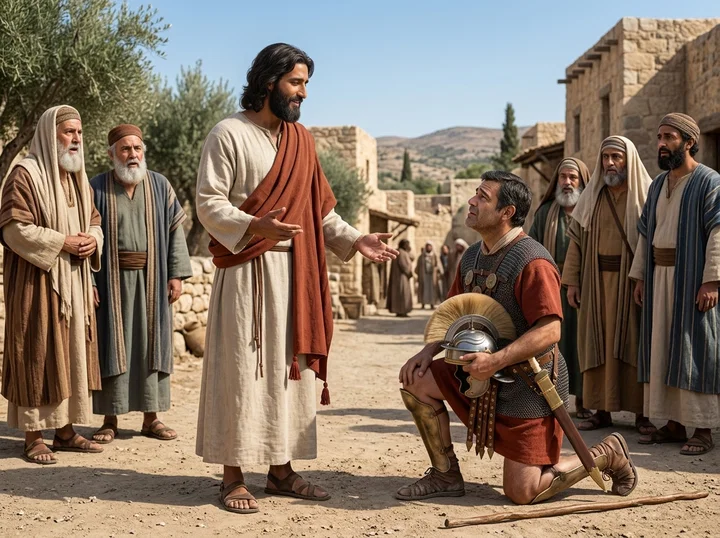
For I also am a man set under authority, having under me soldiers, and I say unto one, Go, and he goeth; and to another, Come, and he cometh; and to my servant, Do this, and he doeth it.
Translations
For I also am a man set under authority, having under me soldiers, and I say to one, Go, and he goes; and to another, Come, and he comes; and to my servant, Do this, and he does it.
King James Version, KJV Cambridge Paragraph Bible
For I also am a man set under authority, having under me soldiers, and I say unto one, Go, and he goeth; and to another, Come, and he cometh; and to my servant, Do this, and he doeth it.
For I also am a man set under authority, having under me soldiers, and I say to one, Go, and he goeth; and to another, Come, and he cometh; and to my servant, Do this, and he doeth it.
Revised Version, American Standard Version
For I also am a man set under authority, having under myself soldiers: and I say to this one, Go, and he goeth; and to another, Come, and he cometh; and to my servant, Do this, and he doeth it.
for I also am a man placed under authority, having under myself soldiers, and I say to this [one], Go, and he goeth; and to another, Be coming, and he cometh; and to my servant, Do this, and he doth [it].'
For I also am a man placed under authority, having under myself soldiers, and I say to this [ one], Go, and he goes; and to another, Come, and he comes; and to my bondman, Do this, and he does [ it].
For, I too, am a man ranked, under authority, having, under myself, soldiers; and I say to this one—Go! and he goeth,—and to another—Come! and he cometh,—and to my servant—Do this! and he doeth it.
For I myself am a man under authority, with soldiers under me. I tell one to go, and he goes; and another to come, and he comes. I tell my servant to do something, and he does it.”
For I myself am a man under authority, with soldiers under me. I tell one to go, and he goes, and another to come, and he comes. I tell my servant to do something, and he does it.”
For I also am a man placed under authority, having under myself soldiers. I tell this one, ‘ Go!’ and he goes; and to another, ‘ Come!’ and he comes; and to my servant, ‘ Do this,’ and he does it.”
For I, myself, am a man under authority, having men under me; and I say to this one, Go, and he goes; and to another, Come, and he comes; and to my servant, Do this, and he does it.
For I likewise am a man set vnder authoritie, and haue vnder mee souldiers, and I say vnto one, Goe, and he goeth: and to another, Come, and hee commeth: and to my seruant, Doe this, and he doeth it.
Douay-Rheims (Challoner revision)
For I also am a man subject to authority, having under me soldiers: and I say to one, Go, and he goeth; and to another, Come, and he cometh; and to my servant, Do this, and he doth it.
Pictures


Cross-references
- Matthew 8:8-10
The centurion answered and said, Lord, I am not worthy that thou shouldest come under my roof: but speak the word only, and my servant shall be healed.
The centurion trusts Jesus’ authority to heal by a word.
- Matthew 8:13
And Jesus said unto the centurion, Go thy way; and as thou hast believed, so be it done unto thee. And his servant was healed in the selfsame hour.
Jesus speaks, and the servant is healed as the centurion trusted.
- Matthew 8:10
When Jesus heard it, he marvelled, and said to them that followed, Verily I say unto you, I have not found so great faith, no, not in Israel.
Jesus praises the centurion’s great faith.
- John 4:50
Jesus saith unto him, Go thy way; thy son liveth. And the man believed the word that Jesus had spoken unto him, and he went his way.
Jesus heals the servant at a distance by his word.
- Acts 10:1-2
There was a certain man in Cæsarea called Cornelius, a centurion of the band called the Italian band,
Cornelius is another Roman officer impressed by Jewish faith.
- Psalms 103:20
Bless the LORD, ye his angels, that excel in strength, that do his commandments, hearkening unto the voice of his word.
Angels obey God’s command and carry out his word.
Commentary
Each commentary is drawn from primary sources: the writings of Ellen G. White and Adventist pioneers and periodicals. Each commentary is separate. Its own words are not a quotation; follow the references to read the source passages.
Ellen G. White
7 sources
The verse records the centurion's argument from his own delegated experience of authority, in which his soldiers and his servant obey his orders to go, to come, and to do what he commands.DA 315.2–316.1DA 316.2ST Aug 8, 1916ST Aug 8, 1916 By that analogy he recognized that Jesus represents the power of the infinite God and has authority over sickness, so that Jesus need only speak the word to command the disease to depart and heal his servant without coming in person.DA 315.2–316.1DA 315.1DA 316.2ST Aug 8, 1916ST Aug 8, 1916 All created things are subject to Jesus' word, and He can command heavenly messengers to bring healing.DA 315.2–316.1DA 316.2 His faith did not demand outward signs and did not question Jesus' power.DA 315.1
His confidence rested not on his own worthiness but on Jesus' power and mercy, making his great need his plea for help.ST Aug 8, 1916ST Aug 8, 1916 The servant was healed that same hour.ST Aug 8, 1916 The account rewards the Capernaum centurion's faith and shows that people among the Gentiles, though regarded by many as unworthy of salvation, could hunger for the light of truth.AA 19.2–20.1 The centurion's conversion and faith showed Christ's work extending beyond Israel and was an early example of the gospel reaching the Gentiles.ST Apr 23, 1885
Sources
Pioneers and periodicals
31 sources
The centurion explains his confidence that Jesus can heal his dying servant by speaking a word without coming to the house, because as a man himself under higher authority who orders soldiers to go and come and a servant to act, he sees them obey him.ST Apr 11, 1900ST Apr 11, 1900 He confesses himself unworthy for Jesus to enter under his roof or even to approach Him, joining humility with recognition of Jesus' mission and power.ST May 31, 1905ST Mar 26, 1894ST Jan 30, 1896 He trusts that sickness itself will obey Jesus' word, for Jesus holds commanding, divine authority over disease and all nature as God's Sent One, with far greater power behind His word than the whole Roman Empire behind the centurion's commands.STST Apr 11, 1900ST Jul 17, 1884ST Jun 2, 1881ST Jan 30, 1896 As the centurion's orders are obeyed without his bodily presence, so Jesus can command healing from a distance and send invisible agents and angels to carry out His work.ST Mar 18, 1897ST Apr 23, 1896ST Mar 18, 1897 Jesus praised this as faith greater than any found in Israel, shown by a Gentile outside the Jewish church who relied not on his own worthiness but on Christ's power and mercy.ST Aug 8, 1916ST May 31, 1905ST Mar 18, 1897ST Jan 30, 1896ST Mar 15, 1899
Words and Historical Setting
The saying is the centurion's explanation of his confidence that Jesus can heal his dying servant by speaking a word alone without coming to the house.ST Apr 11, 1900ST Apr 11, 1900ST Jul 17, 1884ST Jun 2, 1881 He reasons from the military command he knows, that as a man set under authority his orders to soldiers to go and come and to his servant to do are obeyed.ST Apr 11, 1900ST Apr 11, 1900ST Jan 30, 1896ST Jan 30, 1896 Just so, Jesus can command sickness to leave and it will obey His word at a distance, and the servant was healed in that same hour.ST Apr 11, 1900ST Jul 17, 1884ST Jun 2, 1881ST Jan 30, 1896
The words were sent as a message through friends to meet Jesus while He was on His way to the house. Luke gives the fuller account in which the conversation was conveyed through other people, while Matthew gives a more condensed account.ST Sep 15, 1887 The healing is told by both Matthew and Luke with differing details that do not disagree.ST Mar 26, 1894 Luke's silence about the centurion meeting Jesus does not contradict Matthew's statement that he did meet Him, both accounts must be joined together to get all the particulars, and concern over harmonizing them must not draw the mind away from the important lessons.ST Mar 26, 1894
The speaker is a Roman centurion, an officer commanding about one hundred men, probably stationed with the Capernaum garrison while Palestine was under Roman military rule.ST Apr 11, 1900 His servant was at the point of death.ST Mar 26, 1894 His concern for his servant, his love for the Jews, his building of their synagogue, and his favorable regard for the Jewish religion show his character despite Roman contempt for the Jews.ST Mar 18, 1897ST Apr 11, 1900
He confessed himself unworthy for Jesus to come under his roof and unworthy even to come or approach Jesus.ST May 31, 1905ST Mar 26, 1894 His words join humility and a sense of unworthiness with recognition of Jesus' mission and power, and with reliance not on his own goodness but on the Saviour's mercy, making his great need his plea.STST May 31, 1905ST Jan 30, 1896 He reasoned as one himself serving under a higher, delegated authority who understands obedience.ST Jan 30, 1896ST May 31, 1905ST Sep 18, 1893 His own authority was temporary, yet behind his commands stood the whole power of the Roman Empire.ST Jan 30, 1896ST Sep 18, 1893
Faith in Christ's Authority
The centurion believed Jesus held commanding authority over sickness, so that disease itself and his servant's illness would obey a spoken order just as soldiers and servants obeyed his own orders, without Jesus needing to come to the house.STST Apr 11, 1900ST Jul 17, 1884ST Jun 2, 1881 His comparison was drawn directly from his own experience as an officer, expressing confidence that a word alone was sufficient to heal.STST Apr 11, 1900ST Jul 17, 1884 That word carries life, and the servant was healed in that same hour, at that very hour, as he believed.STST Aug 8, 1916ST Jul 17, 1884ST Jun 2, 1881
He recognized that authority as divine and supreme over all nature, not merely a prophet's, for Jesus represents the power of the infinite God as God's Sent One and as Priest-King who has undertaken human cases.STST Aug 8, 1916ST Sep 18, 1893ST Apr 11, 1900ST Sep 15, 1887 It is seen in healing the sick, raising the dead, and controlling nature, and his own authority was temporary while Jesus' authority is spiritual and supreme.STST Jan 30, 1896ST Sep 18, 1893 Behind the centurion's commands stood the whole power of the Roman Empire, but behind Christ's word he saw a far greater authority than the universal Empire of Rome, to which all created things are obedient.ST Sep 18, 1893ST Apr 11, 1900
As his orders are obeyed without his being physically present or needing to go to those commanded, so Jesus can command healing from a distance by His word alone.ST Mar 18, 1897ST Apr 23, 1896ST Mar 18, 1897ST Sep 15, 1887 That includes command over invisible powers and angels, summoning heavenly messengers and sending spiritual agents to bring healing.ST Apr 23, 1896ST Mar 18, 1897ST May 31, 1905ST Apr 11, 1900ST Sep 15, 1887 The healing power belongs not to the messenger but to God's living Word, and though carried by angels its power is not reduced, so the healing remains Christ's work.ST Apr 23, 1896ST May 31, 1905ST Apr 11, 1900
Jesus recognized and praised this as faith greater than any He had found in Israel, unmatched in Israel, resting in the power of Christ's word.ST May 31, 1905ST Mar 18, 1897ST Jan 30, 1896ST Mar 18, 1897 It is an example of trust in unseen authority greater than that of those who required Jesus' physical presence, trusting He could do anything for people without being present in person by word and authority at a distance.ST Mar 18, 1897ST Mar 18, 1897ST Mar 15, 1899 That faith was first manifested and demonstrated by those not of the Jewish church, while even His most devoted Jewish disciples could not grasp that He could help unless He came to them in person, and it was more comprehensive than Jairus's request for Jesus to come to his house.ST Mar 15, 1899ST Feb 6, 1896 His words joined this confidence with humility and a sense of unworthiness.ST May 31, 1905ST Jan 30, 1896
A Gentile could thus recognize Jesus' authority and trust Him, illustrating that God is not a respecter of persons.ST Mar 15, 1899ST Mar 23, 1904 Christ hears people of every nation because He is moved by human need and responds when they reach out to Him, and the centurion's conversion and faith were an early example of the gospel reaching the Gentiles beyond acknowledged Israel.ST Apr 23, 1885ST Mar 15, 1899ST Mar 18, 1897 His faith as a stranger stood in contrast to rejection by Christ's own highly favored people.ST Sep 18, 1893 His confidence rested not on his own worthiness or goodness, nor on his love for the Jews and building their synagogue, but on Jesus' power and mercy, with his great need as his plea for help.ST Aug 8, 1916ST Aug 8, 1916STST Mar 18, 1897
His recognition of commanding authority extends from disease to wind and sea, as when Marcus the centurion of Capernaum, whose servant Jesus healed, was in one of the smaller boats following across the Sea of Galilee.ST Nov 22, 1910 There he witnessed Jesus still the great tempest with Peace, be still, and cried out in astonishment at One whom even winds and sea obey.ST Nov 22, 1910
Doctrine and Application
The centurion reasoned from his own delegated authority that Jesus could command healing without being physically present, trusting His authority as God's Sent One who has spiritual agents at His disposal.ST May 31, 1905 The healing power belongs not to the messenger but to God's living Word, which angels may carry without reducing its power.ST May 31, 1905 God's agencies must be clean, and any power they have comes from the indwelling Word by faith.ST May 31, 1905 Christ ministers in heaven and can send His Word to heal both soul and body.ST May 31, 1905
God is a God of hosts who gives orders to His servants and they carry them out.ST Feb 12, 1902 He is made known in the things He makes and sustains, with His wisdom, skill, power, and purpose in them as a man's skill is in the mechanism of his hand.ST Feb 12, 1902 Yet He remains distinct from His creatures and does not put Himself into them.ST Feb 12, 1902 He works through His agencies, His angels and ministers, under His all-seeing direction.ST Feb 12, 1902 The happiness of His creatures depends on working together with Him in every field of divine work.ST Feb 12, 1902
The centurion's confidence that a spoken word could heal his servant as soldiers obey commands shows that humility strengthens reliance on divine grace rather than discouraging prayer.ST Jul 17, 1884 A believing person may also seek intercession.ST Jul 17, 1884 Such a one may appeal to God through the advocacy of the Son of God.ST Jul 17, 1884
Sources