Matthew 8:10
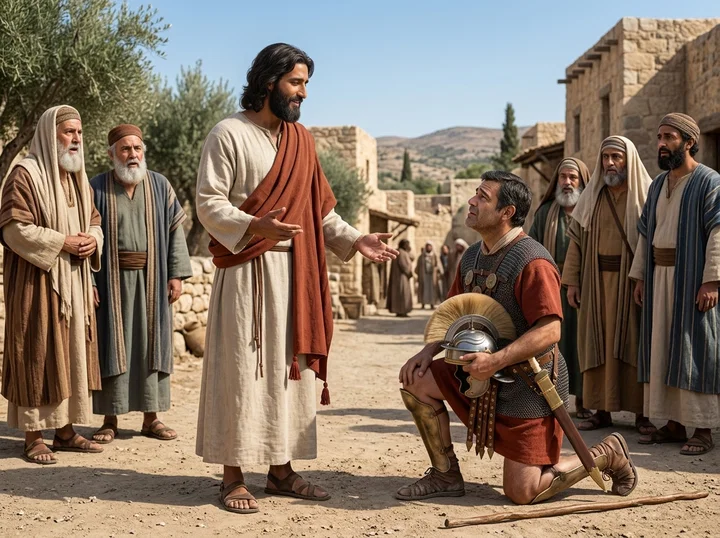
When Jesus heard it, he marvelled, and said to them that followed, Verily I say unto you, I have not found so great faith, no, not in Israel.
Translations
When Jesus heard it, he marveled, and said to them that followed, Truly I say to you, I have not found so great faith, no, not in Israel.
When Jesus heard it, he marvelled, and said to them that followed, Verily I say unto you, I have not found so great faith, no, not in Israel.
When Jesus heard it, he marvelled, and said to them that followed, Verily I say unto you, I have not found so great faith, no not in Israel.
When Jesus heard it, he marveled, and said to them that followed, Verily I say to you, I have not found so great faith, no, not in Israel.
And when Jesus heard it, he marveled, and said to them that followed, Verily I say unto you, I have not found so great faith, no, not in Israel.
And when Jesus heard it, he marvelled, and said to them that followed, Verily I say unto you, I have not found so great faith, no, not in Israel.
And Jesus having heard, did wonder, and said to those following, 'Verily I say to you, not even in Israel so great faith have I found;
And when Jesus heard it, he wondered, and said to those who followed, Verily I say unto you, Not even in Israel have I found so great faith.
Now Jesus, hearing, marveled, and said to them that followed,—Verily, I say unto you, With no one in Israel, such faith as this, have I found.
When Jesus heard this, He marveled and said to those following Him, “ Truly I tell you, I have not found anyone in Israel with such great faith.
When Jesus heard this, He marveled and said to those following Him, “ Truly I tell you, I have not found even in Israel such great faith.
When Jesus heard it, he marveled and said to those who followed, “Most certainly I tell you, I haven’ t found so great a faith, not even in Israel.
And when these words came to the ears of Jesus he was surprised, and said to those who came after him, Truly I say to you, I have not seen such great faith, no, not in Israel.
When Iesus heard that, he marueiled, and said to them that folowed him, Verely, I say vnto you, I haue not found so great faith, euen in Israel.
Douay-Rheims (Challoner revision)
And Jesus hearing this, marvelled; and said to them that followed him: Amen I say to you, I have not found so great faith in Israel.
Pictures


Cross-references
- Luke 7:1-10
Now when he had ended all his sayings in the audience of the people, he entered into Capernaum.
Parallel account of the centurion’s request, Jesus’ praise of his faith, and the servant’s healing.
- Matthew 15:28
Then Jesus answered and said unto her, O woman, great is thy faith: be it unto thee even as thou wilt. And her daughter was made whole from that very hour.
Jesus commends the woman’s great faith and heals her daughter.
- John 4:50
Jesus saith unto him, Go thy way; thy son liveth. And the man believed the word that Jesus had spoken unto him, and he went his way.
The nobleman trusts Jesus’ word, and his son is healed.
- Luke 7:5
For he loveth our nation, and he hath built us a synagogue.
The Jewish elders describe the centurion’s regard for Israel.
- Matthew 17:20
And Jesus said unto them, Because of your unbelief: for verily I say unto you, If ye have faith as a grain of mustard seed, ye shall say unto this mountain, Remove hence to yonder place; and it shall remove; and nothing shall be impossible unto you.
Even small faith is described as powerful enough to move mountains.
- John 20:29
Jesus saith unto him, Thomas, because thou hast seen me, thou hast believed: blessed are they that have not seen, and yet have believed.
Jesus blesses those who believe without seeing, unlike Thomas who required visible evidence.
- Matthew 8:2-3
And, behold, there came a leper and worshipped him, saying, Lord, if thou wilt, thou canst make me clean.
Jesus agrees to cleanse a leper who asks for healing.
- Matthew 21:21
Jesus answered and said unto them, Verily I say unto you, If ye have faith, and doubt not, ye shall not only do this which is done to the fig tree, but also if ye shall say unto this mountain, Be thou removed, and be thou cast into the sea; it shall be done.
Jesus teaches faith without doubt.
- Hebrews 11:1-2
Now faith is the substance of things hoped for, the evidence of things not seen.
Both describe faith that is commended.
- Mark 11:22
And Jesus answering saith unto them, Have faith in God.
Jesus commands his followers to have faith in God.
- Luke 17:19
And he said unto him, Arise, go thy way: thy faith hath made thee whole.
Cited with the principle that faith is measured in its circumstances.
- Mark 9:23
Jesus said unto him, If thou canst believe, all things are possible to him that believeth.
Echoes the passage’s emphasis that belief matters.
- Matthew 8:26
And he saith unto them, Why are ye fearful, O ye of little faith? Then he arose, and rebuked the winds and the sea; and there was a great calm.
contrasts great faith with little faith
- Mark 6:6
And he marvelled because of their unbelief. And he went round about the villages, teaching.
Contrasts Jesus marveling at unbelief in Nazareth.
- 1 John 5:4
For whatsoever is born of God overcometh the world: and this is the victory that overcometh the world, even our faith.
Faith overcomes the world.
Commentary
Each commentary is drawn from primary sources: the writings of Ellen G. White and Adventist pioneers and periodicals. Each commentary is separate. Its own words are not a quotation; follow the references to read the source passages.
Ellen G. White
24 sources
Jesus marvelled at the centurion's faith and declared He had not found so great faith, no, not in Israel.Ms 10, 1890, par. 19Lt 114, 1895, par. 11–1512MR 289.1–2 Though he had never seen Jesus, the centurion trusted that a word spoken at a distance would heal his suffering servant, because Christ's command carries power to the sickroom just as commands are obeyed by those under authority.Ms 10, 1890, par. 19Lt 114, 1895, par. 11–15DA 315.2–316.1 His faith was simple, humble and unselfish, for though others called him worthy he felt unworthy to receive Jesus under his roof and pleaded his great need rather than his own goodness.Lt 114, 1895, par. 11–1512MR 289.1–2Lt 114, 1895, par. 7–10 That faith crossed national prejudice and shows that truly receiving Christ depends on faith and appreciation of Him, not on belonging to Israel or enjoying greater privileges, while Israel's demand for outward signs was unbelief that would bring condemnation.Lt 114, 1895, par. 11–15Lt 114, 1895, par. 7–10DA 315.14T 233.1–2ST Aug 8, 1916 His conversion shows God's grace is not confined to Israel or limited by race, but welcomes Gentiles as children of God to share the kingdom on equal terms and foreshadowed their gathering into the church in intelligent faith.ST Apr 23, 18853SP 354.2–355.1SLP 51.1DA 402.2ST Jun 12, 1879
Faith That Amazed Jesus
When Jesus heard the centurion, He marveled and declared He had not found so great faith, no, not in Israel.Ms 10, 1890, par. 19Lt 114, 1895, par. 11–1512MR 289.1–2DA 315.2–316.1Lt 114, 1895, par. 7–10 His praise set the centurion's trust above all He had found among Israel, despite Israel's greater spiritual privileges.Lt 114, 1895, par. 11–15Lt 114, 1895, par. 7–104T 233.1–2ST Aug 8, 1916 That faith stood out in sharp contrast to the unbelief of His own nation.DA 315.2–316.1DA 315.1
Though the centurion had never seen Jesus, reports about Him had given him confidence in His power.DA 315.2–316.1ST Aug 8, 1916 He trusted that Jesus need only speak a word to heal his suffering servant from a distance, without coming to his house in person or giving an outward sign.Ms 10, 1890, par. 19Lt 114, 1895, par. 11–15Lt 114, 1895, par. 7–10DA 315.14T 233.1–2 He reasoned as a commander whose orders are obeyed by those under authority, recognizing that Christ's command itself carries power that angels carry to the sickroom.Ms 10, 1890, par. 19ST Aug 8, 1916 His was a simple, humble, and unselfish trust in the spoken word alone.Lt 114, 1895, par. 11–15Lt 114, 1895, par. 7–10
Great faith is joined to humility.12MR 289.1–2 Though he was a Roman commander whom others called worthy for his good deeds, he felt unworthy to have Jesus enter his home.Lt 114, 1895, par. 7–104T 233.1–2ST Aug 8, 1916 He relied not on his own goodness but on Jesus' mercy, and made his great need his plea.ST Aug 8, 1916 His faith crossed national prejudice and recognized in Jesus' teaching what his soul needed.ST Aug 8, 1916 Truly receiving Christ therefore depends on faith and appreciation of Him, not on membership in Israel, religious profession, or greater spiritual privileges.Lt 114, 1895, par. 11–15Lt 114, 1895, par. 7–10
In contrast, His own nation showed unbelief that required outward signs before believing.DA 315.1 That unbelief would lead them to reject great light and bring condemnation and overthrow.4T 233.1–2ST May 4, 1876 The same great faith found outside Israel was shown by the wise men from the East, who though Gentiles recognized Jesus as divine beneath His lowly appearance, accepted Him as Savior, and offered Him gifts.DA 63.2
Salvation Beyond Israel Alone
The centurion's conversion was direct work beyond the acknowledged people of Israel, proving that faith and God's work were not confined to them.ST Apr 23, 1885ST Jun 12, 18798RED 14.1–2 Jesus praised this Gentile officer's faith as greater than any He had found in Israel, and in rewarding it He showed that God's grace is not limited by race or nation.ST Apr 23, 1885DA 402.2ST Jun 12, 1879 Gentiles too are recognized as children of God, able to hunger for the light of truth and to receive salvation and favor from Christ.DA 402.2ST Jun 12, 18798RED 14.1–2AA 19.2–20.1
Joined to the declaration that people from many nations will share in the kingdom while some who expected it as their own inheritance will be excluded, the praise of the centurion's faith rebukes the belief that God's blessing belongs exclusively to Israel.3SP 354.2–355.1 It shows that Gentiles may receive religious privileges on equal terms.3SP 354.2–355.1
The encounter foreshadowed and anticipated the later sustained gathering of Gentiles and of whole Gentile communities into the church in intelligent faith, received with joy.SLP 51.13SP 356.2–38RED 14.1–2ST Jun 12, 1879 Jewish rejection, unbelief and malice could not stop that purpose, as a new Israel was grafted into the old olive-tree.3SP 356.2–38RED 14.1–2 The centurion's faith helped teach the disciples that the gospel is for Gentiles as well as Jews and that God's kingdom has no boundary separating nations.8RED 14.1–2AA 19.2–20.1
Pattern for Healing Ministry
The chapter in which this marveling occurs joins the ministry of the Word with medical missionary work and displays the methods of the great Healer.Ms 62, 1904, par. 17 People from other nations came seeking healing and help for loved ones, and their coming represented humanity beyond Israel longing for what it lacked.Ms 50, 1897, par. 2 They listened to His teaching and were deeply moved by the truth, and His words of hope and acts of healing in answer set the example for service to people throughout the world.Ms 50, 1897, par. 2 That response shows His work was for humanity at large and not for one people only.Ms 50, 1897, par. 2
His work for the centurion shows He served people from every class and did not limit His ministry to the poor or to social outcasts.Ms 3, 1899, par. 12 It also shows He sought to reach Roman rulers and win their hearts.ST Jun 9, 1914 The same declaration teaches the tenderness and care Christ shows to the erring and to those needing sympathy and love.12MR 289.1–2 Even those whose lives reveal the deformity of sin must therefore be borne with, as Jesus bears with sinners.12MR 289.1–2
Sources
Pioneers and periodicals
62 sources
At Capernaum a Roman Gentile officer sought Jesus for his servant dying of palsy, and when Jesus offered to come the centurion answered that he was unworthy to receive him and that a spoken word alone would heal, so Jesus marveled and declared he had not found so great faith in Israel and healed the servant that same hour.ST Jun 2, 1881RH Dec 6, 1906ST Jan 23, 1893ST Jun 2, 1898ST Jul 7, 1898 Its greatness lay in trusting that disease must obey Christ at a distance by his word alone, as soldiers obey their commander, because he discerned in Jesus the authority of the infinite God to command life into being.ST Oct 30, 1907ST Jan 23, 1893ST May 31, 1905STST Mar 26, 1894 That confidence was joined to deep humility, counting his good deeds and gifts as nothing and making his need and helplessness his only plea.STRH Dec 6, 1906RH Oct 7, 1915 Against Israel's unbelief despite great light, this faith showed that Gentiles coming from east and west would sit with Abraham, Isaac and Jacob in the kingdom while unbelieving children of the kingdom would be cast out, for descent gives no claim apart from faith.ST Jun 2, 1881ST Nov 19, 1896 Such simple trust in the living, creative power of God's word is held up to be imitated without delay by all of every class, resting with empty hands on what he promises as sure to be done.RH Dec 6, 1906ST Oct 30, 1907STST Oct 22, 1896ST Mar 26, 1894
Story and Setting
Matthew 8:10 belongs to the account at Capernaum, where a Roman centurion sought Jesus for his servant or slave who lay gravely ill and dying of paralysis or palsy.STST Jun 2, 1881RH Dec 6, 1906ST Jan 30, 1896ST Sep 20, 1910 Jesus healed the servant in that same hour in answer to belief, as the centurion had believed so it would be done to him.ST Jun 2, 1881RH Dec 6, 1906ST Jan 23, 1893 The centurion was a heathen Gentile soldier, a Roman officer under the military government of Palestine where a garrison was stationed at Capernaum.ST Jun 2, 1881ST Jun 2, 1898ST Apr 11, 1900 He had shown kindness to the Jews by building them a synagogue and showed regard for their religion and concern for his enslaved servant in a society where Romans despised Jews.ST Jun 2, 1881ST Jun 2, 1898ST Jul 7, 1898ST Apr 11, 1900
Jesus offered to come and heal, and the centurion answered that he was unworthy to receive so holy a one under his roof and that a spoken word alone would heal.ST Jun 2, 1881RH Dec 6, 1906RH Oct 7, 1915 The request and words were conveyed through Jewish elders and other messengers, first asking healing through the Jewish elders and then, when Jesus drew near the house, sending word, though Matthew condenses the exchange and presents them as his own.ST Jun 2, 1881ST Sep 15, 1887 Matthew and Luke give different details that together supply the full particulars without contradiction, with Matthew 8:5-13 paralleling the Luke 7 account.ST Sep 15, 1887ST Jan 30, 1896ST Mar 26, 1894 When Jesus heard it, he marvelled and said to those following him that he had not found so great faith, no, not in Israel.ST Jun 2, 1881RH Dec 6, 1906ST Jan 23, 1893ST Jan 23, 1893ST Apr 11, 1900 That praise answers the centurion's confidence that Jesus could heal his servant simply by speaking, without coming to the house or being personally present.ST Jan 23, 1893ST Jan 23, 1893RH Dec 9, 1852ST Apr 11, 1900
The account shows Jesus loving the heathen soldier and valuing what was good in him.RH Jun 2, 1904 It belongs to his work of seeking to reach Roman rulers and win their hearts, praising a Roman centurion's faith.ST Jun 9, 1914RH Jun 2, 1904 The centurion is identified as having witnessed the Master's healing, and he now sees the winds and sea obey Jesus.ST Nov 22, 1910
Nature of Great Faith
Its greatness lay in trusting that Jesus could heal the servant by speaking a word alone, without coming to the house or being personally present, even at a distance.ST Oct 30, 1907ST Jan 23, 1893ST May 31, 1905ST Jan 23, 1893ST Oct 22, 1896 That confidence was met by Jesus marveling and declaring He had not found faith so great, no, not in Israel, and by His assurance that it would be done as believed, with the servant healed in that same hour.ST Oct 30, 1907ST Jan 23, 1893ST Jan 23, 1893ST Mar 6, 1907ST Oct 22, 1896 True faith so receives God's living word as having living, creative power to do what He promises and accomplish what it declares.ST Oct 30, 1907ST May 31, 1905STST Mar 6, 1907ST Oct 22, 1896
That confidence rested on recognizing Jesus' true character and authority.STST May 31, 1905STST Mar 26, 1894ST Mar 6, 1907 As the centurion's soldiers and servants obeyed him as representative of the power of Rome, so all created things obey Christ as representative of the power of the infinite God and commissioned by God, so that disease must depart at His command.STST Aug 8, 1916STST Mar 26, 1894ST Mar 6, 1907 He understood the power of God's word, and Jesus held his faith up as an example of faith that grasps and rests on the power of the living word, and such faith gives the kingdom.STST Mar 26, 1894ST Mar 6, 1907
His faith joined complete reliance on Jesus' power, mercy and grace with deep humility.STST Aug 8, 1916RH Dec 6, 1906RH Oct 7, 1915ST Jul 17, 1884 Though others called him worthy because of good deeds and gifts, he counted himself unworthy to come to Jesus or to receive so holy a one under his roof, and he did not trust his own goodness, wealth or service to the Jews, but made his great need and helplessness his only plea.STST Aug 8, 1916RH Dec 6, 1906RH Oct 7, 1915ST Jul 17, 1884 Jesus tested him by offering to come and heal his servant sick of the palsy, and answered his humble confident reply by healing in that hour according to what he believed, holding that up as real, simple, remarkable faith recorded for admonition to be profited by and imitated, in contrast to fearful little faith and a faithless generation.RH Dec 6, 1906ST Jul 17, 1884ST Jul 17, 1884 His humility did not weaken his appeal but led him to rely completely, showing perfect confidence in love, so that a humble petitioner may seek help through intercession and such faith was not limited to Israel.ST Jul 17, 1884ST Jul 17, 1884
Though he had never seen Jesus, the reports he heard inspired faith, convinced him that the Jews' religion was superior to his own despite their formalism, broke through national prejudice and hatred, and met the need of his soul.STST Aug 8, 1916 His confidence acknowledged godlike, divine, Creator power, able to command life as light was commanded into being.STST Oct 22, 1885 It was remarkable in a man regarded as a heathen Gentile, while Israel professed to be expecting the Messiah, and it crossed national prejudice to recognize in Jesus' teaching what his soul needed.ST Aug 8, 1916ST Oct 22, 1885
Faith is belief and confidence exercised in God's power and promises, not the Scriptures themselves, for the verse speaks of great faith, not of a great Bible.RH Oct 22, 1857 It rather than love was the quality that distinguished him and marked him as a man of God, so remarkable that Jesus marveled at it and praised it before His followers.ST Aug 20, 1885 Faith is measured in light of the revelation received and the opposition faced, so faith small in itself may be great in relation to limited light and strong opposition, people being judged according to the opportunities they had to know and do their duty, with greater religious privilege bringing greater responsibility.RH Oct 29, 1861
Power of His Word
True faith takes God's living word as able to do what He promises, receiving its life-giving work when the centurion trusted that a spoken word alone, without coming to the house, would heal his servant.ST Oct 30, 1907ST Oct 22, 1896ST Sep 21, 1915 Its greatness lay in trusting that word at a distance to accomplish what it declares, sure to be fulfilled even without seeing it happen.ST Mar 26, 1894ST Nov 19, 1896ST Sep 21, 1915 As a commander’s order moves those under his authority, so Christ’s word commands disease to depart, and this grasping and resting on the power of the living word is the faith that gives the kingdom.ST Oct 22, 1896ST Mar 26, 1894ST Nov 19, 1896 Such confidence treats His spoken word as sure, creative and living power to effect what it says.ST Oct 30, 1907ST Oct 22, 1896ST Sep 21, 1915
The centurion believed healing without personal presence could come through spiritual agents or angelic messengers and would still be Christ’s own healing, as what he did through soldiers and friends was his own doing.ST Apr 23, 1896ST May 31, 1905 Unlike those who thought healing required Jesus to be present, he trusted Jesus to send His word with authority as a commander sends orders through those under him.ST May 31, 1905ST Mar 6, 1907 The healing power belongs to God’s living word rather than to the human or angelic carrier, since any power an agent has comes from the indwelling Word, and the word carried out by God’s invisible messengers is effective because commissioned by God with authority and power for His work.ST May 31, 1905ST Mar 6, 1907 Christ ministers in heaven and can send His word to heal both soul and body.ST May 31, 1905
God’s healing power is not limited by bodily location, for Jesus’ word healed the servant miles away that same hour in answer to trust that He could speak from a distance.ST Oct 8, 1902ST Jan 30, 1912 His power is the source of all healing, including gradual cures that take place through ordinary means.RH Feb 8, 1906 The kind centurion at Capernaum whose slave was fast approaching death believed with a won heart, and his prayer of faith was answered, proving Christ the mighty Healer and great Physician of the soul has the same unchanging power and love to heal today, touching grief with relief and giving life and happiness still through His servants.ST Jun 13, 1900
Trust in Christ’s power at a distance contrasts with thinking bodily presence or touch or sight was necessary, for others thought they needed to see Christ or have Him touch the sick.ST Jun 18, 1896ST Mar 6, 1907 The Roman believed Jesus could heal or restore by His word even when physically absent, and this was commended as greater faith than found in Israel, greater than that of the sisters of Lazarus and the disciples.ST Jun 18, 1896ST May 17, 1910 His faith grasped God’s power acting through Christ’s word and through invisible agents, reaching beyond what is visible to a faith that can be found outside the visible church.ST Mar 6, 1907 The disciples lacked that faith in Christ’s unseen presence and needed it for the time when He would be absent after going away, when His conquering power would still be made personally present to each believer everywhere through the Spirit poured out.ST Jun 18, 1896ST May 17, 1910
Gentiles, Israel and Kingdom
The Gentile soldier's trust in a word spoken at a distance to heal his servant was set against the unbelief of Israel, for no faith so great had been found among those who knew the Scriptures and professed to expect the Messiah.ST Nov 19, 1896 That unbelief rejected great light and brought condemnation and overthrow, while he who was trusted was despised and rejected by his own favored people.ST May 4, 1876ST Sep 18, 1893 The contrast was the more remarkable because the man was regarded as a heathen outsider, yet he acknowledged godlike power in Jesus and, feeling unworthy to receive so holy a one under his roof, relied on the power of God's word alone to accomplish what it promised.ST May 4, 1876ST Nov 19, 1896ST Sep 18, 1893
At Capernaum the Roman centurion sought healing for his slave who lay dying of paralysis, first asking through the Jewish elders and then, as Jesus drew near the house, sending word that he was unworthy and that a spoken word alone would heal.ST Jun 2, 1881 That trust in Christ's distant word is the great faith found nowhere in Israel, and to the centurion it was said that as he had believed so it would be done to him, and his servant was healed in that very hour.ST Jun 2, 1881 Upon that faith came the declaration that many shall come from the east and west and sit down with Abraham and Isaac and Jacob in the kingdom of heaven, while the children of the kingdom shall be cast out into outer darkness.ST Jun 2, 1881 This means Gentiles will share the Messianic banquet with the patriarchs, while the Jews who expected an exclusive table where Gentiles would be shamed will face rejection and despair.ST Jun 2, 1881
Faith in Christ, not descent from Israel, makes a person part of Israel, so Gentiles may belong to God's people through faith while unbelief cuts off descendants of Israel, and Jews too may be reunited through faith. Mere descent from Abraham does not by itself make anyone an heir of the kingdom, for wicked works disqualify claimants to the covenant promises.RH Jan 14, 1873 Hardness of heart and rejection of Christ result in the kingdom being given to others who bear its fruits.RH Jan 14, 1873
The centurion stands as a pious Gentile who sought God, and his conversion is an instance of work done directly beyond the acknowledged people of Israel.ST Apr 23, 1885ST Jun 12, 1879ST Jun 12, 1879ST Jun 21, 1883 It shows that faith and God's working were not confined to them and that Gentiles too were welcomed as children of God.ST Apr 23, 1885ST Jun 12, 1879 His encounter in seeking healing for his servant brought the gospel to a Gentile before it was later carried more fully to other nations, anticipating its welcome among the Gentiles.ST Jun 12, 1879ST May 1, 1907
The same comparison teaches that love for God's word may be greater in an enslaved woman kept from learning than among highly favored people who have been taught to read but neglect it.RH Jul 6, 1868 Faith that trusts Christ's word to heal without his physical presence, grasping that God's power can act through his word and through invisible agents, can be found outside the visible church and may reach farther than any faith in Israel, where others thought they needed to see Christ or have him touch the sick.ST Mar 6, 1907 Her great faith recalls the Canaanite woman, whose faith Jesus also commended as like the centurion's.ST Jun 21, 1899
Example and Call to Believe
Jesus held up the centurion's confidence in his authority and word as real faith to be profited by and imitated.RH Dec 6, 1906ST That faith was simple and remarkable, greater than any he had found in Israel, and was set in contrast to fearful little faith and a faithless and perverse generation.RH Dec 6, 1906ST Sep 12, 1911 Its greatness lay in grasping and resting on the power of the living word, understanding that as command moved those under the centurion's authority so Christ's word could command disease to depart, and such faith gives the kingdom.STST Mar 26, 1894 The centurion was tested by the offer to come and heal his servant sick of the palsy, and answered with humility that he was unworthy to receive Jesus under his roof and with confidence that a word alone would heal, and Jesus answered it by healing the servant in that same hour according to what had been believed.RH Dec 6, 1906
The surrounding miracles stand as evidence that the Messiah performed many wonderful works among the people to confirm his divine mission and the doctrines he taught.RH Nov 18, 1862 The account shows Jesus willing and able to receive and bless those who come to him for mercy and healing and to help men in sickness.RH Nov 17, 1859ST Jan 30, 1896
The verse teaches that a person can trust Christ and receive his help without delay, rather than waiting for a later time or for a particular feeling.RH Aug 12, 1875 It calls for perfect confidence in his love, trusting his power and grace completely.ST Jul 17, 1884 Whatever Jesus speaks is to be trusted as completely reliable and sure to be fulfilled even without seeing it happen, giving assurance that his word accomplishes what it declares.ST Sep 21, 1915
Humility does not weaken appeal but leads to complete reliance, so the humble petitioner may seek help through intercession.ST Jul 17, 1884 The centurion's sense of his own unworthiness was itself great faith, proving that when a person is most vile in his own eyes he is most glorious in the eyes of God.RH Mar 9, 1869 Though others called him worthy because he loved the nation and built a synagogue, he called himself not worthy and did not trust in his own goodness, making his great need his only argument and trusting the Saviour's mercy.ST Feeling sinful is no reason to lose hope of blessing, because Christ came to save sinners.ST
In the same way every human being can come to Christ with nothing to recommend them to God.ST Sinners of every class, rich and poor, masters and servants, old and young, are called to come without money, casting off every sin, pressing through every difficulty, and crying for mercy to be saved.RH Nov 17, 1859 The plea to urge now and ever is utter helplessness, which makes his redeeming power a necessity, renouncing all self-dependence and clinging to the cross with empty hands.ST
Sources