Luke 8:7
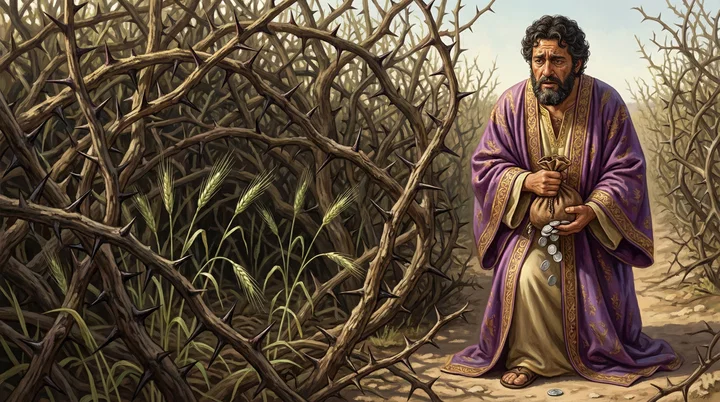
And some fell among thorns; and the thorns sprang up with it, and choked it.
Translations
American King James Version, King James Version, KJV Cambridge Paragraph Bible, Webster Bible
And some fell among thorns; and the thorns sprang up with it, and choked it.
Revised Version, American Standard Version
And other fell amidst the thorns; and the thorns grew with it, and choked it.
'And other fell amidst the thorns, and the thorns having sprung up with it, did choke it.
and other fell in the midst of the thorns, and the thorns having sprung up with [ it] choked it;
And, other, fell and thorns; and, growing together, the thorns, choked it.
Berean Standard Bible, Majority Standard Bible
Other seed fell among thorns, which grew up with it and choked the seedlings.
Some fell amid the thorns, and the thorns grew with it and choked it.
And some went among thorns, and the thorns came up with it and it had no room for growth.
And some fell among thornes, and the thornes sprang vp with it, and choked it.
Douay-Rheims (Challoner revision)
And other some fell among thorns, and the thorns growing up with it, choked it.
Pictures

Cross-references
- Matthew 13:7
And some fell among thorns; and the thorns sprung up, and choked them:
Both texts describe thorns springing up and choking the seed.
- Mark 4:7
And some fell among thorns, and the thorns grew up, and choked it, and it yielded no fruit.
The seed among thorns is choked and yields no fruit.
- Luke 8:14
And that which fell among thorns are they, which, when they have heard, go forth, and are choked with cares and riches and pleasures of this life, and bring no fruit to perfection.
Identifies life’s cares, riches, and pleasures as thorns that choke the word and prevent fruit.
- Matthew 13:22
He also that received seed among the thorns is he that heareth the word; and the care of this world, and the deceitfulness of riches, choke the word, and he becometh unfruitful.
The thorns are life’s cares and riches choking the word and making it unfruitful.
- Mark 4:18-19
And these are they which are sown among thorns; such as hear the word,
Cares, riches, and desires choke the word and make it unfruitful.
- Jeremiah 4:3
For thus saith the LORD to the men of Judah and Jerusalem, Break up your fallow ground, and sow not among thorns.
Both warn against sowing among thorns and call for preparing the heart for truth.
- Luke 8:11
Now the parable is this: The seed is the word of God.
Identifies the seed in the parable as the word of God.
- Luke 8:12
Those by the way side are they that hear; then cometh the devil, and taketh away the word out of their hearts, lest they should believe and be saved.
Both describe how the devil opposes the word in the parable of the sower.
- Luke 8:15
But that on the good ground are they, which in an honest and good heart, having heard the word, keep it, and bring forth fruit with patience.
The good soil bears fruit, as the passage appeals to sow good seed.
- Luke 8:13
They on the rock are they, which, when they hear, receive the word with joy; and these have no root, which for a while believe, and in time of temptation fall away.
contrasted as stony-ground hearers in same parable
Commentary
Each commentary is drawn from primary sources: the writings of Ellen G. White and Adventist pioneers and periodicals. Each commentary is separate. Its own words are not a quotation; follow the references to read the source passages.
Ellen G. White
26 sources
Some of the sown word lands where thorns come up together with it and smother it, so it matures nothing and brings no crop to eternal life.ST Jun 30, 1881Lt 13, 1902, par. 20–24STMW7 4.2COL 34.2–3 The seed is the word of God put into the heart, and the heart is soil meant to be prepared to receive truth and bring forth character and fruit.COL 33.1CT 142.2COL 30.1TBC1872 111.1Ms 28, 1898, par. 12 The thorns are the cares of this world, the deceitfulness of riches, and the pleasures of this life, crowding the heart with love of the world, gain, honor, and indulgence until there is no room for piety to grow.Lt 13, 1902, par. 20–24COL 56.1–2TCBMP 140.1–142.1 They choke the word when its first impressions fade and are not carried into daily life, as business, anxiety, dishonest gain, and neglected duties overgrow and starve the good seed until the heart turns away and Christian character is never perfected.4RED 79.2–80.1TCBMP 140.1–142.12SP 234.1–2Ms 13, 1898 No hearer must remain such soil, for by repentance and earnest effort in the strength of Jesus the thorns can be uprooted and cast out, since good and evil cannot thrive together in the same heart.Lt 13, 1902, par. 20–24COL 57.1–2COL 56.1–2ED 111.1–2
Parable Setting and Imagery
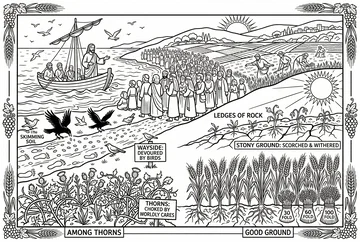
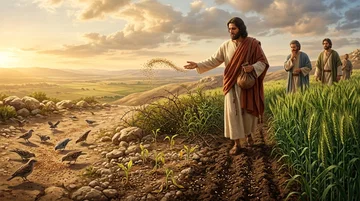
The seed falling among thorns that grew up with it and choked it so that it yielded no fruit was spoken while teaching the crowd from a boat by the Sea of Galilee.ST Jun 30, 1881COL 34.2–3 It was spoken beside the sea while looking across the plain of Gennesaret and the hills beyond where sowers were casting seed and reapers were harvesting the early grain on hillside and plain.COL 34.2–3 Its sowers, fields, and other natural scenes were drawn from the surroundings so that those sights would remind listeners of the lessons of truth.COL 34.2–34RED 78.1–2
It belongs to the parable of the sower which illustrates the things of the kingdom of heaven and the work of the great Husbandman for His people.COL 33.1 Like a sower in the field Christ came to scatter the heavenly grain of truth, and His parable-teaching itself was the seed with which the most precious truths of His grace were sown.COL 33.1 Though its simplicity has kept it from being valued as it should be, the natural seed cast into the soil is meant to lead the mind to the gospel seed whose sowing brings man back to loyalty to God.COL 33.1 He who gave the parable is the Sovereign of heaven, and the same laws that govern earthly seed-sowing govern the sowing of the seeds of truth, using earthly things to represent spiritual realities and letting nature speak eternal truths.COL 33.1Ms 28, 1898, par. 12
In the parable the seed is the word of God sown in the heart.CT 142.2COL 30.1TBC1872 111.1 The heart is like soil and like a garden that must be prepared to receive the seed of truth, where good or bad seed may be sown and develop character.CT 142.2 The sown truth as seed may lie dormant until God's grace awakens it to life and it bears fruit.TBC1872 111.1 The parable shows the different tendencies of the human heart and the classes of people taught, and so explains why the ministry had limited immediate results.2SP 241.1–24RED 86.2–3 Within the sequence of soils it stands between the seed on stony places that withered for lack of root and the seed in good ground that bore fruit a hundredfold, sixtyfold, and thirtyfold, describing seed that fell where thorns grew up together with it and choked it.COL 34.2–3
Thorny Hearts Without Fruit
Some fell among thorns, and the thorns sprang up with it and choked it, so that it yielded no fruit, brought no fruit to perfection, and yielded no fruit unto eternal life.ST Jun 30, 1881Lt 13, 1902, par. 20–24STMW7 4.2Ms 1a, 1874, par. 4–85MR 300.4–301.1 That unfruitful outcome will be the experience of every gospel laborer.Ms 1a, 1874, par. 4–85MR 300.4–301.1
The thorny soil is hearts crowded by worldly things and evil tendencies that prevent the word from developing and bearing fruit.Lt 13, 1902, par. 20–24COL 56.1–2 Its hearers seem to receive the truth, are convinced by it and accept it without seeing the sinfulness of their hearts, yet remain unfruitful.Lt 13, 1902, par. 20–24TCBMP 140.1–142.1 The thorns are the cares of this world, the deceitfulness of riches, and the pleasures of this life.Lt 13, 1902, par. 20–24 They include earthly cares that leave no time for cultivating piety, love of the world holding a large place in the affections, making temporal matters primary, unnecessary cares and needless anxiety about gaining or losing means, dishonest dealing to get the best of the bargain, prevarication, deception and fraud to gain means, love of earthly pleasures and worldly honors that riches give, unchristlike traits of character, and unsanctified human inclinations and desires.Lt 13, 1902, par. 20–24TCBMP 140.1–142.1
The choking happens when worldly cares, temptations, and unfavorable surroundings cause the impressions of the teaching to fade, so hearers abandon the new purpose stirred in them and return to indifference rather than carrying its principles into a holier daily life.4RED 79.2–80.1TCBMP 140.1–142.12SP 234.1–2 The good seed sown in the heart is overgrown and not nourished.TCBMP 140.1–142.1 Meetings and religious privileges where the heart could be strengthened are neglected for fear of temporal loss, toil for gain is excused as duty to help the cause of God, means wrongly gained overbalances good purposes and intentions and proves a thorn, and the more earthly riches increase the less the heart is inclined to part with treasure, until the heart is fully turned from the loved truth and Christian character is never perfected.TCBMP 140.1–142.1
Truth received by a divided or unconverted heart is choked when self-denial and sacrifice are refused, such as in paying tithe, so the truth is not strengthened by practice and is eventually quenched, while genuine conviction and cleansing of the heart leave the thorns no room to grow.Ms 13, 1898 The sown truth must be cherished and received into the heart to lead to eternal life, taking root through attentive, diligent study and the Spirit's work, while distraction and erring thoughts can divert the mind and cause it to fail to produce life.Ms 70, 1897, par. 24–31 Teachings that mix skepticism or fanciful interpretations with Scripture can take root in the heart and choke its fruitful influence, producing infidelity.CT 186.3–187.2
Sowing Truth and Reclaiming Hearts
No heart that has received the seed among thorns must remain thorny soil, for men are held responsible when they resist the Spirit and allow the word to be neglected.COL 56.1–2 Reclaiming is possible through repentance and choice and diligent, earnest effort in Jesus' name and strength, by which the heart can be reclaimed and the thorns removed.COL 56.1–2ED 111.1–2 If the thorns are not overcome and uprooted and cut away and cast out as hindrances to Christian growth, they grow and strengthen and kill the precious graces of the Spirit, for good and evil cannot grow in the heart at the same time.Lt 13, 1902, par. 20–24
Mere cutting off of the visible thorns is not enough, for the truth must break up the fallow ground of the heart and remove their roots.COL 57.1–2 At the start of the Christian life believers are to learn to follow in self-denial, to bear burdens and work and endure hardship and trust in love.COL 57.1–2 Serving and caring for the lost turns attention away from self and weakens the attraction of worldly pleasures.COL 57.1–2
Sowers must help prepare hearts to receive and retain the gospel, since logic and argument fail with hearts as hard as the beaten highway and as stony.COL 57.1–2GW 185.1 Christlike sympathy and personal ministry revealing love awakens interest in eternal life and softens the heart so that the seed of truth can take root.GW 185.1 Parents must likewise prepare the soil of their children's hearts in the first eight or ten years by keeping them home under their own teaching, making the open air among flowers and birds the schoolroom and nature the textbook, opening the treasures of nature as fast as their minds can comprehend it.CTBH 67.3 Time and labor now wasted on following worldly fashions are to be turned to cultivating their minds and forming correct habits.CTBH 67.3
The sower casts seed on all kinds of soil and in every place, placing Himself in the great thoroughfares where travel streamed from all parts of the world to sow gospel seed broadcast to all.Ms 1a, 1874, par. 4–85MR 300.4–301.1Ms 157, 1902, par. 11 Some of that seed falls among thorns and yields no fruit and no fruit unto eternal life, and this unfruitful outcome will be the experience of every gospel laborer.STMW7 4.2Ms 1a, 1874, par. 4–85MR 300.4–301.1 Yet failure to see fruit from some seed is not a reason to stop sowing the truth in every place.STMW7 4.2 Placing books containing light and truth in the homes of as many people as possible is such sowing of gospel seed, and that seed will spring up to bear fruit by meeting the needs of those seeking for help.Ms 157, 1902, par. 11
Sources
Pioneers and periodicals
53 sources
In the parable of the sower the seed is the word of God and the soil is the heart of those who hear, and this verse pictures seed falling among thorns that spring up together with it and choke it so it yields no mature fruit.ST Apr 16, 1894ST Oct 16, 1901ST Aug 5, 1913RH Dec 21, 1905ST Aug 5, 1913 The thorns are the cares and riches and pleasures of this life, with temptations, vanity, carnal desires, love of the world, and all secondary motives that keep religion from becoming the ruling principle of the heart.ST Nov 26, 1894ST Apr 16, 1894ST Nov 26, 1894ST Nov 26, 1894RH Jul 10, 1856 Thorny hearers hear the word and go on their way but are choked, so that although they may endure and show some growth they bring no fruit to perfection.ST Nov 26, 1894ST Apr 16, 1894RH May 11, 1869ST Nov 13, 1901 Worldly cares take over the mind, crush out love for God, and leave no time for reading, meditation and prayer, so the heart must be searched and its weeds cast out that the word may take root in good ground and prosper by divine grace.ST Nov 26, 1894RH Oct 18, 1870RH Jul 10, 1856ST Sep 16, 1886 Sowing should continue even though some seed is hindered among thorns, calling not for discouragement but for more bountiful sowing so enough remains to yield a harvest.ST Jan 22, 1885RH Aug 26, 1902
Parable Setting and Imagery
The verse belongs to the parable of the sower, spoken to gathered crowds while teaching from a boat by the Sea of Galilee, also called the Sea of Gennesaret.ST Jun 30, 1881ST May 17, 1899 In that parable the seed is the word of God and sowing is the preaching of that word.RH Dec 21, 1905RH Apr 2, 1867 The soil or ground receiving it is the human mind and heart, with people themselves treated as soil for God's seed.ST Apr 11, 1900ST Aug 5, 1913ST Sep 16, 1886
The ground must first be prepared and made fit to bear fruit, with its fallow ground broken up and the Lord sought, the Spirit preparing it and the individual willing to receive the word and acting in faith on what God says.ST Sep 16, 1886ST Jun 9, 1898 The seed itself is living and active, pervaded with power to grow like grain, yet without faith it lies dormant and shows no life, just as wheat or corn lies dormant without heat and moisture, so the fault for lack of growth is not with the seed.ST Apr 11, 1900 The verse pictures some seed falling among thorns, springing up together with them, and then being choked by them so that it yields no fruit or no mature fruit.ST Apr 16, 1894ST Oct 16, 1901ST Aug 5, 1913 It is one picture among several responses to the word, contrasted with good ground where the seed takes root and bears fruit.RH Dec 10, 1872RH May 11, 1869RH Oct 7, 1915
The same good seed is received by several kinds of hearers and soils, with attention called to the different kinds of hearers, and the thorny outcome is not the desired result.ST Dec 17, 1894RH Oct 7, 1915ST Among those hearers are three fruitless classes who receive the means of salvation, many professing religion and expecting salvation yet remaining unfruitful to their disappointment, with responsibility resting on the hearers.RH May 11, 1869 A large church may illustrate this condition, with about half its members lukewarm while the living, truth-loving members are stirred and strengthened. At sowing time the thorns can appear so subdued as to promise success, but unless they are rooted out they grow up with the good seed and choke it so that no fruit comes to perfection.ST Sep 16, 1886 The sowing follows the Lord's plowing, in which the work of prophets, rulers, and nations breaks up the ground and prepares it for the seed of the kingdom.ST Sep 19, 1911
Meaning of the Thorns
The thorns are the cares and riches and pleasures of this life, which spring up together with the heard word and choke it so that it brings no fruit to perfection.ST Apr 16, 1894ST Nov 26, 1894ST Nov 13, 1901ST Oct 16, 1901RH Oct 18, 1870 They crowd out the word in those who hear and go on their way, crushing the love of God in the heart and keeping any fruit that appears from coming to maturity.ST Nov 26, 1894ST Apr 16, 1894ST Nov 26, 1894ST Oct 16, 1901RH Oct 18, 1870 Fruit-bearing requires hearing and keeping the word with patience as good soil, rather than letting these distractions prevent mature fruit.ST Nov 26, 1894ST Nov 26, 1894ST Nov 13, 1901
With those cares, riches, and pleasures belong also temptations and perplexities that gradually choke hearts that received the word for a time.ST Nov 26, 1894ST Nov 26, 1894 Worldly cares and vanity are weeds growing alongside the good seed that must be searched out and cast from the heart for the word to grow and prosper by divine grace.RH Jul 10, 1856 The thorns are rival principles thriving in the carnal heart — carnal desires and passions, love of the world and of mammon, and inadequate secondary motives that make religion a secondary affair instead of the great and ruling principle of the heart.RH Aug 6, 1861 Truth as a goodly plant needs root set in the heart in unencumbered, prepared soil where it reigns absolutely and unrivalled, for it cannot elbow its own way among thorns.RH Aug 6, 1861
The thorns can be pictured as bad companions that the seed chooses for love of company and because it cannot grow alone, insisting self-willfully even when warned that the choice brings death.ST Aug 20, 1894 They do no good but harm only, taking up the moisture and choking out its life until it dies, so that growth among such companions cannot last and its destruction becomes a warning to others.ST Aug 20, 1894ST Aug 20, 1894 The choking pictures the danger that the word, though heard, has its effect taken from the conscience and becomes unfruitful.ST Jun 16, 1887
Thorny Hearers Described
Thorny hearers hear the word of God and go on their way, but are choked by the cares and riches and pleasures of this life with its temptations and perplexities, so they bring no fruit to perfection.ST Nov 26, 1894ST Apr 16, 1894ST Nov 26, 1894ST Nov 13, 1901RH Oct 18, 1870 They receive the word for a time and may bear some fruit, yet they do not bring it to maturity because these things crush the love of God in their hearts.ST Nov 26, 1894ST Nov 13, 1901ST Nov 26, 1894 They endure longer than those on rocky ground and bear some fruit, but not fruit to completion, and fruit-bearing requires hearing and keeping the word with patience.ST Nov 13, 1901ST Nov 26, 1894 This describes a large class of Christians, who could instead receive the word as good soil and bear fruit fully.ST Nov 26, 1894ST Nov 26, 1894
They are one of three fruitless classes who hear the word and receive the means of salvation.RH May 11, 1869 Many profess religion and expect to be saved, yet remain unfruitful to their disappointment, and the responsibility for this unfruitfulness rests on the hearers themselves.RH May 11, 1869 The word begins to grow in unprepared hearts like seed sown among thorns, but competing growth chokes it before it bears mature fruit.RH May 11, 1869
This large class is illustrated by a large church with about half its members lukewarm while the living, truth-loving members were stirred and strengthened. It includes some who began in the truth but were overcome by the cares and pleasures of this life, so their spiritual growth was choked and they grew weary in well-doing, from whom believers withdrew.RH Jul 10, 1860 It includes some who accepted present truth but are now nearly choked out like seed growing among thorns.RH Jan 26, 1860 It includes some who acknowledge the message but have not yet decided to live it, where competing influences may choke the seed before it bears fruit.RH Apr 14, 1859
Even when truth is sincerely embraced, firmly believed and zealously upheld by one longing for a home in the beautiful city, a foul clump of thorns can spring up with it and by degrees, silently and unobserved, root it out and choke it out of existence, leaving the once-lighted heart in midnight darkness.RH Aug 6, 1861 This happens because the same good seed sown alike on every mind produces different effects according to the condition of the soil, and truth as a goodly plant needs root set in the heart and unencumbered, prepared soil where it reigns absolutely and unrivalled, and cannot elbow its own way among thorns.RH Aug 6, 1861 The thorns are rival principles thriving in the carnal heart that make religion a secondary affair instead of the great and ruling principle, and those who do not give truth first place faint under trial and persecution, fret under discipline, lay aside the armor and return to the world that was the object of their affections all along.RH Aug 6, 1861 Present testing truth thus exposes what kind of soil it falls upon, because truth must reign in heart and life or be exterminated.RH Aug 6, 1861
Worldly cares, riches, and pleasures take over the mind like thorns choking growing seed and crowd out the heard word, preventing mature fruit.ST Nov 26, 1894RH Oct 18, 1870 They leave no time for reading, meditation, and prayer, sever the person from Christ the true Vine, and prevent the word from bringing fruit to completion. A neglected heart becomes like ground overrun with rank and poisonous weeds that choke growth.ST Aug 12, 1875
Preparing the Heart Soil
The ground is the heart, and it must first be prepared or the seed is choked and bears nothing.RH Oct 22, 1914ST Sep 16, 1886 The soil of life must be kept soft so that divine influences are not scattered in vain, with its fallow ground broken up and the Lord sought in faith.RH Oct 22, 1914ST Jun 9, 1898 The Spirit of God must prepare that ground, and the individual must be willing to receive the word and act in faith on what God says.ST Sep 16, 1886ST Jun 9, 1898
The seed itself is the word of God, seeds of truth and spiritual power planted in the soil of the human mind and heart, which must fall into good ground and take root in order to bear fruit.ST Apr 11, 1900ST Sep 16, 1886 It is living and active and pervaded with power to grow, though the natural eye sees no life in it any more than in a grain of wheat or corn, and it grows wonderfully and surely when given the right conditions.ST Apr 11, 1900 What serves as heat and moisture to make it grow is faith, so that even where the soil is good and the planting careful, words received as mere words lie there showing no signs of life, just as grain seed lies dormant without heat and moisture.ST Apr 11, 1900 The fault for lack of growth is not with the seed.ST Apr 11, 1900
The heart must therefore be searched and worldly cares and vanity cast out as weeds that would grow alongside the good seed and choke it, so that the word can grow and prosper through divine grace.RH Jul 10, 1856ST Sep 16, 1886 Competing influences easily divert the lesson's influence from children and hinder the good seed of a sermon at home.ST Jun 18, 1885ST Mar 11, 1886ST Dec 2, 1897 Attention to clothes keeps teaching from settling in their hearts, as when the hearer becomes absorbed in clothing, appearances, and gossip and so fails to hear and remember the sermon.ST Oct 5, 1882ST Jun 18, 1885 Faultfinding and unkind criticism at the table can mar a child's spiritual impression and spoil the soil for the message, while even small distractions can carry the seed away.ST Mar 11, 1886ST Dec 2, 1897 The seed of truth can likewise be killed by the way it is planted, when needless scolding, repetition, and amplification bury it until it is out of sight, instead of providing helpful soil and explanation.ST Oct 19, 1882
The choking thorns growing alongside the plant picture how the appealing social custom of drinking can become a destructive influence, harming family life and shaping children toward sorrow and ruin.ST May 16, 1878 A professed Christian can likewise become a stumbling block that leads others toward perdition. Yet ground already preoccupied by thorns, where the gospel seed springs up with the thorns and is choked by them, is still a kind of heart-soil for the new kingdom that needs workers.ST Aug 4, 1881 Dependent followers rise to become co-workers to labor not only on good soil already sown but on hard trodden paths, stony ground, and thorn-occupied ground.ST Aug 4, 1881 Sacred song can soften hearers' hearts so the seed springs up to everlasting life.RH Oct 23, 1913
Sowing Despite Hindered Seed
Sowing goes on even though some seed is hindered or lost among thorns, and such loss does not give reason to stop distributing truth by tracts and other means.ST Jan 22, 1885RH Aug 26, 1902 The waste is certain, as when seven grains of corn are sown with four expected to be taken by crows, moles, worms and squirrels and only three left for harvest, yet this apparent waste should not discourage but calls for sowing more bountifully so enough remains to yield a hundredfold harvest in spreading the special message for this time.RH Aug 26, 1902 The sowing is done wherever opportunity offers with hope that some will grow and yield a harvest, especially in spreading religious publications.ST Jan 22, 1885ST Aug 12, 1880
The seed sown is humble gospel work by inexpensive, humble means — books, tracts, periodicals, home influence, and little forgotten acts inspired wholly by love, laid aside from human pride and sprung from divine impulse.RH Nov 23, 1905 Such little seeds sown by the wayside are watched over with peculiar tenderness and care and can be used and multiplied exceedingly, so that one small leaflet on the second coming dropped when the worker feels he accomplishes nothing can result in one hundred and fifty thousand leaflets telling of Christ's soon coming.RH Nov 23, 1905 Seed once sown as truth put into the heart by preaching and by tracts can be cherished in the heart for many years, even eleven years, and then grow when clear light comes until a man and his wife take their stand for the truth.ST May 5, 1881
The parable illustrates God's people sowing the truths of the last message to the world, applying in every age and especially when present truth is carried into new fields.RH May 14, 1872 Preaching the truth that the Lord is coming again soon is sowing seed in hearts, hardness of heart is no reason to stop coming with the message, and continued sowing will cause some seed to grow.RH Sep 21, 1905 The gospel message as seed meets varied results, with some hearers choked by competing influences as in telling people in China about Jesus, while canvassers carry gospel literature to the people as sowers.RH Dec 22, 1904RH May 20, 1909 Even despite lack of interest and warnings against meetings and literature there is hope that some seed may find good soil and bear fruit, as in South Africa and in South Central Africa and Somobula Forest and India and Basutoland at Kolo, and among German Russian families in the River Plate district the good seed took root and several churches grew in contrast with thorn-choked soil.RH Dec 22, 1904RH Sep 21, 1905STRH Feb 16, 1905
Sowing among thorns is foolish because it risks eternal interests without producing a harvest, since the seed of God's word can be choked by worldly concerns and leave hearers unfruitful.RH May 11, 1869 The good seed may spring up in an obscure place and bear fruit, though the sower cannot know in advance where it will do so. The seed is also the doctrines of Luther and the Reformation sown among peoples as soil, and the people of Holland and the Netherlands were good soil because generations of liberty, city charters and privileges, prosperity, advancing education, and freedom of thought and argument prepared them, so that there the seed took deep root, spread more rapidly than anywhere else, and brought a rich harvest.
Sources