Luke 9:38
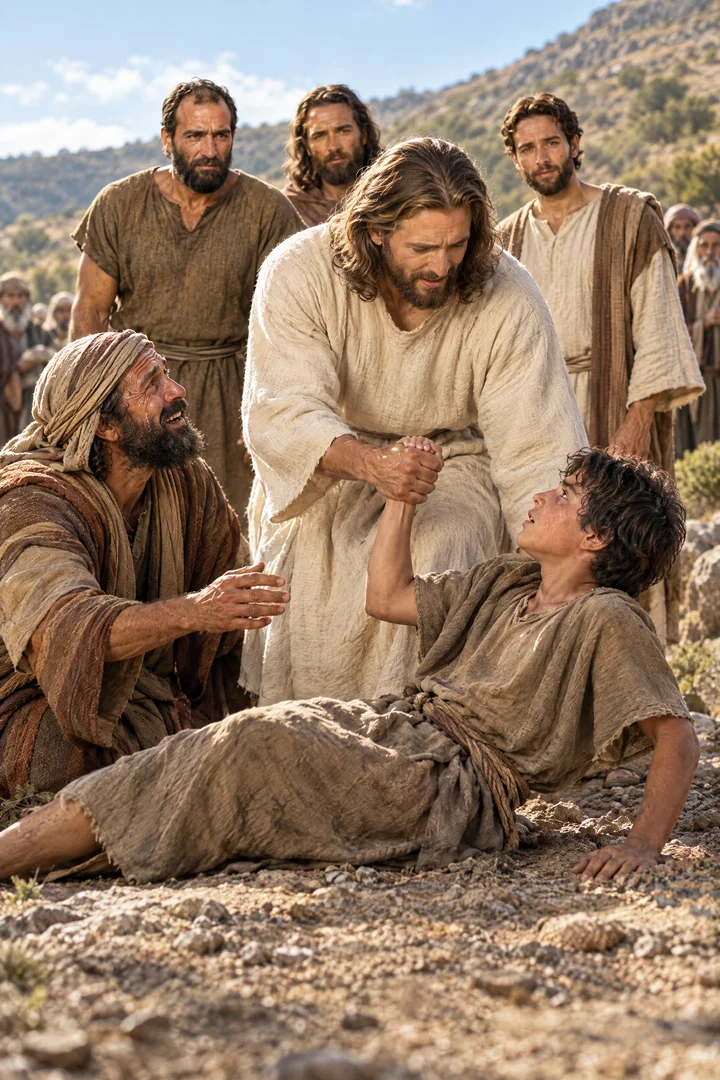
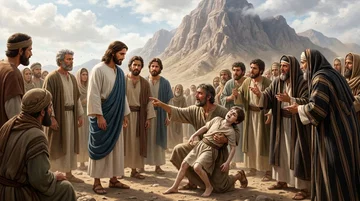
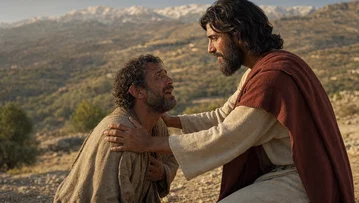
And, behold, a man of the company cried out, saying, Master, I beseech thee, look upon my son: for he is mine only child.
Translations
And, behold, a man of the company cried out, saying, Master, I beseech you, look on my son: for he is my only child.
And, behold, a man of the company cried out, saying, Master, I beseech thee, look upon my son: for he is mine only child.
And behold, a man of the company cried out, saying, Master, I beseech thee, look upon my son: for he is mine only child.
And behold, a man of the company cried out, saying, Master, I beseech thee look upon my son: for he is my only child.
And behold, a man from the multitude cried, saying, Master, I beseech thee to look upon my son; for he is mine only child:
And behold, a man from the multitude cried, saying, Teacher, I beseech thee to look upon my son; for he is mine only child:
and lo, a man from the multitude cried out, saying, 'Teacher, I beseech thee, look upon my son, because he is my only begotten;
And lo, a man from the crowd cried out saying, Teacher, I beseech thee look upon my son, for he is mine only child:
And lo! a man from the multitude, uttered a cry, saying—Teacher! I beg of thee, to look upon my son, because, my only begotten, he is.
Berean Standard Bible, Majority Standard Bible
Suddenly a man in the crowd cried out, “ Teacher, I beg You to look at my son, for he is my only child.
Behold, a man from the crowd called out, saying, “ Teacher, I beg you to look at my son, for he is my only born child.
And a man from among them, crying out, said, Master, I make a request to you, give a thought to my son, for he is my only child:
And beholde, a man of the companie cried out, saying, Master, I beseech thee, beholde my sonne: for he is all that I haue.
Douay-Rheims (Challoner revision)
And behold a man among the crowd cried out, saying: Master, I beseech thee, look upon my son, because he is my only one.
Pictures
Cross-references
- Mark 9:17-27
And one of the multitude answered and said, Master, I have brought unto thee my son, which hath a dumb spirit;
The father brings his afflicted son to Jesus, who frees and heals him.
- Matthew 17:14-18
And when they were come to the multitude, there came to him a certain man, kneeling down to him, and saying,
A father brings his afflicted son to Jesus, who rebukes the devil and heals him.
- Luke 9:1
Then he called his twelve disciples together, and gave them power and authority over all devils, and to cure diseases.
Jesus had earlier given the disciples power over demons and diseases.
Commentary
Each commentary is drawn from primary sources: the writings of Ellen G. White and Adventist pioneers and periodicals. Each commentary is separate. Its own words are not a quotation; follow the references to read the source passages.
Ellen G. White
5 sources
Luke 9:38 belongs to Luke 9:26-62, which must be studied to grasp its meaning so that hearts are in full harmony with Christ and intelligent about His work and what He will do for those who follow on to know the Lord, whose going forth is prepared as the morning with continually increasing light.Ms 72, 1911, par. 1–5 This study prepares for a coming time of trials and persecutions everywhere.Ms 72, 1911, par. 1–5 In this setting the verse shows Christ in this world reflecting light upon the people when the time was nearly come for Him to be taken from them, wanting them to remember all He had said to them.Ms 72, 1911, par. 1–5
The verse is the plea of a father in the crowd for Jesus to look upon his son, who is his only child.DA 426.3–427.22SP 336.1DA 429.2–430.1ST Jan 22, 1902 The child is tormented by an evil spirit, afflicted by Satan and a demon, and suffers agonizing convulsions.DA 426.3–427.22SP 336.1DA 429.2–430.1 The father had first brought the boy to the disciples, but they could not deliver him.DA 426.3–427.2 Jesus meets this plea coming down from the mountain after His transfiguration.2SP 336.1
Jesus lifts the boy from his misery, frees him from the demon's power, and restores him in mind and body to his father and home.2SP 336.1DA 429.2–430.1 The healing is an object lesson of redemption, in which the Divine One stoops from the Father's glory to save the lost.DA 429.2–430.1 It shows that Christ's servants must leave moments of spiritual illumination to help people enslaved by Satan through faith and prayer.DA 429.2–430.1 The boy represents souls enslaved by Satan, who wait for the word of faith and prayer to set them free.ST Jan 22, 1902
Sources
Pioneers and periodicals
19 sources
Immediately after the transfiguration Jesus came down from the mountain to the crowd and suffering people waiting in the valley below, where a man from the company cried out to him as Master, urgently pleading for him to look upon his son because the boy was his only child.ST Sep 27, 1910ST Aug 16, 1905ST Mar 31, 1898RH Jan 4, 1912RH Nov 24, 1910 The only child was seized by a dumb and unclean spirit that made him cry out and foam and bruised him violently, and the father's plea was burdened by the disciples' failure to cast it out when asked, until Jesus answered and healed the boy.ST Sep 27, 1910ST Aug 16, 1905RH Nov 18, 1909ST Oct 9, 1901 The disciples failed through little faith, neglect of prayer, and selfish ambition, and Jesus taught that this kind goes out only by prayer and fasting, calling his servants when their work fails to examine their faith, prayer, and motives in private seeking of God.RH Mar 19, 1914RH Nov 30, 1911 The father's urgent cry is prevailing prayer that Jesus answers, showing how children are to be brought to Jesus in strong and living faith.RH Nov 18, 1909RH Jun 23, 1853 The contrast between the glory of the mount and the sorrow below teaches that time with God prepares for ministry to the needy, for nearness to his heart gives sight of human sin and peril and the love and power to cast out evil and set Satan's captives free in the valley.ST Jun 13, 1900ST Dec 17, 1896RH Jan 4, 1912RH Nov 24, 1910ST May 8, 1901
Context and Affliction
The cry for the only son belongs to what happens immediately after the transfiguration, when Jesus comes down from the mount with his disciples to a crowd and to suffering people waiting below for relief.ST Mar 31, 1898RH Jan 4, 1912RH Nov 24, 1910ST Oct 5, 1904 At the foot of the mount human sorrow was waiting, and a father pleaded there for help for his only son.ST Mar 31, 1898RH Nov 24, 1910ST Oct 5, 1904 The vision of the kingdom on the mountain did not end earthly suffering or the work of caring for those in need, and the contrast with the desire to remain on the mount shows that time with God prepares for ministry to others below.RH Jan 4, 1912RH Nov 24, 1910
A man from the company or crowd cried out to Jesus as Master, urgently pleading with him to look upon his son.ST Mar 31, 1898ST May 14, 1894ST May 14, 1894ST Oct 5, 1904 In his plea he stressed that the boy was his only child.ST Sep 27, 1910ST Aug 16, 1905ST Mar 31, 1898ST May 14, 1894ST May 14, 1894 The request introduces the healing of the child possessed by an unclean and evil spirit.ST May 14, 1894ST May 14, 1894
That only child suffered epilepsy joined with possession by a dumb, unclean, evil spirit.ST Sep 27, 1910ST Aug 16, 1905ST May 14, 1894ST May 14, 1894 The spirit suddenly seized him, made him cry out and foam, bruised him violently, and left him only with difficulty, showing the bodily harm caused by demonic possession.ST Aug 16, 1905ST Oct 9, 1901 The father's hope was burdened because the disciples had been asked to cast the spirit out and could not, and Jesus answered the father and healed the epileptic boy.ST Sep 27, 1910ST Aug 16, 1905RH Nov 18, 1909RH Mar 19, 1914RH Nov 30, 1911 A parent's urgent appeal for a child is thus an example of prayer that Jesus answers.RH Nov 18, 1909
Faith, Failure, and Prayer
The failure of the disciples to cast out the demon from the only child proves they had lost their first love so that the first works were no longer seen, although they had once cast out devils and healed the sick and done mighty miracles.RH Mar 19, 1914 Their inability came from selfishness instead of seeking the glory of God.RH Mar 19, 1914 That selfishness showed itself in reasoning who should be greatest, in striving for positions of honor at Christ's right and left, in raising the question of pay and reward, in losing the missionary spirit, in wanting to call down fire on sinners and to use the sword, and in thus showing they did not know what spirit they were of.RH Mar 19, 1914 It also came from little faith and from lack of courage and reliance on Christ's power and from neglect of prayer.RH Nov 30, 1911
Jesus taught that this kind goes out only by prayer and fasting.RH Nov 30, 1911 When God's work fails, his servants are therefore to seek him privately and to examine their faith and prayer and Bible study and motives, including ambition and jealousy.RH Nov 30, 1911 The father's urgent plea to look upon his only child is an example of the prayer that Jesus answers.RH Nov 18, 1909 It is also an example of bringing children, even infants, to Jesus through strong and living faith.RH Jun 23, 1853
The boy's affliction is bound up with epilepsy as bondage caused by an unclean spirit.RH Mar 7, 1912 The account therefore applies to modern cases of epilepsy as deliverance through prayer and command in Jesus' name.RH Mar 7, 1912
Service in the Valley
The father's plea to look upon his only child belongs to the moment when Jesus and the disciples come down from the mountain to a crowd on the plain below, where suffering people waited for relief.ST Dec 17, 1896RH Jan 4, 1912 That suffering under demonic torment met them at the foot of the mount of transfiguration, setting the glory of the mountain experience against the sorrow and need waiting below.ST Dec 17, 1896RH Nov 24, 1910 The vision of the kingdom on the mountain did not end earthly suffering or the work of caring for those in need.RH Jan 4, 1912 Peter's desire to remain on the mount stands in contrast to those needs below, showing that time with God prepares people to minister to others.RH Nov 24, 1910
The suffering only son held up before Jesus at the foot of the mount is human sin, need, and peril that must be seen in order to be served.ST Jun 13, 1900 Nearness to God's heart in midnight mountain prayer gives sight of man as God sees him, and passion for service is born only in sight of the cross.ST Jun 13, 1900 Only those who have been with Christ on the mount receive that vision and love that makes indifference impossible and gives power to cast out evil spirits in the valley.ST Jun 13, 1900
After the glory of the transfiguration Jesus came down to give the glory of His life to the needy, demon-haunted multitude in the valley, and the father's cry for his only son belongs to that great broad field of sick bodies and dying souls.ST May 8, 1901 That descent from outward triumph to labor, travail, and pain leading to the triumph of saving souls foreshadows the work of Christ's body the church in ministering His life and witnessing to His resurrection after His resurrection and ascension.ST May 8, 1901 The boy brought to Jesus represents souls enslaved by Satan who wait for the word of faith and prayer to set them free.ST Jan 22, 1902 The account of the relapsing demoniac is a parable against the Jews and shows that the Jews have no peculiar blessings in reserve for them.RH Sep 9, 1858
Sources