Mark 10:23
And Jesus looked round about, and saith unto his disciples, How hardly shall they that have riches enter into the kingdom of God!
Translations
And Jesus looked round about, and says to his disciples, How hardly shall they that have riches enter into the kingdom of God!
King James Version, KJV Cambridge Paragraph Bible, Revised Version, American Standard Version
And Jesus looked round about, and saith unto his disciples, How hardly shall they that have riches enter into the kingdom of God!
And Jesus looked around, and saith to his disciples, How hardly shall they that have riches enter into the kingdom of God!
And Jesus having looked round, saith to his disciples, 'How hardly shall they who have riches enter into the reign of God!'
And Jesus looking around says to his disciples, How difficultly shall they that have riches enter into the kingdom of God!
And, looking around, Jesus saith unto his disciples—With what difficulty, shall, they who have money, enter, into the kingdom of God!
Berean Standard Bible, Majority Standard Bible
Then Jesus looked around and said to His disciples, “ How hard it is for the rich to enter the kingdom of God!”
Jesus looked around and said to his disciples, “ How difficult it is for those who have riches to enter into God’ s Kingdom!”
And Jesus, looking round about, said to his disciples, How hard it is for those who have wealth to come into the kingdom of God!
And Iesus looked round about, and sayd vnto his disciples, Howe hardly doe they that haue riches, enter into the kingdome of God!
Douay-Rheims (Challoner revision)
And Jesus looking round about, saith to his disciples: How hardly shall they that have riches, enter into the kingdom of God!
Pictures
Cross-references 20 of 25
- Matthew 19:23-24
Then said Jesus unto his disciples, Verily I say unto you, That a rich man shall hardly enter into the kingdom of heaven.
Jesus says riches make entering the kingdom difficult.
- Luke 18:24-25
And when Jesus saw that he was very sorrowful, he said, How hardly shall they that have riches enter into the kingdom of God!
The rich ruler’s encounter links riches with difficulty entering God’s kingdom.
- 1 Timothy 6:9
But they that will be rich fall into temptation and a snare, and into many foolish and hurtful lusts, which drown men in destruction and perdition.
The desire for riches leads toward spiritual ruin.
- Matthew 6:24
No man can serve two masters: for either he will hate the one, and love the other; or else he will hold to the one, and despise the other. Ye cannot serve God and mammon.
Serving wealth conflicts with serving God.
- 1 Timothy 6:17-19
Charge them that are rich in this world, that they be not highminded, nor trust in uncertain riches, but in the living God, who giveth us richly all things to enjoy;
Both warn the rich not to trust riches, but to seek life to come.
- Luke 12:15
And he said unto them, Take heed, and beware of covetousness: for a man’s life consisteth not in the abundance of the things which he possesseth.
Warns against making possessions the basis of life.
- Matthew 6:19-21
Lay not up for yourselves treasures upon earth, where moth and rust doth corrupt, and where thieves break through and steal:
Both contrast earthly riches with heavenly treasure.
- Matthew 13:22
He also that received seed among the thorns is he that heareth the word; and the care of this world, and the deceitfulness of riches, choke the word, and he becometh unfruitful.
Riches can choke the word and hinder faith.
- James 5:1-3
Go to now, ye rich men, weep and howl for your miseries that shall come upon you.
Warns that hoarded riches bring ruin and judgment.
- Mark 10:27
And Jesus looking upon them saith, With men it is impossible, but not with God: for with God all things are possible.
God makes salvation possible when people cannot.
- Luke 12:33-34
Sell that ye have, and give alms; provide yourselves bags which wax not old, a treasure in the heavens that faileth not, where no thief approacheth, neither moth corrupteth.
Giving possessions for heavenly treasure reveals the heart’s priorities.
- Luke 14:33
So likewise, whosoever he be of you that forsaketh not all that he hath, he cannot be my disciple.
Both require forsaking all to follow Christ.
- 2 Corinthians 8:9
For ye know the grace of our Lord Jesus Christ, that, though he was rich, yet for your sakes he became poor, that ye through his poverty might be rich.
Christ became poor for humanity’s sake.
- 1 Timothy 6:10
For the love of money is the root of all evil: which while some coveted after, they have erred from the faith, and pierced themselves through with many sorrows.
The love of riches leads to many kinds of evil.
- Mark 4:19
And the cares of this world, and the deceitfulness of riches, and the lusts of other things entering in, choke the word, and it becometh unfruitful.
Riches choke the word and hinder entrance into God’s kingdom.
- Matthew 6:20
But lay up for yourselves treasures in heaven, where neither moth nor rust doth corrupt, and where thieves do not break through nor steal:
Both teach that heavenly treasure matters more than earthly riches.
- Philippians 3:7-8
But what things were gain to me, those I counted loss for Christ.
Knowing Christ leads a person to count former gains as loss.
- Ezekiel 7:19
They shall cast their silver in the streets, and their gold shall be removed: their silver and their gold shall not be able to deliver them in the day of the wrath of the LORD: they shall not satisfy their souls, neither fill their bowels: because it is the stumblingblock of their iniquity.
Silver and gold cannot deliver in wrath and become a stumbling block.
- Mark 8:36
For what shall it profit a man, if he shall gain the whole world, and lose his own soul?
Asks whether gaining the world is worth losing one’s soul.
- Ecclesiastes 5:10
He that loveth silver shall not be satisfied with silver; nor he that loveth abundance with increase: this is also vanity.
Both texts warn that wealth cannot satisfy and hinders the kingdom’s riches.
Commentary
Each commentary is drawn from primary sources: the writings of Ellen G. White and Adventist pioneers and periodicals. Each commentary is separate. Its own words are not a quotation; follow the references to read the source passages.
Ellen G. White
13 sources
Jesus spoke looking round upon His disciples just after the young man who claimed to have kept the commandments was loved, told to sell all and give to the poor for treasure in heaven and to take up the cross and follow, and went away grieved because he had great possessions.Ms 141, 1909, par. 9–12 To enter hardly means to enter with great hardness and difficulty, and the hardness is trusting in riches.Ms 43, 1900, par. 48Ms 141, 1909, par. 9–12 Riches shut men out when they become an idol that draws the heart from following Christ, so that men cling to earthly treasure and trust in it instead of God, while absorption in gain makes them worshipers of Mammon whom no man can serve together with God.Ms 43, 1900, par. 48Ms 20, 1902, par. 14COL 393.3–394.4RH Mar 5, 19082T 680.3–4 Wealth gives no claim to heaven, for salvation is impossible by human power but possible with God, so rich and poor alike enter only through His free grace.Ms 43, 1900, par. 48COL 390.1COL 393.3–394.4 Those who belong to God hold possessions as talents entrusted to be wisely used as He directs, especially to help the poor and suffering and to save the lost, which requires the heart's full consecration in following Christ rather than unwilling sacrifice.Ms 141, 1909, par. 9–12Ms 60, 1897, par. 12–14Lt 3, 1897, par. 14–16COL 393.3–394.4
Context and Meaning
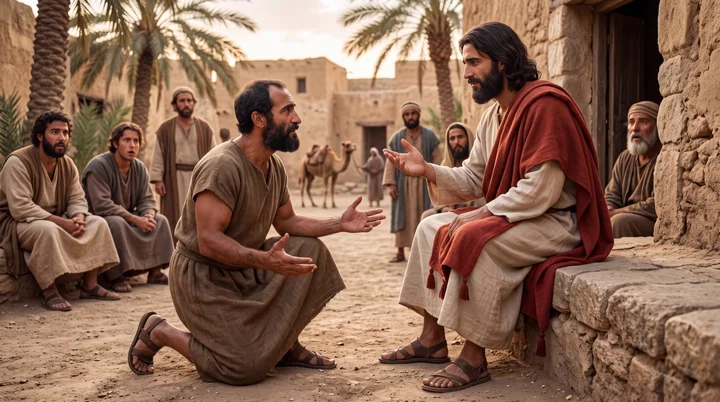
Jesus looked round about to His disciples and spoke this warning immediately after the encounter with the young man who sought eternal life.Ms 141, 1909, par. 9–12 That man came running and kneeled asking how to inherit eternal life, claimed to have kept the commandments from his youth, and was loved even as he was told to sell all he had and give to the poor to have treasure in heaven and to take up the cross and follow.Ms 141, 1909, par. 9–12 He went away sad and grieved because he had great possessions, and it was to His disciples in that moment that Jesus spoke of how hardly the rich enter the kingdom of God.Ms 141, 1909, par. 9–12
The event belongs with the teaching that prepared Jesus to set forth the right principles of God's free grace.COL 390.1 The phrase about how hardly they enter means entry with great hardness and difficulty.Ms 43, 1900, par. 48Ms 141, 1909, par. 9–12 That hardness is trusting in riches, as the words that follow make clear.Ms 43, 1900, par. 48Ms 141, 1909, par. 9–12 Christ spoke the warning with the certainty of one who knew, having visited places where love of gain ruled men.RH Mar 5, 1908
Why Riches Hinder Entry
Riches hinder entry into the kingdom of God when possessions become an idol that draws the heart away from following Christ.Ms 43, 1900, par. 48COL 393.3–394.4 People cling to earthly treasure and put their trust in it instead of trusting God and His promises.Ms 43, 1900, par. 48COL 393.3–394.42T 680.3–4 The danger lies especially in this trusting in riches, which makes entrance difficult.Ms 43, 1900, par. 482T 680.3–4
Being absorbed in gaining worldly riches occupies the thoughts and energies and makes men worshipers at the shrine of Mammon.Ms 20, 1902, par. 14RH Mar 5, 1908 No one can serve two masters, and no one can serve both God and Mammon.RH Mar 5, 1908 This warning reaches even to the use of God-given abilities, when they are employed to gain advantage over others rather than faithfully developed and used.Ms 20, 1902, par. 14
Love of wealth can overpower the mind, fostering selfishness and hoarding.2T 680.3–4 The more people acquire, the more they may fear future need and desire still more, and those who put their trust in riches are poor toward God.2T 680.3–4 The same warning exposes a grasping, mercenary longing for wealth and power even among the disciples, who were not wholly free from that spirit.COL 390.1COL 393.3–394.4
Wealth can also tempt toward indulgence and habits that ruin both soul and body.CH 15.1–3 Those who possess riches may trust in them and fail to recognize their spiritual danger.CH 15.1–3
Grace and Faithful Stewardship
Wealth gives no claim to heaven, for God's favor and the righteous reward cannot be earned by works, and the encounter with the rich young ruler prepared the way to teach the right principles of free grace.Ms 43, 1900, par. 48COL 390.1COL 393.3–394.4 Salvation is impossible by human power but possible with God, so rich and poor alike enter only through Christ's unearned grace.Ms 43, 1900, par. 48COL 393.3–394.4 Though a heart bound to wealth cannot free itself, God can change it through the love of Christ so that the rich become servants of others.COL 393.3–394.4 The riches that endure to eternal life are not houses or land, and Christ became poor so that people might receive these lasting riches.Ms 60, 1897, par. 12–14
When people recognize that they belong to God, they hold possessions and other abilities as talents entrusted by Him to be wisely used as He directs.Ms 60, 1897, par. 12–14COL 393.3–394.4 That stewardship is especially to help the distressed, poor, and suffering, to save the lost and relieve suffering, and faithful use helps reshape and uplift those in need.Ms 60, 1897, par. 12–14COL 393.3–394.4 The danger is not merely possessing wealth but trusting in it and relying on one's own ideas and choices.Ms 43, 1900, par. 49 Wealthy people may give to God's cause yet still fail to surrender control of how their means are used, whereas wealth should be invested where God's blessing can make it fruitful.Ms 43, 1900, par. 49
The rich young ruler chose earthly possessions over heavenly treasure, showing that discipleship requires the heart's full consecration and obedience in following Christ and using gifts for God's glory, not unwilling sacrifice.Ms 141, 1909, par. 9–12Lt 3, 1897, par. 14–16 The warning represents some now whom the Lord is calling to engage in His service.Ms 141, 1909, par. 9–12 It presses the superiority of eternal things over present life, calling men to let the interests of eternity shape how they think and work now.RH Mar 5, 1908 The deceitfulness of riches can lead people to forget they are stewards who must answer to God, so the warning applies to Christians in every occupation whose resources and abilities bring responsibility to support God's work.ST Jan 29, 18804T 468.3 Ministers who abandon their work and businesspeople who withhold effort or means from advancing God's cause misuse their gifts, while all believers share responsibility to work with Christ.ST Jan 29, 18804T 468.3 Because of this peril, the rich need the gospel and earnest help to understand temperance and their responsibility to use resources well, since wealth can tempt toward indulgence and habits that ruin soul and body.CH 15.1–3
Sources
Pioneers and periodicals
33 sources
Those who have riches enter the kingdom of God with great difficulty, and few wealthy people will enter it, for material prosperity is a dangerous spiritual test that can make faithfulness harder than adversity.RH Nov 30, 1916ST Mar 7, 1906 The hardness lies not in merely having riches, which is not itself sin, but in trusting in them and setting the heart upon them instead of depending on God for life's necessities.ST Aug 24, 1904ST Jan 22, 1880ST Mar 31, 1887 Riches hinder entry when attachment to possessions keeps a person from obeying Christ's call to self-sacrifice, to sell and give and follow Him, and when gaining and keeping wealth becomes the main purpose of life while eternal life is neglected.RH Jul 6, 1916RH Dec 17, 1872RH Mar 16, 1916 They make entry very hard through covetousness and idolatry, for wealth becomes an idol claiming supreme affection, and no one can trust in gold and in God at the same time or serve both God and Mammon.RH Mar 5, 1908RH Mar 25, 1915ST Nov 14, 1900ST Aug 24, 1904ST Feb 10, 1898 Wealth is a trust from God to be used wisely in His service, with the kingdom put first and possessions placed at His disposal to support His work and to help the poor, the suffering, and the needy.ST Jul 30, 1894ST Aug 24, 1904RH Apr 8, 1875
Setting and Wording
The words belong to the story of a rich young ruler who came eagerly, even running and kneeling, to ask what good thing he should do to inherit eternal life and receive salvation.ST Sep 26, 1906RH Sep 4, 1866 Jesus loved him when He saw him, for he was in many respects lovely and promising, not corrupted by many leading sins of his age, with a sincere desire to be saved, and he thought he had kept the commandments and had tried to keep them as far as he understood them.RH Sep 4, 1866 The test put to him showed he had not kept them all, since to keep them is to love the Lord supremely and his neighbor as himself, to be willing to impart of his substance to those in need in order to have treasure in heaven, and to follow Jesus.RH Sep 4, 1866
The saying stands in Mark's account of Jesus' life and teachings, whose first ten chapters present Him as a glorious King marked by power joined with love, benevolence joined with justice, humility, respect for the least, and selfless care for those He benefits.RH Oct 30, 1860 It is also connected with the family histories of the patriarchs as lessons for later generations, whose experiences are types and precedents written for admonition, with Jesus directing readers to learn from them.ST Oct 27, 1898
Jesus spoke the words to His disciples while looking round about at them, and the force of His words was conveyed by His piercing look.RH Mar 25, 1915RH Jul 15, 1858 The disciples were astonished at His words, for they had been taught to regard the wealthy as favored by heaven, and the story of the rich young man challenged that belief.ST Mar 5, 1902RH Mar 25, 1915
Those who have riches enter the kingdom of God with great difficulty, and few wealthy people will enter it.RH Nov 30, 1916RH Oct 15, 1861 Material prosperity is a dangerous spiritual test that can make faithfulness harder than adversity.ST Mar 7, 1906 The saying therefore warns the rich against spiritual danger and cautions Christians not to grieve over lacking wealth or worldly ease, since riches are a spiritual danger rather than a necessary good.RH Oct 15, 1861
The hardness lies in the word trust: it is not the having of riches that makes one an idolater, but trusting in them.ST Aug 24, 1904ST Jan 22, 1880 Having riches is not itself sin, for God gives some power to get wealth, but possessing them is a great danger, and the sin comes in setting the heart upon riches and depending on possessions rather than on God for life's necessities.ST Aug 24, 1904ST Jan 22, 1880ST Mar 31, 1887 It is next to impossible for one who has riches to keep from setting his heart upon them, and so neglecting to trust in the living God and forgetting that it is God who gives all things richly to enjoy.ST Mar 31, 1887 The camel and the needle's eye illustrates the impossibility of entering the kingdom while trusting in riches.ST Jan 22, 1880
Hindrance and Required Response
Riches hinder entry when attachment to possessions keeps a person from obeying Christ's call to self-sacrifice and following him.RH Jul 6, 1916RH Jul 29, 1909 The young ruler had kept the law's precepts but would not sell his possessions and follow Jesus, and his great wealth led him to leave sorrowful.RH Jul 6, 1916RH Dec 17, 1872RH Jul 29, 1909 Had he been willing to give up his possessions, he could have become a joint heir with Christ and received glory, honor, immortality, and eternal life.RH Jul 6, 1916 In the same way the desire for wealth can keep people from coming to the Lord and being saved, hinder devotion to God and pursuit of eternal life, and choke God's word, especially when gaining and keeping wealth is treated as the main purpose of life while effort and prayer for the life to come are neglected.RH Dec 17, 1872RH Mar 16, 1916RH Jul 29, 1909 Accumulating money for its own sake is a great evil, and abundance does not satisfy, and the warning applies to anyone who puts wealth ahead of God's truth and refuses to use possessions to support God's work.RH Mar 16, 1916RH Jul 29, 1909
Riches make entry very hard because of covetousness and idolatry.RH Mar 25, 1915 The rich young man was nominally a commandment keeper who paid tithe, made offerings, and kept the Sabbath and was considered ideal, yet he was covetous and unwilling to forsake all.RH Mar 25, 1915 When told to sell whatsoever he had and give to the poor and take up the cross and follow, he was sad and went away grieved because he had great possessions, and his covetousness proved his eternal ruin.RH Mar 25, 1915ST Feb 10, 1898 His wealth was an idol that he coveted along with his reputation more than doing God's will, so his obedience was selfish and incomplete, and Jesus' test exposed that selfishness.RH Mar 25, 1915ST Feb 10, 1898 Paying an honest tithe, giving weekly to missions, and keeping the Sabbath can ease conscience yet leave a person covetous, for God demands more than tithes and offerings.RH Mar 25, 1915 All who would follow Christ must renounce ownership and accept stewardship and place everything at His service, and covetousness is not confined to the rich but is just as common among the poor and dwells by nature in every heart.RH Mar 25, 1915
Riches hinder when they become an idol and claim devotion, with worldly gain occupying thoughts and energies and making men worshipers at the shrine of Mammon.RH Mar 5, 1908ST Nov 14, 1900 The ruler's sorrow showed how difficult it was to give up the object he had worshiped in order to follow Christ, and devotion to silver and gold becomes the stumbling-block of iniquity that comes between people and God.ST Nov 14, 1900ST Aug 24, 1904 No one can serve two masters and no one can serve both God and Mammon, for whatever is supreme in the affections is a god, and no one can trust in gold and in God at the same time.RH Mar 5, 1908ST Aug 24, 1904 Entry requires more than outward or legal obedience: God's law must shape life and character, and a person must yield all that they have and are to God, letting the interests of eternity shape how they think and work now.RH Mar 5, 1908ST Nov 14, 1900 Trust that treasure will deliver in the day of wrath is false; riches instead work destruction and everlasting undoing, and when the rich see this they hurl their gold and silver from them in utter despair.ST Aug 24, 1904
Riches are deceitful and tend to turn the mind and heart from God and heavenly things, foster selfishness, and weaken the spiritual power needed for conversion.ST Jan 11, 1883ST Jun 1, 1904 Eagerness to gain or enjoy wealth can draw attention away from the soul and the heavenly inheritance, leaving earthly things as a person's only portion.ST Sep 28, 1882 They can encourage appetite and endless accumulation, draw people into worldly company, and burden life until religious reflection and service are crowded out, lessen a sense of dependence on God and the continued trust that gives rise to heartfelt prayer, while earthly comforts dim the appeal of heaven.ST Sep 20, 1883 These effects can numb and burden spiritual life and make death terrible, and the desire for wealth and the cares of this life can become a snare that keeps people from everlasting life.ST Sep 20, 1883RH Dec 17, 1872 The warning applies to professed followers of Jesus today who lay up treasure on earth and strive for money while refusing to fear being deceived, calling people to resist the love of wealth and prepare for eternal life by laying up a lasting foundation.ST Jun 1, 1904RH Dec 17, 1872
Wealth, high position, and human praise are not proof of God's favor and may point in the opposite direction.ST Aug 5, 1886 Rich people are not shut out by Jesus; they shut themselves out by clinging to riches, for riches have no purchasing power at the throne of grace.ST Sep 16, 1889 Farms, cattle, gold, and silver cannot save anyone.RH May 20, 1858 A selfish spirit precludes receiving eternal life even as a gift, and clinging to wealth when the poor are around proves failure to keep the commandment to love his neighbor as himself. Jesus loved the rich man and wanted him to have the gift of eternal life, but as long as he loved earthly riches more than the riches of God, which is eternal life, he could not enter.ST Sep 16, 1889 Those who are saved recognize that earthly things are worth nothing beside God, keep the commandments, and place their wealth at God's service and use it for his glory rather than clinging to worldly wealth, giving what they can to spread truth.RH May 20, 1858ST Sep 16, 1889
Trusting riches means making lands, houses, bank deposits, stocks and bonds a defense and refuge in stress and trouble instead of the changeless promises of God, feeling safe only if rich, refusing to commit keeping and destiny to God, refusing to seek first the kingdom of God and trust Him to supply temporal needs, and being kept from the rest Christ offers through fear, unrest, and anxious foreboding.ST Aug 24, 1904 Wealth is a trust from God, meant to be used wisely alongside talents and influence in service with God, and the rich forget they are stewards who must answer to him for how they use gifts.ST Jul 30, 1894ST Jan 29, 1880 Concern about financial security can lead people to put earthly provision ahead of the kingdom and turn away from obedience, as the young man did; those waiting for Jesus' return are to make the kingdom their first concern and trust God for needs in this life, with giving to help others and storing treasure in heaven testing where hearts are.ST Jan 22, 1880 This brings responsibility in every occupation to support God's work and to help the poor, especially the oppressed, hungry, naked, suffering, sick, and needy, even by self-denial of food and raiment.ST Jul 30, 1894ST Jan 29, 1880 Having plenty while letting a fellow believer suffer is a reproach, and a religion that does not teach this care is spurious. The wealthy are called to give up some of the care and burden of possessions by sending resources forward for God's work and giving what they can to spread truth, using wealth to serve others to restore character and gain heavenly treasure.ST Jul 30, 1894RH Apr 8, 1875
Sources