Mark 10:22
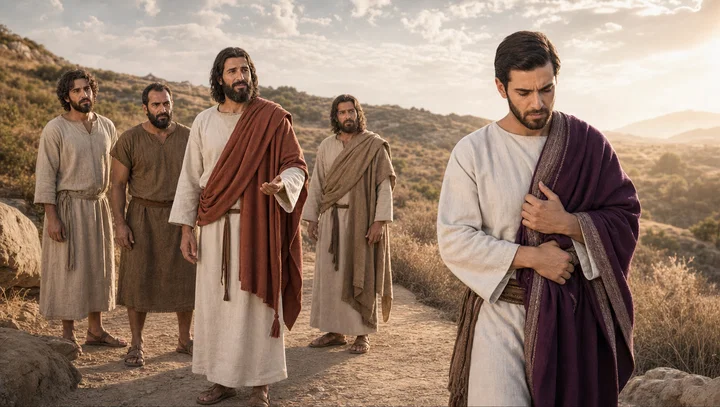
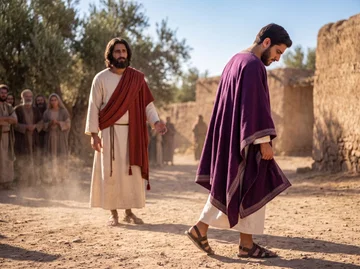
And he was sad at that saying, and went away grieved: for he had great possessions.
Translations
American King James Version, King James Version, KJV Cambridge Paragraph Bible, Webster Bible
And he was sad at that saying, and went away grieved: for he had great possessions.
Revised Version, American Standard Version
But his countenance fell at the saying, and he went away sorrowful: for he was one that had great possessions.
And he — gloomy at the word — went away sorrowing, for he was having many possessions.
But he, sad at the word, went away grieved, for he had large possessions.
And, he, becoming gloomy because of the word, departed sorrowing, for he was holding, many possessions.
Berean Standard Bible, Majority Standard Bible
But the man was saddened by these words and went away in sorrow, because he had great wealth.
But his face fell at that saying, and he went away sorrowful, for he was one who had great possessions.
But his face became sad at the saying, and he went away sorrowing: for he was one who had much property.
But hee was sad at that saying, and went away sorowfull: for he had great possessions.
Douay-Rheims (Challoner revision)
Who being struck sad at that saying, went away sorrowful: for he had great possessions.
Pictures
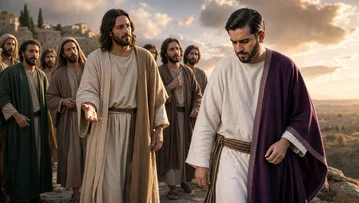
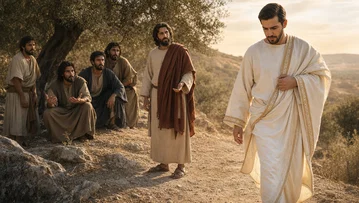
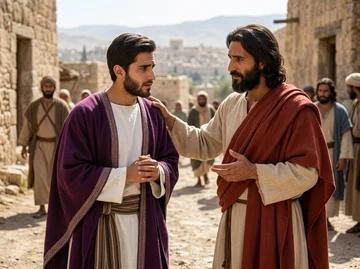
Cross-references 20 of 28
- Matthew 19:16-22
And, behold, one came and said unto him, Good Master, what good thing shall I do, that I may have eternal life?
parallel account of same encounter
- Luke 18:22-23
Now when Jesus heard these things, he said unto him, Yet lackest thou one thing: sell all that thou hast, and distribute unto the poor, and thou shalt have treasure in heaven: and come, follow me.
The ruler becomes sorrowful because he is very rich after Jesus’ demand.
- Matthew 6:19-21
Lay not up for yourselves treasures upon earth, where moth and rust doth corrupt, and where thieves break through and steal:
The young man rejects heavenly treasure because he is attached to earthly wealth.
- Mark 10:17
And when he was gone forth into the way, there came one running, and kneeled to him, and asked him, Good Master, what shall I do that I may inherit eternal life?
The young man asks how to inherit eternal life, leading to his sorrowful departure.
- Matthew 6:24
No man can serve two masters: for either he will hate the one, and love the other; or else he will hold to the one, and despise the other. Ye cannot serve God and mammon.
The rich man’s attachment to possessions shows divided allegiance between God and wealth.
- Matthew 19:16-20
And, behold, one came and said unto him, Good Master, what good thing shall I do, that I may have eternal life?
Parallel account of Jesus’ encounter with the wealthy man.
- Luke 12:15
And he said unto them, Take heed, and beware of covetousness: for a man’s life consisteth not in the abundance of the things which he possesseth.
Jesus warns against covetousness, illustrated by the rich man’s grief at leaving his possessions.
- 1 Timothy 6:18
That they do good, that they be rich in good works, ready to distribute, willing to communicate;
Urges the wealthy to share and use riches for good works.
- 1 Timothy 6:9-10
But they that will be rich fall into temptation and a snare, and into many foolish and hurtful lusts, which drown men in destruction and perdition.
The desire for riches ensnares people and can turn them from faith.
- Matthew 19:23
Then said Jesus unto his disciples, Verily I say unto you, That a rich man shall hardly enter into the kingdom of heaven.
Jesus explains the difficulty of the rich entering the kingdom after the young man's departure.
- Luke 14:33
So likewise, whosoever he be of you that forsaketh not all that he hath, he cannot be my disciple.
Both texts show that following Christ requires forsaking all.
- Matthew 13:22
He also that received seed among the thorns is he that heareth the word; and the care of this world, and the deceitfulness of riches, choke the word, and he becometh unfruitful.
Riches and worldly cares choke the word and prevent fruitfulness.
- Matthew 19:22
But when the young man heard that saying, he went away sorrowful: for he had great possessions.
The ruler leaves sorrowful because he has great possessions.
- Matthew 19:24
And again I say unto you, It is easier for a camel to go through the eye of a needle, than for a rich man to enter into the kingdom of God.
Jesus teaches about the difficulty riches pose for entering God's kingdom.
- Mark 10:18
And Jesus said unto him, Why callest thou me good? there is none good but one, that is, God.
Christ’s answer precedes the ruler’s decision.
- Luke 12:19-21
And I will say to my soul, Soul, thou hast much goods laid up for many years; take thine ease, eat, drink, and be merry.
Both contrast hoarding on earth with being rich toward God.
- Luke 12:33-34
Sell that ye have, and give alms; provide yourselves bags which wax not old, a treasure in the heavens that faileth not, where no thief approacheth, neither moth corrupteth.
Giving to the poor tests attachment to possessions and directs the heart toward heavenly treasure.
- Matthew 16:26
For what is a man profited, if he shall gain the whole world, and lose his own soul? or what shall a man give in exchange for his soul?
Both warn that wealth profits nothing if the soul is lost.
- Philippians 3:7-8
But what things were gain to me, those I counted loss for Christ.
Paul counted former gains as loss for Christ, unlike the grieving rich man.
- Mark 4:19
And the cares of this world, and the deceitfulness of riches, and the lusts of other things entering in, choke the word, and it becometh unfruitful.
Worldly cares and riches choke the word.
Commentary
Each commentary is drawn from primary sources: the writings of Ellen G. White and Adventist pioneers and periodicals. Each commentary is separate. Its own words are not a quotation; follow the references to read the source passages.
Ellen G. White
37 sources
The verse tells of a young ruler of great possessions and responsibility who ran to Christ and knelt asking what he must do to inherit eternal life, and who when told to sell what he had and give to the poor and take up the cross and follow Him for treasure in heaven was sad and went away grieved.DA 518.1–3Ms 141, 1909, par. 9–12ST Oct 28, 1908 He thought his outward keeping of the commandments from his youth was enough, yet he felt a lack he could not satisfy and did not see that true obedience requires a humble heart, supreme love for God, love for others, and trust in Christ.DA 518.5DA 518.6DA 519.2 His riches held his affections and had become his idol, so though he wanted eternal life he judged the sacrifice too costly and preferred his wealth, honor and power to Christ.Lt 3, 1897, par. 6–10CET 164.3ST Oct 28, 19084T 50.2Lt 3, 1897, par. 14–16 Jesus looked on him with pity and love and gave him the only terms that could perfect his character, calling him to a self-denying life of doing good with his means, but he would not withdraw his affections from his treasures and turned sorrowfully back to the world.2T 679.1–680.1ST Mar 11, 1889ST Mar 11, 1889DA 520.24T 49.3–50.1 His turning is an ordeal thousands still pass through in weighing Christ against the world, and to turn from the Saviour as he did is to say in the heart against following Him.ST Oct 28, 1908DA 523.1Ms 43, 1900, par. 49
Ruler's Visit and Grief
Mark 10:22 concerns a young ruler of great possessions and responsible position.DA 518.1–3ST Oct 28, 1908 He had watched how tenderly Christ received the children brought to Him and took them up in His arms, and his heart was kindled with love for Christ and with desire to be His disciple.DA 518.1–3 So deeply moved, as Christ went on His way he ran after Him and kneeled at His feet and asked with sincerity and earnestness what he must do to inherit eternal life.DA 518.1–3 That question was important to his own soul and to the soul of every human being, for though sincerely drawn to Jesus he felt a lack he could not satisfy.DA 518.1–3ST Oct 28, 1908
He had a high estimate of his own righteousness and did not think himself defective in anything, yet he was not altogether satisfied and felt the want of something he did not possess.DA 518.5ST Oct 28, 1908 He hoped Jesus would bless him as He had blessed the little children and satisfy his soul want.DA 518.5 In talk about how to obtain eternal life Christ told him obedience to the commandments of God was necessary and quoted those showing duty to fellow men.DA 518.6 He answered that he had kept all these from his youth up and asked what he still lacked.DA 518.6
His outward obedience did not include what he needed, a humble, contrite heart and supreme love for God.DA 519.2 He lacked discernment of his need for heart devotion and Christian goodness, and needed to trust in Christ's perfection to supply what was lacking.DA 519.2 The verse belongs to the One thing thou lackest account in Mark 10:17-22, which is the same account told in Matthew 19:16-22 and Luke 18:18-23.DA 517.6
It belongs to the event just before the parable of the laborers that opened the way to present right principles of reward.COL 390.1 That setting exposes the loss of the truth of God's free grace, the teaching that God's favor must be earned and the reward of the righteous gained by works.COL 390.1 It exposes worship prompted by a grasping, mercenary spirit from which even the disciples were not wholly free.COL 390.1
The verse represents some whom the Lord is calling to engage in His service.Ms 141, 1909, par. 9–12 When told to sell what he has and give to the poor and to take up the cross and follow Christ for treasure in heaven, the young man is sad and goes away grieved because he has great possessions.Ms 141, 1909, par. 9–12 It belongs to the account in which Jesus presented the rich young ruler with the condition of discipleship, which Judas thought was a mistake, believing that a man of the ruler's wealth and standing could help sustain Christ's cause.DA 719.3
Why He Went Away
His great possessions held his affections, for his riches had become his idol, and unless he shifted his love from them to heavenly treasure they would overcome him and corrupt what was good in him.Lt 3, 1897, par. 6–10Lt 3, 1897, par. 14–16 He would not accept the call to give to the poor and follow Christ, would not surrender his riches or use his gifts for God's glory, but preferred them to Christ.Lt 3, 1897, par. 6–10Lt 3, 1897, par. 14–16
The call to give up his possessions and follow exposed the selfishness and covetousness in his heart, for though he had kept the commandments outwardly and professed to keep them, he lacked their essential spirit of love for God and other people.Lt 63, 1893, par. 22–25Ms 58, 1896, par. 20COL 392.1 That call tested whether he possessed the love and self-sacrifice that are the test of character at the final judgment, and his love of self and worldly gain was out of harmony with heaven and left him unfit for its kingdom.Ms 58, 1896, par. 20COL 392.1 His attachment to wealth kept him from accepting Christ's call.Lt 63, 1893, par. 22–25
Though he claimed to have kept the commandments since youth, his going away sorrowful when told to sell, give to the poor, and follow exposed his self-deception.ST Oct 29, 1912ST Oct 22, 1894 He did not understand what obedience to God's law required, and his attachment to wealth revealed his ignorance of the depth and significance of God's law.ST Oct 29, 1912ST Oct 22, 1894
He had been given the only terms that could place him where he would perfect a Christian character, and accepting and obeying was his only hope of salvation.DA 520.2 The demand appeared severe and exacting but was wisdom.DA 520.2 His sadness exposed that his exalted position and great possessions were exerting a subtle influence for evil upon his character, and if cherished they would supplant God in his affections.DA 520.2 To keep back little or much from God was to retain what would lessen moral strength and efficiency, for when things of this world are cherished, however uncertain and unworthy they are, they become all-absorbing.DA 520.2
He understood the demand but was unwilling to give up the worldly advantages, benefits, prospects, honor and power his wealth offered.ST Oct 28, 19084T 50.2DA 520.3 He wanted eternal life and heavenly treasure, yet judged the sacrifice too costly, so his desire was chilled and did not outweigh his attachment to wealth.CET 164.3ST Oct 28, 1908 His sorrow and departure show his great possessions stood in the way of following Christ, and his love of money and power led him to turn away from immortal life.4T 50.2DA 520.3
His love for earthly riches was stronger than his love for God, his fellow men, and the immortal inheritance, and few realize how strong that love is until the test is brought to bear.ST Mar 11, 1889 When the way to life was pointed out and the cost estimated, he would not withdraw his affections from his treasures and transfer them to heaven by doing good with them, blessing the widow and fatherless, and becoming rich in good works.ST Mar 11, 1889 He withheld from the poor what could have met their needs and did not love his neighbor as himself, showing the danger that wealth can hold affections away from God and the immortal reward.ST Mar 11, 18894T 49.3–50.1 The greater the treasures laid up on earth the harder it is to realize they are not his own but lent to be used to God's glory.ST Mar 11, 1889 He wanted both worlds but rejected the offer of treasure in heaven because he would not comply with the conditions, and sacrificed heaven with all its glory for the treasures of the world.ST Mar 11, 1889
His possessions and standing among people mattered more to him than following Christ and receiving eternal life.RH Jan 12, 1905DA 520.4 He loved God's gifts more than their Giver and could not keep the commandments while the world held first place.DA 520.4 He judged the loss of visible earthly treasure for unseen heavenly treasure too great a risk, could not exchange one for the other, refused the offer and went away grieving.RH Jan 12, 1905DA 520.4 His possessions belonged to God and were entrusted to him to help the poor and relieve suffering, and surrendering them was the condition he would not accept.RH Jan 12, 1905
His refusal teaches that obedience is more than outward rule-keeping and must shape the life and character.DA 523.2 Discipleship requires obedience and self-surrender, and whatever would corrupt the whole person must be given up, because nothing less than obedience can be accepted.DA 523.4 Those who would belong to God's kingdom must be willing to give Christ all they have and all they are, becoming co-workers in His work.DA 523.2 Christ offers to use people and their means in His work, and surrendering to that work is the way He saves them, but the ruler was unwilling to accept the self-sacrificing love and complete surrender required, so he turned away sorrowfully and his grief shows the cost of desiring heaven while rejecting Christ's conditions.DA 523.2COL 392.2–393.2
A man can profess to keep the commandments and be exact in tithing mint and rue yet still be close and covetous at heart.1T 207.2 Unwillingness to sacrifice proves the want of the true spirit of sacrifice acceptable to God, when economy is stretched into meanness and weightier matters are neglected for a rigid, watching, judging spirit toward others.1T 207.2 He wanted eternal life and was willing to keep the commandments but loved possessions more, and worldly cares and the deceitfulness of riches choke the word and make it unfruitful, so those who refuse to understand important truth are left without excuse as their light fades into darkness.CET 166.2
He valued his great wealth too highly to give it up and follow Jesus.ST Mar 30, 1876 Though he wanted eternal life, he refused the sacrifice required and chose earthly treasure over heaven, and his decision fixed his destiny.ST Mar 30, 1876
Choice Warns Still Today
Jesus looked on him with pity and love and laid bare the defect in his character, that he had not kept the commandments from the heart because his earthly treasures were his idol and eclipsed the value of the eternal inheritance.2T 679.1–680.1ST Mar 11, 1889 He was called to imitate Christ's own self-denying, cross-bearing life of leaving everything for the salvation of man by selling all he had, giving to the poor, taking up the cross and following Him, with the promise of treasure in heaven.2T 679.1–680.1ST Mar 11, 1889 He did not leap with joy at that assurance but turned sorrowfully from the cross and from the Redeemer's self-sacrificing life back to this world.2T 679.1–680.1ST Mar 11, 1889 Though he kept a lingering desire for the heavenly inheritance, his heart was set on his great possessions and his love for them was stronger than his love for his fellow men and for the immortal inheritance.2T 679.1–680.1ST Mar 11, 18892T 680.2 After a struggle he reluctantly decided to continue loving his earthly treasures, wanting both worlds yet rejecting Christ's inducement and sacrificing heaven with all its attractive glory for the world.2T 679.1–680.1ST Mar 11, 18892T 680.2 He would not transfer his treasure to heaven by withdrawing his affections from riches and doing good with them in blessing the widow and fatherless and being rich in good works.2T 679.1–680.12T 680.2
He chose his possessions and his standing in the world over Christ's invitation to follow Him and receive eternal life, and his sorrow did not lead him to surrender his riches.ST Oct 28, 1908 His claim to keep God's law was false because he loved God's gifts more than God and placed the world first, judging the unseen heavenly treasure too great a risk beside the earthly wealth he could see, and his refusal and turning away amounted to giving the world his worship.ST Oct 28, 1908 His turning is an ordeal thousands still pass through, weighing Christ against the world with many choosing the world.ST Oct 28, 1908DA 523.1 To turn from the Saviour as he did is to say in the heart, I will not have this man as my leader, and people still face that same choice between Christ and the world.ST Oct 28, 1908DA 523.1
The same danger meets wealthy people when Jesus exposes the attachment that stands between them and eternal life.Ms 43, 1900, par. 49 They may be willing to support God's work, but only on their own terms.Ms 43, 1900, par. 49 Possessions and self-will can keep them from giving themselves and their means as God directs.Ms 43, 1900, par. 49
Sources
Pioneers and periodicals
56 sources
The verse tells of an earnest young ruler who ran to Jesus seeking eternal life, whom Jesus loved, and who then turned sorrowful and went away grieving when told to sell all he had, give to the poor, and take up the cross to follow him, because he owned great wealth he would not surrender.RH Jul 3, 1856ST Sep 26, 1906ST Feb 10, 1898ST Jul 24, 1901 His grief showed that his love for earthly riches was stronger than his love for God, his fellow men, and the heavenly inheritance, so that he prized his possessions, position, and visible security above eternal life.ST Mar 11, 1889ST Oct 28, 1908RH Dec 2, 1873ST Sep 26, 1906RH Dec 2, 1873 Though he claimed to have kept the commandments from youth, his refusal proved he had kept them in letter but not in spirit, for covetousness was his ruling sin and trusting his wealth above God was idolatry that broke the law in practice.ST Oct 29, 1912ST Aug 24, 1904RH Mar 25, 1915RH Sep 4, 1866RH Jan 8, 1867 What was asked of him was no special hardship for him alone, but the condition of discipleship for every age, that following Christ allows no divided hold on both world and heaven and requires giving him all or nothing.RH Jul 3, 1856ST Mar 24, 1881RH Jul 3, 1856ST Dec 22, 1887RH Feb 3, 1910 The verse therefore warns all who possess wealth not to trade priceless spiritual treasure for earthly riches, which must be held as God's trust and used for his glory and the relief of the poor lest love of them shut the holder out of the kingdom.RH Jan 12, 1905RH Jul 29, 1909RH Nov 14, 1854ST Sep 16, 1889RH Apr 23, 1861
Narrative Setting and Terms
The verse concerns a rich young ruler who was concerned about his salvation and came eagerly to Jesus asking how to have eternal life and assure himself of immortality.ST Sep 26, 1906ST Aug 18, 1887 He ran to Jesus and knelt before him, a young man of wealth, responsibility and sincerity who was drawn to become His disciple yet felt a lack he could not satisfy.ST Oct 28, 1908ST Aug 18, 1887 He had a high opinion of his own righteousness, answered that he had kept the commandments from his youth, yet was not fully satisfied with it and still lacked one thing, and so lost his seat in the kingdom.ST Oct 28, 1908RH Jan 8, 1867 That lack means he had kept the law in the letter but not in the spirit, without asking for the Spirit, and even a seemingly small lack is enough to shut out of heaven.RH Jan 8, 1867 The same applies to children given line upon line and precept upon precept with rigorous example and constant Bible teaching at home and by the way, when lying down and when rising up; if they obey in the letter only the obedience is worthless noise and they are lost at last.RH Jan 8, 1867 The verse therefore comforts because God who knew best took children before they learned to sin so they are surer of heaven with nothing lacking, and it warns the living to take earnest care that the one needful thing of the Spirit is not lacking in them.RH Jan 8, 1867
The episode belongs to Jesus' final journey to Jerusalem, when He also told His disciples about the future, though they did not grasp His words.ST Apr 23, 1896 Jesus loved the man, for he was lovely and promising, uncorrupted by many leading sins of his age, with a sincere desire to be saved and potential for good.RH Sep 4, 1866ST Sep 26, 1906 He felt sympathy and pity for him, yearning to break base mammon's powerful snare and draw him by His touch, and pleaded with him while holy angels hovered between them lending their influence and a watching universe awaited the drama's turn in mercy's hour.RH Dec 31, 1908ST Sep 26, 1906 But that love alone did not save him, because his own love was concentrated on his possessions.RH Jan 18, 1870
Jesus exposed the defect in his character and called him to a self-denying, cross-bearing life like Christ's own life of leaving everything for the salvation of man.ST Mar 11, 1889 Christ's words brought him sorrow once he recognized what was asked of him.ST Mar 11, 1889ST Mar 4, 1889 The demand he was sad at was the loving call to sell all he had and give to the poor so he would have treasure in heaven, and to take up the cross and follow Him.ST Jul 24, 1901 His great possessions stood between him and eternal life and made obedience painful, by contrast with those who can obey joyfully, and because he would not give them up he went away grieving.ST Jul 24, 1901RH Jun 6, 1907
The phrase for great possessions identifies great material wealth, and it stands more broadly for what tests people when recognized truth calls for decision, including human honors and worldly benefits.RH Aug 14, 1860 Jesus did not make a personal conviction of His deity a condition for the ruler in this encounter.ST Nov 23, 1915
Reason for His Sorrow
He was sad at that saying and went away grieving because he had great possessions and would not give them up to follow Jesus when told to sell what he owned, give to the poor, and follow him.ST Mar 5, 1902RH Jul 3, 1856ST Feb 10, 1898ST Jan 22, 1880 His attachment to wealth stood between him and accepting the call and the heavenly treasure offered, turning him away when obedience required giving it up.ST Mar 5, 1902RH Jul 3, 1856ST Feb 10, 1898ST Jan 22, 1880 His grief revealed that he valued his wealth more than eternal life and remained bound by love for earthly things.ST Mar 11, 1889RH Dec 2, 1873RH Dec 2, 1873RH Dec 2, 1873 His love for earthly riches was stronger than his love for God, for his fellow men, and for the immortal inheritance, a strength few realize until the test is brought to bear.ST Mar 11, 1889 When the way to life was pointed out and the cost estimated, he would not withdraw his affections from his treasures and transfer them to heaven by doing good with them, blessing the widow and the fatherless, and becoming rich in good works.ST Mar 11, 1889 He wanted both worlds but rejected the offer of treasure in heaven because he would not comply with the conditions, sacrificing heaven with all its glory for the treasures of the world.ST Mar 11, 1889
He wanted eternal life and heavenly treasure yet also wanted the benefits, prospects, social position, and praise attached to his riches.ST Oct 28, 1908ST Oct 28, 1908ST Sep 26, 1906 He judged the sacrifice too costly and the unseen heavenly treasure too great a risk compared with visible earthly wealth he could see.ST Oct 28, 1908ST Oct 28, 1908 His sorrow did not lead him to surrender his riches, for they were his idol and his choice to keep them was grave, perhaps with eternal consequences.ST Oct 28, 1908ST Sep 26, 1906 Though promised treasure in heaven if he would sell all, give to the poor, take up the cross and follow Christ in a self-denying, cross-bearing life, his heart did not leap with joy because his earthly treasures eclipsed the value of the eternal inheritance.ST Mar 11, 1889 He kept a lingering desire for the heavenly inheritance yet after a struggle to decide which to choose reluctantly turned from it, finally deciding to continue his love for his earthly treasures.ST Mar 11, 1889
He turned from the cross and from a self-sacrificing life back to this world and to his old ways.ST Mar 11, 1889RH Nov 14, 1854 His earthly wealth weighed against the heavenly treasure and crown of life, and he chose earthly riches over lasting joy and heavenly reward at the cost of his soul.ST Mar 11, 1889RH Nov 14, 1854 He turned away disappointed because he wanted a comfortable, respectable way to reach heaven without the cost of discipleship.ST Nov 11, 1889 Following Christ requires denying self, bearing the cross, and giving up even a cherished sin, and self-indulgence keeps Christ from ruling the heart.ST Nov 11, 1889
Law Covetousness and Idolatry
The ruler claimed to have kept the commandments from his youth, and he was regarded as an ideal and outwardly spotless young man, yet he did not understand what obedience to God's law requires and was self-deceived about its depth and significance.ST Oct 29, 1912ST Oct 22, 1894RH Mar 25, 1915 His sorrow when told to sell his possessions, give to the poor, and follow Christ exposed that self-deception, for his attachment to wealth showed he had not truly kept what he professed to keep.ST Oct 29, 1912ST Oct 22, 1894 He had kept the law in the letter but not in the spirit, without the Spirit, and his refusal to part with his wealth proves he had not kept all.RH Sep 4, 1866RH Jan 8, 1867 True keeping would have meant loving God supremely and his neighbor as himself, being willing to give his substance to those in need in order to have treasure in heaven and to follow when called.RH Sep 4, 1866 The same holds for children taught line upon line and precept upon precept at home and by the way, when lying down and when rising up: if they obey in the letter only, the obedience is worthless and leaves the one needful thing lacking.RH Jan 8, 1867
His sadness exposes covetousness and selfishness as his hidden failing and ruling sin and the cause of his ruin.RH Mar 25, 1915ST Jul 22, 1880 Tithing, offerings, Sabbath keeping, and keeping the rest of the law from youth did not remove it, and even his otherwise lovely and promising character could not cover it.RH Mar 25, 1915ST Jul 22, 1880 The loving counsel to give up his property and follow Christ was the remedy he needed, and in so extreme a case overcoming selfishness required sacrificing all his property. Covetousness is a breach of God's law, and even one such breach brings the law's penalty and shuts heaven against a soul.ST Jul 22, 1880 He trusted and valued wealth above God, thereby breaking the first commandment in practice.ST Aug 24, 1904 Having riches is not itself idolatry, but trusting in them is, and by serving mammon he could not serve God.ST Aug 24, 1904ST Aug 24, 1904 His devotion to silver and gold stood between him and God and became the stumbling-block of his iniquity, and in the supreme crisis his idol failed him so that money proved not a deliverance but the instrument of his everlasting undoing.ST Aug 24, 1904
His possessions and his standing in the world were his idol that bound his heart and eclipsed the eternal inheritance.ST Oct 28, 1908RH Jan 12, 1905 His claim to keep God's law was false because he loved God's gifts more than God and placed the world first, and his choice amounted to giving the world his worship.ST Oct 28, 1908 He judged the unseen heavenly treasure too great a risk compared with the earthly wealth he could see, valued visible earthly treasure and human standing more than the Saviour, and would not exchange the one for the other.ST Oct 28, 1908RH Jan 12, 1905 His possessions belonged to God and were entrusted to him to help the poor and relieve suffering, which was the condition he would not accept.RH Jan 12, 1905 His one deficiency in self-devotion to God's glory, the essence of true religion, neutralized his other excellences and undermined his confidence in God's favor.ST Apr 15, 1880 Even a seemingly small lack is enough to shut out of heaven, for even one breach brings its penalty.RH Jan 8, 1867ST Jul 22, 1880 Jesus quoted enough commandments to identify the law he meant, and doubtless named precepts the ruler was especially transgressing.RH Oct 26, 1911 The omission of the Sabbath commandment does not show that it is no longer binding.RH Oct 26, 1911
Cost of Discipleship
The turning away grieved because of great possessions shows that the call to sell what was owned, give to the poor, and follow was not an optional higher standard but a condition of discipleship.RH Jul 3, 1856 Attachment to wealth stood in the way of inheriting eternal life, and virtue, eagerness for eternal life, and even being loved did not make the requirement a special hardship imposed on one man alone.RH Jul 3, 1856 Renunciation of worldly self-enjoyment and devotion to heavenly things is necessary for Christians in every age, and wealth does not exempt anyone from the plain demands of the gospel.RH Jul 3, 1856RH Jul 3, 1856RH Feb 3, 1910
Following requires leaving all and taking up the cross, giving all and the best or nothing.ST Dec 22, 1887 Though in need of influence and wealth, no follower who would not surrender everything was kept, for trying to grasp the world with one hand and hold heaven with the other, giving only odds and ends of life, is little better than no service and does not count as discipleship.ST Dec 22, 1887 Christ never makes a compromise, and the demands are just as imperative now.ST Dec 22, 1887 Discipleship does not allow keeping money while becoming a disciple, nor choosing only the sacrifices that suit, for the cross given must be borne even when unwilling, though inquiry is made about what remains to complete title to heaven.ST Mar 24, 1881RH Jul 18, 1865 The one who is only diverted but not converted makes merely a half turn under pressure of gospel truth, with one eye on the world and the other on the cross and little real pleasure in either, trying to hold Christ with one hand and sin with the other before going back sorrowful to old ways.ST Nov 24, 1887
Surrender is so searching because attachment to wealth has become part of life, making its surrender like self-crucifixion.ST Nov 14, 1900 The cost is estimated and the way to life is pointed out in withdrawing affections from treasures and transferring them to heaven by doing good with them, blessing the widow and the fatherless, becoming rich in good works, and giving all that one has and is.ST Mar 11, 1889ST Nov 14, 1900 Outward or merely legal obedience is not enough, since obedience must reach the heart and shape the character.ST Nov 14, 1900 Had there been willingness to give up possessions, sacrifice self, and follow, joint heirship could have been gained with glory, honor, immortality, and eternal life.RH Jul 6, 1916 Instead, valuing great wealth too highly and choosing temporal possessions over hope of eternal life fixed destiny and placed among the lost rather than the eternally blessed.ST Mar 30, 1876RH Jul 6, 1916RH Dec 2, 1873
Great possessions made obedience painful, by contrast with those who obey the command joyfully.RH Jun 6, 1907 Amiable and morally blameless outward goodness and usefulness did not make a Christian or secure salvation when the one thing needful was lacked.RH May 18, 1876 Even a young, good man who had kept the commandments from childhood was still required to surrender wealth to God.RH Jul 31, 1856 That surrender meant using it to relieve distressed fellow believers rather than spending it on luxury, vanity, and worldly pleasure.RH Jul 31, 1856
Warning and Present Application
The verse warns those who possess wealth not to trade away priceless spiritual treasure for earthly riches, for riches can become a snare and love of riches can supplant love for God and lead people to give up Christ.RH Jul 29, 1909RH Nov 14, 1854 The wealthy young man went away sorrowful because he loved his possessions too much to give them up and follow Christ, though he wanted eternal life and was loved, and he rejected the way of self-denial and the reward offered to him.RH Jul 29, 1909 He left in sorrow because his great possessions made him unwilling to give them up for the treasure of eternal life, choosing them over lasting joy and heavenly reward.RH Nov 14, 1854
The rich are not excluded, but those who cling to riches shut themselves out.ST Sep 16, 1889 Attachment to wealth can turn a person away from Christ, and salvation requires recognizing the worthlessness of earthly things and, if wealthy, placing riches at God's service and using them for his glory.ST Sep 16, 1889 Possessions belong to God and are entrusted to people to help the poor and relieve suffering.RH Jan 12, 1905 The ruler went away sorrowful because he would not give up his great possessions to follow Christ, valuing them and his standing among people more than the Saviour, and being unable to exchange visible earthly treasure for unseen heavenly treasure he refused eternal life, though surrendering what was entrusted to him was the condition he would not accept.RH Jan 12, 1905 His response tests and reveals whom people choose to serve and warns those unwilling to give liberally to support a good cause.RH Jan 12, 1905RH Apr 23, 1861
He declined the blessing offered for a judicious investment of his means, measuring highest value by a money standard and wanting to do as he pleased with his possessions while having the credit of giving himself to the Lord.ST Feb 14, 1884 Money spent as the Lord directs brings its reward, while estimating God's favors by the intrinsic value of offerings brings only shame and contempt, and failing to blend gold and silver with spiritual things by unselfish use ends in disaster to the possessor.ST Feb 14, 1884 Unwillingness to give up wealth for God's cause means refusing his company.ST Apr 3, 1884 Not wanting to be in his company means giving generously to foreign missions even at personal cost, for riches cannot purchase eternal life and a selfish spirit keeps one from receiving it as God's gift.ST Apr 3, 1884 His attachment to wealth revealed selfishness and failure to love neighbor as himself, so he went away grieving because he would not give up his great possessions to follow Jesus.
Owning much wealth puts entering the kingdom of heaven in danger, for those who have riches enter with great difficulty.ST Jun 1, 1904 Jesus' teachings about possessions have become practically a dead letter, with very few nominal followers afraid of being deceived by riches or refusing to run the risk, continuing to lay up treasure on earth while nearly all professed children are willing to risk failing to enter the kingdom rather than give up wealth.ST Jun 1, 1904 Many who inquire the way to life and profess to follow Christ still love riches more than neighbor and God, decide heaven costs too much, and testify by works that they are unprepared for heaven.ST Mar 11, 1889 The greater the treasures laid up on earth the harder it is to realize they are not one's own but lent to be used to God's glory.ST Mar 11, 1889 The young man was sad and went away grieved because his heart was set upon his great possessions, and his love for earthly riches was stronger than his love for God, fellow men, and the immortal inheritance, a strength few realize until the test comes.ST Mar 11, 1889 When the way to life was pointed out and the cost estimated, he would not withdraw his affections from his treasures and transfer them to heaven by doing good with them, blessing the widow and fatherless and becoming rich in good works, but wanting both worlds he rejected the offer of treasure in heaven because he would not comply with the conditions, sacrificing heaven with all its glory for the treasures of the world.ST Mar 11, 1889
His many commendable qualities did not make up for the one thing he lacked, for obedience to God mattered more than other good works, and he could have obeyed if he chose.RH Aug 15, 1871 He went away sorrowful because he had great possessions and still lacked the one thing required.RH Aug 15, 1871 The same pleading of the gracious Ruler of the universe now presses upon rich rulers of the modern world, men of rank, station, wealth, and power, in mercy's lingering hour, calling them to choose today and not let base mammon rule over their lives.RH Dec 31, 1908 People still face the same choice between Christ and the world.ST Oct 28, 1908 The ruler turned away sad because the price was too great to pay, revealing that mammon held sway over his life despite youth, wealth, power, and claim to have kept God's precepts from youth while seeking eternal life as the priceless pearl.ST Oct 28, 1908RH Dec 31, 1908 His sorrow did not lead him to surrender his riches, for they were his idol and his claim to keep God's law was false because he loved God's gifts more than God and placed the world first, judging unseen heavenly treasure too great a risk compared with earthly wealth he could see, and his choice amounted to giving the world his worship.ST Oct 28, 1908
The verse comforts because God who knew best took children before they learned to sin so they are surer of heaven with nothing lacking.RH Jan 8, 1867 It warns the living to take earnest care that the one needful thing of the Spirit is not lacking in them, since even a seemingly small lack is enough to shut out of heaven.RH Jan 8, 1867 The man came running, kneeled, asked what to do to be saved, was referred to the ten commandments, answered he had kept them all from youth, yet still lacked one thing and so lost his seat in the kingdom, which means he had kept the law in the letter but not in the spirit, without asking for the Spirit.RH Jan 8, 1867 The same applies to children given line upon line and precept upon precept with rigorous example and constant Bible teaching at home and by the way, when lying down and when rising up; if they obey in the letter only the obedience is worthless noise and they are lost at last.RH Jan 8, 1867
Sources