Translations
Listen; Behold, there went out a sower to sow:
King James Version, KJV Cambridge Paragraph Bible
Hearken; Behold, there went out a sower to sow:
Hearken; Behold, a sower went out to sow:
Revised Version, American Standard Version
Hearken: Behold, the sower went forth to sow:
'Hearken, lo, the sower went forth to sow;
Hearken: Behold, the sower went forth to sow.
Hearken! Lo! the sower went forth to sow;
Berean Standard Bible, Majority Standard Bible
“ Listen! A farmer went out to sow his seed.
“ Listen! Behold, the farmer went out to sow.
A man went out to put seed in the earth:
Hearken: Beholde, there went out a sower to sowe.
Douay-Rheims (Challoner revision)
Hear ye: Behold, the sower went out to sow.
Pictures
Cross-references 20 of 21
- Matthew 13:3-9
And he spake many things unto them in parables, saying, Behold, a sower went forth to sow;
A parallel account of the sower and the different soils.
- Luke 8:5-15
A sower went out to sow his seed: and as he sowed, some fell by the way side; and it was trodden down, and the fowls of the air devoured it.
Luke gives the parallel parable and explains how the seed is received or lost.
- Mark 4:14-20
The sower soweth the word.
Identifies the sower’s seed as the word and describes the different responses and outcomes.
- Matthew 13:18-23
Hear ye therefore the parable of the sower.
Explains the seed and soils in the parable, including those choked by cares and those who bear fruit.
- Mark 4:11-13
And he said unto them, Unto you it is given to know the mystery of the kingdom of God: but unto them that are without, all these things are done in parables:
Jesus reveals the kingdom’s mysteries to his followers and explains why others fail to understand.
- Hosea 10:12
Sow to yourselves in righteousness, reap in mercy; break up your fallow ground: for it is time to seek the LORD, till he come and rain righteousness upon you.
Sowing and cultivated ground picture seeking the Lord and becoming fruitful in righteousness.
- 1 Corinthians 3:6-7
I have planted, Apollos watered; but God gave the increase.
Sowing and tending seed are compared with gospel workers, while God gives the growth.
- Luke 8:11
Now the parable is this: The seed is the word of God.
Identifies the sower’s seed as the word of God.
- Mark 4:13
And he said unto them, Know ye not this parable? and how then will ye know all parables?
Understanding the parable of the sower is necessary for understanding the other parables.
- Isaiah 6:9-10
And he said, Go, and tell this people, Hear ye indeed, but understand not; and see ye indeed, but perceive not.
Jesus’ call to hear echoes the prophecy of hearing without understanding.
- Jeremiah 4:3
For thus saith the LORD to the men of Judah and Jerusalem, Break up your fallow ground, and sow not among thorns.
Calls for preparing fallow ground before sowing.
- Mark 4:15
And these are they by the way side, where the word is sown; but when they have heard, Satan cometh immediately, and taketh away the word that was sown in their hearts.
It explains the seed taken from the wayside.
- Mark 4:20
And these are they which are sown on good ground; such as hear the word, and receive it, and bring forth fruit, some thirtyfold, some sixty, and some an hundred.
It explains the seed in good ground.
- Matthew 13:37
He answered and said unto them, He that soweth the good seed is the Son of man;
Identifies the sower as the Son of man, explaining the image as Christ’s work.
- Luke 8:14-15
And that which fell among thorns are they, which, when they have heard, go forth, and are choked with cares and riches and pleasures of this life, and bring no fruit to perfection.
Life’s cares and pleasures choke fruit, while faithful hearing brings it.
- Mark 4:18-19
And these are they which are sown among thorns; such as hear the word,
The thorny ground depicts hearers whose word is choked by worldly cares and desires.
- Mark 4:26-29
And he said, So is the kingdom of God, as if a man should cast seed into the ground;
A further seed parable redirects thought to the kingdom’s growth.
- Matthew 13:8
But other fell into good ground, and brought forth fruit, some an hundredfold, some sixtyfold, some thirtyfold.
It refers to seed falling in good ground.
- Galatians 6:7-8
Be not deceived; God is not mocked: for whatsoever a man soweth, that shall he also reap.
both teach reaping what is sown
- Psalms 126:6
He that goeth forth and weepeth, bearing precious seed, shall doubtless come again with rejoicing, bringing his sheaves with him.
Both describe sowing seed and the joyful harvest to come.
Commentary
Each commentary is drawn from primary sources: the writings of Ellen G. White and Adventist pioneers and periodicals. Each commentary is separate. Its own words are not a quotation; follow the references to read the source passages.
Ellen G. White
46 sources
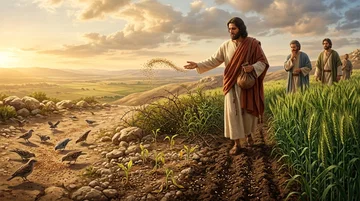
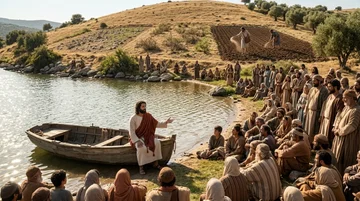
Hearken is a command to give close attention, and behold points to a sower going out to sow seed as Jesus taught the crowd from a boat drawn a little from shore.4RED 78.3–79.1ST Jun 30, 1881COL 33.2–34.1ST May 3, 18772SP 232.1–233.3
The sower is Christ come to plant truth and loyalty in hearts, and the seed is the word of God and its principles of grace sown in the heart as in soil.COL 33.1CT 142.2COL 30.1COL 34.2–3
The same seed brings different harvests because hearts differ, with wayside hardness, stony shallowness, and thorny worldliness losing the word, while good ground bears thirty, sixty, and a hundredfold.4RED 78.3–79.1COL 56.1–2STMW7 4.2TCBMP 140.1–142.1
He left hearers free to choose, using no force to compel belief, so those who desired truth could ask and understand while those who rejected it remained in blindness.2SP 241.1–2ST May 3, 18774RED 86.2–32SP 235.1–2ST May 3, 1877
Every gospel laborer is therefore to keep sowing everywhere beside all waters without discouragement over slow results, preparing hearts by Christlike care and trusting God to awaken the seed to fruit.COL 57.1–2STMW7 4.2Ms 1, 1874, par. 5Ms 1a, 1874, par. 4–8GW 185.1
Setting and Picture
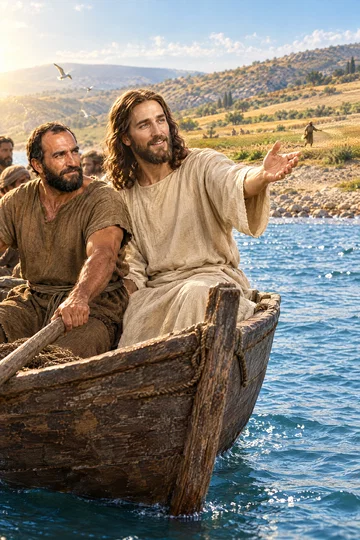
Hearken opens a parable spoken in the early morning on the shore of the Sea of Galilee after a night spent in prayer, taught from a fisherman's boat pulled out a little from shore to a crowd gathered on land because the pressing multitude was too dense to teach from the beach.4RED 78.3–79.1ST Jun 30, 1881COL 33.2–34.12SP 232.1–233.3COL 30.1 The Teacher was the Commander of angels and the Honored of Heaven, preaching salvation and deliverance in the open air to a common listening company, patient with the tempted and tender to the sorrowing, with words of life bringing light to darkened minds.2SP 232.1–233.3 The sower going out to sow pictures the spreading of the gospel, with the seed falling on different kinds of ground and producing different harvests according to how hearers respond.4RED 78.3–79.1COL 30.1
The picture was drawn directly from what the hearers could see at the time, with sowers casting seed and reapers harvesting early grain in plain sight together in the fields.2SP 232.1–233.34RED 78.1–2 Around them lay the plain of Gennesaret and its hills, with fruitful valleys and hillsides, barren rocks on the beach, birds and sea-fowls, lake, mountains, fields and sunlight.2SP 232.1–233.3COL 34.2–3 Sowers were visible in the fields nearby while the teaching was given from the boat on the sea to the people on shore.ST Jun 30, 1881
That familiar landscape, with its visible sowers, varied ground, and seed, was used to make spiritual teaching clear and memorable and to impress it upon the listeners.ST May 3, 18774RED 79.2–80.14RED 78.1–2 The varied ground, seed, and sowers before the hearers helped fix the teaching in their minds, and seed and its growth supplied a natural image through which divine truth was taught.4RED 79.2–80.1Ms 25, 1890, par. 11 So seeing those natural objects again would daily remind them of the truth taught and fasten it in their minds as a lasting reminder of instruction about salvation.ST Jun 30, 18812SP 232.1–233.34RED 78.1–2
The opening call to listen is a command introducing a lesson meant to hold attention and stir the hearers to respond.ST May 3, 1877 The saying remains pure and beautiful in unadorned simplicity today as when it was given more than eighteen hundred years ago.2SP 232.1–233.3
Meaning of Sower and Seed
The sower going out to sow is Christ, who came to scatter the heavenly seed of truth broadcast like grain and to establish God's kingdom by planting a new principle of loyalty in hearts, not by force or political conquest.COL 33.1COL 34.2–3 The parable itself is seed, for through it precious truths of grace were sown to bring people back to loyalty to God.COL 33.1 The same laws that govern the sowing of natural seed govern the sowing of truth.COL 33.1
The seed is the word of God, the precious truths of grace and principles sown in the heart.COL 33.1CT 142.2COL 30.1 The going out to sow pictures the sowing of that word, and the whole lesson is one of great importance in which earthly things teach spiritual truths and the things of nature direct hearers to heed God's voice and convey eternal truth.COL 30.1Ms 28, 1898, par. 12 As soil must be prepared for natural seed, so the heart must be prepared to receive the seed of truth.CT 142.2
The heart is like soil and like a garden in which good or bad seed is planted.CT 142.2ED 111.1–2 Repentance breaks up the soil of the heart, while evil tendencies like thorns that choke good grain must be uprooted through earnest effort in Christ's name and strength.ED 111.1–2 The growth of the plant then illustrates the development of character and spiritual growth, with the stages of growth helping to explain that inward development.CT 142.2ED 111.1–2
The seed cast into the ground teaches Christ's death, and the blade springing up teaches the resurrection.ED 111.1–2 Seed sown in the heart may take root and bear good fruit or be overcome by thorns and brambles, and a person's actions reveal which has taken place.ED 111.1–2ST May 10, 1877 Teachings are like seed planted to grow in the heart and take root and bear fruit, but mixing Scripture with fanciful interpretation produces infidelity.CT 186.3–187.2
Why Jesus Taught in Parables
Jesus spoke this parable to meet the doubt, discontent, and perplexity that arose because so many expected a Messiah who would set up a temporal kingdom to exalt and glorify Israel as a nation.2SP 235.1–24RED 80.2ST May 3, 1877 When He did not assume temporal authority, the people refused to receive Him as Redeemer, the leaders and the learned and wealthy and scribes and Pharisees and teachers would not accept Him, and His followers were left wondering why the long-looked-for Messiah was not acknowledged.2SP 235.1–24RED 80.2 Even His chosen disciples grew impatient that He did not take such authority, His own relatives were disappointed and rejected Him, and His disciples were mortified that it was the poor, the afflicted, and the humbler class who became His disciples.2SP 235.1–24RED 80.2 Their perplexity over His refusal to establish an earthly kingdom led Him to add further illustrations to turn their thoughts from a worldly kingdom to God's work of grace in the soul.COL 62.1–3
The parable is brief and comprehensive, picturing the different classes He had to teach and the tendencies of the human heart, including the worldly-minded, the evil-disposed, and the hard-hearted.2SP 241.1–2ST May 3, 18774RED 86.2–3 It explains why His personal ministry of goodness and mercy in healing the afflicted and casting out demons had meager and limited immediate results.2SP 241.1–2ST May 3, 18774RED 86.2–3 The limited results came because He left men to themselves in correcting the evils of their natures and left them free to choose or reject Him of their own free will.2SP 241.1–2ST May 3, 18774RED 86.2–3 He used no miraculous agency to compel belief and no direct power to force obedience, but only instructed them how to unite human effort with divine power and triumph over besetting sins through His strength.2SP 241.1–2ST May 3, 18774RED 86.2–3 In this way He preserved the free moral agency God gave man and gave moral power to Christian character to fit it for the courts of Heaven.2SP 241.1–2
His illustrations were given to awaken thought, and fuller explanation of the mystery of the kingdom of God was given to those who desired understanding and asked Him, as the twelve did.2SP 235.1–2ST May 3, 1877 Understanding this parable opens understanding of all parables.2SP 235.1–2 Those who followed Him and received Him could understand His words and gain practical knowledge of God's kingdom, while those who rejected truth and neglected their opportunities remained in chosen ignorance.2SP 235.1–24RED 82.1–2 To those without, all things were done in parables, so that seeing they would not perceive and hearing they would not understand, lest they be converted and forgiven.2SP 235.1–24RED 82.1–2
The parable was simple enough for the disciples to understand, yet their dullness showed they needed open minds ready to believe.4RED 82.1–2 Its simple, familiar illustration also let Him expose hypocrisy and wrongdoing without giving His opponents grounds to arrest Him.ST May 3, 1877 Thus He used it to awaken thought and explain the kingdom of God to all who wanted to understand.ST May 3, 1877COL 62.1–3
Soils and Responses of Hearers
The same sower sowing the same seed brings forth different results because of the soil, and the difference shows how hearers respond to the teaching of Christ.4RED 78.3–79.1COL 56.1–2STMW7 4.2Ms 1, 1874, par. 5 Seed that falls on poor soil is lost or choked and yields no fruit unto eternal life, while seed that falls on good ground produces a harvest.4RED 78.3–79.1STMW7 4.2Ms 1, 1874, par. 5 Good soil itself bears in differing measure, some thirty, some sixty, and some even a hundredfold.STMW7 4.2Ms 1, 1874, par. 5 Poor response and slow visible results are no reason to cease sowing beside all waters, for the lesson is to keep sowing truth everywhere even when fruit is not immediately seen.STMW7 4.2Ms 1, 1874, par. 5
Wayside hearers have hearts hardened by neglected duty and corrupt company until regard for truth is lost.TCBMP 140.1–142.1 Stony-ground hearers welcome truth with excitement but have no deep-rooted principle, so when trial, sacrifice, or correction comes their zeal is silenced and they fall away.TCBMP 140.1–142.1 Thorny-ground hearers accept truth but allow love of the world, dishonest gain, riches, cares, pleasures, and worldly honors to crowd it out until their hearts turn from the truth.TCBMP 140.1–142.1
Some who hear are only briefly stirred and soon lose the impression amid worldly cares, temptations, and unfavorable surroundings and return to indifference.4RED 78.3–79.14RED 79.2–80.12SP 234.1–2 Others begin a holier life from the teaching and bear fruit from it.4RED 78.3–79.1 They are guided by its principles and carry them out in life.4RED 79.2–80.12SP 234.1–2
The condition of the heart determines whether the word takes root and grows, and hearers are answerable for resisting hardness and permitting evil growths to hinder it.COL 56.1–2 As soil must be prepared for natural seed, so the heart must be prepared to receive the seed of truth, for the heart is like soil or a garden in which good or bad seed is planted.CT 142.2ED 111.1–2 Wayside, stony, and thorny hearts need not remain as they are but can be cultivated by choice with divine help.COL 56.1–2 Deep repentance breaks up the soil of the heart, and evil tendencies, like thorns choking good grain, must be uprooted through earnest effort in the name and strength of Christ.COL 56.1–2ED 111.1–2
Sowing the Gospel Today
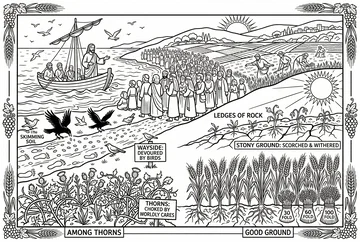
The going out of the sower pictures the work of Christ and the work of His servants and of every gospel laborer.STMW7 4.2Ms 1, 1874, par. 5Ms 1a, 1874, par. 4–85MR 300.4–301.1 He placed Himself in the great thoroughfares where the stream of travel from all parts of the world passed, in order to sow the gospel seed broadcast to every kind of hearer.Ms 1a, 1874, par. 4–85MR 300.4–301.1 That worldwide message must not be localized but is to be given in all cities and all villages and proclaimed in the highways and byways, wherever access can be gained, by speaking the words He gives and going forth everywhere following His example.Ms 1, 1874, par. 5 The seed of truth, the Word of God, thus scattered falls upon all kinds of soil, some by the wayside to be trodden down and devoured, some on stony ground to spring up quickly and then be scorched and withered, some among thorns to yield no fruit, and some on good ground to bring forth thirty, sixty, and even a hundredfold.Ms 1, 1874, par. 5Ms 1a, 1874, par. 4–8
Seed sown on good soil bears fruit in differing amounts, while seed on poor soil produces no fruit unto eternal life, and just so will be the experience of every gospel laborer.STMW7 4.2Ms 1, 1874, par. 5Ms 1a, 1874, par. 4–85MR 300.4–301.1 Poor response and slow visible results are no reason to cease work or be discouraged.STMW7 4.2Ms 1, 1874, par. 5 The lesson is to keep sowing the truth everywhere beside all waters, even when results are not immediately visible.STMW7 4.2Ms 1, 1874, par. 5 The sower does not stop because some seed fails to bear fruit.STMW7 4.2
The work of gospel sowers is to prepare hearts to receive the seed of truth.COL 57.1–2 Hearts may be hard like a beaten path so the seed cannot take root, but personal, Christlike care and sympathy for individuals can soften them and awaken interest in eternal life, allowing truth to take root.COL 57.1–2GW 185.1 From the beginning sowers should teach the foundations of Christian life, receiving salvation through Christ's sacrifice and living out His life and character in self-denial, service, trust, and care for the lost, and this keeps the seed from being lost in shallow soil or choked by thorns.COL 57.1–2
Sowing is spreading truth, and Christ's workers must sow it carefully, earnestly, and with self-denial, then trust God to bring it to life.TBC1872 111.1 Truth sown like seed may lie dormant for a time and take time to show its effect.ST May 2, 1878TBC1872 111.1 Yet God's grace can awaken it in the heart so that it springs up and bears fruit to His glory and helps save many.ST May 2, 1878TBC1872 111.1 After His crucifixion and resurrection, attentive listeners would recall and repeat His teaching for the benefit of later generations, continuing to the end of time.ST May 2, 1878
Preaching is sowing gospel seed, and the minister is the sower and his discourse the seed sown upon hearers.4T 393.36MR 181.2–182.1 The seed is precious truth and heavenly food of more value than gold, the theory of the truth with its evidences, and it should be delivered thoughtfully so hearers can receive it, understand it, retain it, carry it away, digest it, comprehend it, and let it take root and bear fruit.Lt 47, 1886, par. 8–106MR 181.2–182.1 It springs up and bears fruit to the glory of God when Christ as Saviour of the world, His cross, and His redeeming love are presented and exalted in connection with that theory, with practical application to the heart, for discourses wholly argumentative and not presenting Christ leave souls only impressed and not balanced on His side.4T 393.3 Truth is to be given in short discourses, not bringing out the whole counsel of God in one discourse, but in such well-measured portions that people can retain it and be impressed in soul by it.6MR 181.2–182.1 Delivery is to be in the most pleasant manner with a governed, calm, earnest, impressive voice full of pathos and melody, so hearers want to hear again and receive the message as the voice of God, following the example of Jesus the greatest teacher, and not raising the voice to a high key and shouting truth as through a trumpet, which is nervous power rather than the calm spirit and power of the Holy Ghost and loses effect.6MR 181.2–182.1 Such care is urgent because some may be hearing their last sermon and never again be so situated to have the chain of truth brought before them, and that lost golden opportunity is lost forever.4T 393.3
Personal, interested effort in the wise distribution of publications is the sower going out to sow.GW92 409.1 Placing books containing God's light and truth for this time, with spiritual and practical lessons of lasting value, in as many homes as possible is sowing gospel seed, and teaching people how to present those books is part of that sowing.FE 521.1–3Ms 157, 1902, par. 11 The seed sown as truth in a tract or paper reaches people who will not listen to a living preacher, is presented even to businessmen and to all who may not be willing to buy, meets their ideas and needs exactly, and makes impressions on the mind that cannot readily be forgotten.GW92 409.1Ms 157, 1902, par. 11 It convicts and converts souls, makes the gospel plain, reveals the way of salvation, and leads them to see the efficacy of Christ's atonement and trust in its power.Ms 157, 1902, par. 11 The seed of truth can lie buried for years beneath the rubbish of the world and pleasing deceptive fables, and after earthly sorrow or affliction softens the heart it springs up and bears fruit to the glory of God.GW92 409.1
Those who compose the churches are to be sowers of the seeds of truth everywhere they are, at home, in the workshop, in the market, as well as in the meeting-house.4T 285.1 In missionary work precious seed is sown in hope that it will bear a harvest.Ms 183, 1898, par. 5–6 To become such laborers they must be earnest Bible students studying the will of God most earnestly, becoming familiar with the Bible by reading it carefully and prayerfully.4T 285.1 They must learn to cast themselves and their burden on Christ by studying to realize the value of the cross of Christ and learning to bear it, and live holy lives with the fear of God before them.4T 285.1
The mind in early life is impressible soil, and good seed sown then upon good ground bears fruit unto eternal life.4T 499.2 Right sowing gives taste and aptitude for study, while a parent's errors and example sown in children are reproduced in them and do permanent injury to their mental powers.4T 499.2 The heart is soil that must be carefully prepared for the Sower to scatter good seed, and parents must do this preparing work for young children by keeping them home and teaching them themselves until eight or ten years old, refusing to trust the molding of the infant mind to other hands too early.CTBH 67.3 Their schoolroom should be the open air amid flowers and birds and their textbook the treasures of nature, with parents opening God's great book of nature before them as fast as their minds can comprehend it, so lessons given in such surroundings are not soon forgotten.CTBH 67.3 This preparation means cultivating the minds of children and forming correct habits instead of wasting time and labor following the fashions of the world, and such faithful work brings a marked change in families.CTBH 67.3 In teaching children, clear object lessons drawn from nature can lead their minds to God and sow seeds of truth whose lasting good will be revealed on the great day of God.6T 205.1
Sources
Pioneers and periodicals
74 sources
Hearken calls for close attention as the sower goes out to sow, opening the parable Jesus taught from a boat to the crowd on the shore using the familiar sight of farmers scattering seed nearby.ST Jun 30, 1881ST Jan 28, 1889ST May 3, 1877ST May 17, 1899
The seed is the word of God and the gospel of his kingdom, holding living spiritual power like life within grain.ST Nov 26, 1894RH Dec 21, 1905ST Sep 19, 1911
Human hearts and minds are the soil, shown as wayside hearts where the wicked one snatches the word, stony hearts that wither under trouble and persecution, thorny hearts choked by cares, riches and pleasures, and good honest hearts that keep the word with patience and bear thirty, sixty, or a hundredfold.ST Aug 5, 1913RH Apr 10, 1900
The seed takes root only in good prepared willing ground, with the Spirit making the heart receptive and the soil broken up, searched, and cleared of weeds and thorns.RH Jul 10, 1856ST Sep 19, 1911ST Sep 16, 1886RH May 11, 1869
Sowing is preaching and scattering that word everywhere to all hearers without knowing where it will take root, the work committed especially to God's people in the last days to be done bountifully and perseveringly through preaching, publications, and personal effort in hope of an abundant harvest.RH Dec 21, 1905RH Apr 14, 1859RH Aug 26, 1902RH May 14, 1872
Words and Historical Setting
The opening line begins the parable of the sower, spoken beside the sea to the gathered multitude.ST Jun 30, 1881ST Jan 28, 1889ST May 3, 1877ST May 17, 1899ST Nov 26, 1894 He taught it from a boat on the Sea of Galilee while the people stood on the shore listening.ST Jun 30, 1881ST May 3, 1877 Sowers at work in the fields nearby were in plain sight, and the familiar scene of a sower going out to scatter seed was taken up as an illustration of the gospel of the Son of God spread abroad.ST Jun 30, 1881ST Jan 28, 1889ST May 3, 1877 That everyday sight was used to make spiritual teaching about salvation clear, to impress it upon the listeners, and to make it a lasting reminder.ST Jun 30, 1881ST May 3, 1877
The telling belongs by the Sea of Galilee near Capernaum, where farmers scattered seed upon different grounds.ST Nov 26, 1894RH Aug 29, 1871 Some fell by the wayside, on rocks, and among thorns, and the wayside seed was devoured by birds, while seed on good ground yielded thirty, sixty, or a hundredfold.RH Aug 29, 1871 It reflects the familiar sight, as in Christ's time and still in Palestine, of birds following the sower to take the seed.RH Aug 29, 1871ST May 12, 1898 The opening command to listen introduces the lesson and was meant to hold attention and stir the hearers to respond to what followed.ST May 3, 1877
Why Jesus Told Parable
Jesus told the sower parable because the people expected a Messiah who would establish a temporal kingdom to exalt Israel and were disappointed when He did not.ST May 3, 1877ST Jan 28, 1889 The disciples wondered why the learned and wealthy rejected Him while the poor and humble followed Him, and the work of the sower begins the familiar illustration He used to explain the kingdom of God and why people respond differently to His teaching.ST May 3, 1877ST Jan 28, 1889 It accounts for the limited immediate results of Christ's ministry among the different kinds of people He taught and the tendencies of the human heart, since people could freely accept or reject Him and He did not use miracles to compel belief or obedience, but taught them to join their own efforts with divine power to overcome sin.ST May 3, 1877 The different soils explain the varied responses to proclaimed truth, for some who receive it grow weary and are overcome by the cares and pleasures of life, while others persevere and bear abundant fruit.ST May 3, 1877RH Jul 10, 1860
His parables were meant to awaken thought about the mystery of God's kingdom, and those who wanted to understand could ask Him for its meaning.ST May 3, 1877ST Jan 28, 1889 The simple illustration also let Him expose hypocrisy and wrongdoing without giving His opponents grounds to arrest Him.ST May 3, 1877 The parable of the sower serves as a key to understanding His other parables and teachings.RH Oct 6, 1904
Seed and Soils Meaning
The seed is the word of God and the gospel of the Son of God spread abroad to be obeyed as truth, and the sowing is the planting of that Word which announces the coming of His kingdom.ST Nov 26, 1894RH Dec 21, 1905ST Sep 19, 1911 God's words hold living spiritual power as grain seed holds life, and faith supplies the conditions for them to grow and act, for merely receiving them as words does not make them fruitful.ST Apr 11, 1900 Human lives, minds, and hearts are the soil for God's seed of life, and whether the seed grows depends on the condition of the soil that receives it.ST Aug 5, 1913RH Apr 10, 1900RH Aug 6, 1861 Good seed requires cultivated soil, so the Word must fall on good, prepared ground and be received by a willing heart if it is to take root and bear fruit.ST Sep 16, 1886RH May 11, 1869
Seed by the wayside finds no soil and is eaten by birds, picturing those who do not understand while the wicked one takes the Word from their hearts.ST Aug 5, 1913 Seed on shallow, stony ground has too little soil and, though received at first with joy, sprouts only to wither for lack of root when trouble, persecution, temptation, or trials come.ST Aug 5, 1913RH Apr 10, 1900 Seed among thorns is choked because the soil supports thorns instead, picturing hearers crowded out by worldly cares, the deceitfulness of riches, pleasures, and other desires so they bear no mature fruit.ST Aug 5, 1913RH Jun 29, 1869 Seed in good ground falls on honest and good hearts who keep the Word with patience and bear fruit thirty, sixty, or a hundredfold, in differing amounts.ST Aug 5, 1913RH Aug 29, 1871
Hearers like wayside, rocky, or thorny ground risk their eternal interests on ground as unsuitable as a field where no sensible farmer would expect a harvest.RH May 11, 1869 The fruitful class act with wisdom and foresight, work faithfully, and reap with joy, and the possibilities attending the seed on good ground encourage faith.ST Feb 6, 1896RH May 11, 1869 Even lives that seem small and insignificant are worth offering to God because they can receive the seed, become the means of much good, and themselves become sowers.RH Apr 10, 1900ST Aug 5, 1913
When the Word fails to grow the fault is not in the seed but in the soil.ST Apr 11, 1900 Truth must become the ruling principle of the heart rather than a secondary concern, otherwise persecution and trials bring abandonment or competing cares and carnal desires gradually choke it out.RH Aug 6, 1861 A person's actions reveal whether the seed sown in the heart has taken root and borne good fruit or has been overcome by thorns and brambles.ST May 10, 1877RH Aug 6, 1861
Receiving and Preparing Heart
For the seed to take root and bear fruit it must fall on good ground, and that ground must first be prepared, for otherwise it is like seed sown by the wayside.ST Sep 16, 1886RH May 11, 1869 The ground is the heart prepared to receive the word, and the Spirit of God prepares the heart while the person must be willing to receive it, as good seed requires cultivated soil and an unprepared heart prevents lasting fruit.ST Sep 16, 1886RH May 11, 1869
The heart is a soil that must be made ready for the good seed which is the word of God.RH Jul 10, 1856 Every ill weed naturally takes root and spreads in it, with worldly care as thorns and worldly vanity as thistles, along with other unprofitable weeds and roots of bitterness.RH Jul 10, 1856 As the husbandman watches his land, the heart must be searched and examined and all these cast out.RH Jul 10, 1856 When this work is rightly done the soil is ready, and the seed springs up and prospers under the influence of divine grace, as corn grows by the blessing of rain and sunshine from heaven above.RH Jul 10, 1856
Before the seed can take root in the heart the soil must be broken up, for the sowing is the planting of God's Word which follows the breaking up of the ground and announces the coming of His kingdom.ST Sep 19, 1911 John's message did this breaking work by awakening people to their sin, their danger, and their need for a Saviour, so they would seek healing from Jesus rather than rely on their own efforts. A receptive life is like soft soil, while a hard or unreceptive life lets those influences fall in vain.RH Oct 22, 1914 Sympathy and imagination help keep the heart receptive and soft.RH Oct 22, 1914
Soil that is unfit to bear fruit need not remain so, for the heart is made fit by doing in faith what God says.ST Jun 9, 1898 A person's mind may seem cold and unresponsive, like a frozen winter field, yet God's love can soften it so the word can later grow and bear fruit.RH Jul 9, 1914 A hearer's heart may at first be hard like stony ground, but the message of Jesus sung with a dedicated voice can break up and soften that heart, so the seed takes root and springs up to everlasting life.RH Oct 23, 1913 The seed falls into ready soil when the hearer is receptive, especially as the good seed of religious teaching and the good heard in the sermon falls on children's hearts.ST Mar 11, 1886ST Jun 18, 1885 Yet criticism and other distractions can act like little winds that carry it away before it takes root, and unkind talk after worship and diverted attention can hinder the spiritual good a sermon has begun.ST Mar 11, 1886ST Jun 18, 1885ST Dec 2, 1897
Sowing Gospel in Last Days
Sowing is preaching the gospel, sharing the word of God so that people may obey the truth, with the seed as the word and the sowing as its spread abroad, distinguishing seeds of truth that revive from seeds of corruption.RH Dec 21, 1905RH Apr 14, 1859 Christ's servants are to scatter the good seed everywhere, though they cannot know where it will take root and bear fruit unto eternal life.ST Aug 4, 1881RH May 18, 1916 Their work reaches not only those ready to receive but also hard paths, stony ground, and thorny ground, including the curious, the careless, and those who show no interest.ST Aug 4, 1881RH May 18, 1916RH Dec 22, 1904 Seed by the wayside can be taken away, while seed in good ground is truth that remains despite efforts to uproot it through sophistry and slander.RH Apr 14, 1859
The sower pictures the work of the people of God in the last days, into whose hands are committed the great truths of the last message to a perishing world.RH May 14, 1872 The parable has applied in every age since Christ spoke it, but never more than at the present sowing time for the special message for this time, and it is fulfilled every time present truth is sown in new fields.RH Aug 26, 1902RH May 14, 1872 It applies more particularly to ministers, but also more generally to all believers.RH May 14, 1872
Seed must be sown bountifully, knowing some will fall by the wayside, some on stony ground, and some among thorns, seemingly lost as to crows, moles, worms, and squirrels.RH Aug 26, 1902 Such loss should bring no discouragement, for as seven grains of corn are sown to secure three for harvest, so seed must be sown the more bountifully to cover losses that enough may remain to yield a hundredfold.RH Aug 26, 1902
Sowing means persevering in spreading the truth at every opportunity through preaching, publications, and personal work, with prayer and hope that with God's blessing some will grow to an abundant harvest.RH Jan 9, 1913RH Jan 24, 1907ST Aug 12, 1880 Like a farmer who cares for seed and waits, workers must patiently wait after sowing, even months for interested hearers to decide fully to obey, collecting names and opportunities for follow-up visits.RH Jan 9, 1913RH Jan 24, 1907 Truth sown like seed may be heard long before results appear, yet what is planted in the mind will spring up and bear fruit to God's glory and help save many.ST May 2, 1878ST May 5, 1881 So Jesus' words took time to show effect, yet after His crucifixion and resurrection attentive listeners would recall and repeat them for later generations to the end of time, and seed cherished in the heart can later bear fruit in decision for the truth.ST May 2, 1878ST May 5, 1881
Going out to sow includes isolated believers quietly sowing truth where they live by letting others know they keep the right day and by faithful daily living that prepares the way for ministers.RH Nov 11, 1909 Even a small act of kindness or a leaflet sown without expectation may be multiplied by God to lead many to hear of Christ's soon coming.RH Nov 23, 1905 The believer asks where to be sent, then takes God's corn and scatters it far afield, even in desert, pathless sea, and hard ground of oak, sod, and rock to be rent and broken, yielding a hundredfold of grains of gold to feed the waiting children of God.RH Apr 29, 1902
Mission Fields and Methods
Canvassers carrying literature are broadcast sowers of gospel seed, and distributing papers, tracts, newspapers and Bibles is sowing seed in hope it will take root and bear fruit.RH Jul 9, 1914RH May 20, 1909RH Aug 13, 1914 The seed is God's word and the soil is the minds of people, and seed falling on good soil bears fruit even when a mind seems cold and unresponsive like a frozen field, since God's love can soften it so the word later grows.RH Jul 9, 1914 The hope for Bibles placed in hotels is that readers will receive the Word as fertile soil and let it take deep root in the heart.ST Jun 27, 1911 The wide scattering of Bibles stands in contrast to the dwindling number who personally read, study and know Scripture.RH Jan 25, 1912
In Java the gospel spoken simply is sowing in hope the hearers will prove good ground, and printed literature is distributed as people learn to read, with papers sown in Batavia.RH May 30, 1912RH Aug 13, 1914 At Hankow attentive hearers were urged to give themselves to Christ, with names and addresses collected for follow-up visits, and though some might fall away the seed had been sown in their hearts.RH Jan 9, 1913 In Hunan people hearing gospel truth have opportunity to accept or reject it, and the seed may fall on fertile soil, spring up and bear fruit, while meetings at Amoy plant seeds unto eternal life.RH Oct 8, 1908 In Japan hearers may not believe at once yet truth can later take root and grow in the heart, so like a farmer caring for seed and waiting for harvest, workers must patiently wait even months for interested hearers to decide fully to obey.RH Jan 24, 1907 At Nazareth in India teaching God's word is sowing in hope it will fall on good ground and produce precious fruit in due time.RH Oct 7, 1915
Among the Batongas sowing the message of salvation is already producing fruit among people described as slow in movement and thought yet able to understand salvation and be saved through the Saviour's merits.RH Dec 24, 1908 In Basutoland the message is sown though hearts seem hard, in hope some seed will grow, and in South Africa even when few listen some seed may find good soil and produce fruit.RH Sep 21, 1905RH Feb 16, 1905 The first Russian believer sowed the seed of truth and it continued to bear fruit and multiply despite persecution and banishment, with those banished carrying it to new fields.ST Dec 9, 1897 Among German Russian wheat-growers in Entre Rios receptive soil raised up several churches near each other that became the main strength of the district in the River Plate.ST Winter visitors in Florida, freed from business, church and social ties and willing to read and hear preaching, provide receptive soil for seeds of truth, while in Holland freedom, education and openness formed good soil where Luther's Reformation teachings took deep root unto rich harvest, and a missionary's letters showed scattered seed taking root through encouraging responses.RH Dec 26, 1907
When the gospel as seed is sown in the good ground of a young mind it can bear an abundant harvest, so children should hear preaching whose lasting impressions may lead to salvation.ST Mar 18, 1889 Efforts to teach and inspire children are like sowing where some seed will not take root but some will grow in good soil and bear fruit later, with instruction planted now and blessed fruit expected in the future.ST Nov 16, 1888ST Sep 13, 1910 Those hearing present truth respond as wayside seed taken away, as thorn-choked seed, or as good-ground seed bearing much fruit, and once seed has taken root its growth and spread depend on God's blessing.RH Apr 2, 1867RH Jan 26, 1860
Daily Teaching and Living
Religious teaching is like the sower's scattering of seed, where the seed is the essential truth itself, and good teaching helps that truth take root instead of burying it under too much explanation, scolding, or needless repetition.ST Oct 19, 1882 A thoughtful question, a suggestive remark, or a helpful illustration can prepare the mind to receive it, opening the soil for the seed to grow.ST Oct 19, 1882
The sower who scatters the word stands as a warning to preachers, because the enemy can snatch the word from a hearer's conscience and leave it unfruitful.ST Jun 16, 1887 Preaching must therefore make its message clear and personal, so hearers recognize their own sin and are moved toward salvation.ST Jun 16, 1887 Words, looks, and actions are themselves seeds sown for good or ill, for life or death, that may bear fruit later.RH Jul 7, 1874 Speaking true words and doing kindness is scattering seed along the way that can afterward produce an abundant harvest.ST Dec 31, 1874
Putting seed into the ground and afterward reaping the same shows with certainty that people will receive hereafter according to the deeds of this life.RH Sep 17, 1857 The present lifetime is the world's sowing time, in which all are putting in seed and preparing for a future harvest either good or bad.RH Sep 17, 1857 No one can expect to reap differently from what was sown, for one who sows tares must expect only tares, one who will not sow wheat has no right to expect wheat on any condition, and one who will not sow at all has no right to expect a harvest.RH Sep 17, 1857
Teaching about temperance may fail to take root when people believe stimulants are necessary for health and vigor, falling then on barren or stony ground or by the wayside.ST Oct 28, 1875 Seed sown through sermons can nevertheless remain in the hearer, as Deacon Gray's teaching remained in Tom Blake.RH Dec 10, 1867ST Feb 11, 1875 Seeing faith expressed in compassionate action gives that seed a chance to take root and bear fruit.RH Dec 10, 1867ST Feb 11, 1875
The weekly spreading of the message is a scattering of good seed that exposes error, heralds salvation abroad, preaches faith in the Saviour and service to God, and refreshes each receiving soul with love and untiring zeal.RH Jul 23, 1857
Sources