Mark 7:2
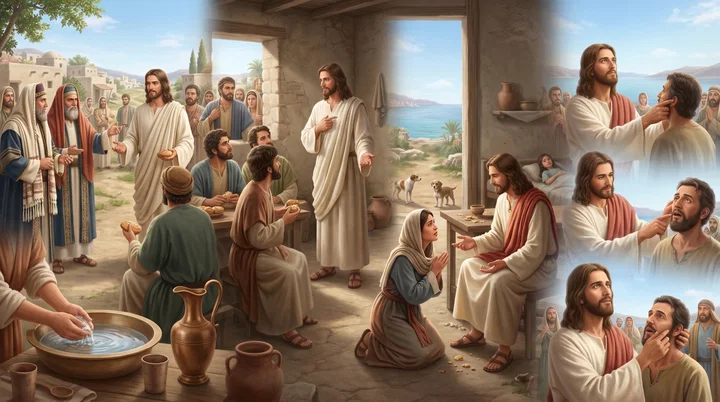
And when they saw some of his disciples eat bread with defiled, that is to say, with unwashen, hands, they found fault.
Translations
And when they saw some of his disciples eat bread with defiled, that is to say, with unwashed, hands, they found fault.
King James Version, KJV Cambridge Paragraph Bible
And when they saw some of his disciples eat bread with defiled, that is to say, with unwashen, hands, they found fault.
And when they saw some of his disciples eating bread with defiled (that is to say with unwashed) hands, they found fault.
Revised Version, American Standard Version
and had seen that some of his disciples ate their bread with defiled, that is, unwashen, hands.
and having seen certain of his disciples with defiled hands — that is, unwashed — eating bread, they found fault;
and seeing some of his disciples eat bread with defiled, that is, unwashed, hands,
and, observing certain of his disciples, that, with defiled hands, that is unwashed, they are eating bread,——
and they saw some of His disciples eating with hands that were defiled— that is, unwashed.
And seeing some of His disciples eating with hands that were defiled ( that is, unwashed), they found fault.
Now when they saw some of his disciples eating bread with defiled, that is unwashed, hands, they found fault.
And had seen that some of his disciples took their bread with unclean, that is, unwashed, hands.
And when they sawe some of his disciples eate meate with common hands, (that is to say, vnwashen) they complained.
Douay-Rheims (Challoner revision)
And when they had seen some of his disciples eat bread with common, that is, with unwashed hands, they found fault.
Pictures
Cross-references
- Matthew 15:1-9
Then came to Jesus scribes and Pharisees, which were of Jerusalem, saying,
Parallel account of traditions used to set aside God’s commandments.
- Isaiah 29:13
Wherefore the Lord said, Forasmuch as this people draw near me with their mouth, and with their lips do honour me, but have removed their heart far from me, and their fear toward me is taught by the precept of men:
Jesus applies Isaiah’s rebuke of worship based on human precepts to the critics.
- Matthew 15:11
Not that which goeth into the mouth defileth a man; but that which cometh out of the mouth, this defileth a man.
Jesus contrasts what enters the mouth with what comes from it.
- Mark 7:15
There is nothing from without a man, that entering into him can defile him: but the things which come out of him, those are they that defile the man.
answers the handwashing dispute described in the verse
- Mark 7:20-23
And he said, That which cometh out of the man, that defileth the man.
Lists the evil things from the heart that defile a person.
- Romans 14:14
I know, and am persuaded by the Lord Jesus, that there is nothing unclean of itself: but to him that esteemeth any thing to be unclean, to him it is unclean.
Uses the hand-washing practice to explain what “unclean” means.
- Colossians 2:20-23
Wherefore if ye be dead with Christ from the rudiments of the world, why, as though living in the world, are ye subject to ordinances,
Handwashing judgment illustrates religious rules rooted in human commandments.
- Acts 10:14-15
But Peter said, Not so, Lord; for I have never eaten any thing that is common or unclean.
Also addresses things regarded as common or unclean.
- Romans 14:17
For the kingdom of God is not meat and drink; but righteousness, and peace, and joy in the Holy Ghost.
God’s kingdom is not about food but righteousness, peace, and joy.
- Mark 7:11-12
But ye say, If a man shall say to his father or mother, It is Corban, that is to say, a gift, by whatsoever thou mightest be profited by me; he shall be free.
shows tradition voiding duty to parents
Commentary
Each commentary is drawn from primary sources: the writings of Ellen G. White and Adventist pioneers and periodicals. Each commentary is separate. Its own words are not a quotation; follow the references to read the source passages.
Ellen G. White
3 sources
Some of the disciples ate bread without performing the ceremonial handwashing required by rabbinic tradition and custom.DA 395.3–396.2Ms 53, 1901, par. 7–9DA 395.1–2 Hands left unwashed in that sense were regarded as defiled, so the washing was treated as a matter of religious purity.DA 395.3–396.2Ms 53, 1901, par. 7–9 That washing was a human religious precept and observance, not a command God had given.DA 395.3–396.2DA 395.1–2
The faultfinding shows how human traditions and petty rites had been raised above God's requirements, confusing the sacred with the common.Ms 53, 1901, par. 7–9 The Pharisees and scribes, acting as spies, seized on this neglect to find fault with the disciples, using it as grounds for accusation to pursue their trap against Jesus.DA 395.3–396.2Ms 53, 1901, par. 7–9DA 395.1–2
Sources
Pioneers and periodicals
24 sources
Some of His disciples were seen eating bread without the ceremonial handwashing required by the tradition of the elders, and the Pharisees found fault with them for it.ST Sep 8, 1881ST Jun 21, 1899ST Aug 23, 1883 Defiled here means ceremonially unclean in the Pharisees' judgment, for hands were called defiled because they had not been washed even when they were not physically dirty.ST Jun 8, 1915ST Jul 8, 1897 The dispute sets keeping human tradition against keeping God's commandments, making God's law void, which is displeasing to God.RH May 19, 1851ST Aug 23, 1883ST Apr 15, 1875 It concerns ceremonial washing and human rules, not whether the animals eaten were clean or unclean, and it gives no liberty to eat foods forbidden by the law.ST Aug 13, 1912ST Feb 10, 1898 Eating with unwashen hands did not make a person morally defiled, for defilement is not what outwardly adheres to a man and enters his mouth but evil thoughts and corruption cherished in the heart.ST Jun 21, 1899ST Feb 10, 1898ST Apr 30, 1896 Outward washings cannot make a person righteous or cleanse the heart, which must first be made right before God.ST Aug 13, 1912ST Jun 8, 1915ST Sep 8, 1881
Washing Custom and Accusation
Some of his disciples were seen eating bread without the ceremonial washing of hands required by the tradition of the elders, and for this omission the Pharisees found fault with them.ST Sep 8, 1881ST Jun 21, 1899ST Aug 23, 1883RH Oct 21, 1851ST Feb 10, 1898 The dispute turned on human tradition rather than any commandment of God, and it concerned ceremonial defilement rather than whether the food itself was proper to eat.ST Jun 21, 1899ST Feb 10, 1898ST Jun 11, 1894 That washing rule had become a strict tradition going beyond the purifications required by the law of Moses.ST Sep 8, 1881 It was treated as a custom imposed by wise forefathers and carefully observed by every pious Israelite.ST Sep 8, 1881
Defiled in the verse means ceremonially unclean in the Pharisees' judgment, for hands were called defiled because they had not been washed.ST Jun 8, 1915ST Jul 8, 1897 The hands could be physically clean and still be counted unclean, since the uncleanness was ceremonial and not actual dirt.ST Jul 8, 1897 The claim was that ritual washing affected cleanness and that eating with unwashed hands made the person and the food unclean, yet the question had no reference to clean and unclean animals.ST Jun 8, 1915
The faultfinding was a hypocritical effort to accuse him of an unlawful act, with leaders gathering around him to watch for a violation.ST Sep 8, 1881 They counted eating with unwashed hands as sin because of their ceremonial rules, and a proven violation would have been used to justify opposition to him.RH Dec 10, 1857 They feared accidental contact with something unclean and kept strict outward scruples over ceremonial cleanness, while practicing and teaching what came from hearts defiled by sin.ST Sep 8, 1881 They charged that a teacher claiming higher sanctity than others should not quietly permit his disciples to neglect the custom.ST Sep 8, 1881
That faultfinding over defiled, unwashen hands illustrates a religion of strict outward observance.RH Oct 10, 1871 It is like the Pharisee who outwardly kept the requirements of the decalogue, gave tithes of all he possessed and did not rob God.RH Oct 10, 1871 He was not a wicked man but an honorable and moral man, better in outward conduct than many professing church members today who condemn him while their minds are occupied with other things, who neglect prayer and true worship, and who are unfaithful in tithes.RH Oct 10, 1871
Tradition Against God's Law
Mark 7:2 belongs to the dispute in which the tradition of the elders was treated as binding religious law and set against the commandment of God, making void the law of God.RH May 19, 1851ST Aug 23, 1883ST Apr 15, 1875RH Oct 21, 1851 To keep human tradition in that way is displeasing to God, because it elevates human rules above the written word, including the Ten Commandments, and so rejects the authority of Scripture.RH May 19, 1851RH Feb 23, 1869ST Feb 6, 1907 The fault found with the disciples for eating bread with unwashen hands is the example used in that argument, showing how a human washing rule was made a test of duty in place of God's holy law.RH May 19, 1851ST Aug 23, 1883RH Oct 21, 1851
To uphold a religious festival or first-day observance in place of the Sabbath rest commanded by God falls under that same rebuke.RH May 19, 1851RH Jun 13, 1854ST Apr 15, 1875 It is holding human tradition so as to set aside an express law of God and make the commandments of God of none effect, and it is wicked.RH May 19, 1851RH Jun 13, 1854 Treating first-day observance as duty on the ground of tradition repeats the danger condemned in the dispute over unwashen hands.RH May 19, 1851ST Apr 15, 1875
In that setting rabbinical rules had buried the Sabbath under superstition and made the fifth commandment of no effect in at least one particular.ST Oct 7, 1897ST Sep 29, 1909 The Jewish church had degenerated into empty forms that exalted the traditions of the elders above the word of God, and this was its condition before its rejection of Christ.ST Oct 7, 1897ST Jan 30, 1896 That those teachers possessed and transmitted the Scriptures yet made the Scriptures and law of God void by tradition proves that long custody of the Bible and claim of religious succession give no title to be the church of God.ST Sep 29, 1909 It provides the pattern for the later apostate church which, while holding the written Word, made void the second commandment in some particulars and the Sabbath commandment wherever her influence extends.ST Sep 29, 1909 Christ opposed these burdensome traditions and taught observance of God's law according to its true purpose, rejecting the added restrictions of the rabbis while keeping the Sabbath in the true spirit of God's commandment.ST Jun 11, 1894RH Dec 10, 1857
True Defilement Not Food
The fault found was over ceremonial washing and human rules, not over whether the animals eaten were clean or unclean.ST Aug 13, 1912ST Feb 10, 1898ST Jun 8, 1915 The question was handwashing before eating bread, required by the tradition of the elders, not eating of foods forbidden by the law.ST Aug 13, 1912ST Apr 30, 1896 It had no reference to foods whatever and gives no liberty to eat anything.ST Apr 30, 1896 It turned on a foolish human law of ritual defilement, impossible to carry out under all circumstances without suffering, in which the claim was that omission of washing made the food unclean.ST Jun 8, 1915ST Apr 30, 1896
Eating with unwashen hands did not make a person morally defiled.ST Jun 21, 1899ST Feb 10, 1898ST Apr 30, 1896 Defilement is not what may accidentally adhere to a man outwardly and thus be placed in his mouth, but corruption cherished in the heart.ST Apr 30, 1896 Evil thoughts and actions coming from the heart defile, and evil things proceeding from the heart are the true source of defilement, not this hand-washing omission.ST Jun 21, 1899ST Feb 10, 1898 The will, desires, motives, lusts and passions are what make the deed acceptable or evil in the sight of God.ST Apr 30, 1896
Outward washings cannot make a person righteous, and outward acts cannot cleanse the heart; the heart must first be made right before God.ST Aug 13, 1912ST Jun 8, 1915 Outward scruples over ceremonial cleanness did not cleanse the heart, even when joined with fear of accidental contact with something unclean while practicing and teaching what came from hearts defiled by sin.ST Aug 13, 1912ST Jun 8, 1915ST Sep 8, 1881 The judgment that called the hands defiled was made according to the tradition of the elders rather than God's law, using religious tradition to judge others.ST Oct 7, 1897RH Jan 2, 1900 It required interpreting the law through accumulated human traditions, and in that surrounding dispute such traditions made God's law void.ST Oct 7, 1897RH Jan 2, 1900
The eating with unwashed hands was part of the effort to overturn the teachings of Jewish extremists, not to reject cleanliness.RH Apr 23, 1867 The verse does not teach inattention to bodily cleanliness.RH Apr 23, 1867
Sources