Nehemiah 13:9
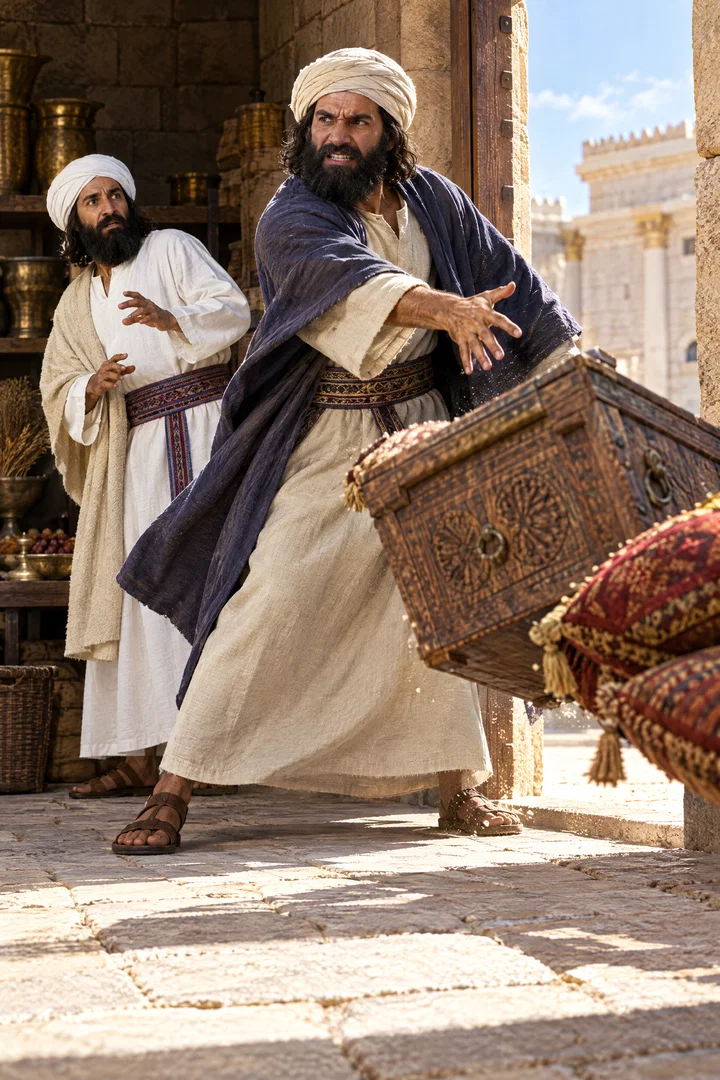
Then I commanded, and they cleansed the chambers: and thither brought I again the vessels of the house of God, with the meat offering and the frankincense.
Translations
American King James Version, King James Version, KJV Cambridge Paragraph Bible
Then I commanded, and they cleansed the chambers: and thither brought I again the vessels of the house of God, with the meat offering and the frankincense.
Then I commanded, and they cleansed the chambers: and thither I brought again the vessels of the house of God, with the meat-offering and the frankincense.
Then I commanded, and they cleansed the chambers: and thither brought I again the vessels of the house of God, with the meal offerings and the frankincense.
Then I commanded, and they cleansed the chambers: and thither brought I again the vessels of the house of God, with the meal-offerings and the frankincense.
and I speak, and they cleanse the chambers, and I bring back thither the vessels of the house of God with the present and the frankincense.
And I commanded, and they purified the chambers; and thither brought I again the vessels of the house of God, the oblation and the frankincense.
Then commanded I, and they purified the chambers,—and I put back there, the utensils of the house of God, the meal-offering and the frankincense.
Berean Standard Bible, Majority Standard Bible
Then I ordered that the rooms be purified, and I had the articles of the house of God restored to them, along with the grain offerings and frankincense.
Then I commanded, and they cleansed the rooms. I brought into them the vessels of God’s house, with the meal offerings and the frankincense again.
Then I gave orders, and they made the rooms clean: and I put back in them the vessels of the house of God, with the meal offerings and the perfume.
And I commanded them to clense ye chambers: and thither brought I againe the vessels of the house of God with the meate offring and the incense.
Douay-Rheims (Challoner revision)
And I commanded and they cleansed the storehouses: and I brought thither again the vessels of the house of God, the sacrifice, and the frankincense.
Pictures
Cross-references
- Nehemiah 13:5
And he had prepared for him a great chamber, where aforetime they laid the meat offerings, the frankincense, and the vessels, and the tithes of the corn, the new wine, and the oil, which was commanded to be given to the Levites, and the singers, and the porters; and the offerings of the priests.
empty great chamber made into Tobiah's home
- Nehemiah 13:4
And before this, Eliashib the priest, having the oversight of the chamber of the house of our God, was allied unto Tobiah:
Eliashib’s alliance with Tobiah led to the chamber being emptied.
- 2 Chronicles 36:18
And all the vessels of the house of God, great and small, and the treasures of the house of the LORD, and the treasures of the king, and of his princes; all these he brought to Babylon.
The vessels taken to Babylon were later brought back to the cleansed temple chambers.
- Deuteronomy 23:3
An Ammonite or Moabite shall not enter into the congregation of the LORD; even to their tenth generation shall they not enter into the congregation of the LORD for ever:
The law excluded Ammonites from the congregation, supporting Tobiah’s removal from the temple chamber.
- Nehemiah 13:14
Remember me, O my God, concerning this, and wipe not out my good deeds that I have done for the house of my God, and for the offices thereof.
Nehemiah asks God to remember his service to the temple.
Commentary
Each commentary is drawn from primary sources: the writings of Ellen G. White and Adventist pioneers and periodicals. Each commentary is separate. Its own words are not a quotation; follow the references to read the source passages.
Ellen G. White
2 sources
Nehemiah's return from Persia to Jerusalem was met by a bold profanation of the temple that demanded prompt action.PK 669.1–670.1 The profanation centered on Eliashib the high priest, who through friendship and intermarriage with Tobiah the Ammonite, Israel's bitter enemy, had cast out the stored tithes and offerings in order to give Tobiah an apartment connected with the temple.PK 669.1–670.1 To house Tobiah there was to contaminate the very precincts of the temple with the presence of an idolater.PK 669.1–670.1 It stood in direct defiance of God's word through Moses forever shutting Ammonites and Moabites out of His congregation because of their cruelty and treachery toward Israel, and it showed the greatest contempt for God.PK 669.1–670.1
Nehemiah was grieved sore by the intruder and cast forth all of Tobiah's household stuff out of the chamber before any cleansing took place.PK 669.1–670.1 He then commanded that the chambers be cleansed.PK 669PK 669.1–670.1 To their rightful place in the house of God he brought again the vessels of God's house, with the meat offering and the frankincense, restoring the grain offerings to their proper use.PK 669PK 669.1–670.1
Sources
Pioneers and periodicals
14 sources
After Tobiah's goods were cast out, Nehemiah ordered the temple rooms to be purified and returned the sacred vessels with the grain offering and the frankincense to their rightful use, undoing the profanation.ST Jun 4, 1902ST Nov 15, 1899 The pollution had come because Eliashib the priest had lodged Tobiah the Ammonite, an enemy and adversary of God, in the temple as his home, giving him access to its treasury.RH Apr 22, 1902ST Nov 15, 1899RH Jul 9, 1908 That room was the great tithe-chamber meant to be well filled to sustain the Lord's work and His Levites and singers, but it stood empty because the people had lost sight of duty and withheld the tithe, so His appointed servants received no support and had gone to their fields.RH Apr 22, 1902RH Jul 9, 1908 The clearing belonged to Nehemiah's vigorous reformation to rouse moral and spiritual life and restore strict observance of the law, especially the Sabbath, in the face of opposition on every side.RH Oct 8, 1908ST Jun 2, 1909ST May 28, 1912ST Aug 25, 1909 His work as governor in restoring Jerusalem amid battles and hindrances is a pattern of God's work in other ages, especially the last days when adversaries strive hardest yet He carries it to triumph, though done under a theocracy that gives no warrant for demanding Sunday laws now.ST Aug 23, 1910ST Jun 2, 1909
Temple Cleansing in Context
After Tobiah's household goods were thrown out of the house of God, Nehemiah commanded the chambers to be cleansed and brought back into them the vessels of the house of God with the grain offering and the frankincense to their proper sacred use.ST Jan 17, 1884ST Jun 4, 1902ST Nov 15, 1899 The cleansing restored the temple to its right use after its profanation by an enemy's presence.ST Jan 17, 1884ST Nov 15, 1899 The defilement had come when Eliashib the priest gave Tobiah the Ammonite, an enemy and adversary of the Lord, a chamber in the temple as his residence and home.ST Nov 15, 1899RH Jul 9, 1908ST Jun 4, 1902ST Jul 14, 1887 That gift gave Tobiah, who was even a relative of Eliashib, access to the temple treasury itself.RH Apr 22, 1902
The chamber so misused was the great tithe-chamber, which should have stood well filled to support the Lord's work and His Levites and singers.RH Jul 9, 1908 It stood empty because the people had intermarried with the heathen around them, had lost sight of their duty to support the work, and had withheld the tithe and the Lord's money.RH Apr 22, 1902RH Jul 9, 1908 With no allotted support left for them, the Levites and singers had gone to their fields.RH Apr 22, 1902 It was shame that the tithe-chamber was empty, and double shame that God's enemy occupied it.RH Jul 9, 1908 All this happened while Nehemiah was absent from Jerusalem, on his second visit after years back at the Persian court, having been recalled to court and having traveled more than a thousand miles in going and returning.RH Oct 8, 1908RH Jul 9, 1908ST Jul 14, 1887 His own statement that he was not in Jerusalem during all this time explains how these grave mistakes were made.RH Jul 9, 1908
The episode lays bare the corrupt social and religious condition of Israel after the return from Babylonian captivity, in which even much of the priesthood had been compromised.ST Jun 13, 1906 The high priest himself, who should have stood as an example to the people, had allied himself with God's enemy.RH Jul 9, 1908 The cleansing belonged together with Nehemiah's demand that Jews who had intermarried with heathen and Samaritans put away their strange wives.ST Jul 14, 1887 It belonged together also with his chasing out Manasseh, the high priest's grandson, for refusing to give up the daughter of Sanballat the Horonite.ST Jul 14, 1887 That expulsion drove Manasseh and others to Samaria and led, in B.C. 409, to Sanballat's building a rival temple on Mount Gerizim with Manasseh as high priest, making the enmity between Jews and Samaritans still more bitter down to the time of Christ.ST Jul 14, 1887 The verse belongs to the history of Babylonian life in the days of Ezra and Nehemiah, and discoveries in ancient lands adjoining Israel and having dealings with Israel confirm that Bible narrative and give information concerning its archaeology.ST Mar 10, 1909
Reform and Last-Day Meaning
The cleansing of the chambers was part of Nehemiah's reformation of religion to rouse and quicken the moral and spiritual life of the people.RH Oct 8, 1908 After being recalled to court and traveling more than a thousand miles in going and returning, he hastened back and plunged into the struggle for real and permanent improvement.RH Oct 8, 1908 He did this work in the face of opposition everywhere, with the same vigor and tenacity of purpose he had shown twelve years before, so that priest and Levite and people and even the high priest himself had to yield to his energetic initiative.RH Oct 8, 1908 It displays him to the last as unweariedly active, zealous, stirring and striving.RH Oct 8, 1908
As governor appointed of the Lord with the burden of restoring Jerusalem, his work stood amid the ups and downs, battles and conflicts, defeats and victories of the Jews at Jerusalem under the last reformation.ST Jun 2, 1909 That work is typical of God's work in other ages, especially in the last days, where adversaries put forth every possible effort to hinder but God carries the work to a glorious success notwithstanding all efforts to hinder.ST Jun 2, 1909 The verse belongs to the restoration from the Babylonian captivity and to Nehemiah's last reform and effort to restore strict observance of the law.ST Jun 2, 1909ST May 28, 1912ST Aug 25, 1909 In that reform the Sabbath was strongly emphasized, and a decided reform took place upon its better observance.ST Jun 2, 1909ST May 28, 1912ST Aug 25, 1909
The work was done under a theocracy guided by God and His prophets, in a nation and city belonging to the Lord and the Lord's special people alone.ST Aug 23, 1910 It gives no justification for demanding Sunday laws now by those who have no such credentials.ST Aug 23, 1910 The theocracy ended with Israel when Israel deliberately declared, We have no king but Caesar.ST Aug 23, 1910 God does not set up His kingdom on earth by might or by power, but in the hearts of His people by His Spirit, and the literal earthly kingdom will not be established until He Himself comes.ST Aug 23, 1910
Sources