2 Chronicles 36:18
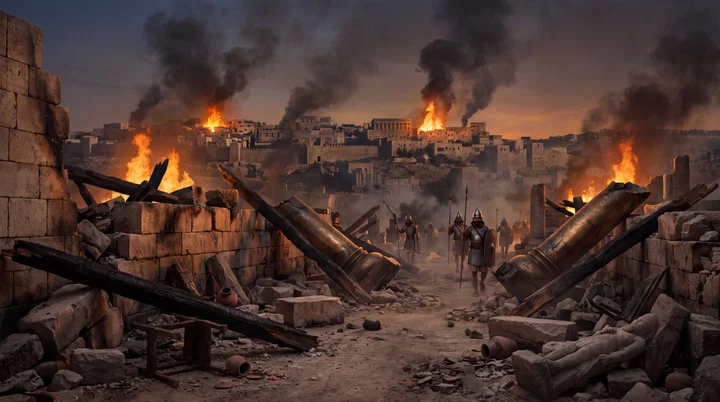
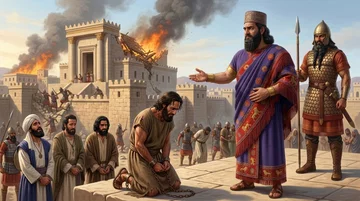
And all the vessels of the house of God, great and small, and the treasures of the house of the LORD, and the treasures of the king, and of his princes; all these he brought to Babylon.
Translations
American King James Version, King James Version, Webster Bible, Revised Version
And all the vessels of the house of God, great and small, and the treasures of the house of the LORD, and the treasures of the king, and of his princes; all these he brought to Babylon.
And all the vessels of the house of God, great and small, and the treasures of the house of the Lord, and the treasures of the king, and of his princes; all these he brought to Babylon.
And all the vessels of the house of God, great and small, and the treasures of the house of Jehovah, and the treasures of the king, and of his princes, all these he brought to Babylon.
And all the vessels of the house of God, the great and the small, and the treasures of the house of Jehovah, and the treasures of the king and of his princes — the whole he hath brought in to Babylon.
And all the vessels of the house of God, great and small, and the treasures of the house of Jehovah, and the treasures of the king and of his princes, he brought all to Babylon.
And, all the utensils of the house of God, both great and small, and the treasures of the house of Yahweh, and the treasures of the king and of his rulers, the whole, carried he to Babylon;
Berean Standard Bible, Majority Standard Bible
who carried off everything to Babylon— all the articles of the house of God, both large and small, and the treasures of the house of the LORD and of the king and his officials.
All the vessels of God’s house, great and small, and the treasures of the LORD’s house, and the treasures of the king and of his princes, all these he brought to Babylon.
And all the vessels of the house of God, great and small, and the stored wealth of the Lord's house and the wealth of the king and his chiefs, he took away to Babylon.
And all the vessels of the house of God great and small, and the treasures of the house of the Lord, and the treasures of the King, and of his princes: all these caryed he to Babel.
Douay-Rheims (Challoner revision)
And all the vessels of the house of the Lord, great and small, and the treasures of the temple and of the king, and of the princes he carried away to Babylon.
Pictures
Cross-references 20 of 46
- Jeremiah 25:8-11
Therefore thus saith the LORD of hosts; Because ye have not heard my words,
Foretells Babylon’s conquest and Judah’s seventy years of captivity.
- Ezra 1:1-4
Now in the first year of Cyrus king of Persia, that the word of the LORD by the mouth of Jeremiah might be fulfilled, the LORD stirred up the spirit of Cyrus king of Persia, that he made a proclamation throughout all his kingdom, and put it also in writing, saying,
Cyrus’s decree permits the return from Babylon and provides for rebuilding the temple.
- 2 Kings 24:10-16
At that time the servants of Nebuchadnezzar king of Babylon came up against Jerusalem, and the city was besieged.
It recounts Jerusalem’s siege and Jehoiachin’s deportation to Babylon.
- Psalms 137:1-4
By the rivers of Babylon, there we sat down, yea, we wept, when we remembered Zion.
Captives mourn for Zion and cannot sing in a foreign land.
- Daniel 1:1-2
In the third year of the reign of Jehoiakim king of Judah came Nebuchadnezzar king of Babylon unto Jerusalem, and besieged it.
Jerusalem is besieged and given into Babylon’s hand.
- Micah 4:10
Be in pain, and labour to bring forth, O daughter of Zion, like a woman in travail: for now shalt thou go forth out of the city, and thou shalt dwell in the field, and thou shalt go even to Babylon; there shalt thou be delivered; there the LORD shall redeem thee from the hand of thine enemies.
Foretells Zion’s exile to Babylon and deliverance.
- Isaiah 64:11
Our holy and our beautiful house, where our fathers praised thee, is burned up with fire: and all our pleasant things are laid waste.
The sanctuary’s destruction is depicted and fulfilled.
- Psalms 79:1
O God, the heathen are come into thine inheritance; thy holy temple have they defiled; they have laid Jerusalem on heaps.
Both describe the sanctuary defiled and plundered by invading nations.
- Psalms 74:3
Lift up thy feet unto the perpetual desolations; even all that the enemy hath done wickedly in the sanctuary.
It describes the sanctuary laid waste.
- Isaiah 63:18
The people of thy holiness have possessed it but a little while: our adversaries have trodden down thy sanctuary.
The sanctuary’s treading down is reflected in the temple’s ruin and the people’s exile.
- 2 Kings 25:13-15
And the pillars of brass that were in the house of the LORD, and the bases, and the brasen sea that was in the house of the LORD, did the Chaldees break in pieces, and carried the brass of them to Babylon.
Temple vessels and treasures were carried away to Babylon.
- Isaiah 39:6
Behold, the days come, that all that is in thine house, and that which thy fathers have laid up in store until this day, shall be carried to Babylon: nothing shall be left, saith the LORD.
Foretells that Jerusalem’s treasures would be carried to Babylon.
- 2 Kings 25:9
And he burnt the house of the LORD, and the king’s house, and all the houses of Jerusalem, and every great man’s house burnt he with fire.
Describes the temple’s burning and the removal of its treasures.
- Jeremiah 29:10
For thus saith the LORD, That after seventy years be accomplished at Babylon I will visit you, and perform my good word toward you, in causing you to return to this place.
Promises the exiles’ return after seventy years in Babylon.
- Leviticus 26:34-35
Then shall the land enjoy her sabbaths, as long as it lieth desolate, and ye be in your enemies’ land; even then shall the land rest, and enjoy her sabbaths.
The land rests during its desolation for neglected sabbaths.
- Psalms 74:7
They have cast fire into thy sanctuary, they have defiled by casting down the dwelling place of thy name to the ground.
The sanctuary is burned and profaned.
- Daniel 9:2
In the first year of his reign I Daniel understood by books the number of the years, whereof the word of the LORD came to Jeremiah the prophet, that he would accomplish seventy years in the desolations of Jerusalem.
Both describe Jerusalem’s seventy-year desolation.
- Ezra 1:7-8
Also Cyrus the king brought forth the vessels of the house of the LORD, which Nebuchadnezzar had brought forth out of Jerusalem, and had put them in the house of his gods;
Vessels taken to Babylon are returned.
- Daniel 5
Belshazzar the king made a great feast to a thousand of his lords, and drank wine before the thousand.
Describes God’s punishment of Babylon’s king after the city had carried Judah into captivity.
- Jeremiah 52:17-19
Also the pillars of brass that were in the house of the LORD, and the bases, and the brasen sea that was in the house of the LORD, the Chaldeans brake, and carried all the brass of them to Babylon.
Both describe the temple vessels and treasures carried away to Babylon.
Commentary
Each commentary is drawn from primary sources: the writings of Ellen G. White and Adventist pioneers and periodicals. Each commentary is separate. Its own words are not a quotation; follow the references to read the source passages.
Ellen G. White
1 source
The carrying of all the vessels and treasures to Babylon was the fulfillment of the calamity that came because of Israel's unfaithfulness.1SP 414.2–3 In that judgment God permitted His people to be taken captive and permitted the temple to be destroyed.1SP 414.2–3 Before that destruction the sacred ark holding the tables of stone was taken away and concealed in a cave.1SP 414.2–3 There it has remained undisturbed ever since, and it has never been restored to Israel.1SP 414.2–3
Sources
Pioneers and periodicals
58 sources
All the vessels of the house of God, great and small, with the treasures of the house of the Lord and the treasures of the king and his princes, were all carried to Babylon in the total overthrow when the house was burned, the wall broken down, and those who escaped the sword made servants until the reign of Persia.ST Dec 7, 1904ST Sep 13, 1905RH Jan 20, 1853ST Apr 12, 1883ST May 27, 1880
The judgment came because the people mocked God's messengers, despised His words, polluted His temple with the abominations of the heathen, and persisted until wrath arose with no remedy.ST Dec 7, 1904ST Sep 13, 1905RH Jan 20, 1853RH Jul 14, 1903ST Sep 24, 1902
Above all it came for Sabbath-breaking, for refusing to keep the holy day and to let the land rest, so the people were removed and the land lay desolate seventy years to enjoy the sabbaths denied it.ST Sep 29, 1914RH Jul 11, 1912ST Feb 10, 1914ST Sep 26, 1911ST Jun 17, 1886
The sanctuary thus overthrown was a building erected in the land, distinct from the land as a house is from its lot, and its forsaking ended its time as the central place of worship as Shiloh had been forsaken before.RH Jan 20, 1853ST May 27, 1880RH Aug 11, 1863RH Jan 6, 1853ST Jan 28, 1886
Israel's going into Babylon for seventy years and coming out again was written as the type of the last generation, when obedience to God's Sabbath brings His children out of Babylon to witness Babylon's doom, while its unquenchable fire proves destruction that consumes what it burns.RH May 11, 1916ST Jun 28, 1877ST Nov 20, 1884ST Mar 10, 1898
Fall of Jerusalem
The verse records that all the vessels of the house of God, great and small, together with the treasures of the house of the Lord and the treasures of the king and of his princes, were all brought to Babylon.ST Sep 13, 1905ST Apr 12, 1883ST May 27, 1880RH Nov 10, 1863ST Nov 5, 1912 The carrying away took place because Israel was unfaithful and after repeated warnings were ignored, when Nebuchadnezzar plundered Jerusalem and the temple.RH Nov 10, 1863ST Nov 5, 1912ST May 20, 1913 The temple sanctuary built in the land was thus plundered when Judah was driven from Canaan, and the captivity was the fearful doom that followed mocking God's messengers, despising His words, and misusing His prophets.ST Sep 13, 1905ST May 27, 1880
The removal was part of a total overthrow in which the Lord gave His people into the hand of the king of the Chaldees after He had sent by His messengers early and continually because He had compassion on His people and on His dwelling place, until wrath arose with no remedy.ST Dec 7, 1904RH Jan 20, 1853RH Jan 21, 1862 Without compassion young men were slain with the sword in the house of the sanctuary, with no pity on young man or maiden, old man or aged, and all were given into his hand.ST Dec 7, 1904RH Jan 20, 1853RH Jan 21, 1862 The house of God was burned, the wall of Jerusalem was broken down, the palaces were burned with fire, and all the goodly and desirable vessels were destroyed.ST Dec 7, 1904RH Jan 20, 1853ST Sep 24, 1902 Those who escaped the sword were carried away to Babylon as servants to him and his sons until the reign of the kingdom of Persia, leaving Jerusalem in ruins for seventy years until Cyrus decreed restoration.ST Sep 24, 1902RH Jan 21, 1862
Only the vessels that survived were taken to Babylon, while the other vessels were destroyed in the burning of the temple and palaces.ST May 24, 1883 The destruction by fire fulfilled Jeremiah's warning of a fire that could not be quenched, and the fire ended after it had consumed what it was sent to destroy. When Nebuchadnezzar destroyed Jerusalem he carried the surviving vessels of the sanctuary and the treasures of the temple, the king, and the princes to Babylon.ST May 24, 1883
The plundering came in stages, for the earlier deportation took only part of the temple vessels, while the later captures took the remaining treasures.ST Nov 28, 1911ST The first captivity in B.C. 606 took Daniel and his companions, and the first capture of Jerusalem is also dated to 605 B.C., while the second captivity in B.C. 598 took Ezekiel and many others with much treasure.ST Aug 9, 1899ST When Jehoiachin rebelled and Nebuchadnezzar again took Jerusalem, he stripped the Lord's temple of its gold and treasures and carried them to Babylon along with Jehoiachin, his court, and many people.ST Aug 20, 1885 The third captivity in B.C. 586 completely destroyed Jerusalem, with the people removed by about 588 B.C. and Zedekiah and those who remained carried into exile in Babylon, completing the overthrow of the Jewish nation.ST Jul 23, 1885ST Aug 9, 1899 Seventy years from the first captivity reaches B.C. 536, the first year of Cyrus in his rule over all Medo-Persia including Babylon, after which the Jews were allowed to return but never again became an independent nation, remaining under successive empires until Rome destroyed Jerusalem in A.D. 70.ST Jul 23, 1885ST Aug 9, 1899
The verse belongs to the account of Judah's swift decline under its final kings, ending with Jerusalem laid waste and the holy house burned.ST May 7, 1912ST Apr 12, 1883 The long record in Chronicles of Jerusalem's siege and fall is a true record, sufficient to establish the event even where 2 Kings does not use the word siege.ST Jan 11, 1916
Sin That Caused Exile
The judgment fell because the people mocked God's messengers, despised His words, and misused His prophets until the wrath of the Lord arose against them till there was no remedy.ST Dec 7, 1904ST Sep 13, 1905RH Jan 20, 1853ST Sep 24, 1902RH Jan 21, 1862 The Lord had sent by His messengers rising up early and continually because He had compassion on His people and on His dwelling place, but when His warnings were rejected He gave them all into the hand of the king of the Chaldees.ST Dec 7, 1904RH Jan 20, 1853RH Jan 21, 1862 That king slew without compassion in the house of the sanctuary, slaying young men with the sword and showing no pity to young man or maiden, old man or aged, and then all the vessels of the house of God great and small with the treasures of the house of the Lord and of the king and of his princes were brought to Babylon.ST Dec 7, 1904RH Jan 20, 1853ST Sep 24, 1902RH Jan 21, 1862 With that carrying away came the burning of the house of God, the breaking down of the wall of Jerusalem, the burning of the palaces with fire and the destruction of all the goodly vessels, and those who escaped the sword were carried to Babylon as servants until the reign of Persia, leaving Jerusalem in ruins for seventy years until Cyrus decreed restoration.ST Dec 7, 1904RH Jan 20, 1853ST Sep 24, 1902RH Jan 21, 1862
The people had transgressed and departed from the Lord, and the chief priests and people had copied all the abominations of the heathen and polluted the house of the Lord at Jerusalem.RH Jul 14, 1903ST Sep 24, 1902ST Jun 21, 1883 The Babylonian removal of the sacred vessels and treasures with the exile of the people was the consequence of that persistent disobedience and refusal to heed God's warnings.RH Jul 14, 1903ST Apr 19, 1883RH Oct 14, 1902 Jerusalem could become a city of truth and a holy mountain, with God's promised protection, only if the people did not return to the iniquity that had brought its destruction.ST Jun 21, 1883ST Apr 19, 1883
The chief cause stressed is Sabbath-breaking, utter refusal to remember the Sabbath and its divine Author, to keep it holy, and to rest from work and business on the holy day.ST Sep 29, 1914RH Jul 11, 1912ST Jun 17, 1886RH Oct 29, 1914 Israel failed to let the land rest and to keep the Sabbath in memory of His creative works, and that failure was bound up with forgetting the Creator and Sanctifier whom the Sabbath commemorates, whose sign declared that Jehovah who created all things was the living God.ST Sep 29, 1914RH Jul 11, 1912ST May 21, 1896 This captivity fulfilled the threatened destruction and the word of the Lord by Jeremiah, so that the land emptied of its people rested from their tillage and enjoyed her Sabbaths for threescore and ten years.ST Sep 29, 1914RH Oct 29, 1914ST Sep 8, 1909 That history of conquest, seventy years of bondage, and deliverance covering only one generation, with God's word of prophecy and God's prophet prominent in the deliverance, was written for learning for those on whom the ends of the world are come as the type of the last generation, in which obedience to God's Sabbath brings His children out of Babylon to live in the generation that witnesses Babylon's doom at Christ's second advent.RH May 11, 1916
Through persistent rejection of God's instruction and warnings Judah grew so wicked that God withdrew His protection and allowed Babylon to conquer, desolate the sanctuary, and carry the people captive, beginning the church's humiliation, anguish, grief and longing for the Deliverer until Jesus was born in Bethlehem.ST Apr 29, 1903ST Oct 8, 1896ST May 16, 1911ST Sep 8, 1909RH Jul 20, 1911 God could use idolaters both to punish His people and afterward to restore them.RH Dec 1, 1874 The bodily captivity followed captivity to sin after the people rejected His power in Christ, the promised Seed and their only protection; sin leads to death and deliverance is found only in the Seed, and the judgment was a necessary final appeal.RH Jan 21, 1904 Their removal to Babylon was safer than leaving the vessels in a temple that Judah's leaders and people had polluted with heathen practices.ST Jul 13, 1904
Land's Sabbath Rest
Because Israel failed to let the land rest every seventh year, the people were taken away to Babylon and the land lay desolate for seventy years so that it could enjoy the sabbaths they had denied it.ST Feb 10, 1914ST Sep 26, 1911ST Aug 9, 1910ST Feb 10, 1914 The carrying of all the vessels and treasures of the house of God and of the king and his princes to Babylon belonged to that captivity and exile brought by Babylon's conquest.ST Feb 10, 1914ST Aug 9, 1910ST Jan 4, 1905 The surrounding account connects that Babylonian captivity with the land lying desolate and keeping the rest Israel had disregarded.ST Feb 10, 1914ST Aug 9, 1910ST Feb 10, 1914
Emptied of its people, the land rested from their tillage and enjoyed her sabbaths for threescore and ten years.ST Sep 29, 1914ST Sep 26, 1911ST Sep 8, 1909 That desolation fulfilled the word of the Lord spoken by Jeremiah, in the context of warnings against Sabbath profanation and threatened destruction for disobedience.ST Sep 29, 1914ST Jun 28, 1877ST Sep 8, 1909 Judah's persistent Sabbath-breaking and other disobedience ended in national ruin, with God's protection withdrawn, Jerusalem destroyed, and the people taken captive to Babylon.ST Sep 29, 1914ST Jun 28, 1877ST Sep 8, 1909
The desolated land, untilled and unsown and unreaped, is a pattern of the earth's future sabbath during the seventh millennium.ST Sep 29, 1914ST Sep 26, 1911 For a thousand years on account of wickedness the earth will rest from its tillage with sinners destroyed out of it, after which there will be no more Sabbath-breaking.ST Sep 29, 1914ST Sep 26, 1911
Josiah was the last king of Jerusalem who obeyed the commandments and kept the statutes, and his reign ended in B.C. 607.SMV 22.1–24.1 After being carried to Babylon no year of release or Jubilee could be kept, for neither kings, nobles, people, nor lands could be redeemed, and there the Jewish Jubilees ended with no more than 21 kept and 23 lacking to the great Jubilee.SMV 22.1–24.1 The ceasing of the Sabbaths and Jubilees at the close of his reign begins 2450 years, 49 times 50 years, of the Jubilee of Jubilees reaching to A.D. 1843.SMV 22.1–24.1
Seventy years reckoned from the first captivity in B.C. 606 reaches B.C. 536, the first year of Cyrus in his rule over all Medo-Persia including Babylon.ST Jul 23, 1885ST Aug 9, 1899 That first captivity took Daniel and his companions, the second in B.C. 598 took Ezekiel and many others with much treasure, and the third in B.C. 586 completely destroyed Jerusalem.ST Jul 23, 1885ST Jan 4, 1905ST Aug 9, 1899 The people were removed by about 588 B.C., and Jerusalem was destroyed and many deported in 586 B.C.; after seventy years the Jews were allowed to return but never again became an independent nation, remaining under successive empires until Rome destroyed Jerusalem in A.D. 70.ST Jul 23, 1885ST Jan 4, 1905ST Aug 9, 1899
Sanctuary Distinct From Land
The sanctuary was a building erected in the land of Canaan, distinct from the land itself as a house is distinct from the lot on which it stands.ST May 27, 1880RH Aug 11, 1863RH Jan 6, 1853RH Feb 18, 1858RH Apr 4, 1854 When God's people were driven out of Canaan and dispossessed of their inheritance, they lost both that inheritance and the sanctuary built there, which was laid in ruins and whose vessels and treasures were carried to Babylon.RH Aug 11, 1863RH Jan 6, 1853RH Feb 18, 1858RH Apr 4, 1854RH Feb 15, 1870 The bringing of all the vessels of the house of God, great and small, with the treasures of the house of the Lord and of the king and his princes to Babylon was not merely loss of the land but destruction of the house erected therein as God's habitation.ST May 27, 1880RH Feb 18, 1858RH Apr 4, 1854RH Feb 15, 1870 This treading down of the sanctuary in the conquest proves the land of Canaan itself, the border where it stood, is not the sanctuary.RH Aug 11, 1863RH Jan 6, 1853RH Apr 4, 1854RH Feb 15, 1870
The carrying away marks the end of Jerusalem's temple as the central place of worship at that time.RH Jan 20, 1853ST Jan 28, 1886 It accomplished God's declared purpose to forsake the temple as He had forsaken the tabernacle at Shiloh, because Israel mocked God's messengers, despised His words and misused His prophets until the wrath of the Lord arose with no remedy.RH Jan 20, 1853 Therefore God gave them into the hand of the king of the Chaldees, who slew without compassion in the house of the sanctuary, burned the house of God, broke down the wall of Jerusalem, burned the palaces with fire and destroyed all the desirable vessels, while every vessel great and small with the treasures was carried to Babylon.RH Jan 20, 1853 In this overthrow and treading down God's house was plundered and laid in ruins.RH Jan 20, 1853
The typical sanctuary built by Solomon thus shared in the seventy-year desolation of Jerusalem, left desolate when its vessels and treasures were carried to Babylon.ST Sep 26, 1906RH Sep 2, 1852 That is the desolation Daniel prayed about, and the same house that was rebuilt after the captivity.RH Sep 2, 1852 Its destruction did not mean rebuilding was forever forbidden, for God later commanded the temple to be rebuilt and reproved His people for delaying through selfishness.ST Sep 26, 1906
Prophecy Type and Application
The burning of the city with its temple and palaces fulfilled the word spoken through Jeremiah of a fire kindled against Jerusalem that could not be quenched.ST Jun 28, 1877ST Sep 8, 1909 That fire ended once it had consumed what it was sent to destroy, taking the treasures and sacred vessels to Babylon and then destroying what remained with the burning of the house of God.ST Nov 20, 1884 Hallowing the Sabbath would have preserved the city, while continuing to profane it brought its overthrow as judgment for disobedience.ST Jun 28, 1877RH Jan 21, 1862 Persistent Sabbath-breaking with other disobedience ended in idolatry and national ruin, so God withdrew His protection, Jerusalem was destroyed, the people were taken captive to Babylon, the captivity fulfilled Jeremiah's word, and the land was left to enjoy its Sabbaths.ST Sep 8, 1909RH Jan 21, 1862
Nebuchadnezzar plundered the treasures of the city before burning Jerusalem and its temple, and their carrying to Babylon is the fulfillment of the prophecy that Jerusalem's treasures would be taken there.ST That first capture of Jerusalem took place in 605 B.C.ST
Israel after the flesh going into Babylon, with all the vessels of the house of God and the treasures of the house of the Lord and of the king and his princes carried to Babylon because of Sabbath-breaking, covered in its conquest, seventy years of bondage, and deliverance only one generation, with God's word of prophecy and God's prophet prominent in the deliverance.RH May 11, 1916 That history was written for learning for those upon whom the ends of the world are come, as the type of the last generation, in which obedience to the Sabbath brings God's children out of Babylon to live in the generation that witnesses Babylon's doom at the second advent of Christ.RH May 11, 1916
Judah's growing wickedness led God to withdraw His protection, Babylon took the people captive, subverted the kingdom and scattered Judah where earlier enemies had only succeeded temporarily, and the Babylonian king carrying the vessels and treasures of God's house with the king's and princes' treasures to Babylon began Israel's scattering.ST Apr 29, 1903ST Oct 8, 1896RH Oct 22, 1861ST Nov 7, 1906 That captivity to Babylon began the church's humiliation, anguish, grief and longing for the Deliverer, which continued until Jesus was born in Bethlehem.ST Apr 29, 1903ST Oct 8, 1896ST May 16, 1911
The destruction by unquenchable fire consuming Jerusalem's walls and palaces shows that a fire cannot be quenched until it has consumed what it burns.ST Nov 20, 1884ST Mar 10, 1898 Set alongside Isaiah 51:6 and Jeremiah 17:27, the removal of the treasures to Babylon with the burning of the city stands as evidence for destruction that consumes rather than endless torment.ST Nov 20, 1884ST Mar 10, 1898 The catalogue of gold and silver vessels and all the rich treasures carried as spoil to Babylon, with the captives, priests, Levites and singers, ancients and honorable, young men and maidens all in captivity, pictures spiritual death and desolation upon Christendom.RH Apr 2, 1857RH Apr 2, 1857 Praying fathers and mothers who poured forth prayers and exhortations with a Saviour's love and tears for sinners, and young men and maidens who with the strength of young giants filled with new wine made closets, out-buildings and groves vocal with prayer and shouts of praise, are gone like the vessels of gold and silver and rich treasures of Jerusalem into the enemy's land, so that the church's spiritual graces taken into enemy territory leave only moan and wail over the loss.RH Apr 2, 1857RH Apr 2, 1857
Sources