Numbers 25:6
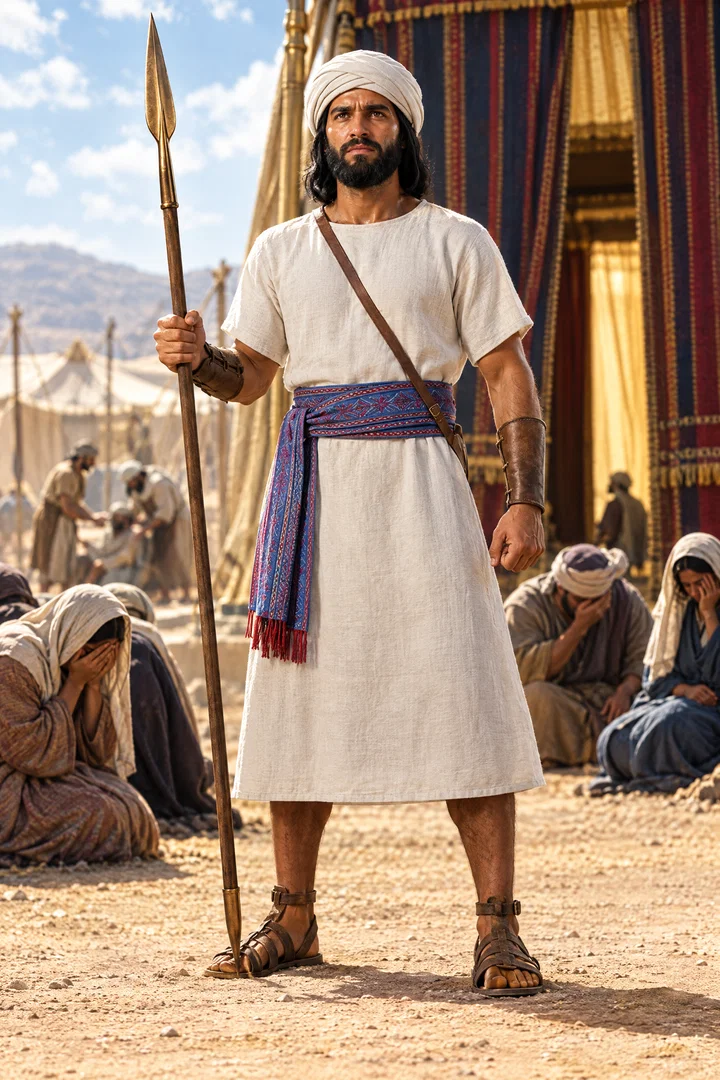
And, behold, one of the children of Israel came and brought unto his brethren a Midianitish woman in the sight of Moses, and in the sight of all the congregation of the children of Israel, who were weeping before the door of the tabernacle of the congregation.
Translations
And, behold, one of the children of Israel came and brought to his brothers a Midianitish woman in the sight of Moses, and in the sight of all the congregation of the children of Israel, who were weeping before the door of the tabernacle of the congregation.
And, behold, one of the children of Israel came and brought unto his brethren a Midianitish woman in the sight of Moses, and in the sight of all the congregation of the children of Israel, who were weeping before the door of the tabernacle of the congregation.
And behold, one of the children of Israel came and brought unto his brethren a Midianitish woman in the sight of Moses, and in the sight of all the congregation of the children of Israel, who were weeping before the door of the tabernacle of the congregation.
And, behold, one of the children of Israel came and brought to his brethren a Midianitish woman in the sight of Moses, and in the sight of all the congregation of the children of Israel, who were weeping before the door of the tabernacle of the congregation.
Revised Version, American Standard Version
And, behold, one of the children of Israel came and brought unto his brethren a Midianitish woman in the sight of Moses, and in the sight of all the congregation of the children of Israel, while they were weeping at the door of the tent of meeting.
And lo, a man of the sons of Israel hath come, and bringeth in unto his brethren the Midianitess, before the eyes of Moses, and before the eyes of all the company of the sons of Israel, who are weeping at the opening of the tent of meeting;
And behold, a man of the children of Israel came and brought a Midianitish woman to his brethren, in the sight of Moses, and in the sight of the whole assembly of the children of Israel, who were weeping before the entrance of the tent of meeting.
And lo! a man of the sons of Israel coming in, who brought near unto his brethren a Midianite woman, before the eyes of Moses, and before the eyes of all the assembly of the sons of Israel, when they were weeping at the entrance of the tent of meeting.
Berean Standard Bible, Majority Standard Bible
Just then an Israelite man brought to his family a Midianite woman in the sight of Moses and the whole congregation of Israel while they were weeping at the entrance to the Tent of Meeting.
Behold, one of the children of Israel came and brought to his brothers a Midianite woman in the sight of Moses, and in the sight of all the congregation of the children of Israel, while they were weeping at the door of the Tent of Meeting.
Then one of the children of Israel came to his brothers, taking with him a woman of Midian, before the eyes of Moses and all the meeting of the people, while they were weeping at the door of the Tent of meeting.
And behold, one of the children of Israel came and brought vnto his brethren a Midianitish woman in the sight of Moses, and in the sight of all the Congregation of the children of Israel, who wept before the doore of the Tabernacle of the Congregation.
Douay-Rheims (Challoner revision)
And behold one of the children of Israel went in before his brethren to a harlot of Madian, in the sight of Moses, and of all the children of Israel, who were weeping before the door of the tabernacle.
Pictures
Cross-references
- 1 Corinthians 10:8
Neither let us commit fornication, as some of them committed, and fell in one day three and twenty thousand.
Israel’s fornication brought 23,000 deaths and serves as a warning.
- Numbers 31:16
Behold, these caused the children of Israel, through the counsel of Balaam, to commit trespass against the LORD in the matter of Peor, and there was a plague among the congregation of the LORD.
The women are identified as causing Israel’s trespass at Peor and the resulting plague.
- Deuteronomy 4:3-4
Your eyes have seen what the LORD did because of Baal-peor: for all the men that followed Baal-peor, the LORD thy God hath destroyed them from among you.
Contrasts those destroyed for following Baal-peor with those who cleaved to God.
- 1 Corinthians 10:11
Now all these things happened unto them for ensamples: and they are written for our admonition, upon whom the ends of the world are come.
Israel’s example warns later believers against falling.
- Numbers 25:11-13
Phinehas, the son of Eleazar, the son of Aaron the priest, hath turned my wrath away from the children of Israel, while he was zealous for my sake among them, that I consumed not the children of Israel in my jealousy.
Phinehas’s zeal turns away God’s wrath and brings a covenant of peace and everlasting priesthood.
- Revelation 2:14
But I have a few things against thee, because thou hast there them that hold the doctrine of Balaam, who taught Balac to cast a stumblingblock before the children of Israel, to eat things sacrificed unto idols, and to commit fornication.
Israel’s sin at Peor illustrates Balaam’s counsel leading them into idolatry and fornication.
- Numbers 31:2
Avenge the children of Israel of the Midianites: afterward shalt thou be gathered unto thy people.
God orders vengeance on Midian after the people’s iniquity.
- Psalms 106:28
They joined themselves also unto Baal-peor, and ate the sacrifices of the dead.
Israel joins Baal-peor and eats sacrifices of the dead.
- Numbers 31:8
And they slew the kings of Midian, beside the rest of them that were slain; namely, Evi, and Rekem, and Zur, and Hur, and Reba, five kings of Midian: Balaam also the son of Beor they slew with the sword.
Records Balaam’s later death.
- Psalms 106:30-31
Then stood up Phinehas, and executed judgment: and so the plague was stayed.
Phinehas’s action turns away the plague and is counted as righteousness.
- Numbers 25:17-18
Vex the Midianites, and smite them:
command to smite Midianites for their wiles
- Numbers 31:17-18
Now therefore kill every male among the little ones, and kill every woman that hath known man by lying with him.
Midianite women who had led Israel into sexual sin were killed to prevent further sin and plague.
- Numbers 25:2
And they called the people unto the sacrifices of their gods: and the people did eat, and bowed down to their gods.
details the invitation to idol sacrifices
- Leviticus 17:8-9
And thou shalt say unto them, Whatsoever man there be of the house of Israel, or of the strangers which sojourn among you, that offereth a burnt offering or sacrifice,
explains why altar looked like Baal-Peor rebellion
Commentary
Each commentary is drawn from primary sources: the writings of Ellen G. White and Adventist pioneers and periodicals. Each commentary is separate. Its own words are not a quotation; follow the references to read the source passages.
Ellen G. White
20 sources
The verse pictures Israel's apostasy at Baal-peor on the borders of Canaan, when a luxurious idol feast laid as a snare at Balaam's suggestion drew the people into licentiousness through Midianite women, while Moses and the congregation wept in mourning before the tabernacle under plague and judgment, and one man brazenly brought a Midianite woman past them to his tent until Phinehas followed and slew them both, staying the plague and receiving a covenant of peace and everlasting priesthood for making atonement.Ms 162, 1903, par. 3–8PP 454.4PP 455.2–3SLP 168.3ST Jan 6, 1881 Twenty-four thousand died in the plague before it was stayed, while those who held the other reckoning teach that twenty-three thousand fell in one day for this fornication by the sword at Moses' command.Ms 162, 1903, par. 3–8SLP 168.3Ms 79, 1908, par. 13–15 The destruction was both judgment on disobedience and mercy to keep the corruption from spreading as Israel stood at the threshold of Canaan, and Midian's success in the seduction filled up its iniquity and ended its probation so that Israel was commanded to vex and smite them as God's instruments without malice or revenge.ASCOP 26.1–27.1ST Jan 6, 1881ST Jan 6, 1881RH Aug 31, 1905 The history happened as ensamples and is written for admonition upon those on whom the ends of the world are come, warning against lusting after evil things, idolatry and fornication, so that whoever thinks he stands takes heed lest he fall and looks to God's faithful way of escape from common temptation.Ms 162, 1903, par. 3–8CH 613.3Ms 79, 1908, par. 13–15 Though all shared great privilege under the cloud and through the sea, eating the same spiritual meat and drinking from the spiritual Rock that followed them, which was Christ, many were overthrown because they did not live by the light, showing that the same satanic snares laid just before Canaan are laid for God's people now and that they must remain separate and worship God alone.PK 293.2–294.1Lt 22, 1892, par. 15–16HL 280.2
The Open Sin Described
The verse belongs to Israel's national apostasy at Baal-peor, when joining Baal-peor brought the people down from God's commandments to the level of idolatrous nations and kindled the Lord's anger to command execution of the guilty heads and men.Ms 162, 1903, par. 3–8PP 454.4 It took place near the close of the wilderness wandering on the very borders of the promised land, where the sin had spread into the camp itself.PP 454.4PK 293.2–294.1 The brazen public character of the apostasy is shown in that an Israelite openly brought a Midianite woman before Moses and the weeping congregation gathered at the tabernacle.Ms 162, 1903, par. 3–8PP 454.4
The sin came through a feast connected with the worship of Baal-peor that led into licentiousness and grievous sin, a luxurious feast that brought God's anger upon the people.SLP 168.3AA 315.2–316.1 It was a snare laid for Israel at Balaam's suggestion and through his counsel, by which Midian through deceitful wiles enticed Israel to sin.ST Jan 6, 1881ST Jan 6, 1881 It was one of Satan's snares laid for Israel just before entering Canaan.HL 280.2
The Midianite women who enticed Israel were idolatrous and licentious, seeking by every evil art to accomplish Israel's destruction.ST Jan 6, 1881ST Jan 6, 1881 They were the principal criminals who caused Israel to commit trespass against the Lord in the matter of Peor, bringing wrath and plague among the congregation.ST Jan 6, 1881ST Jan 6, 1881
While this was happening Moses and the whole congregation were weeping in mourning and confession before the door of the tabernacle because enticed to sin and thus bringing the wrath of God upon themselves.PP 455.2–3ST Jan 6, 1881 The plague was still killing people and the magistrates were carrying out judgment, and Moses looked on the enticement with grief and indignation.PP 455.2–3ST Jan 6, 1881
Against that grief one Israelite, Zimri, openly and brazenly defied Moses, the grieving leaders, the judges, and the whole congregation by bringing a Midianite woman to his brethren in their sight.Ms 162, 1903, par. 3–8PP 454.4PP 455.2–3 He escorted her to his tent, flaunting his sin before the congregation.PP 455.2–3 The episode shows Israel's sexual sin becoming an open, defiant act in the camp while the people wept before the tabernacle, a stark contrast between their grief and his public defiance, illustrating how impurity and crime had advanced among Israel as they stood on the borders of Canaan.Lt 9, 1898, par. 10–12ASCOP 26.1–27.1STM2 4.3
Phinehas followed them and thrust both the man and the woman through, stopping the open sin.Ms 162, 1903, par. 3–8PP 455.2–3 The plague was then stayed, his zeal turned away wrath so Israel was not consumed, because he was zealous for God and made an atonement.Ms 162, 1903, par. 3–8PP 455.2–3 He received a covenant of peace, even an everlasting priesthood for him and his seed after him and his descendants.Ms 162, 1903, par. 3–8PP 455.2–3
Judgment and Enduring Warning
The plague was not stayed until twenty-four thousand had died.Ms 162, 1903, par. 3–8 Twenty-three thousand fell in one day for this fornication, by the sword at the command of Moses.SLP 168.3Ms 79, 1908, par. 13–15 The transgression brought disease and death, with signal judgments following close upon the heinous sin of fornication when thousands fell and their polluted bodies were left in the wilderness, while those who cleaved to the Lord and remained faithful stayed alive and renewed their vows of allegiance.Lt 9, 1898, par. 10–12RH Aug 31, 1905CH 613.3PK 293.2–294.1ST Jan 6, 1888
The destruction of the followers of Baal-peor was both judgment on disobedience and mercy, since their continued influence would have corrupted all Israel.RH Aug 31, 1905 Severe punishment was needed to stop the advance of impurity and crime, for the flagrant rebellion had entered the camp openly while Israel stood at the threshold of Canaan.ASCOP 26.1–27.1Lt 22, 1892, par. 15–16 Midian's success in leading Israel into sin filled up the measure of Midianite iniquity, ended their day of probation, and closed the door of mercy to them, so God commanded Israel to vex, smite, and make war upon them.ST Jan 6, 1881ST Jan 6, 1881
That command to destroy Midian was just retribution upon a guilty people and also mercy to give Israel victory over a people bent on their ruin.ST Jan 6, 1881 Israel was to act as God's instruments from zeal for the divine glory and not to gratify malice or revenge.ST Jan 6, 1881 Sparing the women as captives was lack of thoroughness in executing the command, because their presence would constantly endanger Israel's morals, so sympathy that spares such transgressors is contrary to God's will.ST Jan 6, 1881 The sin exposes the malignity of sin as a deadly leprosy contaminating all brought into contact with it, showing why God as Creator and owner must maintain His name and authority as ruler against idolatry, blasphemy, and rebellion.ST Jan 6, 1881
Its offensive character can be estimated only in the light of the cross, where Christ took the guilt of the disobedient and suffered in the sinner's stead.ST Jan 6, 1881 The history happened as ensamples and is written for admonition upon those on whom the ends of the world are come, to be repeated lest it be forgotten.Ms 162, 1903, par. 3–8 It warns against lusting after evil things, idolatry, and fornication, so that whoever thinks he stands takes heed lest he fall, knowing no temptation is beyond what is common to man and God is faithful to make a way of escape to bear it.Ms 162, 1903, par. 3–8CH 613.3Ms 79, 1908, par. 13–15
The wilderness people all had great privilege, being under the cloud and through the sea and baptized unto Moses and eating the same spiritual meat and drinking the same spiritual drink from the spiritual Rock that followed them, which was Christ, yet with many God was not well pleased and they were overthrown in the wilderness.Ms 79, 1908, par. 13–15 So the verse warns that those who reject great spiritual light and fail to live by it face judgment.Lt 22, 1892, par. 15–16 The same satanic snares laid for Israel just before entering Canaan are laid for God's people now because they are repeating that history, and there the conditions of the covenant were repeated with warning through Moses to remain separate from surrounding nations and worship God alone.PK 293.2–294.1HL 280.2
The event stands as a proved warning against departing from God and setting up separate worship, so that a new altar is suspected as the same rebellion bringing wrath upon the whole nation.ST May 12, 1881 Even after the judgments many still cherished the same sins, giving reason to fear that living surrounded by idol worshipers would lead to partaking again of that iniquity.STM2 4.3ST May 12, 1881 Its fearful results at Beth-peor were still fresh when Israel faced Jericho and made them look with disgust and horror on Jericho and its idolatry.PP 487.2
Sources
Pioneers and periodicals
30 sources
The verse shows an Israelite openly and defiantly bringing a Midianite woman to his brethren before Moses and the whole congregation while they were weeping in humiliation before the tabernacle under plague and judgment for joining Baal-peor.RH Mar 9, 1869RH Oct 3, 1907ST Sep 10, 1912 It was the public culmination of Balaam's counsel, who after God overruled his words to blessing sought to destroy Israel by leading them into sin, knowing they could be overcome only by bringing upon themselves the curse Balak had sought.RH Mar 9, 1869 That daring defiance made God's honor the issue, so Phinehas rose in zeal for God and slew them both, and God approved him with a covenant of peace, while wrath fell in terrible judgment in which three and twenty thousand died in one day and the faithful who cleaved to the Lord stayed alive.ST Dec 30, 1880RH Aug 31, 1905RH Oct 3, 1907RH May 29, 1913ST Aug 13, 1912 Destroying those responsible was mercy that protected Israel from ruin and spared future generations, and Midian's success in seducing Israel filled up their iniquity and closed their probation, so God's command to vex and smite them was just retribution and mercy giving Israel victory over a people bent on their ruin.ST Jan 6, 1881ST Jan 6, 1881RH Aug 31, 1905ST Apr 28, 1909RH Sep 4, 1860 The fornication and idolatry, though all shared the cloud and the sea and the spiritual meat and drink from Christ, overthrew those with whom God was not well pleased and was written as a proved type to admonish believers on whom the ends of the world are come, calling them to separate from sin and shun friendship and marriage alliance with the world.ST May 12, 1881RH Mar 9, 1869ST Sep 10, 1912ST Aug 13, 1912RH Sep 7, 1869
Open Sin at Peor
The verse shows an Israelite openly and boldly bringing a Midianite woman to his brethren in the sight of Moses and in the sight of all the congregation while they were weeping in humiliation before the door of the tabernacle.ST Dec 30, 1880RH Mar 9, 1869RH Oct 3, 1907ST Sep 10, 1912RH Sep 4, 1860 The weeping was over joining Baal-peor, while plague and judgment were still at work and the magistrates were executing the command against those joined to Baal-peor.ST Dec 30, 1880RH Oct 3, 1907ST Sep 10, 1912RH Oct 3, 1907 The act was done publicly before the grieving assembly at the tabernacle, making the crisis open and brazen.RH Mar 9, 1869RH Oct 3, 1907ST Sep 10, 1912RH Oct 3, 1907
It was the public culmination of Balaam's counsel and plan.ST Jan 6, 1881RH Mar 9, 1869ST After God overruled his words over Israel to blessing, he sold himself to destroy Israel by leading them into sin.RH Mar 9, 1869ST Mar 4, 1913 Israel could be overcome only through sin, and by falling into sin through his devices they brought upon themselves the curse Balak had sought.ST For this leading into sin Balaam deserved death and was later slain.ST Mar 4, 1913ST
Midian deliberately sought Israel's ruin by every evil art, enticing them by deceitful wiles that brought God's wrath upon themselves.ST Jan 6, 1881ST Jan 6, 1881ST Apr 28, 1909 Licentious, idolatrous women were the principal instruments and principal criminals causing Israel to commit trespass against the Lord, seducing them into the worship of Peor.ST Jan 6, 1881ST Apr 28, 1909RH Sep 4, 1860 The enticement came through Balak's invitation to a gluttonous, idolatrous and licentious feast in honor of Moab's gods, and the leaders carried out this seduction openly even in the sight of Moses and the congregation.ST Apr 28, 1909ST Dec 3, 1902 The smiling daughters of Moab did more mischief than all Balak's frowning warriors could have done.ST Jan 17, 1884
The sin means literal fornication joined to idolatry.ST Dec 3, 1902 It included joining Baal-peor and eating sacrifices offered to the dead, as worship associated with impurity.ST Dec 3, 1902RH Jun 20, 1907 To sacrifice to idols is to sacrifice to the dead because pagan deities were deified dead heroes, and to sacrifice to the dead is to sacrifice to demons in disguise as spirits of the dead.ST Dec 3, 1902
That Baal-peor worship was sun-worship.ST Mar 11, 1889ST Aug 21, 1901 Baal is the sun-god Baal Shamen, lord of the heavens and highest heavenly body yet only a power of nature born from primitive chaos.ST Mar 11, 1889 As sun-god he is the male principle of life and reproduction in nature, patron of the grossest sensuality and even systematic prostitution, worshiped at the Canaanite high places in association with the unchaste goddess Ashera, the female principle of nature.ST Mar 11, 1889 Through nature worship sexuality became inseparably connected with religion, as the warmth of the sun causing the earth to bring forth was joined to sexuality, making sun-worship the most grossly licentious of all systems of idolatry whose vileness is further seen in that the word for play in calf-worship means sexual mocking.ST Mar 11, 1889ST Aug 21, 1901
The man was Zimri, a noble of Israel, and the woman a Midianitish princess whom he gallantly escorted to his tent.ST Dec 30, 1880ST Jan 2, 1901 His bringing her in marriage alliance with the world violated God's command against such union.RH Mar 9, 1869 It broke Israel's local covenant by mixing with foreign peoples and brought swift execution.ST Dec 30, 1880RH Apr 8, 1915ST Jan 2, 1901
The episode was Israel's final and most flagrant apostasy in the valley of Shittim, when the host had come a second time to the borders of the promised land after forty years of wandering led by the fiery cloudy pillar. Its judgments destroyed the survivors of the vast company who nearly forty years before had provoked the Lord to swear in His wrath that they should not enter Canaan, striking down the last of the original host led out of Egypt.ST Dec 30, 1880 The numbering of the people at God's command just before the death of Moses proved that not a man of that generation was left save Caleb, so the word of God was strictly fulfilled.ST Dec 30, 1880 The chapter stands in sad contrast to the blessings in chapters 22-24, exposing harboring sin as Israel's greatest weakness.ST Feb 21, 1911
Judgment and Divine Mercy
The open outrage was committed in the sight of Moses and the whole congregation while Israel was weeping in humiliation before the door of the tabernacle, with plague still doing its work of death and magistrates executing judgment against those joined to Baal-peor.ST Dec 30, 1880RH Oct 3, 1907RH May 29, 1913 The public, brazen bringing of a Midianite woman into the camp made God's honor the issue and made decisive action to uphold it especially urgent.RH Oct 3, 1907RH May 29, 1913RH Oct 3, 1907 This daring defiance in the face of judgment stirred the indignation of all Israel, and Phinehas rose up in zeal for God to put the sin away and slew them both, bringing swift retribution.ST Dec 30, 1880RH May 29, 1913 God approved his loyalty and gave him a covenant of peace because he sought to put the sin away.RH May 29, 1913
The trespass brought God's wrath in terrible judgments in which many thousands fell by plague, disease and death upon the guilty.RH Aug 31, 1905ST Jan 6, 1888ST Aug 13, 1912 Three and twenty thousand fell in one day for fornication, idolatry, tempting Christ, murmuring and lusting after evil things.ST Aug 13, 1912 Those who cleaved to the Lord and remained faithful to Him stayed alive, which shows that God judges and rebukes disobedience.RH Aug 31, 1905ST Jan 6, 1888
Destroying those responsible was an act of mercy because their continued influence would have corrupted all Israel, protecting the nation from destruction and sparing future generations from being raised in the same course.RH Aug 31, 1905ST Apr 28, 1909 It also warned the people not to dishonor God.RH Aug 31, 1905 Thoroughness was required, for the Israelite adulterers died by plague while the Midianite adulteresses deserved death by the sword, and those same women if spared as captives would constantly endanger Israel's morals by repeating the same revolting scenes and bringing a new plague or judgment upon the people.ST Jan 6, 1881RH Sep 4, 1860 Sympathy that spares such transgressors is contrary to the will of God, and the offensive character of this sin can be estimated only in the light of the cross, where Christ took the guilt of the disobedient and suffered in the sinner's stead.ST Jan 6, 1881
Midian was seeking by every evil art to accomplish Israel's destruction, and success in leading Israel into sin by enticement filled up the measure of their iniquity and called for God's just judgment.ST Jan 6, 1881ST Jan 6, 1881 That act ended their day of probation and closed the door of mercy to them.ST Jan 6, 1881 God's command for Israel to vex, make war upon and smite them was both justice in visiting judgment upon the guilty and mercy in giving Israel victory over a people bent on their ruin, to be carried out by Israel as God's instruments from zeal for the divine glory and not to gratify malice or revenge.ST Jan 6, 1881ST Jan 6, 1881ST Jan 6, 1881
The summary punishment ministered through men under the theocracy exposes the malignity of sin as a deadly leprosy contaminating all brought in contact with it.ST Jan 6, 1881ST Jan 2, 1901 It shows why God as Creator, owner and ruler must maintain His name and authority when idolatry, blasphemy and rebellion strengthen.ST Jan 6, 1881 God has not changed, being no less merciful then than now and no more merciful now than then, for sin is death and righteousness is life.ST Jan 2, 1901 As truly as that open sin was punished, so surely the sin of this age will be punished with even sorer punishment for treading underfoot the Son of God, and though the death of Zimri is not seen this side of the crucifixion, its counterpart is seen in the awful death of Herod, while the changeless Creator and Redeemer has always longed to save men to righteousness and is mighty to save.ST Jan 2, 1901
Warning and Prophetic Application
The open bringing of the Midianite woman stands among the wilderness fornications for which three and twenty thousand fell in one day, when though all shared the cloud and the sea and the spiritual meat and the spiritual drink from Christ the Rock that went with them, with many God was not well pleased and they were overthrown for lusting after evil things, for idolatry, for fornication, for tempting Christ, and for murmuring.ST Aug 13, 1912RH Sep 7, 1869ST May 31, 1899 These things happened and were written as a proved type and example for admonition upon those on whom the ends of the world are come, to keep from lusting after evil things as they lusted and especially from committing fornication as they committed, so that whoever thinks he stands takes heed lest he fall.ST Aug 13, 1912RH Sep 7, 1869ST May 31, 1899 The joining to Baal-peor was rebellion against the Lord bringing His wrath in terrible judgments upon the guilty, yet even after those judgments many still cherished the same sins, giving reason to fear that living surrounded by worshipers of the idol would lead to partaking again of that iniquity.ST May 12, 1881 For that reason departing from God and setting up separate worship is proved a warning, so that any new altar is suspected as the same rebellion bringing wrath upon the whole nation.ST May 12, 1881
Loyalty to God as shown when Phinehas acted requires standing for truth and separating from sin, together with carrying a burden for sinners, while judgment belongs to God.ST Sep 10, 1912 The guilt lies in professed worshipers allying themselves with the world through marriage, contrary to God's command, in the public culmination seen while Moses and the weeping congregation before the tabernacle looked on.RH Mar 9, 1869 The smiling daughters of Moab did more mischief than all Balak's frowning warriors could do, for the hatred of the ungodly in persecution seldom harms the spiritual nature, but the friendship of the world is always to be suspected.ST Jan 17, 1884 That friendship disarms believers in an enemy's country and draws them to share in sinners' sins, so believers cast among sinful persons who respect them must be peculiarly watchful and walk carefully, especially when the sinner has acted a friendly part.ST Jan 17, 1884
The unlawful union with neighboring peoples associated with Balaam illustrates the corrupting union that ultimately joined civil and church powers in the formation of the Papacy.RH Jun 10, 1862 It was acted out when Balak invited Israel to a gluttonous, idolatrous and licentious feast in honor of Moab's gods, with literal fornication joined to idolatry in a time of backsliding and toleration of evil.ST Dec 3, 1902 To sacrifice to idols is to sacrifice to the dead because pagan deities were deified dead heroes, and to sacrifice to the dead is to sacrifice to demons in disguise as spirits of the dead.ST Dec 3, 1902 It applies to the Pergamum stage of the church, led away by professed children of God to false pagan philosophy about God and the soul and duty, to physical and spiritual fornication with the kings of the earth, to Mariolatry, adoration of saints and modern Spiritism, tolerating the licentious teaching of the Nicolaitans that the Ephesus church hated, so that the church herself becomes a sacrifice on pagan altars.ST Dec 3, 1902
The incident represents grave sexual and moral evil and stands as a measure for judging the possible harm of another indecent public affair.ST Feb 15, 1910 The open sin of Zimri in bringing the Midianitish woman before Moses and the weeping congregation led to his death as summary punishment ministered through men under the theocracy, proving that God punishes sin.ST Jan 2, 1901 God has not changed, being no less merciful then than now and no more merciful now than then, for sin is death and righteousness is life.ST Jan 2, 1901 As truly as that open sin was punished, so surely the sin of this age will be punished, with even sorer punishment for treading underfoot the Son of God.ST Jan 2, 1901 Though the death of Zimri is not seen this side of the crucifixion, its counterpart is seen in the awful death of Herod, while the changeless Creator and Redeemer has always longed to save men to righteousness and is mighty to save.ST Jan 2, 1901
Sources