Numbers 29:1
And in the seventh month, on the first day of the month, ye shall have an holy convocation; ye shall do no servile work: it is a day of blowing the trumpets unto you.
Translations
And in the seventh month, on the first day of the month, you shall have an holy convocation; you shall do no servile work: it is a day of blowing the trumpets to you.
And in the seventh month, on the first day of the month, ye shall have an holy convocation; ye shall do no servile work: it is a day of blowing the trumpets unto you.
And in the seventh month, on the first day of the month, ye shall have a holy convocation; ye shall do no servile work: it is a day of blowing the trumpets unto you.
And in the seventh month, on the first day of the month, ye shall have a holy convocation; ye shall do no servile work: it is a day of blowing the trumpets to you.
And in the seventh month, on the first day of the month, ye shall have an holy convocation; ye shall do no servile work: it is a day of blowing of trumpets unto you.
And in the seventh month, on the first day of the month, ye shall have a holy convocation; ye shall do no servile work: it is a day of blowing of trumpets unto you.
'And in the seventh month, in the first of the month, a holy convocation ye have, ye do no servile work; a day of shouting it is to you;
And in the seventh month, on the first of the month, ye shall have a holy convocation: no manner of servile work shall ye do; a day of blowing the trumpets shall it be unto you.
And in the seventh month, on the first of the month, a holy convocation, shall there be unto you, no laborious work, shall ye do,—a day of loud acclamation, shall it be unto you.
Berean Standard Bible, Majority Standard Bible
“ On the first day of the seventh month, you are to hold a sacred assembly, and you must not do any regular work. This will be a day for you to sound the trumpets.
“‘ In the seventh month, on the first day of the month, you shall have a holy convocation; you shall do no regular work. It is a day of blowing of trumpets to you.
In the seventh month, on the first day of the month, let there be a holy meeting; on it you may do no field-work; let the day be marked by the blowing of horns;
Moreouer, in the first day of the seuenth moneth ye shall haue an holy conuocation: ye shall doe no seruile worke therein: it shall be a day of blowing the trumpets vnto you.
Douay-Rheims (Challoner revision)
The first day also of the seventh month shall be venerable and holy unto you; you shall do no servile work therein, because it is the day of the sounding and of trumpets.
Pictures
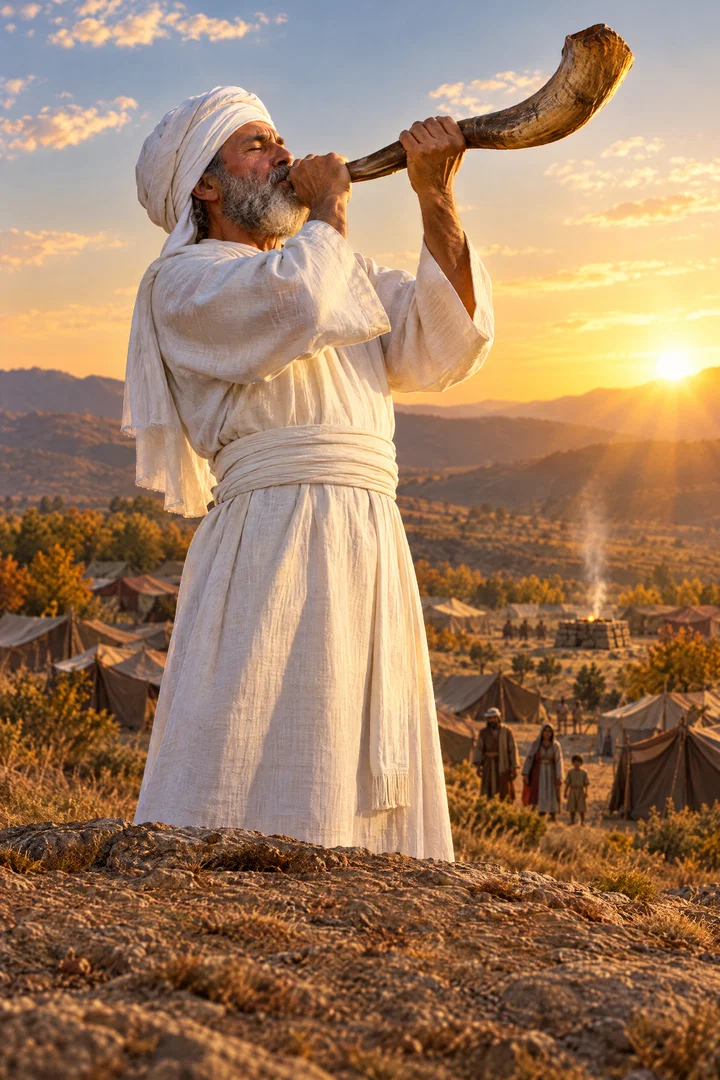
Cross-references
- Leviticus 23:24-25
Speak unto the children of Israel, saying, In the seventh month, in the first day of the month, shall ye have a sabbath, a memorial of blowing of trumpets, an holy convocation.
Both command a holy convocation and rest on the first day of the seventh month.
- Numbers 28
And the LORD spake unto Moses, saying,
Together with Numbers 29, it gives instructions for appointed offerings and services.
Commentary
Each commentary is drawn from primary sources: the writings of Ellen G. White and Adventist pioneers and periodicals. Each commentary is separate. Its own words are not a quotation; follow the references to read the source passages.
Pioneers and periodicals
11 sources
Numbers 29:1 appoints the first day of the seventh month as an annual Sabbath and holy convocation, a day of blowing the trumpets on which no servile work was to be done and prescribed offerings were to be presented.RH Jan 14, 1862RH Jan 22, 1914ST Nov 28, 1892 It fell in Tisri, the first month of the civil year and New Year's Day, commemorating the creation of the world, when trumpets and horns were blown in Jerusalem from morning until evening.RH Jan 22, 1914 It belongs to the additional services for annual Sabbaths, new moons and feasts that were added to the regular daily service and formed part of the continual year-round ministration in the holy place, distinct from the yearly work on the tenth day of the seventh month when ministration entered the most holy place for the cleansing of the sanctuary.ST Nov 28, 1892RH Feb 3, 1853 Standing with the morning and evening sacrifices called the continual burnt offering, it helps show that the continual in Daniel 8 comprehended the entire divinely appointed service of the earthly sanctuary, which was a figure of the heavenly sanctuary above.ST Oct 13, 1909 The seventh-month observances were considered as a possible chronological type of events connected with the second advent rather than conclusive evidence for its date, and since preliminary burnt offerings did not prevent Passover, firstfruits and Pentecost from meeting their antitypes exactly as to time, the grand work of the tenth day of the seventh month must have its antitype commence on the tenth day of the seventh month of some year, though it may then extend forward according to its magnitude.RH Oct 30, 1855RH Aug 27, 1857
Feast and Its Observance
The first day of the seventh month was appointed as an annual Sabbath and holy convocation, a day of blowing the trumpets on which no servile or ordinary work was to be done and the prescribed offerings were to be presented.RH Jan 14, 1862ST Nov 28, 1892RH Aug 27, 1857RH Mar 8, 1870RH Mar 28, 1854 It belonged among the additional services appointed for the annual Sabbaths, new moons and feasts, distinct from individual offerings for sin, and was carried on continuously through the year as part of the regular round of sanctuary service with the morning and evening sacrifice and incense.ST Nov 28, 1892RH Mar 8, 1870RH Mar 28, 1854 It is counted as the fourth annual Sabbath.RH Jan 22, 1914 It was also considered as one of the seventh-month observances that might chronologically typify events connected with the second advent, though presented as a subject for consideration rather than conclusive evidence for the date of the Advent.RH Aug 27, 1857
The day fell on Tisri, which was the first month of the civil year and New Year's Day.RH Jan 22, 1914 It commemorated the creation of the world.RH Jan 22, 1914 Israel was to gather for a holy convocation, servile work was forbidden, and various offerings were brought to the Lord.RH Jan 22, 1914 Trumpets and horns were blown in Jerusalem from morning until evening.RH Jan 22, 1914
The great number of burnt offerings in the sanctuary service surrounding this appointment each had a drink-offering of strong wine poured out upon it.ST May 19, 1914 That wine was never drunk freely by priests and worshipers.ST May 19, 1914 The large number of sacrifices therefore required a large quantity of wine.ST May 19, 1914 This explains why wine is mentioned so often in connection with the sanctuary service.ST May 19, 1914
Place in Sanctuary Service
The verse belongs to the additional and special services appointed for annual Sabbaths, new moons, and feasts, which were additions to the regular daily service.RH Mar 8, 1870RH Feb 25, 1858RH Mar 28, 1854 Those additions formed part of the regular ministration and yearly cycle of the earthly sanctuary carried on continuously through the year.ST Nov 28, 1892RH Mar 8, 1870RH Feb 25, 1858 Among them was the holy convocation on the first day of the seventh month, on which no servile work was to be done as a day of blowing the trumpets, with its prescribed special offering.ST Nov 28, 1892RH Mar 8, 1870RH Mar 28, 1854 The trumpet-blowing itself was part of the additional services appointed for Israel's annual feasts and sacred days.RH Feb 25, 1858RH Mar 28, 1854
Numbers 28 and 29 set out the general regular offerings of the sanctuary, distinct from individual offerings for sin.ST Nov 28, 1892 They include the regular morning and evening sacrifice, the morning and evening incense, and the special offerings for the weekly Sabbath, the annual Sabbaths, new moons, and feasts.ST Nov 28, 1892 The special work of this verse was performed in the holy place as part of that continual ministration through the year, alongside the regular morning and evening burnt-offering, the burning of sweet incense when the lamps were lighted morning and evening, and the special work for individuals presenting their particular offerings.ST Nov 28, 1892RH Feb 3, 1853 That holy-place continual ministration through the year is distinct from the yearly work on the tenth day of the seventh month, when the ministration changed from the holy place to the most holy place for the sins of the people and for the cleansing of the sanctuary.RH Feb 3, 1853
Standing in Numbers 28 and 29, where the morning and evening sacrifices offered for the entire congregation every day of the year and never omitted because of any other offerings are about sixteen times called the continual burnt offering, the verse helps show that the continual in Daniel 8 comprehended the entire divinely ordained service of the earthly sanctuary.ST Oct 13, 1909 Because that earthly service in all its appointments was a figure of the heavenly sanctuary, the term applies with equal force to the sanctuary above.ST Oct 13, 1909
Prophetic Timing and Antitype
The first day of the seventh month was a yearly holy convocation and a day for blowing trumpets, on which no ordinary work was to be done.RH Aug 27, 1857 It stands among the seventh-month observances that may chronologically typify events connected with the second advent.RH Aug 27, 1857 That typical bearing is set forth as a subject for consideration rather than as conclusive evidence for the date of the Advent.RH Aug 27, 1857
The seventh-month offerings do not establish a long preliminary work before the cleansing of the sanctuary.RH Oct 30, 1855 Scripture is silent on whether the burnt offerings and other offerings of the Day of Atonement portion in Numbers 29:7-11 were presented before the high priest entered the most holy place or after he came out at the time described in Leviticus 16:23-24.RH Oct 30, 1855 Mere preliminary and circumstantial offerings did not keep the grand event of the day from meeting its antitype on the very day pointed out in the type.RH Oct 30, 1855 The Passover, the day of firstfruits, and Pentecost each involved the same work of burnt offerings, yet each was fulfilled exactly as to time.RH Oct 30, 1855 Therefore the grand work of the tenth day of the seventh month, performed in the holiest, must have its antitype commence on the tenth day of the seventh month of some year, though beginning on the day of the type it may extend forward a great distance corresponding to its magnitude and importance.RH Oct 30, 1855
Sources