Translations
I thank my God, making mention of you always in my prayers,
King James Version, KJV Cambridge Paragraph Bible, Webster Bible
I thank my God, making mention of thee always in my prayers,
Revised Version, American Standard Version
I thank my God always, making mention of thee in my prayers,
I give thanks to my God, always making mention of thee in my prayers,
I thank my God, always making mention of thee at my prayers,
I am giving thanks unto my God—always, making mention, of thee, in my prayers,
Berean Standard Bible, Majority Standard Bible
I always thank my God, remembering you in my prayers,
I thank my God always, making mention of you in my prayers,
I give praise to God at all times and make prayer for you,
I giue thanks to my God, making mention alwaies of thee in my praiers,
Douay-Rheims (Challoner revision)
I give thanks to my God, always making a remembrance of thee in my prayers.
Pictures

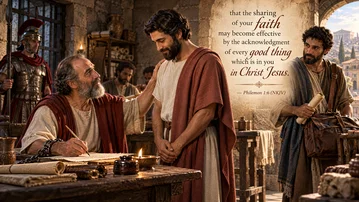
Commentary
Each commentary is drawn from primary sources: the writings of Ellen G. White and Adventist pioneers and periodicals. Each commentary is separate. Its own words are not a quotation; follow the references to read the source passages.
Ellen G. White
3 sources
The verse belongs to Paul's letter to Philemon from the time of his voyage to Italy, his landing at Puteoli, and his coming to Rome as a prisoner bound to a soldier, when the Christians in Italy who had received his letter to the Romans and had long looked for his visit learned of his approach and came to meet and welcome him.AA 447.2 The letter was carried by Onesimus to plead the cause of the repentant slave and to express the desire to retain his services.AA 456.3–457.1 The verse is an affectionate greeting to Philemon as friend and fellow-laborer at the beginning of the letter.AA 456.3–457.1 In it Paul regularly remembers Philemon in prayer and thanks God for him, mentioning him always in his prayers.SLP 285.2–3AA 456.3–457.1
The thanksgiving is given upon hearing of Philemon's love and faith toward the Lord Jesus and toward all saints.AA 456.3–457.1 It reminds Philemon that every good purpose and trait of character he possesses is due to the grace of Christ, which alone makes him different from the perverse and the sinful, and that the same grace can make a debased criminal a child of God and a useful laborer in the gospel.AA 456.3–457.1
Sources
Pioneers and periodicals
2 sources
The verse stands in a short letter composed by Paul about A.D. 64 while he was a prisoner at Rome.ST Jan 9, 1907 It was carried back to Colosse by Philemon's runaway servant Onesimus on his return to his master, and Onesimus at the same time also carried Paul's letter to the church at Colosse.ST Jan 9, 1907 The letter is the account of the conversion of the escaped slave Onesimus.ST Jan 9, 1907 In the verse Paul thanks God for Philemon and regularly remembers him in prayer.ST Nov 28, 1911
Sources