Proverbs 6:8
Provideth her meat in the summer, and gathereth her food in the harvest.
Translations
Provides her meat in the summer, and gathers her food in the harvest.
King James Version, Revised Version
Provideth her meat in the summer, and gathereth her food in the harvest.
Provideth her meat in the summer,
And gathereth her food in the harvest.Provideth her provisions in the summer, and gathereth her food in the harvest.
Provideth her bread in the summer,
And gathereth her food in the harvest.She doth prepare in summer her bread, She hath gathered in harvest her food.
provideth her bread in the summer, [ and] gathereth her food in the harvest.
Prepareth, in the summer, her food, hath collected, in the harvest, her sustenance.
Berean Standard Bible, Majority Standard Bible
it prepares its provisions in summer;
it gathers its food at harvest.provides her bread in the summer,
and gathers her food in the harvest.She gets her meat in the summer, storing up food at the time of the grain-cutting.
Prepareth her meat in the sommer, and gathereth her foode in haruest.
Douay-Rheims (Challoner revision)
Provideth her meat for herself in the summer, and gathereth her food in the harvest.
Pictures
Cross-references
- Proverbs 24:30-34
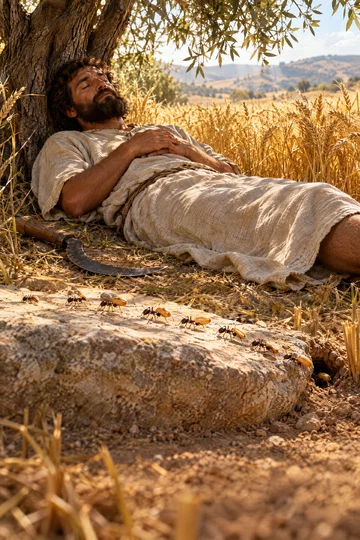
I went by the field of the slothful, and by the vineyard of the man void of understanding;
A neglected field shows the consequences of sloth and the value of diligence.
- Proverbs 30:25
The ants are a people not strong, yet they prepare their meat in the summer;
Both describe ants preparing food in summer.
- Proverbs 20:4
The sluggard will not plow by reason of the cold; therefore shall he beg in harvest, and have nothing.
The sluggard fails to work in season and later has nothing.
Commentary
Each commentary is drawn from primary sources: the writings of Ellen G. White and Adventist pioneers and periodicals. Each commentary is separate. Its own words are not a quotation; follow the references to read the source passages.
Ellen G. White
6 sources
The ant provides its meat in summer and gathers its food in harvest, storing up provision in its proper season.CT 190.1–2Ms 35, 1899, par. 3–413MR 336.1–24T 455.2RH Jun 6, 1912 It does this by steady labor, diligence, perseverance, and foresight, preparing for future seasons while opportunity lasts.CT 190.1–2Ms 35, 1899, par. 3–413MR 336.1–2 This preparing and storing is done without a guide, overseer, or ruler to direct it.4T 455.2
By this example idleness is reproved as sinful, and wasting time in inactivity is rebuked, with diligence set in direct contrast to the sluggard.CT 190.1–2Ms 35, 1899, par. 3–413MR 336.1–2RH Jun 6, 1912 Diligence and faithfulness are taught, calling for the wise use of the abilities God has given.CT 190.1–2Ms 35, 1899, par. 3–413MR 336.1–24T 455.2 That faithfulness means doing diligently and faithfully the appointed work that God calls His people to do.4T 455.2RH Jun 6, 1912
Like the ant that gathers in season, a person should work industriously and live frugally rather than depend on others, making self-support a worthy ambition.2T 308.1 In the same way, provision for coming seasons teaches preparation for the future immortal life that God has secured and provided for fallen humanity.CT 190.1–2Ms 35, 1899, par. 3–413MR 336.1–2
Sources
Pioneers and periodicals
22 sources
The verse shows the ant working diligently in summer and harvest, the favorable and proper season, to provide and store food ahead for a future time of need, scarcity and winter, all without guide, overseer or ruler but on her own initiative.RH May 18, 1916RH Oct 4, 1864RH Feb 13, 1913ST Apr 29, 1903RH May 27, 1915 It holds her up as a teacher of wisdom, industry, thrift, foresight and purposeful labor at the right time, condemning the laziness, idleness and neglect of the sluggard that leads to hunger and want.RH May 18, 1916RH Oct 4, 1864ST Apr 29, 1903 It therefore calls people to labor faithfully to supply their own necessities and those of their household and dependents, rather than living indolently or expecting what they have not worked for.RH Feb 13, 1913RH Mar 21, 1912 Beyond temporal provision, it seeks to awaken those sleeping over important and eternal things to practical duty and energetic activity in the cause of God and the work He gives, doing with might whatever present duty the hand finds, even small duties, instead of idly waiting.RH Sep 3, 1872ST Jan 25, 1905RH Feb 5, 1914 Applied to the soul, sluggard habits are shameful and must give way to spiritual wakefulness and readiness for Christ's return, lest those who heed for a time sink back into spiritual idleness and everlasting slumber.RH Sep 3, 1872ST Jan 25, 1905RH Feb 5, 1914
The Ant's Provident Work
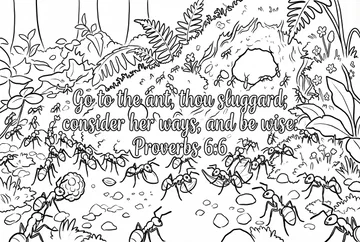
The ant provides her meat in the summer and gathers her food in the harvest, working diligently in the favorable and proper season to prepare and store ahead for a future time of need, scarcity and winter.RH May 18, 1916ST Apr 29, 1903RH May 27, 1915RH Jul 26, 1906ST Oct 23, 1901 This seasonal providing and gathering is foresight and thrift put into action, industry rather than laziness, working in season rather than neglecting sowing and reaping and then suffering hunger and want in winter.RH May 18, 1916ST Apr 29, 1903RH May 27, 1915ST Oct 23, 1901ST Oct 21, 1930 The lesson is set in the natural world as a teacher of wisdom, so that the sluggard learns from the ant to prepare diligently instead of neglecting work.RH May 18, 1916RH May 27, 1915RH Jul 26, 1906ST Oct 23, 1901ST Oct 21, 1930
She does this work without a guide, overseer or ruler, laboring independently and on her own initiative.RH Oct 4, 1864RH Feb 13, 1913 That self-moved diligence commends preparing and working at the right time rather than idling, exercising industry and foresight in the summer and harvest seasons to meet the coming time of need.RH Oct 4, 1864RH Feb 13, 1913 So the household is provided for out of faithful labor for its own necessities and for those dependent on it, rather than expecting what has not been worked for.RH Oct 4, 1864RH Feb 13, 1913
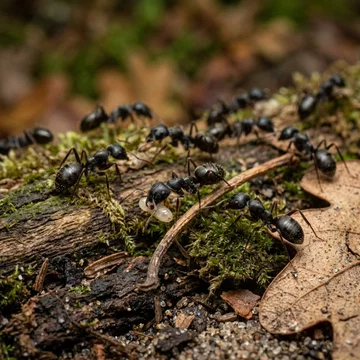
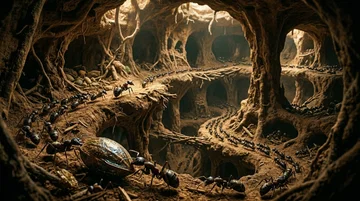
The description holds true to nature, for some ants store millet seeds to eat during stormy weather, showing that gathering when food is available and keeping it for later need is accurate.ST Apr 10, 1879 Leaf-carrying ants likewise carry and knead leaves, not to eat them, but to grow the fungus that produces their food, which is the ant's way of working to provide its food.ST Nov 14, 1900 Ants live in a house in the sand and forage abroad for food, doing their best to lay in a supply for the future, and together with the bee gathering a store for winter this shows that every living thing has a definite place and a work to perform in industrious, purposeful labor.ST Apr 10, 1879ST Nov 14, 1900ST Jun 3, 1908
Diligence Taught and Applied
The ant stands as a teacher of wisdom, industry, thrift, foresight and purposeful labor, showing what it means to prepare ahead by securing food in summer and at harvest through diligent work rather than laziness.RH May 18, 1916RH Oct 4, 1864ST Apr 29, 1903RH May 27, 1915ST Oct 21, 1930 Without waiting to be directed, she works at the right time and in season, and her example rebukes the sluggard's idleness, neglect and failure to sow and reap, which ends in hunger and want in winter.RH Jun 6, 1912RH Oct 4, 1864ST Apr 29, 1903RH May 27, 1915ST Oct 21, 1930 The contrast is deliberate: timely gathering and storing against future need on the one hand, inactivity and unpreparedness on the other.RH Jun 6, 1912RH May 18, 1916RH May 27, 1915
Faithful toil for daily need is the duty taught here, for people are to labor to supply their own necessities and those of their household and dependents.RH Feb 13, 1913RH Mar 21, 1912 Indolence and indifference toward self-support are condemned, and no one should expect to live on what he has not worked for, since the ant herself works independently in the favorable season to meet the coming time of need.RH Feb 13, 1913RH Mar 21, 1912
Labor must be active and timely, done now and not put off until a supposedly better time.RH Jan 24, 1907 The season of opportunity is to be used while food is available, because gathering then prevents hardship after it has passed, as seen when a young man spends his summer fishing and later struggles to make a living in old age.RH Jan 24, 1907RH Sep 28, 1916
Diligence is not manual work alone, for refusing to use a capable mind for a useful purpose is sloth just as surely as refusing manual work for the necessities of life, and living in want through idleness is the sluggard's portion.ST Apr 14, 1887 Useful industry is commended and idleness condemned as sin, showing that even the Sabbath was not intended for mere inactivity.RH Apr 3, 1900 Yet the call to diligence does not make immediate rising a virtue in itself, since people, especially children, need enough sleep.ST Apr 17, 1879
The lesson reaches beyond the field to awaken those sleeping over important and eternal things to a practical sense of duty and energetic activity in the cause of God and the work He calls His people to do.RH Jun 6, 1912RH Sep 3, 1872 Life is real and demands work rather than idle waiting for a miracle or for a greater work, so whatever present duty the hand finds, even duties counted small, is to be done with might.RH Sep 3, 1872 Small faithful work revives where inactivity has brought decline, and it prepares the way for a more extended field in the Lord's vineyard.RH Sep 3, 1872 Applied to the soul, sluggard habits are shameful and must give way to spiritual wakefulness and readiness for Christ's return, with diligent gathering in the proper season set against those who knowingly walk into harmful temptations with less foresight than small creatures, and with warning lest those who heed for a time sink back into spiritual idleness and everlasting slumber.ST Jan 25, 1905RH Feb 5, 1914RH Sep 9, 1858
Sources