Psalms 11:1
In the LORD put I my trust: how say ye to my soul, Flee as a bird to your mountain?
Translations
In the LORD put I my trust: how say you to my soul, Flee as a bird to your mountain?
King James Version, Revised Version
In the LORD put I my trust: how say ye to my soul, Flee as a bird to your mountain?
In the Lord put I my trust:
How say ye to my soul,
Flee as a bird to your mountain?To the chief Musician, A Psalm of David. In the LORD I put my trust: how say ye to my soul, Flee as a bird to your mountain?
In Jehovah do I take refuge:
How say ye to my soul,
Flee as a bird to your mountain;To the Overseer. — By David. In Jehovah I trusted, how say ye to my soul, 'They moved [to] Thy mountain for the bird?
In Jehovah have I put my trust: how say ye to my soul, Flee [ as] a bird to your mountain?
In Yahweh, have I sought refuge. How can ye say to my soul, Flee to a mountain like a little bird;
In the LORD I take refuge.
How then can you say to me:
“ Flee like a bird to your mountain!For the choirmaster. Of David. In the LORD I take refuge. How then can you say to me: “ Flee like a bird to your mountain!
In the LORD, I take refuge.
How can you say to my soul, “ Flee as a bird to your mountain”?In the Lord put I my faith; how will you say to my soul, Go in flight like a bird to the mountain?
To him that excelleth. A Psalme of Dauid. In the Lord put I my trust: howe say yee then to my soule, Flee to your mountaine as a birde?
Douay-Rheims (Challoner revision)
Unto the end. A psalm for David.
In the Lord I put my trust: how then do you say to my soul: Get thee away from hence to the mountain like a sparrow?
Pictures
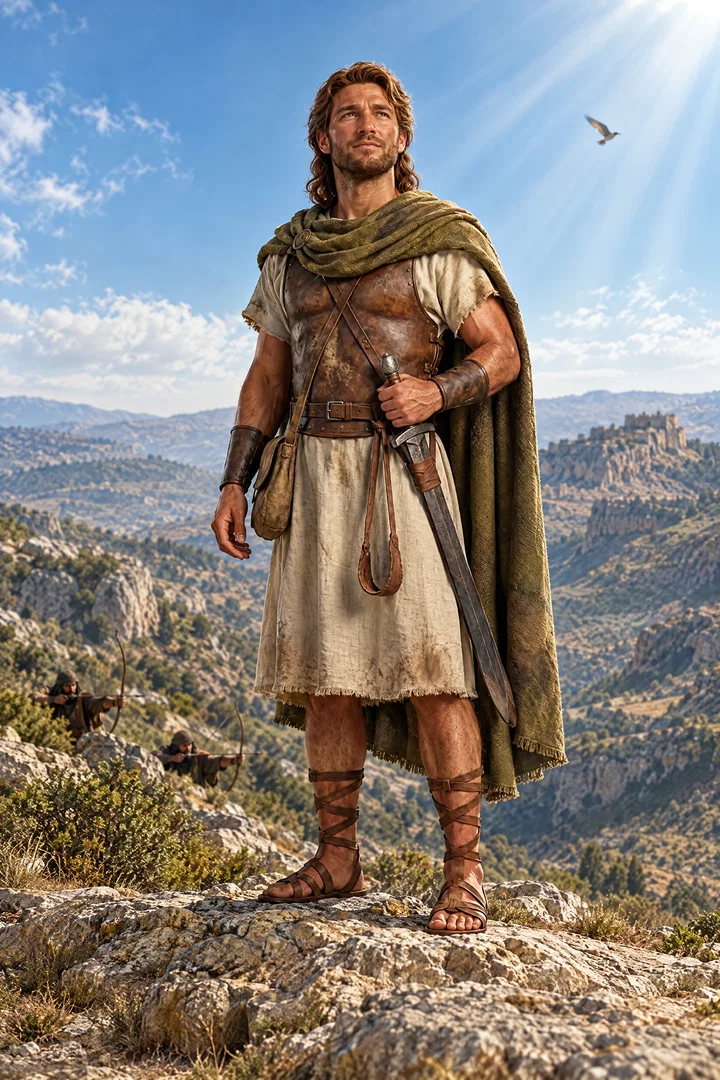
Commentary
Each commentary is drawn from primary sources: the writings of Ellen G. White and Adventist pioneers and periodicals. Each commentary is separate. Its own words are not a quotation; follow the references to read the source passages.
Ellen G. White
2 sources
David spoke these words as a hunted fugitive, affirming his trust in the Lord and refusing the urging to flee to the mountain like a bird.PP 660.4 After Jonathan's visit he sang them as a song of praise to strengthen and encourage his own soul, accompanying his voice with his harp.PP 660.4 That trust stands as the answer to counsel to run away when the wicked threaten those who do right.Lt 224, 1906, par. 18–20 The lines that follow set out the peril in detail and raise the question of what the righteous can do if the foundations are destroyed.Lt 224, 1906, par. 18–20 The answer given is that the Lord is still enthroned in heaven, watching and testing people, loving righteousness, judging the wicked, and looking with favor upon the upright.Lt 224, 1906, par. 18–20
Sources
Pioneers and periodicals
1 source
The mountain is a symbol of a place of refuge and safety.ST Oct 31, 1906 It is pictured as shelter for one who is hunted and endangered, fleeing for life.ST Oct 31, 1906 The urging to flee to the mountain points the soul to God as its secure refuge.ST Oct 31, 1906 In this it belongs with other mountain images of divine protection, picturing His strength and salvation.ST Oct 31, 1906 Mountains of earth also symbolize earthly kingdoms.
Sources