Psalms 18:13
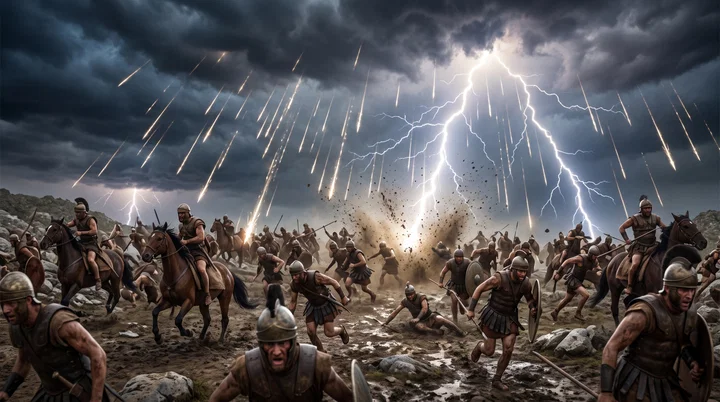
The LORD also thundered in the heavens, and the Highest gave his voice; hail stones and coals of fire.
Translations
American King James Version, King James Version, Webster Bible
The LORD also thundered in the heavens, and the Highest gave his voice; hail stones and coals of fire.
The Lord also thundered in the heavens,
And the Highest gave his voice;
Hail- stones and coals of fire.The LORD also thundered in the heavens, and the Most High uttered his voice; hailstones and coals of fire.
Jehovah also thundered in the heavens,
And the Most High uttered his voice,
Hailstones and coals of fire.And thunder in the heavens doth Jehovah, And the Most High giveth forth His voice, Hail and coals of fire.
And Jehovah thundered in the heavens, and the Most High uttered his voice: hail and coals of fire.
Then did Yahweh thunder in the heavens, and the Highest uttered his voice,—hail, and live coals of fire.
Berean Standard Bible, Majority Standard Bible
The LORD thundered from heaven;
the voice of the Most High resounded—
hailstones and coals of fire.The LORD also thundered in the sky.
The Most High uttered his voice:
hailstones and coals of fire.The Lord made thunder in the heavens, and the voice of the Highest was sounding out: a rain of ice and fire.
The Lord also thundred in the heauen, and the Highest gaue his voyce, haylestones and coales of fire.
Douay-Rheims (Challoner revision)
And the Lord thundered from heaven, and the highest gave his voice: hail and coals of fire.
Pictures
Cross-references
- 2 Samuel 22:14
The LORD thundered from heaven, and the most High uttered his voice.
Both describe the Lord thundering from heaven and uttering his voice.
- Psalms 144:5-6
Bow thy heavens, O LORD, and come down: touch the mountains, and they shall smoke.
Both describe God’s descent with mountains smoking and lightning.
- Psalms 81:7
Thou calledst in trouble, and I delivered thee; I answered thee in the secret place of thunder: I proved thee at the waters of Meribah. Selah.
Both describe God's thundering voice at Sinai.
Commentary
Each commentary is drawn from primary sources: the writings of Ellen G. White and Adventist pioneers and periodicals. Each commentary is separate. Its own words are not a quotation; follow the references to read the source passages.
Pioneers and periodicals
13 sources
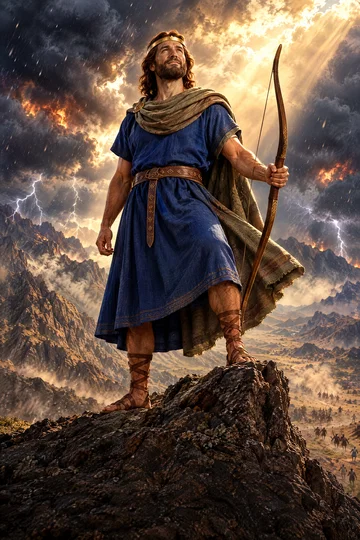
David sang this when he cried to the Lord in deep trouble under Saul and was delivered and set firm in the kingdom before his great sin, and the song stands both as Psalm 18 and as 2 Samuel 22 in closely similar but not identical form.ST Apr 19, 1910ST Jan 7, 1889ST Aug 27, 1896 The Lord answers the sufferer by bowing the heavens and coming down, thundering on high and sending hailstones and coals of fire before the brightness of His presence to draw him out of many waters.RH Mar 10, 1868ST Jan 7, 1889ST Apr 22, 1875 That thunder and fire are His direct coming in wrath to scatter His foes, with earthquake and storm as only the means He uses and not the cause.RH Mar 10, 1868ST Aug 13, 1902RH Mar 10, 1868 The voice of the Highest is the voice of Jehovah the Creator heard at Mount Sinai amid clouds and darkness when He spoke His ten-commandment law to a people who had grown half-heathen in Egypt.RH Feb 3, 1910 Prophetically it pictures Christ's life-and-death struggle with the enemy and His victory and kingdom, and it shows that the cry of faith moves heaven as well as earth.RH Jun 6, 1912ST Jan 7, 1889RH Jun 12, 1855ST Aug 27, 1896
Setting and Storm Imagery
Psalm 18 is David's song of thanksgiving for deliverance from the hand of Saul, given when in deep trouble he cried unto the Lord.ST Jan 7, 1889RH Feb 18, 1875 It was composed after his victory over Saul and establishment in the kingdom, but before his great sin.ST Aug 27, 1896 It is preserved as Psalm 18 and also recorded in 2 Samuel 22, the two being strongly similar but not exactly alike.ST Apr 19, 1910RH Feb 18, 1875
The verse portrays the Lord answering by thundering in the heavens, the Highest giving His voice in power with hailstones and coals of fire.RH Mar 10, 1868ST Jan 7, 1889RH Mar 10, 1868 He bows the heavens and comes down and rides upon heaven and the sky to take the sufferer and draw him out of many waters.ST Jan 7, 1889 It is a shower of hail and fire sent before the brightness of His presence, appearing in fiery glory amid dark clouds as a visible, awe-inspiring manifestation.RH Mar 10, 1868ST Apr 22, 1875RH Jan 20, 1874
The thunder, hail, and fire are His coming in wrath to strike a guilty world and scatter His foes by arrows and lightning.RH Mar 10, 1868RH Mar 10, 1868 They are the direct mandate and manifestation of the Eternal Omnipotent One when He is wroth, bringing the various elements of destruction into contact with each other.ST Aug 13, 1902 The internal fires of the earth and other seismic forces are only the means or agencies by which the shaking, smoking mountains, thunder, lightning, hail, and fire are accomplished, not the cause.ST Aug 13, 1902
The voice of the Highest is the voice of Jehovah, the Creator of heaven and earth, speaking at Mount Sinai when He declared His holy law, the ten words afterward graven on stony tablets.RH Feb 3, 1910 His thundering voice revealed His power amid clouds and thick darkness and the droppings of the heavens.RH Feb 3, 1910 This display of power was given because Israel, made semiheathen in Egypt, had only a very indistinct knowledge of the true God and needed to learn the difference between the impotent gods known in Egypt and Jehovah.RH Feb 3, 1910
Prophecy Doctrine and Application
Psalm 18 is a prophetic word-picture in which David foresaw and felt the life-and-death struggles of Christ with the enemy, giving insight into Christ's experience of suffering and temptation.RH Jun 6, 1912 It is counted among Christ's resurrection psalms.RH Jun 12, 1855 Composed after victory over Saul and establishment in the kingdom but before the great sin, David's victories and kingdom point to Christ's victory over sin and spiritual foes and to Christ's kingdom.ST Aug 27, 1896
The verse belongs to David's testimony of being in deep trouble and crying unto the Lord, and it shows faith as a lever resting on the throne of the eternal God that moves heaven as well as earth.ST Jan 7, 1889 The reason is that God answers that cry by thundering in the heavens and giving His voice with hailstones and coals of fire, bowing the heavens and coming down and riding upon heaven and the sky in help to take the sufferer and draw him out of many waters.ST Jan 7, 1889
The portrayal of the Lord appearing in fiery glory amid dark clouds, with thunder, hail, and fire, is a visible, awe-inspiring manifestation of divine glory that supports the sense of appearing in glory in Psalm 102:16.RH Jan 20, 1874 The same hailstones and coals of fire describe the destructive effect of words spoken by those who excuse gossip and fault-finding as honesty.RH Jul 14, 1868
Sources