Psalms 18:34
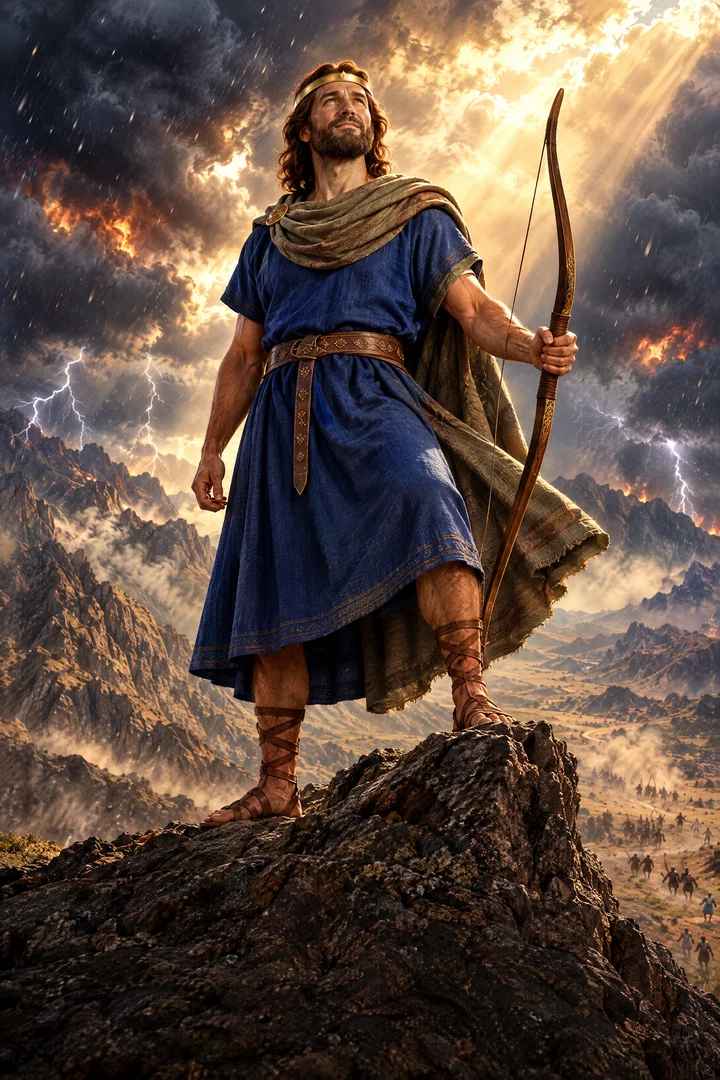
He teacheth my hands to war, so that a bow of steel is broken by mine arms.
Translations
He teaches my hands to war, so that a bow of steel is broken by my arms.
He teacheth my hands to war, so that a bow of steel is broken by mine arms.
He teacheth my hands to war,
So that a bow of steel is broken by mine arms.He teacheth my hands to war, so that a bow of steel is broken by my arms.
He teacheth my hands to war; so that mine arms do bend a bow of brass.
He teacheth my hands to war;
So that mine arms do bend a bow of brass.Teaching my hands for battle, And a bow of brass was brought down by my arms.
Who teacheth my hands to war, and mine arms bend a bow of brass;
Teaching my hands to war,—so that a bow of bronze was bent by mine arms.
Berean Standard Bible, Majority Standard Bible
He trains my hands for battle;
my arms can bend a bow of bronze.He teaches my hands to war,
so that my arms bend a bow of bronze.He makes my hands expert in war, so that a bow of brass is bent by my arms.
He teacheth mine hands to fight: so that a bowe of brasse is broken with mine armes.
Douay-Rheims (Challoner revision)
Who teacheth my hands to war: and thou hast made my arms like a brazen bow.
Pictures
Cross-references
- 2 Samuel 22:35
He teacheth my hands to war; so that a bow of steel is broken by mine arms.
God trains David for battle in the parallel song.
- 2 Samuel 10:8-19
And the children of Ammon came out, and put the battle in array at the entering in of the gate: and the Syrians of Zoba, and of Rehob, and Ish-tob, and Maacah, were by themselves in the field.
The psalm is connected with the events described here.
Commentary
Each commentary is drawn from primary sources: the writings of Ellen G. White and Adventist pioneers and periodicals. Each commentary is separate. Its own words are not a quotation; follow the references to read the source passages.
Ellen G. White
1 source
God trains human hands for warfare, imparting both strength and skill for battle.Lt 142, 1902, par. 18–19 By that teaching the arms are made capable of breaking a bow of steel.Lt 142, 1902, par. 18–19 Military strength and success therefore come from God.Lt 142, 1902, par. 18–19
Sources
Pioneers and periodicals
10 sources
The verse belongs to David's song of triumph and thanksgiving for deliverance from his enemies, including deliverance from the hand of Saul, and it expresses confidence in God's power.ST Mar 14, 1911RH Feb 18, 1875 The psalm closely resembles the song recorded in 2 Samuel 22, though the two are not exactly alike.ST Apr 19, 1910RH Feb 18, 1875 The Samuel record shows its historical connection, while the psalm record presents it as part of the collection of David's writings.RH Feb 18, 1875
The verse means that God trains the speaker's hands for war and gives strength and skill to break a bow of steel and to overcome otherwise formidable opposition.RH Apr 7, 1868ST Aug 27, 1896RH Apr 7, 1868 Psalm 18 is one of Christ's resurrection psalms.RH Jun 12, 1855 David's victories described in the verse also point to Christ's victory for believers over sin and spiritual enemies.ST Aug 27, 1896 The verse is part of Old Testament instruction that remains relevant to Christians, since its moral teaching is not confined to Israel as a nationality.RH Mar 5, 1857
The verse shows that God trains and equips a person for demanding work, so that divine power is the source of capability and steadfastness for the trained nurse in formidable duties.RH Aug 9, 1906 It shows God girding His people and teaching their hands to war when hostile hordes draw near and the country needs all its children to answer the stirring battle call without dallying, hesitating, or doubting.ST Aug 7, 1893 The war is not a literal battle with bloody garments and rattling deadly shots, but bad confronted by good, error by truth, and wrong by right, which awakens terror because sin is great and strong.ST Aug 7, 1893 In answer to long prayer for open doors, the Lord rises and girds His people to meet the coming throng, and where God's own hand leads they dare to go without further pleading, fear no overthrow, and go forward with a victor shout.ST Aug 7, 1893
Sources