Psalms 18:40
Thou hast also given me the necks of mine enemies; that I might destroy them that hate me.
Translations
You have also given me the necks of my enemies; that I might destroy them that hate me.
Thou hast also given me the necks of mine enemies; that I might destroy them that hate me.
Thou hast also given me the necks of mine enemies;
That I might destroy them that hate me.Thou hast also given me the necks of my enemies; that I might destroy them that hate me.
Thou hast also made mine enemies turn their backs unto me, that I might cut off them that hate me.
Thou hast also made mine enemies turn their backs unto me,
That I might cut off them that hate me.As to mine enemies — Thou hast given to me the neck, As to those hating me — I cut them off.
And mine enemies didst thou make to turn their backs unto me, and those that hated me I destroyed.
As for my foes, thou didst give me their neck, and, as for them who hated me, I destroyed them.
You have made my enemies retreat before me;
I put an end to those who hated me.You have made my enemies retreat before me; I destroyed those who hated me.
You have also made my enemies turn their backs to me,
that I might cut off those who hate me.By you their backs are turned in flight, so that my haters are cut off.
And thou hast giuen me the neckes of mine enemies, that I might destroy them that hate me.
Douay-Rheims (Challoner revision)
And thou hast made my enemies turn their back upon me, and hast destroyed them that hated me.
Pictures
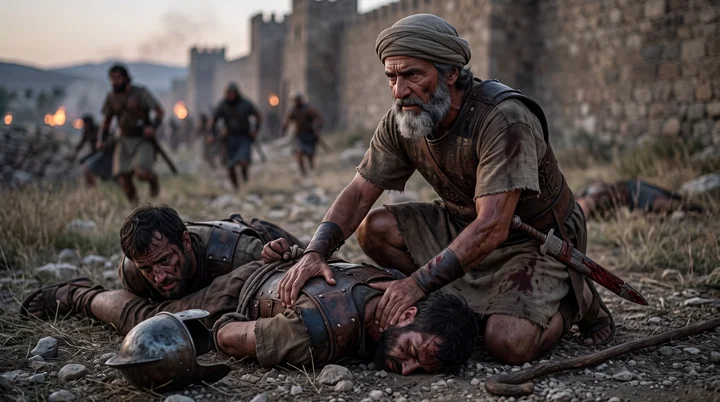
Cross-references
- 2 Samuel 22
And David spake unto the LORD the words of this song in the day that the LORD had delivered him out of the hand of all his enemies, and out of the hand of Saul:
A closely parallel version of David’s triumphant psalm.
- 2 Samuel 22:41
Thou hast also given me the necks of mine enemies, that I might destroy them that hate me.
Parallel account of God giving David victory.
- 2 Samuel 10:8-19
And the children of Ammon came out, and put the battle in array at the entering in of the gate: and the Syrians of Zoba, and of Rehob, and Ish-tob, and Maacah, were by themselves in the field.
The psalm illuminates David’s experiences during these events.
Commentary
Each commentary is drawn from primary sources: the writings of Ellen G. White and Adventist pioneers and periodicals. Each commentary is separate. Its own words are not a quotation; follow the references to read the source passages.
Pioneers and periodicals
8 sources
It is part of David's triumphant song celebrating marvelous deliverance from enemies on the field of victory.ST Mar 14, 1911ST Apr 19, 1910
It is David's thanksgiving for being delivered from the hand of Saul.RH Feb 18, 1875
The same psalm is recorded in 2 Samuel 22, where its historical connection is shown, while Psalm 18 presents it as part of the collection of David's writings, and the two chapters parallel each other closely but are not exactly alike.ST Apr 19, 1910RH Feb 18, 1875
It means that God gives victory by making enemies submit, so that those who hate may be brought down, and David credits God rather than himself for the victory.RH Apr 7, 1868ST Aug 27, 1896
It shows mistrust of human strength and exaltation of divine power, expressing confidence in God's might and goodness and assurance that all wickedness will finally be overthrown and all good will triumph.ST Mar 14, 1911
It belongs to a prophetic picture of Christ's life-and-death struggles with the enemy, portraying conflict and triumph, without further specification of its individual meaning.RH Jun 6, 1912
In connection with Christ, the psalm is about resurrection, in which he was lifted up and his foes were not allowed to rejoice over him.RH Jun 12, 1855
It reflects something of the experience of Christ as the greater Son of David.ST Mar 14, 1911
It points to Christ's victory on behalf of believers and within them over sin and spiritual foes.ST Aug 27, 1896
Though part of the Old Testament given to the Jews as God's people in that dispensation, its moral principles also concern Christians as God's people now, for the whole Bible reveals to fallen humanity the plan of redemption and resulting duty, so every part is to be learned for that duty, just as letters addressed to the Romans, Corinthians, Galatians, Ephesians, Philippians, Colossians, Thessalonians, Hebrews, scattered strangers, and the seven churches in Asia concern all Christians and not only those directly addressed.RH Mar 5, 1857
It is instructive, devout, helpful, elevating and worshipful, teaching trust and confidence in God.ST Mar 14, 1911
Sources