Psalms 76:6
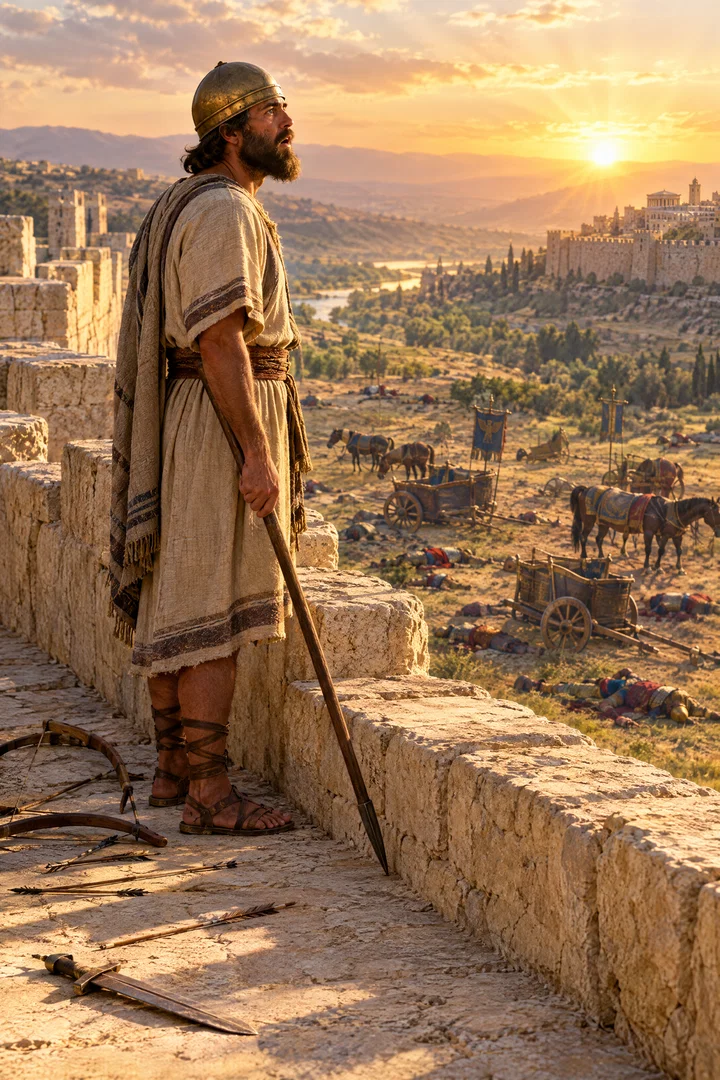
At thy rebuke, O God of Jacob, both the chariot and horse are cast into a dead sleep.
Translations
At your rebuke, O God of Jacob, both the chariot and horse are cast into a dead sleep.
King James Version, Webster Bible
At thy rebuke, O God of Jacob, both the chariot and horse are cast into a dead sleep.
At thy rebuke, O God of Jacob,
Both the chariot and horse are cast into a dead sleep.Revised Version, Darby Translation
At thy rebuke, O God of Jacob, both chariot and horse are cast into a dead sleep.
At thy rebuke, O God of Jacob,
Both chariot and horse are cast into a dead sleep.From Thy rebuke, O God of Jacob, Both rider and horse have been fast asleep.
At thy rebuke, O God of Jacob, Stunned are the horsemen.
Berean Standard Bible, Majority Standard Bible
At Your rebuke, O God of Jacob,
both horse and rider lie stunned.At your rebuke, God of Jacob,
both chariot and horse are cast into a dead sleep.At the voice of your wrath, O God of Jacob, deep sleep has overcome carriage and horse.
At thy rebuke, O God of Iaakob, both the chariot and horse are cast a sleepe.
Douay-Rheims (Challoner revision)
At thy rebuke, O God of Jacob, they have all slumbered that mounted on horseback.
Pictures
Cross-references
- 2 Kings 19:35
And it came to pass that night, that the angel of the LORD went out, and smote in the camp of the Assyrians an hundred fourscore and five thousand: and when they arose early in the morning, behold, they were all dead corpses.
angel's night stroke puts army to sleep
- 2 Chronicles 32:21
And the LORD sent an angel, which cut off all the mighty men of valour, and the leaders and captains in the camp of the king of Assyria. So he returned with shame of face to his own land. And when he was come into the house of his god, they that came forth of his own bowels slew him there with the sword.
leaders slain, king returns in shame
Commentary
Each commentary is drawn from primary sources: the writings of Ellen G. White and Adventist pioneers and periodicals. Each commentary is separate. Its own words are not a quotation; follow the references to read the source passages.
Ellen G. White
1 source
The rebuke speaks of God's overnight deliverance of Jerusalem when Sennacherib's Assyrian army lay before its walls and the angel of the Lord smote a hundred fourscore and five thousand men in the camp.PK 361.4 Those smitten included all the mighty men of valor and the leaders and captains, numbering 185,000 men destroyed in a single night.PK 361.4 At that rebuke the Assyrian chariots and horses with their riders were put into a death-sleep, the chariot and horse cast into a dead sleep.PK 361.4
This shows that the God of Jacob, the God of the Hebrews, prevailed over the proud Assyrian.PK 361.4 By that overthrow He vindicated His honor before the surrounding nations and in the eyes of the surrounding nations.PK 361.4 The rebuke answered the earnest prayers and entreaties of His people for deliverance, offered mingled with confession of sin and tears.PK 361.4 It was the plea of a people who in great need trusted wholly in His power to save and in whole trust in His power to save.PK 361.4 The deliverance filled Jerusalem with holy joy and filled the temple courts with songs of solemn praise.PK 361.4
Sources
Pioneers and periodicals
4 sources
Asaph composed this psalm during the reign of Hezekiah, at the time of Isaiah's prophetic ministry.RH Jul 13, 1916 It refers to Sennacherib's invasion and God's overnight deliverance of Jerusalem in the destruction of the Assyrian host.RH Jul 13, 1916 That destruction came when the angel of the Lord struck a hundred fourscore and five thousand in the camp, including all the mighty men of valor and the leaders and captains.
At God's rebuke, chariots and horses together with their riders and warriors were cast into a sleep of death, bringing their fighting power to an end.RH Jul 13, 1916ST Dec 10, 1912 The verse shows the God of Jacob prevailing over the proud Assyrian and vindicating His honor before the surrounding nations. The deliverance answered the earnest prayers of His people, offered with confession of sin and tears and whole trust in His power to save, and was followed by holy joy and solemn songs of praise in the temple courts.
The verse belongs to a song that calls God's victorious power to remembrance, recalling His faithful leading and preservation of Israel in difficulty and displaying the greatness of Jehovah.ST Mar 11, 1908RH Jul 28, 1904 That holding up of the days of old and the years of ancient times serves as a memorial of God's deliverances to keep His people from forgetting Him and turning to the idols of other nations.RH Jul 28, 1904 It presses the reader to ask whether he shall be saved with the meek of the earth.RH Jul 13, 1916
Sources