Psalms 92:2
To shew forth thy lovingkindness in the morning, and thy faithfulness every night,
Translations
To show forth your loving kindness in the morning, and your faithfulness every night,
King James Version, Revised Version
To shew forth thy lovingkindness in the morning, and thy faithfulness every night,
To shew forth thy lovingkindness in the morning,
And thy faithfulness every night,To show forth thy loving-kindness in the morning, and thy faithfulness every night.
To show forth thy lovingkindness in the morning,
And thy faithfulness every night,To declare in the morning Thy kindness, And Thy faithfulness in the nights.
To declare thy loving-kindness in the morning, and thy faithfulness in the nights,
To declare, in the morning, thy lovingkindness, And thy faithfulness at night;
Berean Standard Bible, Majority Standard Bible
to proclaim Your loving devotion in the morning
and Your faithfulness at nightto proclaim your loving kindness in the morning,
and your faithfulness every night,To make clear your mercy in the morning, and your unchanging faith every night;
To declare thy louing kindenesse in the morning, and thy trueth in the night,
Douay-Rheims (Challoner revision)
To shew forth thy mercy in the morning, and thy truth in the night:
Pictures
Cross-references
- Psalms 107:43
Whoso is wise, and will observe these things, even they shall understand the lovingkindness of the LORD.
Observing God’s works helps people understand his loving-kindness.
- Psalms 5:3
My voice shalt thou hear in the morning, O LORD; in the morning will I direct my prayer unto thee, and will look up.
David directs his prayer to God in the morning.
- Ecclesiastes 11:6
In the morning sow thy seed, and in the evening withhold not thine hand: for thou knowest not whether shall prosper, either this or that, or whether they both shall be alike good.
same morning-evening idiom for whole
- Psalms 89
I will sing of the mercies of the LORD for ever: with my mouth will I make known thy faithfulness to all generations.
Recommended alongside Psalm 92 for study in schools.
Commentary
Each commentary is drawn from primary sources: the writings of Ellen G. White and Adventist pioneers and periodicals. Each commentary is separate. Its own words are not a quotation; follow the references to read the source passages.
Ellen G. White
3 sources
To declare divine lovingkindness in the morning and divine faithfulness every night is praise to God and thanksgiving to the Lord.8T 12.5Lt 199, 1903, par. 17–21RH Oct 1, 1903 Gratitude and praise in this form belong to daily worship, morning and night.8T 12.5 This thankful praise is offered with music.RH Oct 1, 1903 It is joined to gladness and to triumph in God's works.RH Oct 1, 1903
Sources
Pioneers and periodicals
31 sources
It is good to declare God's lovingkindness in the morning and His faithfulness every night with thanksgiving, music, and glad triumph in His works.STST Aug 11, 1909ST Sep 28, 1904 The song is appointed for the Sabbath day, so this praise belongs to seventh-day Sabbath worship in spirit and not mere outward rest, and not to the first day of the week.RH Sep 8, 1853STST Jul 19, 1905RH Sep 2, 1851 Morning and night together mean the whole day, and the Sabbath is a fitting time for this praise that keeps God as Creator, Preserver, and Benefactor uppermost in thought and affection.RH Jul 15, 1875RH Jul 15, 1875ST Mar 31, 1887ST Nov 19, 1912 Because the power shown in creation is pledged for redemption, the Creator praised is also the Redeemer, and the song points to His power to save.ST Mar 31, 1887 Grateful thanks are due at the beginning and close of each day in private morning and evening prayer and praise, in the evening for kindness and guardianship through the day and in the morning while seeking wisdom and grace for the day ahead.ST Jun 18, 1902RH Jul 15, 1858ST Apr 18, 1878
Sabbath Setting and Wording
The psalm is marked by its title as a song for the Sabbath day, and that marking shows the Sabbath required spiritual worship and not mere outward rest.RH Sep 8, 1853ST Nov 10, 1898 The Sabbath is a day of rest and refreshment set apart for rejoicing, worship, and praising the Lord.RH Sep 2, 1851 Having to flee on the Sabbath would be more tedious because it would interrupt that rest and praise.RH Sep 2, 1851
In that Sabbath worship rest was joined to spiritual study of creation, divine providence, preservation of the church, mighty acts for Israel, the giving of the law at Sinai, and Israel's special privileges.RH Jan 15, 1857 Morning and nightly praise of lovingkindness and faithfulness was the fitting work of the day of public national rest, embodying the highest feeling and the purest and loftiest devotion known before the gospel.RH Jan 15, 1857 Its glory belonged to the former time and is surpassed by the far nobler themes of redemption now given, when shadows and types have vanished and the true light shines.RH Jan 15, 1857
The call to show forth lovingkindness in the morning and faithfulness every night belongs to the seventh-day Sabbath, placing that praise within Sabbath worship.STST Jul 19, 1905 It is one of the injunctions and promises placed upon the Sabbath, and to that day only.ST It has no application in any way to the first day of the week.ST
A different teaching applies its reference to morning light to the first day of the week, called the Lord's Day, and to a new-covenant spiritual Sabbath and worship.RH Jul 5, 1864 That testimony may have been given, yet early Christians did not universally regard the first day as sacred before Constantine's edict in A.D. 321.RH Jul 5, 1864
Morning and night together mean the whole day, by the Bible habit of putting the beginning and the end of a thing for the whole of it.ST Nov 19, 1912 It is just as evening and morning mean a full day of twenty-four hours.ST Nov 19, 1912 Morning declares love and night declares faithfulness.ST Jan 20, 1914 The beauty of the morning sky with its colors and shifting tints shows the Father's love and helps know His glory, lifting thoughts high and making God seem near even under a sense of sin.ST Jan 20, 1914 That morning love lasts all through the day and does not cease at night, so hope stays always bright and His might is trusted night and morning.ST Jan 20, 1914
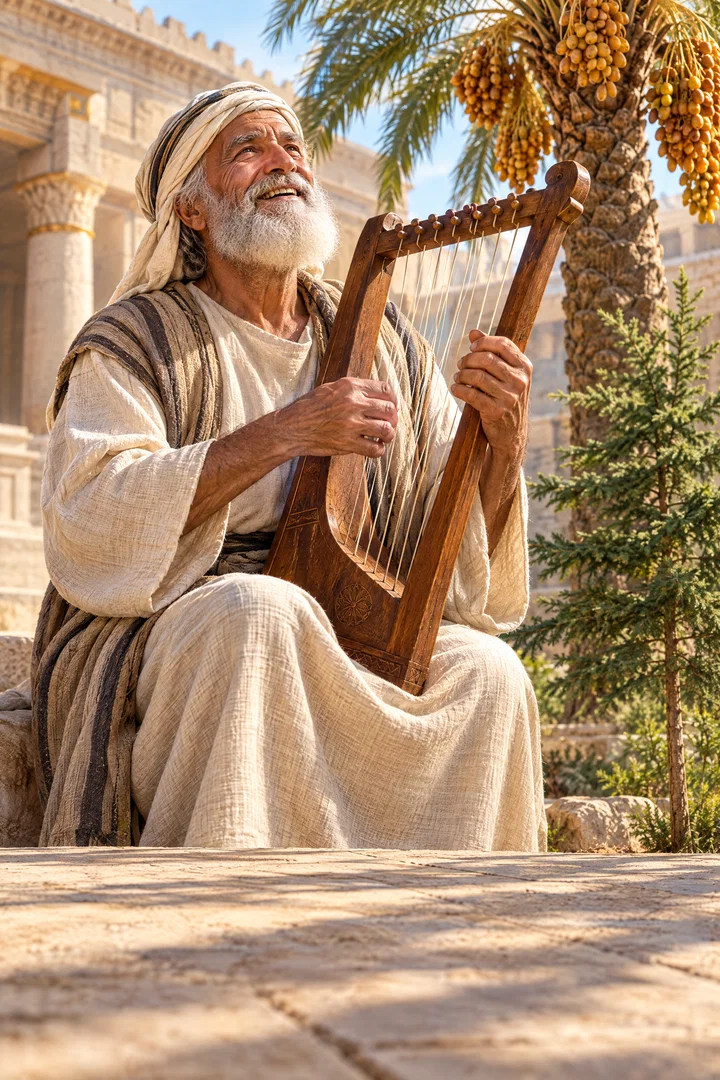
The praise includes instruments of music, upon an instrument of ten strings and upon the psaltery, upon the harp with a solemn sound.ST Mar 17, 1914 Instrumental music has a proper place on appropriate occasions, and God approves its use in church when properly employed.ST Mar 17, 1914 Its effect for good or harm depends on the hearts of those rendering it.ST Mar 17, 1914 Singing praises to the Lord with an instrument is good, and in this Sabbath-day song it supports using instruments in worship on the Sabbath and cultivating musical talent.ST Mar 17, 1914ST Jun 6, 1900
Thanksgiving and Daily Praise
It is good to thank and praise God by declaring his lovingkindness in the morning and his faithfulness every night.STST Aug 11, 1909ST Sep 28, 1904 That praise is to be offered with music and joined to gladness and triumph in his works, recounting his power and goodness.RH Oct 1, 1903ST Aug 11, 1909 His lovingkindness is to be declared in the morning and his faithfulness remembered and praised every night.STST Sep 28, 1904
The Sabbath is a fitting time for this morning and night praise, in remembrance of God as Creator, Preserver, and benefactor and of his temporal and spiritual blessings.RH Jul 15, 1875RH Jul 15, 1875ST Mar 31, 1887 Morning and evening praise, including solemn music, keeps God uppermost in thought and affection and acknowledges him as the Most High.RH Jul 15, 1875RH Jul 15, 1875 Its reflection on his works joins gratitude for his love with reverence for his creative power.RH Jul 15, 1875ST Mar 31, 1887 Creation displays his power, and that same power is pledged for redemption, so the Creator is also the Redeemer.ST Mar 31, 1887ST Jun 26, 1893 In its Sabbath setting the song points to God's power to save, which the Sabbath teaches.ST Jun 26, 1893ST Jul 16, 1894
Considering what he has made leads people to honor him and to know him, while failing to consider his works leaves them without knowledge of him.ST May 13, 1889 Merely resting from physical labor, without giving thanks and meditating on his faithfulness and creative works, does not by itself give knowledge of God.ST May 13, 1889ST May 20, 1889 Grateful thanks are due to the giver of every good gift at the beginning and close of each day.ST Jun 18, 1902RH Jul 15, 1858 Morning and evening are regular times for private prayer and praise, declaring lovingkindness in the morning and faithfulness every night.ST Jun 18, 1902RH Jul 15, 1858ST Apr 18, 1878
In the evening thanks are given for kindness and guardianship through the day, and in the morning wisdom and grace are sought for the day ahead.RH Jul 15, 1858RH Aug 4, 1863 His kindness keeps people in safety, so they should thank him rather than forget what he has done.ST Apr 18, 1878RH Aug 4, 1863 Praise belongs to him in the morning in anthem and song at daybreak, and the night brings strength because his mercies renew his people to run in his ways.ST Apr 18, 1878ST Aug 26, 1913 Declaring lovingkindness each morning and faithfulness each evening is a daily practice, not merely an annual observance.ST Nov 29, 1905ST Nov 29, 1905 A single annual day of national thanksgiving therefore seems insufficient, though giving thanks even for one day is good.ST Nov 29, 1905ST Nov 29, 1905
This gratitude rests not only on blessings already seen but also on faith in God's promises and good things still to come.ST Nov 29, 1905ST Nov 29, 1905 A spirit of faith and thankfulness looks both back on blessings received and forward to fulfillment.ST Nov 29, 1905ST Nov 29, 1905 Faith can be certain of victory before it is visible, as Israel's song of thanksgiving before the Red Sea opened illustrates.ST Nov 29, 1905ST Nov 29, 1905
Sources