Psalms 92:3
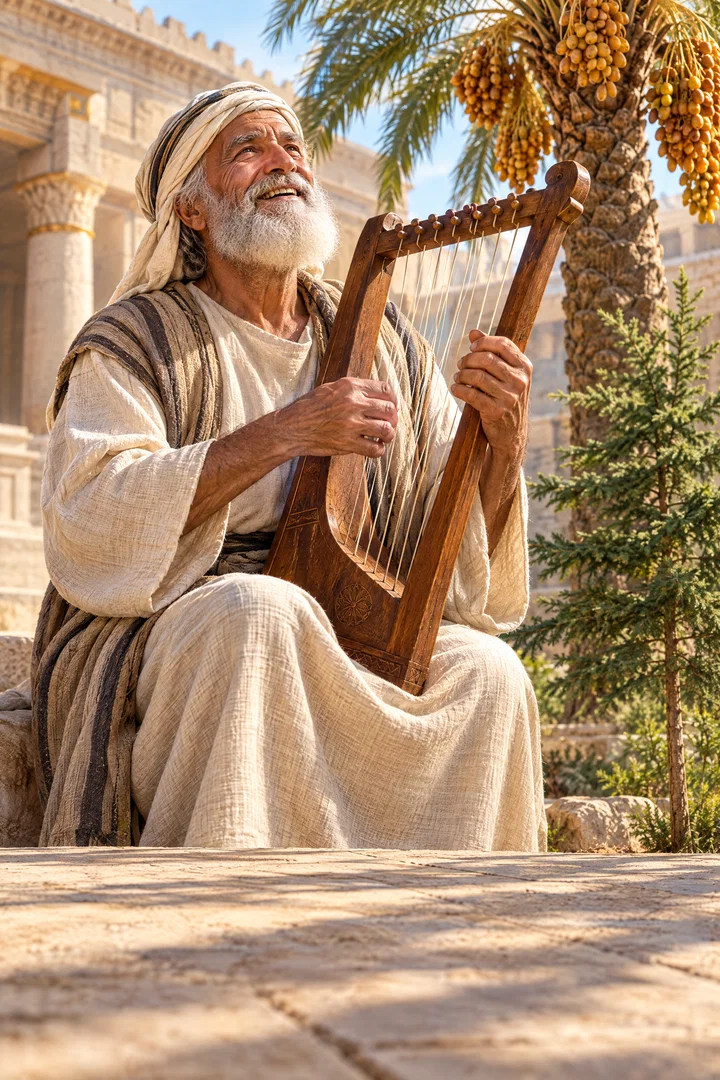
Upon an instrument of ten strings, and upon the psaltery; upon the harp with a solemn sound.
Translations
On an instrument of ten strings, and on the psaltery; on the harp with a solemn sound.
King James Version, Webster Bible
Upon an instrument of ten strings, and upon the psaltery; upon the harp with a solemn sound.
Upon an instrument of ten strings, and upon the psaltery;
Upon the harp with a solemn sound.With an instrument of ten strings, and with the psaltery; with a solemn sound upon the harp.
With an instrument of ten strings, and with the psaltery;
With a solemn sound upon the harp.On ten strings and on psaltery, On higgaion, with harp.
Upon an instrument of ten strings and upon the lute; upon the Higgaion with the harp.
Upon an instrument of ten strings, and upon a harp, With resounding music on the lyre.
Berean Standard Bible, Majority Standard Bible
with the ten-stringed harp
and the melody of the lyre.with the ten-stringed lute, with the harp,
and with the melody of the lyre.On a ten-corded instrument, and on an instrument of music with a quiet sound.
Vpon an instrument of tenne strings, and vpon the viole with the song vpon the harpe.
Douay-Rheims (Challoner revision)
Upon an instrument of ten strings, upon the psaltery: with a canticle upon the harp.
Pictures
Cross-references
- Psalms 81:1-2
Sing aloud unto God our strength: make a joyful noise unto the God of Jacob.
Calls for joyful praise with musical instruments, including the harp and psaltery.
- Psalms 33:2
Praise the LORD with harp: sing unto him with the psaltery and an instrument of ten strings.
Both call for praising God with stringed instruments.
- Psalms 150:3-5
Praise him with the sound of the trumpet: praise him with the psaltery and harp.
Both call for praising God with musical instruments.
- Psalms 98:5-6
Sing unto the LORD with the harp; with the harp, and the voice of a psalm.
Both call for praise with musical instruments.
- Revelation 5:8
And when he had taken the book, the four beasts and four and twenty elders fell down before the Lamb, having every one of them harps, and golden vials full of odours, which are the prayers of saints.
Both portray heavenly beings playing harps in worship.
- Psalms 33:3
Sing unto him a new song; play skilfully with a loud noise.
Both call for skilful instrumental praise with a loud sound.
- Amos 6:5
That chant to the sound of the viol, and invent to themselves instruments of musick, like David;
contrasts wrong use with proper use
Commentary
Each commentary is drawn from primary sources: the writings of Ellen G. White and Adventist pioneers and periodicals. Each commentary is separate. Its own words are not a quotation; follow the references to read the source passages.
Ellen G. White
2 sources
Instrumental music, played on a ten-stringed instrument and on the harp, is praise to God.RH Oct 1, 1903Lt 3, 1851, par. 2–3 That music is also thanksgiving to the Lord, and the instruments named include the psaltery.RH Oct 1, 1903 The praise celebrates lovingkindness every morning and faithfulness every night, and expresses gladness because of His work.RH Oct 1, 1903 The ten-stringed harp also pictures the music of angels in heaven.Lt 3, 1851, par. 2–3
Sources
Pioneers and periodicals
20 sources
Psalm 92 is set apart by its title as a song for the Sabbath day alone, written in a form intended for singing.RH Sep 8, 1853STST Aug 27, 1912 It names threefold instrumental praise with an instrument of ten strings, the psaltery, and the harp with a solemn sound.RH Aug 31, 1916ST Aug 8, 1878 Its praise gives thanks, sings praises, and declares God's loving-kindness in the morning and His faithfulness at night with gladness in His works, remembering Him as Creator, Preserver, and Benefactor.RH Jul 15, 1875ST May 13, 1889ST Mar 31, 1887 It proves God requires spiritual service of praise and worship on the Sabbath, showing the Sabbath was a day of worship not merely rest, but a day of rest and refreshment given for rejoicing and praising the Lord with music.RH Jul 15, 1875ST Mar 17, 1914RH Sep 8, 1853 Stringed instruments are therefore proper on appropriate occasions, and God approves their use in church when properly employed with right hearts.RH Jul 15, 1875ST Mar 17, 1914ST Jun 6, 1900
Sabbath Setting and Instruments
The psalm is set apart by its title as a song for the Sabbath day.RH Sep 8, 1853ST Aug 27, 1912RH Mar 12, 1861 It belongs to the seventh day, and to that day alone.ST No name is given for who wrote it.ST Aug 27, 1912 It stands in a book whose psalms were written in a form intended for singing.RH Mar 12, 1861
The praise named is threefold, upon an instrument of ten strings, and upon the psaltery, and upon the harp with a solemn sound.RH Aug 31, 1916 The harp is the ten-stringed instrument with which Israel praised God and proclaimed His wondrous works.ST Aug 8, 1878
Its setting reflects worship shaped by study of God's creation, providence, care for the church, acts for Israel, and the giving of the law.RH Jan 15, 1857 It expresses the highest form of devotion belonging to the time before the Gospel.RH Jan 15, 1857 It is also grouped with psalms of the Hebrew captives' sorrows and afflictions that give encouragement and assurance of divine help and final deliverance.RH Aug 31, 1916
Sabbath worship included praise accompanied by musical instruments.ST Jul 19, 1905 The musical instruments and solemn sound illustrate worship through song.ST Nov 10, 1898 The psalm thereby shows the Sabbath was a day of worship, not merely a day of rest.ST Nov 10, 1898
Praise Meaning and Worship
Sabbath praise in the verse is giving thanks to the Lord, singing praises to His name, and declaring His loving-kindness in the morning and His faithfulness every night.RH Oct 1, 1903RH Jul 15, 1875ST May 13, 1889ST Mar 31, 1887ST Mar 17, 1914 It is offered with gladness because of His works, remembering Him as Creator, Preserver, and Benefactor.RH Oct 1, 1903RH Jul 15, 1875ST May 13, 1889 It honors Him for His works as Creator and for His wonderful power, keeping Him foremost in thought and affection.RH Jul 15, 1875ST May 13, 1889 The praise is made with voices and with musical instruments played solemnly, with the ten-stringed instrument, the psaltery, and the harp with a solemn sound.RH Oct 1, 1903RH Jul 15, 1875ST May 13, 1889ST Mar 31, 1887
Joined to gladness in God's works, this Sabbath praise recalls God's creative power and assures the worshiper that the Creator's power is also pledged for salvation and redemption.ST Jun 26, 1893 In this way the Sabbath teaches God's power to save.ST Jun 26, 1893ST Jul 16, 1894
The verse proves that God required a spiritual service of praise and worship on the Sabbath, showing the Sabbath was a day of worship and not merely a day of rest.RH Sep 8, 1853ST Nov 10, 1898 It remains a day of rest and refreshment given for rejoicing and praising the Lord with music, so that being forced to flee on the Sabbath would interrupt that rest and make flight more tedious.RH Sep 2, 1851 Giving thanks to the Lord and singing praises and declaring His loving-kindness and faithfulness morning and night in this way is good and fitting for the Sabbath.RH Jul 15, 1875ST Mar 17, 1914
Praise to the Lord may be offered with musical instruments, including stringed instruments, and this supports using instruments in worship on the Sabbath.RH Jul 15, 1875ST Mar 17, 1914ST Jun 6, 1900 Such instruments are proper on appropriate occasions, and God approves their use in church when properly employed with right hearts.ST Mar 17, 1914
The call to worship, including worship with music, is an injunction and promise God has put upon the Sabbath, belonging to the seventh day and to that day alone.ST It has no application to the first day of the week, and to use it to teach Sunday worship takes the divine clothing of the Sabbath to cover a day that stands naked of any scriptural sanctity or holiness.ST
The verse also calls the mourner to express praise to God with instruments, including an instrument of ten strings, rather than give way to despair.RH Jul 10, 1856
Sources