Romans 14:11
For it is written, As I live, saith the Lord, every knee shall bow to me, and every tongue shall confess to God.
Translations
For it is written, As I live, says the Lord, every knee shall bow to me, and every tongue shall confess to God.
King James Version, KJV Cambridge Paragraph Bible, Webster Bible
For it is written, As I live, saith the Lord, every knee shall bow to me, and every tongue shall confess to God.
Revised Version, American Standard Version
For it is written, As I live, saith the Lord, to me every knee shall bow, And every tongue shall confess to God.
for it hath been written, 'I live! saith the Lord — to Me bow shall every knee, and every tongue shall confess to God;'
For it is written, I live, saith [ the] Lord, that to me shall bow every knee, and every tongue shall confess to God.
For it is written—Living am, I, saith the Lord, unto me, shall bow every knee, and, every tongue, shall openly confess unto God.
Berean Standard Bible, Majority Standard Bible
It is written:
“ As surely as I live,
says the Lord,
every knee will bow before Me;
every tongue will confess to God.”For it is written,
“‘ As I live,’ says the Lord, ‘ to me every knee will bow.
Every tongue will confess to God.’”For it is said in the holy Writings, By my life, says the Lord, to me every knee will be bent, and every tongue will give worship to God.
For it is written, I liue, sayth the Lord, and euery knee shall bowe to me, and all tongues shall confesse vnto God.
Douay-Rheims (Challoner revision)
For it is written: As I live, saith the Lord, every knee shall bow to me, and every tongue shall confess to God.
Pictures
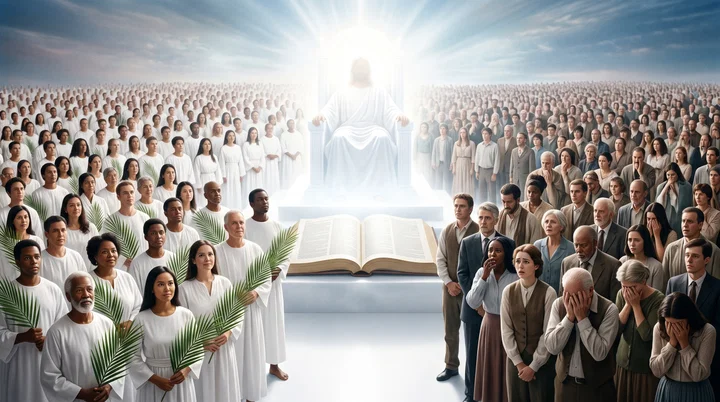
Cross-references
- Isaiah 45:23
I have sworn by myself, the word is gone out of my mouth in righteousness, and shall not return, That unto me every knee shall bow, every tongue shall swear.
Every knee will bow to God, and every tongue will acknowledge him.
- 2 Corinthians 5:10
For we must all appear before the judgment seat of Christ; that every one may receive the things done in his body, according to that he hath done, whether it be good or bad.
All appear before Christ’s judgment seat and answer for their deeds.
- Philippians 2:10-11
That at the name of Jesus every knee should bow, of things in heaven, and things in earth, and things under the earth;
Both describe every knee bowing and every tongue confessing Christ as Lord.
- Ecclesiastes 12:14
For God shall bring every work into judgment, with every secret thing, whether it be good, or whether it be evil.
Both place final judgment and accountability with God.
- Revelation 20:11-12
And I saw a great white throne, and him that sat on it, from whose face the earth and the heaven fled away; and there was found no place for them.
All people stand before God at the great white throne for judgment.
- Revelation 5:13
And every creature which is in heaven, and on the earth, and under the earth, and such as are in the sea, and all that are in them, heard I saying, Blessing, and honour, and glory, and power, be unto him that sitteth upon the throne, and unto the Lamb for ever and ever.
Every creature gives praise and honor to God and the Lamb.
- Revelation 15:4
Who shall not fear thee, O Lord, and glorify thy name? for thou only art holy: for all nations shall come and worship before thee; for thy judgments are made manifest.
All nations worship God when his judgments are made manifest.
- Psalms 22:29
All they that be fat upon earth shall eat and worship: all they that go down to the dust shall bow before him: and none can keep alive his own soul.
Both describe all who go down to the dust bowing before God.
- James 4:12
There is one lawgiver, who is able to save and to destroy: who art thou that judgest another?
God alone is Lawgiver and Judge, so people should not judge one another.
- Acts 17:31
Because he hath appointed a day, in the which he will judge the world in righteousness by that man whom he hath ordained; whereof he hath given assurance unto all men, in that he hath raised him from the dead.
God appoints Christ to judge the world in righteousness.
- Philippians 2:10
That at the name of Jesus every knee should bow, of things in heaven, and things in earth, and things under the earth;
Both describe every knee bowing at judgment.
- Psalms 86:9
All nations whom thou hast made shall come and worship before thee, O Lord; and shall glorify thy name.
partly fulfilled when all bow at judgment
- Isaiah 66:23
And it shall come to pass, that from one new moon to another, and from one sabbath to another, shall all flesh come to worship before me, saith the LORD.
Both describe the fulfillment of universal worship of the Lord.
- John 5:22-23
For the Father judgeth no man, but hath committed all judgment unto the Son:
The Father commits all judgment to the Son, who represents Divinity in judgment.
- Revelation 19:10
And I fell at his feet to worship him. And he said unto me, See thou do it not: I am thy fellowservant, and of thy brethren that have the testimony of Jesus: worship God: for the testimony of Jesus is the spirit of prophecy.
The angel refuses worship and directs John to worship God.
- Isaiah 42:8
I am the LORD: that is my name: and my glory will I not give to another, neither my praise to graven images.
God declares that he will not give his glory to another.
- Luke 4:8
And Jesus answered and said unto him, Get thee behind me, Satan: for it is written, Thou shalt worship the Lord thy God, and him only shalt thou serve.
only God to be worshiped and served
- Acts 10:42
And he commanded us to preach unto the people, and to testify that it is he which was ordained of God to be the Judge of quick and dead.
Christ is ordained by God as judge of the living and the dead.
- Acts 10:25-26
And as Peter was coming in, Cornelius met him, and fell down at his feet, and worshipped him.
Peter stops Cornelius from bowing to him.
Commentary
Each commentary is drawn from primary sources: the writings of Ellen G. White and Adventist pioneers and periodicals. Each commentary is separate. Its own words are not a quotation; follow the references to read the source passages.
Ellen G. White
42 sources
Every person will one day bow before God and confess to Him, standing before the judgment seat of Christ to give account of himself.Lt 97, 1898, par. 13–16Lt 60, 1898, par. 1–3Ms 79, 1910, par. 18 Each one answers for himself alone under searching scrutiny, with no excuse in another's fault or devotion and none in the numbers who share a sinful practice.5T 349.24T 357.3RH Nov 9, 1905Lt 123, 1894, par. 12 Christ alone has been appointed Judge, qualified because He took humanity and lived without fault and died and rose to be Lord of both the dead and the living.Lt 97, 1898, par. 13–16STB 187.4 Because all are accountable to God, no one is to judge or despise his brother or put a stumbling block in his way, but is to leave judgment to God.Lt 97, 1898, par. 13–16Lt 60, 1898, par. 1–3Ms 96, 1905, par. 7–10STB 187.4 At last every mouth will acknowledge God's righteousness as just, even Satan silenced and admitting his sentence is just, when cases are forever settled with no further probation.GC88 670.1Lt 25, 1900, par. 10–11
Words and Judgment Context
Every person will bow before God and acknowledge Him, with every tongue confessing to God.Lt 97, 1898, par. 13–16Lt 60, 1898, par. 1–3Ms 79, 1910, par. 18Ms 96, 1905, par. 7–10Ms 79a, 1910, par. 21–25 As the Lord lives, every knee shall bow to Him and every tongue shall confess to God.Lt 97, 1898, par. 13–16Lt 60, 1898, par. 1–3GC88 670.1 Even Satan's bow and confession fulfill this, when his accusations against God's mercy and justice are silenced and he admits his sentence is just.GC88 670.1
The verse quotes what God swore by Himself as He lives: that all would bow to Him and pledge allegiance, with righteousness and strength found in the Lord and justification for all His people.Lt 97, 1898, par. 13–16 It stands in the setting where all shall stand before the judgment seat of Christ, which is the judgment seat of God.Lt 97, 1898, par. 13–16Lt 60, 1898, par. 1–3Ms 21, 1892, par. 20–21 There every one shall give account of himself to God, which means all people must give that personal account to Him.Lt 60, 1898, par. 1–3Ms 79, 1910, par. 18Ms 96, 1905, par. 7–10Ms 79a, 1910, par. 21–25Ms 21, 1892, par. 20–21
Personal Accountability to God
Every person will stand before God in judgment and answer to Him for himself, examined individually and with searching scrutiny, with no reliance on another's purity or devotion to carry him through.5T 349.2RH Nov 9, 1905Lt 76, 1899, par. 8 All nations and every person will come before Him, and each will give account for how opportunities have been used and privileges have been valued.RH Nov 9, 1905Lt 123, 1894, par. 12 Each will be judged individually according to deeds done in the body and will hear a sentence, belonging to God as one who must render to Him what is His.Ms 123, 1901, par. 8–9Ms 177, 1897, par. 37–38 That reckoning is the turning point where character is tested, calling each to choose the Lord's side in whole-souled service with mind and heart surrendered, rather than following personal devising or casting influence toward evil.Ms 177, 1897, par. 37–38
Another's wrongdoing does not excuse one's own sin, and another's faults do not remove one's own guilt.5T 349.24T 357.3 The number who join in a sinful practice neither excuses it nor lessens condemnation.Ms 123, 1901, par. 8–9 Christ's faultless character and faultless life are the perfect standard by which each is measured, so each must set the heart in order and not neglect God's claims.5T 349.24T 357.3
The account embraces every deed, for every deed is written in the books and every action stands under God's inspection before the God who lives and reigns.Ms 130, 1906, par. 22Lt 307, 1903, par. 7–8 It covers every thought, deed, and action, and not words and deeds only but their motives and spirit, with the Lord's eye over all and each judged as works have been.SLP 240.2–3Ms 7, 1882, par. 21–23 Hearers of the gospel will stand either among the pure and holy around the great white throne or among those dismissed for doing evil, and the record of life then faced will bring shame to one who has built a record to blush to meet in the day of God.SLP 240.2–3Lt 61, 1880, par. 6
The settlement of God's claims includes duty in beneficence and vows and pledges made and promised to Him, where to neglect or underpay is to rob God and violate duty.4T 468.1 Conscience must therefore be aroused to feel guilt and remorse over neglected vows and unpaid pledges as keenly as over an unpaid debt to a neighbor, with new and deeper convictions and earnest attention now.4T 468.1 The reckoning also reaches transgression of the laws of physical life, for sin against God is committed in how the body is treated and Christians must answer for it.Lt 73a, 1896, par. 14–16 Secret choices and habits are not hidden from Him but must be faced again, requiring examination of life and weighing of the eternal consequences of principles and influences chosen.18MR 256.1–2
Parents as united rulers of the home will stand before the bar of heaven to answer for the children entrusted to them and for their work in forming character.CTBH 76.2–3CT 128.3 They must answer for transmitting harmful appetites and passions and for neglecting to train children after God's pattern.CTBH 76.2–3 If they failed to maintain purity of heart and life, to train and discipline themselves, and to set an example worthy of imitation, their own children will stand as witnesses to that neglect, bringing a terrible realization of loss and failure.CT 128.3
The same judgment meets particular trusts: the church in Fresno must answer for exalting a fallible man and encouraging a course that made divine reproof ineffective.EDFCP 21.2 Physicians and those connected with the sanitarium will meet in judgment the work they have done.Lt 173, 1907, par. 1 Answer must also be given for the harvest reaped from seed sowing, including dishonoring God by expressing confidence in physicians not of the faith who act from hereditary and cultivated tendencies to wrong, bringing confusion and many other evils, and for estrangement from God shown by failing in word and action to uphold His appointed men and thus making an unfavorable showing to the world.Ms 26, 1902, par. 29 Men placed in responsibility in God's work must stand before God's judgment seat and give account of themselves with sterling integrity that cannot be bought or sold, refusing gain offered in exchange for wrongdoing, since to gain the whole world profits nothing if the soul is lost while to lose life for Christ's sake secures it unto eternal life, representing Christ's character as He revealed the Father in His simple, loving life.Ms 25a, 1891, par. 29 Those who reject God-given testimony will face it when all accounts are settled, and refusal to be converted brings great loss.Ms 77, 1912, par. 12
The day of final settlement of all accounts will also bring to light close, ungenerous treatment, such as placing a poor stranger in unpleasant positions and making him feel his poverty in order to bring him to terms, and failing to deal with kindness after Christ's manner, to be met then with shame from the record kept in heaven.Lt 34a, 1886, par. 32 God's cause must therefore be kept free from every act of littleness, injustice, or oppression.Lt 34a, 1886, par. 32
Christ the Appointed Judge
Christ alone has been made Judge, and He only can be Judge, for the Father is not the Judge and the angels are not.STB 187.4 He is qualified to judge because He took humanity upon Himself and lived a perfect life in this world, and for that reason He is to judge.STB 187.4 As a man He lived and died and rose again to become Lord of both the dead and the living and to make immortality possible for believers.Lt 97, 1898, par. 13–16
The Redeemer and Advocate who died to make cleansing from sin and obedience possible will be the Judge in view of the future judgment, when the opening of God's Word will reveal His dealings with the world and with individuals in working out His great plan.Lt 76, 1899, par. 8 Because each is judged by the Lord Jesus Christ, all people will answer to God and believers must not judge one another.Lt 61, 1893, par. 24–25 God lives and reigns and every person will have to give an account to Him, for every deed is written in the books.Lt 307, 1903, par. 7–8
He is the one Great Teacher, Leader and Master, the Majesty of heaven and King of glory who will soon take His place upon His throne.Ms 203, 1903, par. 4–5 Through His blood all can be saved.Ms 203, 1903, par. 4–5 There is but one Lawgiver.Ms 203, 1903, par. 4–5
Final Universal Confession
Satan himself will bow and confess, and in that act the promise is fulfilled that every knee shall bow and every tongue acknowledge God, for all his charges against divine mercy and justice are silenced and he admits his sentence is just.GC88 670.1 At the final conflict every mouth will acknowledge divine glory and righteousness, with even the rebellious recognizing that the principles of righteousness and obedience to the law stand above every power and that their punishment is just.Lt 25, 1900, par. 10–11 That universal acknowledgment grants no further probation, because cases are forever settled, and after the second resurrection Satan and his followers will perish.Lt 25, 1900, par. 10–11
The verse points to the time when every person will bow to God and every tongue confess to Him, and those who persist in rejecting light from heaven will then face its truth, though they have treated that light as darkness.Ms 18, 1896, par. 21–22 It belongs to the setting of the final judgment, when all accounts are settled and each must answer to God, in the day of final settlement of all accounts.Ms 77, 1912, par. 12Lt 34a, 1886, par. 32 Those who reject God-given testimony will confront it then, and refusal to be converted brings great loss, as the record kept in heaven is met with shame.Ms 77, 1912, par. 12Lt 34a, 1886, par. 32
Seeing Jesus Christ and His sacrifice on the cross draws people to bow in allegiance to Him.Ms 12, 1895, par. 22–24 This compelling power is not force upon the intellect, but the Holy Spirit working in the heart.Ms 12, 1895, par. 22–24 People may refuse the invitation, yet those who behold Him are called to yield to Him rather than to self or the world.Ms 12, 1895, par. 22–24
Living Without Judging Others
Because every knee will bow to God and every tongue confess to Him, with all standing before the judgment seat of Christ which is the judgment seat of God and each giving account of himself to God, no one is to judge his brother, despise him, treat him as nothing, or sentence one another, but is to leave judgment to God and live in His sight.Lt 97, 1898, par. 13–16Lt 60, 1898, par. 1–3RCOC 61.2Lt 61, 1893, par. 24–25Ms 57, 1906, par. 19–22 Final acknowledgment belongs before God and not in the hands of people who judge and sentence one another.Ms 57, 1906, par. 19–22 Instead of judging, each is to determine to put no stumbling block or occasion to fall in a brother's way.Lt 97, 1898, par. 13–16Lt 60, 1898, par. 1–3Ms 96, 1905, par. 7–10
Christ alone has been made Judge, and He only can be Judge, for the Father is not the Judge and the angels are not, and because He took humanity upon Himself and lived a perfect life in this world He is to judge.STB 187.4 Therefore no one has been appointed to be a judge of others, and no man is appointed to climb upon the judgment seat to rule and command others, for there is but one Lawgiver.STB 187.4Ms 203, 1903, par. 4–5 Brethren and ministers and fathers and mothers and fellow workers must remember this, come down from the judgment seat in humility, and not dare to take it, for all a person can do is to discipline himself.STB 187.4Lt 307, 1903, par. 7–8 Passing judgment on brethren and on the ways and works of Christ in the person of His saints while losing sight of one's own imperfect character, by wicked surmising, suspicion, prejudice, jealousy, and persecuting speech, usurps what belongs to God, whose eye is over all and who knows every thought and will judge each one as his works have been.Lt 307, 1903, par. 7–8Ms 7, 1882, par. 21–23 No course of oppressing, accusing, wounding, and crushing the burdened, and no treating a fellow worker as disposable, can be made to harmonize with the Word of God.Ms 7, 1882, par. 21–23Ms 57, 1906, par. 19–22
Every person is accountable directly to God and not to one another, so believers must not divide into distinct parties to criticize, condemn, judge, and censure each other or be subject one to another.Ms 203, 1903, par. 4–5 Those redeemed by Christ through whose blood all can be saved are to love God supremely and neighbor as self, act out Christ's example in every particular, and love righteousness and hate iniquity, under Christ the one Great Teacher, Leader and Master, the Majesty of heaven and King of glory who will soon take His place upon His throne.Ms 203, 1903, par. 4–5 In the judgment every person's actions and motives will be made plain, and each will answer for injustice and harsh words, which calls for repentance, confession, and faith in Christ, and for treating fellow believers with kindness rather than condemnation.RCOC 43.2–3 That same personal accountability requires every business transaction to be righteous.Ms 96, 1905, par. 7–10
The certainty that all must bow before God and acknowledge Him and give account of self to God presses each person to be prepared to give that account, even nightly before sleep, by considering what has been done that day to glorify God.Ms 79, 1910, par. 18Ms 79a, 1910, par. 21–25 Each is to do his or her individual part as a humble worker, to order life by God's standard and avoid sin, and, belonging to God at the turning point where character is tested, to choose to be on the Lord's side in whole-souled service with mind and heart surrendered to God rather than following personal devising or casting influence into the scale of evil.Ms 79a, 1910, par. 21–25Ms 9, 1880, par. 55–57Ms 177, 1897, par. 37–38 Holding forth the Word of life to people is solemn work done as in that judgment presence where all will stand together before the judgment seat of God to give account and every case will be decided, requiring the speaker to leave nothing unsaid that might influence a soul to make peace with God.Ms 21, 1892, par. 20–21Lt 65, 1901, par. 11–14 When these words are explained in the power of the Holy Spirit to those who are not yet Bible Christians, they carry power that gives living testimonies unto eternal life, brings conviction and conversions and reconversions, brings souls from darkness into the light, and is accompanied by fervent intercession in prayer, making the spiritual condition of the people before God a grave responsibility.Ms 130, 1908, par. 13Lt 65, 1901, par. 11–14
Sources
Pioneers and periodicals
138 sources
As God lives, it is certain that every person will bow to him and confess to him, giving worship that belongs to God alone. ST Jun 3, 1897ST Jun 3, 1897RH Nov 17, 1868ST Apr 25, 1900
All will stand before Christ's judgment seat and each one will give account of himself to God for himself, personally and individually and not through nation, church, or family. RH Oct 26, 1911ST Mar 19, 1894ST May 22, 1907ST Dec 23, 1903
That confession will be universal, with the saved bowing in glad praise and the lost at last unwillingly acknowledging that God's ways and punishment are just, yet without being saved by that acknowledgment. ST Mar 23, 1904ST Dec 10, 1896ST May 8, 1907RH Mar 11, 1875ST May 13, 1897
Because judgment belongs to the Lord alone, believers must stop despising or condemning one another over eating and drinking and esteeming days, and must put no stumbling-block in a brother's way. ST Jul 12, 1910ST Aug 11, 1909
The days and foods in view were Jewish ceremonial observances, yearly feasts and fasts, and meats connected with them, not the weekly Sabbath of the fourth commandment, which remains in force. RH Mar 29, 1864ST Jul 29, 1880ST Jan 3, 1878RH Dec 27, 1853
Words and Historical Setting
The declaration is framed as an oath grounded in God's own life, with the words As I live underscoring the certainty that every person will bow to God and confess to him.ST Jun 3, 1897ST Jun 3, 1897RH Nov 17, 1868 Bowing the knee means having religion and giving worship, and that worship and confession belong to God alone as the true God, not to any intermediary.ST Jun 3, 1897ST Jun 3, 1897ST Apr 25, 1900 Even false religion bows the knee, to gods like Baal or Ashtaroth, so that to bow the knee to no one, not even to a false god, is to be entirely without religion.ST Apr 25, 1900
The verse stands in Paul's lesson of forbearance in Romans 14 about eating, drinking, and esteeming days, teaching believers not to despise or judge or condemn one another over such differences.ST Jul 12, 1910ST Aug 11, 1909RH Apr 21, 1851ST Aug 4, 1909 Each believer answers to the Lord and must take care to stand acquitted before God, with the emphasis carried through Romans 14:12-13.ST Jul 12, 1910ST Aug 11, 1909 It closes Paul's teaching on how Christians should treat one another, teaching Christian self-control and temperance about eating things sacrificed to idols and not causing a weak brother to stumble, to be studied together with 1 Corinthians 8:1-13 and 1 Corinthians 10:17-33, with the aim summed as following after the things which make for peace.ST Aug 4, 1909ST Jul 29, 1897ST Feb 4, 1903
The chapter applied directly to the trials of the apostolic church, where converts from the Jews still clung to Jewish views of eating and feast-days and divisions arose between those who ate and those who did not.RH Apr 21, 1851RH Aug 19, 1851ST Feb 4, 1903 Paul taught those who ate not to despise those who did not, and those who did not eat not to judge those who ate, for God had received both, and he did not remove those lingering errors of the Jewish converts at once.RH Apr 21, 1851 It was mutual forbearance between Jewish and Gentile believers over ceremonial days, with Jews not to impose their ceremonies on Gentiles and Gentiles not to despise Jewish scruples.RH Aug 19, 1851 The teaching was given because Jewish and Gentile believers differed over yearly feasts and fasts, and its purpose is not to teach whether days are binding or not binding, and those particular divisions about feast-days and eating no longer exist.RH Apr 21, 1851ST Feb 4, 1903
The days and foods in view were Jewish holy days and ceremonial sabbaths, yearly feasts and fasts, and meats and bitter herbs eaten with the unleavened bread of the passover.RH Aug 19, 1851RH Aug 28, 1853RH Oct 7, 1851ST Feb 4, 1903 Those feast days were not necessary for salvation, and believers were not to judge one another over observing them.RH Aug 28, 1853 They were matters treated as secular or religiously indifferent, spoken of as every day in the sense of ordinary activity, distinct from the holy Sabbath.RH Sep 24, 1872 Paul's direct treatment here concerns the feast-day sabbaths of the ceremonial law, not the moral law and its weekly Sabbath.RH Oct 7, 1851
The same practical instruction about eating things sacrificed to idols and the use of liberty without wounding a weak conscience is found in the first ten chapters of 1 Corinthians.ST Jul 29, 1897ST Feb 4, 1903 It settled questions troubling the early Christians in Corinth, a church founded in A.D. 52-53 and about five years old when the Corinthian epistle was written in Greek from Ephesus, having come out of heathenism only about five years before.ST Jul 29, 1897ST Feb 4, 1903 That instruction was also a factor in the conference at Jerusalem.ST Jul 29, 1897 It applies as a temperance lesson to give up meat and other lawful liberty rather than make a brother stumble.ST Jul 29, 1897
Romans 13 and 14 together form a treatise separating what is due to God from what is due to the powers that be, separating religion and the State.ST Oct 18, 1899 The verse speaks of a future universal judgment at the last day, when all people must appear before the judgment-seat of Christ, and not of a present meeting or contention with God.ST Feb 6, 1901
Universal Judgment and Accountability
Every person will bow before God and every tongue will confess to him, acknowledging his authority and worship.RH Oct 26, 1911ST Jun 3, 1897RH Apr 20, 1876RH Mar 23, 1916ST Nov 11, 1930 All will stand before Christ's judgment seat and each one will give an account of himself to God for himself.RH Oct 26, 1911ST Mar 19, 1894ST Aug 20, 1896ST Jun 26, 1907 This certainty is the reason believers must not judge or despise one another, must not put a stumbling block in a brother's way, and must treat others with mercy and charity, since each servant stands or falls to his own Lord.RH Oct 26, 1911ST Jun 3, 1897RH Mar 23, 1916ST Nov 11, 1930
That accountability is strictly personal and individual, resting between each soul and its Maker.ST May 22, 1907ST Dec 23, 1903ST Oct 29, 1885RH Mar 11, 1915RH Oct 2, 1866 It is not borne as part of a nation, church, family, or other group, it cannot be transferred to another, and no one can rely on another person's purity or devotion.RH Nov 9, 1905ST May 22, 1907ST Dec 23, 1903ST Oct 29, 1885RH Mar 11, 1915 Each lives and dies as an individual and must stand alone to be saved or lost forever, judged for his own work.RH Nov 9, 1905ST Oct 29, 1885RH Oct 2, 1866
No one is exempt from appearing before God.ST Aug 20, 1896ST Jun 26, 1907RH Dec 28, 1911ST Feb 22, 1883 Ministers and lay members alike are accountable, prince and peasant are made equal before that tribunal, and every earthly court and judge will have to give account to God as the great Judge of the universe.ST Aug 20, 1896ST Feb 22, 1883ST Aug 19, 1880ST Sep 12, 1895 Each will be judged according to works and deeds.ST Feb 22, 1883
Final judgment belongs to the Lord alone, who will bring to light hidden things and manifest the counsels of hearts.ST Aug 20, 1896RH Dec 28, 1911RH Oct 19, 1916RH Jun 22, 1916 Christ represents the Godhead in the judgment as the appointed judge, who took human nature and lived a perfect life.ST Aug 20, 1896RH Oct 19, 1916RH Jun 22, 1916 Judgment is reserved to God, whose holy law is its great rule.ST Nov 24, 1909ST Jan 21, 1897 People will be judged by God's law and must live by his word as their standard, with no argument or evasion able to change it, and because God alone is Lawgiver and Judge no one may condemn fellow believers or impose his own standards of religious morality on others.ST Nov 24, 1909ST Jan 21, 1897RH Mar 4, 1915
The judgment is a future, general judgment in which every person's case and deeds are considered.RH Oct 4, 1864 It determines each person's destiny and vindicates God's character. The account is given on the day of judgment, not at death, with neither the righteous receiving their reward nor the wicked their punishment before it.RH Oct 4, 1864 That universal bowing and confessing takes place through the investigative judgment that examines the record of lives, beginning with professed believers, and clears the book of life by blotting out unworthy names so that those not found written in it are cast into the lake of fire.ST Jul 20, 1904RH Apr 2, 1914 Once cases are decided there is no new trial or appeal, and stewardship in this life decides the outcome.ST Jul 20, 1904RH Apr 2, 1914
The Christian can face that judgment with boldness because Christ, who is now the Judge, has borne and canceled the sins for which the believer would otherwise be judged.RH Oct 19, 1869 For the pardoned those sins are hidden and made clean, and they are not rehearsed before the universe to vindicate God's justice and mercy.RH Oct 19, 1869 The verse reveals God's eternal purpose that all things in heaven and earth acknowledge his divine right to rule and reign in all. The happiness and continued existence of all created intelligences depends on their free and joyful recognition of that right, and its accomplishment is the gathering together in one of all things in Christ, so that one life animates the universe and one mind guides and controls the minutest details of creation. The Son shares fully in this sovereignty, being associated with the Father in creating all things and imparting life and breath to all, one with the Father, having life in himself with inherent self-existent power, as Creator and upholder of the universe with rightful supremacy over all.
The verse is a plain-text witness that the universe will be cleansed from sin and woe, pointing to every being acknowledging God.ST Dec 19, 1900 God is a personal Creator and upholder to whom every man is morally responsible for himself, his deeds, and his future, and by whom all will be judged.RH Oct 29, 1908 This accountability cannot be shifted to evolutionary forces and remains true despite denial that men are products of antecedent causes without power to shape their own destiny.RH Oct 29, 1908
Final Confession of All
Every intelligent creature will finally bend the knee to God and confess Christ as Lord, the righteous and the ungodly together hearing Christ's voice and meeting him as Lord and Judge, including opposers and enemies and even Satan and the fallen angels.RH Mar 11, 1875ST May 13, 1897RH Nov 17, 1868 The wicked, humbled and convicted of sin, will recognize the justice of God's government, and this universal acknowledgment brings glory to the Father.RH Mar 11, 1875ST Mar 11, 1880 That praise by all does not mean repentance or forgiveness, for the dead know nothing and the wicked will finally cease to exist.ST Mar 11, 1880
When God's dealings are fully seen, every guilty person will bow and confess Jesus Christ as Lord to the glory of God the Father, acknowledging that his ways and his punishment are just before the sentence is carried out.ST Mar 23, 1904ST Dec 10, 1896ST Nov 11, 1913 Even those finally lost will admit the justice of their punishment, and even Christ's opposers and enemies will acknowledge his power, mercy and wisdom with a feigned obedience that does not accept salvation.ST Mar 23, 1904ST May 8, 1907 When the judged see the justice of Christ's judgment, every tongue confesses that Jesus Christ is Lord, yet this does not change the fate of those who chose their own way despite all God did to save them.RH Feb 6, 1900RH Feb 6, 1900
This confession by the lost is unwilling, humbled and feigned, a recognition of divine justice and conviction of sin without receiving salvation.ST May 8, 1907RH Mar 11, 1875 The wicked are raised in the second resurrection to see the reward of the redeemed and the results of their own choices, then unwillingly acknowledge God's justice before all the assembled inhabitants of the world. That universal acknowledgment settles forever the controversy between God and Lucifer, after which they suffer the second death from which there is no awakening. When raised after the thousand years and seeing the righteous in God's kingdom, they will recognize God's justice in excluding them and bow before him.ST Jun 16, 1887
At last before the great white throne, with the eye of the Eternal searching to the very core, those who would not be willing, glad witnesses to his power, wisdom, goodness and love will still be witnesses, but unwilling in unholy abasement.ST Feb 20, 1901 Reaping corruption and the wages of sin and eating the fruit of their own way, they bear witness to the truth of his infallible word that God is not mocked and not one word he has spoken shall fail, unable then to deny or excuse sin when the full record is brought to light.ST Feb 20, 1901RH Oct 19, 1869ST Oct 2, 1879 The saved bow in glad praise and the lost bow too late, and this universal submission first fulfills the promises that all nations and all flesh shall come and worship before God.ST May 28, 1902 The remaining fulfillment comes beyond sin, the grave, the judgment and the wicked, when Christ reigns forever on the earth made new.ST May 28, 1902 The verse thus points to a still-future universal prayer-meeting when all will bow to God and confess him.RH Jan 14, 1858
A day is coming when everyone, including those who ridicule true religion, will bow before Jesus and confess that he is Lord, warning hearers to take godliness seriously before it is too late.RH Jun 23, 1868 Those given to vanity and pleasure will then pray to him, but that recognition will come too late, so wisdom is to become acquainted with God now.RH Jun 23, 1868ST Nov 26, 1912 The day of the Lord will bring every person to bow and confess, for God has seen wickedness and will expose it whether people recognize it now or not.RH Jul 19, 1864 Those professing to know God are therefore called to acknowledge him now by humbly obeying all his commandments, so that he will acknowledge them when he rises to shake the earth.RH Jul 19, 1864
Worship and confession belong to God alone with no intermediary, and the words grounded in God's life make the promise an oath emphasizing its certainty.ST Jun 3, 1897ST Jun 3, 1897 Even the wicked will acknowledge God in the judgment, but then it will be too late, for God calls people to confess to him now in individual service and personal responsibility before him.ST Jun 3, 1897ST Jun 3, 1897 That final bowing will be too late for those who have not put away their sins, so sins must be confessed now, specifically and with genuine humility, without excuse or self-justification, trusting God faithful and just to forgive with the Spirit's assurance.ST Jun 3, 1897ST May 25, 1882 In the final judgment every person will acknowledge the justice of God the great Lawgiver, leaving those who disregard his clear command to keep the seventh day with no answer, since he has given no corresponding command to observe the first day.RH Jun 9, 1868 The bowing and confessing at the judgment does not teach universal salvation, does not save the wicked, and does not remove the penalty of God's law.RH Mar 10, 1868RH Feb 20, 1872RH Feb 6, 1900 None can keep alive his own soul, and immediately after this acknowledgment those on the left hand are told to depart into everlasting fire prepared for the devil and his angels, going away into everlasting punishment while the righteous enter life eternal.RH Feb 6, 1900
Sabbath and Ceremonial Days
Romans 14 addresses disputes about food and about days belonging to ceremonial observances and yearly feast days of the Jewish ritual, not the Sabbath or the fourth commandment, and therefore does not teach that the Sabbath was abolished.RH Mar 29, 1864ST Jul 29, 1880RH Aug 28, 1853RH Oct 7, 1851 Its instruction about esteeming days concerns Jewish feast days associated with particular foods which were not necessary for salvation, over which believers were not to judge one another.RH Mar 29, 1864RH Aug 28, 1853 More particularly it treats the meats and bitter herbs eaten with the unleavened bread of the passover and the feast-day sabbaths of the ceremonial law, not the moral law and its weekly Sabbath.RH Oct 7, 1851 The weekly Sabbath remains the one day God hallowed and commanded.ST Jul 29, 1880
The verse itself contains no word concerning the weekly Sabbath and says nothing about the seventh or first day of the week.ST Jul 29, 1880ST Jan 3, 1878RH Dec 27, 1853RH Apr 11, 1854 It belongs to expressions that clearly refer to the ceremonial law, and consequently it has no bearing upon any commandment of the moral or original law given to Adam and still in full force.ST Jan 3, 1878 It is not a plain declaration that the Sabbath law has ended and does not mention the Lord's Sabbath.RH Dec 27, 1853RH Apr 11, 1854 To use Romans 14 to prove that it makes no difference what day is kept is folly, exposed alongside contradictory claims that the ten commandments are abrogated for the first day and that Hebrews 4 leaves no Sabbath day at all.ST May 29, 1884
The verse shows that no distinction between clean and unclean meats is now recognized by the Bible.RH Jan 20, 1853 The sanctuary described in Ezekiel 44 which still recognizes clean and unclean meats therefore cannot belong to the present or future but belonged to the Mosaic dispensation while circumcision, divorce, sacrifice, feasts, and the Levitical priesthood were in force.RH Jan 20, 1853 People are not saved by eating or abstaining from particular foods, or by keeping days; salvation is only through Jesus Christ.ST Jul 29, 1913 Since everyone will be called to stand before the Judge of all the earth, faith should be founded only on the word of God so as not to be ashamed in that day, instead of being risked on excuses for Sunday-keeping that have no foundation in reason or the word of God, such as the claim that redemption is finished.ST Mar 11, 1886
In contrast, those who held otherwise taught that the passage running from Romans 14:5-6 to the end of the chapter means that observance of the seventh day is optional and not required.ST Feb 4, 1903 On that reading, one man esteemeth one day above another and another esteemeth every day alike, every man should be fully persuaded in his own mind, and he that regardeth the day regardeth it unto the Lord while he that regardeth not the day to the Lord he doth not regard it.ST Feb 4, 1903
Religious Liberty and Conscience
Every person will finally answer to God alone, who is the rightful judge of religious belief and conduct.RH Mar 26, 1914RH Mar 26, 1914ST May 21, 1912ST Nov 1, 1883RH Feb 4, 1873 The church is not the supreme judge, and its authority does not extend to controlling belief or compelling conscience.RH Mar 26, 1914RH Mar 26, 1914 Human government has no authority to control religious belief or to take God's place as its judge, and no government can stand in for its subjects before God or free them from personal responsibility.RH Mar 26, 1914RH Feb 4, 1873 Wrongdoing that does not violate another person's rights will be judged by God at the end of the world under God's law rather than by human law.ST Oct 25, 1899 Any person or civil tribunal that claims authority to decide another's religious convictions usurps God's place as Judge.ST May 21, 1912
The duty owed to the Creator and the manner of discharging it are directed only by reason and conviction and are answerable nowhere except at the tribunal of the Universal Judge.ST Jul 17, 1907ST Jun 18, 1912 Civil government therefore has no jurisdiction over religion.ST Jul 17, 1907ST Jun 18, 1912 Its only proper objects are the happiness and protection of men in the present existence, the security of life, liberty, and property, and restraining the vicious and encouraging the virtuous by wholesome laws extending equally to every individual.ST Jul 17, 1907 Religious belief and practice are matters of conscience beyond the proper authority of the state.ST Jun 18, 1912
Observing or not observing a day is a matter of conscience before God, answerable to him and not to civil rulers.ST Jun 10, 1908ST Mar 19, 1894ST Dec 23, 1889 Personal matters of conscience should not be imposed by human law.ST Jun 10, 1908 People should be free to choose whether to rest or work rather than have rest treated as a legal duty.ST Jun 10, 1908 The Sabbath belongs to God alone, so civil authorities cannot rightfully compel people to follow their interpretation of its observance, including which day to observe and how to observe it.ST Dec 23, 1889
Each person must choose for himself whether he will keep the Sabbath and will answer for that choice alone at the bar of God in the day of judgment.RH Dec 13, 1906 Being compelled by an employer to work on the Sabbath will be no excuse.RH Dec 13, 1906 Resting only because human law compels it, or only from fear of human law, gives no honor to God.RH Dec 13, 1906 Resting through fear of human law on a day God did not appoint as Sabbath while working on the day God did appoint leaves a person charged with disobedience before God.RH Dec 13, 1906
How a person keeps the Sabbath, whether by resting, working, or attending church, is a matter between that person and God, who will judge the account.ST Jan 24, 1911 Every person is likewise answerable to God and his law for how he observes the Sabbath, any sabbath, or no sabbath.ST Nov 7, 1895 So far as man is concerned no one has authority to forbid or compel Sunday work or play, and religious worship is to be protected without Sunday laws.ST Nov 7, 1895 Baseball players, Seventh-day Adventists, and Presbyterians alike must answer to God and his law, and the word of God decides duty.ST Nov 7, 1895 The right response is not compulsion or criticism but entreaty, that all may find blessed peace, rest, and power through loyalty to God's law through Jesus Christ.ST Nov 7, 1895
Every person will ultimately bow before God and confess to him, and judgment belongs to God who alone can judge each case righteously.ST May 21, 1912ST Oct 17, 1906 Each person is therefore to be allowed liberty in matters such as Sunday observance rather than be compelled by law.ST May 21, 1912 Each person should be free to worship according to conscience rather than be compelled by law to observe a religious practice.ST Jun 11, 1912 God's people should persuade and entreat others rather than coerce them.ST Oct 17, 1906
No person should set himself up as judge of another's conscience, since every person will give account to God alone. Enacting religious ordinances into law puts man in God's place of judgment and is always coercion of those whose sentiments differ. Judging consciences in this way makes men bigots even when their motive is pure and their zeal unquestionable. A person or civil tribunal claiming authority over another's religious convictions usurps divine authority.ST May 21, 1912
Every person is answerable to God at the coming judgment, and this accountability belongs to God alone.ST Nov 1, 1883 No individual, nation, church, or other human authority has the right to compel obedience to Jehovah's laws or punish their violation.ST Nov 1, 1883 Every person will ultimately answer to God, who alone judges people in matters of religion.ST Aug 8, 1900 Human beings must not coerce others' religious choices.ST Aug 8, 1900
Not Judging One Another
Because each must give account to God rather than to fellow believers, judging, condemning or despising one another must stop, and no one may set himself up as judge over another's heart, hidden motives, conduct or final reward, since judgment of every person is reserved to God alone at the last day and no human being or group is competent to judge another's standing before him.RH May 1, 1900ST Dec 10, 1896 All are fellow servants of one Master, and each servant stands or falls to his own Lord who has power to make him stand, so no person may take God's place by condemning fellow believers over religious conduct or imposing his own standards of religious morality on others.ST Nov 11, 1930ST Feb 11, 1913ST Jan 21, 1897ST Jun 26, 1893
God holds each person responsible for the light and evidence given to him, requiring that informed believers show charity, kindness, mercy, humility and brotherly love toward those whose practices or understanding differ rather than harshly condemning them, with each living according to conviction and not acting against conscience while applying principles of healthful living to himself.RH Oct 26, 1911ST Feb 11, 1913ST Feb 20, 1907ST Jan 10, 1911RH May 7, 1914 No Christian is therefore empowered to sit on the judgment seat to condemn others who do not meet his ideas, or to exclude from fellowship and the sacrament those who are striving to serve the Lord but do not in everything come up to his standard, since final judgment belongs to the Lord alone who will bring to light hidden things and manifest the counsels of hearts.RH Dec 28, 1911 The judgment to be made instead is to put no stumbling block or occasion to fall in a brother's way, even giving up lawful liberty like eating meat if it causes a brother to stumble, so that the work of God does not suffer through indulgence.ST Jun 17, 1897RH Mar 23, 1916ST Feb 11, 1913RH Dec 28, 1911RH Jul 16, 1914 This is the same practical instruction found in the first ten chapters of 1 Corinthians about eating things sacrificed to idols and the use of liberty without wounding a weak conscience, which settled questions troubling the early Christians in Corinth, a church founded in A.D. 52-53 and about five years old when the Corinthian letter was written in Greek from Ephesus, and which was also a factor in the conference at Jerusalem, and it applies now as a temperance lesson.ST Jul 29, 1897
In matters of diet and healthful living, conscientious choices about food and drink are between each person and God, not grounds for persecution, censure or judging another, but each is responsible for how he responds to the light and instruction he has received.RH Oct 6, 1904RH Oct 26, 1911RH Jun 1, 1916RH May 7, 1914 Every person is left free to choose as fully persuaded in his own mind, and God will not compel obedience, since service from doubt or fear is not service from choice and love; men may teach God's word and show the way but must leave judgment to God.ST May 21, 1902ST Aug 10, 1904 This liberty gives no license to commit sin, break God's commandments, turn from what the Lord has instructed, or excuse what appetite suggests, for freedom does not remove results since each reaps what he sows — death if he disobeys God's word and disease if he feeds on what is unwholesome, but righteousness and peace and joy in the Holy Ghost if he chooses in harmony with God's word — and accountability does not justify disobedience, though God may justify an ignorant person with a perfect heart despite transgression.ST Feb 11, 1913ST May 21, 1902ST Oct 8, 1912
It is not for men to judge others whatever they do, but for each to see that his own course is such that he can meet it before the judgment seat of Christ where he will be judged by God's law, attending to disciplining himself, examining the soul, noticing its growth or decay, keeping honest account of conduct, looking to the Lord alone for orders and taking up the special mission and work God gives, rather than watching what this man or that man does, finding fault with one whose work is in a different line, or waiting for others to do their duty.RH Jun 22, 1916ST Oct 29, 1885ST Apr 1, 1889 No one has the right to judge another in matters of private belief or conduct, though publicly expressed views may be examined and criticized by an ethical standard.ST Oct 15, 1902 Every person will face God's seat to answer even for eating up others by gossip and slander that destroys souls, for taking a neighbor's honor and name and broiling them, whispering derogatory words and leaving unfavorable impressions that spread from town to town, tasting a person's hope for this world and the world to come and giving it to others to taste.RH Jun 28, 1870
Calls to Present Faithfulness
The certainty that every creature will appear before God and bow to him makes it wise to choose and obey him now so as to enjoy him forever rather than be separated from him.RH May 28, 1857 Every person lives and dies as an individual and must stand alone before God to give account of himself, to be saved or lost forever, and therefore each must think, speak and act now as one personally responsible to God, waiting for no others before doing good.RH Oct 2, 1866
Every person must bow to God himself and confess to God himself, directly and individually, with no human or dead intermediary.RH Dec 17, 1914 Prayer is to be made to the Father in Christ's name, confession of sin is to be made to God the sin-pardoning Saviour, and worship belongs to God alone.RH Dec 17, 1914 Confession to a priest and prayer to dead saints, the Virgin Mary, angels, or any other interposed mediator is forbidden, and worship and service directed to saints or any other creature is rejected.RH Dec 17, 1914ST Nov 18, 1913
The universal bowing to God and confessing of God is what the gospel brings about, and the verse is one of the texts that make up the call to go into all the world and preach the gospel to every creature.RH Dec 1, 1904 Appearing before God is personal and individual, since not the church and not the nation but each person by himself appears before the judgment-seat of Christ to be judged for his own work.ST Oct 29, 1885 Therefore no one should turn to watch what this man or that man is to do, find fault with one whose work is in a different line, or wait for others to do their duty before doing his own, but each should look to the Lord alone to receive orders, take up the special mission and work God gives him, and follow Christ.ST Oct 29, 1885
Teachers and leaders will answer to God at his tribunal for their responsibility toward human souls, and their choices can hinder or advance the work, so that accountability must not be treated lightly.RH Jan 2, 1913 Those entrusted with teaching will soon be called to render an account before the bar of God for that talent, which is a sacred gift bestowed to assist in spreading the message of a soon-coming Saviour.RH Jun 11, 1901
Every person must appear before his judgment seat, where character and the consequences of one's acts, words, and thoughts matter, responsibility cannot be cast off, and the life lived helps decide the future.ST Oct 21, 1886 People must answer for their lives and for the good or harm their actions have done to others, so that neglecting souls and failing to offer help may be remembered when standing before God. Those who selfishly discourage others from doing God's work bear a serious responsibility for their influence, and pastor, doctor, and deacon will answer before God for their influence over the family.ST Mar 16, 1882ST Oct 22, 1874 Those who aid the liquor traffic will ultimately bow before God and acknowledge him and will face him and answer for the ruin they have caused.ST Jul 3, 1879
The verse places every person before God where all will bow to him and confess to him, and it is applied to the liquor vote as a warning to decide with the coming judgment in view and to answer according to conscience rather than greed.ST All must appear before God's tribunal, where the Judge cannot be deceived or bribed.ST Jul 18, 1916
Every knee shall bow and every tongue confess to God when each person gives in his account before the Judge of all at the judgment-seat of Christ. That day will test excuses for neglecting prayer, and remembered hours of pleasure or sin once preferred to the prayer-meeting — carnal levity, the idle word, the thoughtless jest, gay companionship, halls of gaiety and haunts of sin — will give no comfort to the dying soul and will not bear it up in judgment. Laughter will then be exchanged for burning tears and nights of merriment for ages of endless woe, so not one precious hour or moment is to be wasted because eternity may hang on it and soon it will be too late to pray, and with days but a handbreadth the sleeper must awake, the sinner must turn, and all must flee from the wrath to come.
People will answer at the eternal judgment of God for how they used their time, money, and talents, including resources wasted or used for worse than nothing.ST Jul 23, 1912 Pride must bow before God's truth, since truth confronts and humbles human pride rather than flattering it.RH Jul 16, 1872 The image of bowing the knee is applied to America's anticipated submission to Roman Catholic power, paying homage to Rome as other nations had done.RH Mar 30, 1911
The day of judgment brings everyone low before God regardless of race or social standing, as illustrated when people mistook the falling stars of 1833 for that day.ST Sep 27, 1910 Election returns matter less than where those who voted will stand when every person stands before God in the final judgment.ST Jan 7, 1897
Every person must stand alone before the judgment bar of God in the last great day to answer for himself, so acceptance of truth is a personal decision that belongs to each one alone and cannot be delayed, and nearness of family or friends who believe or practice differently does not change that individual accountability.RH Mar 11, 1915 Each person must give account to God, which is connected with the duty to watch over each member of the family.RH Dec 20, 1870
Everyone is placed before God in the judgment where every person will acknowledge him, including the coming judgment when pleasure-loving young people will stand alongside the young Christians of Rome who suffered and died for the Savior, exposing the contrast between their choices.RH Mar 20, 1856 The verse points to the great day when all people will stand before God's judgment seat, in which knowledge Jesus trusted God and pitied his persecutors.ST Mar 6, 1901 The universal bowing and confession before God is linked for memory with Jesus telling Caiaphas that he is the Christ, the Son of God, and that they shall see the Son of man sitting at the right hand of power and coming on the clouds of heaven, together with Matthew 26:62-64, Isaiah 53:7 and Revelation 1:7.ST Mar 6, 1901
Every person is personally accountable to God and will answer to him in the context of verses 10-12, which conflicts with the claim that there is no final judgment for mortals. God is the supreme ruler and just judge and judgment belongs to God, not to each person judging only himself, supporting the reality of divine judgment against denying probation and replacing judgment with inevitable progression.ST Jul 31, 1879 The verse points to every person acknowledging God in the discussion of judgment and human destiny in which all who have lived will be raised and judged individually.ST Feb 27, 1893 At the last great day all will acknowledge the justice of the Lord's judgment and reward.ST Nov 11, 1913 The verse is invoked in connection with the day when all people stand before God and give account to him.ST Nov 13, 1901
Sources