Romans 14:10
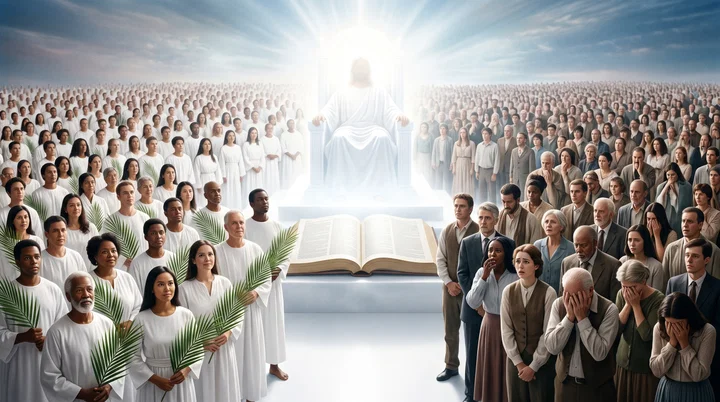
But why dost thou judge thy brother? or why dost thou set at nought thy brother? for we shall all stand before the judgment seat of Christ.
Translations
But why do you judge your brother? or why do you set at nothing your brother? for we shall all stand before the judgment seat of Christ.
King James Version, KJV Cambridge Paragraph Bible
But why dost thou judge thy brother? or why dost thou set at nought thy brother? for we shall all stand before the judgment seat of Christ.
But why dost thou judge thy brother? or why dost thou set at naught thy brother? for we shall all stand before the judgment-seat of Christ.
Revised Version, American Standard Version
But thou, why dost thou judge thy brother? or thou again, why dost thou set at nought thy brother? for we shall all stand before the judgment-seat of God.
And thou, why dost thou judge thy brother? or again, thou, why dost thou set at nought thy brother? for we shall all stand at the tribunal of the Christ;
But thou, why judgest thou thy brother? or again, thou, why dost thou make little of thy brother? for we shall all be placed before the judgment-seat of God.
But, thou, why dost thou judge thy brother? Aye! and thou, why dost thou despise thy brother? For, all of us, shall present ourselves unto the judgment seat of God;
Why, then, do you judge your brother? Or why do you belittle your brother? For we will all stand before God’s judgment seat.
Why, then, do you judge your brother? Or why do you belittle your brother? For we will all stand before the judgment seat of Christ.
But you, why do you judge your brother? Or you again, why do you despise your brother? For we will all stand before the judgment seat of Christ.
But you, why do you make yourself your brother's judge? or again, why have you no respect for your brother? because we will all have to take our place before God as our judge.
But why doest thou condemne thy brother? or why doest thou despise thy brother? for we shall all appeare before the iudgement seate of Christ.
Douay-Rheims (Challoner revision)
But thou, why judgest thou thy brother? or thou, why dost thou despise thy brother? For we shall all stand before the judgment seat of Christ.
Pictures
Cross-references 20 of 52
- 2 Corinthians 5:10
For we must all appear before the judgment seat of Christ; that every one may receive the things done in his body, according to that he hath done, whether it be good or bad.
Both say all must appear before Christ’s judgment seat and answer for their deeds.
- Romans 14:4
Who art thou that judgest another man’s servant? to his own master he standeth or falleth. Yea, he shall be holden up: for God is able to make him stand.
Believers answer to their own Lord, who determines whether they stand or fall.
- Romans 14:5-6
One man esteemeth one day above another: another esteemeth every day alike. Let every man be fully persuaded in his own mind.
Differing convictions about days and food explain the call not to judge one another.
- Colossians 2:16-17
Let no man therefore judge you in meat, or in drink, or in respect of an holyday, or of the new moon, or of the sabbath days:
Both passages address judging others over observance of days.
- Ecclesiastes 12:14
For God shall bring every work into judgment, with every secret thing, whether it be good, or whether it be evil.
Both teach that God brings every work, including secret things, into judgment.
- Revelation 20:12
And I saw the dead, small and great, stand before God; and the books were opened: and another book was opened, which is the book of life: and the dead were judged out of those things which were written in the books, according to their works.
The dead stand before God and are judged according to the records of their lives.
- Matthew 7:1-2
Judge not, that ye be not judged.
Both warn against judging others and the judgment measured will return upon the judge.
- Acts 17:31
Because he hath appointed a day, in the which he will judge the world in righteousness by that man whom he hath ordained; whereof he hath given assurance unto all men, in that he hath raised him from the dead.
Both speak of God’s appointed judgment through Christ.
- Isaiah 45:23
I have sworn by myself, the word is gone out of my mouth in righteousness, and shall not return, That unto me every knee shall bow, every tongue shall swear.
Every knee will bow to God, affirming the universal scope of judgment.
- James 2:12
So speak ye, and so do, as they that shall be judged by the law of liberty.
judged by law of liberty
- Matthew 25:31-32
When the Son of man shall come in his glory, and all the holy angels with him, then shall he sit upon the throne of his glory:
Christ gathers all nations and judges them at his coming.
- Matthew 12:36
But I say unto you, That every idle word that men shall speak, they shall give account thereof in the day of judgment.
People give account for their words on judgment day.
- 1 Corinthians 4:5
Therefore judge nothing before the time, until the Lord come, who both will bring to light the hidden things of darkness, and will make manifest the counsels of the hearts: and then shall every man have praise of God.
The Lord judges at the appointed time, revealing hidden things and the heart’s purposes.
- John 5:22
For the Father judgeth no man, but hath committed all judgment unto the Son:
The Father has committed all judgment to the Son.
- Romans 2:16
In the day when God shall judge the secrets of men by Jesus Christ according to my gospel.
God judges people’s secrets through Jesus Christ.
- James 4:12
There is one lawgiver, who is able to save and to destroy: who art thou that judgest another?
Both forbid taking God's place as judge over another.
- 2 Timothy 4:1
I charge thee therefore before God, and the Lord Jesus Christ, who shall judge the quick and the dead at his appearing and his kingdom;
Christ judges the living and the dead at his appearing and kingdom.
- John 12:47
And if any man hear my words, and believe not, I judge him not: for I came not to judge the world, but to save the world.
Christ came to save the world, not to judge it.
- Matthew 16:27
For the Son of man shall come in the glory of his Father with his angels; and then he shall reward every man according to his works.
Christ comes with his angels and rewards each person according to their works.
- Revelation 22:12
And, behold, I come quickly; and my reward is with me, to give every man according as his work shall be.
Christ repays each person according to their work.
Commentary part 1 of 2
Each commentary is drawn from primary sources: the writings of Ellen G. White and Adventist pioneers and periodicals. Each commentary is separate. Its own words are not a quotation; follow the references to read the source passages.
Ellen G. White
57 sources
The verse forbids judging a brother and despising him as worthless, because all will stand before the judgment seat of Christ and each one will give account of himself to God.Lt 97, 1898, par. 13–16Lt 60, 1898, par. 1–3MH 166.2 Christ alone is Judge because He took humanity, lived perfectly, died in man's stead and rose as Lord, purchasing life and making cleansing and obedience possible.Lt 97, 1898, par. 13–16STB 187.49T 185.4Lt 76, 1899, par. 8 That judgment seat is the solemn tribunal of God where all the living and the dead must appear to be judged by His moral law, with books opened to reveal every deed, word, thought and motive.Lt 97, 1898, par. 13–16ST Dec 29, 1887TBC1882 48.1RCOC 43.2–3SLP 240.2–3 Judgment is strictly personal, so no other's wrong excuses one's own sin, and every gift, opportunity and claim of God must be met with a prepared heart and faithful use.Lt 97, 1898, par. 13–16Lt 60, 1898, par. 1–3RH Nov 9, 19055T 349.2 Instead of condemning one another, believers are to judge only to put no stumblingblock in a brother's way, meeting weakness and error with compassion, unity and love under one Master.Lt 97, 1898, par. 13–16Lt 60, 1898, par. 1–3MH 166.2RCOC 33.2–3
Command Not to Judge
The verse forbids judging a brother and despising him or setting him at nought as worthless, because all will stand before the judgment seat of Christ, which is the judgment seat of God, where every knee shall bow and every tongue confess and every one shall give account of himself to God.Lt 97, 1898, par. 13–16Lt 60, 1898, par. 1–3MH 166.2RCOC 61.2ST Human life is precious in God's sight because Christ lived and died as a man and rose and revived to be Lord of both dead and living, purchasing human life by being executed in man's stead to make eternal life and immortality possible for those who believe.Lt 97, 1898, par. 13–16 It is addressed even to those bearing responsibility as editors and contributors, and it places judgment of others in the light of each person's own accountability to Christ, calling each to live conscious of standing in God's sight.Lt 60, 1898, par. 1–3RCOC 61.2 All are brethren under one Master with no ground for exalting self over another, since whatever anyone has was received and all share like infirmities of heart, so remembering personal weakness should move believers to treat the fallen and struggling with compassion rather than discouragement or contempt.MH 166.2ST
That prohibition includes criticizing, finding fault, condemning, censuring, pronouncing sentence on a brother, and watching brethren to find something in them to condemn.ST Apr 1, 18895T 613.1Ms 203, 1903, par. 4–5Lt 307, 1903, par. 7–8Ms 73, 1908, par. 8 Mortal man is not fitted to judge a brother's actions and motives, for each heart knows its own bitterness and all have hereditary and cultivated weaknesses, yet may obtain precious victories daily.ST Apr 1, 1889 Instead believers are to turn attention inward and examine their own conduct, seeing that they put no stumblingblock or occasion to fall in a brother's way.Lt 97, 1898, par. 13–16Lt 60, 1898, par. 1–35T 613.1 Climbing upon the judgment seat to judge shuts light from the soul and shows Christ is not enthroned in the heart, and the Spirit of God goes out of the soul that admits the spirit of criticism.ST Apr 1, 1889 Such watching brings disunion and comes from the same spirit that criticizes the testimonies, growing from unwillingness to receive light and preference for one's own chosen ways, searching them to encourage unbelief and disobedience.Ms 73, 1908, par. 8
It forbids climbing upon the judgment seat, taking God's place as judge, ruling another's conscience, lifting self up to rule and command others, exalting self over another, and exalting a human being by praise, since God alone reads every heart and gives no commission to judge.STB 187.4RCOC 33.2–3ST Apr 1, 1889Ms 203, 1903, par. 4–5TBC1882 77.1–2 Christ alone can be Judge because He took humanity and lived a perfect life in this world, while neither the Father nor the angels are the Judge, and no brethren, ministers, shepherds, fathers or mothers, holders of position and office, no one man nor many men, have been appointed to judge others or may dare to take the one Lawgiver's seat.STB 187.4Ms 203, 1903, par. 4–5Lt 307, 1903, par. 7–8 Every person redeemed by Christ's blood is amenable to God and not subject one to another, and all anyone can do is discipline self, coming down from the judgment seat in humility.STB 187.4Ms 203, 1903, par. 4–5 Human judgments can be unjust, especially when those who judge have themselves erred and received God's patience, share like infirmities, may be more deserving of censure, and have their own work under God's inspection with labor given and remuneration received to be reviewed.RCOC 33.2–3TBC1882 77.1–2Lt 21, 1888, par. 25–27 To take the seat is to lose sight of one's own imperfect character and to press discontented words upon brethren, passing judgment on Christ's ways and works in the person of His saints, while every deed is written in the books for which each must give account.Lt 307, 1903, par. 7–8
It forbids even unkind thoughts, coldness, disparagement, harsh and even thoughtless words, oppression, and a close ungenerous spirit that makes a poor stranger feel his poverty and puts him in unpleasant positions to bring him to terms.RH Feb 17, 1903Lt 61, 1893, par. 24–25Lt 21, 1888, par. 25–27Lt 34a, 1886, par. 32 No position or office, even as president, gives power over others' consciences or justifies oppression or crowding and pushing a brother because his views are questionable and he differs on points of truth, which is inexcusable; instead it binds the holder under sacred obligation to respect the rights of all and to be forbearing, courteous, Christlike, like-minded with God, and an example in words, spirit, deportment and manner of treating brethren, whom God also teaches and guides.Lt 21, 1888, par. 25–27 Everyone naming Christ's name is called to help every other soul in the heavenward way, pitying, comforting and helping the unfortunate, erring, tempted and struggling fainting soul rather than judging, oppressing and casting a dark shadow, speaking only words of comfort, peace, hope and courage, because harsh words sting and bruise and may drive a soul onto Satan's ground never again to listen.RH Feb 17, 1903 How brethren treat souls needing help tests them and reveals the heart and whether first love still burns, with all heaven watching, and a record is kept in heaven of how they treated brethren to be met in the final settlement of all accounts, which they will not be proud to face unless the cause of God is kept free from every act of littleness, injustice and oppression.RH Feb 17, 1903Lt 34a, 1886, par. 32
Christ Alone Is Judge
Christ alone can be judge because He took humanity upon Himself and lived a perfect life in this world.STB 187.49T 185.4 He lived and died as a man and rose and revived to be Lord both of the dead and the living, having been executed in man's stead to purchase human life.Lt 97, 1898, par. 13–16 By that death He made it impossible to lose eternal life for those who believe on Him and made immortality possible, so that the life of men and women is precious in God's sight.Lt 97, 1898, par. 13–16 Neither the Father nor the angels are the judge, for Christ has been made Judge.STB 187.4
As Redeemer and Advocate He died to make it possible for the world to be cleansed from sin and to keep God's commandments.Lt 76, 1899, par. 8 The opening of His word reveals His dealings with the world and with individuals in working out His great plan, so that people realize their accountability and responsibility to God in view of the future judgment where Jesus Christ will be Judge.Lt 76, 1899, par. 8 Knowing this calls for meeting and working harmoniously in unity of faith, bound up with God and one with Christ as He is one with the Father, and for preparing men and women by communicating the knowledge of God's infinite wisdom, love, and power.Lt 76, 1899, par. 8
No person has been appointed to judge others, whether brethren, ministers, fathers or mothers, and Christ enjoins never to place self on the judgment seat but to discipline self and come down from it in humility.STB 187.49T 185.4 The prohibition is spoken to those bearing responsibility as editors and contributors of periodicals, that no one should judge another or despise a brother since all will stand before the judgment seat of Christ and give account of himself to God.Lt 60, 1898, par. 1–3 Christ has not placed any person on the judgment seat to pass judgment on a brother or sister who is unfortunate or falls into error.RH Feb 17, 1903 No shepherd or watchman should take the place of judge over fellow believers by criticizing them, finding fault, or picking flaws.ST Nov 11, 1889 Because all will stand before the judgment seat of Christ, no one is to judge, criticize, condemn or censure his brother, climb upon the judgment seat, or lift himself up to rule and command others, for there is but one Lawgiver and every person redeemed by Christ's blood is amenable to God and not subject one to another.Ms 203, 1903, par. 4–5
Mortal man must not judge his brother's actions and motives because he is not fitted for that work.ST Apr 1, 1889 Human judgments can be unjust, especially when those who judge have also erred and have received God's patience, so instead of denouncing an erring brother they should pity, comfort, and help him.RCOC 33.2–3 All are brethren under one Master with no ground for exalting self over another, because whatever anyone has was received and all share like infirmities of heart, so weakness and wrongdoing must be met with compassion rather than censure or reproach.MH 166.2 Each heart knows its own bitterness, and all have hereditary and cultivated weaknesses yet can obtain precious victories every day.ST Apr 1, 1889 No one is placed in God's judgment seat, for God alone reads every heart and gives no commission to judge or to exalt human virtues by praise, and to take that seat by praising and exalting a human being, especially one who has not accepted a Thus saith the Lord in keeping His commandments, dishonors God.Lt 60, 1898, par. 16–19 Position and office, even as president, gives no power over the consciences of others and justifies no oppression, but binds the holder under sacred obligation to respect the rights of all and to be forbearing, courteous, Christlike and like-minded with God, as an example in words, spirit, deportment and manner of treating brethren, because God teaches and guides them also, and because the one who judges may himself be in many respects more deserving of censure while his own work is bearing the inspection of God.Lt 21, 1888, par. 25–27 Climbing upon the judgment seat to judge a brother shuts light away from the soul and makes manifest that Christ is not enthroned in the heart, and the Spirit of God goes out of the soul that admits the spirit of criticism, so that not even unkind thoughts toward brethren are permitted.ST Apr 1, 1889Lt 21, 1888, par. 25–27
Universal Future Judgment Seat
The judgment seat of Christ is the judgment seat of God, a solemn tribunal before the righteous Judge where all people, both the living and the dead, must stand and give account of themselves to God. Lt 97, 1898, par. 13–16ST Dec 29, 1887Ms 25a, 1891, par. 29 Every knee shall bow and every tongue shall confess to God there, and standing before Christ's judgment seat is a solemn reality that will soon arrive. Lt 97, 1898, par. 13–16TBC1882 48.1RH Dec 9, 1902 All will soon stand before God's judgment seat and answer for what they have done in life. RH Dec 9, 1902Ms 25a, 1891, par. 29
There each person is judged by the precepts of God's great moral law, without which there could be no judgment. ST Dec 29, 1887 Character is constantly tested by God's standard of right, and God who sees every thought and deed judges people according to their works. Ms 7, 1882, par. 21–23Ms 9, 1880, par. 55–57 All transgressors of God's law must render a fearful account at the bar of God, and the life must be ordered and fashioned as in the eye of the great Taskmaster. Ms 9, 1880, par. 55–57 Continuance in disobedience in this life means disharmony with God in the future life, and following the world gives no excuse when motives of the heart are tried. ST Dec 29, 1887 Those who have received great light must not be content with a low level but must earnestly seek the divine presence, realizing the end of all things is at hand and the Judge of all the earth stands at the door, with no disregard of His just and holy requirements permitted. Ms 9, 1880, par. 55–57
When the books are opened the complete record reveals secret thoughts and hidden deeds seen by an observing eye, with character revealed from that full account. ST Dec 29, 1887 The judgment examines not only words and actions but also their motives and spirit, with every deed and harsh word reviewed and the motives behind actions revealed. RCOC 43.2–3SLP 240.2–3 Actions and habits practiced in secret are not hidden from God and angels, and every deed is written in the books to be faced again. Lt 307, 1903, par. 7–818MR 256.1–2 Every mouth is stopped and each unsaved person is convicted by the revelation of his own life, seeing where he departed from right and realizing his disobedient influence in turning others from truth. ST Dec 29, 1887 The harm caused by unjust, unchristlike treatment of souls will be made plain. RCOC 43.2–3
In the present day of atonement each person's life is examined with searching scrutiny in the heavenly sanctuary. RH Nov 9, 1905 The judgment is already in progress and will soon reach the cases of the living, so each person must repent, search the heart, and prepare. RH Nov 9, 1905 While the day of atonement is underway there is call for repentance, confession, and trust in the merit of the crucified and living Savior. RCOC 43.2–3 No one's purity or devotion can make up for another's lack. RH Nov 9, 1905
Every case is inspected and decided and each person hears his sentence. Lt 65, 1901, par. 11–14 Each hearer will stand either among the pure and holy around the great white throne or among those Christ tells to depart, for no one can remain neutral toward the gospel but either receives and obeys its teachings or opposes it. SLP 240.2–3 Each soul will be lost or saved as deeds are tested to see if they will stand in that day, so deeds must be made right now by being true to the principles of truth from the Bible. Ms 25, 1887, par. 18 The record of each person's conduct is fixed at death and will be faced in the judgment, so harsh words, unkind acts, and failures to support a brother or sister matter and call for kindness and care now while there is still time. 5T 489.1–490.1 Honest belief does not excuse believing a lie, and moral and physical powers must be kept from being weakened by tobacco and strong drink that lessen capacity to comprehend God's truth and gain the victory. Ms 25, 1887, par. 18 The prospect of that decided judgment presses the responsibility of speaking to people who are unready and in danger of being lost. Lt 65, 1901, par. 11–14
Personal Accountability Requires Preparation
Judgment is personal and individual, for every one must stand before God's judgment seat and give account of himself to God for his own conduct and according to his deeds, and must answer for himself and not for another and hear his own sentence.Lt 97, 1898, par. 13–16Lt 60, 1898, par. 1–3RH Nov 9, 1905Ms 25a, 1891, par. 29Ms 123, 1901, par. 8–9 No one's purity or devotion can make up for another's lack, and in the present searching scrutiny each life is examined so that each must repent, search the heart, and prepare.RH Nov 9, 19054T 357.3 Another person's wrongdoing, defects, or choices do not excuse one's own sin or make it right, and the fact that many share a practice neither excuses wrongdoing nor lessens its condemnation, with Christ's faultless life as the perfect pattern.5T 349.24T 357.3Ms 123, 1901, par. 8–9 Everyone belongs to God and must give account to Him, and at the test of character when the turning point of life comes and a course must be chosen each must be on the Lord's side in whole-souled service rather than following his own devising and refusing light.Ms 177, 1897, par. 37–38
In light of that tribunal each must put his own heart in order and prepare the life for heaven, examining the heart for secret sin and idols rather than relying on outward religious duties that merely quiet the conscience.5T 349.2MYP 83.3 Preparation requires more than worldly learning or accomplishments, for the mind must be trained in spiritual exercises, attention turned inward to examine one's own conduct instead of pronouncing sentence on a fellow believer, and each must act with integrity under God's final inspection and reckoning.2T 267.15T 613.1Ms 130, 1906, par. 22 All must give account for gifts entrusted by God such as intellect, wealth, reason, and grace, which belong to God and are to be faithfully improved through use to bless others, with loss for neglect. All will stand before Christ's judgment seat to give account of how opportunities have been used and privileges valued, and to meet the work done, including physicians and all connected with sanitarium work meeting their sanitarium work.Lt 123, 1894, par. 12Lt 173, 1907, par. 1
All must render account to God in the last day and settle His claims in beneficence, neglected vows, unpaid pledges, and daily robbing God, matters that should strike the conscience with remorse and demand new and deeper convictions and earnest attention now because that final accounting is certain.4T 468.1 The life must be ordered and fashioned as in the eye of the great Taskmaster with character constantly tested by God's standard of right and spirituality cultivated, with no disregard of His just and holy requirements, for the end of all things is at hand and the Judge stands at the door.Ms 9, 1880, par. 55–57 Transgressing the laws of physical life is sin against God to be accounted for when every case is reviewed and deeds are tested to see whether each soul will stand lost or saved, so moral and physical powers must not be weakened by tobacco and strong drink that lessen capacity to comprehend truth and gain victory, deeds must be made right now by being true to Bible principle, and honest belief does not excuse believing a lie.Lt 73a, 1896, par. 14–16Ms 25, 1887, par. 18 Persisting in sin and laying up by one's own life a record to be met in the day of God to shame and blushing, refusing light, following the bent of one's own mind, walking in ways of one's own choosing, and rejecting plain testimony forfeits divine favor and the confidence of brethren and brings great loss.Ms 73, 1908, par. 8Ms 77, 1912, par. 12Lt 61, 1880, par. 6 Such a course takes away wisdom so sacred and common can no longer be discerned and sin loses its offensive character, deteriorates principle, manners, temper, and every trait of character instead of perfecting Christian character, and stores up that shameful record to be faced at the judgment.Lt 61, 1880, par. 6
Love and Help Instead
Instead of judging one another any more, believers are to make this the judgment: to put no stumblingblock or occasion to fall in a brother's way, neither judging a brother nor despising him as worthless.Lt 97, 1898, par. 13–16Lt 60, 1898, par. 1–3MH 166.2 This charge rests on the preciousness of human life, purchased when Christ lived and died as a man and rose to be Lord of both dead and living, making eternal life and immortality possible for those who believe, and on the certainty that all will stand before the judgment seat of Christ, which is the judgment seat of God, where every knee shall bow and every tongue confess and every one give account of himself to God.Lt 97, 1898, par. 13–16Lt 60, 1898, par. 1–3 The warning is addressed especially to those dealing with the tempted and erring and to those bearing responsibility as editors and contributors, that no one should exalt self over another, since whatever anyone has was received and all share like infirmities of heart.Lt 60, 1898, par. 1–3MH 166.2
Weakness and wrongdoing, temptation and error, and the struggling fainting soul are to be met with compassion, pity, comfort, and help rather than censure, reproach, discouragement, contempt, oppression, or casting a dark shadow.MH 166.2RCOC 33.2–3RH Feb 17, 1903ST Only words of comfort and peace and hope and courage are to be spoken to the oppressed, because harsh or even thoughtless words sting and bruise and may drive a soul onto Satan's ground never again to listen to Christ.RH Feb 17, 1903 Remembering personal weakness and having received God's patience after erring should move believers to pity rather than denounce an erring brother, since human judgments can be unjust and no one may rule another's conscience or take God's place as judge.RCOC 33.2–3ST All are brethren under one Master, called to love one another with kindness, courtesy, sympathy, and forbearance from a sense of their own imperfections, remembering their own faults and weakness rather than dealing in coldness or disparagement.Lt 97, 1898, par. 13–16MH 166.2Lt 61, 1893, par. 24–25Ms 57, 1906, par. 19–22 The duty is to lift up the Man of Calvary, to keep silent where God has not spoken, to refrain from praising and exalting a human being or exalting virtues, since God alone reads every heart and gives no commission to judge, and to uproot every root of bitterness.Lt 60, 1898, par. 16–19 No one is to condemn or dismiss a fellow believer or deal out sentences, but to treat one another with sympathy and courtesy in view of standing before Christ's judgment seat.Ms 57, 1906, par. 19–22
Both companies are to blend in unity under Christ as the one Leader and Master rather than dividing into distinct parties with a separating spirit, loving God supremely and neighbor as self, and, if sanctified through His grace, acting out His example in loving righteousness and hating iniquity.Ms 203, 1903, par. 4–5 In that unity a variety of gifts is brought into the building of the temple of the Lord, each finding its proper place to grow into a holy temple.Lt 97, 1898, par. 13–16 Climbing upon the judgment seat to judge a brother's actions and motives shuts light away from the soul and makes manifest that Christ is not enthroned in the heart, for mortal man is not fitted for that work, each heart knowing its own bitterness amid hereditary and cultivated weaknesses, and the Spirit of God goes out of the soul that admits the spirit of criticism.ST Apr 1, 1889 How brethren treat souls needing help tests them and reveals what is in the heart and whether the fire of first love still burns on the altar, with all heaven watching, since everyone naming Christ's name is called to help every other soul in the heavenward way, Christ identifying His interests with suffering humanity and marking work for them as done unto Himself.RH Feb 17, 1903 Because every deed and harsh word will be reviewed, motives revealed, and harm from unjust, unchristlike treatment made plain, with a heavenly record kept of how brethren were treated, the cause of God must be kept free from every act of littleness, injustice, and oppression.RCOC 43.2–35T 489.1–490.1Lt 34a, 1886, par. 32 That record, fixed at death and faced in the judgment when all answer to Christ and settle all accounts, includes close ungenerous dealing toward a poor stranger, making him feel his poverty and placing him in unpleasant positions to bring him to terms instead of dealing kindly after Christ's manner, which none will be proud to face.5T 489.1–490.1Lt 34a, 1886, par. 32 The warning therefore calls for repentance, confession, and trust in the crucified and living Savior while the day of atonement is underway, and for kindness and care now while there is still time to encourage others and make conduct such as can be faced without shame.RCOC 43.2–35T 489.1–490.1
Warnings for Special Trusts
Educators will meet their students before the judgment seat of Christ and answer for their work, taking youth as they are and bearing patiently with dullness and ignorance.4T 420.1–3 They must deal tenderly and kindly with sensitive, nervous students, cherishing sympathy and forbearance from a sense of their own imperfections and failures.4T 420.1–3 Wrong must be corrected faithfully but in a manner that binds the reproved closer, and youth must be dealt with as Christ deals with them in bearing with perversity and rebellion without growing cold or giving them up, so that in the day of judgment educators meet their students and the history of their management without shame.4T 420.1–3 Each person's work and its results, including the labor given and the remuneration received, will be reviewed before God, and to judge and condemn fellow believers is to act as though holding God's place as judge.TBC1882 77.1–2
Parents will answer before Christ the Judge for the solemn work entrusted to them of bringing up their children in the Lord's nurture and admonition, and for neglect of that work.ST Sep 10, 1894CT 128.3 At the final reckoning they will answer to God for their responsibility in shaping character, since inherited appetites and passions and neglect of godly training helped form what their children became, and they will pass in review before God.CTBH 76.2–3 Their children may stand as witnesses to that neglect, and the prospect of facing the Judge of all the earth makes urgent the parents' duty to model purity, courtesy, and self-discipline so their children can learn the same.CT 128.3
A physician will meet again before Christ as Judge every soul placed under his care, especially the sufferer who may be losing hold on life while last opportunities slip from grasp.MH 119.4–5 Medical work amid disease and death therefore carries accountability for peril of the soul and not only peril of the body, making the cure of souls the highest trust committed to the physician equally with the gospel minister, requiring deep yearning for souls and remembrance of the solemn realities of the future life.MH 119.4–5 Physicians and all connected with sanitarium work will have to meet their sanitarium work in the judgment, meeting the work they have done.Lt 173, 1907, par. 1 Every soul will stand in review before God in that great day and answer for sowing seed that produces confusion and many other evil results, including dishonoring God by expressing confidence in physicians not of the faith who act according to hereditary and cultivated tendencies to wrong, and failing through estrangement from God to hold up by word and action the men of God's appointment.Ms 26, 1902, par. 29
The one who holds forth the Word of life and those who hear it will stand together before the judgment seat of God, so preaching and speaking are done as in its presence and as if already before that seat.Ms 37, 1892, par. 24–25Ms 21, 1892, par. 20–21 Nothing must be left unsaid that might influence a soul to make peace with God.Ms 37, 1892, par. 24–25Ms 21, 1892, par. 20–21 All people will soon stand before God's judgment seat and answer for what they have done in life, every person answering before God with each case decided, and this solemn reality makes the warning urgent and presses earnest work to lead people to accept the truth, especially speaking to those who are unready and in danger of being lost.RH Dec 9, 1902Lt 65, 1901, par. 11–14 The church at Fresno will answer to God in the judgment for making too much of a human leader and encouraging his pride, since every person is finite and must be regarded according to standing before God.EDFCP 21.2
Sources