Romans 2:23
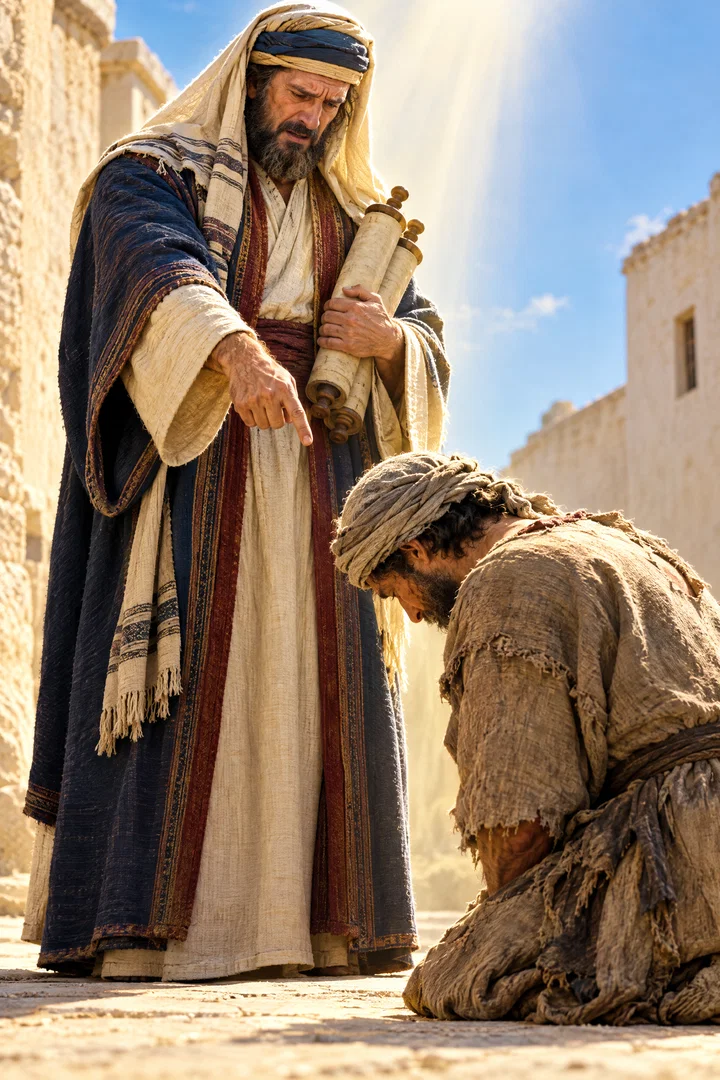
Thou that makest thy boast of the law, through breaking the law dishonourest thou God?
Translations
You that make your boast of the law, through breaking the law dishonor you God?
Thou that makest thy boast of the law, through breaking the law dishonourest thou God?
thou that makest thy boast of the law, through breaking the law dishonourest thou God?
Thou that makest thy boast of the law, through breaking the law dishonorest thou God?
thou who gloriest in the law, through thy transgression of the law dishonourest thou God?
thou who gloriest in the law, through thy transgression of the law dishonorest thou God?
thou who in the law dost boast, through the transgression of the law God dost thou dishonour?
thou who boastest in law, dost thou by transgression of the law dishonour God?
That in law dost boast, Through the transgression of the law, art thou dishonouring God?
Berean Standard Bible, Majority Standard Bible
You who boast in the law, do you dishonor God by breaking the law?
You who glory in the law, do you dishonor God by disobeying the law?
You who take pride in the law, are you doing wrong to the honour of God by behaviour which is against the law?
Thou that gloriest in the Lawe, through breaking the Lawe, dishonourest thou God?
Douay-Rheims (Challoner revision)
Thou that makest thy boast of the law, by transgression of the law dishonourest God.
Pictures
Cross-references 20 of 60
- Romans 3:19-20
Now we know that what things soever the law saith, it saith to them who are under the law: that every mouth may be stopped, and all the world may become guilty before God.
The law exposes sin and leaves all accountable and guilty before God.
- Romans 2:13
( For not the hearers of the law are just before God, but the doers of the law shall be justified.
Doers of the law, not hearers alone, are justified, contrasting lawbreaking that dishonors God.
- Romans 3:31
Do we then make void the law through faith? God forbid: yea, we establish the law.
Faith establishes the law rather than making it void.
- James 2:10-11
For whosoever shall keep the whole law, and yet offend in one point, he is guilty of all.
Breaking one commandment makes a person a transgressor of the law.
- 1 John 3:4
Whosoever committeth sin transgresseth also the law: for sin is the transgression of the law.
Sin is transgression of the law.
- Matthew 5:17-19
Think not that I am come to destroy the law, or the prophets: I am not come to destroy, but to fulfil.
Christ affirms the law’s continuance and condemns breaking its commandments.
- Romans 2:17-18
Behold, thou art called a Jew, and restest in the law, and makest thy boast of God,
The law instructs people in God’s will, which they boast of knowing.
- Romans 3:20
Therefore by the deeds of the law there shall no flesh be justified in his sight: for by the law is the knowledge of sin.
The law makes sin known, including sin committed while boasting in the law.
- Romans 8:7
Because the carnal mind is enmity against God: for it is not subject to the law of God, neither indeed can be.
The carnal mind is hostile to and cannot submit to God’s law.
- Romans 8:4
That the righteousness of the law might be fulfilled in us, who walk not after the flesh, but after the Spirit.
The law’s righteousness is fulfilled in those who walk by the Spirit.
- Romans 2:15
Which shew the work of the law written in their hearts, their conscience also bearing witness, and their thoughts the mean while accusing or else excusing one another;)
Gentiles show the law’s work written in their hearts, with conscience bearing witness.
- Romans 3:1-2
What advantage then hath the Jew? or what profit is there of circumcision?
Despite their hypocrisy, the Jews’ advantage was being entrusted with God’s oracles.
- Romans 4:15
Because the law worketh wrath: for where no law is, there is no transgression.
Transgression occurs where the law is present.
- Galatians 3:13-14
Christ hath redeemed us from the curse of the law, being made a curse for us: for it is written, Cursed is every one that hangeth on a tree:
Christ redeems transgressors from the law’s curse so Abraham’s blessing reaches the Gentiles.
- Romans 3:21-23
But now the righteousness of God without the law is manifested, being witnessed by the law and the prophets;
Righteousness by faith contrasts with the universal fact of sin.
- Revelation 14:12
Here is the patience of the saints: here are they that keep the commandments of God, and the faith of Jesus.
Both address keeping God’s commandments, alongside faith in Jesus.
- Romans 7:14
For we know that the law is spiritual: but I am carnal, sold under sin.
Both describe the law as spiritual, contrasting it with human sinfulness.
- Exodus 20:14
Thou shalt not commit adultery.
The law forbids adultery, yet its boasters dishonor God by breaking it.
- Romans 2:28-29
For he is not a Jew, which is one outwardly; neither is that circumcision, which is outward in the flesh:
Contrasts outward circumcision with inward circumcision of the heart.
- Romans 2:12
For as many as have sinned without law shall also perish without law: and as many as have sinned in the law shall be judged by the law;
Those who sin under the law are judged by the law.
Commentary
Each commentary is drawn from primary sources: the writings of Ellen G. White and Adventist pioneers and periodicals. Each commentary is separate. Its own words are not a quotation; follow the references to read the source passages.
Ellen G. White
7 sources
To boast of the law while breaking the law dishonors God, and to claim honor through the law while breaking it is hypocrisy.Ms 47, 1901, par. 21–24Lt 29a, 1872, par. 45–51Lt 29, 1872, par. 44–49RH Jan 7, 1902Lt 73, 1886, par. 2–4 The rebuke falls on those in God's service who claim to know His will and to be guides of the blind, lights in darkness, instructors and teachers of the commandments, yet do not teach and govern themselves.Ms 47, 1901, par. 21–24Lt 29a, 1872, par. 45–51Lt 29, 1872, par. 44–49Lt 73, 1886, par. 2–4 It exposes the minister of the gospel and professed follower of Christ who teaches another but does not teach himself, who instructs others but does not govern himself.Ms 47, 1901, par. 21–24Lt 29a, 1872, par. 45–51Lt 29, 1872, par. 44–49 The specific charge is preaching that a man should not steal while stealing, preaching against adultery while committing adultery, and abhorring idols and condemning idolatry while committing sacrilege and acting sacrilegiously.Lt 29a, 1872, par. 45–51Lt 29, 1872, par. 44–49
The same boast belonged to the Jewish priests and teachers who extolled their own piety and condemned Greeks and Romans as sinners.DA 61.2 They perverted God's law while boasting of it, and the most zealous advocates of the law were themselves transgressors who dishonored God by breaking it.Ms 132, 1902, par. 16 When the wise men came, the professed worshipers showed them no sympathy, yet those non-idolatrous strangers stood higher in God's sight than the boasters.DA 61.2 In contrast, Christ fulfilled every letter of God's law, observing even the precepts and ceremonies of the Mosaic institutions, while bringing transformation and making all things new.Ms 132, 1902, par. 16
Such lawbreaking dishonors God and causes His name to be blasphemed among the Gentiles and among those who see the hypocrisy.Ms 47, 1901, par. 21–24RH Jan 7, 1902 The warning therefore is against measuring and judging others while failing to examine one's own conduct and to take heed to self.Ms 47, 1901, par. 21–24RH Jan 7, 1902 It condemns hasty temper, impatience, oppression, criticism, and exclusion of brethren.Ms 47, 1901, par. 21–24 It condemns judging character and measuring ministering brethren when the heart cannot be read, and claiming to be holier while violating love.Ms 47, 1901, par. 21–24
The same principle reaches the married man and minister who gives to another woman attentions and familiar liberties that belong only to his wife.Lt 29a, 1872, par. 45–51Lt 29, 1872, par. 44–49Lt 73, 1886, par. 2–4 This includes unbecoming familiarities, impure thoughts and affections fixed on another woman while having a lawful wife, even to being thrown off balance while preaching with her before him.Lt 29, 1872, par. 44–49 Familiar liberties between a married minister and a professed Christian woman, persisted in despite warning, are an abomination in the sight of a holy God and sin against God.Lt 29a, 1872, par. 45–51Lt 29, 1872, par. 44–49 Such conduct wounds and injures His precious cause, burdens His work, and keeps Him from working through and blessing the efforts of the preacher.Lt 29a, 1872, par. 45–51Lt 29, 1872, par. 44–49Lt 73, 1886, par. 2–4
The call to all living amid the perils of the last days is to be careful how they measure a brother.Ms 47, 1901, par. 21–24 They are to be doers and not hearers only, and to seek inward religion where praise is of God and not of men.Ms 47, 1901, par. 21–24
Sources
Pioneers and periodicals
101 sources
To boast in possession of God's law while breaking it is to dishonor God, and the question itself is a direct accusation of that lawbreaking.RH Apr 8, 1909ST Nov 25, 1908RH Dec 23, 1915 The law boasted in and broken is the same moral law of the Ten Commandments, known by its commands against stealing, adultery and idolatry.RH Jul 12, 1870ST Dec 20, 1905ST Nov 13, 1879 Such profession without practice misrepresents God before unbelievers, so that His name is blasphemed among the Gentiles who judge Him by those who claim to represent Him.RH Feb 27, 1900ST Nov 25, 1908RH Dec 23, 1915 The rebuke assumes the law remains in force and binding, for breaking an abolished law could not dishonor God, and it includes the fourth commandment so that claiming to honor the law while disregarding the Sabbath is itself boasting while breaking.ST May 20, 1908RH Apr 16, 1861ST Dec 24, 1885 Jewish birth and outward circumcision give no exemption, for a lawbreaking Jew stands as a Gentile and a lawkeeping Gentile is accepted as a Jew, since circumcision profits only when the law is kept.RH Feb 27, 1900RH Jun 16, 1874RH Jun 10, 1875ST Oct 7, 1880
Setting and Addressees
Paul wrote in A.D. 58 from Corinth and sent by Phebe from Cenchrea to the Christian church at Rome.RH Oct 19, 1916 That church was made up of heathen who had embraced the gospel and Jews who believed in Jesus as Messiah yet kept many prejudices, especially hesitation to regard the uncircumcised Gentile convert as on the same footing with themselves.RH Oct 19, 1916 The verse is part of instruction to strengthen faith and correct misapprehensions arising from that mixed membership, to expose the moral depravity of mankind in general, to show all rites and ceremonies of the Mosaic law abrogated by the gospel dispensation, and to open the blessings of salvation equally to all whether Jew or Gentile.RH Oct 19, 1916 It belongs to a letter to a church composed of both Jews and Gentiles which is a masterly argument upon the perpetuity and universality of God's law, its binding obligation upon every soul, and the relationship of the law to the gospel as the power of God to bring every longing soul into perfect harmony with God's government.ST Jul 21, 1909 Its first three chapters stand as New Testament lesson, teaching that one who boasts in the law but breaks it dishonors God.ST Oct 14, 1908
It is a direct personal charge to one who bears the name of Jew, rests in the law, relies on the law, boasts in God, knows His will, approves excellent things, and is instructed out of the law.ST Dec 12, 1895 That one is confident he is a guide of the blind, a light in darkness, a corrector of the foolish, an instructor of the foolish and teacher of babes, having the form of knowledge and of the truth in the law.ST Dec 12, 1895ST Dec 12, 1895 He holds only the form without the reality, remaining unchanged by what he knows outwardly.ST Dec 12, 1895ST Dec 12, 1895 Yet he does not teach himself and does the evils he preaches against concerning stealing, adultery and idolatry, with sacrilege standing beside them as a parallel exposure of profession without practice.ST Dec 12, 1895ST Dec 12, 1895 The pointed question is a positive accusation of lawbreaking, proved by the fact that God's name is blasphemed among the Gentiles through such conduct, for pride in possessing the law joined with disobedience brings dishonor to God.ST Dec 12, 1895ST Dec 12, 1895
The chapter addresses people who had not received the law at Mount Sinai, not people with no knowledge of law.RH Mar 7, 1871 Moral knowledge among the nations came in part through tradition reaching back to an earlier revelation to humanity, and ignorance does not remove the force of God's law or obligation to it.RH Mar 7, 1871 The verse belongs to the argument that people are accountable to God and have a fair chance in this life.ST Jul 12, 1883 Even those who do not know God are without excuse, because creation makes His power and divine nature known, and people turn from Him by choosing not to retain Him in their knowledge.ST Jul 12, 1883
Identity of the Law
The law in the verse is God's moral law, identified by its commands against stealing, adultery and idolatry.RH Jul 12, 1870ST Jan 27, 1881ST Jul 1, 1880 It is distinct from the gospel and does not justify sinners, and it is distinct from the ceremonial ordinances and shadows that were fulfilled in Christ's death.RH Jul 12, 1870ST Jan 27, 1881ST Jul 1, 1880 It is the rule by which sinners under it are judged, and those who boast in it dishonor God when they break it.RH Jul 12, 1870ST Jan 27, 1881 The law written in hearts is not instruction supplied by nature nor another name for the gospel.RH Jul 12, 1870
Both uses of law in the verse refer to the same instrument, the Ten Commandments, not merely abstract principles.ST Dec 20, 1905ST Nov 13, 1879ST Dec 24, 1885 The contrast between boasting in the law and breaking it identifies the law as commandments that can be transgressed.ST Nov 13, 1879ST Nov 8, 1910ST Dec 24, 1885 Those commandments include adultery, theft and coveting, with the Jews possessing in outward form only the form of knowledge and of the truth contained in them.ST Dec 20, 1905ST Nov 8, 1910ST Oct 16, 1901ST Jul 7, 1909 The law is spiritual, while people in the flesh are carnal and cannot meet its requirements, though those who have God's Spirit and are in Christ can live in harmony with it.ST Dec 24, 1885
The law boasted in is the ten-commandment law through which the Jew is instructed in God's will.ST Feb 11, 1886ST Jun 23, 1887 It expresses God's will and righteousness and applies to all intelligent creatures under one unchanging will.ST Feb 11, 1886ST Jun 23, 1887 Because it expresses His goodness it cannot be abolished but remains intact as the law of God's kingdom.ST Jun 23, 1887
The verse gives the inspired explanation that the will of the Father is the law of God.ST Aug 5, 1875 Thus Christ's statement in John 6:38 that He came not to do His own will but the will of Him that sent Him is allegiance to the law.ST Aug 5, 1875 It is proof He did not come to abolish His Father's law and enact one of His own.ST Aug 5, 1875
The law is God's law as the principles of His government, whose knowledge was also preserved among Gentiles through conscience and tradition. Breaking this law is sin, and boasting of it while breaking it dishonors God.RH Jun 23, 1863RH Feb 4, 1873 It makes known God's will and forbids theft, adultery and idol worship, being a tangible law of direct enforcement and a law of truth.RH Jun 23, 1863RH Feb 4, 1873 Those who know this law will be judged by it when God judges secrets according to the gospel.RH Jun 23, 1863
The law is the law given to the Jews in which the Jew rested, consisting of God's precepts and oracles that gave them their advantage.ST Feb 24, 1887RH Nov 22, 1853RH Feb 4, 1873ST Mar 9, 1888 Its teaching about sin and transgression applies both to people who lived before it was given to Israel and to people living afterward.ST Feb 24, 1887 It is not limited to the law of Moses.RH Jul 12, 1870 God judges by those precepts without regard to national distinctions, so possessing and boasting in them does not excuse breaking them, and Jews and Gentiles alike are sinners under God's law.RH Nov 22, 1853RH Jul 12, 1870ST Mar 9, 1888
The law is the law of ten commandments as written in Hebrew and proclaimed at Sinai, taught and enjoined by Christ and the apostles without alteration of one letter or tip of a letter.RH Oct 14, 1873 Paul's rebuke for breaking that law treats it as still in authority and binding.RH Oct 14, 1873 Therefore no repeal took place and no re-enactment of any part of it, including the Sabbath, was necessary.RH Oct 14, 1873
In this argument the law is also set forth as the Mosaic code as a whole, not only the Ten Commandments, by which the Jews were shown to be sinners.RH Feb 18, 1873 Connected with the law by which people are judged, the cited argument identifies this as the gospel or law of faith, while exposing contradiction in claims that the old covenant is the Ten Commandments and that all have sinned against a different law.RH Jul 12, 1870 Its judgment applies to all people, Jews and Gentiles, with none excepted.RH Jul 12, 1870
Boasting Breaking Dishonoring God
The question asks whether the one who boasts in the law dishonors God by breaking the law, and boasting in possession of God's law gives Him no honor when that law is broken.RH Apr 8, 1909ST Nov 25, 1908RH Dec 23, 1915ST Apr 22, 1889ST Jun 1, 1882 The pointed form of the question is itself a positive accusation of lawbreaking.RH Apr 8, 1909ST Nov 25, 1908RH Dec 23, 1915ST Apr 22, 1889ST Jun 27, 1900 Such boasting while breaking dishonors God and causes His name to be blasphemed among the Gentiles and unbelievers.RH Feb 27, 1900ST Nov 25, 1908RH Dec 23, 1915ST Jun 27, 1900ST Dec 14, 1882 This happens because people judge God by the conduct of those who claim to represent Him and to be like Him.RH Feb 27, 1900ST Nov 25, 1908RH Dec 23, 1915ST Jun 27, 1900ST Dec 14, 1882 Profession without practice makes the profession false, misrepresents God's name and power, and gives unbelievers occasion to blaspheme when they do not see His keeping and saving power in the lives of those who commend His ways.RH Feb 27, 1900ST Nov 25, 1908RH Dec 23, 1915ST Jun 27, 1900ST Dec 12, 1895
The charge is proved by specific transgressions concerning stealing, adultery, idolatry and sacrilege.RH Apr 8, 1909ST Jan 27, 1881RH Nov 22, 1853RH Jun 23, 1863 It reaches taking what has been set apart for God's service, which is sacrilege or the stealing of holy things, and taking the Lord's name in vain, with parallel exposures of profession without practice.RH Apr 8, 1909ST Dec 12, 1895ST Jan 27, 1881RH Nov 22, 1853 Those rebuked hold only the outward form of knowledge and of the truth in the law, not the reality.ST Dec 12, 1895ST Sep 4, 1907ST Oct 1, 1896ST Nov 8, 1910ST Oct 16, 1901 They possess the law outwardly and can know its truth in form while remaining unchanged by it, lacking its essence and substance and its place in the heart and affections where faith in Christ places it to sanctify the life.ST Dec 12, 1895ST Sep 4, 1907ST Oct 1, 1896ST Nov 8, 1910ST Mar 20, 1907
The verse puts a hard question that each soul who prides himself on correctness of life must answer for himself.ST Dec 12, 1895ST Dec 12, 1895 It rebukes natural pride in morality and the comfort of those who are not Christians that their moral lives make them as well off as Christians.ST Dec 12, 1895ST Dec 12, 1895 There is no morality except conformity to the law of God, and everything in any respect below that standard is immorality, so each person must see whether he has perfectly kept that law.ST Dec 12, 1895ST Dec 12, 1895 Every professed follower misrepresents the truth professed and gives a miserably inadequate idea of true godliness by failures in word or action, in teaching or living, and therefore must answer yes to its charge, admit very often failure, and no one can declare himself guiltless before God's law.ST Dec 12, 1895ST Dec 12, 1895 It warns against measuring others while failing to examine one's own conduct.RH Jan 7, 1902RH Jul 22, 1902 Religious instruction and outward forms, church membership and activity, become false grounds for security when life contradicts teaching and lacks self-conquest and seeking God's kingdom first.RH Jan 7, 1902RH Jul 22, 1902
Jew and Gentile Alike
Jewish descent and outward circumcision give no standing before God apart from obedience, for the law is the standard of character by which all are measured.RH Feb 27, 1900RH Jun 16, 1874ST Feb 11, 1886RH Mar 13, 1856ST Feb 18, 1886 A circumcised Jew who transgresses the law is in character as a Gentile and loses that claim, while a Gentile who keeps the righteousness of the law is counted as circumcised and accepted with God.RH Feb 27, 1900RH Jun 16, 1874RH Jun 10, 1875ST Feb 11, 1886ST Feb 18, 1886 A true Jew is one inwardly by faith, whether born Jew or Gentile, for God judges by character and not by nationality.RH Jun 16, 1874RH Jun 10, 1875ST Feb 18, 1886 Boasting in possession of the law counts for nothing when it is transgressed, and hearers who disobey are guilty just as Gentiles who sin without the written law are guilty.RH Jun 10, 1875ST Feb 11, 1886RH Mar 13, 1856ST Feb 18, 1886 Keeping the righteousness of the law brings acceptance with God for Jew and Gentile alike.RH Jun 10, 1875
The Ten Commandments were not for Israelites only but bind Gentile converts, who are under no guilt for transgression when they keep them through conversion.ST Sep 27, 1910RH Feb 3, 1852RH May 27, 1875ST Aug 12, 1875ST Jan 17, 1878 Gentiles who did not have the written law had the work of the same law written in their hearts, are accountable as moral beings to higher authority than their kings, sustain the same relation to the law as the Jews did, and are condemned by it as violators.RH Apr 30, 1872RH Feb 3, 1852RH May 27, 1875ST Aug 12, 1875 No exemption for Gentiles can be drawn from the silence of Acts 15, for Romans 2 proves directly that the law remains binding upon them.RH May 27, 1875ST Aug 12, 1875 There is one law for all, not a law limited to the Jews, so the fourth commandment is as broad as the other commandments and an important part of that same law binding Gentiles as well as Jews.RH Feb 3, 1852ST Jan 17, 1878 Under the new covenant God writes that same moral law on hearts when people give themselves to Him, and no Gentile keeps the commandments until converted through faith in the Lord Jesus Christ and acceptance of His gospel of salvation, because the carnal mind is not subject to the law of God.ST Sep 27, 1910RH Apr 30, 1872 In contrast to Jews who rejected Christ while boasting in the law and teaching it to others yet breaking it and thereby dishonoring God, Gentiles who accepted Christ become doers of that same law, keeping its righteousness and fulfilling what the Jews continually broke.ST Sep 27, 1910
The moral law was never given to the Jews as a people exclusively, but they were entrusted with it, its oracles and testimony for a time in trust and passed it on to others.RH Dec 13, 1853RH Aug 23, 1870RH Dec 21, 1869ST Jul 1, 1875RH Dec 24, 1861 Possessing and boasting in the law does not excuse breaking it or make its obligations exclusive by descent.RH Aug 23, 1870RH Dec 21, 1869 Its custody honored Israel without making the law or its Creator Jewish.ST Jul 1, 1875RH Dec 24, 1861
The law in question is the rule of righteousness for Gentiles as well as Jews and the basis of the Abrahamic covenant, with its curse resting on both and showing all accountable.RH Jun 10, 1875RH Feb 18, 1873RH Mar 4, 1873 Transgressors cannot inherit Abraham's blessing until the curse is removed.RH Feb 18, 1873 God is honored when the law is kept and dishonored when it is broken, and Gentiles who keep it are accepted by Him.RH Jun 10, 1875RH Mar 4, 1873
Circumcision profits only when the law is kept, and a lawbreaker's circumcision counts as uncircumcision and for nothing.ST Oct 7, 1880RH Nov 22, 1853 The law committed to the Jews consisted of God's precepts, the oracles that gave them their advantage, and God judges by those precepts without regard to national distinctions, while its doers will be justified.RH Nov 22, 1853 Since circumcision was first given to Abraham, he kept this law, including the seventh-day Sabbath.ST Oct 7, 1880
There is no difference between Jew and Greek, for God is not partial and favors none, and boasting in the law gives the Jews no advantage over others.ST Jul 23, 1896RH Jan 19, 1860 The idea that God has special blessings for one nation of earth that He has not for others, whether that nation be called Jews, Israelites, Anglo-Saxons, Englishmen, or anything else, denies the gospel of grace.ST Jul 23, 1896 God has no special regard for the literal descendants of Jacob requiring a rebuilding of the middle wall that Christ in His gospel has broken down.RH Jan 19, 1860
Lawbreaking made circumcision into uncircumcision, because the righteousness of the law is obtained only through Christ, whom those seeking it without faith did not accept.ST Jul 9, 1896ST Jun 18, 1896 Therefore Israel after the flesh were not Israelites at all but were as Gentiles, separate from Christ, having no hope and without God in the world.ST Jul 9, 1896 Obedience to God's law is the only mark of an Israelite indeed and an heir of God, for at heart all men are the same and all are to be judged by one and the same standard, and knowledge of the law and high profession do not in themselves recommend anyone to God.ST Jul 9, 1896ST Jun 18, 1896 The same subject of who are true Israelites and heirs and how only that heirship is obtained is carried out in Romans 9-11.ST Jul 9, 1896
The unregenerate Jew was guilty of the same things charged to the Gentile world in Romans 1:28-32 because both possess the same nature.ST Aug 19, 1897 Apart from the gospel and its restraining influence the world as the world remains ever the same, though sin assumes varied front and form in different ages.ST Aug 19, 1897 High profession of God's law amounts to nothing without corresponding works, as the Jewish church made the highest profession yet crucified Christ whose blameless life and teaching condemned their sins.ST Aug 19, 1897 This gives the pattern for the Christian church apostatizing into fornication with the world and becoming guilty of the same sins under a form of godliness.ST Aug 19, 1897
Law Still Binding
The question itself assumes the law remains in force, for breaking an abolished law could not dishonor God.RH Apr 16, 1861 Paul's appeal was made years and years after the resurrection of Christ and shows he still stands by the law with no change or revocation.ST May 20, 1908 To glory in the law while breaking it by transgression dishonors God, calling for obedience to the letter and the spirit of the law while urging faith in Jesus and ever insisting on its binding claims.ST May 20, 1908 Such transgression treats God and His law with contempt.RH Apr 16, 1861
The law remains the rule of action and the standard by which people are judged, and the gospel does not set it aside.ST Jun 1, 1882 Faith does not make the law void nor permit continued transgression.RH Nov 22, 1853 The gospel works so that the righteousness of the law is fulfilled in believers, for the law is spiritual while the carnal mind is not subject to it. It exposes sin and places both Jews and Gentiles under its claim because all have sinned.RH Nov 22, 1853
The law in view includes prohibitions against blasphemy, idolatry, stealing and adultery, and the fourth commandment belongs to that same law, so the Sabbath commandment remains binding in this dispensation.ST May 13, 1889 Claiming to honor God's law while disregarding the Sabbath is the contradiction of boasting in the law while breaking it.ST Dec 24, 1885ST May 13, 1889 Sabbath-breaking is a breach of the law and therefore dishonors God, and the moral law remains on its original basis with no commandment excepted, including the Sabbath.RH Oct 7, 1851ST Aug 25, 1914RH Jul 1, 1873 Burdening the Sabbath with human traditions while violating its intent is the same boasting in the law while breaking it.ST Dec 24, 1885
Breaking the law dishonors God, while keeping it honors Him, so to claim God is dishonored by keeping it contradicts apostolic doctrine.RH Feb 4, 1873 The statement applies in this dispensation, for the law is a law of truth and a tangible law of direct enforcement that forbids stealing, adultery and idol worship.RH Feb 4, 1873 Rejecting the moral law is not merely rejecting a rule but rejecting the God whose law it is.RH Oct 23, 1860 The Creator's right to demand obedience follows from His worthiness to receive honor, and no one can honor God while breaking His law.RH May 1, 1855
God's authority and government are to be recognized and His law honored by obedience, for the divine will is learned only in His law.ST Aug 21, 1884 Past sin must be forgiven and future sin must be prevented, because sin past, present or future is odious to God and obedience is better than sacrifice.ST Aug 21, 1884 Works must conform to the law because all shall be rewarded according to works, and keeping the law remains necessary even though the law has no power to justify a sinner.ST Aug 21, 1884 Pardon through Christ redeems from the curse and condemnation that invariably follows transgression but does not release from duty and obligation to keep the law.ST Aug 21, 1884 Christ took the sinner's condition and was made sin so He could redeem those under the law, whose demand for the transgressor's life explains why people remain under its condemnation until they die with Christ.RH Nov 22, 1853
Sin Judgment and Grace
The law is the measure of righteousness and the rule by which people are judged, because it reveals sin, makes guilt known and shows what holy character is.ST Sep 9, 1875RH Jun 10, 1875ST Sep 27, 1883ST Oct 8, 1912RH Mar 29, 1864 Those who keep the righteousness of the law are accepted with God, whether Jew or Gentile, while boasting in possession of the law counts for nothing when it is transgressed.ST Sep 9, 1875RH Jun 10, 1875 Breaking the law dishonors God, and the law remains binding as the standard by which sin is exposed and by which people are judged and know sin.ST Oct 8, 1912RH Mar 29, 1864
Hearers who disobey are guilty just as Gentiles who sin without the written law are guilty, for having the law did not make righteous, and God judges by character and not by nationality.RH Nov 22, 1853ST Feb 18, 1886 Doers will be justified, and circumcision profits only when the law is kept, so a lawbreaker's circumcision counts for nothing.RH Nov 22, 1853ST Feb 18, 1886 The charge applies beyond Jews, since Paul concludes that the whole world is guilty before God and that both Jews and Gentiles are all under sin, which raises what advantage the Jew has.RH Mar 1, 1864RH Apr 29, 1873 The law committed to the Jews consisted of God's precepts and oracles that gave them their advantage, and God judges by those precepts without regard to national distinctions.RH Nov 22, 1853
Those who boast in the law yet dishonor God by breaking it, if any would deserve eternal torment, are instead sentenced as worthy of death, not unending conscious misery, though there was the most fitting occasion to teach eternal torment if it were true.RH Mar 4, 1862RH Oct 6, 1859RH Jan 7, 1873 Death means the complete end and extinction of life, for as long as any life remains a man is not dead, and continued life is not death.RH Oct 6, 1859RH Jan 7, 1873 The wicked ultimately perish, are consumed and are no more, identified with the second death, and the death that never dies is a contradiction.RH Mar 4, 1862RH Oct 6, 1859
No Gentile keeps the commandments until converted through faith in the Lord Jesus Christ and acceptance of His gospel of salvation, because the carnal mind is not subject to the law of God.ST Sep 27, 1910ST Dec 24, 1885 In contrast, Gentiles who accepted Christ are doers of that same law, keeping its righteousness and fulfilling what was continually broken, which proves the Ten Commandments were not for Israelites only but are binding on Gentile converts without guilt for transgression.ST Sep 27, 1910 The law is spiritual while people in the flesh are carnal and cannot meet its requirements, but those who have God's Spirit and are in Christ can live in harmony with it.ST Dec 24, 1885 Faith in Christ places the law in the heart, whereas having it outwardly leaves its truth outside the heart unchanged.ST Sep 4, 1907ST Dec 24, 1885
Conscience is connected with the chapter's teaching that God's law is written in the heart: it makes a person unhappy when knowingly doing wrong and cannot simply be silenced.ST Aug 24, 1882 Even a Buddhist who denies God recognizes that this witness is good and may come from God.ST Aug 24, 1882 That witness shows the need for pardon and peace, found in the Christian message of Immanuel, God with us.ST Aug 24, 1882
No one completely obeys the law, for it shows what holy character is but cannot make fallen people perfect because of the weakness of the flesh.ST Sep 27, 1883 Greater religious privilege brings greater responsibility, so Israel's sins were more serious because of greater privilege, not because its actions were worse than those of other nations, and the commandment makes sin exceedingly sinful.ST Sep 27, 1883ST Nov 4, 1880 Claiming to follow the Bible makes inconsistency especially evident when Sunday is observed without an explicit scriptural warrant while such a warrant is demanded for other practices, and such Sabbath practice dishonors God by departing from the commandment professed.ST Nov 4, 1880
Witness and Daily Obedience
Knowing and teaching the law is not enough unless its truth shapes the life, for conduct that contradicts profession makes the profession false.RH Dec 23, 1915 Those who teach truth must live by what they teach, or their actions undermine their words and teach others false principles.RH Dec 23, 1915 Such a life misrepresents truth and gives an inadequate idea of godliness.ST It causes God's name to be blasphemed among others outside the faith.RH Dec 23, 1915
Professing godliness without living according to it is hypocrisy, not Christianity.ST Such hypocrisy discredited God's name among Gentiles and unbelievers.ST Dec 5, 1892ST The transgressor's conduct brings this dishonor even while he boasts in the law.ST Dec 5, 1892ST Zeal for the law joined to human traditions and burdens imposed on others does not honor God when the heart is far from Him.ST Dec 5, 1892
Boasting of the law while breaking it is done when Christians seek public opportunities to honor God while neglecting faithfulness at home and at work.ST Jan 29, 1885 A mechanic powerful in prayer meeting but slovenly and weak at his trade, a servant weeping at religious services but careless in the kitchen and putting his mistress out of temper, a clerk teaching in mission school yet always late at his employer's store, and a lady engaged in missionary work yet going home to find unreasonable fault with her cook all disgrace and hinder the cause instead of spreading it.ST Jan 29, 1885 True religion begins at home in daily duty, careful work, and right temper.ST Jan 29, 1885 A religion that seeks to set others straight while overlooking one's own crookedness brings no credit to the cause professed.ST Jan 29, 1885
Breaking the law includes more than the specific wrongs of stealing, adultery, and idolatry named nearby.ST May 1, 1884 Failing to care about helping others learn saving truth also violates the law.ST May 1, 1884 Love for neighbor expressed by working for that person's eternal good is part of keeping the law.ST May 1, 1884 The same contradiction appears when church members condemn gambling while supporting raffles, fish ponds, or similar schemes that teach others to gamble.ST Oct 15, 1894 Professed loyalty does not excuse conduct that contradicts His law and damages the reputation of His name among those outside the faith.ST Oct 15, 1894
Like the Jews rebuked, those who respect and hallow one part of the holy and just and good law become guilty before God when they violate another part.RH Aug 10, 1876 Keeping the Sabbath commandment is one token of respect for God's law but is not enough by itself.RH Aug 10, 1876 Honoring God requires obedience to the whole law with Bible conversion.RH Aug 10, 1876 That means a heart renewed by divine grace, cleansed from sin and washed in Christ's blood, having the Spirit of Christ.RH Aug 10, 1876
Israel had received the law as an everlasting covenant, and the priests dishonored God by departing from it, failing to keep knowledge, and causing others to stumble at the law, even while professing to honor God as Father.RH Nov 22, 1853 The same principle applies to teaching others to fulfill the law while transgressing it.RH May 1, 1856 Claiming that first-day observance is right while breaking God's law by rejecting the seventh-day Sabbath is such a contradiction.RH May 1, 1856ST Nov 4, 1880 Observing Sunday without explicit scriptural warrant while demanding such warrant for other practices dishonors God by departing from the commandment professed, and greater religious privilege brings greater responsibility because the commandment makes sin exceedingly sinful.ST Nov 4, 1880
God's people can burden Him with their sins when they profess to know Him yet break His law.ST Jul 26, 1905 Claiming honor for God's law while breaking it dishonors God.ST Nov 1, 1899 The rulers' failure to live by what they taught illustrates this contradiction.ST Jul 26, 1905ST Nov 1, 1899
Sources