Matthew 5:17
Think not that I am come to destroy the law, or the prophets: I am not come to destroy, but to fulfil.
Translations
American King James Version, Webster Bible
Think not that I am come to destroy the law, or the prophets: I am not come to destroy, but to fulfill.
King James Version, KJV Cambridge Paragraph Bible
Think not that I am come to destroy the law, or the prophets: I am not come to destroy, but to fulfil.
Think not that I came to destroy the law or the prophets: I came not to destroy, but to fulfill.
Think not that I came to destroy the law or the prophets: I came not to destroy, but to fulfil.
'Do not suppose that I came to throw down the law or the prophets — I did not come to throw down, but to fulfil;
Think not that I am come to make void the law or the prophets; I am not come to make void, but to fulfil.
Do not think, that I came to pull down the law, or the prophets,—I came not to pull down, but to fulfil.
Berean Standard Bible, Majority Standard Bible
Do not think that I have come to abolish the Law or the Prophets. I have not come to abolish them, but to fulfill them.
“Don’ t think that I came to destroy the law or the prophets. I didn’ t come to destroy, but to fulfill.
Let there be no thought that I have come to put an end to the law or the prophets. I have not come for destruction, but to make complete.
Think not that I am come to destroy the Lawe, or the Prophets. I am not come to destroy them, but to fulfill them.
Douay-Rheims (Challoner revision)
Do not think that I am come to destroy the law, or the prophets. I am not come to destroy, but to fulfill.
Pictures
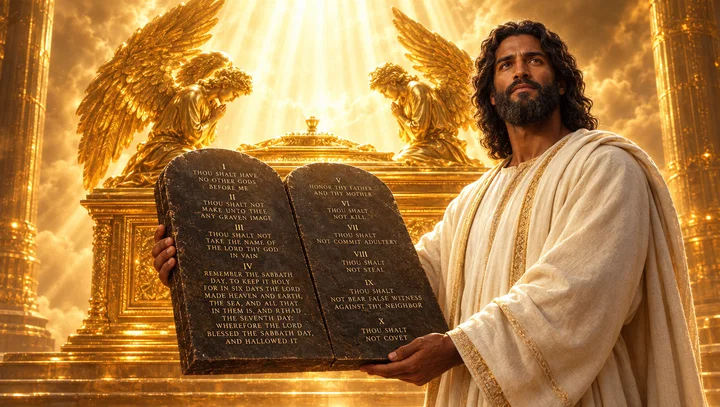
Cross-references 20 of 216
- Exodus 20:8-11
Remember the sabbath day, to keep it holy.
The Sabbath commandment is part of the law Christ came to fulfil, not destroy.
- Romans 3:31
Do we then make void the law through faith? God forbid: yea, we establish the law.
Faith establishes rather than nullifies the law.
- Isaiah 42:21
The LORD is well pleased for his righteousness’ sake; he will magnify the law, and make it honourable.
The Lord magnifies and honors the law, fulfilling it rather than destroying it.
- James 2:10-11
For whosoever shall keep the whole law, and yet offend in one point, he is guilty of all.
Breaking one commandment makes a person accountable to the whole law.
- Luke 16:17
And it is easier for heaven and earth to pass, than one tittle of the law to fail.
Both affirm that not even the smallest part of the law will fail.
- 1 John 3:4-5
Whosoever committeth sin transgresseth also the law: for sin is the transgression of the law.
Sin is transgression of the law, and Christ was manifested to take away sin.
- John 15:10
If ye keep my commandments, ye shall abide in my love; even as I have kept my Father’s commandments, and abide in his love.
Christ’s obedience to the Father’s commandments fulfills the law.
- Matthew 19:17
And he said unto him, Why callest thou me good? there is none good but one, that is, God: but if thou wilt enter into life, keep the commandments.
Jesus connects entering life with keeping the commandments.
- Psalms 40:8
I delight to do thy will, O my God: yea, thy law is within my heart.
Christ delights to do God’s will, with the law in his heart.
- Romans 7:12
Wherefore the law is holy, and the commandment holy, and just, and good.
The law and commandment are called holy, just, and good.
- Colossians 2:14
Blotting out the handwriting of ordinances that was against us, which was contrary to us, and took it out of the way, nailing it to his cross;
The ordinances are described as blotted out and nailed to the cross.
- Romans 8:4
That the righteousness of the law might be fulfilled in us, who walk not after the flesh, but after the Spirit.
The law’s righteousness is fulfilled in believers who walk by the Spirit.
- Psalms 111:7-8
The works of his hands are verity and judgment; all his commandments are sure.
God’s commandments are sure and stand fast forever.
- Romans 7:7
What shall we say then? Is the law sin? God forbid. Nay, I had not known sin, but by the law: for I had not known lust, except the law had said, Thou shalt not covet.
The law reveals sin through its command against coveting.
- Matthew 5:21-22
Ye have heard that it was said by them of old time, Thou shalt not kill; and whosoever shall kill shall be in danger of the judgment:
Christ extends the command against murder to causeless anger.
- Galatians 6:2
Bear ye one another’s burdens, and so fulfil the law of Christ.
Bearing one another’s burdens fulfills Christ’s law by doing what it requires.
- Jeremiah 31:33
But this shall be the covenant that I will make with the house of Israel; After those days, saith the LORD, I will put my law in their inward parts, and write it in their hearts; and will be their God, and they shall be my people.
God’s law is written in the hearts of his people.
- Romans 3:20
Therefore by the deeds of the law there shall no flesh be justified in his sight: for by the law is the knowledge of sin.
The law gives knowledge of sin and remains in force.
- Hebrews 8:10
For this is the covenant that I will make with the house of Israel after those days, saith the Lord; I will put my laws into their mind, and write them in their hearts: and I will be to them a God, and they shall be to me a people:
God promises to write his law in his people’s hearts.
- Psalms 19:7
The law of the LORD is perfect, converting the soul: the testimony of the LORD is sure, making wise the simple.
Describes as perfect the law that Christ did not destroy.
Commentary part 1 of 3
Each commentary is drawn from primary sources: the writings of Ellen G. White and Adventist pioneers and periodicals. Each commentary is separate. Its own words are not a quotation; follow the references to read the source passages.
Ellen G. White
157 sources
He came not to do away with the law and the prophets but to keep them perfectly, carry out every detail, uphold their claims, and open their full depth, breadth and spiritual meaning.COS 75.1–4RH May 19, 19104RED 69.217MR 320.4–321.1Lt 58a, 1898, par. 16 The law He so honored is the moral law of the Ten Commandments, given in Eden, proclaimed at Sinai and as lasting as God's throne, distinct from the ceremonial system of sacrifices and ordinances that pointed to Him and met its end in His death.Ms 69a, 1896, par. 46–47Ms 43, 1887, par. 1PP 365.1–3Lt 89, 1898, par. 14–19ST Jul 29, 1897 By living every precept in humanity He proved obedience possible and exposed the lie that men cannot keep it, and by bearing its curse as Substitute He magnified it and established it, for if it could have been changed or set aside His death would not have been needed.ST Jan 25, 1905ST Sep 23, 1889COL 314.2–4ST Jul 18, 1878Ms 162, 1899, par. 16–18 That law stands forever without one letter passing, condemning sin yet joined to the gospel that frees from sin, and its fourth precept still requires the seventh-day Sabbath, which He kept and cleared of human burdens and which no power can change.4SP 280.1Ms 51, 1902, par. 1ST Nov 12, 1894Ms 145, 1897, par. 13–16Lt 384, 1908, par. 16–17 Therefore breaking even the least commandment and teaching others to do so brings least place and exclusion from the kingdom, while a righteousness exceeding outward show, reaching heart, thought and motive, and shining in good works, brings greatness and entrance into life.ST Oct 15, 1894ST Oct 22, 1912PK 183.2Ms 5, 1889, par. 1–5Ms 24, 1898, par. 2–5
Words and Setting
The saying belongs to the Sermon on the Mount, coming after the blessings on the poor in spirit, those who mourn, the meek, those who hunger and thirst after righteousness, the merciful, the pure in heart, the peacemakers, and those persecuted for righteousness, and after the sayings about being the salt of the earth and the light of the world whose good works glorify the Father in heaven.Lt 202, 1908, par. 7–11 It comes before the declarations that not one jot or tittle shall pass from the law till all be fulfilled, that breaking one of the commandments and teaching men so brings least place in the kingdom while doing and teaching them brings greatness, and that righteousness must exceed that of the scribes and Pharisees to enter the kingdom of heaven.Lt 202, 1908, par. 7–11 It is part of that sermon in which false ideas about the kingdom were corrected and its nature and the conditions for entering it were taught, setting out foundational principles of God's kingdom.DA 299.3 It was spoken when He went up into a mountain and His disciples came to Him and He taught them, opening His discourse by stating the principles that govern His kingdom of divine grace as contained in the beatitudes, with the disciples close about Him yet designed to reach the hearts and consciences of the whole mixed crowd.Lt 202, 1908, par. 7–112SP 204.1
It was spoken by the divine Teacher to the disciples pressing closely around Him, and was also heard by the vast multitude.Ms 28, 1899, par. 1–2RH May 28, 1901 Scribes and Pharisees watched His every movement and listened to every word hoping to hear something to use in accusation against Him, and spies closely watched Him as He unfolded the principles of righteousness.Ms 169, 1903, par. 30–35Ms 28, 1899, par. 1–2RH May 28, 1901 His words were full of grace and truth, spoken in a clear, musical voice such as the people had never heard from the rabbis.Ms 28, 1899, par. 1–2RH May 28, 1901 In unmistakable language they revealed His attitude toward the divine statutes given with solemnity from Sinai, declaring He had not come to destroy the law or the prophets but to fulfil them, so every specification of the prophetic Word will be fulfilled.Ms 169, 1903, par. 30–35
The saying answered the thought in many hearts, the whisper spread by the Pharisees, and the unspoken charge in their hearts that He had come to destroy or do away with the law and the prophets and that His unfolding of righteousness was in opposition to the precepts God had given from Sinai.Ms 169, 1903, par. 30–3521MR 195.4–196.1 It answered the thought that He had come to destroy the law because He did not make the law as prominent as the Jewish teachers did, who dwelled upon the law as their entrance into heaven while having Christ represented in the typical offerings and sacrifices.Ms 5, 1889, par. 1–5 It answered those who braced themselves to resist light, and the Jews who thought He was going to pass by the law, and the scribes and Pharisees who accused Him of doing away with His Father's law when He did not recognize their customs and traditions, having mingled human customs and practices with divine commands.3MR 100.3Ms 79, 1896, par. 10–1221MR 195.4–196.1Ms 9, 1893, par. 22–24 Contrary to the leaders' accusation, His teachings upheld God's law, and He looked with pity and sympathy on people misled by teachers who twisted its plain precepts, announcing the royal law in clear and decided utterances and showing its full scope by applying it to all human acts and to duties toward others.3MR 100.3Ms 63, 1912, par. 26–29ST Oct 24, 1895
The same voice that declared the moral and ceremonial law and gave instruction through Moses in the wilderness upheld them on the mount, affirming rather than undermining them.ST Apr 26, 18772SP 216.2–217.14RED 68.2–69.1 He Himself had proclaimed the law on Mount Sinai amid thunder and flame, when the glory of God rested on its summit like devouring fire and the mountain quaked at the presence of the Lord while Israel lay prostrate and listened in solemn awe to its sacred precepts. What He spoke on the mount of the beatitudes under the summer sky with only birdsongs breaking the stillness, unfolding the principles of His kingdom in accents of love, was a carrying out and opening up of the principles of that same law proclaimed on Sinai. The law is represented by the Ten Commandments on stone tablets, and the mountain setting connects the law with its proclamation. He opposed false interpretations, superstitious exactness, superstitious requirements and demands that obscured the law, not the law itself, seeking to lead hearers to observe its principles and understand the prophets' teachings more fully, preserving vital truths and guiding into greater knowledge and clearer light.ST Apr 26, 18772SP 216.2–217.14RED 68.2–69.1
The sermon gave no great display of power for a new earthly kingdom to free the believing Jews from the yoke of bondage and reinstate them in their ancient glory, and it disappointed their hopes of earthly glory.2SP 204.1 He upheld God's law and corrected mistaken ideas about it, rebuking pretentious piety through His teaching and manner of working, revealing God's character by living it and presenting the law in its true, perfect form.Ms 135, 1902, par. 19–20Ms 16, 1894, par. 6–9 He removed false interpretations and human traditions that had obscured the law, expounding important portions whose sense had been buried under human customs and traditions, bringing out pure principles, freeing it from spurious and burdensome exactions, and restoring it to its enduring basis of virtue and purity.Ms 16, 1894, par. 6–9Ms 79, 1896, par. 10–12 His teaching of God's commandments corrected the rabbis' misinterpretation and exposed ungodly doctrine, practices and lives, refuting the claim that obedience is impossible and misrepresentation of God.Ms 16, 1894, par. 6–9Ms 63, 1912, par. 26–29ST Mar 26, 1896 The words about the law, its commandments, and righteousness were addressed to His disciples and apply through all ages, expressing in teaching the life He had already lived, in contrast to seeking self-glory.3MR 100.3
Sense of Fulfil
To fulfil does not mean to destroy, abolish, lessen, set aside, or do away with the law and the prophets. It means to keep, perform, obey perfectly, meet its demands, carry out literally every detail, uphold, establish, honor, magnify and make honorable, vindicate, and defend.COS 75.1–4RH May 19, 19104RED 69.2Ms 8, 1902, par. 13–14Ms 11, 1893, par. 11 It is used in the same sense as fulfilling all righteousness at His baptism.COS 75.1–4 His fulfilling upheld the full force and continuing validity of the law rather than weakening it, cancelling it, or granting freedom from obedience.RH May 19, 19104RED 69.212MR 415.1
To fulfil means to fill up the full measure of its requirement and to give every specification a depth and meaning the Pharisees never saw nor understood.Lt 58a, 1898, par. 1611MR 339.1 It means to open up and explain its true significance, present its far-reaching principles, breadth, length, dignity, purity and spirituality, and make plain its eternal obligation.17MR 320.4–321.1GC88 262.1–2FE 237.1 What had been obscured by human explanations is made clear, and the solemn charge given at Sinai is upheld as still binding with the gospel aim of freedom from sin through faithful obedience to every precept.17MR 320.4–321.1GC88 262.1–2
Fulfilling magnifies the law by showing it reaches beyond outward acts seen by men to the heart, motives, thoughts, intents and purposes known only to God.ST Oct 15, 1894ST Oct 22, 1912Ms 5, 1889, par. 1–5COS 75.1–4Lt 16, 1892, par. 22–25 It condemns sinful thoughts and desires, hatred and anger as murder, lust as adultery, covetousness as idolatry, and even the least injustice, and it calls for perfect spiritual obedience and love in conduct and state of heart.ST Oct 22, 1912Ms 5, 1889, par. 1–5Lt 16, 1892, par. 22–25ST Dec 30, 1913 Its requirements concern not only outward ceremonies but the motives that control the heart, with the commandments exceedingly broad.ST Oct 22, 1912Lt 16, 1892, par. 22–25
Fulfilling includes rescuing precious truths buried under rubbish of human traditions, maxims, false interpretations, technicalities, exactions and burdens.ST Oct 15, 1894ST Jan 25, 1905Ms 16, 1894, par. 6–9Ms 79, 1896, par. 10–12ST Jun 5, 1901 It tears away error, removes confusion and false human burdens, removes spurious exactions, and resets jewels of truth in the framework of the gospel and of God's law to shine in original luster in their purity and perfect form.Ms 5, 1889, par. 1–5Ms 16, 1894, par. 6–9Ms 79, 1896, par. 10–12ST Jun 5, 190118MR 133.2–3 So restored, truth commends itself to the intellect, arouses the conscience, and leads from what rabbis and Fathers say to what the Word says judged by law and testimony.Ms 5, 1889, par. 1–518MR 133.2–3
Fulfilling does not permit setting aside the law for natural desires or plans, departing even in the smallest degree, lessening obligation, or claiming that those led by the Spirit are no longer bound to keep the commandments.Lt 189, 1909, par. 12–16Lt 306, 1903, par. 3–4Ms 51, 1902, par. 4–5Ms 63, 1912, par. 30–33 It enforces human obligation to God more decidedly, exposes unrighteousness by joining righteousness with truth, and declares disobedience can never be rewarded with eternal life.12MR 415.1Ms 165, 1907, par. 8–9Lt 189, 1909, par. 12–16 Only those truly living the holy law with sanctified heart are accepted, and no sinner with sins unrepented and unforsaken will enter the New Jerusalem, yet a way is opened for men to obey and teach others by laying hold of divinity and walking after the Spirit.Ms 165, 1907, par. 8–9Lt 189, 1909, par. 12–16Ms 63, 1912, par. 30–33
Which Law and Prophets
The law spoken of is the moral law of the Ten Commandments given in Eden, proclaimed from Sinai and enforced by the prophets, written upon human hearts at creation when they came from the Creator's hands.Ms 69a, 1896, par. 46–47Lt 89, 1898, par. 14–19Ms 43, 1887, par. 4 It was never a type or shadow, it existed before man was created, it governs angels and all intelligent beings as necessary for the order and well-being of the universe, and it stands fast forever as firm as God's throne and as the pillars of heaven.RH Apr 22, 1902Ms 43, 1887, par. 4 It is the revelation of God's character and jurisdiction over the whole human family, holy and just and good, the voice from heaven in promise, Do and live, and its authority is never to be circumscribed nor to lose its all-pervading power as a sin detector approving or condemning every soul.Lt 89, 1898, par. 14–19RH Apr 22, 1902 It rests on an entirely different foundation from the ceremonial or ritual law, which was a built-up barrier and restraint upon a stiff-necked rebellious people to guard the moral law from being broken.PP 365.1–3Ms 43, 1887, par. 4 That ceremonial law consists of symbols, sacrifices, ordinances and ritual pointing to His sacrifice and priesthood, distinct from the moral precepts which remain binding and are not made disposable by being fulfilled.Ms 69a, 1896, par. 46–47PP 365.1–3
To fulfil the prophets and what God predicted is to carry out literally every detail foretold by holy men, for every specification of the prophetic Word will be fulfilled.Ms 169, 1903, par. 30–35Ms 48, 1893, par. 4 This includes fulfilling the prophecies concerning Israel's Redeemer and the Messiah, vindicating the Father's law as the author and foundation of all the religion of God's chosen people from Adam's day and the finisher of the faith.AA 120.23T 432.1 The Old Testament presents the gospel of the coming Saviour and points forward to Him through prophecies and typical offerings and sacrifices, while the New Testament shows that the foretold Saviour and true Offering has come, bringing clearer light and not removal of God's law.ST Jul 29, 1886ST Oct 21, 1886 The Old and New Testaments are inseparable teachings, and to reject either leaves the testimony incomplete.ST Jul 29, 1886ST May 17, 1877
To fulfil the typical laws is to meet type with antitype in Himself as the greater and wholly perfect sacrifice, the Lamb without blemish and the originator and foundation of the entire Jewish system of sacrifices.Ms 43, 1887, par. 1AA 120.23T 432.1 Sacrificial laws, temple services and shadowy ceremonial observances stayed in force until type reached antitype in Him, then were to cease and were abolished at the cross when He blotted out the handwriting of ordinances and nailed it to His cross.Ms 43, 1887, par. 1PP 365.1–3ST Jul 29, 1897 His death ended the laws governing Jewish sacrifices and offerings, so that offerings ceased to have value and were no longer acceptable, but it did not abolish, destroy or set aside the Ten Commandments.ST Jul 29, 1897SG1 109.2EW 179.2–3 The Decalogue as reality enduring as Jehovah's throne was not destroyed but magnified, honored and upheld in obedience to its holy precepts, and those who see to the end of what was done away plainly see the glory of what is not done away.SG1 109.2EW 179.2–3RH Apr 22, 1902
Fulfilling also includes developing the Jewish religious system and dispensation in accordance with truth, not destroying it.1MR 137.5Ms 87, 1907, par. 4 It includes pulling down the works of oppression the enemy raised up, opposing oppression, and restoring marriage to its original sanctity and elevation as a sacred holy institution ordained and first celebrated in Eden, by sanctioning the marriage relation and putting His seal upon it and beginning the restoration of God's moral image in man.ST Sep 6, 189910MR 202.1–203.3Ms 16, 1899, par. 31–33 It includes not disparaging education but sanctifying human talents employed for His glory, making human learning strong and pure and ennobling by founding it in the knowledge of Himself, as originator of all deep thoughts of true philosophy and every line of education retained through sanctification of the spirit.11MR 339.1 Fulfilling meant observing every letter including the precepts and ceremonies of the Mosaic institutions while at the same time bringing a transformation that makes all things new.18MR 116.2 This stands in contrast to the Jewish teachers who perverted God's law while as its most zealous advocates being themselves transgressors.18MR 116.2
Law Stands Forever
Christ declared that He had not come to do away with the law or the prophets but to fulfill every specification, showing the immutability of the law and the holiness of its claims so that it will endure throughout the ages.Ms 51, 1902, par. 1Ms 145, 1897, par. 13–16Lt 384, 1908, par. 16–17 The law retains its authority as long as heaven and earth remain, and not even its smallest part passes away before its purpose is fully accomplished.Ms 145, 1897, par. 13–16Lt 384, 1908, par. 16–17Lt 79, 1911, par. 1–3 As long as heaven and earth remain no power in heaven or on earth has any excuse to change it, and human traditions that teach against it make it void while His words affirm its continuing authority.Ms 163, 1897, par. 27–28Ms 56, 1902, par. 25–27 In the Sermon on the Mount He bore witness that not one jot or tittle shall pass till heaven and earth pass and all be fulfilled, that whoever breaks one of the least commandments and teaches men so shall be called least while whoever does and teaches them shall be called great, and that except righteousness exceeds that of the scribes and Pharisees there is no entrance into the kingdom.Lt 384, 1908, par. 16–17Ms 56, 1902, par. 25–27 To admit change would stamp God as changeable and imperfect, for the law remains perpetual, unchangeable, immutable and eternal without one letter, stroke or least precept passing.Ms 51, 1902, par. 1Ms 145, 1897, par. 13–16Ms 56, 1902, par. 25–27
The law is the transcript of His character and of Christ's character, given through the Redeemer as the standard that measures character, with careful obedience and no lower standard and no trifling with even one moral precept for convenience or pleasure.Ms 69, 1896, par. 5–6Ms 105, 1894, par. 28Ms 9, 1893, par. 22–24 It is the foundation of His government in heaven and earth, the expression of His unchanging nature and of man's relation to God and man, holy, just and good, essential to moral government and necessary for order of the universe and angels.Ms 69, 1896, par. 5–6Ms 9, 1893, par. 22–24Ms 139, 1903, par. 20–21 Written from creation on human hearts, it can never be wholly erased, and there was nothing in it that needed changing or altering to meet man in his fallen condition.Ms 9, 1893, par. 22–24ST Jun 13, 1900 It could no more be abolished nor one precept altered than the throne of the infinite God could be torn away, for to have abolished it would have been to immortalize sin.Ms 9, 1893, par. 22–24ST Jun 13, 1900 In the last days this calls His people to exalt Him by keeping His law holy, to bear the sign of God and let light shine in clear distinct rays, with no part of the law and covenant obligation losing its binding claims upon all the world.Ms 139, 1903, par. 20–2118MR 32.2–33.1
The law takes hold upon the thoughts and intents and purposes of the heart, rebukes pretentious piety and corrects erroneous ideas, and exposes the man of sin who thought to change times and laws and oppresses those who honor God by keeping the only true Sabbath of creation.Ms 9, 1893, par. 22–24Ms 139, 1903, par. 20–2118MR 32.2–33.1 Whoever breaks one of the least commandments and teaches men so by precept and example is called least, which means being registered in heaven's councils as of least value, pronounced so by God and Christ and the holy angels, brought into judgment for disregarding the law, and never entering the kingdom.Ms 69, 1896, par. 5–6Ms 105, 1894, par. 28 Whoever does the commandments and teaches them is called great, which means being recognized in heaven as one with Christ and with God and accounted great by the angelic hosts, honoring God before a disobedient world.Ms 69, 1896, par. 5–6Ms 105, 1894, par. 28 Christ fulfilled the law by carrying out its every specification and vindicating it by living it in human nature in perfect obedience, giving an example to fallen, disorderly, lawless human beings.Ms 9, 1893, par. 22–24ST Jun 13, 1900 By doing this He offers Himself and all He has, His glory and His character, in service to those who return to loyalty and keep the law of God, and this is their only hope.ST Jun 13, 1900
The Ten Commandments remain binding on every person for as long as human life and moral consequences continue, and their force cannot be repealed or reduced, for His death does not abolish the Father's law.Lt 35a, 1877, par. 14–16Ms 12, 1894, par. 17–19Ms 76, 1893, par. 61–65 Obedience is required to every commandment, breaking one makes a person guilty, while keeping and teaching them is honored, and those who break them or lead others to do so will answer for that influence in the judgment.Lt 35a, 1877, par. 14–16Lt 1, 1895, par. 9–11 The continued existence of heaven and earth testifies that the law is unchanging, and it will stand as the standard when transgressors are judged and the obedient are blessed.Lt 1, 1895, par. 9–11Ms 76, 1893, par. 61–65 The law remains a perfect standard of character but cannot save anyone, for people are free through Christ's merits and righteousness, and living faith in Him leads to obedience and keeping the commandments.Ms 12, 1894, par. 17–19ST Jul 18, 1878RH Jun 26, 1900 It cannot pardon or cleanse the sinner but reveals sin and condemns transgression, while forgiveness comes only through repentance toward God and faith in the atoning sacrifice, and the Lord's law is perfect and converts the soul.Lt 35a, 1877, par. 14–16ST Jul 18, 1878RH Jun 26, 1900
Christ's death ended the ceremonial law and its sacrificial offerings when their types met their fulfillment, but it established rather than canceled the Ten Commandments, and the gospel has not removed their claims as the standard of holiness by which people will be judged.ST Jul 18, 1878RH Jun 26, 1900 His life proves that human beings can keep God's law, and through His merits they can overcome, for its letter directs conduct while its spirit points to Him as the atoning sacrifice through whom repentant sinners can meet its requirements.ST Jul 18, 1878Ms 12, 1894, par. 17–19 The Sermon on the Mount explains God's law whose commandments remain binding, and its gospel message to be preached to the world has as its grand aim freedom from sin through faithful obedience to every precept, with not one dishonest action in kings or nobles, ministers or teachers overlooked.Lt 187, 1903, par. 21–23Ms 11, 1893, par. 1117MR 320.4–321.1 To fulfill means not to destroy but to uphold and defend its honor by presenting the truth as it is in Jesus, bringing its right principles to light after traditions had covered it so it could not be kept.ST Jul 18, 1878Ms 11, 1893, par. 11 Law and gospel go hand in hand and must never be disconnected, belonging together through the whole Bible from Genesis to Revelation, in perfect harmony with each upholding the other, as the glory of Christ revealed in the law transforms the soul into His image to partake of the divine nature.Ms 11, 1893, par. 11RH Apr 22, 190210MR 156.2–157.1
Satan's special work is to separate the Father and the Son, leading one party to cry for the law and away with Christ and another to cry for Christ and away with the law, but turning from the Father and His law to dwell wholly upon Christ does not honor God.RH Apr 22, 190210MR 156.2–157.1 Every Old Testament provision to turn men from sin and bring forgiveness was made with reference to the coming Saviour, and by His sacrifice He finished the plan that puts man where he can keep God's law and be accepted through the Redeemer's merits, shedding glory upon the law.RH Apr 22, 190210MR 156.2–157.1 The claim that His death abolished the law is false, for He came to uphold and vindicate His Father's claims, and His death demonstrates that the law remains unchanged.6RED 13.1–2ST Aug 15, 1878ST Jul 4, 1899 To teach that it has been changed or abrogated, to spiritualize and explain away its claims, or to ridicule those who obey it literally is infidelity and rejection of truth even within the professedly Christian church, and preaching faith must not loosen the obligation of any commandment even the least.GC88 582.3ST Jul 4, 1899GC88 263.2 Teaching that the law was abolished at the cross is a false doctrine opposed to the plainest statements of the Word, presented as part of the wine of Babylon by which she makes all nations drink through corrupting friendship with the world, more dangerous and more widely held than the temporal millennium, natural immortality, purgatory, denial of resurrection and judgment, eternal torment or Universalism, and joined to the claim that the first day is now holy instead of the Sabbath of the fourth commandment.4SP 234.2–235.3GC88 263.2
A gospel that weakens obedience under pretense of honoring Christ instead betrays Him and destroys His teaching, leading people to break the Father's commandments while professing devotion to the Son.6RED 13.1–2ST Aug 15, 1878GC88 263.2 The law of God has not been changed or abrogated but continues in perpetuity as a pillar of faith, with its requirements still valid and to be literally obeyed.GC88 582.3ST Jul 4, 1899 The chapter reveals the truth concerning the laws of God's government and warns of the peril of continuing in disobedience to His commandments.Lt 195, 1899, par. 16–17
Christ Upholds Law
He upheld the law by explaining its meaning, vindicating its sacred claims, showing how it applies to human life and to all human actions and duties toward others, and demonstrating its precepts through His own perfect obedience in humanity.2SP 217.2–219.14RED 69.2Ms 45, 1886, par. 6 He lived every precept, every jot and every tittle of the law, kept it perfectly and violated no precept, living in humanity as Head of the human family the very life He requires His followers to live, so there is no excuse for failing to reach the standard of perfection.ST Dec 19, 1900Ms 78, 1897, par. 47–48Ms 162, 1899, par. 16–18 His coming and suffering answer the consequences of human transgression, not any need to change or abolish the law, and His death on the cross confirms that every precept remains changeless and binding upon disciples through all ages.2SP 217.2–219.1ST Dec 19, 1900Ms 45, 1886, par. 6Ms 78, 1897, par. 47–48 Not even the smallest part passes away before all is fulfilled, and this includes the Sabbath, which He as its Maker did not abolish or nail to His cross.Ms 78, 1897, par. 47–48Ms 162, 1899, par. 16–18
He took human nature and bore the test in humanity on the very ground where Adam fell and stumbled, facing the test where Adam fell, because the law could not be altered to suit fallen humanity.ST Jan 25, 1905ST Jul 18, 1878 By that obedience He proved false Satan's claim that men cannot keep the law, clearing away deception and human burdens added to the law and revealing its purity and spiritual meaning.ST Jan 25, 1905ST Jul 18, 1878Ms 162, 1899, par. 16–18 His fulfillment did not make the law void or give sinners freedom from it, but showed that through His grace and merits people can live it and overcome.ST Jul 18, 1878Ms 111, 1897, par. 46–49Lt 189, 1909, par. 12–16 Joined with divinity by living faith, humanity can obey every precept, lay hold of divinity and become partaker of the divine nature, fulfilling the righteousness of the law in those who walk not after the flesh but after the Spirit.Ms 162, 1899, par. 16–18Lt 189, 1909, par. 12–16ST Jun 13, 1900 He met every specification in His life, carrying out its every detail and vindicating it by perfect obedience in human nature, giving an example to fallen, disorderly, lawless human beings and offering Himself and all He has, His glory and His character, in service to those who return to loyalty and keep God's law as their only hope.Ms 111, 1897, par. 46–49Lt 189, 1909, par. 12–16ST Jun 13, 1900
His death did not cancel, lessen, weaken, slay, or set aside even the smallest part of the law, nor detract from its sacred dignity, but atoned for transgression by consenting to die in the sinner's stead and suffer its curse and penalty as Substitute and Surety.ST Sep 23, 1889COL 314.2–4RH Jun 4, 1901ST Aug 7, 1879 That death proclaimed the justice of the Father's law in punishing the transgressor, justified the claims of the divine law, showed its immutability and changeless character, magnified it and made it honorable, established it, and opened the way for man by a life of obedience to escape its penalty.COL 314.2–4GC 466.1–3GC88 466.2–3ST Aug 7, 1879 It confirms that the law remains unchangeable and binding while heaven and earth remain, magnifying the law and making it honorable and declaring that not even its smallest part will fail or pass away, and it grants no permission to break the law.RH Jun 4, 1901GC 466.1–3GC88 466.2–3 His own relation to it was delight to do God's will with the law within His heart, in agreement with prophets and apostles who regarded the holy law as liberty and the keeping of the commandments as bringing blessing and right to the tree of life and entrance through the gates into the city.GC88 466.2–3
If the law could have been changed, altered to meet man in his fallen condition, or set aside, His death to save man from the penalty of sin would not have been necessary.COL 314.2–4GC88 466.2–3Ms 9, 1893, par. 22–24 There was nothing in it that needed changing or altering, for it is a transcript of God's character that no more could be abolished nor one precept altered than the throne of the infinite God could be torn away.Ms 15, 1898, par. 18–19Ms 9, 1893, par. 22–24 To have abolished it would have been to immortalize sin, for sin is transgression of the law, and where there is no law there is no transgression and no sin, leaving no need of the gospel and no need of a Saviour; giving the whole question up to Satan would give him on earth what was refused him in heaven when his demand led to war and his expulsion.21MR 281.3–282.4Ms 9, 1893, par. 22–24 His sacrifice instead magnified the law, revealed sin in its true light, bore the penalty of the violated law to rescue humanity from Satan rather than cancel the law, and provided fallen people a second trial and second probation to return to loyalty to God through His righteousness rather than removing the law.21MR 281.3–282.4Ms 15, 1898, par. 18–19Ms 43, 1900, par. 27–28 To refuse Him as fulfillment repeats the deception of the Jews who thought He would pass by the law, for type met antitype in Him at His coming and on the cross, and the law takes hold upon the thoughts and intents and purposes of the heart.Ms 9, 1893, par. 22–24Ms 43, 1900, par. 27–28
He redeemed by living the obedience the law requires and by suffering its penalty, shedding glory upon the law and finishing the plan that puts man where he can keep God's law and be accepted through the Redeemer's merits.LC1 121.2RH Apr 22, 1902RH Apr 29, 19022RED 17.2 He came to magnify God's law and make it honorable, showing it could be obeyed, honoring it and giving it dignity, with all His work done without selfishness in service for the salvation of the lost to bring humanity separated by Adam's transgression back to God and His law.Lt 58, 1906, par. 14–15Ms 45, 1886, par. 14–15 By complete obedience He honored its precepts and by death for the guilt of those who broke it He established that the law is unchanging in holiness and justice, bearing its curse, suffering its penalty, and thereby displaying God's love and the law's immutability.LC1 121.2RH Apr 22, 19022RED 17.2 The law cannot be kept by human power alone, so deliverance comes through His merits imputing His righteous character through repentance and faith, making obedience possible for those who repent and believe, while no sinner is accepted on pretension and the sinner continuing in transgression with sins unrepented and unforsaken remains liable to its full penalty and will not enter the New Jerusalem.Lt 189, 1909, par. 12–16RH Apr 22, 1902RH Apr 29, 1902 His fulfilling work thus made reconciliation between God and humanity and brought the blessings of the gospel to Jews and Gentiles, His life and teachings making the law's principles clear and vindicating it and His death for its transgressions confirming that it is unchanging.ST Aug 25, 1887
Sabbath Still Binding
He did not come to destroy the law or the prophets but to fulfil them, and therefore He did not change, abolish or lessen the Sabbath.4SP 280.1Ms 91, 1894, par. 2GC88 446.3–447.1Lt 118, 1900, par. 4–7Lt 38, 1906, par. 10–13 The fourth commandment is unchanged, and the seventh day remains the Sabbath, the Lord's day.GC88 446.3–447.1Lt 118, 1900, par. 4–7Lt 38, 1906, par. 10–13 It is God's memorial of His creative power in making the world in six days and resting on the seventh, written by His finger on stone and preserved in the ark.Lt 118, 1900, par. 4–721MR 281.3–282.4 It endures as long as heaven above and earth beneath, as a sign of obedience, with not one jot or tittle passing till heaven and earth pass and all be fulfilled.4SP 280.1Ms 91, 1894, par. 2Lt 118, 1900, par. 4–721MR 281.3–282.4 Whoever breaks one of the least commandments and teaches men so will be called least in the kingdom of heaven, while whoever does and teaches them will be called great.4SP 280.1Ms 91, 1894, par. 2GC88 446.3–447.1 The commandments were not abolished and were not abolished at the cross, with not one word in Scripture to intimate such an idea.21MR 281.3–282.4
His teaching and example upheld the Sabbath and affirmed its binding claims.ST Nov 12, 1894RH Nov 6, 1913ST Jul 29, 1897 He kept it perfectly and lived out God's holy law, which human traditions and ceremonies had obscured.ST Jul 29, 1897ST Mar 18, 1897 He came to explain the law and to restore the Sabbath on its original basis, cutting through the slime and rubbish of human inventions, exactions, false interpretations and meaningless requirements that had made it a yoke of bondage.Ms 12, 1893, par. 8–12ST Mar 18, 1897ST Mar 31, 1881 Especially the Sabbath had been hedged with senseless restrictions that made it almost unendurable, forbidding kindling a fire or lighting a candle, narrowing views until people became slaves to useless regulations.ST Mar 31, 1881 Works of mercy and necessity were lawful and consistent with keeping it, and His refusal to follow restrictive human traditions did not break the law.ST Nov 12, 1894RH Nov 6, 1913 His Sabbath keeping and His denial that He had broken the Sabbath show His actions were in harmony with its commandment, while the ceremonial observances distinct from the Decalogue passed away when their types met fulfillment in His offering and His death magnified the law and showed it remains unchanged.ST Jul 29, 1897 Those necessary duties of life cannot be sins, for a just God has given no commandment that cannot be consistently kept by all.ST Mar 31, 1881
To assert that He changed the Sabbath from the seventh to the first day directly contradicts His own words.Ms 51, 1899, par. 14–17Ms 12, 1893, par. 8–12 To change it to Sunday is to tamper with the law of God.Lt 35, 1877, par. 4–13Ms 12, 1893, par. 8–12 There is to be no change in its enforcement concerning observance of the seventh-day Sabbath, for the law remains in force down to one jot or tittle till heaven and earth pass and all is fulfilled.Lt 38, 1906, par. 10–13Ms 51, 1899, par. 14–17 Calling the first day the Sabbath echoes the first great deceiver.21MR 281.3–282.4 The Roman power's attempt to change God's times and laws directly opposes His teaching.Ms 115, 1894, par. 4Ms 139, 1903, par. 20–2118MR 32.2–33.1 In the last days the man of sin has made the Sunday law a distinctive power and has thought to change times and laws and to oppress those who honor God by keeping the only true Sabbath of creation.Ms 139, 1903, par. 20–2118MR 32.2–33.1 Knowingly disregarding a commandment and influencing others to disregard it is transgression, not a harmless personal choice, and is not excused on the ground that God is merciful, that most people keep another day, or that Sabbath observance seems less important than commands concerning other people.Lt 35, 1877, par. 4–13
The verse sounds down to the present time, when the world is agitated by the great crisis question in regard to the Sabbath of the fourth commandment.Lt 18, 1899, par. 11–15 Teaching that the law was abolished is a false doctrine opposed to the plainest statements of the Word, joined to the claim that the first day is now holy instead of the Sabbath of the fourth commandment.4SP 234.2–235.3 Cooperating with Him in the work to be done in these last days means honoring the Lord by calling His Sabbath holy and repairing the breach which the man of sin has made in the law of God.Ms 16, 1900, par. 47 Universal scorn thrown on God's law does not make enmity against this law right, and no one should take sides with the great apostate.Ms 16, 1900, par. 47 Those who receive inspiration love God's commandments above gold, yea, above fine gold, even when men have made void the law.Ms 16, 1900, par. 47 No part of God's law loses its binding claims upon all the world, for the law is a transcript of His character, and those with light on keeping His law must stand firmly and bear the sign of God by keeping holy the only true Sabbath, the Sabbath of creation, letting that light shine forth in clear, distinct rays.Ms 139, 1903, par. 20–2118MR 32.2–33.1
Least Great Righteousness
Not even the smallest letter or stroke passes from the law till heaven and earth pass and all be fulfilled, so the law remains fully binding in its smallest details and without even a jot or tittle passing away.ST Oct 22, 1912Ms 24, 1898, par. 2–5Lt 258, 1907, par. 15–16Ms 28, 1900, par. 10–12Ms 129, 1907, par. 27–28 Breaking even one least commandment and teaching others to do the same by precept and example brings the lowest place, lowness, no honor and no part in the kingdom of heaven, while doing the commandments and teaching them brings greatness, honor and a great place there.ST Oct 22, 1912Ms 75, 1908, par. 5–6Lt 258, 1907, par. 15–16Ms 28, 1900, par. 10–12ST Jan 25, 1905 Those who do and teach are called great by the Father, the Son, and the Holy Spirit together with the heavenly family, and are recognized in heaven as one with Christ and with God.Ms 69, 1896, par. 5–6Ms 129, 1907, par. 27–28Ms 105, 1894, par. 28 Entrance into the kingdom requires a righteousness greater than that of the scribes and Pharisees, and there is no safety unless ministers press the necessity of obedience and religious people come to the light and examine the Word on this point.ST Oct 22, 1912Ms 24, 1898, par. 2–5Ms 28, 1900, par. 10–12 The commandments are exceedingly broad and reach to the motives that control the heart.ST Oct 22, 1912
To be called least in the kingdom of heaven is to be registered in the councils of heaven as of least value among men, pronounced so by God and Christ and the holy angels.Ms 69, 1896, par. 5–6Ms 105, 1894, par. 28 It is to be brought into judgment for disregarding the law, for God brings those who disregard it to judgment and no one may consult convenience or pleasure in obeying God or replace His law with a lower standard.Ms 69, 1896, par. 5–6Ms 105, 1894, par. 28 Those who work against God by refusing to keep the law are recorded as least in God's world, counted least by those who inherit the kingdom, and not admitted to heaven as disobedient examples who rebel against God's government, sin themselves and lead others into disobedience.Ms 75, 1908, par. 5–6Ms 153, 1901, par. 4–7ST Jan 25, 1905 Whoever breaks one of the least commandments and teaches men so by precept and example never enters the kingdom of heaven, and will have no place in God's kingdom.Ms 69, 1896, par. 5–6ST Jan 25, 1905 Whoever does the commandments and teaches them is called great in the kingdom of heaven, which means being accounted great by the angelic hosts and honored in the kingdom.Ms 69, 1896, par. 5–6Ms 23, 1898, par. 16 The law is the standard that measures character and a transcript of God's character given through Jesus Christ the Redeemer, so entire and willing obedience is required rather than replacing its precepts with human maxims and traditions, and not one moral precept is to be trifled with.Ms 69, 1896, par. 5–6Ms 105, 1894, par. 28Ms 153, 1901, par. 4–7
The righteousness of the scribes and Pharisees had become pretense rather than vital godliness, outward show and pretentious piety, for they dwelled upon the law as their entrance into heaven while building around it with exactions and human laws and ideas until no one could observe even the letter of it as they interpreted it.Ms 5, 1889, par. 1–5ST Oct 24, 1895Ms 165, 1907, par. 8–9 Christ answered the thought that He had come to destroy the law because He did not make it prominent as the Jewish teachers did, by revealing the old light in new settings in the framework of the gospel and showing the exceeding breadth and extended character of the law of Jehovah in a light they had not comprehended.Ms 5, 1889, par. 1–5 He set forth the principles of the law as reaching into the inmost parts of the mind and bringing out the purposes of God's law, and He announced the royal law in clear and decided utterances with pity for people misled by teachers who twisted its plain precepts.Ms 5, 1889, par. 1–5ST Oct 24, 1895 Those serving under His banner must possess a piety and righteousness beyond anything presented in the precept or example of the scribes and Pharisees, with life and immortality brought to light by the word of the gospel and truth as it is in Jesus lying at the foundation of all righteousness and sanctification.Lt 170, 1908, par. 4–6ST Oct 24, 1895Ms 165, 1907, par. 8–9 His charge therefore enforces human obligation to God more decidedly and introduces His most decided, far-reaching explanation of the law, so that breaking even the least commandment and teaching others to do so brings lowness while doing and teaching them brings greatness.Lt 170, 1908, par. 4–6Ms 165, 1907, par. 8–9
Teachers who dismiss God's precepts, break even a least commandment, and teach others to do so are false teachers whose claims have no foundation. Those who break the commandments or lead others to do so will answer for that influence in the judgment, for breaking one makes a person guilty of the law and God's mercy does not mean He will leave lawbreakers unpunished, while the Lord's law is perfect and converts the soul.Lt 35a, 1877, par. 14–16 Heaven's judgment values humble obedience above earthly learning, wealth, position, and honor.Ms 23, 1898, par. 16 These words, spoken by Him who is the Alpha and the Omega, are light to be given to the world to those nigh and afar off, and in the day of judgment they will confront every transgressor of the law of God, so that to neglect them is to neglect so great salvation with no escape.Ms 7, 1901, par. 7–8 At the final judgment the law will stand as God's standard of character, and those who have rejected it or taught that it is no longer binding will face its authority.Ms 39, 1898, par. 17–20
Living and Teaching Obedience
Christ's declaration that He came not to destroy but to fulfil is instruction to His disciples about their work as the light of the world appointed to dispel the darkness of this world.Ms 68, 1903, par. 32–34Lt 170, 1908, par. 4–6 As that light they are to let their light shine before men by good works that lead men to glorify the Father in heaven, like a city set on a hill and like a candle set on a candlestick and not hidden under a bushel.Ms 68, 1903, par. 32–34Lt 170, 1908, par. 4–6Lt 91, 1900, par. 23–24Ms 38, 1909, par. 5–7 Their life on earth is to be a perfect reflection of the divine law and an illustrious example of what can be accomplished through cooperation with Him to obtain salvation and life eternal, revealing the likeness of the divine Lord and glorifying God in body and spirit as the salt of the earth.ST May 10, 1910 Those who abide in Him and partake of the divine nature under the molding influence of the Spirit through faith that works by love shine as lights in the world, for keeping His commandments allows Him to reveal His power through His people.ST May 10, 1910Lt 7, 1901, par. 11
That charge requires open missionary labor that carries truth to nigh and afar, to unworked fields, and follows up awakened interest instead of hiding the light.Lt 170, 1908, par. 4–6 They have a message to carry to the world to teach men and women to treat no principle of God's law as unimportant, explaining by precept and example the nature of God's holy requirements and the breadth and depth of Christian service.11MR 73.1Ms 69, 1907, par. 7 There is no safety for churches unless ministers press the necessity of obedience, for religious people must come to the light and examine the Word, and obedience to the commandments is necessary since the law remains fully binding until heaven and earth pass without even a jot or tittle passing away.Ms 28, 1900, par. 10–12 When all of God's people obey His commandments they are lights in the world through whom God can reveal His power, becoming a savor of life unto life.16MR 73.311MR 73.1 Those who work against God by refusing to keep the law and replacing its precepts with human maxims and traditions are recorded as least in God's world and not admitted to heaven as disobedient examples, while doing and teaching even the least commandment brings greatness.16MR 73.3Ms 153, 1901, par. 4–7
The sayings of Matthew 5 must be read and believed and practiced as It is written and Thus saith the Lord on its own merits, with preconceived opinions laid aside, and believed and obeyed regardless of financial standing, losses, or gains, until their divine principles are inwrought in the heart as if written with the finger of God.Ms 201, 1898, par. 11 Matthew 5 is a clear and definite expression of Christ's will full of instruction for followers, to be studied for individual benefit and cherished with its divine requirements heeded, so that those willing to do God's will may know whether the teaching is from God.Lt 48, 1911, par. 5–618MR 348.1–2Ms 157, 1907, par. 14 Reading and practicing these sayings changes the life and develops Christlikeness in character and transforms character to show Christ's character, so that not a soul living by them would be lost.Ms 201, 1898, par. 11Lt 48, 1911, par. 5–6 Living those lessons can impress minds more deeply and lastingly than preaching alone, for only he that does the will of the Father enters the kingdom of heaven and whosoever hears His sayings and does them is like a wise man who built his house upon a rock.Ms 157, 1907, par. 146T 472.1 Holding them gives courage so that the lion's den and the fiery furnace, loss of favor, worldly honors, exalted position, or reputation cannot force denial or betrayal of truth, and makes to live obedience to the word of Christ and to die for truth's sake gain.Ms 201, 1898, par. 11
Obedience to the law He came to fulfil was the condition for ancient Israel to receive the promised blessings, and obedience brings blessings to individuals and nations now as well, for He declares the moral law perpetual and warns against neglecting or despising it.ST Oct 21, 1886 God's law is the principle of true holiness and the holy standard of character: no precept may be set aside, the gospel requires perfect obedience and has taken nothing from the law, faith in Christ does not make the law void, and holiness means obeying its commands so that those who claim sanctification while breaking or undermining it are not holy.Ms 150, 1899, par. 52–54Ms 27, 1886, par. 7–10Ms 38, 1899, par. 7 The law is written on the heart and shown in the character as the echo of God's own voice calling every soul to come up higher to be holy and holier still, demanding holiness in every part and strict observance by word and example.Ms 150, 1899, par. 52–54Ms 38, 1899, par. 7 Loving God with the whole heart and one's neighbor as oneself is incompatible with dishonest business, unjustly taking another's means, or pursuing gain and power at another's expense, and keeping marriage sacred and knowing health and happiness come through full obedience with faith in Jesus.Ms 26, 1899, par. 29–30 No sinner is accepted on pretension to righteousness and even supposed little sins will exclude from heaven, for refusing to let self die and be hid with Christ in God leaves a person in unbelief and transgression, and only those truly living the holy law with a sanctified, holy heart are accepted and enter the golden gates of the New Jerusalem.Lt 189, 1909, par. 12–16Ms 38, 1899, par. 7 To fulfil the law is to obey God's righteous law and work the works of Christ in perfect harmony with the Father and oneness with Christ, so humanity lays hold of divinity and becomes partaker of the divine nature and the righteousness of the law is fulfilled in those who walk not after the flesh but after the Spirit, as Christ fulfilled the law by coming in human flesh to educate, to heal, to offer Himself as an offering for sin, and to present the pattern of the heavenly being, laying aside glory so humanity could speak with Him, learn His meekness and perfection, and reach toward divinity.Lt 189, 1909, par. 12–16
Further points
To fulfil means to meet every letter of God's law without exception.Ms 132, 1902, par. 16 It includes observing even the precepts and the ceremonies of the Mosaic institutions.Ms 132, 1902, par. 16 At the same time it brings a transformation that makes all things new.Ms 132, 1902, par. 16 This fulfilling stands against the perversion of God's law by the Jewish teachers, whose most zealous advocates were themselves transgressors.Ms 132, 1902, par. 16
Sources