Song of Solomon 3:10
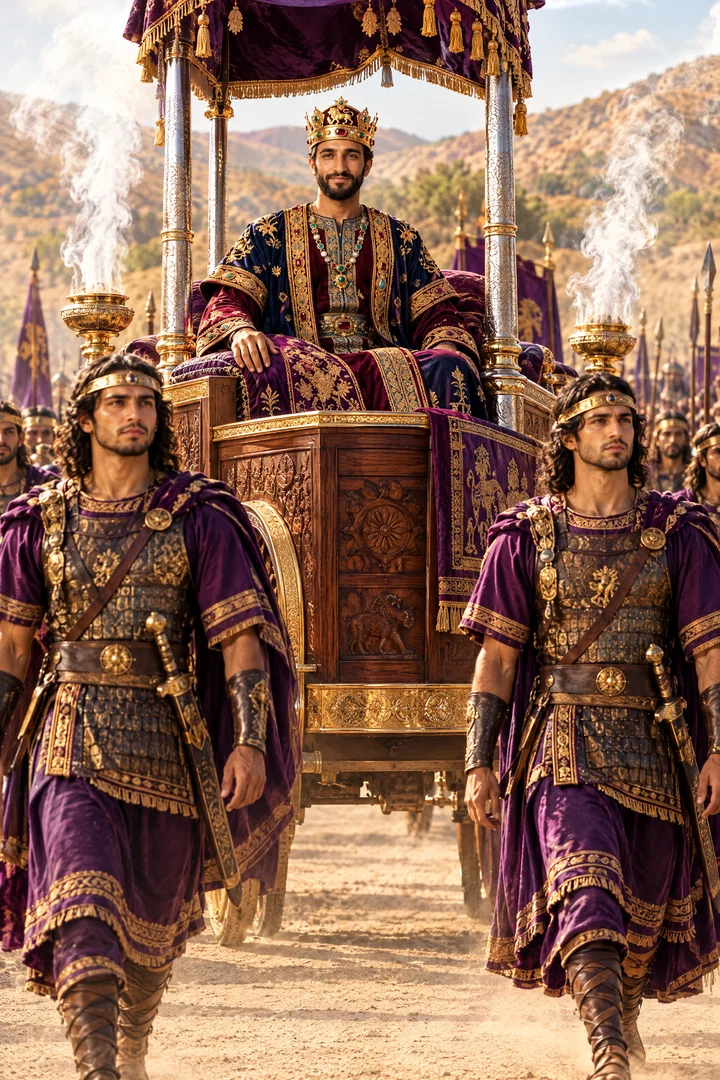
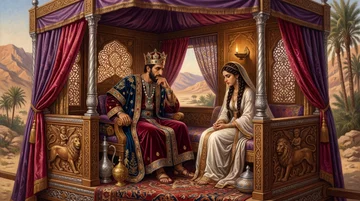
He made the pillars thereof of silver, the bottom thereof of gold, the covering of it of purple, the midst thereof being paved with love, for the daughters of Jerusalem.
Translations
He made the pillars thereof of silver, the bottom thereof of gold, the covering of it of purple, the middle thereof being paved with love, for the daughters of Jerusalem.
He made the pillars thereof of silver, the bottom thereof of gold, the covering of it of purple, the midst thereof being paved with love, for the daughters of Jerusalem.
He made the pillars thereof of silver,
The bottom thereof of gold,
The covering of it of purple,
The midst thereof being paved with love, for the daughters of Jerusalem.He made its pillars of silver, the bottom of it of gold, the covering of it of purple, the midst of it being paved with love, for the daughters of Jerusalem.
He made the pillars thereof of silver, the bottom thereof of gold, the seat of it of purple, the midst thereof being paved with love, from the daughters of Jerusalem.
He made the pillars thereof of silver,
The bottom thereof of gold, the seat of it of purple,
The midst thereof being paved with love,
From the daughters of Jerusalem.Its pillars he made of silver, Its bottom of gold, its seat of purple, Its midst lined [with] love, By the daughters of Jerusalem.
Its pillars he made of silver, Its support of gold, Its seat of purple; The midst thereof was paved [ with] love By the daughters of Jerusalem.
The supports thereof, made he of silver, the couch thereof, of gold, the seat thereof, of purple,—the midst thereof, hath an inlay of love from the daughters of Jerusalem.
Berean Standard Bible, Majority Standard Bible
He has made its posts of silver,
its base of gold, its seat of purple fabric.
Its interior is inlaid with love
by the daughters of Jerusalem.He made its pillars of silver,
its bottom of gold, its seat of purple,
the middle of it being paved with love,
from the daughters of Jerusalem.He made its pillars of silver, its base of gold, its seat of purple, the middle of it of ebony.
Hee made the pillars thereof of siluer, and the pauement thereof of gold, the hangings thereof of purple, whose middes was paued with the loue of the daughters of Ierusalem.
Douay-Rheims (Challoner revision)
The pillars thereof he made of silver, the seat of gold, the going up of purple: the midst he covered with charity for the daughters of Jerusalem.
Pictures
Commentary
Each commentary is drawn from primary sources: the writings of Ellen G. White and Adventist pioneers and periodicals. Each commentary is separate. Its own words are not a quotation; follow the references to read the source passages.
Pioneers and periodicals
5 sources
The verse belongs to an Oriental love poem whose imagery uses the warm, figurative language of the East.ST Jul 29, 1908ST Sep 15, 1909 It is widely interpreted as a parable or poetic picture of Christ and His church, with experiences in Solomon's life also serving as types of Christ and the church.ST May 24, 1910ST Jul 29, 1908ST Sep 15, 1909 It displays Christ's wonderful love and the church's answering love, which is often wanting in faithfulness and constancy.ST May 24, 1910 Beyond that general meaning its particular imagery is left without explanation.ST Sep 15, 1909
In its literal sense it describes Solomon's chariot as richly appointed.ST Nov 27, 1884 Its pillars were made of silver and its base of gold, with a covering of purple.ST Nov 27, 1884 Its interior was decorated with costly tapestry made by the daughters of Jerusalem.ST Nov 27, 1884
Spiritually the chariot is religious duty — praying, hearing, receiving, and every approach to God — and the beloved who must be in the chariot is Christ.RH Nov 11, 1858 No duty must be entered without bringing God to it, and none must be left with satisfaction without carrying God from it.RH Nov 11, 1858 A duty in which Christ does not meet the soul is no ordinance of comfort.RH Nov 11, 1858 The blessed soul prays, hears, receives, carries Christ to all, enjoys Christ with all, and seeks Christ among all, going out in God's strength and returning in God's presence, and not rising from duty until God's countenance rises in mercy upon the soul.RH Nov 11, 1858
Sources