Translations
American King James Version, King James Version, KJV Cambridge Paragraph Bible, Webster Bible
King Solomon made himself a chariot of the wood of Lebanon.
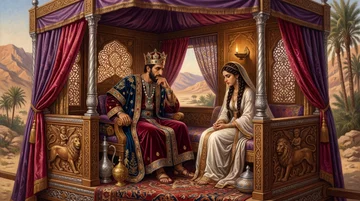
King Solomon made himself a palanquin of the wood of Lebanon.
American Standard Version, Darby Translation
King Solomon made himself a palanquin
Of the wood of Lebanon.A palanquin king Solomon made for himself, Of the wood of Lebanon,
A palanquin, King Solomon made himself, of the trees of Lebanon:
Berean Standard Bible, Majority Standard Bible
King Solomon has made his carriage
out of the timber of Lebanon.King Solomon made himself a carriage
of the wood of Lebanon.King Solomon made himself a bed of the wood of Lebanon.
King Salomon made himselfe a palace of the trees of Lebanon.
Douay-Rheims (Challoner revision)
King Solomon hath made him a litter of the wood of Libanus:
Pictures

Commentary
Each commentary is drawn from primary sources: the writings of Ellen G. White and Adventist pioneers and periodicals. Each commentary is separate. Its own words are not a quotation; follow the references to read the source passages.
Pioneers and periodicals
5 sources
The verse stands within a poetic dialogue, an Oriental love poem whose warm, vivid and highly figurative language fit its ancient Eastern setting.ST May 24, 1910ST Jul 29, 1908ST Sep 15, 1909 It describes how Solomon fashioned for himself a conveyance from the wood of Lebanon, using its finest cedar.ST Nov 27, 1884 That conveyance was a chariot of state, decorated with gold and silver and purple and carpeted with costly tapestry worked by the daughters of Jerusalem.ST Nov 27, 1884
The poem as a whole presents a poetic picture and parable of Christ and His church, setting forth Christ's love and the answering love of the church.ST May 24, 1910ST Jul 29, 1908ST Sep 15, 1909 In that reading the experiences of Solomon in the poem may serve as types of Christ and the church.ST Sep 15, 1909
The chariot signifies religious duty and every approach to God in praying and hearing and receiving, while the beloved within it signifies Christ meeting the soul with His strength and mercy and presence.RH Nov 11, 1858 Without Him there the chariot is worthless, and no such observance is an ordinance of comfort.RH Nov 11, 1858 No duty should be entered without bringing God to it, and none should be left with satisfaction without carrying God from it.RH Nov 11, 1858 Blessed is the soul that carries Christ to all duties and enjoys Christ in all and seeks Christ among all, going out in God's strength and returning in His presence.RH Nov 11, 1858
Sources