Song of Solomon 5:3
I have put off my coat; how shall I put it on? I have washed my feet; how shall I defile them?
Translations
American King James Version, King James Version, KJV Cambridge Paragraph Bible, Webster Bible, Revised Version
I have put off my coat; how shall I put it on? I have washed my feet; how shall I defile them?
I have put off my garment; how shall I put it on?
I have washed my feet; how shall I defile them?I have put off my coat, how do I put it on? I have washed my feet, how do I defile them?
— I have put off my tunic, how should I put it on? I have washed my feet, how should I pollute them? —
I have put off my tunic, oh how shall I put it on? I have bathed my feet, oh how shall I soil them?
I have taken off my robe—
must I put it back on?
I have washed my feet—
must I soil them again?I have taken off my robe—must I put it back on? I have washed my feet—must I soil them again?
I have taken off my robe. Indeed, must I put it on?
I have washed my feet. Indeed, must I soil them?I have put off my coat; how may I put it on? My feet are washed; how may I make them unclean?
I haue put off my coate, howe shall I put it on? I haue washed my feete, howe shall I defile them?
Douay-Rheims (Challoner revision)
I have put off my garment, how shall I put it on? I have washed my feet, how shall I defile them?
Pictures
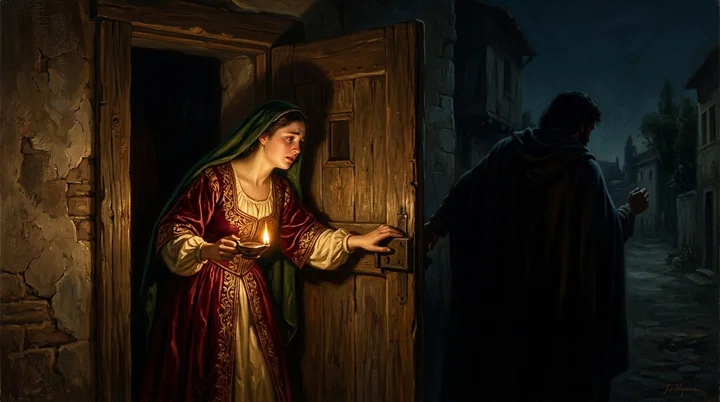
Cross-references
- Luke 7:44
And he turned to the woman, and said unto Simon, Seest thou this woman? I entered into thine house, thou gavest me no water for my feet: but she hath washed my feet with tears, and wiped them with the hairs of her head.
Jesus contrasts the host’s failure to provide water with the woman washing his feet.
- John 13:4-5
He riseth from supper, and laid aside his garments; and took a towel, and girded himself.
Jesus lays aside his garments and washes the disciples’ feet as an example.
- Genesis 19:2
And he said, Behold now, my lords, turn in, I pray you, into your servant’s house, and tarry all night, and wash your feet, and ye shall rise up early, and go on your ways. And they said, Nay; but we will abide in the street all night.
Lot offers his visitors water to wash their feet.
Commentary
Each commentary is drawn from primary sources: the writings of Ellen G. White and Adventist pioneers and periodicals. Each commentary is separate. Its own words are not a quotation; follow the references to read the source passages.
Pioneers and periodicals
7 sources
The verse belongs to a dialogue in a poem that uses vivid, warm, Oriental imagery.ST May 24, 1910ST Sep 15, 1909 The Song is an Oriental love poem whose experiences of Solomon set forth in type the love of Christ for His church, giving a poetic picture of Christ and His church.ST May 24, 1910ST Sep 15, 1909 The foot-washing in the verse reflects the custom in which people washed their own feet with water provided for them, not a host washing a guest's feet.ST Aug 5, 1886 The knocking in the verse reflects the earlier arrangement in which people knock and have the door opened to them, in contrast with the later picture of Christ Himself standing at the door and knocking.RH Nov 6, 1856
The church's love for Christ is a response to His wonderful love, but it is often lacking in faithfulness and constancy.ST May 24, 1910 The verse gives the church's hesitant answer to Christ's call to open the door: she hears Him but is unwilling to rise, and her excuses about her coat and washed feet show she is not ready to welcome Him.RH Oct 30, 1860RH Jun 11, 1901 This sleepy hesitation is the response of the Laodicean church to Christ's knock.RH Oct 30, 1860
By the time she is roused and opens the door, Christ has withdrawn and left, so she opens to find her Beloved gone.RH Oct 30, 1860ST Aug 1, 1878RH Jun 11, 1901 After finding Him gone, she searches for Him in the streets and asks the watchmen where He is.ST Aug 1, 1878 The scene is a solemn warning to respond to Christ before it is too late.RH Oct 30, 1860 For a soul seeking Christ, opening the door to Him does not immediately end the experience of His absence and the search for Him.ST Aug 1, 1878
Sources