Titus 2:3
The aged women likewise, that they be in behaviour as becometh holiness, not false accusers, not given to much wine, teachers of good things;
Translations
The aged women likewise, that they be in behavior as becomes holiness, not false accusers, not given to much wine, teachers of good things;
King James Version, KJV Cambridge Paragraph Bible
The aged women likewise, that they be in behaviour as becometh holiness, not false accusers, not given to much wine, teachers of good things;
The aged women likewise, that they be in behavior as becometh holiness, not false accusers, not given to much wine, teachers of good things;
that aged women likewise be reverent in demeanour, not slanderers nor enslaved to much wine, teachers of that which is good;
that aged women likewise be reverent in demeanor, not slanderers nor enslaved to much wine, teachers of that which is good;
aged women, in like manner, in deportment as doth become sacred persons, not false accusers, to much wine not enslaved, of good things teachers,
that the elder women in like manner be in deportment as becoming those who have to say to sacred things, not slanderers, not enslaved to much wine, teachers of what is right;
Aged women, in the same way, in deportment, as becometh sacred persons, not given to intrigue, nor yet, to much wine, enslaved, teachers of virtue,—
Berean Standard Bible, Majority Standard Bible
Older women, likewise, are to be reverent in their behavior, not slanderers or addicted to much wine, but teachers of good.
and that older women likewise be reverent in behavior, not slanderers nor enslaved to much wine, teachers of that which is good,
That old women are to be self-respecting in behaviour, not saying evil of others, not given to taking much wine, teachers of that which is good,
The elder women likewise, that they be in such behauiour as becommeth holinesse, not false accusers, not subiect to much wine, but teachers of honest things,
Douay-Rheims (Challoner revision)
The aged women, in like manner, in holy attire, not false accusers, not given to much wine, teaching well:
Pictures
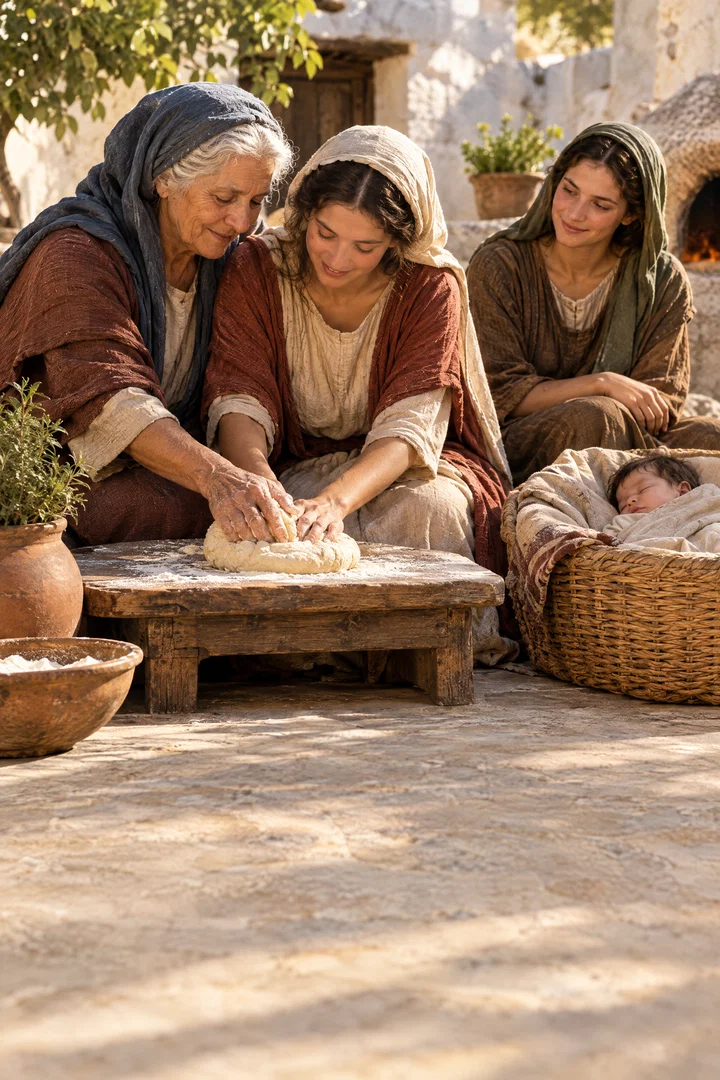

Cross-references
- Titus 2:12
Teaching us that, denying ungodliness and worldly lusts, we should live soberly, righteously, and godly, in this present world;
God’s grace trains believers to live godly lives.
- 1 Timothy 3:11
Even so must their wives be grave, not slanderers, sober, faithful in all things.
Both commend women’s godly conduct and warn against slander.
- 1 Timothy 5:2
The elder women as mothers; the younger as sisters, with all purity.
Older women are to be treated as mothers.
- Luke 2:38
And she coming in that instant gave thanks likewise unto the Lord, and spake of him to all them that looked for redemption in Jerusalem.
Anna speaks publicly about the Lord and redemption.
- 1 Timothy 2:11-12
Let the woman learn in silence with all subjection.
Women are instructed to learn in submission and not teach or exercise authority over men.
- 2 Timothy 3:3
Without natural affection, trucebreakers, false accusers, incontinent, fierce, despisers of those that are good,
Both texts warn against false accusation as ungodly conduct.
Commentary
Each commentary is drawn from primary sources: the writings of Ellen G. White and Adventist pioneers and periodicals. Each commentary is separate. Its own words are not a quotation; follow the references to read the source passages.
Ellen G. White
17 sources
The verse commands older women to live in conduct fitting holiness, free from slander and excess wine, and to be teachers of what is good.RP 41.4Lt 32, 1912, par. 18Lt 28, 1890, par. 1–3 Such holy conduct means sober, grave, temperate and pure words, deportment and character, with Christ enthroned in the heart, rejecting all lightness, jesting, flirting and licentiousness.Ms 10, 1891, par. 26–28Lt 6a, 1890, par. 82–84 The good they are to teach is to train younger women to be sober, loving to husbands and children, discreet, chaste, keepers at home, good and obedient, while all believers show a pattern of good works in sound speech.RP 41.4Lt 32, 1912, par. 18Lt 6a, 1890, par. 82–84 Their sacred calling is in the home as faithful wives and mothers who train their own children by precept and example, and leaving husband and children for supposed greater religious work is contrary to this command and a deception.Lt 28, 1890, par. 1–3Lt 28, 1890, par. 4–88MR 433.1–3 By such consistent, elevated lives they guide the young in godly living so that the word of God is not dishonored or blasphemed.STB 867.4–868.1Ms 8a, 1888, par. 18–21Lt 74, 1896, par. 45–47
Meaning and Conduct
The instruction through Paul to Titus is the words of Jesus Christ, in which the Spirit and the Word agree.Lt 28, 1890, par. 1–3 It commands aged women to live in behavior fitting holiness, to avoid false accusation or slander and excess wine, and to be teachers of good things.RP 41.4Lt 32, 1912, par. 18Lt 28, 1890, par. 1–3STB 867.4–868.1Lt 54, 1908, par. 16–18 Their example and teaching guide younger women in godly, sober conduct, in loving their families and acting with discretion and purity, so that the word of God is not dishonored.RP 41.4Lt 32, 1912, par. 18STB 867.4–868.1Ms 10, 1891, par. 26–28
Behavior becoming holiness means Christian words, deportment, and character that are sober, grave, temperate, and pure.Lt 6a, 1890, par. 82–84 It requires sober thinking with Jesus enthroned in the heart instead of thoughts running riot.Lt 6a, 1890, par. 82–84
That holy sobriety forbids love-sick sentimentalism and the flirting of married men with young girls, married women, or widows.Lt 6a, 1890, par. 82–84 It forbids all lightness, trifling, jesting, joking, levity, and licentiousness, even when excused as thoughtlessness or as no moral wrong.Lt 6a, 1890, par. 82–84 Believers are therefore to reject frivolous speech and conduct and to let sound teaching and good works shape life.Ms 10, 1891, par. 26–28Lt 6a, 1890, par. 82–84
The speech of older women is to be sanctified for teaching Bible truth.Lt 54, 1908, par. 16–18 In that sanctified speech and conduct they help form younger women in godly living.Ms 10, 1891, par. 26–28Lt 54, 1908, par. 16–18
Mentoring in the Home
The good things the aged women are to teach are spelled out in the verses that follow as training young women to be sober, to love their husbands and to love their children, to be discreet, chaste, keepers at home, good, and obedient to their own husbands, with young men likewise to be sober-minded and all to be a pattern of good works in sound speech.RP 41.4Lt 32, 1912, par. 18Lt 6a, 1890, par. 82–84Lt 21, 1862, par. 11–12Lt 19, 1860, par. 3–7 Their example and instruction are to shape younger women toward sober, discreet, and pure family love and godly conduct.RP 41.4Lt 32, 1912, par. 18 That teaching of home virtue is what keeps the word of God from being blasphemed.Lt 6a, 1890, par. 82–84Lt 21, 1862, par. 11–12Lt 19, 1860, par. 3–7
Their God-given work is not public work but the very important work in their own home.Lt 28, 1890, par. 1–3 It is a sacred, holy calling to be true as wife and mother, lovable, patient, kind yet firm, to exemplify the Christian graces, and to train their own children by precept and example and by right methods and tact to keep the way of the Lord.Lt 28, 1890, par. 1–3Lt 28, 1890, par. 4–88MR 433.1–38MR 433.4–434.2 Faithful love for husband and children and faithfulness in home duties are themselves the Christian calling lived out through care and training of the family.8MR 433.1–38MR 433.4–434.2
Neglecting husband and children for what are supposed to be greater and holier religious duties goes directly contrary to the verse.Lt 28, 1890, par. 1–3Lt 28, 1890, par. 4–88MR 433.1–38MR 433.4–434.2 Attending meetings, working for others, giving Bible readings, or carrying messages for others can never excuse such neglect, for God never gives work contrary to His own Word.Lt 28, 1890, par. 1–3Lt 28, 1890, par. 4–8 The religion of Christ never leads a wife and mother away from her first duty in the home.Lt 28, 1890, par. 4–8 Any teaching that leads to even the slightest neglect of home duty in that way is not prompted by the Spirit of the Lord but is a deception of Satan.Lt 28, 1890, par. 4–8
Keeping at home means a wife finds her sweetest, happiest, best enjoyment at home among her own family.Lt 21, 1862, par. 11–12 She practices self-denial and economy to save money and her husband's time, and does not seek her own pleasure in much visiting.Lt 21, 1862, par. 11–12 Undue or extravagant love for visiting breaks the command to be keepers at home, leads to expense, becomes a snare, and hurts spiritual enjoyment.Lt 21, 1862, par. 11–12 A true and loving Christian is seldom lonesome but draws elevated joy and sweet consolation from Jesus, and finds common visiting and common conversation upon commonplace worldly things disgusting and offensive.Lt 21, 1862, par. 11–12
This example and teaching guide younger women in godly, sober, faithful living so that the word of God is not blasphemed, dishonored, or discredited.STB 867.4–868.1Lt 6a, 1890, par. 82–84Lt 21, 1862, par. 11–12Ms 8a, 1888, par. 18–21Lt 74, 1896, par. 45–47 The conduct of those who profess to serve Christ determines whether God is honored or the truth is reproached.Ms 8a, 1888, par. 18–21 Consistent, elevated lives in sound doctrine benefit both those who preach the word and those who hear it.1T 414.2–415.2
Wider Application to All
The charge to be a teacher of good things reaches beyond aged women to every servant of God as a call to rise continually to a higher standard in education and religious experience.FE 214.2 It requires putting every entrusted talent to active use so that it grows in value and is returned to God, rather than remaining defective in manner, voice, or education.FE 214.2 Growth comes through careful observation, study, and communion with God, letting the word of God give wisdom, guidance, and perfection in Christ.FE 214.2 Christ stands as the faultless pattern to copy in understanding spiritual things and in wisely managing what is entrusted, for God allows no excuse for careless, slipshod work and such work is unacceptable to Him.FE 214.2 That same charge to teach what is good also embraces young men, who when trained to mature and upright character become able to impart good.Lt 95, 1898, par. 5
Sources
Pioneers and periodicals
13 sources
Older women are to live in a reverent and holy way that honors God, with steady, sober minds and solid, humble character shaping their whole lives.ST Nov 14, 1900RH Jul 3, 1856RH Apr 6, 1905ST Mar 26, 1885ST Dec 19, 1900
That means refusing slander and refusing enslavement to wine, keeping clear of excess in drink and of speech that accuses falsely.ST Nov 14, 1900RH Jul 3, 1856RH Apr 6, 1905
They are to be active teachers of what is good, first living what they teach so their example gives weight to their words.ST Nov 14, 1900RH Apr 6, 1905ST Nov 14, 1900
Their teaching guides younger women in discreet and sober living, in love for husbands and children, in purity, in care for the home, and in respect for their husbands.RH Nov 5, 1901
Such teaching by women speaks truth to others without taking the office or authority of apostles, evangelists, or elders over men.RH Nov 5, 1901RH Dec 2, 1862
Words, Setting, Conduct
The verse stands among counsels for aged men, aged women, and young men, addressed to Titus in Crete where he had been left to set in order what was lacking and to ordain elders in every city for the regulation of the churches.RH Dec 7, 1916 It gives minute direction concerning morals and doctrine for guiding ministerial faithfulness and zeal.RH Dec 7, 1916
Behavior becoming holiness calls aged women to a reverent, holy manner of life that reflects holiness and shows reverence for God.ST Nov 14, 1900RH Jul 3, 1856RH Apr 6, 1905ST Nov 14, 1900RH Nov 5, 1901 The term translated as false accusers means slanderers.ST Oct 8, 1896 The verse therefore warns aged women against slander and false accusation.ST Nov 14, 1900RH Jul 3, 1856RH Apr 6, 1905ST Nov 14, 1900RH Nov 5, 1901 That slander is associated with Satan's original slander of God and Christ.ST Oct 8, 1896
The warning about wine forbids excessive drinking and excessive use of wine.ST Nov 14, 1900RH Jul 3, 1856RH Apr 6, 1905ST Nov 14, 1900RH Jun 16, 1868 It warns against enslavement to much wine and being controlled by it.ST Nov 14, 1900ST Nov 14, 1900RH Nov 5, 1901 Wine is thus treated as calling for restraint, with a distinction drawn between moderate use and excess.RH Jun 16, 1868 The instruction belongs to teaching on sober living, summed up as living soberly, righteously, and godly in this present world.ST Dec 19, 1900 Aged women are to be sober-minded in a broader sense than mere abstinence from drunkenness, with steady rather than flighty minds, so that their whole lives display a solid, humble character that is built up.ST Mar 26, 1885
Teaching and Application
Older women are to be active teachers of what is good, giving instruction that guides younger women in Christian duties and helps them live faithfully.ST Nov 14, 1900RH Apr 6, 1905ST Nov 14, 1900 Their own conduct is to serve as an example, so they must themselves live what they teach.RH Apr 6, 1905 By such reverent living and faithful teaching they become honored teachers whose experience can strengthen the work of God.RH Apr 6, 1905
This good teaching has a wide scope, including guiding younger women in sober and discreet living, love for their husbands and children, chastity, care of the home, and respect for their husbands.RH Nov 5, 1901 The verse supports women speaking truth to others.RH Dec 2, 1862 This teaching work does not usurp authority over men, but is distinguished from teaching as ordained apostles, evangelists, or elders.RH Nov 5, 1901RH Dec 2, 1862
As part of instruction about the duties of church members and their families, the verse is applied in counsel concerning sobriety and cleanliness.RH Mar 1, 1864 The verse has been cited in support of Christ's personal, visible second coming, but that subject appears in Titus 2:13, not Titus 2:3.ST Mar 7, 1878
Sources