Zechariah 6:2
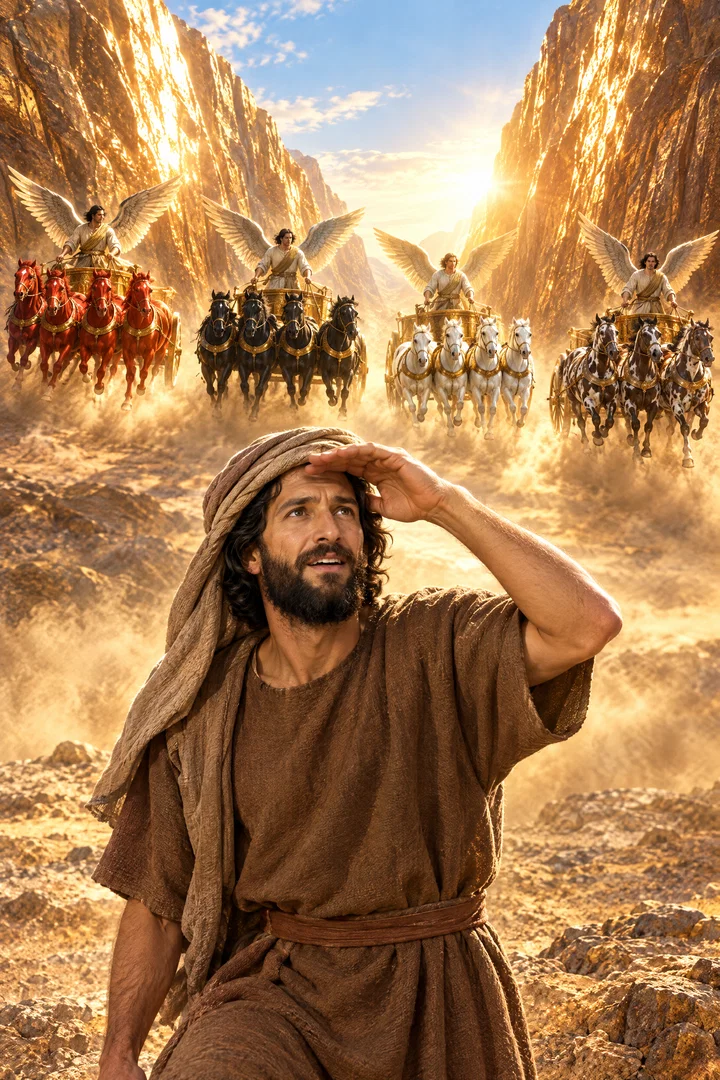
In the first chariot were red horses; and in the second chariot black horses;
Translations
American King James Version, King James Version, KJV Cambridge Paragraph Bible, Webster Bible, Revised Version, American Standard Version, Darby Translation
In the first chariot were red horses; and in the second chariot black horses;
In the first chariot [are] red horses, and in the second chariot brown horses,
In the first chariot, were red horses,—and, in the second chariot, black horses;
Berean Standard Bible, Majority Standard Bible
The first chariot had red horses, the second black horses,
In the first chariot were red horses. In the second chariot were black horses.
In the first war-carriage were red horses; and in the second, black horses;
In the first charet were red horses, and in the second charet blacke horses,
Douay-Rheims (Challoner revision)
In the first chariot were red horses, and in the second chariot black horses.
Pictures
Cross-references
- Zechariah 6:8
Then cried he upon me, and spake unto me, saying, Behold, these that go toward the north country have quieted my spirit in the north country.
The chariots complete their work in the north, quieting the angel’s spirit.
- Zechariah 1:10
And the man that stood among the myrtle trees answered and said, These are they whom the LORD hath sent to walk to and fro through the earth.
The earlier horsemen also go to and fro through the earth.
Commentary
Each commentary is drawn from primary sources: the writings of Ellen G. White and Adventist pioneers and periodicals. Each commentary is separate. Its own words are not a quotation; follow the references to read the source passages.
Ellen G. White
1 source
In the first chariot the horses are red, and in the second chariot the horses are black.Ms 65a, 1900, par. 15–16 These chariots are part of a vision of heavenly agents going forth from standing before the Lord.Ms 65a, 1900, par. 15–16 The vision reveals the Lord's watchcare over the work of His cause.Ms 65a, 1900, par. 15–16
Sources
Pioneers and periodicals
7 sources
The first chariot carries red horses and the second carries black horses, the first two of four chariots distinguished by their color. The four chariots are God's heavenly agents and messengers sent out into the earth to watch over His interests, to battle and to execute judgment, each given its own field and territory.ST Sep 6, 1910ST Mar 14, 1911 Their going to the north quieted rebellion in Babylon and Media and stayed the trouble that threatened God's work, while war in Egypt was also quelled, so the decree of Cyrus could be carried out and the temple and Jerusalem rebuilt in peace about 519 B.C.ST Sep 6, 1910ST Mar 14, 1911 Red stands for war and bloodshed and black for want, famine and mourning, calamities arising from sin and wrought by Satan and his angels but overseen, limited and controlled by God's angels and overruled for good.ST Feb 14, 1911 The vision belonged to the reformation under Zerubbabel in building the temple, which was a type of future reformations and of the last reformation, and it is repeated with differences in Revelation 6:1-8 where John sees single horses with riders and no chariots, the first two being white and red.ST Nov 25, 1908ST Dec 15, 1909
Vision and Historical Setting
The first chariot is drawn by red horses and the second by black horses, the first two of four chariots distinguished from one another by color. How many horses belong to each chariot is not stated, only that the horses stand in four groups, one group for each chariot. The black horses go toward the north country with the white horses following after them, while the red horses are not expressly said to be sent out. In the whole pattern two chariots go to the north, one goes to the south, and one goes to and fro through the earth.ST Mar 14, 1911ST Apr 9, 1902
The horses in each group are under a commander, and the four commanders are the four spirits of heaven of Zechariah 6:5, who direct what the horses do. The verse belongs to the first eight chapters of Zechariah, given in the time of the reformation under Zerubbabel when Zechariah was contemporary with Haggai.ST Nov 25, 1908 It belongs to his work of encouraging Zerubbabel and Ezra in building the temple and restoring Jerusalem, and that reformation is a type of future reformations and of the last reformation.ST Nov 25, 1908ST Dec 15, 1909 Its historical setting is found by reading Ezra in connection with Zechariah and Haggai.ST Mar 14, 1911
Meaning and Prophetic Fulfillment
The four chariots are God's heavenly agents and messengers sent out into the earth to survey and to act, to look after His interests, to wage battle and to execute judgment.ST Sep 6, 1910ST Mar 14, 1911 Each is given a different field and a definite territory to watch over, with two going to the north, the general seat of all trouble, one to the south, and one passing to and fro over the great field.ST Sep 6, 1910ST Mar 14, 1911 Their northward mission quieted rebellions in the provinces of Babylon and Media and stayed the trouble in the north that threatened God's work, while war in Egypt was also quelled.ST Sep 6, 1910ST Mar 14, 1911 In this way God worked among the powers of earth to bring deliverance to His people and help to Jerusalem, so that the decree of Cyrus regarding the building of the temple might be carried out.ST Sep 6, 1910ST Mar 14, 1911 This work is linked to the events that brought peace in 519 B.C. and made it possible to rebuild Jerusalem and the temple.ST Sep 6, 1910
The horses and the four winds symbolize strife, which God overrules for good as verse 8 explains.ST Feb 14, 1911 Red represents war and bloodshed, while black represents want, famine and mourning.ST Feb 14, 1911 Although the first chariot is not expressly said to be sent out, its appearance implies that it went forth before the second, since famine follows war and slaughter. The chariots portray calamities that arise from sin and are directly caused by Satan and his angels, while God's angels oversee, limit and control their course through the nations and are not their direct authors. God's people would be protected or chastised according to whether they obeyed or rebelled.
The vision centers on the territory between two Grecian kingdoms and concerns calamities that would come upon the Jews from the kings of the north and south if they sinned. Those calamities were wars between Syria, the kingdom of the north, and Egypt, the kingdom of the south, with Palestine as their battlefield. In these readings no separate meaning is assigned to the colors of the horses. The same vision of chariots and horses sets forth the coming conflict between Israel and the Greek kingdom under Antiochus and points to the Jews' eventual victory over Antiochus through God's miraculous intervention.ST Nov 8, 1883
The figure of chariots with red and black horses is one of the symbols by which the nations are indicated and God's power to save is shown.ST Nov 25, 1908 It pertains to the reformation among God's people under Zerubbabel, which was a type of future reformations and of the last reformation.ST Nov 25, 1908ST Dec 15, 1909 The vision is repeated in Revelation 6:1-8 with important differences. There John sees individual horses with riders and no chariots, and the first two horses are white and red rather than red and black.
Sources