The Vote on the Prohibition Amendment — Intense Interest Manifested — An Unprecedented Petition — Very Encouraging Showing — The Battle to Continue
By MAHLON E. OLSEN, A. M.
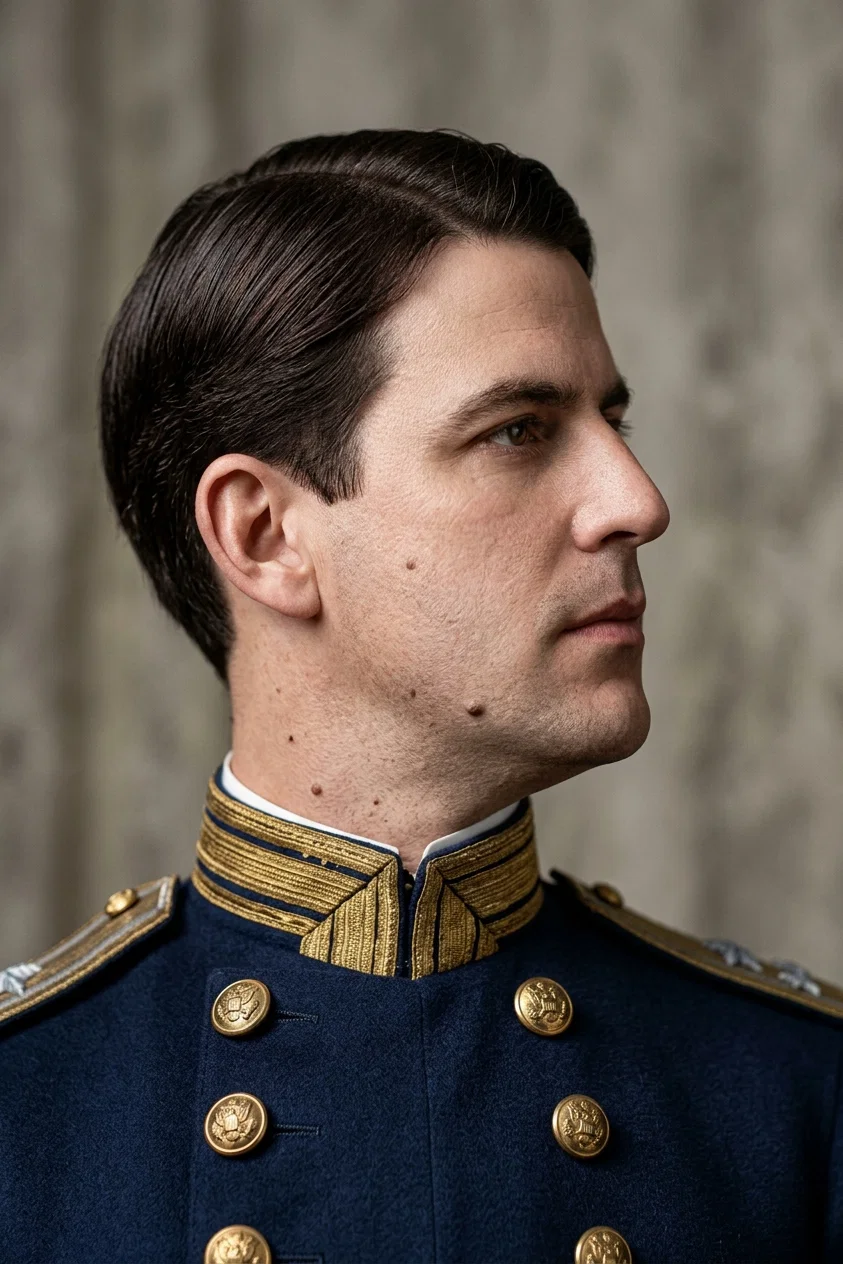
THE HON. RICHMOND PEARSON HOBSON
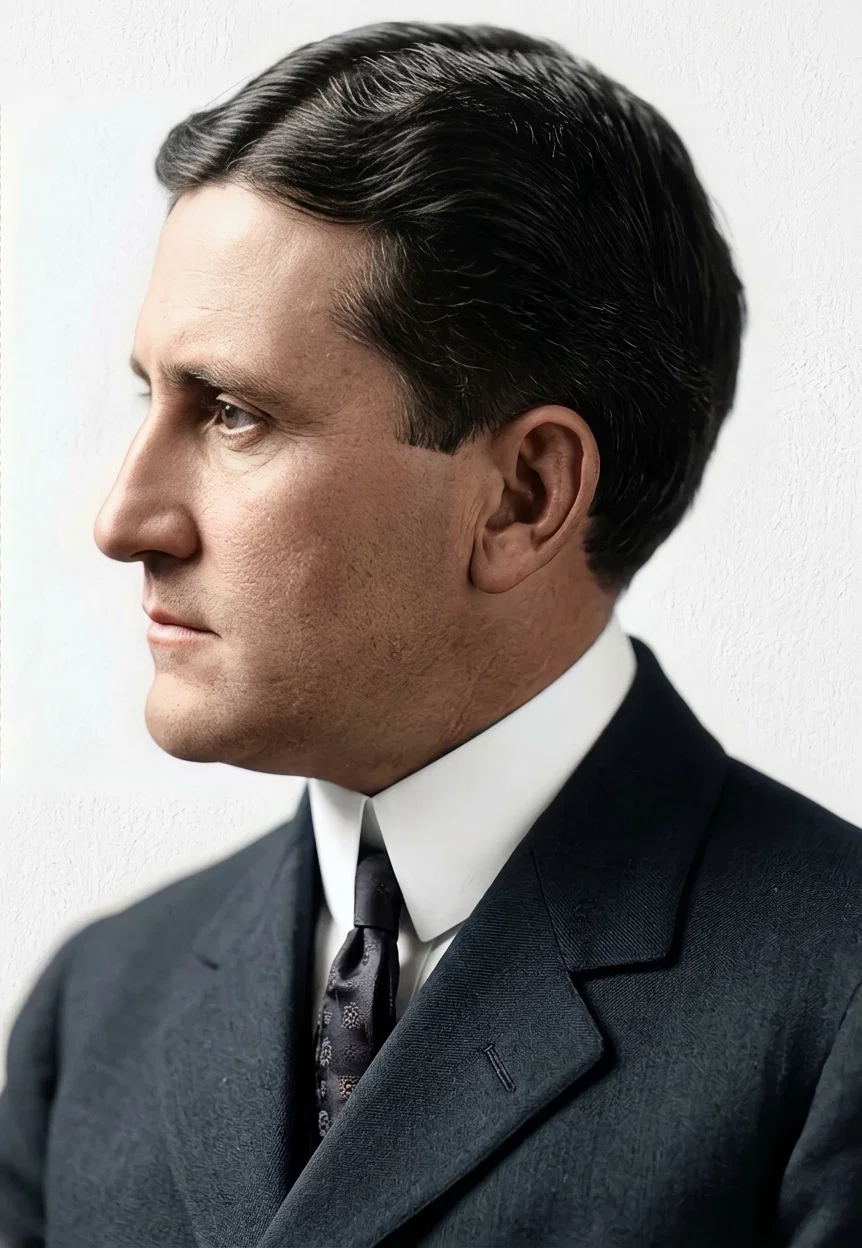
THE HON. MORRIS SHEPPARD
The Hobson-Sheppard amendment to the constitution, calling for nation-wide prohibition, was defeated in the House after an exciting debate lasting some twelve hours, in the course of which half a hundred speeches were made. A total of 197 votes were cast in favor of the amendment, and 189 against it. This gave a majority of eight, which fell sixty-one votes short of making up the necessary majority of two thirds.
The day was a memorable one in the annals of temperance reform, and indeed in the history of this country. Never before has a question involving such momentous consequences been brought squarely before the representatives of the United States; and taking into consideration the powerful interests that form the opposition, it speaks well for the efficiency and tireless vigilance of the temperance organizations that even a bare majority of the legislators put themselves on record as favoring national prohibition.
The contest began at ten in the morning, with a preliminary skirmish over the Cantrill rule to make the antiliquor amendment privileged. In this the temperance forces were victorious, the House voting, without a roll call, to take up immediately and proceed to debate and vote on the Hobson resolution proposing nation-wide prohibition by amendment to the constitution.
SIX MILLION PETITIONERS
Before a full house, and galleries crowded almost to suffocation, Representative Hobson made his brief introductory address. He called the attention of the members to the great string of petitions in favor of the bill which had been hung round the gallery rail, totaling six million names, a far greater number than had ever before been signed to a petition to this or any other government for any one thing. “If the details of the resolution are not satisfactory,” he continued, “let us amend it. What we seek is a scientific remedy for a deep-seated, organic disease, one which is debauching our youth.”
TEXT OF THE BILL
The text of the bill, which readers of the SIGNS will remember was somewhat fully discussed at hearings granted by the Senate and the House last spring, is as follows:
“Resolved by the Senate and House of Representatives of the United States of America in Congress assembled (two thirds of each House concurring therein), that the following amendment of the constitution be, and hereby is, proposed to the states, to become valid as a part of the constitution when ratified by the legislatures of the several states as provided by the constitution:
“Article —, section 1. The sale, manufacture for sale, transportation for sale, importation for sale, of intoxicating liquors for beverage purposes in the United States and all territory subject to the jurisdiction thereof, and exportation for sale thereof, are forever prohibited. “Sec. 2. The Congress, or the states, shall have power, independently or concurrently, to enforce this article by all needful legislation.”
Following the opening speech of Captain Hobson, the members of the House to the number of half a hundred expressed themselves for or against the bill. Among the strong supporters naturally were the men who came from prohibition states. Representative Campbell, of Kansas, made reference to the great act of Russia in abolishing the drink evil throughout that vast empire. With magnificent courage she had risen in her strength and cast off the shackles that bound her, thus asserting freedom for her millions of citizens. Already great social and economic advantages had resulted from the act.
THE WELL-WORN OBJECTIONS
The speakers in opposition offered the usual well-worn objections. Some thought it a question that ought to be referred to the state legislatures, at the same time arguing, with singular inconsistency, that state prohibition did not really prohibit, liquor being sold in spite of the law making its sale illegal. Obviously such a condition of things, if it exists, calls loudly for a national law, in order that the state laws may be effective. Some urged property considerations, the fact that the government derives a large revenue from the sale of intoxicants apparently going a long way with them toward making the traffic a proper thing. But temperance workers have many times proved that the cost of the drink evil in crime, to say nothing of ruined homes and blasted lives, is far in excess of the revenues derived from its sale. Some members were very fearful lest stopping the sale of liquor should interfere with the personal liberty of the people who wish to engage in the business. Some thought it would be difficult to enforce an antiliquor law.
STATES’ RIGHTS AND PERSONAL LIBERTY
But these and other objections seemed small when viewed in the light of the tremendous evils wrought by drink. “Talk about protecting state rights,” said Representative Quin, of Mississippi. “What we want is to protect the rights of society. The question here is whether you will stand with all the forces of evil, or whether you will join those who are trying to aid the progress of civilization.”
“We have been told that the vote here tonight means political death for many of us,” said Representative Murray, of Oklahoma; “but we can choose whether we will have the preacher and the church choir chant a benediction over the remains, or whether we will have a grave decorated with saloons, breweries, and distilleries.”
“Congress should pass this resolution,” said Representative Kelly, of Pennsylvania, “because it places the liquor question where it belongs — squarely before the people. Personal liberty is the law of the jungle — the strongest overcomes the weak.”
Representative Lindquist, of Michigan, made an impassioned plea for the resolution. “I want my boy to grow up a strong, sturdy American citizen, and I do not want to trust his future to the hands of the liquor traffic. Not all the wars since the dawn of the world have struck down the millions that have fallen under the onslaught of alcoholism. Now is our opportunity to save these lives.”
THIS CONGRESS PROBABLY UNFAVORABLE
What the fate of the amendment will be in the Senate remains to be seen. Even if it obtained the requisite number of votes in the Upper Chamber, which is not likely, it could have no practical result, the defeat in the House being, for the present, decisive. But the fight will go on. The prohibition forces of the country have made very substantial gains in the last few years; and with the divine blessing which always attends honest efforts to reform great evils, the active cooperation of a growing number of the men and women who love righteousness and hate iniquity will be secured.
The vote on the bill is really a victory, for it is a significant thing that the majority of the members of the House are willing to put themselves on record as favoring national prohibition. The moral forces of the country are against the open saloon. Such a menace to the young manhood of this nation must not be allowed to continue.
The Strength of Abstinence
By Sir J. Ross
I WAS twenty years older than any of the officers or crew, yet I could stand the cold better than any of them, who all made use of tobacco and spirits. I entirely abstained from them. The most irresistible proof of the value of abstinence was when we abandoned our ship and were obliged to leave behind us all our wine and spirits. It was remarkable to observe how much stronger and more able the men were to do their work, when they had nothing but water to drink. — Sir J. Ross.
A Great Bulwark Against Apostasy
By T. E. Bowen
The Memorial of the Creator—It Guards Against Idolatry—Great Apostasies Have Been Marked by Sabbath Desecration—A Prophetic Call to Reform
By T. E. BOWEN
To apostatize is to depart from God, to forget Him. Man does the departing, the forgetting. “I will in no wise fail thee, neither will I in any wise forsake thee,” is God’s promise. Heb. 13:5, A. R. V. He is faithful, but we forget and forsake Him. This is the tendency of sin. God knew it, and knew, before sin existed, what it would do in us. He planned to make it hard to forget His wonderful creative power, forget His wonderful love for us.
The earth was fitted up by the Son of God because of His love for us. That love shines in the sunlight, is displayed in the showers, the landscape, the sky, earth’s verdure. In fact everywhere we look, the Creator’s loving hand is seen. That we might not forget God, through His Son He gave us the Sabbath. This blessed day comes often—once a week. Six days are ours, one day is God’s. At the close of creation’s week, the Sabbath was made for us.
Remember God by Remembering the Sabbath
The opposite of forgetting is to remember. So the Sabbath commandment starts out, “Remember the Sabbath.” Forget it not. The Sabbath itself is a memorial. It is a memorial of creation. It stands for God’s creative power. No one but God can create. That men should not forget God, the Lord planned a way by which we might remember Him. “He hath made His wonderful works to be remembered: Jehovah is gracious and merciful. . . . He hath showed His people the power of His works. . . . The works of His hands are truth and justice; all His precepts are sure. They are established forever and ever.” “He will ever be mindful of His covenant.” Ps. 111:4-8.
The enemy quickly saw that that which kept the Lord in mind must in some manner be obliterated and set aside, or his power would be small with men. So he began early to contest the law of God, particularly the Sabbath commandment, which made so prominent the true God.
Sabbath Forgotten in Egypt
Israel in Egypt lost sight of the Sabbath. Moses and Aaron taught the obligation of the Sabbath as they attempted, at the end of the two hundred years of Israel’s sojourn there, to call the attention of the people back to the God of their fathers, preparatory to their deliverance. Pharaoh accused Moses and Aaron of teaching the people to rest, saying, “Behold, the people of the land are now many, and ye make them rest from their burdens.” Ex. 5:5. Pharaoh then made their tasks still harder.
God brought Israel out, that the people might worship Him by resting upon the Sabbath. And the Sabbath was one particular day, not a day, but the seventh day. Some one may ask, How do you know? Surely God was particular as to the day; because for forty years He demonstrated to that mighty host that every recurring Sabbath fell upon the last day of the week—the seventh, now called Saturday. They received from heaven no manna to pick up that particular day. On the other six days, including Sunday, they had to go out and get it or go hungry.
Sabbath Keeping the Secret Link Between God and His People
Later God emphasized what the keeping of the Sabbath meant to His people. He was explicit, and definitely told them what great importance was attached to the keeping of the particular day He Himself had sanctified and made holy. “Ye shall keep the Sabbath therefore; for it is holy unto you: every one that profaneth it shall surely be put to death; for whosoever doeth any work therein, that soul shall be cut off from among his people. Six days shall work be done; but on the seventh day is a Sabbath of solemn rest, holy to Jehovah. . . . Wherefore the children of Israel shall keep the Sabbath, to observe the Sabbath throughout their generations, for a perpetual covenant. It is a sign between Me [the only true God, who created all things] and the children of Israel forever: for in six days Jehovah made heaven and earth, and on the seventh day He rested, and was refreshed.” Ex. 31:14-17. This is as true to-day as on the day God said it.
The Kingdom Departs from Israel
But Israel forgot. It was by not keeping the Sabbath given them that they departed into idolatry. They forsook God by forgetting the Sabbath. The call back to God included the revival of true Sabbath keeping. The two went together.
Among the chief causes for the destruction of Jerusalem was idolatry. And Israel would not have gone into idolatry had they kept the Sabbath. This is made plain by what Nehemiah said as the people came back to their land from their seventy years’ captivity in Babylon.
“In those days saw I in Judah some men treading wine presses on the Sabbath, and bringing in sheaves, and lading asses therewith; as also wine, grapes, and figs, and all manner of burdens, which they brought into Jerusalem on the Sabbath day: and I testified against them in the day wherein they sold victuals.” Let it be noted that this language was addressed to the people of God for that time, Israelites, who, so far as the proper day was concerned, observed the right day—the seventh day—but had profaned it by not keeping it as God commanded.
“There dwelt men of Tyre [worldlings who did not profess to be religious at all] also therein, who brought in fish, and all manner of wares, and sold on the Sabbath unto the children of Judah, and in Jerusalem. Then I contended with the nobles of Judah, and said unto them, What evil thing is this that ye do, and profane the Sabbath day? Did not your fathers then, and did not our God bring all this evil upon us, and upon this city? yet ye bring more wrath upon Israel by profaning the Sabbath.
“And it came to pass that, when the gates of Jerusalem began to be dark [at the going down of the sun on Friday, the sixth or preparation day] before the Sabbath, I commanded that the doors should be shut, and commanded that they should not be opened till after the Sabbath: and some of my servants set I over the gates, that there should no burden be brought in on the Sabbath day. So the merchants and sellers of all kind of wares lodged without Jerusalem once or twice. Then I testified against them, and said unto them, Why lodge ye about the wall? if ye do so again, I will lay hands on you. From that time forth came they no more on the Sabbath.” Neh. 13:15-21.
This is an important scripture, as it reveals that Sabbath desecration was one of the chief sins of God’s people, and that because His people thus departed from Him He overthrew the kingdom of Israel, and told His people to be ruled by the nations of the world. This scripture quoted, telling of Sabbath breaking coming in again as Jerusalem was rebuilt, took place about 450 years before Christ.
Jesus Restores True Sabbath Keeping
Jesus restored the Sabbath to its rightful place once more when He came. He showed that to do good on the Sabbath day was lawful and right. He performed some of His most wonderful works of healing on the Sabbath. The Jews contended with Him that He was thus profaning the Sabbath. Still He went right on with these good deeds. He showed that there is a wide difference between the restoration of a sufferer bound by sin, bound by Satan, on the Sabbath day, and the bringing in of fish to market, working the grain fields, and trafficking to get gain. One is the doing of God’s work on His own day, the other was the doing of our own common, everyday work on the Sabbath. One is an act of righteousness, the other sin. The one honored the Sabbath by exalting its Author, the other profaned the Sabbath by setting its Maker aside and being busied by the common cares of life.
Thus Jesus kept the Sabbath, and taught His disciples true Sabbath keeping. They, too, kept it.
Apostasy Again Sets Aside the Sabbath
Coming down about three centuries this side of Christ, we find apostasy again strong in the church, and the true Sabbath of Christ supplanted by a heathen feast day—a day used to honor the sun god. Soon the day was appropriately called Sunday. This usurpation of the true Sabbath of the Lord was by no means an easy task. It was not accomplished in a day; but with a well laid plot, Satan steadily pursued his purpose to set aside entirely the day that served as a memorial of the work of creation, the masterpiece of the Son of God. And his purpose was accomplished. Little by little that first day, Sunday, supplanted the Sabbath, the seventh day.
The word of God ever stood in the way of the unholy men forming these new decrees. At last, in January, 1562, a man was bold enough to get up in a Roman Catholic council and put forth the claim that these rulings of their councils were above Scripture, and that the Scriptures were not so important as tradition. This helped matters out; and ever since that wicked decree was voted, violent disregard of the Sabbath has been common. And as Christ, His law, the Sabbath,71and the Word were eclipsed, the world experienced its spiritual midnight.
(Continued from page 6)
The Decree Placing Human Authority Above Scripture
Here is the very important quotation telling us about exalting tradition above the Bible. Before the close of the Council of Trent, a further step was taken, which gave a new definition to tradition, and made it entirely independent of the Scriptures and of the so-called voice of the church in the past. This is clearly set forth by Dr. J. H. Holtzman, in “Canon and Tradition,” page 263:
“The council agreed fully with Ambrosius Pelargus, that under no condition should the Protestants be allowed to triumph by saying that the council had condemned the doctrine of the ancient church. But this practice caused untold tribulation without serving as a safeguard. For this business, to be sure, ‘almost divine prudence’ was requisite—which was indeed awarded to the council on the sixteenth of March, 1562, by the Spanish ambassador. Really they could scarcely find their way in the many labyrinthian passages of an older and a newer comprehension of tradition, which were constantly crossing and recrossing each other. But even in this they were destined to succeed. Finally, at the last opening on the eighteenth of January, 1562, their last scruple was set aside; the archbishop of Rheggio made a speech in which he openly declared that tradition stood above Scripture. The authority of the church could therefore not be bound to the authority of the Scriptures, because the church had changed Sabbath into Sunday, not by the command of Christ, but by its own authority. With this, to be sure, the last illusion was destroyed, and it was declared that tradition does not signify antiquity, but continual inspiration.”
Therefore to avoid this labyrinthian crossing and recrossing of their own canon laws, continually contradicting one another, they passed a law that the last one should stand secure against all preceding ones, and further that each and every one should be above the Scripture; for at all hazards, their Sunday sabbath program must stand. As now, everybody, nearly, Protestants and all, had acknowledged their power in this; but as the Bible upset this pet sabbath of theirs, as well as standing in their way regarding other traditions, the only thing to do was to place their rulings above all Scripture, above all former canon laws. This they did. A tottering foundation indeed. But such it is upon which Sunday sacredness stands.
The Final Call of God to Sabbath Observance
Down near the end, when apostasy from God is again alarmingly great, when nearly the whole world has forsaken God by setting aside His word, His law, His Sabbath, He once more calls to repentance by calling people back to the keeping of the Sabbath: “And I saw another angel flying in midheaven, having eternal good tidings to proclaim unto them that dwell on the earth, and unto every nation and tribe and tongue and people; and he saith with a great voice, Fear God, and give Him glory; for the hour of His Judgment is come: and worship Him that made the heaven and the earth and sea and fountains of waters.” Rev. 14:6, 7.
Here we have the call back to the true Sabbath keeping. You have here language almost identical with that of the Sabbath commandment. That commandment is based upon the fact that “in six days the Lord made heaven and earth, the sea, and all that in them is,” and that after this creative work, He “rested the *seventh day”; and that because of His resting, “wherefore the Lord blessed the Sabbath day, and hallowed it.” People are now invited to worship Him, the one God who created heaven and earth. Surely this call would be foolish were not all these people worshiping at some other shrine aside from Jehovah’s.
No one can get out of all this apostasy, this departing from the true and living God, without coming back to true Sabbath keeping. The true worship of God is bound up with true Sabbath keeping. On the other hand, apostasy, the forsaking of God, is bound up with Sabbath desecration—from which spring many other works of darkness.
Now the hour of God’s Judgment has come. The light of Sabbath reform has been shining since 1844, the very year the Judgment work began in heaven. Now with a strong voice—because many voices join in speaking the same thing—the call back to the worship of God is sounding in every nation, every land, and in nearly every tongue on earth.
It is God’s mighty call, reader, back to the Bible, back to the safe paths, back to Himself. Have you heard the call? Has He not in some manner told you about this world apostasy? Have you not heard the Spirit’s voice saying, “This is the way, walk ye in it”? Why not obey God now? Why not stop profaning His holy Sabbath, the day in which He has placed His name? Why not keep the next one the Lord graciously permits to come to you? To obey means life and peace. “If ye know these things, blessed are ye if ye do them.”
Critical Hours for the World
By J. W. McCord
Times When the World Has Trembled in the Balance — The Critical Condition Now — The Great Crisis Just Ahead of Us
By J. W. McCORD
ELDER McCord prepared this, and two articles that are to follow it, and sent them to us several weeks before the war broke out in Europe. The match has already been applied to the powder magazine, and the explosion has come. This article is one of the many evidences that those who are guided by the prophecies were not taken by surprise when all Europe burst into a flame of war. They knew it was coming, and they understand what it means. Editor.
THERE have been hours in history so startlingly critical that the destiny of the world for centuries to come trembled in the balance. There was such an hour in the history of Europe in A. D. 732, when Charles Martel faced the Saracens at the memorable battle of Tours. The great victory gained by Martel over the forces of Islam saved Europe from the evils of Mohammedanism, and thus preserved the choice seed, from which liberty and progress have sprung.
Crucial Hours for the Church
Likewise in the history of the church, these crucial hours have frequently appeared. It was surely a solemn hour for the church in Egypt when the destroying angel passed over the land. Again at the Red Sea the fate of God’s people trembled in the balance. The Egyptian army was behind them, a desolate wilderness on either side of them, and in front of them the sea. Look which way they would, escape seemed impossible, and death in some form appeared to be inevitable. In that hour of supreme peril, the Lord delivered His people, and destroyed their enemies.
Once again the church of God is passing through a crisis—even the solemn hour of the Judgment. The heavenly tribunal is now investigating the records so faithfully kept by the angels. The Judgment is set. The books have been opened. The Judge has taken His place on the throne. The angel witnesses are in attendance, and Jesus is now pleading the cases committed to His care. The people of God are now on trial for their lives, and the universe is awaiting the verdict.
“I beheld till the thrones were cast down, and the Ancient of days did sit, whose garment was white as snow, and the hair of His head like the pure wool: His throne was like the fiery flame, and His wheels as burning fire. A fiery stream issued and came forth from before Him: thousand thousands ministered unto Him, and ten thousand times ten thousand stood before Him: the Judgment was set, and the books were opened.” Dan. 7:9, 10.
“For the time is come that Judgment must begin at the house of God: and if it first begin at us, what shall the end be of them that obey not the gospel of God? and if the righteous scarcely be saved, where shall the ungodly and the sinner appear?” 1 Peter 4:17, 18.
Where Is the Higher Type of Man?
We are told, however, that according to evolution, a higher type of man is constantly evolving, and therefore a general Judgment is unnecessary. If this dictum is true, why does the apostle describe the world as “this present evil world” (Gal. 1:4), and also declare that “evil men and seducers shall wax worse and worse, deceiving, and being deceived” (2 Tim. 3:13)?
Surely if “evil men” “wax worse and worse” in “this present evil world,” it logically follows that the world is growing worse instead of better, and therefore the dogma of natural evolution is nothing but a fallacy.
Facts Rather Than Fancies
In this connection, kindly note the following statistics compiled by the American Federation of Hygiene, of which Dr. Charles W. Eliot is president. According to these statistics, the United States spends twelve million dollars every year to evangelize the heathen, and thirteen million dollars on chewing gum. Yet to-day more people die without having even heard of Christ than are reached by the combined missions of Christendom.
According to the same authority, we spend over thirty dollars every year on vice and needless luxuries, to every dollar spent by all the churches in America on spiritual uplift. Think of it,—thirty dollars for Satan, and only one for the Lord! If figures, therefore, are reliable data, the above statistics favor the Judgment at the ratio of thirty to one.
The Bread and Butter Test
If the world is improving in religious ethics, one of the first to profit by such an uplift would be the laboring man. Do we find the mass of toilers well fed, well clad, well housed, and well paid, or do we see signs of unrest and dissatisfaction among these workers in every land? If the world is improving in morals, the first would doubtless be true; but, alas, we all know that the second view prevails.
Recently in Calumet, Michigan, a great strike was called, and eighteen thousand miners put down their tools, and walked out together. While it is true that many object to the strike as the weapon of labor, yet the public generally favors the axiom that a living wage ought to be the minimum wage in every industry.
Our captains of industry may favor a living wage in theory, but in practice the vast majority do not grant it. Instead of meeting Labor halfway as a friend, Capital is inclined to strangle her as an enemy. This shortsighted policy will soon receive its just reward, and the prophecy of James 5:1-8 will be fulfilled to the letter.
On the other hand, syndicalism retaliates with the general strike and direct action. In the terms of mathematics, direct action means the straight line, or the shortest line between two given points. To the militant industrial workers of the world, direct action usually means force.
No wonder Alfred R. Wallace, codiscoverer with Darwin of evolution, in summing up conditions as they exist to-day, said: “It is not too much to say that our whole system of society is rotten from top to bottom, and the social environment as a whole, in relation to our possibilities and our claims, is the worst that the world has ever seen.”
The War Spirit
In our quest for the millennium, we must now pass from the individual to the nation. With individuals as the basis of analysis, it is always possible to make mistakes, and to claim for the many what really belongs to the few. But with nations this is impossible, for the dominant traits in the lives of the people are always faithfully mirrored in national life. What, then, is the predominant characteristic among the great nations of to-day?—Doubtless it is the war spirit; that spirit which is from beneath, and which is now vitalized by demons (Rev. 16:12-18), that spirit which is the very antithesis of the principles of the Prince of peace.
We are told by Senator Burton that Uncle Sam spends sixty-seven cents out of every dollar on wars and armaments, and in Europe over half the yearly revenue is spent in the same way.
Some One Will Apply the Match
Yet they tell us the great nations are at peace. If this is peace, then another decade of such peace would bankrupt the world. Europe to-day is sitting on a barrel of gunpowder, and somebody—some nation—sometime will apply the match. Then the present mad race for supremacy will have reached its climax, and the most sanguinary war in the sad history of war will be the result.
Surely this fearful waste of time, treasure, and blood is a sign that “the nations were angry, and Thy wrath is come, and the time of the dead, that they should be judged.” Rev. 11:18.
Omens of the Judgment
To-day we see ominous clouds gathering rapidly. Conditions everywhere are so hopeless and so terrible that it is very evident some catastrophe is imminent. Star after star has vanished from our moral and social sky, and now the world is left in midnight darkness. These fearful omens bespeak the Judgment, and the close proximity of the end of the world.
If any of us had a case pending in an earthly court, we would surely employ the72best counsel we could get. Then why not adopt the same measure in the case we have pending in the court above? In that court, Jesus Christ alone is advocate, and He will gladly plead our case if we only let Him. Without a mediator, we are lost forever, but with Jesus as our advocate, our case will be won.
Mouth Infection as a Source of Disease
By George Thomason
By GEORGE THOMASON, M. D.
The attention of medical men is becoming more and more directed to unhygienic conditions of the mouth as the principal causative factor in a number of diseases. Physical examinations by physicians now necessarily include a thorough inspection of the mouth, or the referring of the patient to a competent dentist for this purpose. Repeated investigations show that less than twenty per cent of the people have healthy mouths.
A great variety of germs may be found in the mouth, eighty per cent of cases showing pus-producing organisms. Various infections which produce by far the greatest number of diseases find entrance to the body through either the digestive or the respiratory tracts, with entrance by the mouth. Germs are constantly taken into the mouth through the process of eating. Particles of food remaining between the teeth, with the warmth and moisture in the mouth, form ideal conditions for the growth of the bacteria. The presence of decayed teeth and cavities of course greatly facilitate these processes.
DISEASES PRODUCED THROUGH INFECTIONS FROM THE MOUTH
The most common of these is rheumatism, both acute and chronic. The swollen, painful joints in rheumatism, as well as pains in the muscles, have been demonstrated many times to have had their origin in pyorrhea of the gums, root abscesses, and pus pockets around the teeth. By means of the blood current, infection from the mouth is carried to the joint, producing inflammation in the blood vessels, and permitting of enlargement and permanent tissue changes in the joints.
Neuritis, or inflammation of the nerve trunks, sciatica, neuralgia, headaches, as well as various digestive disturbances, including ulcer of the stomach, inflammation of the gall bladder and the appendix, are frequently traceable to mouth infection. The sensation of “pins and needles” of which people so frequently complain, often originates from a similar source.
Cases of pronounced mental depression and even melancholia have entirely cleared up following thorough dental care.
A number of cases of palpitation of the heart and even malignant inflammation of the lining of the heart, also Bright's disease of the kidneys, have been found to have originated through an infection from the mouth.
Decaying food particles in the mouth tend to produce an acid reaction which favors the development of cancer of the mouth and tongue, especially in the presence of sharp edges of roots and other sources of irritation.
THE REMEDY
The conditions above mentioned can be obviated largely by:
First, the occasional attention of a competent, conscientious dentist.
Second, the thorough use of the toothbrush, with suitable dental cream or powder, at least three or four times a day, to include light scrubbing of the tongue or use of a tongue scraper.
Third, a toothpick or linen thread or dental floss used so as to remove thoroughly remaining food particles from between the teeth.
Fourth, rinsing the mouth and gargling the throat once or twice daily with a mild antiseptic, such as two or three drops of oil of cinnamon in a glass of water, or one part of listerine or glycothymoline to three parts of water.
Fifth, the eating daily of acid fruit, especially oranges, apples, grapes, pineapples, and similar fruits.
In view of the serious and often disastrous physical mischief that may be wrought by septic mouth conditions, it is of tremendous importance that the possibilities involved should be more generally recognized and appreciated, and oral asepsis practiced.
The Saloon’s Failed Reform
“THE saloon — which never took a drunken man and made him a sober one, nor a shiftless one and made him provident, nor a dishonest one and made him upright, nor a cruel one and made him a loving husband and father — yet jauntily essays to reform itself!”