Signs of the Times, Vol. 37, No. 21.

Promises of Our God
Earlier text: Higher Criticism

The Men’s National Missionary Congress
By Our Own Correspondent
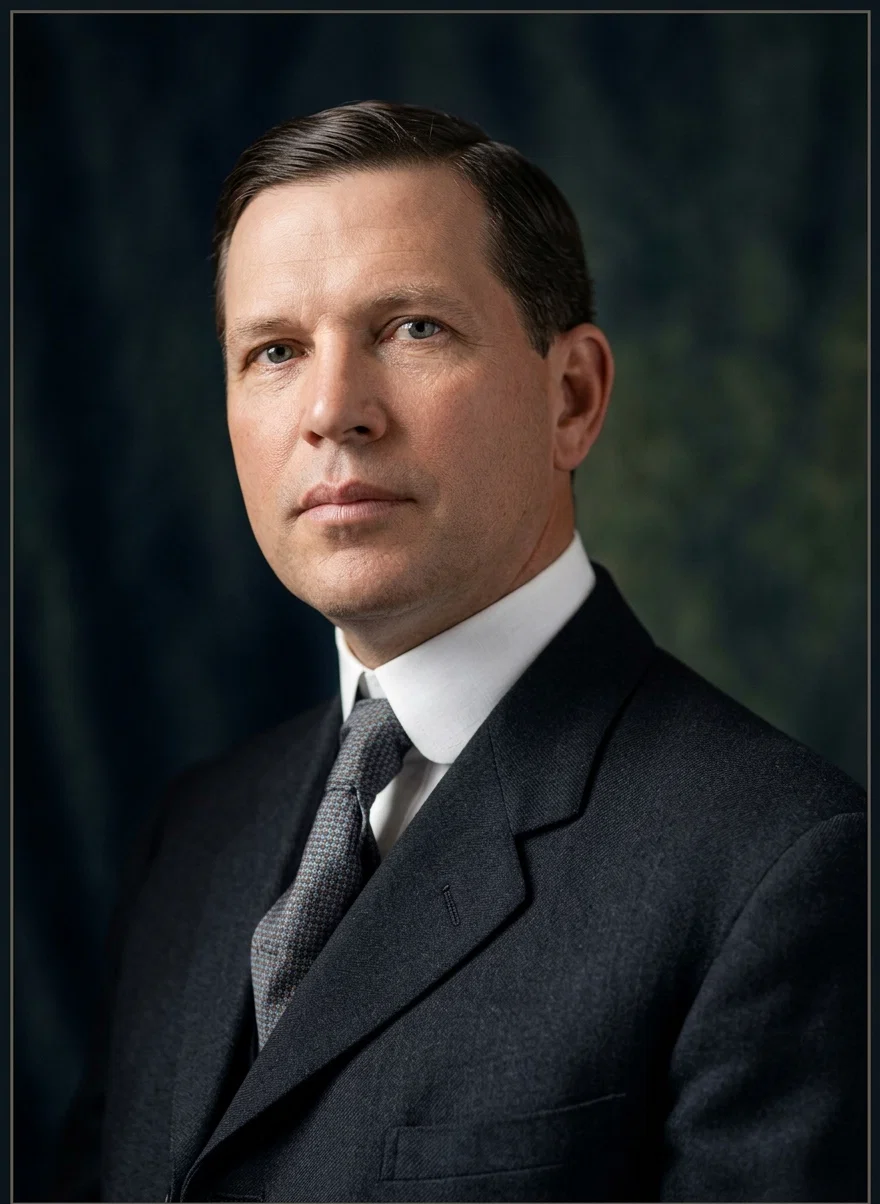
J. Campbell White, New York
General Secretary
J. Campbell White, New York General Secretary
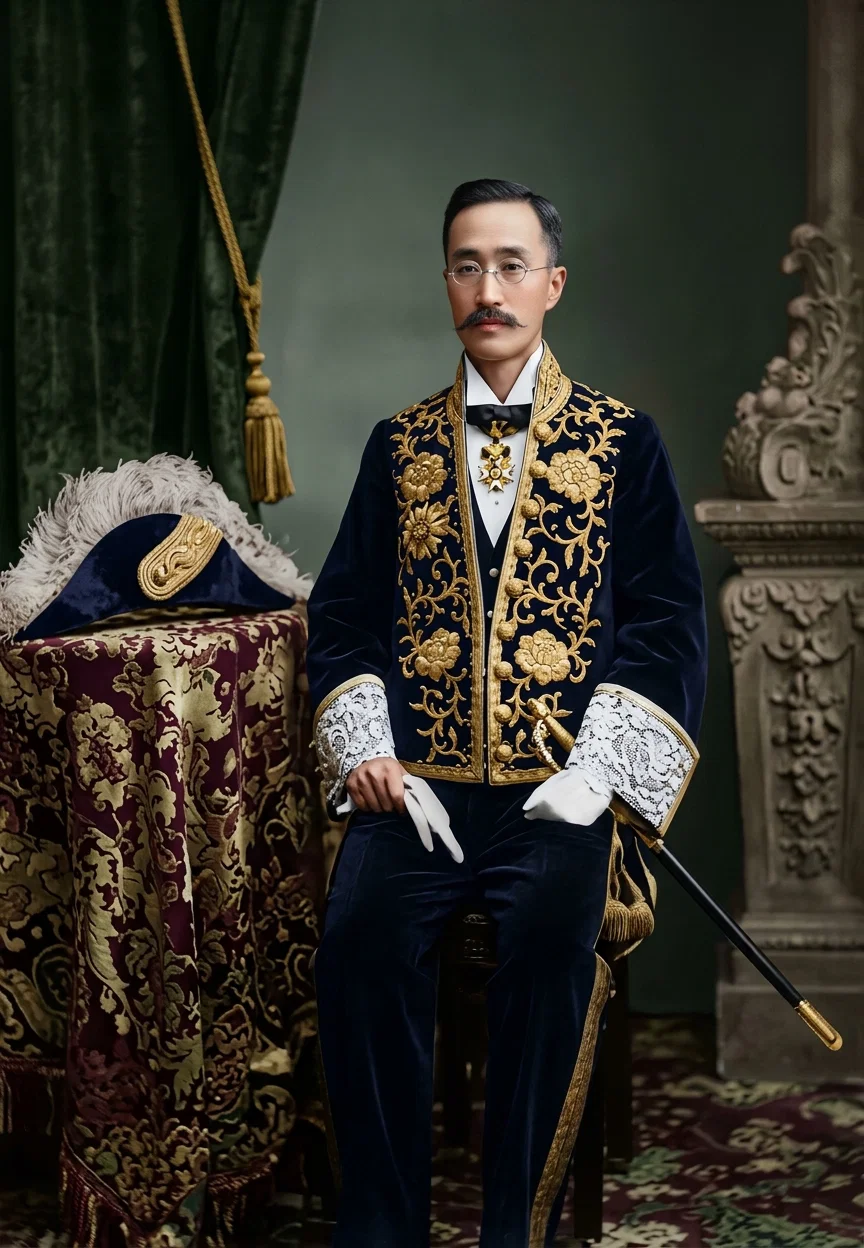
Prince T. H. Yun, of Seoul, Korea
John B. Sleman, Washington, D. C.
Founder of the Movement
John B. Sleman, Washington, D. C. Founder of the Movement
ONE of the most significant and noted gatherings of modern times in the interest of missions, convened May 3 at the Auditorium, the largest theater in Chicago.
The Men’s National Missionary Congress was the culmination of a series of seventy-five preliminary conventions held in all the large cities of America. One of the most significant things about this missionary movement is that it is a purely men’s organized effort to solve the most important problem of the ages,—the evangelization of the whole world.
To see four thousand men gathered from every part of America,—bankers, lawyers, doctors, railway officials, merchants, politicians, and preachers,—all in the interests of missions, in an age of great spiritual decadence, is really marvelous.

Noted Men

Among the delegates were present some noted men, such as Vice-President Fairbanks, Lord Wm. Cecil, brother of the Earl of Salisbury, Ex-Governor Folk of Missouri, Ex-Governor Hanly of Indiana, Prince T. H. Yun of Korea, and a score of bishops and prominent clergymen, among whom I might mention Bishop Thoburn, the noted missionary bishop of India.

Its Composition

All the leading denominations of America were represented in the congress. In fact, the last afternoon session, each denomination represented held a separate conference, in which the following churches participated: Baptists, Disciples, Congregationalists, Episcopalians, Friends, Lutherans (Synod and General Council), German Evangelical, Methodists (North and South), Presbyterians, Reformed Church, United Brethren, and Evangelical.
The sectional conferences that occupied another afternoon session, show the varied elements that are allied in the movement. There were the physicians’ and surgeons’ conference, ministers’ conference, church officers’ conference, lawyers’ conference, business men’s conference, editors’ conference, brotherhood conference, and conference of the Bible and Sunday-school teachers. In the ministers’ meeting alone there must have been nearly two thousand persons present. And at the same hour the congress provided a special session at the Auditorium for women.
However, all the activity and enthusiasm manifested, and the large and varied elements that have been enlisted in the movement, are all needed if the program placed before the congress is to be fully carried out. The immense mottoes stretched across the stage and galleries and other prominent places, set forth the program quite clearly.
“THE EVANGELIZATION OF THE WORLD IN THIS GENERATION: WE CAN DO IT AND WE WILL.”
“THIS IS THE ONLY GENERATION WE CAN REACH.”
“UNTO HIM SHALL THE GATHERING OF THE NATIONS BE.”
Then in a conspicuous place was the following: “Characteristic features of the standard missionary church: 1. Missionary pastor; 2. Missionary committee; 3. Missionary Sunday-school; 4. Program of prayer for missions; 5. Systematic missionary education; 6. An every member canvass for missions; 7. The weekly offerings for missions.”

The Purpose of the Movement

The purpose of the congress can well be stated in the words of J. A. McDonald, editor of the Toronto “Globe,” and one of the principal speakers:
“America; the world; and these two linked together by an awakened sense of responsibility. That is the organizing idea of this national congress of American laymen. The laymen’s missionary movement will have justified itself if through this national congress there is brought home to the conscience and heart of this nation a vivid and compelling sense of America’s responsibility of the uplift of the world. To raise this question so conspicuously before the whole world, is to create a new time of crisis in this nation. The challenge of this national congress, is a testing of the American republic. Lincoln’s campaign was for liberty and union within this republic. We are to-day in the thick and stress of another and larger crisis. The campaign of which this national congress is significant, has as its objective not the integrity of the United States, but the redemption of the world. The meaning of this movement is that America recognizes its world relationship. Its message is a declaration of America’s world responsibility.”
Dr. Mullins, president of the Baptist Theological Seminary, Louisville, Kentucky, made some helpful remarks:
“The great need of to-day is that men who are successful in business should give their talents and gifts to the Christian work. Too long have the business men left the running of the affairs of the church to the clergy and the women. This missionary campaign, by rousing the laymen of America, will save us from materialism. Our greatest need in America is that the forces which make for character, shall be superior to the forces that are directed to the making of money. There is no greater influence in this direction than missionary effort. This movement means the coming of power to our home churches. World-wide evangelization is the task, and the power is the gift of the Holy Ghost.”
Dr. Lilly of Richmond, in speaking on the theme, “What the Laymen Can Do for Missions,” said:

A New Order of Princes

“The time has come for a new order of princes and principalities. The prince will be the successful business man of America. His principality will be a great district of the heathen world. It will have a million or more people in it, but they are untaught and needy like a multitude of little children. He will send his missionaries to them and teach them how to heal diseases, how to protect life, and how to keep off the famine and the plague. He will found for them a system of education, and lead them to the waters of intellectual life. He will teach them about God—about God their Father, who loves them; and they shall find eternal life. The largest potential factor in the work is the men of the church. They are as yet a largely undeveloped resource. To enlist them in the missionary enterprise, is to make a success in the whole world, and also to make men a success in the church. So long as the church spends ninety-five per cent of our gifts on the work in America, and only five in the heathen world, the work of missions can not be successfully prosecuted. The men of the church must offer themselves in greater numbers as missionaries . If the heathen world is to be won for Christ, it must be done by men.”

Christ the Only Hope

Prince T. H. Yun, formerly vice-minister of foreign affairs of Korea, is at present president of the Southern Methodist College at Sang-do, Korea. He was persecuted for embracing the Christian religion, and on several occasions had to flee, but at present is much respected, and his counsel is sought by the government. His theme was “The Far East,” and he said in part:
“I came from a race whose watchword has been for the last twenty centuries, Backward Ho. The watchword of your race has been, Westward Ho. The East thinks that the past was the best; that the present is bad enough; and that the future is to be worse. Your sentiment is well expressed in the words of a Methodist bishop: ‘Good days are gone; greater days are here; but the greatest days are to come.’
“The East is the land of rest, of contemplation, of simple life. The West is the land of action, of progress, of the spirit of life. Can these ever be harmonized? Just as the growth of Western civilization, without Christ, will crush us in the East with materialism and brutality, so the Oriental philosophy of contemplation without Christ will crush you. Who is able to save the East from a soulless civilization, and the West from a fruitless philosophy? ‘There is none other name given among men, whereby we must be saved.’ You give the East Christian civilization, and we give back Christianized rest and Christianized contemplation. Jesus Christ has made all one, that He might reconcile the East and the West to God in one body by Christ.”

Money for the Gospel

Mr. Marling, a prominent business man of New York, who was chairman of the meeting, spoke on the subject of “Money and the Kingdom,” and said:
“By itself money is worthless. When it is linked with personality it is omnipotent. It molds the personality unless he is big enough to mold it. Reverently be it said, this kingdom which we are talking about coming in this generation, never can come until we consecrate this gold and silver of ours unto the Lord Jesus Christ. I am thankful that the laymen’s missionary movement has come. I am thankful that these noble missionaries have taught me a new incentive for life, and dignified my outlook on life, so that my money-making is not a matter of drudge. Why do I not retire? I am not ready to retire. I want to live a few more years, and be in business for the Master’s sake. Is not that enough of an ambition for any man? I do not care about any more wealth, but I do care for the use of wealth. I wish to look into the face of Jesus and say, ‘My Master, I am in business for Thee and Thee only.’”
The man who was largely responsible for the inception of the laymen’s missionary movement, is John B. Sleman, who sixteen years ago conceived the idea of utilizing the mighty forces that lay latent in the business men of America for the benefit of missions. He was sick at the time of the congress, but a message of sympathy was sent him by a rising vote of the delegates.

Does It Pay?

The real power of the movement is J. Campbell White, general secretary, who has worked untiringly for the success of the congress. His speech contained among other things the following:
“Every man is facing inevitable and eternal bankruptcy except as he invests his life and his treasures in something that can abide forever. On the Congo they value a man at the number of cattle he will bring; on the Hudson and on the Thames they value men too often by their bank-accounts or social standing; but by the River of Life every man is valued by what he is, as revealed by what he has done.”
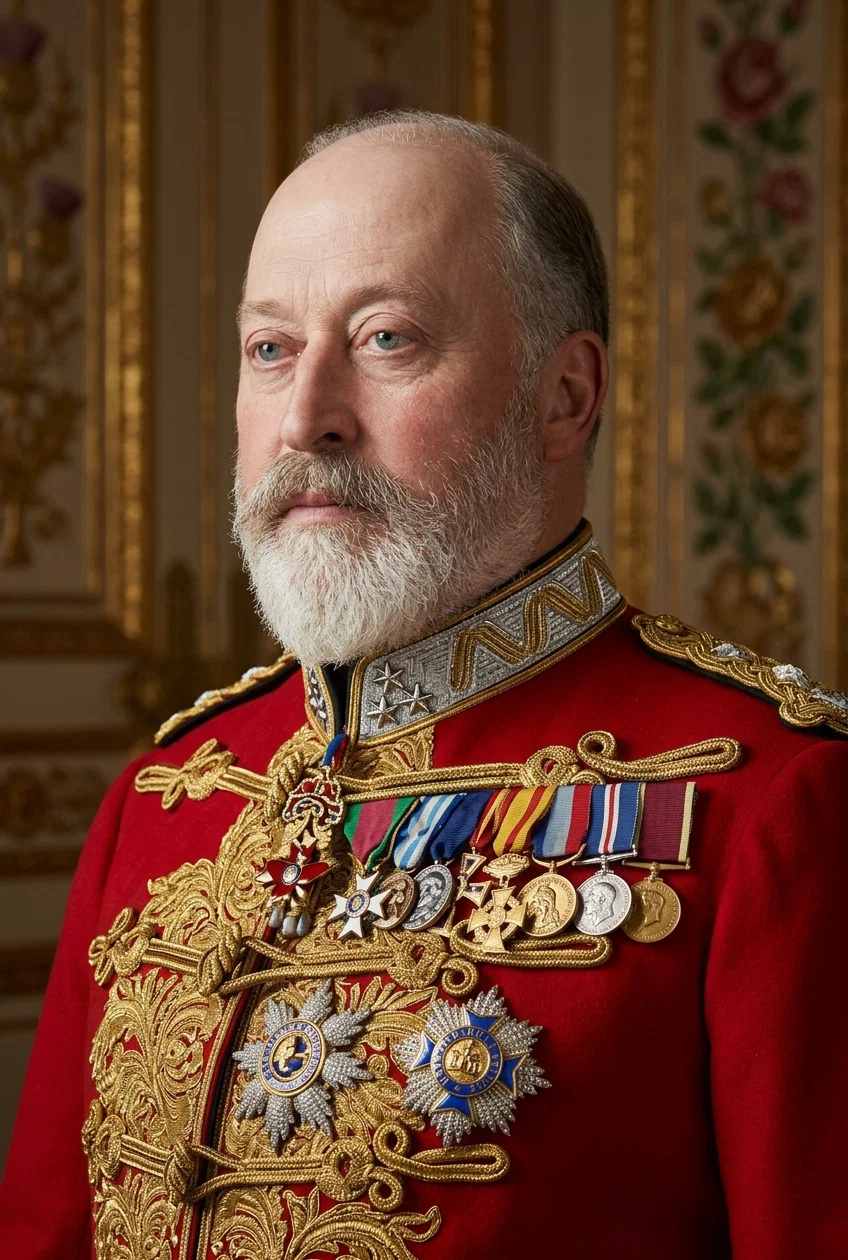
H.R.H. KING EDWARD VII
“The Christian church in America only spends as much each year on missions as it costs to build and equip one modern battle-ship. Of all definitely religious problems in the world, the chief is this, that more than half the human race is yet ignorant of Jesus Christ, and the message of hope and peace that He brought to mankind. The triumphs of His Gospel have been so universal and so stupendous, wherever it has been applied, that no missionary ever raises a question whether the Bible is the Word of God, and Jesus is the Son of God, and the Gospel is the power of God unto salvation to every one that believeth.”
“It took one hundred years of modern missionary effort to win the first million converts. We passed the million mark in 1896. It only took twelve years to win the second million. For the past two years we have been winning them at the rate of a million in six years. There are now, on the average, every week, as many new converts as would fill this auditorium (about 6,000).”
The proportion of unconverted falling to the United States as its share was estimated at 560,000,000. It will take an annual offering of about $45,000,000 to do the work in this generation. The United States gives nearly $11,000,000 annually at present, and together with England gives a little over $20,000,000, while all the rest of the world gives only a little over $3,000,000 to missions.
It is estimated that there should be one white missionary, together with his native assistants, to every 25,000 people in order to make the work succeed. At present there is a missionary to every 275,000 persons in heathen lands.

A Bad Element

Of course the movement is strongly permeated with the church federation idea, and will be for foreign lands the same problem that the church federation is for America. I shall not dwell at length on this phase of the question, but one quotation made by one of the speakers is quite significant. Dr. Duff of India said in New York, “I would as lief jump into the Ganges as to go over and pilfer the Christians of another denomination.”
The closing meeting of the congress was addressed by Bishop McDowell, who said as his closing words, “Here, now, at the close, let us clasp hands with Jesus Christ, and covenant with Him that we will live with Him until we know that He is essential to the world, that we will live with Him until we share His purpose for the world, that we will pray for the world until it rests on our hearts as it rests on His, that we will live with Him until we are like Him in all holy fellowship and in all rich reward, that we will do this until the last man knows the Name, and until we stand on the height that is yet unreached and cast our crowns before Him.”
CHAS. T. EVERSON.

Our London Letter

From Our Own Correspondent, the Editor of Present Truth
[The first part of this letter was given last week. The portion below was withheld that we might have space for the story of King Edward’s death. This pertains to the religious life of Britain.]

In the Religious World

In the religious world, the most interesting topic is the suggestion put forward by the Rev. J. H. Shakespeare at the annual Free Church Council, for the union of the Free churches of England in one organization, of which all the existing denominations shall be merely sections, and which shall redistribute the forces of the Free churches and enter upon a vigorous campaign of social service. The proposition has been discussed, and several of the leaders in religious life have given it their warm approval. Dr. J. H. Jowett, who occupies the first place among the great preachers of the day, and who has lately declined a pressing invitation to go to the United States, believes that the time is ripe for such a move, and that the churches are longing for just such a step. He says:
“Everybody mourns our present wastage of strength. The denominations are like so many regiments engaged in a common battle, but with no common plan of campaign. Each regiment is doing whatever it likes, without any cooperative consultation with any other. There is no fine strategy, no enlightened attack or defense, no mutual counsel or support. The consequence is, we get in one another’s way; we are jostling rather than confirming. We make a perspiring, pell-mell rush for one part of the field, while another vital part of the field is forsaken. There are a dozen regiments where two would suffice, or, again, there is only one where the needs require six. So we have both prodigality and stint, superfluity and impoverishment. . . . But there is not only wastage of strength. Our want of strategy and common policy leads to rivalry, and therefore to misunderstanding, irritation, resentment, and bad blood. I have only just entered upon the duties of president of the Free Church Council, but already I have made the acquaintance of this perilous truth. Churches are established without any conference with fellow laborers in the field; they are started, not because they are really needed, but to gratify denominational pride, the wish to display an aggressive representation. And this, I say, engenders bad blood, and the springs of service are often poisoned at the fountain.”
On the other hand, many criticize the scheme for union adversely. They point to the fact that the Free Council is an admitted failure, and do not see how a further step in the same direction can be expected to produce any better results. The Rev. J. D. Jones, who ranks high among the evangelical spirits of the Congregational Church, thinks that the idea of uniting the Free churches is an unattainable dream. In a recent address he said that “what they wanted to do was to realize that God had given to every church its own distinctive religious work, and that they were really serving the interests of God best not in disparaging or depreciating one another, or by trying to produce a kind of mechanical uniformity, but by each one of them following the bent of their own genius, and so developing their own type of men, and so creating richness, wealth, and variety in that kingdom to which they belonged.”
W. T. BARTLETT.

Shiloh: the Man of Sorrows

Copyright, 1910, Pacific Press Publishing Association
By Mrs. L. D. Avery-Stuttle

Chapter XIII.—A Home in Bethsaida

Let us visit the home of the young fisherman Bar-jona and his family, over at Bethsaida, in sight of the blue waters of Galilee. The slanting sunbeams dance over the waters as the light evening breeze sets the waves aquiver. The sun is already receiving his nightly baptism in the mighty Mediterranean at the far west, and the shadows of the great sycamores outside the court are long and indistinct.
The house is much larger and better equipped with the comforts of life than those of most fishermen.
A sweet-faced woman in the prime of life is preparing the evening meal, while a happy young mother, with a babe at her breast, is seated beside her husband.
Possibly the reader may need no introduction to the family; but as some of its members act an important part in the succeeding pages of our story, it is well to have a clear understanding at the outset.
We are acquainted with the young husband Bar-jona and the brown-eyed lad Matthias well enough. We met them very recently in the temple at Jerusalem, whither they had journeyed to attend the Passover. It is the evening after their return.
Bethsaida was the city of Andrew and Peter, one of the populous towns on the Sea of Galilee. Now there is naught but ruins to mark the once busy town.
The other members of the family we have not seen in twelve years. The man sitting by the doorway is Sylvanus the shepherd, who has returned from the Passover three days since. The sweet-faced woman preparing the meal is Esther, his wife. The young mother with the babe is their daughter Perpetua, grown to womanhood, now the wife of Bar-jona. The lad Matthias, whom we met with Bar-jona at the temple, will need no further introduction. Father Eliab, who met death at the hand of the Roman centurion, has been missed and mourned all these years; while poor Heber is lamented as dead, for the light of reason has never returned to him. The horrors of that night at Bethlehem have done their cruel work,—work which the hand of a dozen years has been powerless to undo; and so, altho a strong man of a score or more years, the mind is that of a babe. Following that night of horror, the sensitive lad had been stricken with a deadly fever; since when he has been the constant care of his parents, Sylvanus and Esther.
At the death of the elder Jonas, father of Bar-jona, the family of Sylvanus removed from Bethlehem, and took up their abode at the commodious home of the son-in-law, young Bar-jona, at Bethsaida.
“Come, Bar-jona,” pleaded Esther, with all a woman’s curiosity, “we would hear an account of the Passover and its happenings, at thy mouth, for verily Sylvanus is slower of tongue than thou,—and thou, Matthias, lad, what sawest thou? and what canst thou tell thy mother? for hath not this been thy first attendance at the Passover?”
“Many things were indeed new and strange unto me, my mother,” replied the lad; “but O Bar-jona, speak thou,—I can not,—speak thou of the Lad whom we saw, and whose voice we heard in the temple; as for me, I can think of nothing else.”
“Yes,” interrupted Bar-jona, “and thou couldst speak of nothing else all the journey homeward. The Child, I suppose, must have been about the age of our lad Matthias. For three days this Child visited the temple, at the close of the Passover, and discoursed so learnedly, even with the lawyers and doctors and some members of the Sanhedrin, that I trow He hath set half the tongues of Jerusalem wagging. Verily it is a hard task thou hast set me, mother Esther, to repeat unto you His conversation,—and O, as the Lord liveth,” continued Bar-jona, with sudden emotion, “the Child is unlike any other in Jerusalem—or—the world!”
“I saw Him not, my son,” replied Sylvanus.
“Nay; I saw Him not myself until thou hadst left Jerusalem; not until the confusion of the feast was ended. Then came He into the temple and discoursed with the teachers. Having occasion to pass through the temple, Matthias and I, we heard voices engaged in earnest conversation and discussion, and so we entered the door and paused to listen.”
“The high priest was propounding a question to the Child: ‘What sayest Thou, Lad? when the Messiah cometh, shall not our nation rest from her enemies? Shall not the glory of Jerusalem spread from sea to sea, and from the river to the ends of the earth? If not, why saith the prophet, “And He shall sit upon the throne of His father David, and of His kingdom there shall be no end”?’”
“Then,” continued Bar-jona, “I heard the voice of the Child as He made answer; the voice was low and earnest, but the words sounded clear and distinct as the notes of a silver trumpet: ‘Verily, when the Messiah cometh as King of Kings, O Annas, then shall He reign forever, and His glory shall fill the earth. But first must be brought to pass the words of the prophet, “He was despised and rejected of men; a Man of Sorrows, and acquainted with grief.”’”
“Then Jazer, the scribe of the temple, cried out, while a fierce scowl overspread his hateful face: ‘Wherefore protest Thou thus? Knowest Thou not, Thou Child of Nazareth, that Thy words are odious unto us? Saith not the prophet concerning Messiah, that He shall smite the earth with the rod of His mouth, and with the breath of His lips shall He slay the wicked? Surely the Gentile dogs shall lick the dust when the Shiloh of Jacob cometh.’ And the scribe cast a look of scorn upon the slight form which stood beside good Rabbi Ben Israel, as he continued: ‘It seemeth to me worse than folly to listen to this Lad. I mine own self have somewhat to say further; and if the word of a master in Israel be accounted of value, let this Child be silenced.’”
Bar-jona rested a moment as if to collect his thoughts before proceeding with his tale.
“But tell me, my son, did the words of the scribe prevail?” questioned Sylvanus, arising from his seat and coming closer to the side of the narrator. “Verily I have known him many a year to be a man hard of heart and stubborn of mind, who hath a tongue sharper than a sword.”
“Prevail? Nay, verily, they prevailed not; for at once some of the lawyers and doctors cried out earnestly, ‘Let us hear the Child; we care not to listen to the scribe.’ At this, the face of the scribe Jazer was black with madness, while the high priest gathered his rich robes closer about him, and his face took on a look of malignant hatred, as he glanced at the Child. His lips moved as if to speak; but for a moment his tongue seemed paralyzed.”
“I saw that the eyes of Jazer and the Lad met; the one full of deep hatred, the other mild, tender, gentle, and unspeakably sorrowful. Then the high priest turned to the lawyers and doctors. ‘Ye men of Jerusalem, what think ye? Shall we yield the faith of our fathers, that when Shiloh cometh, He shall rule the nations as with a rod of iron, and break the heathen in pieces as a potter’s vessel,—shall we yield this doctrine because of the foolish prattling of a babe?’ and the speaker glanced scornfully at the small figure before him.”
“Then,” continued Bar-jona, “the Child spake once again: ‘What saith the prophet Isaiah? “For the leaders of this people cause them to err; and they that are led of them are destroyed.”’”
“Then the voice of the scribe was again heard, harsh and shrill as the notes of the cornet: ‘Speak, Child! what sayest Thou of the Messiah? Surely He cometh in splendor and in glory greater than that of Solomon. Speak Thou.’”
“And I tell thee, father Sylvanus,” continued the narrator, “I have heard no voice like the voice of the Child as He answered; it seemeth even now that the sound thereof is in mine ears. It soundeth mournful as the sighing of the night wind among the cedars. It seemed that the fountain of tears was about to break from the sorrowful eyes as the Child made answer: ‘What then meaneth the prophet? “He is despised and rejected of men; a Man of Sorrows, and acquainted with grief: and we hid as it were our faces from Him; He was despised, and we esteemed Him not. Surely He hath borne our griefs, and carried our sorrows; yet we did esteem Him stricken, smitten of God, and afflicted.”’”
“‘Hear ye the Lad, ye men of Israel,’ interrupted a lawyer, ‘while I question Him. Verily we shall judge of His wisdom by the answer He maketh. Hearest Thou, O Child? Thou hast been speaking of Shiloh, and Thou sayest that He cometh in poverty, as a Man of Sorrows. But answer me, Lad, and verily it behoveth Thee to answer wisely. When cometh Messiah?’”
“Then,” continued Bar-jona, “a silence as of death followed the question of the lawyer.”
“What answered He?” questioned Sylvanus and Esther in one voice, while Perpetua bent her head to listen.
“What said He? Amid the breathless silence of the company, the Child stooped, for He was standing, took a roll of parchment from the lap of Rabbi Ben Israel, and unbound it with His small hands. Fixing His finger upon the place, He read: ‘Therefore understand the matter, and consider the vision. Seventy weeks are decreed upon thy people and upon thy holy city; . . . to make reconciliation for iniquity, . . . and to anoint the Most Holy. Know therefore and discern, that from the going forth of the commandment to build again Jerusalem, unto the Anointed One, shall be seven weeks and threescore and two weeks.’”
“It is the word of Simeon the prophet!” interrupted Sylvanus eagerly; “the same which he spake unto us the day of his death. Rememberest thou, Bar-jona?”
“Verily, my father, I remember well, and I did remember even as the words of the Child sounded in mine ears. And truly the lawyer was much astonished at His reply.”
“Who art Thou, Lad, that Thou knowest the prophets like a master in Israel?” exclaimed one whom they called Nicodemus, while a look of deep admiration rested upon his countenance. “Who art Thou?” he repeated in astonishment.
“The lawyer did not wait for a reply, but fixed his eyes upon Rabbi Ben Israel, and then turned them full upon the high priest, as he said: ‘Now we know that it hath been near four hundred sixty and five years since Artaxerxes, king of the Persians, gave command to restore Jerusalem. And his was based upon those of Cyrus and Cambyses. It seemeth to have been this threefold decree to which the vision of Daniel the seer referred. Am I right, O Annas?’”
“Thou hast well said,” reflected the high priest slowly. “Indeed we know that the coming of Shiloh can be delayed but little longer. Verily there be scarce a score of years remaining of the nine and sixty weeks of years. There is little dispute concerning this among the teachers of Israel. But that He, the Star of Jacob, shall come in obscurity and poverty is too absurd to be taught by aught save ignorance and imposture;” and the high priest fixed his eyes scornfully upon the Child.
“Before any could make answer,” continued Bar-jona, “a pleasant-faced man, with a look of deep anxiety upon his countenance, ascended the stairs and touched me, as we—Matthias and I—stood in the doorway; and behold, it was the father of the Child. In a moment more the Lad had joined him, and together with the mother, who awaited them in the court of the women, they left the temple.”
“But Jazer the scribe declareth that the family dwelleth at Nazareth, and that the father is a carpenter.”
At these words, Sylvanus clasped his hands devoutly, as he exclaimed with conviction:
“Bar-jona, my son, behold THIS Child is the Babe of Bethlehem—the Shiloh of Jacob!”
(To be continued)
Continue reading: THE Spirit World