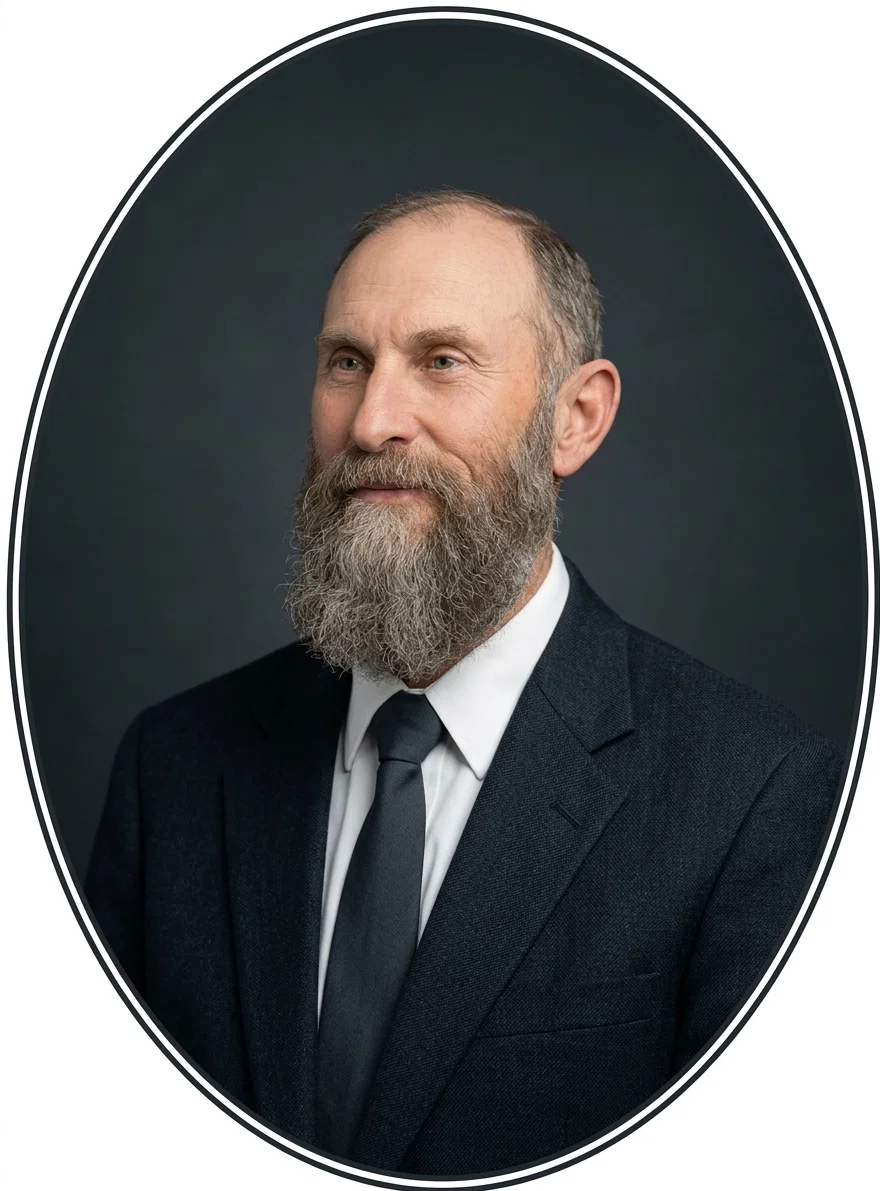
MUALEVU, LOMA LOMA, LAU.—If our people could only see, as we on the firing line, the great needs for advance moves, I am sure there would be no lack of means in the mission treasury. Every delay gives Satan time to concentrate his forces, and strengthen his defenses. It means greater labor and expense in the end. We see so many opportunities, which, if we could only improve, would keep us on vantage-ground, and the work would go, O! so much easier and faster. If the statement of the Testimonies, that “there should be a hundred missionaries where there is one,” were to be carried out, it would only be a question of but a short time, and the work would be done, and we be in the kingdom, with the fruits of our labors.
These tropical climates are wearing on the constitutions of those who are called to labor in them, and it is only a question of time before there must be changes. Then where are the men that can step in and fill the places? It takes time to get acquainted with the languages and customs of the people. Our beloved Brother Fulton has had to leave this field for two years. It was thought best by our Australasian Union Conference that he take the presidency of the New South Wales Conference, and he and his family recruit their health. His work and mine now fall to my lot, as we have no one fitted for this field. Brother Carr, who has charge of our native school, and myself are the only white laborers. If ever we needed laborers here, it is now, as everything is ripe for advance moves. The one great comfort of my heart now is the divine invitation, “Come unto me, all ye that labor and are heavy laden, and I will give you rest.” Jesus knows it all, and my eyes wait for him. May God bless his people with a lengthening of the ropes. C. H. PARKER.
South Africa
By I. J. Hankins
THE Cape Colony Conference was held in Kenilworth, January 11-20. The ministers were all present, and also a few lay members from distant churches. An interesting program was rendered, papers being read on Conference Organization, Medical Missionary Work, the Sabbath-school, and True Education. Four newly organized churches were received into the conference, making our total church-membership four hundred and nineteen, over one hundred having been added during the year.
Tithe receipts for the year were over eight thousand dollars, being nearly twenty dollars per capita. The financial report shows a gain during the year of twelve hundred dollars in the conference, and over two thousand dollars in the tract society, also Sabbath-school contributions to the amount of nearly one thousand dollars.
The Kimberley treatment rooms have added a circulating tank, an extension to their heater, and an adjoining lot to their property, and still the work shows a fair profit. The Cape sanitarium has enjoyed an increasing patronage, which has necessitated increased facilities to the amount of nearly five thousand dollars. The health food sales have been larger than ever before, and the work has extended to some of the principal cities in South Africa, where agencies have been established.
Considering the severe financial depression in this field, our work has enjoyed a fair degree of prosperity, for which we are grateful to Him who has given success to his servants.
Six persons have spent their whole time in the canvassing field during the year, and ten or twelve others have spent more or less time.
The Lord has blessed the work among the Dutch people, a good church having been organized in the Orange River Colony, and a smaller one in Cape Colony. The work in East London has been strengthened by the addition of some good people to the church. A few of these have been canvassing, and others expect soon to join the mission in Cape Town, which has just been started for the training of workers, and for aggressive work in the city. This work will be conducted by Mrs. Hankins and the writer. Some changes were made in the conference officers, one being the election of Elder Hyatt to the presidency.
We have reason for sincere gratitude to God for the blessings he has bestowed in every department of our conference work during the past year. We do not regard this an easy field. The results of seed sowing have never been so manifest as in some other countries, yet the Lord has a people in this land who will receive the message, and be saved by it. To these we still hold out the lamp of life, hoping to co-operate with God in saving the little flock for his kingdom. I. J. HANKINS. Cape Town.
St. Lucia
By R. N. A. Batson
CASTRIUS.— St. Lucia was first canvassed with our literature by Brother Williss Hacket, about eight or nine years ago. He did a good work, and although he now sleeps, his work still lives. He took with him a native canvasser, who also did a good work; but since that time no systematic work has been carried on. Those who came into the truth did a little here and there, the best they could.
I was asked to go to St. Lucia; I had then been canvassing in Grenada for about six years. I landed in Castrius Oct. 30, 1905, and after finding a place to stay, started out with the Caribbean Watchman. I found that the paper had been sold there, but that the place had not recently been visited by a canvasser. In all the parishes I find books containing the third angel’s message. As far as I have been able to learn, there are in the islands about one hundred copies of “Patriarchs and Prophets,” some of which were brought here from St. Kitts and other places, one hundred and fifty copies of “Coming King,” and seventy-five of “Thoughts on Daniel and the Revelation,” a few of “Home Hand-Book” and “Man the Masterpiece,” a number of “Ladies’ Guide,” and up to January, 1906, over two thousand small books, sold by eleven workers.
Since I have been here the Sabbath-school has been reorganized and the scattered ones have found their way back to the fold. The tithe and offerings have increased, also the Sabbath-school donations. The field is white already to harvest, and my prayer is that the Lord of the harvest may send a minister here, to gather the wheat into the garner, and so hasten the coming of the Son of man, who shall reward every man according to his work.
R. N. A. BATSON.
J. H. SCHILLING
By J. H. SCHILLING
Germany
BRESLAU.—In compliance with the requests of friends in eastern Pennsylvania, where I labored during the last five years, I will write a short sketch of the work in which we are now engaged. October 5 my family and I sailed from New York for Germany, our present field of labor. On the fifteenth we arrived in Hamburg, where we lived until January 9. During our stay there it was my privilege to work conjointly with Elder Pieper, the president of the West German Conference, in the city of Bremen. The people of this city are rather atheistic and philosophic, as the people, generally speaking, are throughout Germany. The simple truths of the Bible they regard as childish, and it is quite difficult to draw a large congregation. Notwithstanding the fact that the work went exceedingly slow and hard, Brother Pieper had the privilege of baptizing thirteen souls as a result of the work. As I was rather weak and inexperienced in preaching all our truth in the German language, Brother Pieper did most of the preaching.
In harmony with the request of the brethren, we finally, on January 9, moved from Hamburg to Breslau, the chief city of the Province of Schlesien, where I am now laboring. From January 24 to 30, the East German Conference held its annual meeting at this place. About three hundred of our people were in attendance. It was a blessed feast, a holy convocation.
The attendance from the city at the evening services was more than ordinarily good; hence a large interest was awakened, the following up of which was committed to my charge. Brother F. Adomeit, a licentiate, and Sister Vater, a Bible worker, were left here to assist me. We are holding our effort in one of the large halls in the center of the city, and several hundred people are in attendance each evening. The Lord is certainly richly blessing our efforts, and according to all appearances there will be precious souls added to the church here, which now has sixty-eight members.
I have found our German brethren a very diligent and earnest people. The general meeting held here amply evidenced this fact. I have learned to love and esteem this people, and by God's grace I shall endeavor to do all that lies in my power to encourage and assist the closing work of the Lord in this part of the world.
My family and I are gradually becoming accustomed to the ways of the German people. At first everything was very strange to us; but now it is different. Pray for us and the work here.
J. H. SCHILLING
Martha Strasse 13, Pr.
Getting Settled in India
By Stephen N. Haskell
THE following letter received from Brother and Sister Burgess, who went to India a short time ago, will be of interest to many:—
“It hardly seems possible that three weeks have gone by since we last wrote you. During this time we have visited several places we had in mind, in the interest of our work. We have felt that it would be wise for us to take time to look about carefully before deciding definitely as to our location, in order that no mistake be made. In the course of our journeyings we have ridden sixty miles in an ox cart, so you may know that we have had some interesting experiences. We travel third class, at the rate of less than half a cent a mile, sleeping in waiting-rooms, under a tree, or wherever we may chance to be, so you see our traveling expenses are not very heavy.
“‘Where the night may find us surely matters not,
If we sleep with Jesus, O blessed is the spot!’”
“We both feel strongly impressed that we have found the place where the Lord would have us locate. This place, Tulakiour, is a large village on the railway, surrounded by many smaller villages. Within a radius of two or three miles we can count as many as twelve different villages. The Hindus of this part of the country hold their yearly mela (religious festival) here every year, at which time people come in large numbers from all parts of the country. This would afford an excellent opportunity of distributing reading-matter far and wide.
“The land is well watered and very fertile. In every direction can be seen large groves of mango trees, while oranges, guavas, and other fruit can be had. The principal crop seems to be wheat and rice. This place is in the State of Balraspore, which, while subject to England, has its own native king. The land is all owned by the king; he lives two stations below this place, but also has a house here.
“We have seen his representative who lives here, in reference to securing land, and he has encouraged us to hope that the king would be pleased to give us a piece of land on which to begin our work. He instructed us to make a written application to the king, stating just what we wanted, and said that the matter would be considered by him.
“Yesterday we sent in our application, and can now only wait and trust in the Lord to give us favor in the sight of the king, if this is the place where he wishes us to be located. In the ordinary course of events it will probably be several weeks before we know definitely, as things move very slowly in India, and there is a great deal of ceremony connected with such matters.
“This place is about one hundred and fifty miles northeast of Lucknow, and is only about fourteen miles from the mountains on the north. Of course this tempers the climate very much. At the present time it is quite cold, and we find our heavy woolen underwear very comfortable; we never needed anything of this kind in Calcutta in the winter. We sleep under three blankets, with our heavy wraps thrown over the bed, so you see the climate at this season of the year is quite bracing. We are told that it does not get very warm until the first of May, and the rains begin the middle of June, so there is not much time for very hot weather.
“I do not know that we have ever been in a place where the native people were more friendly than here. As we were going along one day, we met a number of men who were evidently from the hills. We had a few friendly words of conversation with them, and passed on. Shortly after, they overtook us, and without giving any explanation, one of them handed Mr. Burgess some fruit. I only mention this to show their friendly feeling. Several have given us presents of fruit.
“A few evenings ago several men from a village a short distance away came to us to inquire if we were in need of anything. They said that in their village they had built a house for those of their religion who gave themselves to the service of God, and as they understood that we were religious teachers, they thought it only right that they should look after our wants. They brought a servant with them, and said that any time we needed his services he was at our disposal, and whatever food we needed they would be glad to supply. They were the leading men of the village, and we looked upon this as a very favorable sign.
“We find that among all these people outside of Bengal in northern India we need the Urdu as well as the Hindi language. The Hindi is the language of the up-country Hindus, the Urdu of the Mohammedans throughout India; but we find that even among the Hindus they have to a great extent adopted the language of their Mohammedan conquerors, so in order to reach all classes we need to study the Urdu also. It will not be hard, for it is very similar to the Hindi.
“Last evening the native doctor of this place made us a visit. He is well educated, and speaks English fluently. He offered to come each day and help us in studying the Urdu, so you see the Lord supplies our need as soon as it arises. He is a Hindu, and as we shall make the Bible our text-book in studying with him, we hope that the good seed may be planted in his heart.”
From the preceding letter we see how the work may go to foreign fields even if our people do not arise and do their duty in sending out workers and supporting them in the field. The Lord can use even the heathen to carry forward his work. The God who sent the ravens to supply the wants of his servant when his professed people did not do their duty, is still the leader of his people. If we as a people arise to the needs of the18time, and supply the wants of the workers that take their lives in their hands and go forth into the difficult fields, we shall share in the reward; but if we are so interested in gathering means for our own comfort that we can not spare money to the cause of the Lord, the work will go forward just the same, only others will take our crowns.
God grant that we may be alive to the needs of the cause, and the coming year see many workers going forward into fields that are now waiting all white for the harvest. Those that remain at home can carry the workers in the foreign fields on their hearts, and pray daily that God will bless their efforts. The ones that daily pray for them will be pretty sure to remember that they need food and clothing as well as the prayers. The work will soon close in triumph. Who will share in bearing the burdens during the heat of the closing battle?
S. N. HASKELL.
Pacific Union Conference Notes
By F. M. Burg
In the sixth meeting of the conference held at 10 A. M. Feb. 19, 1906, the committee on plans submitted the following partial report:—
“Whereas, God in infinite mercy has, during the past two years, granted us as a conference many blessings, both temporal and spiritual, and we are again assembled in conference, surrounded by so many evidences of his love; therefore,—
“1. Resolved, That we express our thankfulness and gratitude for his kind providence; and that we hereby renew our covenant relation with him, and pledge ourselves to renewed energy and devotion to his service.
“Whereas, A considerable number of delegates express a desire that the Pacific Union Conference be divided into two union conferences; therefore,—
“2. We recommend, That this conference consider the advisability of dividing the territory, making the southern boundary of Oregon and Idaho the line of separation. And if such division is agreed upon by action of this conference, we further recommend (a) that the southern division retain the name Pacific Union Conference, and that the northern section assume the name North Pacific Union Conference; (b) that the funds now belonging to the Pacific Union Conference be divided in proportion to the number of Sabbath-keepers in each section; and (c) that the Pacific Union Conference take the oversight of, and provide for, the mission fields of Utah and Arizona; and that the North Pacific Union Conference take charge of, and provide for, the mission fields of British Columbia, Alaska, and Hawaiian Islands.
“3. Resolved, That we heartily approve of the continuous missionary-campaign policy adopted by the General Conference, and recommend a united effort in the doing of the different items of work outlined; namely, (a) the placing of the REVIEW AND HERALD in every Sabbath-keeping home; (b) the liberal circulation of message-filled tracts, every Seventh-day Adventist using a pound of Signs Leaflets (about eighteen each of the different kinds) as an entering wedge; (c) a more general use of our missionary periodicals.—The Signs of the Times, Watchman, and Life and Health,—small clubs by isolated members, and large clubs by churches and companies; (d) the development of the interest thus created, by the sale of forty-per-cent books and the relief books, ‘Christ’s Object Lessons’ and ‘Ministry of Healing;’ (e) all these lines of work to be followed by Bible readings, cottage meetings, missionary correspondence, etc.
“4. Resolved, That we also approve of the church-depository plan outlined by the Missionary department, whereby the department shall make up assortments of missionary publications valued at perhaps ten, fifteen, and twenty dollars, and we recommend all our churches to secure such assortments, that they may the more readily and effectually give a reason for the hope that is within them.
“5. Resolved, That we recommend the more general adoption of the plan of devoting the fourth Sabbath donation to home missionary work.”
It was moved to adopt the report by considering each item separately. The first item in reference to a division of the conference called out a lengthy and interesting discussion. When it came to the final vote at the afternoon session, thirty-three delegates supported the recommendation to divide the conference, and fourteen opposed the measure. On motion by Elder M. C. Wilcox, a vote was taken to make it unanimous for division. There was one dissenting voice. It has been especially gratifying to note the tender and brotherly feeling which prevailed in the discussion of this question of so much importance. Indeed, the evidence of divine presence with us has been very clear from the opening meeting of the conference.
The delegates from the two sections respectively have been called together with a view to consummate an organization according to the provisions of the recommendation which had been adopted.
The remainder of the report from the committee on plans, as given above, was adopted after a very interesting discussion of the several items.
F. M. BURG.
East Caribbean Conference
The semiannual meeting of the East Caribbean Conference Committee was held in Port of Spain, Trinidad, January 22-31. In many ways this was the most encouraging meeting ever held in our conference. There was a spirit of courage and unity that promises much for the success of our work in the future. This conference has now on its pay-roll sixteen laborers. Of these only six are from the States, and ten are native West Indians who have developed sufficiently in the knowledge of the truth to be able to bear positions of responsibility in this work. We decided to add another of our young men to the list at this meeting, and hope to take others as they develop and the finances strengthen.
Our people are realizing more fully their personal responsibility in bearing the burden of carrying the message to all within our borders. The tithe for 1905 was an increase of $327 over that of 1904, and $644 more than for 1903. Ninety-eight persons were baptized in the conference during the year, and nineteen added to the church on previous baptism. In addition to the English-speaking fields in our conference, we have work to do for the East Indians, aboriginal Indians, French, Spanish, Dutch, and Danish fields. We are entering these doors as fast as we can, and only the lack of men and means hinders us from occupying all.
The assistance rendered to the needy enterprises in our field by conferences and individuals in the home land, was an omen for good cheer. The gift of the Western Washington Conference of Brother O. E. Davis for the work among the aboriginal Indians lifted a heavy burden from our shoulders.
The Publishing Work
The treasurer was able to report that the outfit already purchased, consisting of a job-press, stitcher, cutter, and sufficient type to set up the Caribbean Watchman, and other accessories, costing about one thousand dollars, was entirely paid for. The investment by an interested brother from Kansas of five hundred dollars in our publishing work, and another gift of one hundred dollars, enabled us to purchase in England a cylinder press, so we shall have a small but complete plant in the near future. We shall soon be able to do all the work on the Caribbean Watchman ourselves, and hope to cover the West Indies with pamphlets and tracts. It was decided to hold a missionary and seed-sowing convention May 5 and 6, at which time a special collection will be taken up to aid our publishing work. Provision was made at this meeting to set the press to work as soon as it is set up, and keep it running steady for many months to come. It has been the custom for the Watchman to issue each year a neat little calendar, with sunsets, which have been given as a sort of premium to the small army of Watchman agents who are faithfully carrying the paper from house to house. It was decided to issue for 1907 an improved calendar having thirteen large-size illustrations, at least ten of which will be West Indian Seventh-day Adventist church buildings. This will be a good opportunity for those who are interested in the missionary work of this denomination to invest a small sum in a souvenir that will not only help a small publishing plant, but be an interesting ornament as well. All inquiries concerning the calendar, or subscriptions for the Watchman or Gleaner, may be sent to S. A. Wellman, Port of Spain, Trinidad. The small company of young people, as busy as bees in producing the Caribbean Watchman and other literature, formed a pleasant and interesting sight to the members of the committee.
The Medical Missionary Work
The favorable beginning of the medical missionary work in our conference brought joy and hope to our hearts. The following resolutions concerning this important branch of our work were passed:—
“Resolved, That the East Caribbean Conference extend a hearty welcome to Brother C. W. Enoch and his wife, who have come to labor in behalf of the medical work in our conference, and note with gratitude the encouraging evidences already manifested that their work will be successful.
“Whereas, C. W. Enoch and his wife have already demonstrated that our medical work will be welcomed by the people of the West Indies; and—
“Whereas, There are many wealthy people who will doubtless support liberally such work, and further, as Barbados, because of location, climate, and liberal
Death of Elder D. A. Ball
By S. H. Lane
It is painful to chronicle the decease of one who has been called from active service in the cause of God.
Elder Dexter A. Ball departed this life at Lockport, N. Y., on the morning of Feb. 12, 1906, of cancer of the stomach, being 55 years, 10 months, and 24 days of age. Elder Ball was born of poor parents. His father emigrated from Vermont and settled in Cattaraugus County, in southwestern New York, as early as 1826, where he cleared a large farm. Panthers, bears, and wolves were so numerous that sheep and cattle had to be herded at night to protect them. Elder Ball was the seventh of thirteen children. At an early age he worked for near-by farmers, and aided in the support of his father’s large family. He attended school during the winters.
In the summer of 1873, when working as a farm-hand near Sugartown, N. Y., through the power of the Holy Spirit he was converted, and united with the Baptist Church. Immediately after his conversion he felt impressed that he should preach the truths of the gospel, and began to do so as opportunity presented the occasion. In the latter part of 1874 he became acquainted with, and embraced the views of, Seventh-day Adventists. He immediately became active in promulgating his new-found faith, especially through the distribution of the printed page.
In due time he devoted his energies to preaching earnestly the truth in southern New York and in the State of Pennsylvania, as at that time the Pennsylvania Conference consisted of the State of Pennsylvania and a few counties in southwestern New York. He lived in New York. He raised up a number of churches.
In 1876 he united in marriage with Miss Martha Clark, a young school-teacher from New York who was teaching at the time at Roulette, Pa. To this union, in 1879, was born a daughter, now the wife of Elder R. F. Cottrell, at present the Bible teacher in the South Lancaster (Mass.) Academy. Sister Ball was a faithful wife and mother, and being earnest in the faith, was a great help to her husband. Her death occurred in the early part of 1901.
While laboring in the Pennsylvania Conference, he received a call from the Mission Board to open up work in the unentered field of the West Indies. He began labor in that field in 1890, and remained there until the spring of 1892, when failing health made it imperative for him to return. He was so poorly that it seemed doubtful whether he would live to reach home. At that time he had his first hemorrhage of the stomach.
He was the pioneer minister of our people in the West Indies. Brother William Arnold was the pioneer colporteur. He and Elder Ball went together to the islands. They distributed and sold a large amount of literature. Brother Arnold supported himself and paid his own expenses. Brother Ball’s profits on his book sales aided much in his support. He gave hundreds of sermons, and many embraced the truth, and the foundation was laid for success in the future of the work in that island field.
ELDER D. A. BALL
After his return from the islands, he regained to a great degree his health, and began work in the New York Conference. Since then he has worked incessantly not only in preaching, but in selling our books and obtaining subscriptions for our papers. He was a staunch supporter of our schools, publishing houses, and sanitariums. He personally sold hundreds of copies of “Christ’s Object Lessons” to aid our schools.
In the latter part of 1902 he united in marriage with Sister Hattie M. Buckland, of Newfane, N. Y. She immediately engaged with him in his work, which he continued to within a short time before his death. He preached his last sermon in the latter part of December, 1905. During his rapid decline everything that a faithful, loving wife and daughter could do was done, but to no avail, as the deadly disease soon terminated his valuable life.
Elder Ball, through the blessing of the Lord, was a self-educated man. He was studious. He was well versed in the Bible, being able to repeat many parts of it, having read it through by course over thirty times. He wrote many articles on Biblical subjects, which appeared in his town paper, in Ellicottville, N. Y. The editor printed Brother Ball’s written comments on the entire book of Hebrews. Thus he presented the truth by pen as well as by voice.
Elders Peabody, Meleen, and Hicks, also Elder I. N. Williams, of the Western Pennsylvania Conference, were present at the funeral. As requested by the deceased, Elder J. W. Raymond and the writer conducted the funeral services, both at Lockport and at Ellicottville. The congregation at the family residence at Lockport on Tuesday afternoon, February 13, was large, consisting of friends and neighbors. After the service at Lockport we proceeded to Ellicottville, and on Wednesday forenoon our large meeting-house was well filled with his townsmen and relatives, who manifested every token of respect. The sermon by the writer and the remarks by Elder Raymond moved the congregation, and hearts were deeply affected as the promise of immortality, through Christ and the glories that shall characterize that life were dwelt upon. We then proceeded to Eddyville, and laid our beloved brother to rest in the family burying-ground until the Life-giver shall come.
He leaves a wife, a daughter and her husband, and six brothers and sisters, and a large circle of relatives to mourn their loss. It can be said truthfully of Elder Ball, He has fought a good fight, he has finished his course, and there is laid up for him a crown of righteousness to be received by him when the blessed Master shall come. S. H. LANE.
Medical and Educational Work in Barbados
By GEO. F. ENOCH
medical laws, is a favorable center for the establishment of such work.—
“Resolved, That we appeal to the General Conference to do all in its power to procure a doctor as soon as possible to locate in Barbados.”
We hope this plea will not remain long unanswered. As those at the outposts have seen the medical work continue to centralize, and increase facilities in the home land, absorbing the greater part of the means and medical talent of the denomination in a comparatively small circle, they have almost despaired of ever obtaining any help for sick and suffering humanity in the dark places of the earth.
We are also planning for an educational institution of a humble sort in the near future. We have a small army of young people, who need an education, and who can not afford to go to the States.
We expect to carry forward an aggressive campaign the coming season. Pray for the work here, that there may be an ingathering of souls.
GEO. F. ENOCH, Secretary.
Field Notes
THREE persons have been won to the observance of the Bible Sabbath in Scranton, Pa., since the beginning of the new year.
ELDER W. R. BURROW reports the baptism of four persons at Bowling Green, Ky., three of whom united with the church there.
IN a report of meetings at Herrin, Ill., which closed February 11, Brother E. L. Cardey states that as a result two were taken into the church, and four others have promised to keep the Sabbath.
ELDER F. M. CORBALEY, who is holding meetings in Keokuk, Iowa, reports that one of the finest halls in the city has been rented for the meetings, and that some of the most respectable people in the city are attending the meetings and keeping the Sabbath.
ELDER P. G. STANLEY reports a good work done at Lewiston, Ill., where four members of the church had become sidetracked from the straight line of Bible truth, having “boarded a train with D. M. Canright as engineer.” After a week of study these souls were again rejoicing in the truth. One person joined the church, church officers were elected, and the Sabbath-school was reorganized.
IN a recent report from Newport News, Va., Brother G. H. Clark says: “Yesterday, Sabbath, was a day of fasting and prayer. A father and his two children took their stand for Christ, and all will be baptized in a few days. A daughter of one of our sisters in the church also took her stand for Christ. A sister who has been keeping the Sabbath in the Presbyterian Church came forward for baptism, and two others desired to unite with us by letter. Others are soon to make their decision.”
That Franking Privilege
THE following is taken from an editorial contained in the New Bedford (Mass.) Evening Standard of February 20, which shows how the International Reform Bureau regards Postmaster-General Cortelyou’s attitude on their use of the franking privilege:—
“The International Reform Bureau is not disposed to take altogether pleasantly Postmaster-General Cortelyou’s ruling which will exclude from the franking privilege not only its own ‘Patriotic Studies,’ but reprints of speeches in Congress and of documents ordered by Congress. It says of the postmaster-general in connection with this subject:—
“His attention has also been called to the wholesale franking done in the last presidential campaign by the Republican and Democratic congressional committees, composed of the most eminent men in both houses, for example, to a pamphlet entitled “What Roosevelt Says” (containing matter of great civic value on as great a variety of subjects as “Patriotic Studies”), which was printed for the committee of which Mr. Cortelyou himself was the national chairman, at the Globe printing-office in Washington, with other documents that were edited by omitting paragraphs and by adding headings, new paging, indexing numbers, and even the union label of the Typographical Union.”
Night Is Coming
By K. C. Russell
GOVERNOR PATTISON, of Ohio, in his inaugural address, outlined as one of his policies a strict enforcement of the Sunday laws. The Toledo Blade, in commenting upon the governor’s address, says: “If Governor Pattison proceeds on the lines indicated in his inaugural address, we confidently predict for him an administration that will reflect credit on him, and one that will add glory to this grand old commonwealth.” In commenting on this statement, the religious liberty secretary of the New York Conference in the New York Indicator pertinently says: “Such, brethren, are the ideas and conditions in a neighboring State. These are gaining ground rapidly and ever becoming more generally extant. How soon public sentiment may change in our own State, regarding the rights of conscience! To the east of us is New England conservatism and strict sabbatarianism; to the north, Canadian intolerance; to the west, State National Reformism; to the south, Pennsylvania’s fanatical bigotry and oppressive Sunday laws. Surrounded and bounded with dangerous and heretical church and state ideas and measures, we in New York State are still enjoying comparative peace and tranquillity, and the state, the bulwark of human rights, still protects us with tolerative exemptions. Let me ask a pertinent question: What is each one doing to rightly educate the public conscience that these rights enjoyed may be preserved? Are you circulating tracts, papers, and letters upon the subject of the rights of conscience? Each individual of the commandment-keeping remnant should do his duty. ‘England expects every man to do his duty,’ was Lord Nelson’s message to his fleet at the opening of the battle with the Spanish ‘Armada.’ Surely, in the present battle with the principles of Romanism everywhere, God expects every soldier of the cross to do his duty. A thousand avenues are open! Let us work while it is day! Night is coming.”
K. C. RUSSELL.
An Adverse Report
A SUNDAY bill which is a duplicate of H. R. 3022, “To prevent Sunday banking in post-offices in the handling of money-orders and registered letters,” which was framed by Mr. Crafts, and introduced into the House of Representatives by Mr. Sibley, of Pennsylvania, was turned down by the Senate committee on post-offices and post-roads. The Washington Star of February 22 gives the following report of its treatment by the committee:—
“The Senate committee on post-offices and post-roads has ordered an adverse report on a bill entitled ‘To Prevent Sunday Banking in Post-offices in the Handling of Money-orders and Registered Letters.’
“The committee was almost unanimous in saying that there could be no good reason for closing the post-office divisions affected by the bill, and permitting other divisions, such as mail deliveries and the sale of stamps, to remain open. There has been no demand for the closing of these public conveniences. The bill was only thirty words long, as follows:—
“That the issuing and paying of money-orders and the registering of letters and delivery of registered mail on Sundays is hereby prohibited in the mail service of the United States.”