Your ShelfYour Projects

Signs of the Times, Vol. 25, No. 39.

THE GLORY OF BUILDINGS
Earlier text: PROTECTED CRIMINALITY

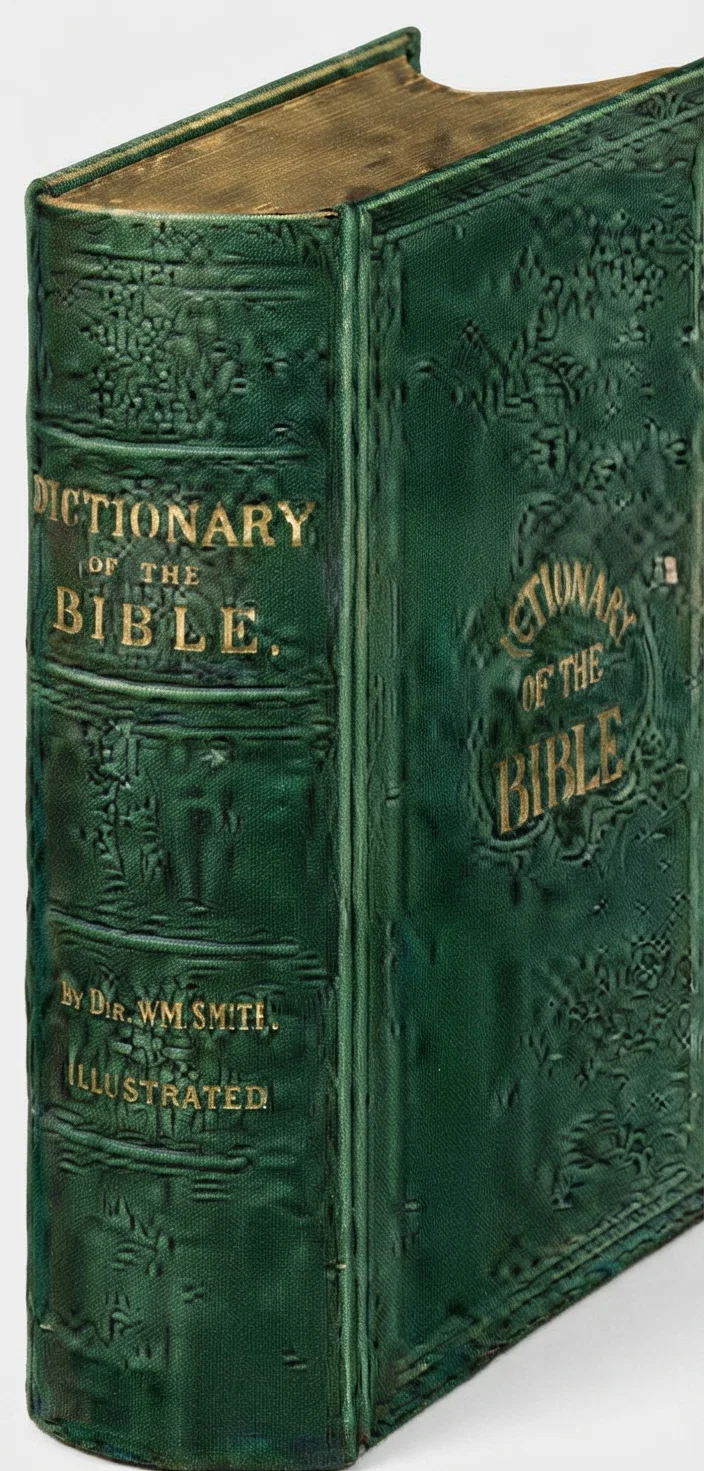
DICTIONARY OF THE BIBLE

$5.50 for $2.25
By Dr. Wm. Smith
Size, 6 1/4 x 9 1/2 x 2 1/2 inches
1017 pages
Illustrated
It contains a full description of every custom, place, plant, mineral, animal, etc., and a biographical sketch of every individual mentioned in the Bible
Publishers' price, bound in cloth, $4.50
Our price, post-paid, with the SIGNS, one year, $2.25
Book sent free for five new yearly subscriptions and one renewal at $1.00 each

PERIODICALS WANTED.

C. G. ALLEN, 424 South Montana Street, Butte, Mont., solicits copies of the SIGNS, all he can get, for missionary work.

SPECIAL OFFER.

A Complete Vegetarian Cook-book and "Gospel of Health," One Year for Fifty-five Cents.
IN order to increase the circulation of our health journal, Gospel of Health, and to provide a most excellent guide to hygienic cookery, we make, for a limited time, the following extraordinary offer:—
We will send to any address, Gospel of Health for one year and a copy of Mrs. Kellogg's hygienic cook-book, "Every-day Dishes," bound in paper covers, for only fifty-five cents.
The author of this book is well known as an authority on hygienic cookery. This book is the result of hundreds of experiments made in the Sanitarium food laboratory and kitchen, and is thoroughly up to date and practical. It gives a number of recipes for the health foods, and also contains instruction which will enable those who have not access to these foods to prepare hygienic meals from the ordinary products of the farm.
The book is characterized by marked simplicity of treatment. It tells just the things that every housewife wants to know in order to set a vegetarian table every day with food prepared at moderate cost, easy of digestion, yet so palatable and satisfying that meat will not be missed.
This offer applies both to renewals and new subscriptions.
If you wish to profit by it, send in your name at once, together with fifty-five cents, and we will send you the book, post-paid, and put your name on the subscription list of Gospel of Health for one year.
The regular price of "Every-day Dishes," bound in boards, is 80 cents. The paper edition, which is hereby offered you at almost nothing, contains exactly the same matter. It is a book that will prove itself invaluable in every home.
Address, Gospel of Health, Battle Creek, Mich.

90% OF AMERICAN WOMEN

wash dishes three times each day. If you are one of these, wear a pair of "Goodyear" Rubber Gloves and always have soft, white hands. Sent by mail, post-paid, on receipt of $1.50. Agents wanted. Address, M. O. Dept., M. F. Reese Supply Co., Setauket, N. Y.

Prophetic Lights

If you want a real help in the study of prophecy, you will find it in Dr. E. J. Waggoner's book,

"Prophetic Lights"

Heavy paper-cover edition - $0.50 SIGNS, one year - - - 1.00 Both, post-paid, $1.25
Book free for one new yearly subscriber and one renewal at $1.00 each

The Parker Jointless Fountain Pen

Is a constant comfort A continual source of satisfaction A thing of beauty A joy forever Having no shoulder where the fingers and thumb hold it, but gently tapering, it handles like an ordinary penholder, and is fitted with a good gold pen
NO
  • screw to break
  • nozzle to get "stuck"
  • joint to leak
  • ink on your fingers, and
  • chance for the buyer to rue his bargain
Makers' price for pen, $2.50 Our price for pen and SIGNS one year, $2.50 Sent free for five new names
Address

SIGNS OF THE TIMES

Oakland, Cal.

The Medical Missionary

The Medical Missionary.—To my thinking, no one follows in the Master's footsteps so closely as the medical missionary, and on no agency for alleviating human suffering can one look with more unqualified satisfaction. The medical mission is the outcome of the living teachings of our faith. I have now visited such missions in many parts of the world, and never saw one which was not healing, helping, blessing, softening prejudice, diminishing suffering, making an end of many of the cruelties which proceed from ignorance, restoring sight to the blind, limbs to the crippled, health to the sick—telling in every work of love and skill of the infinite compassion of Him who came "not to destroy men's lives, but to save them." —Mrs. Isabella Bird Bishop.

The Power of the Bible

A GERMAN missionary magazine relates the following incident showing the power of the Bible: In the Shansi province of China a copy of the Gospel of Mark fell into the hands of a learned man and a priest. The one read the strange book aloud to the other. There was a great deal in it which neither the reader nor hearer understood. But they were so impressed that they came to the conviction that the book must come from heaven, and they paid divine honors to it for many years. Later on they obtained a copy of the New Testament, and began to worship Jesus and the apostles. When at last a Chinese evangelist came to their country, these two men were the first who joined themselves to him. They were instructed, and baptized, and began to gather two little churches around them. One of them has led about fifty persons to Christ.

DIVINE LAW IN DISEASE.

IN these modern times we have been viewing disease from a different standpoint than it was formerly considered. Less than a hundred years ago a prominent physician said he would drive disease out of a patient as he would drive a squalling cat out of a room. His idea of disease was that it was a substance, an entity, which should be driven out of a man—and many speak in the same manner of disease even in these times. They seek for something that will stop the progress of disease and "drive it out."
A mother whose child is sick, asks the doctor if the disease is "driven out." The idea has become deeply rooted in our minds, perhaps we inherited it from our parents, that disease is something to fight; that nature goes wild when we come to sickness, and that we must use all our energies to combat disease.
That is a mistaken notion. We don't have to fight disease, nor even to cure disease.
What we should seek to do is to cure the patient, and then the disease will pass off as the scarf skin does off a healthy person.
Now the thing we call "disease" is simply an effort of nature to throw off something that we have brought upon ourselves through some error in diet or manner of life. Emerson has said that "crime and punishment grow upon the same stem," and that is a divine truth. He says that punishment is the fruit that ripens unsuspected within the flower of the pleasure that concealed it. Here is a flower; the fruit is within the flower; it has not ripened yet, but it will ripen; you do not see it; all you see is the flower. Likewise, here is a man who goes out to have a "good time," as he calls it. Here is another man who has dyspepsia; he eats heartily and toils early and late over his business; he works late at his books and accounts when he should be asleep; it is a pleasure to him to do this work; he feels that he must do it. Or another man goes to an ice-cream social; he thinks there is something good and pleasant in it; and there is a variety of other things that people do which they consider "nice," even if it is nothing but the smoking of a cigar after dinner. The results of these violations of nature's laws may not yet be seen; there is nothing in sight; but, as Emerson says, the punishment is in it. The effect is sure to follow the cause; for, as it is written, "He that soweth to his flesh shall of the flesh reap corruption." Gal. 6:8.
The man who is sowing to unnatural, unlawful pleasure is, in his very act, heaping up wrath against himself. The disease that comes as the result of this manner of life is the kindest thing that nature can send. This may seem like an amazing statement, nevertheless it is true. We have so long looked upon disease as a thing to be dreaded, as a thing that we must fight, as an enemy, that it seems absurd to call it friendly.
A certain orator and lecturer has said that if he had the arrangement of the natural order of things he would make pain a pleasure. But he would not improve matters; for this would upset things terribly, as you can readily see; it would be destructive to life, because it would cease to be a warning. Pain is the kind warning, the red danger-signal that nature hangs out. Suppose when you were traveling, your train going rapidly down grade, that just before you came to some ravine or broken bridge or broken rail, you should see a red light waving before you, would it not disturb you? It would certainly disturb the engineer and the train hands. Was it not more kind to keep that signal waving than to take it away and let you go down to destruction?
Now this is exactly the purpose of pain; and yet men instinctively, when in pain, look upon it as an enemy and desire to smother it, regardless of the fact that it is the warning that nature hangs out against some other and deeper trouble. The engineer on the train might have shot the man with the signal lantern; the light would then have disappeared, and, without warning, the train would have rushed on. Then there would have been another "mysterious dispensation of Providence."
As a rule, the attempt is to smother nature's warnings. A man said to me the other day, "I must have something to relieve my pain." I said to him, "Can't you see that the very thing that would stop your pain would also stop the activities by which nature is trying to build up your body?" But he was not disposed to reason the matter with me. Men reason well upon nearly every subject except that of disease, and here it seems as if all their logic fails them.
DAVID PAULSON, M.D.

THE HARVEST OF THE RICH.

MRS. ALTON was wealthy. Her husband was considered a millionaire, and she had large moneyed interests in her own name. She had been trained in childhood by a devoted Christian mother; but the wealth that came to her in after years had made her indifferent to nearly everything but her own interests and pleasures. One day she casually took in her hand a Bible that she kept upon her center-table more as an ornament or a sort of talisman than for any practical use it had ever been to her as the Word of God. Opening it at random, the first sentence that caught her eye was, "Go to now, ye rich men, weep and howl for your miseries that shall come upon you."
She at once became interested, and, seating herself, she read on and on, wondering what it could mean, and how the prophecy applied to her own case in particular, and was especially impressed with the sentence, "Ye have lived in pleasure on the earth, and been wanton."
Meditating upon these things, that night she fell asleep and had an impressive dream. She seemed to be riding in her beautiful launch on the clear blue waters of a lake; and as the boat swiftly sped along, it drew near to a poor open skiff, in which were seated a woman and a boy. The woman she recognized as a poor neighbor whom she had often employed to do drudgery at a mere trifle in wages. She seemed to be able to read the thoughts that were passing through their minds. The woman thought: "There is Mrs. Alton in her beautiful launch, covered with an awning that screens her from the sun, while I am compelled to ride in this poor old skiff, and that very seldom. She has every comfort and pleasure that money can buy. See how the beautiful boat moves swiftly over the water; but we poor people can have no share in such pleasure. Why is it that many must suffer without any fault of their own, while to others almost every pleasure comes almost without bidding?" The woman then seemed to change slowly into the person of Jesus of Nazareth, in His seamless coat of gray. He looked sorrowfully into the eyes of Mrs. Alton, and said, "Inasmuch as ye have done it unto the least of these, ye have done it unto Me."
The poor woman's boy thought: "Why won't the rich folks give us poor fellows a chance sometimes? It seems as if they just tried to treat us as mean as they can. See her boy there, how nice he is dressed, and just look at my old clothes. Just look at that beauty of a boat, and then at our old skiff. We poor fellows can't ride in such a launch, and if we only go near to look at her we are ordered away. Old man Alton just cheated my father out of his home. We had half paid for it, and had made improvements that were worth as much more; but old Alton wouldn't allow my father a cent for it. When I get to be a man, I'll be revenged." Then his form changed slowly into that of Satan himself; and Mrs. Alton was glad to see the skiff fall rapidly behind, and at length disappear.
Mrs. Alton then seemed to be in her own beautiful home, when she heard without a great and ominous roar, as of an angry sea, and a voice near by in solemn cadence saying: "The harvest of the rich has come. They must now reap that which they have sown."
Looking out of the window, she saw a vast crowd of men, women, and children armed with all sorts of weapons. They were cursing and swearing, and surging in awful confusion. Instinctively, she saw the rich men driven hither and thither, unable to escape. They were scattering gold and silver among the crowd, but it only momentarily diverted their attention, tho it did not appease their wrath. She was terrified when she saw her husband among them, and dark-visaged men consulting together and pointing at him, and she momentarily expected to see him killed; but she heard one say: "He is the husband of Mrs. Alton. For her sake let the old reprobate live."
She then saw many beautiful mansions of the rich in flames, and their inmates flee, screaming, into the streets, only to be insulted and trampled upon by the maddened crowd. The beautiful lawns and choice flora, upon which the owners had lavished so much care, were completely ruined, and the iron fences broken down. A great crowd then surged toward her own home, and she almost fainted with fear. But she saw a tall person who seemed to be a commander wave his hand, and the crowd was stayed; and she heard him say: "For the life of you, men, don't meddle with anything here. This is Mrs. Alton's home. She is our friend. Walk through these beautiful grounds if you wish to, for I know that she would bid you welcome, but don't touch a shrub or flower that is hers." He then turned to Mrs. Alton and said, "I have made a hedge about thee, and about thy house, and about all thou hast on every side."
She then seemed to be at the lake-side, and saw her beautiful launch, with many others like it, moored near the shore. A great crowd surged towards the boats, destroying them, or appropriating them to their own use. But the same commanding figure that she had seen before stood in her launch with a banner in his hand upon which was inscribed her name. As the men saw it, they swung their hats and cheered, and she heard one say: "That boat has been used to bless the poor and needy, by giving them many a pleasure that they would never otherwise have enjoyed. For our lives we will not injure it." She then saw stores looted, banks robbed, and general desolation; but she heard a voice say, "He shall give His angels charge over thee, to keep thee in all thy ways." She then awoke, and resolved that, with the help of God, that portion of the dream that related to her own experience should be realized. Henceforth the study of her life was how she could best minister to the happiness of others. In doing so her heart became compassionate and tender, and the Bible became the Book of books to her. She delighted in its daily study. She had found her Saviour. Grandville, Mich. A. SMITH.

THE DRUNKARD'S DAUGHTER.

[These beautiful and touching verses were written by a young lady in reply to a friend who had called her a monomaniac on the subject of temperance.]
Go, FEEL what I have felt, Go, bear what I have borne; Sink 'neath a blow a father dealt, And the cold, proud world's scorn; Then struggle on from year to year, The sole relief the scalding tear.
Go, weep as I have wept, O'er a loved father's fall; See every cherished promise swept, Youth's sweetness turned to gall; Hope's faded flowers strewed all the way, That led me up to woman's day.
Go, kneel as I have knelt; Implore, beseech, and pray; Strive the besotted heart to melt, The downward course to stay; Be cast with bitter curse aside, Thy prayers burlesqued, thy tears defied.
Go, stand where I have stood, And see the strong man bow, With gnashing teeth, lips bathed in blood, And cold and livid brow; Go, catch his wandering glance, and see There mirrored his soul's misery.
Go, hear what I have heard— The sobs of sad despair, As memory's feeling fount has stirred, And its revealings there Have told him what he might have been Had he a drunkard's fate foreseen.
Go to my mother's side And her crushed spirit cheer; Thine own deep anguish hide, Wipe from her cheek the tear. Mark her dimmed eye, her furrowed brow, The gray that streaks her dark hair now, Her toil-worn frame, her trembling limb, And trace the ruin back to him Whose plighted faith in early youth Promised eternal love and truth, But who, foresworn, has yielded up That promise to the deadly cup, And led her down from love and light, From all that made her pathway bright, And chained her there, 'mid want and strife— That lowly thing—a drunkard's wife— And stamped on childhood's brow so mild That withering blight—a drunkard's child.

PUTTING HEART INTO IT.

THE customer was a prudent matron from the country, careful in her shopping.
"It is a very pretty piece of goods," she said, "and just the color I want; but I am afraid it will not wash."
One of the shop-girls behind the counter bowed indifferently and turned away. The other said eagerly: "Are you going to another part of the store, madam? For it is my lunch hour, and I will take a sample to the basement and wash and dry it for you before you come back."
The color of the fabric proved to be fast, and the customer bought it, and asked the name of the obliging shop-girl.
A year afterwards she was again in the same store, and on inquiry learned that the girl was at the head of the department.
"She put as much life into her work as ten other women," said the manager.
A prominent business man once said: "I have always kept a close watch on my employees, and availed myself of any hint which would show me which of them possessed the qualities requisite for success for themselves and usefulness to me. One day, when I was passing the window of the counting-room, I observed that the moment the clock struck six, all the clerks, with but one exception, laid down their pens, tho in the middle of a sentence, and took up their hats. One man alone continued writing. The others soon passed out of the door.
" 'Pettit,' said one, 'has waited to finish his paper, as usual.'"
" 'Yes, I called to him to come on, but he said if this was his own business he would finish the paper before he stopped work.'"
" 'The more fool he! I would not work for a company as for myself.'"
"The men caught sight of me and stopped talking, but after that I kept my eye on Pettit, who worked after hours on my business 'because he would have done it on his own,' and he is now my junior partner."—Exchange.

TAKE UP THE WHITE MAN'S MUSKET.

[David P. Page, in Humanity.]
TAKE up the white man's musket, The deadliest ones ye make; Go drill your sons to use it, And then, for Jesus' sake, Send them with ammunition To hunt these heathen wild, Your new-caught, sullen people On whom God never smiled.
Take up the white man's cannon, The largest that ye cast, Go put it on your war ships, The strongest ones and fast— Speed them to the heathen countries, Seek out each farthest spot, And save these sullen people, With Bibles—and with shot.

AN EXPERIMENT ON HOGS.

An interesting and practical result has been obtained by the feeding of four pigs on milk from tubercular animals. Two of the pigs were fed on the milk just as it came from the cows; the other two were fed on milk said to have been sterilized. A post-mortem examination of these animals showed each to be extensively diseased with tuberculosis. It is not to be wondered at that the ones fed on the untreated milk were diseased, but when all were found to be tubercular, the veterinary surgeons concluded that the milk either had not been thoroughly sterilized or that the animals had contracted the disease from some other source.—Charles E. Stewart, M.D., in Good Health, September.

Self-Absorption and Genuine Love

THE world is large and full of varied scenery. But the man who holds his own photograph directly in front of his eyes shuts out mountains and rivers from his vision.—Ella Wheeler Wilcox.
"A GENUINE love does not count the cost of its sacrifice."

Meatless Recipes

Our new cook-book, "A FRIEND IN THE KITCHEN," is nearly ready for delivery.
On account of the generally diseased condition of meat, and for other reasons given by the author, none of the 400 recipes in the book include flesh of any kind.
One chapter is devoted to meat substitutes, from which we select the following recipe. Try it.

BAKED VEGETABLE GOOSE

Take a quart of stale bread crumbs and moisten with water or milk; then mix in a tablespoonful of dry, powdered sage leaves, salt to taste, a well-beaten egg, and a small onion or a few stalks of celery chopped fine. Make into a mound in a buttered pudding dish, pour over a spoonful or two of cream, and bake from thirty to forty minutes. Serve as soon as done.
From "A FRIEND IN THE KITCHEN."
The following is the

Table of Contents

Importance of Good Cooking Helpful Hints for the Housewife Soups .. Mushes .. Toasts .. Breads Fruits .. Vegetables Substitutes for Meats Eggs .. Omelets .. Puddings Custards and Creams .. Sauces .. Pies Cakes .. Wholesome Drinks Specially Prepared Health Foods Simple Dishes for the Sick Food for Infants .. Miscellaneous A Week's Menu .. Sabbath Dinners Food Combinations Time Required to Digest Various Foods Nutritive Value of Foods How to Become a Vegetarian Rules for Dyspeptics . The Pulse in Health Weights and Measures in the Kitchen Household Hints
It will contain 128 pages, 400 recipes, is fully illustrated, and will be bound in water-proof cloth, which can be washed the same as oilcloth. Price 60 cents.

Pacific Press Publishing Co.

Oakland, California 39 Bond Street, New York City 18 West Fifth Street, Kansas City, Mo.
THE SABBATH SCHOOL
THE SABBATH SCHOOL

LESSON II.—SABBATH, OCTOBER 14, 1899.

THE TRIUMPHAL ENTRY INTO JERUSALEM.

Jerusalem, A.D. 31. Lesson Scripture, Matt. 21:1-11; Mark 11:1-11; Luke 19:29-44; John 12:12-19, R.V.
(Matt. 21:1-5, 9-11.) 1 "And when they drew nigh unto Jerusalem, and came unto Bethphage, unto the Mount of Olives, then Jesus sent two disciples, saying unto them, Go into the village that is over against you, and straightway ye shall find an ass tied, and a colt with her loose them, and bring them unto Me. And if any one say aught unto you, ye shall say, The Lord hath need 4 of them; and straightway he will send them. Now this is come to pass, that it might be fulfilled which was spoken by the prophet, saying, 5 Tell ye the daughter of Zion, Behold, thy King cometh unto thee, Meek, and riding upon an ass, And upon a colt the foal of an ass." 9 "And the multitudes that went before Him, and that followed, cried, saying, Hosanna to the Son of David; Blessed is He that cometh in the name of the Lord; Hosanna in the highest. And when He was come into Jerusalem, all the city was stirred, saying, Who is this? And the multitudes said, This is the prophet, Jesus, from Nazareth of Galilee."
(Mark 11:4-8, 11.) 4 "And they went away, and found a colt tied at the door without in the open street; and they loose him. And certain of them that stood there said unto them, What do ye, loosing 6 the colt? And they said unto them even as Jesus had said; 7 and they let them go. And they bring the colt unto Jesus, and 8 cast on him their garments; and He sat upon him. And many spread their garments upon the way; and others branches which they had cut from the fields." 11 "And He entered into Jerusalem, into the temple; and when He had looked round about upon all things, it being now eventide, He went out unto Bethany with the twelve."
(Luke 19:39-44.) 39 "And some of the Pharisees from the multitude said unto 40 Him, Master, rebuke Thy disciples. And He answered and said, I tell you that, if these shall hold their peace, the stones will cry out. 41 "And when He drew nigh, He saw the city and wept over 42 it, saying, If thou hadst known in this day, even thou, the things which belong unto peace! but now they are hid from 43 thine eyes. For the days shall come upon thee, when thine enemies shall cast up a bank about thee, and compass thee 44 round, and keep thee in on every side, and shall dash thee to the ground, and thy children within thee; and they shall not leave in thee one stone upon another; because thou knewest not the time of thy visitation."
(John 12:12, 13, 17-19.) 12 "On the morrow a great multitude that had come to the feast, when they heard that Jesus was coming to Jerusalem, 13 took the branches of the palm trees, and went forth to meet Him, and cried out, Hosanna: Blessed is He that cometh in the name of the Lord, even the King of Israel." 17 "The multitude therefore that was with Him when He called Lazarus out of the tomb, and raised him from the dead, 18 bare witness. For this cause also the multitude went and met Him, for that they heard that He had done this sign. 19 The Pharisees therefore said among themselves, Behold how ye prevail nothing; lo the world is gone after Him."
NOTE.—The texts enclosed in marks of parentheses, while not essential to the lesson study, will be found to throw much light upon the lesson, and are suggested for those who wish to study further.

SUGGESTIVE QUESTIONS.

1. While on His way to Jerusalem, near what village did Jesus and His disciples come? Matt. 21:1. Note 1. 2. As they drew near this hamlet, what order did Jesus give to two of His disciples? Verse 2. (Luke 19:29.) 3. In case any one objected, what did He tell them to say? Verse 3. 4. Arriving at the place designated, what did the two disciples find? Mark 11:4-6. See note 2. 5. Upon returning with the colt, how did they provide a seat thereon for Jesus? Verse 7. Note 3. (2 Kings 9:13.) 6. When the people of Jerusalem heard that Christ was coming that way, what did they do? John 12:12, 13. Note 4. 7. What demonstration did the people make as they met Christ in the way? Mark 11:8. (Matt. 21:8.) 8. With what did they accompany their waving of palm branches? Matt. 21:9. (Ps. 118:25, 26; Mark 11:9, 10.) 9. On seeing the demonstration, what did some of the Pharisees say to Jesus? Luke 19:39. 10. What answer did He make? Verse 40. Note 5. 11. What conclusion did the Pharisees draw from what they saw? John 12:19. 12. Why was all this demonstration permitted? Matt. 21:4, 5. (Zech. 9:9; Isa. 62:11.) 13. When the city came in full view, what change suddenly came over Jesus? Luke 19:41, 42. 14. What prediction did He then make concerning the city? Verses 43, 44. Note 6. 15. On arriving in Jerusalem, how were the inhabitants affected, and what did they say? Matt. 21:10. 16. What answer was returned to these questionings? V. 11. 17. Who so readily bore this testimony to the mission of Christ? John 12:17. (John 11:19, 45.) 18. Why were the people so anxious to see Jesus on this occasion? Verse 18. 19. To what point in the city did Jesus immediately go? After looking about the temple, where did He then go? Mark 11:11. Side Lights.—"Desire of Ages," chapter 63; "Spirit of Prophecy," vol. 2, chapter 33.

N O T E S.

1. Bethphage, the "House of Figs," was situated on the Mount of Olives near Bethany. 2. A colt.—Christ's entry into Jerusalem, at the Feast of Tabernacles, had been made secretly, and on foot. This time He will go in riding on an ass, the ancient symbol of Jewish royalty, even as David and the judges of Israel had done before Him. In contrast to the horse, introduced by Solomon for war purposes, the ass was an emblem of peace. As the Prince of Peace, the Saviour of men approached the city of the great King for the last time, only to find the hearts of its rulers steeled against Him. He knew, too, that the act would hasten His death, yet He must fulfil what was written concerning Him. 3. On Him their garments.—Spreading their own garments under Christ was the initial act of proclaiming Him king. Doubtless they thought the long-expected Messianic reign was about to open. 4. Multitude.—Josephus estimates the number usually present in Jerusalem at a Passover, to be about 3,000,000, more than two-thirds of the entire population of Judea and Galilee. The city could not contain them. All the environs—even the slopes of Mount Olivet itself, which looked toward the city—were covered with the booths of the pilgrims.

The Jones Umbrella "Roof"

COVER YOUR OWN UMBRELLA

Don't throw away your old one—make it new for $1.00. Recovering only takes one minute. No sewing. A clumsy man can do it as well as a clever woman.

TEN DAYS' FREE TRIAL.

Send us $1.00 and we will mail you, PREPAID, a Union Twilled Silk, 26-inch "Adjustable Roof" (28-inch, $1.25; 30-inch, $1.50). If the "Roof" is not all you expected, or hoped for, return AT OUR EXPENSE and get your money-back by return mail—no questions asked.
WHAT TO DO.—Take the measure (in inches) of your old umbrella. Count the number of outside ribs. State if the center rod is of steel or wood. Full instructions for putting on the cover will be sent with all orders. Our special price-list of different sizes and qualities mailed on request.
Send for our free book, "Umbrella Economy," anyway. Your umbrella will wear out some day, and you will be glad that you know about
THE JONES-MULLEN CO., 396-398 Broadway, New York

The Walla Walla College

Offers Practical Courses for those who wish to prepare for MINISTERS MEDICAL NURSES MISSIONARIES BIBLE WORKERS COMMERCIAL MUSICIANS WORKERS TEACHERS STENOGRAPHERS
A TRAINING-SCHOOL FOR WORKERS
ONE YEAR will be sufficient to prepare consecrated young men and women of average ability, and having a common school education, to take up work in the above lines. Rates very reasonable. Board is given on the European plan, thus affording opportunity for reducing expenses.
DO YOU WANT AN EDUCATION? DO YOU WISH TO PREPARE YOURSELF TO TAKE AN ACTIVE PART IN THE CLOSING WORK OF THE THIRD ANGEL'S MESSAGE? Our schools are being conducted for the training of young people to engage in the work. They are training-schools.
The Walla Walla College has a liberal offer to make to canvassers who wish to take a special course in any of the above lines.
For full information address W. R. SUTHERLAND, College Place, Washington

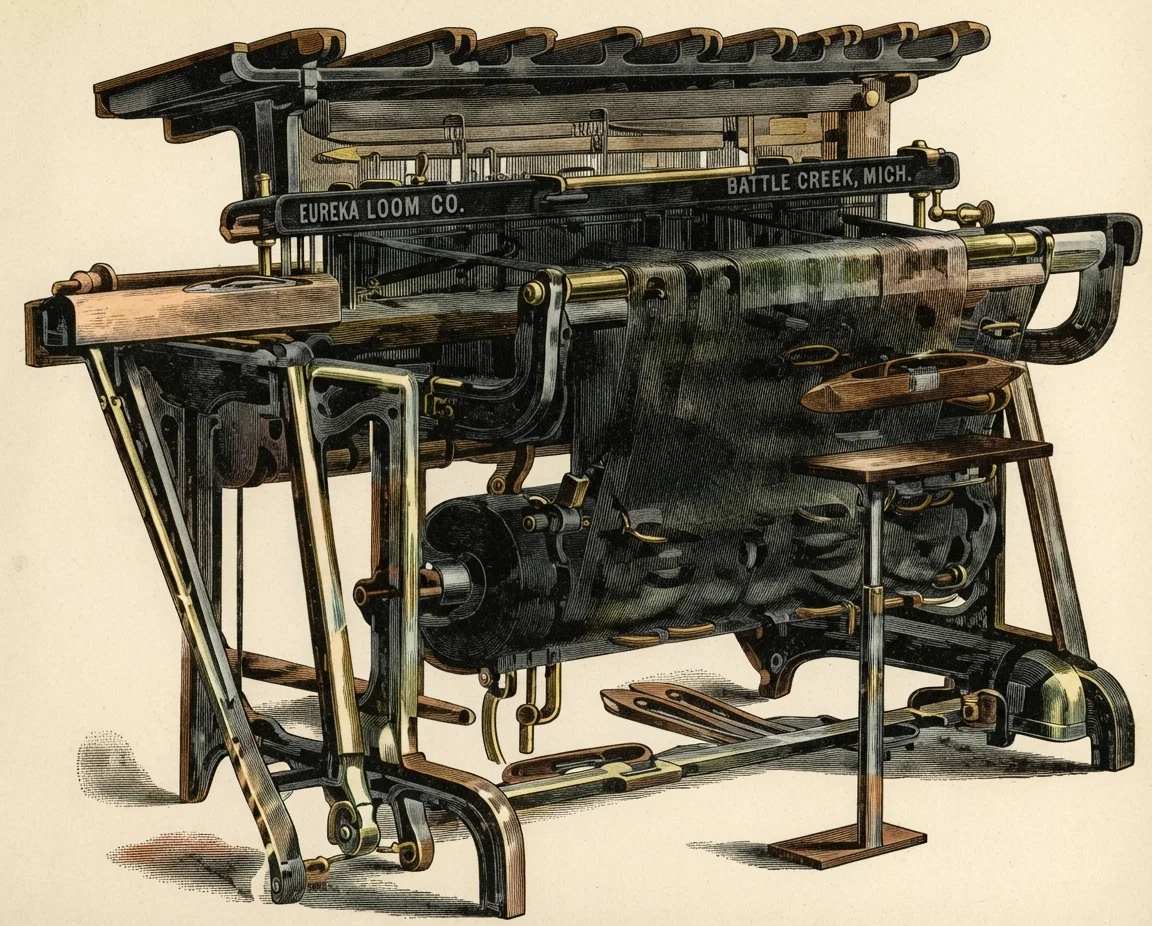
FLY SHUTTLE CARPET LOOM

The best, handiest, easiest running, cheapest, and most durable

FLY SHUTTLE CARPET LOOM

In the world.—100 yards a day. Catalogue free.
EUREKA LOOM CO.
5018 Main St., Battle Creek, Mich.
When you write, please mention the SIGNS OF THE TIMES.
Wonders OF THE 19TH CENTURY
Is a 32-page tract. Its object is to recount and describe some of the principal inventions of this closing century, and to show their significance.
It contains fifteen illustrations. Is an easy seller.
Price, 5c each or $2.00 per 100.
PACIFIC PRESS PUBLISHING CO., Oakland, Cal.
New York City           Kansas City, Mo.

The Stones Will Cry Out

"Much people" were indeed present. Everything was favorable for the greatest demonstration toward making Christ the long-expected King.
5. The stones will cry out.—Inasmuch as the prophet had said that these words would be repeated at just such a time, they must be heard, even tho the stones of earth cry out, because the Word of God can not be broken. What He says is sure to come to pass, even tho it must be done in the most improbable way.
6. Their enemies.—How little the people realized the meaning of those sorrowful words! A generation later the Roman army was encamped on the very spot from whence these words were uttered, and it laid in ashes all the splendor of the city as it appeared on the day of Christ's triumphal entry thereto.
Continue reading: LESSON III.—SUNDAY, OCTOBER 15, 1899