The Youth’s Instructor, Vol. 67, No. 23.

The Turks are anxious for America to be made the mandatory for all Turkey
Earlier text: Marjory’s Muff

XII — Solomon’s Choice; Building the Temple

(June 21)
LESSON SCRIPTURE: 1 Kings 3: 5-15; 4: 20-32; 2 Chron. 2 to 5: 1.
MEMORY VERSE: “The fear of the Lord is the beginning of wisdom.” Prov. 9: 10.
STUDY HELPS: “The Story of Prophets and Kings,” pp. 25-36; “Bible Lessons,” McKibbin, Book Two, pp. 96-102.
“Our lives are songs; God writes the words, And we set them to music at pleasure; And the song grows glad, or sweet, or sad, As we choose to fashion the measure.
“We must write the music, whatever the song, Whatever its rhyme or meter; And if it is sad, we can make it glad, Or if sweet, we can make it sweeter.”

Questions

1. Who appeared to King Solomon in a dream? What did the Lord say to him? 1 Kings 3: 5. Note 1.
2. What blessings did Solomon acknowledge had been given to his father? In what humble way did he speak of himself? What did he say of the Lord’s people? Verses 6-8.
3. Because of all the reasons he had given, what choice did Solomon make in reply to the invitation of the Lord? How did this choice please the Lord? Verses 9, 10. Note 2.
4. For what other things might Solomon have asked? Because of his wise choice what other blessings did the Lord promise him? Verses 11-13. Note 3.
5. On what condition was long life promised to Solomon? After he awoke, where did he go? What offerings did he make? Verses 14, 15.
6. How prosperous did Israel become under the rule of Solomon? 1 Kings 4: 20-24.
7. How definitely did the Lord fulfil his promise to Solomon? Verses 29-32.
8. What did Solomon now prepare to do? What special help did he ask of Hiram, king of Tyre? 2 Chron. 2: 1-3, 7-9.
9. In the letter which the king of Tyre sent in reply, what help did he promise to give? Verses 11-16.
10. What site did Solomon choose for the temple? When did he begin the building? 2 Chron. 3: 1, 2.
11. Read the description of the temple, and note the points of similarity between it and the tabernacle built in the wilderness. Verses 3-14.
12. In what unusual manner was this house built? 1 Kings 6: 7. Note 4.
13. Describe the molten sea, its position, and use. Describe the lavers, the candlesticks, and tables. 2 Chron. 4: 2-8.
14. Name some of the smaller things made for the temple service. Verses 11-22.
15. When the house of the Lord was finished, what did Solomon bring into it? How long did it take to build the temple? 2 Chron. 5: 1; 1 Kings 6: 38. Note 5.

Something to Do

Draw a plan of the holy place and the most holy place, indicating the location of the furniture in each, as built by the children of Israel in the wilderness.
Draw a plan of these rooms, placing the additional furniture provided for them in Solomon’s temple.

Notes

1. Gibeon, meaning “hill city,” was five or six miles northwest of Jerusalem. The tabernacle carried by the children of Israel in the wilderness, was there, although the ark had been taken to Jerusalem.
2. “A young person is like a train starting out of the station of a great city. The track on which he starts soon meets switches which turn him in many different directions to various destinations. The train is sent where the switch tender directs. But the young man does his own switching, and chooses his own destination, though Providence is continually presenting before him many possibilities.”—Peloubet.
3. “Choosing is a test of character. It is not what we get, but what we choose; not money or poverty, but the love of money; not success in gaining pleasure, but what we seek first, that tests us as to what we really are. What we have and what we do often depends on many things outside of ourselves. What we choose is the work of our hearts and wills.”—Id.
4. “The stones were not prepared for their respective places just as they were about to be laid in the wall of the temple; all the fitting and planning was done previous to their being brought to the place of building. So it is that all the hewing, fitting, and polishing of character must be done during men’s probation. . . . Earth is the quarry and the workshop where men are to be fitted and refined for the courts of heaven. As the stones composing Solomon’s temple came together in the wall a perfect fit, without the touch of ax or hammer or any other instrument, so will the resurrected saints, and those who are alive at the time of his coming, be caught up together to meet the Lord in the air, each one fitted for the great change and taking his proper place in the temple of God’s love.”—Spirit of Prophecy, Vol. III, pp. 40, 41.
5. “Alone and isolated in its grandeur stood the Temple Mount. Terrace upon terrace its courts rose, till high above the city, within the inclosure of marble cloisters, the temple itself stood out, a mass of snowy marble and of gold, glittering in the sunlight against the half-encircling green background of Olivet. . . . Nor has there been in ancient or modern times a sacred building equal to the temple, whether for situation or magnificence.”—Edersheim.
The close student will observe that the temple building was not of very great size, but it must be remembered that it was not used by the people, but only by the priests; the people used the spacious courts that were open to the sky.

Genius Is the Fruit of Labor and Thought

Genius

MEN give me some credit for genius. All the genius that I have lies just in this: When I have a subject in hand, I study it profoundly. Day and night it is before me. I explore it in all its bearings. My mind becomes pervaded with it. Then the effort which I make is what people are pleased to call the fruit of genius. It is the fruit of labor and thought. — Alexander Hamilton.

“Every church ought to be a prayer circle.”

Our Influence

In the goldroom of a printing house where the delicate yellow sheets are being manipulated, a breath is enough to set the leaves aflutter. No less delicate is the soul of a child.
Only as one discloses some such early experience as is quoted below do we begin to appreciate the sensitiveness of the child. We then see why the Saviour pronounced a woe upon him who should offend one of these little ones.
“‘Many years ago, when I was a small boy,’ a gentleman said recently, ‘a Mr. Gorton was pastor of our church—a godly and gifted man, for whom I grew to have an admiration that almost amounted to idolatry. I listened to his earnest sermons with rapt attention, and they were sermons that an intelligent boy could understand and enjoy. My father was an elder in the church, and Mr. Gorton often called at our house. His smile and his brisk, cheery greeting were things to look forward to and to think of pleasantly afterward. I remember thinking that one of his prayers, when he knelt with the family at the close of his call, must be worth at least a hundred of those which father offered every night and morning. Not that I discredited father’s goodness and sincerity, but Mr. Gorton seemed to be something above a common man, more like Moses and Paul and the other holy personages we read of in the Bible.
“‘If it had become customary to receive children into the church, I should have joined before I was ten years old, for I had implicit faith in a religion that could make a man like Mr. Gorton. As a matter of fact, however, I did not become a church member until I was well past thirty, and, strangely enough, Mr. Gorton was indirectly responsible for the delay.
“‘One crisp, starlit winter night I went to the back door of the parsonage with a basket of dishes. There was to be a donation party the next evening, and father had sent me from the horse sheds with the basket while he did some errands at the store. As the girl took the dishes at the door, I heard Mr. Gorton’s voice raised in high, angry tones, and I turned away quickly, forgetting the message that was to go with the basket. If Mr. Gorton used any unseemly language, I did not hear it, but the mere fact that he was angry, like ordinary men, shocked me. I ran all the way to the sheds with the unreasoning fear that the minister might follow me to ask about the dishes, and thus be shamed and humiliated by knowing that I had overheard his burst of ill temper. It was weeks before I could look Mr. Gorton in the face, and I think I never again heard him preach or pray without seeming to hear those high-pitched tones of anger.
“‘Of course in my boyish idealism I expected too much. The best and godliest of men have their faults; but the impressions made upon my mind by that incident have never been effaced. It has made me more careful not to say or do anything that might seem to others inconsistent with a Christian profession. If the New Testament means what it says, we make a high claim for ourselves when we stand before the world as loyal disciples of Jesus Christ. We sometimes resent criticism, but do our critics really demand any more of us than our loyalty to Christ demands? And is there not a grave danger of wounding the idealism of some one who takes the teaching of the gospel at its face value?’”
More than a score of years of Christian joy and service were lost to this boy because of Mr. Gorton’s anger. Surely this incident alone shows that it is imperative that parents, ministers, and teachers walk softly lest they offend the child; but it is equally imperative that older brothers and sisters should remember the far-reaching effect one wrong or inconsiderate act of theirs may have upon their younger brothers and sisters.
F. D. C.

We Are Fed

O LITTLE brown bird on the city street Where the ways of a hundred nations meet, Where the chink and weight of the hoarded gold Turn the blood of many a true heart cold,— Are you fed?
Where the passions clamor; where clash and din Speak the iron purpose of wills to win; Where success is the far, elusive end; Where the many save that the few may spend,— Are you fed?
“A foot-worn hollow, a shower of rain; A van o’erloaded, a plenty of grain; A roof’s high shelter; a little brown mate; However the passers may strive or hate,— We are fed!”
No man provided; the self-seeking street Forgot the wee bird that chirped at its feet; The world hurries by; but One keeps care For you and me and the birds of the air,— We are fed!
— Ada Melville Shaw, in the Sunday School Times.

Discarding the Old System for a Better One

According to the World Trade Club our system of weights and measures is of German origin; and strange to say it was discarded by Germany in 1871, while it is still used by Great Britain and the United States of America.
In one hundred fifty-two other nations, really the rest of the world, it has been superseded by the metric system, a system that is simple, scientific, and efficient.
There is now a strong effort being made to have the old system give place in Britain and the United States to the metric.
Another curious anomaly is the fact that the metric system in reality was devised by a British inventor, who greatly felt the need of such a system in his scientific work.
Besides the commercial advantage to be derived from the adoption of the decimal system of weights and measures, instead of our present cumbersome one, the master mathematician of the University of California says that two years less time would be required to teach a child-arithmetic.

Spelling Note: Pernickety, Not Persnickety
It is not “persnickety,” but it is pernickety.
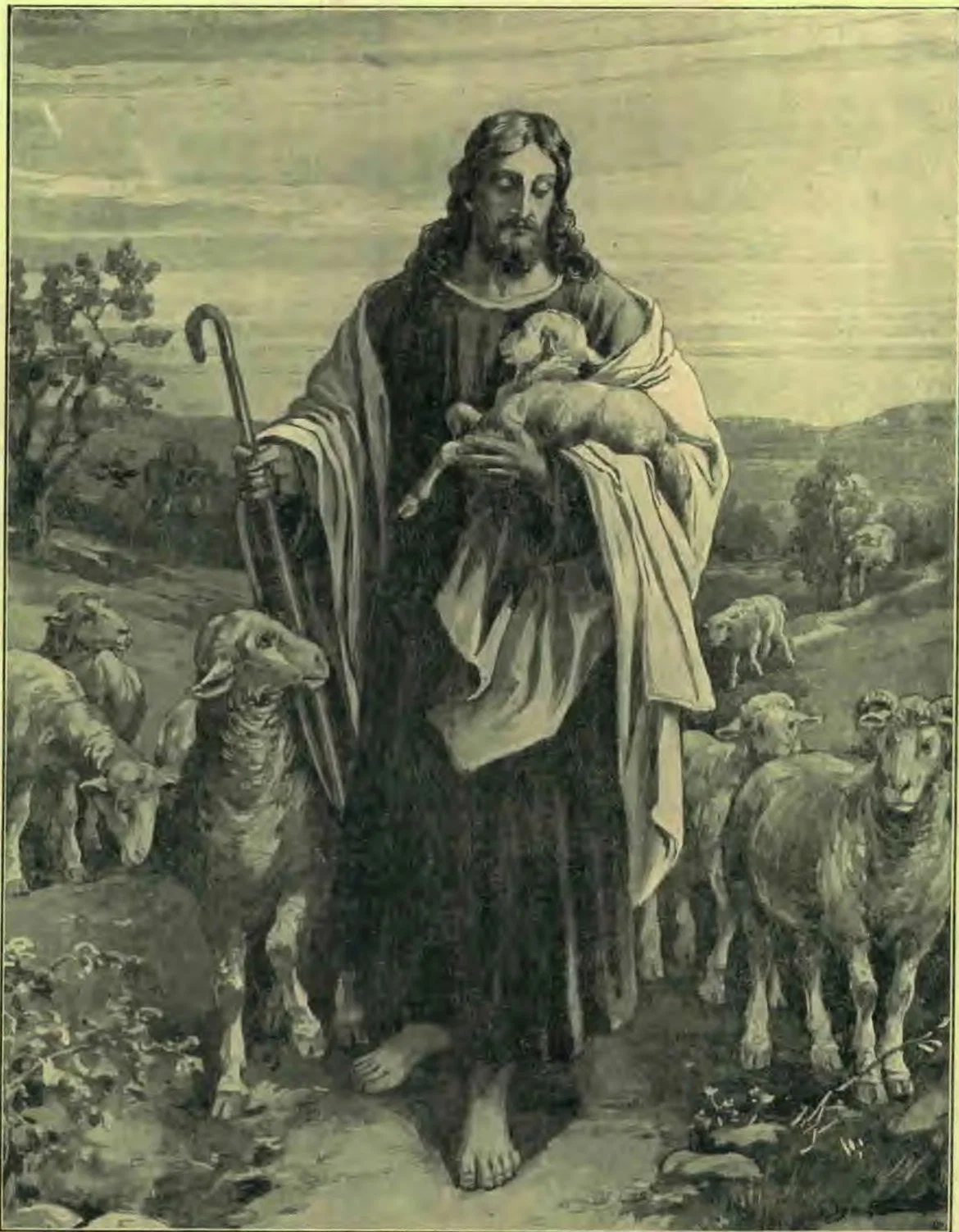
“The Son of man is come to seek and to save that which was lost.” Luke 19:10.

You have reached the end of this edition.

The Youth’s Instructor · Jun 10, 1919