The Youth’s Instructor, Vol. 65, No. 45.

Nephews of German and American Leaders Enlist
Earlier text: WHO CHANGED THE SABBATH?

On the Value of Endurance Over Cleverness

A SOMEWHAT varied experience of men has led me, the longer I live, to set less value on mere cleverness, to attach more and more importance to industry and physical endurance. Indeed, I am more disposed to think that endurance is the most valuable quality of all.— Huxley.

Conversion Instant, Growth Takes Years

“A MAN may be converted in an instant, but he must grow by the year.”

Missionary Volunteer Society Programs for Week Ending November 17

The programs for this date, with notes, illustrations, and other helpful material, will be found in the Church Officers’ Gazette for November.

The Bible Year

Senior Assignment

  • November 12. Acts 19 to 21: Paul at Ephesus; farewell; at Jerusalem.
  • November 13. Acts 22, 23: Paul’s defense before the Jews; conspiracy.
  • November 14. Acts 24 to 26: Paul’s defense before Felix, Festus, and Agrippa.
  • November 15. Acts 27, 28: The journey to Rome; preaching and teaching.

Junior Assignment

  • November 11. Acts 3: The lame man healed.
  • November 12. Acts 4: Peter and John preach Christ.
  • November 13. Acts 5: Ananias and Sapphira; many sick healed.
  • November 14. Acts 6: Seven deacons chosen.
  • November 15. Acts 7: Stephen’s defense.
  • November 16. Acts 8: Saul the persecutor.
  • November 17. Acts 9: Saul persecuted.

A Soldier of the Cross

Close beside the sea in a humble fisherman’s home, lived two boys. One of the lads was a frank, impulsive, energetic fellow, who always took the lead in work or play. He had faults a plenty, and if you had been one of his playfellows you might have found him provokingly changeable at times; yet in spite of this you would have liked him immensely. Andrew, his brother, was a fine manly lad, and while not so much of a leader, he was the kind of boy that one could count on every time.
As the boys grew up they became fishermen like their father. Although it was a hard life in many ways because it was so uncertain, yet it must have been a healthy, pleasant one, especially in the long summer days.
It was while they were young men that these boys became followers of Jesus; Andrew first gave his heart to the Lord, and then he led his brother to the Master. Have you guessed the name of this brother? It was no other than the rash, though courageous and loving disciple whom Jesus named Peter, meaning “a rock.”
Three times the Master called Peter to be his disciple, and at length he joined the band of twelve men who became the closest comrades of Jesus. Then what a remarkable life began for Peter. There are really two parts to it, the first of which is told in the Gospels, while the second is given in the first twelve chapters of the book of Acts, which we are now reading.
You have read of the miracle of the great draft of fishes which led Peter to surrender fully to Jesus; of his experience in trying to walk to Jesus on the waves of the sea; of the grand and glorious privilege which he had of being present when Jesus met Moses and Elijah in the mountain; and then finally of that sad, sad night in the garden, when Peter became so drowsy that he fell asleep just when the dear Saviour needed him most. Jesus came and found him sleeping, and said gently, “Could ye not watch with me one hour?” I wonder if we should have fallen asleep if we had been there. It is watching unto prayer that young Christians need. Kneeling down to pray each night and morning is like keeping watch with Jesus in the garden. Let us never fail to faithfully keep this watch.
Three times did Peter bitterly deny his Master, forsaking him utterly on that sad night. But what a blessed thing it is that the life of Peter did not end in defeat. Jesus freely forgave him, and later his life showed the most beautiful humility and meekness. And what a power for God he became! Imagine the conversion of three thousand persons at one time when Peter preached Jesus on the day of Pentecost. The Lord used him also to heal the sick and raise the dead. Are you not glad we have these later chapters in his life?
It was upon the cross that this loyal soldier for Jesus met his death. We are told that at seventy-five years of age he was crucified at Rome, a martyr for the cause of Christ.
There are two small books near the back of your Bibles, written by Peter; when you come to them, read them very thoughtfully, and remember the noble man who wrote them. ELLA IDEN.

Extravagance Rots Character; Habit of Saving

EXTRAVAGANCE rots character; train youth away from it. On the other hand, the habit of saving money, while it stiffens the will, also brightens the energies. If you would be sure that you are beginning right, begin to save.—Theodore Roosevelt.

VII — The Ordinances

(November 17)
MEMORY VERSE: “If ye know these things, happy are ye if ye do them.” John 13:17.

Questions

Baptism

1. Just before his ascension what work did Jesus give his disciples? Matt. 28:19.
2. In what ordinance had he already set the example? Matt. 3:13.
3. What remarkable experience attended the baptism of Jesus? Verses 16, 17.
4. What promise is made to those who repent and are baptized? Acts 2:38. Note .
5. What is the meaning of the ordinance of baptism? Rom. 6:11. Note .
6. What experiences in the life of Christ does baptism commemorate? Verses 4, 5. Note .
7. After being buried in baptism, what should we henceforth not serve? Verse 6. Note .

A Lesson in Humility

8. What ceremony was customary at Oriental feasts? Note .
9. How did Jesus teach his proud disciples that they should esteem it a privilege to minister to others? John 13:1-5.
10. How did Peter feel about the Saviour’s washing his feet? Verses 6-10. Note .
11. What instruction did Jesus give concerning his example? Verses 12-16.

The Lord’s Supper

12. On what occasion was the ordinance of the Lord’s Supper instituted? 1 Cor. 11:23.
13. What three things did Jesus do before giving them the bread to eat? Matt. 26:26.
14. What did he say as he passed it to them? 1 Cor. 11:24.
15. What did Jesus then do? Verses 25, 26.
16. What preparation should be made for this service? Verses 27-29. Note .
17. What events are commemorated by the ordinances of the Lord’s Supper and baptism? Note .

Notes

A Novel Brain Test

WHEN a professor of psychology at one of the large universities recently put his freshmen pupils through the brain test here set forth, his purpose was to find out how many of the young men measured up to a certain standard of mental capacity and concentration; but at the same time he unwittingly supplied material for one of the most amusing evening entertainments that a host could offer to a gathering of friends.
He presented the following series of questions, and announced that the questions were to be answered as the reader went over them for the first time. He specified one minute as the time in which a pupil should accomplish the work if he was to attain the mark of one hundred.
Arm yourself with a pencil and answer the questions as you read them for the first time. Place the correct answer in the blank space that follows each question, and make careful record of the time consumed in accomplishing the task.
Here is the test:
With your pencil make a dot over any one of these letters, F, G, H, I, J, and a comma after the longest of these three words: boy — mother — girl —. Then if Christmas comes in March, make a cross right here —; but if it does not, pass along to the next question and tell where the sun rises —. If you believe that Edison discovered America, cross out what you last wrote; but if it was some one else, put in a number to complete this sentence: “A horse has — feet.” Write yes, no matter whether China is in Africa or not —; and then give a wrong answer to this question: “How many days are there in a week?” —. Write any letter except G just here —, and then write no if two times five are ten —. Now, if Tuesday comes after Monday, make two crosses here —; but if it does not, make a circle here —, or else a square here —. Be sure to make three crosses between these two boys’ names: George — Henry. Notice these two numbers, 3, 5. If iron is heavier than water, write the larger number here —, but if iron is lighter than water, write the smaller number here —. Show by a cross when the nights are longer: In summer? — in winter? —. Give the correct answer to this question: “Does water run uphill?” —; and repeat your answer here —. Do nothing here (5 + 7 = —), unless you skipped the preceding question; but write the first letter of your first name and the last letter of your last name at the ends of this line —.
At a party you can use the test to excellent advantage by making a contest of it. Have double- or triple-spaced typewritten copies and distribute them, folded, among the guests. Start the guests all at the same time, and to the first person who turns in a correct set of answers award a small prize.—Youth’s Companion.

“CONSISTENCY, thou art a jewel!”

Infant Welfare Unit

SEVEN men and five women comprise the Infant Welfare Unit of the American Red Cross which recently sailed for France to help save the children of that war-stricken country from annihilation. “Wherever the wave of war has rolled across that country, broken babies have been left to drag their maimed, shattered, diseased bodies through the stagnant backwash of the grim red tide. Many of them have died. More have almost unbelievably managed to keep the spark of uncertain life alive through three terrible years, until today the first infant welfare unit of the American Red Cross has reached its destination to save the children of France from annihilation.
“The unit is facing a tremendous human problem. Those who have visited what is left of the little French hamlets that lay in the path of the invader tell tragic tales of the battle-field children. With the gray lines from Germany, when only half-starved women and aged cripples were left to care for them, some were herded like cattle into ramshackle barracks. Others were hidden away in deep moldering cellars above which sag the shot-torn frames of houses. And when the barracks and the cellars were filled to overflowing with the little refugees, those who were left were taken ‘to the caves,’ the deep recesses which radiate from shell craters.”
Dr. William P. Lucas, formerly of Harvard University, heads the unit. Dr. Lucas was associated with Mr. Herbert Hoover in Belgium, and was the originator of the “save a Belgian baby” movement in that country.

Setting Our Affection on Things Above

Of Henry the Fourth of France it is said that when the Duke of Alva asked him if he had observed the eclipses that had occurred that year, he replied: “I have had so much business on earth that I have had no leisure to look up to heaven.” This is true in a spiritual sense of many who live in this important hour of the world’s history; but the apostle Paul’s admonition is: “Set your affection on things above, not on things on the earth.” A daily study of the Word of God is necessary for the attainment of this happy condition.

Mail Order House Recycles Envelope Waste Into Wallpaper

The largest retail store in the world is a Western mail order house which sends out sixty to seventy carloads of goods a day. This store is said to waste nothing. The letters which come in by the wagonload are opened by a machine which clips a very narrow edge off each envelope. This excelsior-like stack of paper from the edges of the envelopes is not thrown away. It, with all other waste paper from the plant, including the mass of letters removed from the correspondence files at regular times, is made into wall paper for the company’s paper department. This company does an annual business of nearly $150,000,000. Its receipts for its largest day’s business were more than a million dollars.

Knowing God and Making Him Known

To know God and to make him known is our business here.—Bishop Thorburn.

Icebergs and Saints

“I DON'T see,” said Robert Kittredge to his mother, “how old Deacon Bradbury can be so serene when he has so much to put up with at home. I think he must have been born a saint!”
“If you had known Deacon Bradbury as long as I have, you would know that he was not born a saint,” said the mother. “I knew Wilson Bradbury long before he was a deacon. I have known him more than forty years, and I can assure you that he was not born a saint. He was one of the most impulsive and quick-tempered young men I ever knew.”
“Then how did he come to be so patient and quiet?” asked Robert.
“I think,” said the mother, “that he would tell you that it is because long years ago he saw the folly of his quick temper, and began deliberately to curb it and to acquire the habit of restraint. That is a hard thing for young persons to understand; you look at the ripened saints about you and you think of only the finished product. You do not see that it has been the achievement of years of striving against desperate handicaps, and so you talk of ‘born saints.’ There is no such thing.
“Some persons are born with a better start than others, but every one has had his own peculiar battle to fight. If he had not, he would be no better than a plaster saint adorning a niche in the wall somewhere. Sainthood, Robert, is built up by years of work. Do you remember the iceberg we saw last year on our trip abroad? Do you remember that you asked me what made it go in one direction, while the wind and surface waves were going in the other? The reason was, as I told you, that two thirds of the iceberg was below the surface of the water, and there were currents far down beneath that were carrying the iceberg along with them, regardless of winds and surface currents.
“That is the way with people. Two thirds of us are hidden down out of sight of the world. That is the region of thoughts, ideals, emotions, secret habits, and imagination. When some man high in public esteem suddenly falls into disgrace, it means that the two thirds of him that was out of sight was running counter to what he was professing in public. And when some man like Deacon Bradbury lives a life of serenity in the midst of surface currents that are trying to carry him in the other direction, it means that the two thirds of him you do not see are reaching down into currents of patience and peace, currents that he has been establishing for years.
“I hope you will not be fooled or discouraged by thinking of born saints. Just keep the hidden two thirds of your life—your dreams and ideals and imagination—set in the right direction, and the current some day will set straight and carry you strong into some such haven of peace as Deacon Bradbury enjoys.—Youth’s Companion.
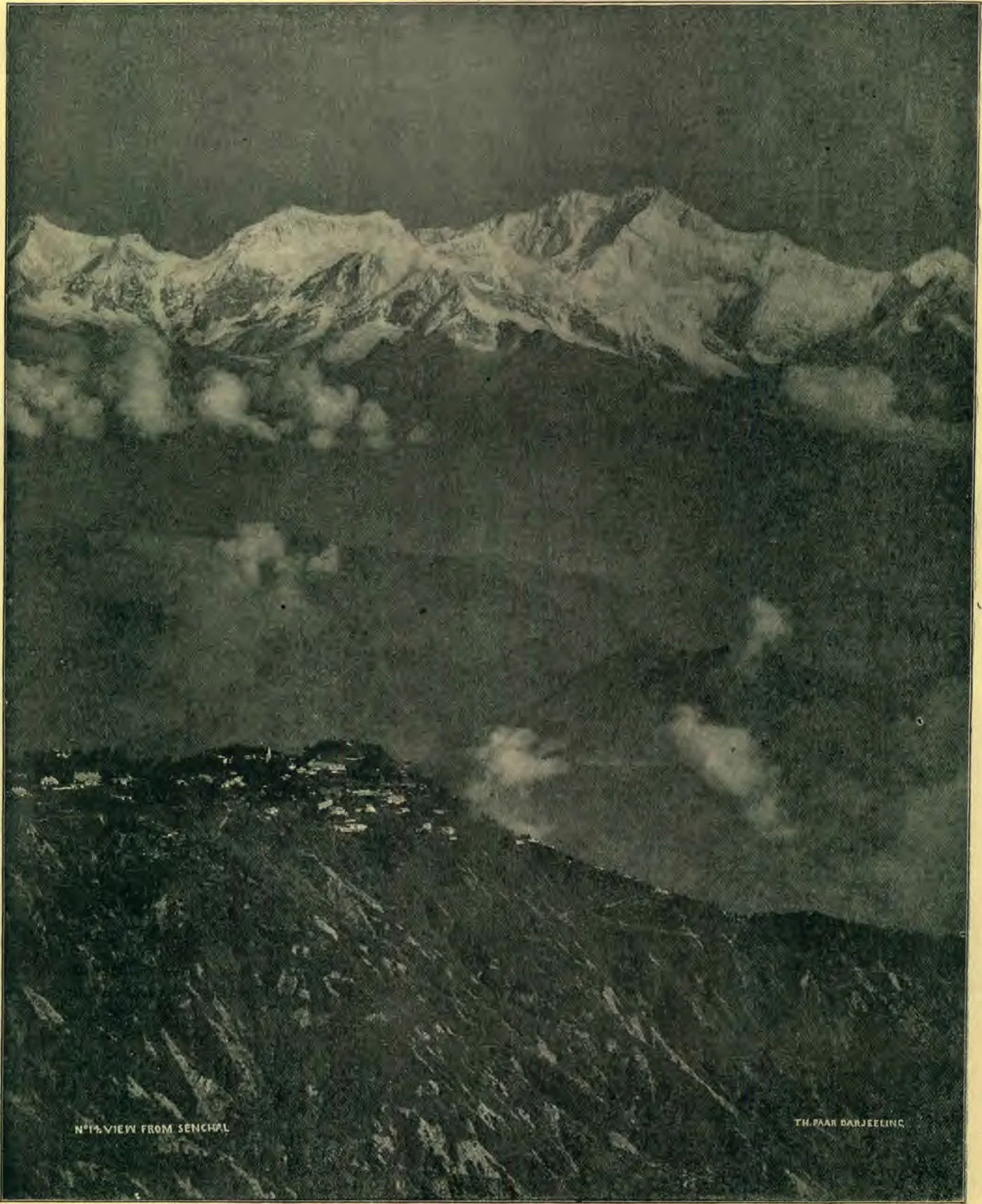
DARJEELING, INDIA, AND THE HIMALAYAS
STURDY TROPICAL PLANTS
WHO CHANGED THE SABBATH?
Donald Hears the History of the Change of the Day
WHO CHANGED THE SABBATH? Donald Hears the History of the Change of the Day

You have reached the end of this edition.

The Youth’s Instructor · Nov 6, 1917