The Youth’s Instructor, Vol. 65, No. 31.

Startling Facts About Africa
Earlier text: Alice Freeman Palmer: “The Princess of Wellesley”

Goal Dollar Day

ONE afternoon not long ago several young people were discussing Missionary Volunteer plans.
“What is this Gold Dollar Day that I’ve been hearing about?” one inquired.
There was a merry twinkle in the eyes of the one who knew as he laughingly replied, “There is a dollar day coming; but you’re not quite straight on the kind. It’s not ‘gold,’ but G-o-a-l Dollar Day.”
Have you, too, been wondering about this special day, and its significance? No doubt you have read the announcement of it in our papers, saying that on Sabbath, August 25, every Missionary Volunteer should be prepared to give a dollar in young people’s meeting to be applied on our Missionary Volunteer Goal.
The dollar may be gold, silver, or paper; it may even be made up of pennies, nickels, and dimes — no matter. But the point is, we all surely want to have that amount to give when the time arrives. This important day comes but once a year, and deserves to be celebrated properly.
The real object in having a special offering is not simply to reach our financial goal, though every true Volunteer is genuinely interested in accomplishing that. But back of this object is a far greater one. You know our young people are working for definite missionary enterprises. In some conferences the Missionary Volunteers are helping to build mission schools and dispensaries with their offerings. In other conferences we are undertaking to support certain missionaries in foreign fields. These brave workers are giving their time, their service, their lives to the Master. They have gone down into the mines to search for precious jewels for God’s kingdom, and they are depending on us to “hold the ropes.”
We mustn’t fail them; for if we should, there would be a shortage of means, necessitating a curtailing of expenses which would seriously hinder the work. It is actually true that the General Conference budget of expense, apportioning various sums to the different enterprises, would have to be cut down, and some things be allowed to wait, if the young people failed to do their part.
Isn’t it splendid that the Missionary Volunteers have so definite a part in advancing the work of God? Yet what a responsibility it places upon us! It makes us realize that we who are looking for Jesus’ soon coming and praying for it, must do more than that — we must work for it.
“I see the need,” says some one, “but how am I to get my dollar for Goal Dollar Day?” There are scores of ways if you have a real determination to do it; and the harder it is for you to get the money, the happier you will be in giving it. You will need to begin early to plan for it. Why not begin several weeks before the day to lay aside the nickels and dimes that are going to make up that precious dollar for August 25? True love will lead to self-denial; there is no other way to serve others. And as you work, remember that you are doing it for Jesus’ sake. “That which we do for ourselves, is forgotten; that which we do for Christ is immortal.”
ELLA IDEN.

VI — The Creation of the Earth

(August 11)
MEMORY VERSE: “In the beginning God created the heaven and the earth.” Gen. 1:1.

Questions

1. What is the meaning of the word “create”? Note 1.
2. Who was with God the Father in the work of creation? Gen. 1:26, first part. Note 2.
3. How was the world created? Ps. 33:6, 9.
4. How many days were used in the work of creation? Ex. 20:11, first part.
5. What did God first create on the earth? How was it made? Gen. 1:3.
6. What name was given the light? What was the darkness called? Which came first? What did the two constitute? Verse 5. Note 3.
7. What was made on the second day? Verses 6-8. Note 4.
8. What appeared on the third day? What names were given to the dry land and the gathered waters? What did the earth bring forth? Verses 9-13.
9. What command did God give on the fourth day? For what purposes were these lights made? How many great lights were made? What were they each to rule? What other lights were created? Verses 14-19.
10. What were created on the fifth day? Verses 20-23.
11. Name the creatures created on the sixth day. Verses 24, 25.
12. On the same day whom did God create in his own image? Verses 26, 27.
13. Over what did he give them dominion? Verse 28; Ps. 8:4-8. Note 5.
14. When God had ended his work, how did he spend the seventh day of the week? What did he do for the seventh day that he had not done for any of the six days? Gen. 2:1-3.
15. What was God’s plan concerning the creation of the earth? Num. 14:21.

Notes

1. To create is “to cause to be or to come into existence.”—Standard Dictionary. “To produce out of nothing.”—Century Dictionary.
2. In John 1:1-3, 14, Jesus is called the Word, and his association with the Father in the work of creation is clearly shown. He was the agent used of God to create everything. Of Jesus it is said: “By him were all things created, that are in heaven, and that are in earth, visible and invisible, . . . all things were created by him, and for him: and he is before all things, and by him all things consist,” or are held together. Col. 1:16, 17.
3. “Of the first day employed in the work of creation is given the record, ‘The evening and the morning were the first day.’ And the same in substance is said of each of the first six days of creation week. Each of these periods, Inspiration declares to have been a day consisting of evening and morning, like every other day since that time.”—“Education,” p. 129.
4. The firmament, or expanse of heaven, was created. The clear, blue sky was seen. The waters were divided. The stores of rain were above the firmament; the vapors of the air floated through it; the waters covering the earth were below it.
5. “He who set the starry worlds on high, and tinted with delicate skill the flowers of the field, who filled the earth and the heavens with the wonders of his power, when he came to crown his glorious work, to place one in the midst to stand as ruler of the fair earth, did not fail to create a being worthy of the hand that gave him life. The genealogy of our race, as given by inspiration, traces back its origin, not to a line of developing germs, mollusks, and quadrupeds, but to the great Creator. Though formed from the dust, Adam was ‘the son of God.’”—“Patriarchs and Prophets,” p. 45.

Missionary Volunteer Convention

OUR young people, we are sure, are always interested in the progress of the Missionary Volunteer Department which has meant so much to them. There just began an important meeting of this Department at College View, Nebraska. There are present the General North American Division secretaries and the Union secretaries from each of the twelve Union Conferences in the North American Division Conference. Plans for the advancement of the Missionary Volunteer work are being considered. Let all our young people pray for the leaders of this work. M. E. K.

The Brilliancy of the Bible

“THE brilliancy of the Bible depends upon the setting we give it in our lives.”

Read Good Books

Two book lovers married. Before their marriage they each were eager readers; but the press of business, home, and social duties finally made serious inroads upon their time for reading, and unconsciously and insidiously they found they were being robbed of even their zest for reading books. It came to them one day that this was the sign of aging—“to settle into a dull routine, to lose contact with that which is fresh, fine, and stimulating in the world around us.” “We decided with disgust,” they said, “that we were simply letting our brains get choked with fat. We put a little dynamite into our way of living, and began to manage to have the time to read. We know again the charm of good books. We read as we used to do. It was Balfour—the English foreign minister lately here—who pointed out that it is not our bodies that lose youth, but our minds. We stop assimilating new ideas. Our once eager curiosity about other people and about other ways of life than our own grows cold. We become deadly dulled middle-aged people. That is the one symptom of age in a man—that he no longer reads books. We may live a half century more. But when we stop reading, our brains are definitely on the down grade; they have stopped developing and are dying.”
There are old young people. They are they who are not growing in mental and character strength, who are not alive to present-day issues, who are not awake to their possibilities and opportunities. Such are not fully living, they are on the down grade; they are atrophying or aging even in their youth. And why?—Because they do not read good books. A man said recently that he had read but one book for years. He is a busy man, ministering to the bodies and souls of men; but he cannot possibly give what might be his best to the people as he would do if he demanded time for reading.
But it were better to have read wisely and enthusiastically and then lose the habit than not to have learned to read; but the better way is to read and keep on reading, at least two or three good books a year, while life lasts. There is no one too busy or too poor to do it. Surely the person who doesn’t read one good book a year is losing out. He cannot interest others in vital matters as he otherwise could do.
A cripple is always hampered by his infirmity. He can never attain to what otherwise would have been his best. Neither can a young person who does not read. There is a way for every one to find time to read. Will you find it? or will you grow old before your time? or at least remain below the standard God has set for you in life, because you do not read? There is a way for you to secure the Reading Course books. Will you find it? These books are well worth reading.

Prayer of Faith Answered

A MISSIONARY said to a woman: “Pray that God will send money to pay my transportation and my support for the beginning of my work.” She prayed and believed. About a week after that a plain, humble man in her town came to her and said, “Could you tell me of a missionary going to Africa that needs some money to help him start? I have been saving up for years, and I have three hundred dollars cash, and all I want is the right man.” She said, “I think I can.” Before the week was over the transportation of that missionary was provided, and he is today in the dark Kongo.

Carelessness in Speaking

Few of us can plead “not guilty” to the indictment that we make poor work using our native tongue. We mispronounce; we use incorrect forms of speech; we do not choose our words wisely. We have used the cheaper forms of expression and slang phrases, until the younger generation is inclined to regard the careful speaker as prudish and out of date.
We slide our words together. We say “Don’t know?” instead of “Don’t you know?” and because of this habit our sentences are misleading or unintelligible. A teacher once said to her pupils, “Cambodia is about as large as Siam.” Because of the teacher’s faulty enunciation, one little girl wrote, “Teacher says Cambodia is about as large as she is.”
This child suffered only a temporary injustice, as the teacher was doubtless later able to correct the restricted view she had given of Cambodia; but we may not be fortunate enough to correct our faulty work by subsequent explanations. Let us therefore take pride in fostering in ourselves only the purest of English.

When Jesus Came

WHEN Jesus came to earth two thousand years ago, Rome ruled the world. “All over Italy,” says Ferrero, “there was a rage to build palaces, country houses, and farms, to buy slaves, and to increase the expenses of public and private life. Ambitious politicians spent fabulous sums giving the populace shows.” One man bought three thousand statues and three hundred columns of rare marbles to decorate a theater that would hold eighty thousand spectators. He used it only a month. Women ruined their husbands in order to buy silk and pearls; and a pound of silk was worth a pound of gold. No wonder that Christianity seemed unfashionable.”
So when Jesus comes again, he will find many squandering money and time for that which is naught. Let us be among those who ever seek to conserve both means and time.

On Cheerfulness and Keeping a Bright Spirit
It is a part of my religion to look well after cheerfulness, and let the dismals shift for themselves.—Louisa Alcott.
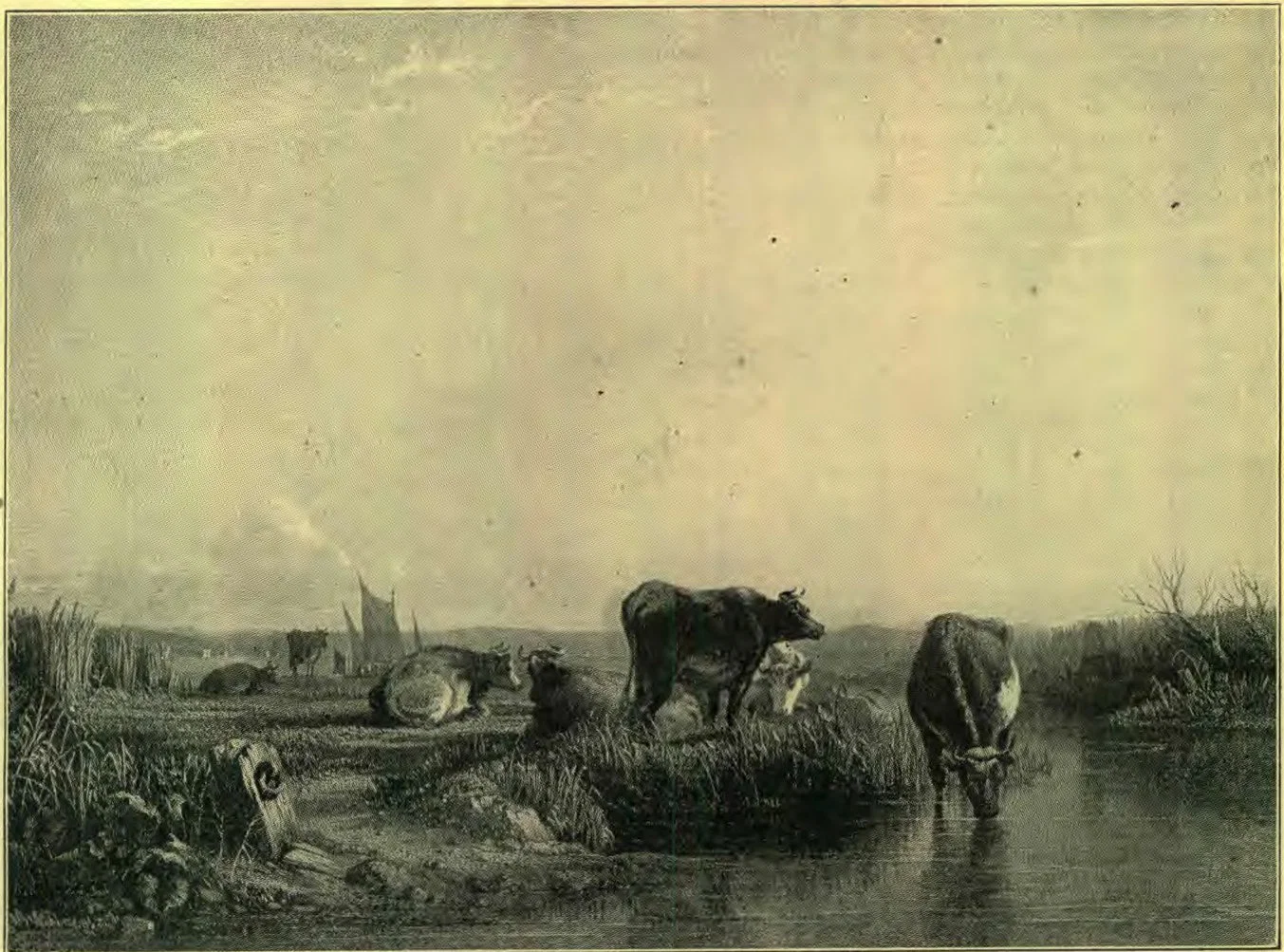
THE REST AT EVE
THE REST AT EVE
“THE EARLY MORNING OFTEN FOUND JESUS IN SOME SECLUDED PLACE, MEDITATING, SEARCHING THE SCRIPTURES, OR IN PRAYER”

You have reached the end of this edition.

The Youth’s Instructor · Jul 31, 1917