Your ShelfYour Projects

Review and Herald, Vol. 57, No. 25.

THE FALL OF ANCIENT BABYLON
Earlier text: LIGHT, MORE LIGHT

PASSING UNDER THE ROD.

BY MRS. D. A. GOFF.
Hear me, O thou Man of Sorrows! All my griefs on thee are laid; Speak the word o’er life’s rough billows, “It is I; be not afraid.”
Abba, Father, I entreat thee In the name of thy dear Son; Have compassion on my weakness; Let thy will, not mine, be done.
Send the Comforter from Heaven, Never henceforth to depart; Let my sins be all forgiven; Take possession of my heart.
Then let all thy waves pass o’er me; Nothing shall my soul affright, While I follow Jesus only, Trusting thee through all the night,
Waiting for the blessed morning, When the night of time is past, When again to earth returning, This same Jesus comes at last.
Palms of victory, crowns of glory, And eternal life he’ll give; I shall walk the golden city, I shall see his face, and live.
I shall see him in his beauty, My Redeemer and my King; And I’ll bow in adoration, Where the host are worshiping.
There I’ll clasp my long-lost jewels He has rescued from the grave; And we’ll sing with saints and angels, Of his wondrous power to save.
We shall stand on the Mount Zion, Purified, made white, and tried; We shall reign with Christ our Saviour, Without fault, and glorified.
Come, Lord Jesus, O come quickly, That my pilgrimage may cease; Come, and seal me thine forever, Lord of Life and Prince of Peace.
Battle Creek, Mich.

PENNSYLVANIA CONFERENCE.

Yorkshire Center, N. Y., June 13.—Held our first meeting in the tent here June 10. Have had four meetings, with increasing congregations. The Lord gives liberty in preaching his word.
F. PEABODY. E. RUSSELL.

INDIANA

Fishersburg.—We pitched tent No. 3 in Fishersburg, Madison Co., last week. We have held four meetings. The congregations have ranged from one hundred to two hundred and fifty. This is a Methodist community, and there is plenty of prejudice to begin with, yet some are quite friendly.
Wm. COVERT.
J. P. HENDERSON.

MISSOURI

Ash Grove.—We commenced meetings here in the tent, June 3. Have preached every night except one, with an average attendance of from seventy-five to one hundred. The people of the country are harvesting; and when night comes, they think they are too tired to go to meeting. We also learn that the ministers of this vicinity have combined to warn their flocks to keep away from our meetings. Two of these ministers know that this is the only successful argument that can be used against us, one of them having discussed the Sabbath question last winter, while the other sat as moderator in a discussion recently held between one of his brethren and one of ours. We trust the Lord will cause the wrath of man to praise him, and that fruit will appear in due time.
J. G. Wood. H. Woodruff.

NEW YORK.

Labor among the Churches.—May 20 to June 15, visited the Roosevelt, Brookfield, Frankfort, Middle Grove, and Chester churches. Our meetings were interesting and profitable, especially at the last two places. The special blessing of God was granted at Middle Grove and Chester. Difficulties of long standing were amicably settled, and a spirit of confession and searching of heart characterized our meetings that was indeed profitable and encouraging, for it brought the rich blessing of the Lord. At Middle Grove, one wanderer returned to the fold, and old troubles were fully disposed of, so that the leader remarked that they had not been in as good condition before for twenty years.
The financial interests of the cause were considered, and $73.70 was pledged toward a tent fund, of which $53.15 was paid. Bro. E. W. Whitney was with me at the two places last named, and rendered efficient help. M. H. BROWN.
Labor among the Churches.—May 16 to 22, I visited the churches of West Pierrepont, South Pierrepont, and Buck’s Bridge. We trust good was accomplished through the word spoken. Although it was rainy while at the Pierrepont churches, the attendance was good. There seems to be an interest to hear and read on the part of those not of our faith. Wake up, brethren, and let your light so shine that others may see your good works, and thus be led to embrace the truth.
Fast-day we enjoyed a blessing while trying to seek God with the church at Buck’s Bridge, and especially with our dear brother, Eld. A. H. Hall, who is steadily but slowly improving in health. May God grant him many days of usefulness here.
Thursday, the 26th, I left home for tent labor. Held meeting with the Adams Center church Thursday evening. But few were out. The friends here are anxious that Bro. and Sr. White shall come to Adams Center if they conclude to hold a two-days’ meeting in this State the present season. A pledge of $4.50 was made on the fund for a new tent, $1.75 of which was paid.
Sabbath and Sunday I held meetings and visited from house to house at Mannsville. We had a good congregation each day. The friends showed that they had not lost their interest by pledging $9.65 to tent fund, $9.40 of which was paid; and yet we think more zeal and interest should be shown in getting out to meeting on the Sabbath. We are nearing the time of Jacob’s trouble, and it will take earnest effort and strong pleading to press through the darkness that is enveloping the world as a pall. Put away all wrongs and idols, brethren, and seek God with your whole heart, and he will be found of you.
Last night Bro. T. M. Lane and myself held our first meeting in Orwell, Oswego Co., where our tent is now pitched. We have a very good location, and the people appear friendly. We earnestly desire to consecrate ourselves to the work, that there may be a harvest of precious souls saved through the word spoken. Pray for us.
Our P. O. address will be Orwell, Oswego Co., N. Y. Librarians of Dist. No. 4 will please make note of this. M. C. WILCOX.
June 13.

TEXAS TENT.

Granbury, Hood Co., June 9, 1881.—Since my last report, our meetings have been unusually interesting. The tent is well filled on every occasion. Some come from six to ten miles. Our audiences are composed of all classes. A number of rather skeptical persons are interested, and they have stated that now they see harmony in the Bible where they previously saw contradictions. The people all say that the Bible is read more than ever before. And just now, within the last two days, two challenges for discussions have been received. One was presented publicly at the close of our night service, in a very defiant and persistent manner, by Eld. Price of the M. E. Church South, their champion in this part of the State. I utterly refused to have anything to do with debate till after my meetings had closed, gave my reasons, and accepted the challenge to meet him at that time. Yesterday, amid the boasting and bragging of his friends, who expressed the opinion that I would not meet him even then, another challenge from Eld. Horn (Disciple) was received, thus bringing to bear an additional pressure. Last night I threw myself into the hands of the people, told them to choose their man, and select the subjects; I was ready. A chairman and secretary were appointed. A committee of seven, representing each of the churches, with two outsiders, was appointed to recommend the man and subjects. By a large vote, Eld. Price was chosen as their champion; and the Sabbath, the immortality of the soul, and the destiny of the wicked, to be the subjects, the disputants to be confined strictly to the Bible. Next Monday was selected as the time to enter the conflict, which is to continue indefinitely.
I am still holding the crowd on the immortality question, occupying an hour each night, and resting up for the debate. I am alone and single handed, yet I shall believe the Lord is on the side of his truth. Brethren, do not forget us when you pray.
R. M. KILGORE.

NEW ENGLAND.

La Fayette and Niantic, R. I.—May 21, 22, I held some good meetings with the church at La Fayette. I visited all the Sabbath-keeping families there, and tried to encourage them in patient continuance in well-doing. All seemed resolved to strive in humility for the victory over all their trials by faithfully submitting to the counsel of God.
The 28th and 29th, I held five meetings with the church at Niantic. Found two of the active members sick; they had been unable to attend meeting all winter. I visited and prayed with them, and encouraged them all I could.
June 4, 5, I attended the State quarterly meeting at Danvers, Mass. The Conference Committee thought it best that I should go to Newport, R. I., to see if there was an opening for labor there, and if not, that I should go to Connecticut, and look after the scattered Sabbath-keepers in that State, holding meetings until we could get suitable help to hold a tent-meeting in some good locality. As I found no opening in Newport, I now go to Connecticut, expecting to find plenty to do. The weather is now very cold, and if it does not change, the present season will be a poor one for tent labor. I. SANBORN.

COLORADO

Texas Creek, June 13.—May 28, 29, I had the privilege of meeting with this church for the first time. Here I found a band of commandment-keepers, some twenty-five or more, standing together in brotherly love and perfect union. Not a jar or trial among them. Bro. A. J. Stover, their leader, is a man of experience, and one who fears God. The rest of the church have more recently embraced the truth, and greatly rejoice in it. They are faithful in all known duties, and gladly receive instruction. Every family takes the REVIEW. They are prompt to pay their tithes, and the influence of this church is such as to fully prepare the way for the truth to reach many hearts. A deep interest to hear the solemn truths of the third angel’s message pervades the people of this valley.
Our meetings, from first to last, were marked by the blessing of God. We had the use of the school-house, and it was well-filled at each meeting. The M. E. minister of that circuit attended all our services excepting one. He had an appointment at the house on Sunday afternoon, but kindly requested me to preach in his place, as he wished his congregation to hear me. He also invited his class about six miles away, where he preached in the morning, to attend. At the hour, the house was more than full, and some were obliged to stand outside. A deep and solemn interest was manifested. The tearful eyes showed that hearts felt the power of the truth. At the close of this service I sold $25 worth of books in about ten minutes; and the people, and minister also, crowded around me, and freely expressed their hope that I would return and preach to them more.
I feel greatly encouraged by my visit here, and the words of Paul to the Philippians, “I thank my God upon every remembrance of you,” can be truthfully applied to the brethren at Texas Creek.
E. R. JONES.

WISCONSIN

Labor among the Churches.—Sickness and bad weather prevented a full attendance at Avalanche, May 14, 15. However, our meetings were good. There are only a few members belonging to this church, and they are much scattered, so that it is difficult for them to keep up meetings and Sabbath-school.
The meetings at Debello on the following Sabbath were well attended, and we enjoyed much of the blessing of the Lord. This church has had some trials, but hopes to see better days.
May 24, 25, I visited the church at Hillsborough. This church is much weakened by removals. The elder of the church with his family has also moved away, so that he cannot meet with them. But though the members are scattered, all are still trying to be faithful to their profession.
Our meetings at Pine River were quite well attended, though some were kept at home on account of sickness. All who embraced the truth there about two years ago are still firm, as is also the First-day Adventist minister who was among those who embraced the Sabbath. He told me that one more of his children had decided to obey the holy law of God. Others are still interested, and studying their Bibles carefully to learn what is truth.
June 4, I met with the church at Whitehall in a school-house about three miles from the village, as most of the brethren live in the country. On Sunday afternoon and evening, I spoke in the Baptist church of Whitehall, which the Baptists kindly permitted us to occupy. The Methodists took up their evening appointment, and their minister and many of their members came out to our meeting. We were very kindly received, and there seem to be reasons to believe that good impressions were made upon the hearts of all by the Holy Spirit. The brethren are anxious to have a tent-meeting at Whitehall, and the way seems to open well.
On the following Sabbath I went into the country where Bro. C. Holmes labored last winter with some success. Had good meetings. On Sabbath, six were baptized, who had come out principally under Bro. Holmes's labors. On Sunday I spoke in an adjoining Granger's hall, kindly opened to us by the Patrons of Husbandry. Good order and attention prevailed, and God came near by his Spirit. Many expressed a desire to hear more.
I have enjoyed much of the blessing of God while trying to labor for the good of others, and there are good reasons to believe that most of the brethren of these churches feel much encouraged. May we ever trust in God for wisdom and help to serve him faithfully till the close of our probation.
Whitehall, June 18. O. A. JOHNSON.

LITTLE THINGS.

LIFE is made up of little things. He who travels over a continent must go step by step; he who writes a book must do it sentence by sentence; he who learns a science must master it fact by fact and principle after principle. What is the happiness of our life made up of? Little courtesies, little kindnesses, pleasant words, genial smiles, friendly letters, good wishes, and good deeds. The little things that make up our life come every day and every hour. If we make the little events of life beautiful and good, then is the whole life full of beauty and goodness.—Sel.

Not Alone

We do not labor alone. However feeble our hands, that mighty Hand is laid on them, to direct their movements and to lend strength to their weakness. It is not our speech which will secure results, but His presence with our words. Here is our encouragement when we are despondent. Here is our rebuke when we are self-confident. Here is our stimulus when we are indolent. Here is our quietness when we are impatient. If ever we are tempted to think our task heavy, let us not forget that He who set it helps us to do it, and from his throne shares in all our toils,—the Lord still, as of old, working with us. If ever we feel that our strength is nothing, and that we stand solitary against many foes, let us fall back upon the peace-giving thought, that one man against the world, with Christ to help him, is always in the majority; and let us leave the issues of our work in his care, whose hands will guard the seed sown in weakness, whose smile will bless the springing thereof.—A. Maclaren, D. D.

IT MAY NOT BE.

It may not be our lot to wield The sickle in the ripened field; Nor ours to hear, on summer eves, The reaper’s song among the sheaves.
Yet where our duty’s task is wrought In unison with God’s great thought, The near and future blend in one, And whatsoever is willed, is done.
And ours the graceful service whence Comes, day by day, the recompense; The hope, the trust, the purpose stayed, The fountain, and the noonday shade.
And were this life the utmost span, The only end and aim of man, Better the toil of fields like these Than waking dreams and slothful ease. —Whittier.

“HE THAT WINNETH SOULS IS WISE.”

BY ELD. E. H. GATES.
THERE is no work that requires more wisdom to perform it successfully than that of presenting unpopular truth to men of the world. When Christ sent forth the apostles, he said to them, “Be ye therefore wise as serpents, and harmless as doves.” This injunction is just as applicable to-day as when it was given, and should be heeded by our missionary workers as well as by ministers. But some have no idea of using any wisdom whatever in this important work. They engage in it as though it were no more sacred than any manual labor. No preparation of heart is made, no wisdom sought of Him who giveth liberally, and consequently no fruit of their effort is seen.
Those who have labored successfully in the ministry well know how carefully they must approach a man, lest by some unguarded expression, some harsh remark, or some lack of Christian charity, they turn him against the truth; and then, after all they can do in their own strength to insure success, they will fail of reaching hearts unless they earnestly seek the help of the Holy Spirit.
But some novices will take it upon them to instruct others in present truth, who have need to learn the first principles themselves. Instead of praying that their own hearts may be made tender, they attempt to pound the truth into others. Such workers need to learn of Him who was “meek and lowly of heart.” Christ did not force his doctrines upon those who did not wish to be benefited, nor his presence where it was not desired. Instead of driving with harshness, he won by love. He came not to condemn those that would not hear, but to save the world. His great heart of love yearned over the fallen race. Hear his cries as he wept over those who spurned his love: “O Jerusalem, Jerusalem, thou that killest the prophets, and stonest them that are sent unto thee, how often would I have gathered thy children together, even as a hen gathereth her chickens under her wings, and ye would not.” Instead of manifesting this spirit, some severely condemn the one that does not see as he does, being careful to inform him that he has the mark of the beast, and is a member of fallen Babylon. None of the meekness of Christ is seen in their efforts for others, but only harshness, which drives away those who might be benefited. They seem to think their missionary work is done when they have conquered in argument, not realizing that it is one of the most effectual ways in the world of driving men from the truth. Such labor will result in more injury to the cause than those who have the burden of the work can ever repair.
In our missionary labors we need more of the disposition of Christ, and less of the spirit of controversy; more of a burden for poor lost souls, more “supplications with strong crying and tears,” for them, and less of the Jehu spirit; more of the wisdom that Jesus had in his missionary labors, and which we may have by asking of Him “that giveth liberally.” Then will the seed sown bear abundant fruit, and the laborer “come again with rejoicing, bringing his sheaves with him.”

Present Wants of the Cause.

BY ELD. R. F. COTTRELL.
Those who have been waiting for an opportunity to use their means judiciously for the benefit of the cause of truth, cannot fail to see that the time has fully come when it can be invested to good advantage. We have come to an important point in the history of the last message, a point that will test the sincerity of those who profess to love it, and show what is their real faith in the work of the Lord. For our good, and not because he is needy, the Lord has laid on us the duty to labor for the advancement of his cause and the salvation of our fellow-men. Our faith and love must be tested, not because God does not know what is in our hearts, but because he wants us to discover what is there, so that we may put away our wrongs that we may be saved. The heart is deceitful above all things, and desperately wicked. And while we fancy that we have faith and love, and are willing to do and suffer in the cause of human salvation, the trial of our faith, love, and liberality may bring to light the fact that we are unbelieving, selfish, and covetous. Now we have the opportunity to prove ourselves, whether we are in the faith, and test our love and liberality.
The fields are white, but where are the reapers? Let us take hold of the work, each one in his own sphere, and God will reward our efforts. If we will walk out by faith, he will help us. Do you believe it, brother? Do I believe it? Our actions will tell. We do not want to be deceived. God is giving us a chance to prove ourselves. Let us improve it while we may. The Lord’s work will move forward. It will not fail. We may share in it. But if we do not move, others will take the crown. There are crowns enough for all the victors. All may so run as to obtain. Let us so run as to gain the prize, and lay hold on eternal life. It is no time to look back. Remember Lot’s wife. Let go the world, and lay up treasure in Heaven.
The believing heart which is truly in sympathy with the work of the Lord will rejoice and take new courage at calls for an enlargement of the work, and renewed consecration and greater faithfulness in labor in every department of the great work. Such will be cheered with the prospect of soon seeing the work accomplished, and will be in earnest to renew their zeal. Their faith will not falter at the greatness of the work; but will say, It will be done; for it is God’s work; he has promised, and he will fulfill. Let me do what I can; let me share in the work; but God will do the work, and all the glory shall be his.

Native Converts.

An orphan boy and a little girl in India brought up and educated, in a mission with many others, became Christians. When they were baptized, the missionaries gave them new names. They called the boy William Plummer, and the little girl, Hannah. William afterward became a helper in the mission, and Hannah became his wife.
During the terrible Sepoy rebellion of 1857, they were in great peril. The rebels were plotting to kill all Christians, both natives and Europeans. William took their little boy, and Hannah their little girl, only one day old, and they tried to escape to some place of safety.
Weary, hungry, and sick, they wandered from place to place, but the people would give them no help or shelter because they were Christians.
William knew if he would deny Christ and tell the people he was a Moslem, they would at once give him food and protect him. When he saw Hannah so weak and suffering, and his children hungry and sick, his faith and courage almost gave way; but the faithful Hannah in all her sorrow and pain still clung to Jesus, and would not let William deny him to save their lives. They wandered on and suffered terribly, but finally reached a place of safety. But Hannah never recovered from the cruel hardships and sufferings she endured. A few years later she died, but with the blessed assurance of a home in Heaven. Her favorite hymn in her last days was—
“Joyfully, joyfully, onward I move, Bound for the land of bright spirits above.”
Reader, if you had been in Hannah’s place, subjected to such weary wanderings, and hunger, and sufferings, would you have clung to Jesus, as she did, at the risk of starving or being killed by those who hated the Christians? “He that loveth his life shall lose it; and he that hateth his life in this world shall keep it unto life eternal.” John 12:25.—Illustrated Missionary News.

The Good Seed Springing Up.

A GENTLEMAN in Tennessee, in writing to the Office for books, supplements his order as follows:—
“I am a Baptist, but having received from ——, of Texas, some tracts, and a copy of the Signs of the Times, I desire to read further. I would be glad if you would send an agent with books and tracts through this part of the country. I believe much good could be done by circulating good reading matter here.
“We as a people are filled with notions inherited from the dark ages of superstition. I am interested greatly in the Sabbath question, having read ‘One Hundred Facts about the Sabbath,’
“I always rather held to the sleep of the dead, but never could get it fixed up to suit me, until I read your tract, ‘Thoughts for the Candid.’
“I also believed in the never-ending torment of the wicked, until I read the tracts, ‘Appeal on Immortality’ and the ‘End of the Wicked.’ Now I wish to learn which is the true Sabbath, and something of the origin and progress of S. D. Adventists, with their church doctrines and ordinances.
“I would be glad to distribute tracts for you if you wish me to do so. I am in business which brings me in daily connection with all classes of people.”

SMALL BEGINNINGS.

Black founded a system of modern chemistry with but a few shillings’ worth of chalk, salt, and glass. A pan of water and two thermometers were all the apparatus used by him in detecting latent heat.
A sheet of paper, a prism, and a lens enabled Sir Isaac Newton to unfold the composition of light and theory of colors. Franklin’s kite and key, wire and ribbon, taught the world the nature of lightning. Let no one, then, sit down in contented ignorance because of want of appliances. Where there is a will, there is a way. Pluck, not luck, brains, not money, are the keys of knowledge.
But if science gives us these illustrations of the significance of results from small beginnings, the world of Christian effort is still more fruitful in examples. In a cobbler’s shop in Germany seven consecrated Christians formed a church. They linked their hands together and to the throne of God. In twenty years that church became the parent of fifty churches, 10,000 souls were hopefully converted, and 50,000,000 through them heard of Jesus, to say nothing of 400,000 copies of the Scriptures circulated and millions of pages of truth besides. Their motto was, “Every man and woman is required to do something for the Lord.” They allowed no honorary members. They kept the gospel ship free from barnacles, and so its precious freight was not delayed in its mission to men. In one year every family in a city of 150,000 people was visited by the pastor and members of one church, for the purpose of religious conversation and the distribution of religious books. We say, “Lo! What hath God wrought?” But he chooses to use human hands and feet in saving men. Despise not the day of small things. “Go work in my vineyard.”—Utah Methodist Advocate.

The Hindu's Tithe.

A Hindu Christian, who used to be always grumbling at the smallness of his salary, made up his mind to give one-tenth to God. So next pay-day, when the missionary handed him, as usual, ten rupees, he pushed back one of them, saying, “That is for God's work, sir.”
The missionary took it, but wondered much how the man, who was really poor and had a large family, would get on without it. Meeting him two or three weeks after in the bazar, he asked how they were doing. Instead of grumbling, as usual, the man answered cheerfully, “Well, thank you, sir.”
“Then tell me how it is that you who used to be always grumbling when you were spending your ten rupees a month on yourself, now do so nicely with only nine?”
“Because, sir, nine-tenths with God's blessing is better than ten-tenths without it.”—Illustrated Missionary News.

Moravian Brethren's Missions in Remote Regions

—The missions of the Moravian Brethren are carried on, not in the most densely populated and most civilized parts of the heathen world, but in its more remote regions, in regions which may emphatically be called the uttermost parts of the earth. Their “mission provinces” are Greenland, Labrador, among the Indians of North America, the West Indies, the Cape of Good Hope, Thibet, and Australia. They have 99 stations and 314 missionaries, with 1400 native assistants. The income last year was 18,000l.

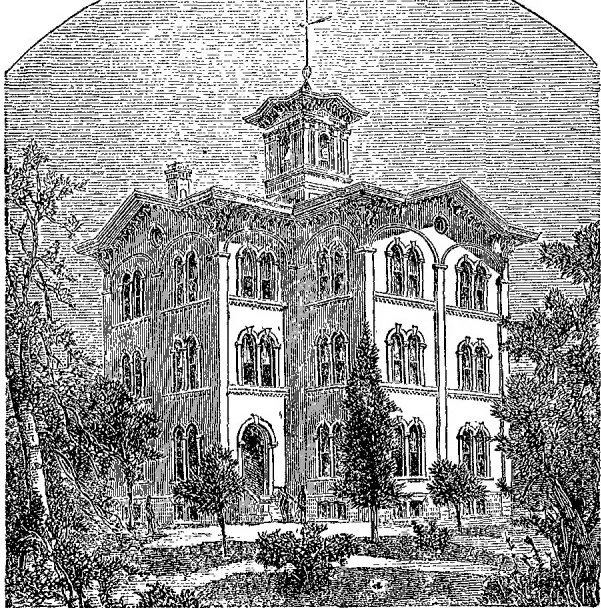
BATTLE CREEK COLLEGE.

A MODEL EDUCATIONAL INSTITUTION, COMPRISING FIVE DEPARTMENTS.

Nearly 500 Students Enrolled Annually, Coming from 32 States and Territories.

DEPARTMENTS.

I. DEPARTMENT OF THE ARTS AND SCIENCES.

This includes a Classical Course of FOUR YEARS and an English Course of three years, each with its Preparatory Course of two years.

II. NORMAL DEPARTMENT.

This includes a Teachers' Course of FOUR YEARS, and a Model School. The course in this department includes all the branches required for a first-class certificate in any State. Professional instruction in Didactics is also given to those in this department who are expecting to teach.

III. COMMERCIAL DEPARTMENT.

This includes instruction in the following topics: Bookkeeping, Business Correspondence, Business Forms, Business Penmanship, Commercial Law, Banking, and Telegraphy. The common branches are also pursued in connection with the topics given above; also, French and German.
There are two sessions daily—afternoon and evening.
The courses in this department are of varying length, and the tuition ranges from $5.00 to $30.00.
Superior advantages for those desiring to prepare themselves for Tract and Missionary Secretaries and Librarians. (Send for special circular.)

IV. DEPARTMENT OF THEOLOGY.

This department has a course of three years, which includes, besides the usual common branches, Geology and Greek.

V. DEPARTMENT OF HYGIENE.

This department has a course of one year. It is designed for those who desire to obtain accurate and scientific information on all subjects pertaining to the preservation of health, together with a fundamental knowledge of anatomy and physiology, and a practical acquaintance with the nature and ordinary treatment of common diseases.

THE FACULTY

numbers fourteen members. They are all men and women of experience and critical scholarship.
The majority of the students are young men and women of true moral worth. Their influence over the unstable is highly restrictive and salutary, making it comparatively easy to maintain the most rigid discipline.

EXPENSES.

Probably there is no other College in the United States where a thorough education can be obtained at so small an expense. A system of clubbing, which has become very popular among students, enables them to secure excellent board at $1.10 a week, exclusive of lodging, which costs 50 cents to $1.00 more. The annual expenses of each student, including all but traveling expenses and clothing, need not exceed $113.00. A full descriptive Catalogue will be sent free, upon application.
Address BATTLE CREEK COLLEGE, Battle Creek, Mich.

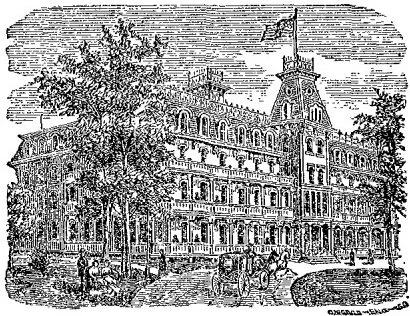
MEDICAL AND SURGICAL SANITARIUM,

Battle Creek, Michigan.
This institution, beautifully located in one of the most healthful cities of Michigan, is everywhere recognized as the

GREAT SANITARIUM OF THE WEST.

More than 4,000 patients successfully treated. The erection of new buildings and the addition of all the most approved remedial appliances known to the profession, have made it The Most Complete Institution of the Kind in America. All modern hotel conveniences furnished. Terms very reasonable.
J. H. KELLOGG, M. D., Medical Superintendent.
Address, SANITARIUM, Battle Creek, Mich.

REVIEW AND HERALD PUBLISHING HOUSE.

BOOK AND JOB PRINTING,

BOOK BINDING,
Electrotyping, Stereotyping, Paper Ruling, Blank Book Manufacturing, Etc.
The largest and best equipped printing office in the State. Orders by mail promptly attended to.
Address REVIEW AND HERALD, Battle Creek, Mich.
TRACTS.—4 cents each. Redemption—The Second Advent—The Sufferings of Christ—The Present Truth—Origin and Progress of S. D. Adventists—Ten Commandments not Abolished—The Two Covenants—Address to the Baptists—The Two Thrones—Spiritualism a Satanic Delusion—Samuel and the Witch of Endor—The Third Message of Rev. 14—Who Changed the Sabbath?—The Spirit of Prophecy—The Millennium—Signs of the Times—Scripture References—Constitution of the T. and M. Society—Tithes and Offerings—Sabbaton.

THE SIGNS OF THE TIMES.

PUBLISHED WEEKLY AT OAKLAND, CAL., FOR THE

MISSIONARY SOCIETY OF SEVENTH-DAY ADVENTISTS.

A live Religious Family Paper, containing, in addition to the great variety of original articles, which make it a desirable prophetic journal. Departments devoted to Temperance, The Home Circle, News, The Missionary Work, and The Sabbath-school. Price per year, $2.00.
In clubs of five or more copies to one address, to be used for missionary work, each $1.50.
Address
SIGNS OF THE TIMES, Oakland, Cal.,
— OR —
REVIEW AND HERALD, Battle Creek, Mich.
MISS ELIZA THAYER, Secretary N. E. Tract Society, So. Lancaster, Mass.
ELDER J. N. LOUGHBOROUGH, Ravenswood, Shirley Road, Southampton, England.
WM. LEAVITT, Salem, Oregon.
Continue reading: ADVENT HAROLDEN