Review and Herald Publishing Assn. · Washington, D. C. · June 13, 1905
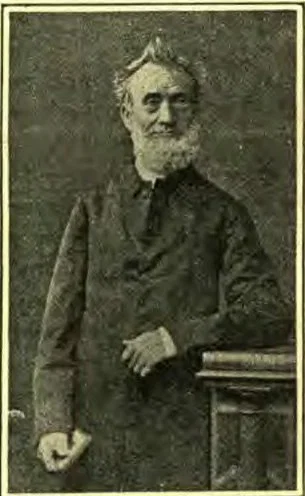
A Life of Faith and Works—George Muller
THE Bible emphasizes the value of a study of the experiences of men of God. Since the Lord still lives, and works through man as of old, it is quite possible for the Christian to receive help and encouragement from the study of the lives of men in this generation who have devoted their strength to the service of God.
George Muller, of Bristol, England, was a man called of God for a definite work, and signally directed by him in it. His biographer divides his life into five periods, or epochs. The first is the lost days of sin, in which he learns the bitterness and worthlessness of a disobedient life. It covers a period of twenty years. The second reveals the steps by which God prepared him for the work of his life. This covers the next ten years. The third period embraces the working out, during forty years, of his great mission. The fourth compasses the seventeen years devoted to missionary journeys in various countries. The fifth period covered the six years of well-earned quiet at the sundown of life.
His Early Life
George Muller was born in Prussia in 1805. He had no proper parental training. His father's favoritism and indulgence were a decided injury to him. Before he was ten years old, he was an expert at cheating and lying. When eleven, he went to Halberstadt to be fitted for the university. His father wished to educate him for a clergyman, even though he knew the boy's evil habits and tendencies. Novel reading, card-playing, drinking and other vicious indulgencies were sadly mixed with his school studies. The night his mother lay dying, her boy of fourteen was reeling through the streets drunk. The loss of his mother caused no change in his downward course. He became so calloused that on the evening of his confirmation he indulged in vicious sins.
Later on when placed in a responsible position, he collected heavy dues from his father's debtors, spent the money, and concealed the fact that it had ever been paid. When away from home, he would stop at costly hotels, run up heavy bills, then go away without meeting them, or have his clothes kept as security. Once he was caught and imprisoned. His father, hearing of his disgrace, sent the money to pay the bills, and also for his return home. For a time he promised a reform.
Then he left home to attend school. He made his father think he was going to a certain school, but he chose another of less rigid discipline. During two and one-half years he was a hard student, and rose in favor with teachers and students.
When dissipation, as it often did, dragged him into debt, he would borrow until no one would lend. Once in his extremity he pretended that the money he had spent in riotous living had been stolen from him. Having forced the locks of his own trunk and guitar case, he ran into the directors' room half dressed, feigning fright, and declared that he was the victim of a robbery. He excited such pity that friends made up a purse for him; but his deception was later discovered, and he became conscious that it was not relished by his friends. On returning to his father during vacations, he resorted to a chain of falsehoods to account for his allowance. Thus nearly twenty years of his life was spent in absolute viciousness. His various attempts at reformation and his signal failures proved conclusively that there was no power within him to make even a respectable citizen. But the dawn of a better day came. George Muller was converted.
One afternoon as he and a friend were returning from a walk, the young man remarked that he was going to a meeting. George Muller at once felt a desire to go, though he could not have told why. He did go; but on arriving at the meeting place, he found himself in a strange company. He felt uncertain as to his welcome, so made an apology for being there. The good man in whose home the meeting was held, replied, “Come as often as you please! house and heart are open to you.” All present sat down and sang a hymn, then a brother fell upon his knees, and began to pray for God's blessing. The kneeling before the Lord in prayer made an impression upon Mr. Muller that was never lost. He had never before seen any one on his knees praying, the Prussian habit being to stand. A chapter was read from the Bible, and then a printed sermon.
Mr. Muller found a new joy was coming into his heart, and he remarked on his way home, “All I saw on my journey to Switzerland, and all my former pleasures, are as nothing compared to this evening.” A strange peace and rest somehow found him that night as he lay in bed. The change was wrought quietly, but surely. A relish for divine things came to him, so that three times during that week he visited Mr. Wagner's home, where the meeting was held, and studied the Bible with him.
“There came also a distaste for wicked joys and former companions; the frequenting of taverns entirely ceased, and a lying tongue felt new and strange bands about it. A watch was set at the door of the lips, and every word that went forth was liable to a challenge. Though weak and often vanquished in his fight against sin, he did not habitually continue in sin, nor offend God without a godly sorrow.” He took his stand boldly for the Saviour, though he was ridiculed by his old associates. The Bible soon became to him a very precious book; because of the great love it revealed. During the last twenty years of his life, he read it through carefully four or five times each year. It early became to him the basis of all his actions; and his carefulness to follow strictly its teachings, whatever might be the teaching of the Christian world, made him the unique man he was.
Courageous, Conscientious Acts
His first act of marked self-denial in surrender to the voice of the Spirit was the burning of a French novel, in manuscript, that he had translated into the German language, with the hope of gaining means from its publication to visit Paris.
Another step in self-surrender was taken while still a university student. His father did not sympathize with him at all in his Christian work, but insisted on his son's following out the line of work that he had chosen for him—that of clergyman in the state church, a lucrative position. Mr. Muller decided that, by using his father's money, he was placing himself under obligation to do as the father desired. So in order to be wholly free to follow the leading of the Lord, he refused to take any further help from his father. He did not know how he would be able to finish his school work; but an opportunity of tutoring American students soon came to him, so that he easily paid his expenses. Another act that cost him a struggle was to give up an alliance with a young woman, which he had every reason to believe would not allow him to carry out successfully his desire to be a foreign missionary. Some years later he married a devoted Christian young woman, who was of very great help to him in his life-work. The union proved a happy one in every way.
(To be continued)
“Pussy’s Friend”
By F. B. Wickersham
A Sketch of the Life of Mme. Ronner
ONE day, years ago, a little blue pincushion was seen hanging on the door of a well-known house in Amsterdam. This strange, though to that city most ordinary, sign showed that a little girl baby had come to make her home there, and by her future life to prove whether she were deserving of a place in the famous country which has been so aptly called the “Land of Pluck.” Now this you shall judge for yourself. This baby was the daughter of Herr August Knip, a painter. From her babyhood this little daughter, Henriette, was seen to be wonderfully observant of all the strange and curious things around her.
When only five years old, she began drawing from nature everything that came within the range of her young eyes. These first drawings were all dated and kept, with greatest care, by her father, whose heart was filled with pride for his talented little girl.
By a sad fate the poor father was not destined long to see the progress of his daughter, for when she was only eleven years old, he lost his eyesight2and became totally blind. His ambition for little Henriette, and the desire that the talent which he recognized should be developed to the utmost, became, even in his blindness, his ruling passion. From this time began for the young girl a life of such hard and constant labor that I fear there are not even many boys in America who would not have felt like rebelling against such severity, and have considered themselves very unfortunate indeed. This brave little girl had a natural love of work and a strong constitution; these, combined with a noble desire to please and reward the dear father, whose hopes were all centered in her, enabled her to endure the severe life of study which followed.
Her father was her only teacher. Under his loving care and direction alone she developed and cultivated her extraordinary talent. Living then in the country, she spent every day, from sunrise to sunset, at her easel,— when the days were clear, always out of doors in the fresh air, and when cloudy, in her studio,—stopping her work only at meal-times, and for two hours in the middle of each day, which her father compelled her to spend sitting in a perfectly dark room, so as to give complete rest to her eyes.
When only seventeen, she exhibited her first pictures, and these won for her the praise of the severest art critics, who promptly called attention to her rare talents, and ever since then her works have held an honorable position in Europe.
America, always appreciative of true worth, was not slow to acknowledge the merit of her work, and one of her pictures gained a high prize at our Centennial Exhibition, where they were first brought before the American public.
Her father, while he guided and directed her study, in no way interfered with the bent of her own inclination, and he left her free to exercise in her own way her unusual qualities of observation and imagination.
She painted everything that attracted her attention,— animals, interiors of houses, or landscapes,— though from a little child animals were always the subject she liked best.
In 1850 Henriette Knip became Mme. Ronner, and, with her husband, went to Brussels to live. When first married, their income was very small, but the young artist had brought with her to her new home that which I am sure each boy and girl will agree with me is much better than mere dollars and cents, and which in the end usually gains all things, dollars and cents included, and that was her Dutch pluck and perseverance. With these she set to work to overcome all difficulties. At this time she would often be at her easel as early as four o’clock in the morning. Later Mme. Ronner devoted all her time and talents to the painting of dogs and cats, which have ever been the favorite subjects of her brush. These household pets, indeed, have found a true friend in this gifted artist, who understands them so well, and who reproduces on canvas so truly all their different moods and expressions, which are almost as varied as the expressions on the faces of the boys and girls.
No more sincere compliment could have been paid to Mme. Ronner’s skill than was offered her by a dog. The queen of Belgium, and her sister-in-law, the Countess of Flanders, each had several favorite dogs whose portraits they wished painted by Mme. Ronner. They were brought to the studio at different times for their “sittings,” and on a certain occasion one of the countess’s dogs, a rather savage, ill-tempered animal, coming into the room, found the newly finished portrait of one of his companions standing on the floor. Barking furiously, he rushed excitedly to it, prepared for a violent battle, when, seeing his mistake, he stood quite still with astonishment, staring at the picture, unable to understand why his friend should be there, and yet not offer to play or fight. Still later, Mme. Ronner almost entirely gave up the painting of dogs, and devoted all her attention to cats, whose restless playfulness makes them such difficult as well as such fascinating subjects. But Mme. Ronner’s wonderful quickness of observation enabled her to catch every trick and expression of these little animals, at once so frolicsome, so active, and so difficult to picture with the brush, and yet which she portrayed with, as one critic humorously says, “a care that might kill a cat.”
It is her paintings of cats especially that has established her reputation, and placed her, even in Paris, on a level with the great specialist Eugene Lambert. It is quite a revelation to see how many different expressions Mme. Ronner’s pussies have. She never makes the mistake of giving them a human expression, as so many painters do: they are always cats, but so varied that it makes one think that each kitten is a distinct individual in its way, and not at all to be judged and treated by one general rule which must apply to the whole cat race.
Every one of my readers, I am sure, would be charmed could he have looked into Mme. Ronner’s beautiful, sunny studio as I saw it. There the walls were covered with paintings of old cats and young cats, big cats and little cats, sleeping cats and waking cats; and on the floor, darting in and out among the chairs and easels, springing from the tables, and playing bo-peep with one another behind the portieres, were all kinds of live cats.
These favored pussies lived in Mme. Ronner’s studio, and all her pictures were sketched from life, and each one portrays some actual situation in which she had found her kittens. If you look at many of these pictures, they will give you a good idea of how restless and mischievous cats are—almost as lively as monkeys, or, I was going to say, little boys and girls.
In the midst of this charming studio, with her easel always before her, sat a dear old lady with pink cheeks and snow-white hair, and eyes so kind and gentle that you feel sure they must see the best, not only in cats and dogs, but in everything. This was Mme. Ronner, whose life has been a very simple one; for, although the artistic world is proud to do her homage, her nature is strangely retiring and unaffected, finding her greatest happiness in her peaceful, happy home life, and her dearly loved art, to which now, at eighty-three, she devotes as much time and strength of energy as in her younger days.
Yet it is impossible for her to refuse the richly merited honors that are thrust upon her, and she has received a great number of medals from different countries, including the cross of the Order of Leopold, conferred by the king of Belgium, a distinction which few women possess. Holland, her own land, has not been behindhand in doing her justice, for in the magnificent museum opened a few years ago in Amsterdam, the name of Henriette Ronner is inscribed among the most illustrious painters of her native country.—F. B. Wickersham, in St. Nicholas.
The Making of a Day
By Julia F. Deane
“Between six and eight
You fix its fate”
It has the sound of a couplet from a fairy tale of our childhood, when, as in the days of Aladdin and Sindbad, by swallowing a certain mysterious powder before breakfast, one was guaranteed a day of glorious success. If a twentieth century magician were to offer such assurance, the temptation would be great to sell one's substance and lay in a stock of these valuable antidotes against failure and discouragement.
And yet in all seriousness there is such a blessed potion, whose composition is an open secret to all who will take the trouble to learn it, and which must be prepared and taken in the early morning hours. The men and women who have reached most deeply into the lives of their fellows, and whose work is to be measured by eternal values, have counted the first hours of the day well spent in preparing it.
In the crucible of your desire and your will it must be prepared. In the hours when the brain and heart are fresh and keen, fashion the day in your thought and your determination.
Put into this crucible gratitude for blessings past, a generous portion of serene faith in a divine Father for blessings future, an unstinted measure of trust and belief in those with whom you shall associate, a fervent purpose to pack the hours of the day full of wisdom and strength and cheer for yourself and for others. Let it all simmer over a bright fire of prayer and meditation.
Forget not that to be of its greatest value it must be prepared and taken while the day is new and plastic. Later there may sift in unawares bits of selfishness and irritableness that will defeat the enchantment.
The possibility of the morning hour to shape a day is an interesting and fascinating thought. An unwholesome, uninviting breakfast is often held responsible for disordered digestions. But although the menu of a breakfast may be perfect from a culinary point of view, if it fail to furnish inspiration for right living, its power for evil may be immense. Many a hopeful, promising day has been snuffed out at a dull, depressing, or a disputatious breakfast table. The social thermometer is liable to register its lowest at that hour, and in the haste and hurry incident to the morning meal it does not seem worth while to produce one's choicest thoughts, and thus the meal becomes a feeding, or even a bolting, time, and not a social occasion.
The atmosphere of a cheerful, happy breakfast table may give the coloring to half a dozen days in as many different lives. The impetus afforded by a lively, ardent, enthusiastic group gathered for the morning meal, may send a man or woman out to a successful day's work, which otherwise would have been a failure. A carefully planned breakfast menu, which takes into account hunger of mind and soul as well as of body, often furnishes impulses for victorious days, soul-winning days, epoch-making days.—Julia F. Deane, in Sunday School Times.
How a Sermon Was Spoiled
By Anna Burnham Bryant
“Ten persons stole the best part of my sermon to-day!”
Aunt Sophia bit off the end of her sentence with a little click as if she would like to take a little bite or nip right out of every one of those ten sermon-robbers.
“Well,” laughed mother good-naturedly, “if it did them any good, I suppose you——”
“It didn’t!” snapped Aunt Sophia. “That’s the worst of it. First thing, they took the text and ran off with it. That was Jenny Peters. She coughed, a nice little hacky kind of cough, just as the minister was going to give the chapter and verse. Something about ‘redeeming the time;’ I suppose I can look it up in the concordance. Next Sunday I think I shall carry some slippery-elm lozenges, and pass them round in my immediate neighborhood.”
“Too bad,” said mother, soothingly. “But ten, you said. There couldn’t have been nine more troublers of the peace in one congregation.”
“There could, because there was!” said Aunt Sophia, firmly. “I settled down to do without looking up the text, though I always like to look it up and mark it, when three pretty-appearing3young persons, who had at last succeeded in getting ready to come to church, came tiptoeing in, and the rustling and all made me lose the whole fore part of the introduction, or outline, which I don’t like to lose any more than I like to step right into a big house straight off the sidewalk. Sort o’ needs a pair o’ steps and a front entry or something.”},{
“Five? Yes, number five was a fidgety woman in front of me. She had a long chain of black beads that her little bead purse was fastened to; and she played with it. And she had a fan that she flirted some, and the rest of the time spent hunting after. She had a little belt-bag that she kept snapping. She looked at her watch right in the face and eyes of the minister, and that had an old-fashioned hunter’s case that snapped, too. At first she felt shivery, and took her cape off; and by and by she put it on again. Her gloves seemed to bother her a good deal by being tight round the wrists, and she held her hands right up in front of her and undid the lacings, and did them up differently. There were a number of other things she did, too numerous to mention.
“Over across the aisle was a young man that read the hymn-book. I presume to say he was deaf, or partially so, for everybody else could hear the leaves rustling. A girl and a young man in front of him sat and whispered. I don’t wonder the Bible has so much to say about whisperers, and names them in pretty bad company. One sat with me, a woman that wouldn’t listen when the hymns were given out, and always had to lean over and ask me what was the number announced. Once, near the end of the sermon, she didn’t quite catch a word, and leaned over to ask me what it was, and by that means I lost two whole sentences.
“The last stroke and straw was when somebody finally concluded she felt faint or something, and started to go out, and in so doing tumbled over the footstool. No, I don’t feel to say that I enjoyed the sermon. What I’m wondering is, whether the minister did. He must have seen and heard some of it.”—Anna Burnham Bryant.
Do Your Best
By Judson A. Baker
It is important in every line of work you undertake, to do your best. If it is mending a dress or a coat, remember that a stitch in time saves nine; and that a few poor stitches may mean that the garment will shortly have to be again repaired. If a rotten piece of timber is put into the structure of a ship, it may cause it to sink.
One bad habit cherished and developed will eventually undermine our characters, and sink all our prospects of eternal life, and leave us with all the hosts of evil outside of the city of God.
Do your best. Do not think that because you can not do some great thing, or just the kind of work some one else is doing, your life is a failure. Is not the work of the humble laborer who handles the shovel just as necessary on a line of railroad as is that of the one who controls the movements of the trains? If not just as important a position, it is just as necessary. And it is just as necessary that he do his very best work.
Take a child that is going to school. It must learn the simplest things first. Yet those simple things—reading, writing, spelling, numbers, and a knowledge of God’s will—are the very foundation of his future knowledge. The child has not the ability of the college graduate; yet it is just as important for him to learn his lessons well as for the one of more mature mind. So with the one who accepts the gospel; when he comes to Christ, perhaps he may know but little of God’s will or what it means to lead a Christian life; but if he comes to him as a little child, confessing his sins, and asks for pardon, and believes he has it, then he is accepted of the Lord, and may at once through grace become as able a worker as the one who has long proclaimed the gospel from the pulpit.
The man who went into a far country, having delivered talents unto his servants, did not excuse the one to whom he gave only one talent any more than he would those who were given two or five talents. Many persons to-day excuse themselves from doing anything for the Lord because they have only one talent. All can do something. The poor widow cast in more than they all. So now and always, do your very best.
JUDSON A. BAKER.
In Girlhood's Hours—The Little Things
By Margaret E. Sangster
SAID the wise Hannah Moore: “When we are alone, we have our thoughts to watch; in the family, our tempers; in company, our tongues.” I would like to add to this aphorism that everywhere and always we have to take careful notice of the little things that compose the great sum of our days.
The temptation to despise the little things, to sit in the seat of the scornful, when we consider the hundreds of minute details which smooth life’s road, yet make no stir, assails many girls. For instance, it seems a small thing to shut doors gently, to thread needles for aged eyes, to give the coziest place in the house to the ailing mother, to see that the lamps are filled every morning, and that the ink and pen and paper on the common desk are ready for any one who wishes to write a note. But these are small duties that fall directly into the lot of the daughter of the house. Other equally unobtrusive duties there are that fall to her share, and they include the things she would better not do. A lady said to me one day, alluding to a youthful kinswoman: “Elizabeth annoys me beyond words. The instant a new magazine or a new number of our weekly paper arrives, she seizes it, and no one has a chance to read it, until she has finished. In the interest of my patient husband, I have actually to lie in wait for the postman, so that Robert may have the first look at the literature he pays for.” I am very sure that Elizabeth’s ill manners in this particular were due to want of thought. She had not been trained to watch for the little things.
“In the family, our tempers,” said Hannah Moore. When you think of it, amazement grows that it is so hard to be amiable, and even gentle, in our own households. But there we are off guard, and so—
> “We vex our own
> With look and tone,
> Though we love our own the best.”
Sisters who adore one another dispute over trifles. Jenny borrows Madge’s stocks or handkerchiefs without asking. Madge passes through Jenny’s tidy room, and leaves it in disorder. Should either be at the point of death, love would express itself in countless ways. It is only at the point of daily life that love hides behind frowns and descends to nagging and scolding. Oh, the much ado about nothing, that scars the surface of home life, and mars its beauty! The vocabulary of love should never be enlarged by words of crossness. A little forbearance, a little concession, a little formality and courtesy, properly mingled in human life, add to its harmony. Little civilities count for more than we think in daily intercourse. Deference to those older than ourselves is a beautiful trait, never more beautiful than when shown by a young girl to a man or woman with silver hair. “A man’s own good breeding,” said Lord Chesterfield, “is his best security against other people’s ill manners.” It may happen that the older members of the family are unreasonable and difficult. Some old persons are both. But polite attention and thought for their caprices as well as their comfort, will usually win them to a better mind.
“In company, our tongues!” Ah, do not you and I need this caution? We rattle on, in a gale of merriment, and we say more than we mean. We repeat thoughtlessly something we have heard; we reveal the confidence another has reposed in us. This is no little thing—but little words are part of it, and we need to be on guard here. A girl who is quick in repartee may say clever things, yet she must be careful lest her sharp wit wound some sensitive friend.
In another department girls must keep an eye on little things. If you would live honest lives, be fastidious in little matters of money. Do not spend more than you can afford. Avoid debt. Never borrow unless you can instantly pay. I heard of a girl in a boarding-school, who, at the beginning of the term, asked a loan of her roommate. The amount was small, but it seriously crippled the lender, who was poor, and weeks elapsed before the borrower, who was rich, gave her debt a single thought. This, too, is a little thing that looms very large in its revelation of the kind of girl you are.
Little notes of grateful thanks for gifts, immediately sent, little courtesies, like rising when your elders stand, offering chairs to visitors, helping an old gentleman on or off with his coat, are indications of the well-bred girl.
She must not be petty in her own soul. It is petty to bear a grudge, to single out one you do not like and treat her with rudeness, to care only for your own way and to pursue it, trampling on the rights of your neighbor. To feel above one less fortunate than yourself is to be petty. No girl can afford to be this. For the rest, in the home and in company,—
“Thou need’st not ask the angels where
His habitations be,
Keep thou thy spirit clean and fair
And he will dwell in thee.”
—Margaret E. Sangster.
Why They Are Poor
By O. S. Marden
THEIR ideas are larger than their purses.
They think the world owes them a living.
They do not keep account of their expenditures.
They are easy dupes of schemers and promoters.
They reverse the maxim, “Duty before pleasure.”
They have too many and too expensive amusements.
They do not think it worth while to save nickels and dimes.
They try to do what others expect of them, not what they can afford.
The parents are economical, but the children have extravagant ideas.
They do not think it worth while to put contracts or agreements in writing.
They prefer to incur debt rather than to do work which they consider beneath them.
They have indorsed their friends’ notes or guaranteed payment just for accommodation.
They think it will be time enough to begin to save for a rainy day when the rainy day comes.
They do not realize that one expensive habit may introduce them to a whole family of extravagant habits.
They subscribe for everything that comes along—organs, lightning-rods, subscription books, pictures, bric-a-brac—anything they can pay for on the instalment plan.
They have not been able to make much in the business they understand best, but have thought that they could make a fortune by investing in something they know nothing about.—O. S. Marden, in Success.
Honor Shown Through Respect for Others
“HONOR will show its inward strength by a firm respect for the rights, the claims, the feelings of others, even the least of one's fellow men.”
The Young People’s Work in Australasia
By C. W. Irwin
A BEGINNING has been made in the organization of Young People’s Societies in Australasia, and the result so far has been very encouraging. It has been the aim in starting these Societies to organize them in harmony with the plans sent us from the General Conference. Such organizations may degenerate into mere literary societies, unless the officers of the church and persons of mature experience and judgment shall unite heartily with the young people in planning for the meetings and work of the Society. Most of our Societies have heartily co-operated with this plan. As a result a good work has been done for the young people themselves, the churches have been stimulated to greater activity, and the principles of the third angel’s message have been brought to the knowledge of the people who are living in the vicinity of these churches. Thousands of papers have been sold, tracts have been loaned and given away, the sick and afflicted have been visited, money has been raised to assist in various island mission enterprises, many Bible readings have been held, and the more mature young men have held meetings wherever and whenever opportunity afforded.
The Young People’s Society of the Avondale School holds its meeting from 10 to 11 A. M., every Wednesday. The time is so appointed that nearly every student is able to be present, and they all look forward to this hour as a time of special pleasure and profit. The teachers and students unite in planning for the meetings and prosecuting the work of the Society. The students esteem it a privilege to take an hour out of the midst of their studies and work, and devote it to the consideration of the spread of the third angel’s message in all parts of the world. After the usual opening exercises, a carefully prepared program is rendered each week on some phase of missionary effort. Time is often given for oral reports of work done by the members, and at the close of each program, the Society divides up into sixteen divisions for the wrapping and mailing of a large club of Signs. Each division has a leader who takes a record of all the missionary work done by the members of his division, and these items are embodied in the secretary’s report to be read at the next meeting.
The work done by the members consists of missionary correspondence, conducting Sabbath-schools, distributing tracts, holding Bible readings and meetings. Each member is expected to hold himself in readiness to act his part in the missionary meeting, or to act as an officer in such capacity as the Society may decide by vote.
It is safe to say that as a result of these meetings the majority of the members of this Society have received a definite inspiration to consecrate their lives to missionary work, preferably in foreign fields if the Lord so wills.
We have every reason to be encouraged at the favorable beginning of our Young People’s work, and it is our sincere hope and prayer that their usefulness may grow until they will form no small part in swelling the loud cry of the third angel’s message. C. W. IRWIN.
Evolution Debated at the Club Meeting
By Mrs. M. E. Steward
Evolution
“We have come now to earth’s topmost round,” remarked President Merriam at the next meeting of the club.
“I wish to ask our naturalists if they have ever found in their researches anything that favors the theory of ‘development;’ that is, higher forms being evolved from lower ones. Such a thing would contradict Moses’ history of creation.”
“On the contrary, Mr. President,” replied the geologist, “my science proves the degeneration of species. Petrifactions show much larger specimens of both plants and animals than are now found in the same localities; men have been exhumed of much larger stature than any now living.”
“And we may reasonably infer that with larger physical frames, their greater vigor produced intellectual and spiritual natures correspondingly superior,” added the president. “Does our chemist know anything that proves development?”
“Nothing whatever, sir,” was the emphatic reply. “There is no way to account for chemical affinities; but there is one thing certain about them, they are immovably fixed. Well is it for us that they are; for if they were subject to change, we could never know what to depend upon. When the cook adds soda to his acid, he might get a bitter; and when he puts his bread into the oven, it would as likely as any other way separate into its original ingredients, instead of baking; and so on, ad infinitum. We should have a ‘chance world’ in earnest.
“New affinities may be discovered, but there is no progression in the fundamental constituents of things, nor has there ever been. The integrity of the world depends on this fact.”
“What about the vegetable kingdom, Miss Ford? Do the grasses ever step up into what we call a higher class?”
“Oh, no, sir. We have progress which makes variety possible, but a species never loses its family characteristics. Cultivation improves the grasses, but never changes them into wheat; an apple-tree never becomes a pear-tree, and no pomologist ever attempts the change. The way is open for endless improvement, but never a change of species.”
“From this standpoint what can the physiologist say of Charles Darwin’s evolution of the human body? Was he right when he taught that at first animals of the lowest type lived in the ocean, having neither heads nor tails; that after a time one crawled on to the land, where he needed a head, so a head grew for him; the other decided he needed a tail, so a tail grew for him? What evidence do you find for such a belief?”
“I call it retrogression. That theory supposes that more wisdom and ability inhered in the creature which had no brain, than is now to be found in any human being. I have personally known men who were greatly dissatisfied with a short stature; so they ‘took thought’ and exerted all their powers; but they could not ‘add to their stature one cubit.’” — Mrs. M. E. Steward.
Like the Sound of the Sea
By Henry Turner Bailey
LIKE the sound of the sea swells the chorus of praise
Round the star-circled throne of the Ancient of Days.
— Henry Turner Bailey.
THE WEEKLY STUDY
The Field Study was omitted this month, and it has been thought best by those in charge of the Young People’s work to omit also the lessons on the life of Paul for two weeks. This will give the leaders of the Young People’s Societies an opportunity to construct programs from the material that has appeared in the Review, the stirring reports and appeals given by the foreign delegates to the General Conference, and the reports of the president, secretary, and union conference presidents. By wise effort these studies may be made intensely interesting and profitable.
A Good Idea
By Editor
[THE letter given below was not intended for publication; but I thought that its appearance in the INSTRUCTOR might bring to the question asked the most satisfactory response. The request is in harmony with a resolution just passed at the General Conference. Two or three small Societies might unite with the New York Society in the support of a foreign missionary. Will not the officers of some Society write to the editor, who will at once pass the word on to the secretary or president of the New York Society?—ED.]
The Young People's Society of the New York Seventh-day Adventist church requested me to ask your advice concerning the distribution of some funds now in its treasury.
The organization has a membership of ten, and holds its meetings Friday evenings. They are fairly well attended. Bible readings are given by different members, who make them interesting and instructive. Last year we had more members, but quite a number have dropped off, some having moved away, so we can not accomplish as much as we did.
We have sent two barrels of clothing to North Carolina; the young men distributed over four thousand copies of the Signs, and the young women have written a number of missionary letters.
In place of dues we are now taking collections amounting from twenty cents to sixty-five cents each week. We have about six dollars on hand, and we would like to place the amount in some missionary work. We thought you might know of some other Young People's Society with which we could co-operate. By putting the funds of two or three Societies together, perhaps we could help support a missionary.
Thanking you in advance for any advice that you may give, I am,—