Come out and take a walk to-day; ’tis June, and everywhere
The sun is shining brightly; there is gladness in the air;
The great, white clouds are drifting in a sea of azure blue,
And o’er the fields the shadows of the clouds are drifting, too.
’Tis June, and wild-rose blossoms fill the air with fragrance, sweet;
The clover and the daisies are a-blooming under-feet;
The bobolink sings joyously in meadows far away,
And Nature smiles a sunny smile: “Come, take a walk to-day.”
The carpet, stretched across the fields, in sunny spring, was green;
But June, the artist, one omission plainly has seen;
And now the carpet blossoms forth, in many a pattern, bold,
Worked out in skilful meaning, by the butter-cups, in gold.
The maples, in their vivid green, stand out against the sky,
And berries, ripe and red, are hiding ’mongst the grasses high;
From distant meadows comes the sound of men a-mowing hay,
And Nature says, in pleasant mood: “Come, take a walk to-day.”
’Tis June, bright June; from far and near sweet messages of love
Are pulsing through the radiant air from wondrous worlds above;
All Nature speaks of Him: O, come and listen while you may,
For peace shall dwell beside you, if you take a walk to-day.
BENJAMIN KEECH.
Insects and Their Habits at Home and What Harold Learned about Them
By Mrs. L. D. Avery-Stuttle
UNCLE FRANK was coming on a visit, all the way from London, and Harold was delighted.
“What did you say Uncle Frank was, mama? I never can remember,” questioned Harold for the twentieth time, the day before his uncle was expected.
“An entomologist, which means a person who has made the habits of insects a study. Your uncle has learned much about ants and spiders and bees and bugs of all kinds; and a very interesting study it is.”
Harold’s papa had just begun keeping bees, and the little lad never tired of asking questions about them, and watching them as they hurried back and forth—an army of busy workers—all day long.
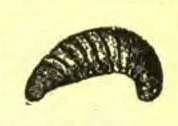
BEE SHOWING WAX SCALES
The next day, after the greetings were over, and Uncle Frank had enjoyed a hearty dinner with the family, Harold could wait no longer to conduct his uncle to the pleasant orchard, under the shady green trees, where papa had chosen to plant his colony of bees.
“I suppose you will tell me how the bees make their honey, Uncle Frank; I’ve asked papa ever so many times, and he always says, ‘Wait till Uncle Frank comes; he’ll tell you all about it.’”
“I’m afraid your father has set me a hard task, my lad; for really I do not suppose there is a man on earth who is wise enough to answer even so simple a question as that. But I’m sure we can learn very much about the habits of these useful insects if we watch them for an hour every day. Just see these little fellows pacing back and forth before the door; but be careful not to venture too near.”
“I wonder what they are doing. They don’t seem to go inside at all.”
“No, and neither do they fly away. They are the sentinels, who warn the inhabitants of the hive of the presence of danger.”
“How strange! they are just like soldiers in the army. But papa said you would tell me about the queen bees.”
“Well, there are three different kinds of bees in each hive,—the queen, or mother bee, the worker, and the drone. But before I speak of the queen bee, I must tell you something about the way the strange little cells that hold the honey are made. Did you ever notice, Harold, how wonderfully exact they are? These little creatures are great carpenters, and they build their cells in the very best way to insure their containing the most honey in the least space.”
“Yes, uncle, papa said only the other day that he could not do as fine carpenter work as the bees; I wonder if they think about their work, as people do.”
“I am very sure they must; for they work with marvelous speed and skill. But they do not all do the same kind of work. I’ll tell you how they begin: the first bee clings to the roof of the hive with his fore legs, and another hangs by the hind legs of the first, and so on, until they form a regular ladder or clump of bees.”
“How funny they must look! I wonder what they do then?”
“They just wait patiently a little while, and after a time, small, thin scales of wax appear on their stomachs; for these little workers are formed by their all-wise Creator for doing just this very work. They then knead and roll this wax with their legs, until it is ready to be glued to the roof to form the first layer. To this is added layer after layer by the other bees in the cluster, and then this detachment go out again into the fields, for a new store.”
“What do the other bees do, when this first company go away for more wax?” asked Harold.
“O they are not idle by any means! Another squad of workers that seem to understand another part of the trade, begin at once to shape the mass into the six-sided cells where the honey is to be stored. They work so fast and with such skill that they can build four thousand cells in twenty-four hours.”
“Just think, uncle, how long it would take a boy to do the same thing!”
“Yes, and a very strange-looking honeycomb we should have, I am thinking. But you see, Harold, that the Creator did not intend boys to do this kind of work, or he would have made them able to do it. But I promised to tell you something about the queen, or mother bee.”
“Papa says there is only one queen in each hive.”
“Yes, a colony of bees is very much like a kingdom governed by a king or queen. There are sentinels and workers and nurses and drones, besides a multitude of baby bees to attend to.”
“I am wondering if the queen goes around in the hive to see if the others do their work all right,” ventured Harold.
“O, no; there is small danger but that the bees will perform their work faithfully; for I am sorry to say these little insects are much more diligent in doing the work for which they were created than are many boys and girls,—or grown people, either. But the principal business of the queen is to lay the eggs for a new bee colony.”
“I suppose the queen lays an egg every day, doesn’t she? like my white leghorns; they never disappoint me,” and Harold smiled with satisfaction.
“O, the queen bee lays at least two hundred eggs every day, and continues this work all summer.”
“My! but I should think she would get awfully tired!”
“Possibly, but she never complains. Indeed, this is all the work she ever does. The workers wait upon her, and tend and feed her with great care.”
“But, Uncle Frank, you said there were nurses; that seem so odd; do explain what they do.”
“They take care of the little bees before they become perfect insects. This generally takes twelve or thirteen days; and all this time the nurses feed the helpless infant a sort of white stuff which looks much like paste. When these babies grow larger, their taste seems to demand more and more sweet. This, the wise little nurses are careful to supply. So, little by little, the young bee develops all its organs, and becomes a perfect insect.”
“Then I suppose the nurses leave it, don’t they, uncle?”
“Not quite yet; the baby must have careful attention for a few hours longer; and this, the nurses seem to be perfectly willing to give; they support and tend it with almost human care until, if it is a young worker, it is strong enough to begin to make honey.”
“Who teaches the baby bees how to do that,—do they have teachers who show them how to make honey and wax?”
“O, no, my lad; they have no teacher other than their Almighty Creator, who has implanted in their tiny heads a complete knowledge of their mysterious trade, so that the very first honey made by a young bee, is just as good as that made by its older relatives.”
“How strange that people must be taught how to work, when little bees do not need a single lesson. Can you explain this, Uncle Frank?”
“No one can explain it, my child; it is one of the mysteries of creation, as is also the bees’ strange secret of making their honey. The facts which are seemingly the simplest are often the hardest to explain, you know,—look out! look out, Harold!” cautioned Uncle Frank, for the little fellow had ventured too near one of the hives, and the inmates came out after him in a very angry manner. Papa had often warned him about this, but the boy’s curiosity to see if he could locate some of the nurses, had overcome his caution. The poor child ran crying to the house, and the faster he ran, the more angry the bees became. Uncle Frank followed more slowly.
“I can’t quite understand what made the insects so angry,” said Uncle Frank to mama, “are you sure there is nothing about his clothes which the bees do not like? their sense of smell is very delicate, you know,—perhaps —”
Just then mama took from her little boy’s pocket a handkerchief highly scented with cologne water, and tossed it to Uncle Frank.6
“Ah, my dear, this is the secret of the attack, and I dare say our young scientist will be careful to remove his handkerchief the next time he ventures out to watch the bees.”
MRS. L. D. AVERY-STUTTLE.
(To be continued)
Coveting Secrets
LITTLE birdie, tell me true
What the sunshine says to you,
What the trees, and flowers, and grass
Whisper to you as you pass.
There are secrets summers say,
Tell me, birdie, yours I pray.”
Bert's Mistake
“Guess!” said Bert, rushing into the house with the air of one who had a very important piece of news.
“Guess what?” asked Tom, excitedly.
“Why, the best thing that could happen.”
“Oh, I know!” Tom cried, his eyes shining. “Aunt Margie’s coming! She said she would soon,” and taking Bert’s smile for assent, he hurried up-stairs to tell the good news to his sick mother. On the way he met Mary, the servant girl, and he told her. Next he stopped by grandma’s door to let her know, and by the time he reached his mother’s room, he was so out of breath from hurry and excitement that he could only gasp, “Aunt Margie—she’s coming!”
“How do you know, and where is she?” cried Mrs. Williams.
“Why, Bert saw her, and I suppose she’s walking up the street this minute.”
How glad everybody was! Aunt Margie’s visits were few and far between, for she lived many miles away, and her coming was quite an event in the family. Even Mary shared the general delight.
The minutes passed, and poor Mrs. Williams, lying up-stairs on her bed, waited patiently for her sister’s appearance. “Why does she not come to me?” she asked herself again and again. She heard the outside door open and close, but no one came near her, and she was growing exceedingly nervous when steps sounded on the stairs, her own door opened, and she looked up to see no one but Tom.
“Where’s Aunt Margie?” she cried.
“I don’t know,” Tom said in a disappointed tone, “she hasn’t come yet. I watched and watched by the door, and I can’t see anything of her.”
“Why didn’t you ask Bert where he saw her?”
“I can’t find Bert, either. He ran right off and hasn’t been back since. I thought he’d gone to meet auntie. I’m afraid now that he’s just been fooling.”
Some hours afterward the missing Bert appeared. Tom happened to be by the front gate, so was the first to see him.
“Where’s Aunt Margie?” he demanded.
“I don’t know,” carelessly answered Bert.
“Where did you see her?”
“I didn’t see her.”
This time Bert laughed.
“But you said so.”
“I didn’t. I said for you to guess something, and you guessed Aunt Margie. I didn’t say yes.”
“You didn’t say no, either, Bert Williams, and that was the same as saying yes.” Tom returned in an injured tone.
“No, it wasn’t,” and Bert laughed heartily as he ran to the house.
In the sitting-room he met his father.
“Bert,” said Mr. Williams, “I thought you always prided yourself on being truthful.”
The smile faded from Bert’s face, and he scarcely knew how to answer.
“You were untruthful this afternoon.”
“I didn’t say that Aunt Margie was coming.”
“But you let Tom believe it. Besides, your words implied that something wonderful had happened. Is that your idea of truth?”
“It was only a joke,” Bert said, meekly.
“A joke! and for the sake of a joke you acted deceitfully, you disappointed the whole family, you made Mary stop her work, and begin to prepare a lunch that was not needed, you caused your sick mother to so excite herself that her fever has returned, and I am sure she — Bert started, and said, “I didn’t know that.”
“No, and I am sure you would have refrained if you had thought of such a consequence. But leaving your mother out of the question, do you think it is worth while to stoop to deceit at any time for the sake of a joke? Do you believe it is worth while to lower yourself by acting deceitfully under any circumstances?” — New York Observer.
The Leak in the Dike
By Phoebe Cary
The good dame looked from her cottage
At the close of the pleasant day,
And cheerily called to her little son
Outside the door at play:
“Come, Peter, come! I want you to go,
While there is light to see,
To the hut of the blind old man who
Lives across the dike, for me;
And take some cakes I made for him—
They are hot and smoking yet;
You have time enough to go and come
Before the sun is set.”
Then the good wife turned to her labor,
Humming a simple song,
And thought of her husband, working hard
At the sluices all day long;
And set the turf ablazing,
And brought the coarse black bread;
That he might find a fire at night,
And find the table spread.
And Peter left the brother,
With whom all day he had played,
And the sister who had watched their sports
In the willow’s tender shade:
And told them they’d see him back before
They saw a star in sight,
Though he wouldn’t be afraid to go
In the very darkest night!
For he was a brave, bright fellow,
With eye and conscience clear;
He could do whatever a boy might do,
And he had not learned to fear.
Why, he wouldn’t have robbed a bird’s nest,
Nor brought a stork to harm,
Though never a law in Holland
Had stood to stay his arm!
And now with his face all glowing,
And eyes as bright as the day
With the thoughts of his pleasant errand,
He trudged along the way;
And soon his joyous prattle
Made glad a lonesome place—
Alas! if only the blind old man
Could have seen that happy face!
Yet he somehow caught the brightness
Which his voice and presence lent;
And he felt the sunshine come and go
As Peter came and went.
And now as the day was sinking,
And the winds began to rise,
The mother looked from her door again,
Shading her anxious eyes;
And saw the shadows deepen
And birds to their homes went back,
But never a sign of Peter
Along the level track.
But she said, “He will come at morning,
So I need not fret nor grieve—
Though it isn’t like my boy at all
To stay without my leave.”
But where was the child delaying?
On the homeward way was he,
And across the dike while the sun was up
An hour above the sea.
He was stopping now to gather flowers,
Now listening to the sound,
As the angry waters dashed themselves
Against their narrow bound.
“Ah! well for us,” said Peter
“That the gates are good and strong,
And my father tends them carefully,
Or they would not hold you long.
“You’re a wicked sea,” said Peter;
“I know why you fret and chafe;
You would like to spoil our lands and homes;
But our sluices keep you safe”!
But hark! Through the noise of waters
Comes a low, clear, trickling sound;
And the child’s face pales with terror,
And his blossoms drop to the ground.
He is up the bank in a moment,
And, stealing through the sand,
He sees a stream not yet so large
As his slender, childish hand.
’Tis a leak in the dike! He is but a boy,
Unused to fearful scenes;
But, young as he is, he has learned to know
The dreadful thing that means.
A leak in the dike! The stoutest heart
Grows faint that cry to hear,
And the bravest man in all the land
Turns white with mortal fear,
For he knows the smallest leak may grow
To a flood in a single night;
And he knows the strength of the cruel sea
When loosed in its angry might.
And the boy! He has seen the danger,
And shouting a wild alarm,
He forces back the weight of the sea
With the strength of his single arm!
He listens for the joyful sound
Of a footstep passing nigh;
And lays his ear to the ground, to catch
The answer to his cry.
And he hears the rough winds blowing,
And the waters rise and fall,
But never an answer comes to him,
Save the echo of his call.
He sees no hope, no succor,
His feeble voice is lost:
Yet what shall he do but watch and wait,
Though he perish at his post!
So, faintly calling and crying
Till the sun is under the sea;
Crying and moaning till the stars
Come out for company;
He thinks of his brother and sister,
Asleep in their safe warm bed;
He thinks of his father and mother,
Of himself as dying—and dead;
And of how, when the night is over,
They must come and find him at last;
But he never thinks he can leave the place
Where duty holds him fast.
The good dame in the cottage
Is up and astir with the light,
For the thought of her little Peter
Has been with her all night,
And now she watches the pathway,
As yester eve she had done;
But what does she see so strange and black
Against the rising sun?
Her neighbors are bearing between them
Something straight to her door;
Her child is coming home, but not
As he came before!
“He is dead!” she cries, “my darling!”
And the startled father hears,
And comes and looks the way she looks,
And fears the thing she fears:
Till a glad shout from the bearers
Thrills the stricken man and wife—
“Give thanks, for your son has saved our land,
And God has saved his life!”
So, there in the morning sunshine
They knelt about the boy;
And every head was bared and bent
In tearful, reverent joy.
’Tis many a year since then; but still,
When the sea roars like a flood,
Their boys are taught what a boy can do
Who is brave and true and good;
For every man in that country
Takes his son by the hand,
And tells him of little Peter,
Whose courage saved the land.
They have many a valiant hero,
Remembered through the years;
But never one whose name so oft
Is named with loving tears;
And his deed shall be sung by the cradle,
And told to the child on the knee,
So long as the dikes of Holland
Divide the land from the sea!
—Phoebe Cary.
Pieces for Recitation
Some of the readers of the Instructor have requested that there be printed at times selections suitable for recitations. The poem given below was sent in to be used in this way. It is well to commit to memory choice selections from the best writers. The “Leak in the Dike” was written by Phoebe Cary. This fact alone enlists our interest in the story of the little hero portrayed in the poem.
MEMORY VERSE: “Therefore all things whatsoever ye would that men should do to you, do ye even so to them.” Matt. 7: 12.
“And seeing the multitudes, he went up into a mountain: and when he was set, his disciples came unto him: and he opened his mouth, and taught them, saying, Blessed are the poor in spirit: for theirs is the kingdom of heaven. Blessed are they that mourn: for they shall be comforted. Blessed are the meek: for they shall inherit the earth. Blessed are they which do hunger and thirst after righteousness: for they shall be filled. Blessed are the merciful: for they shall obtain mercy. Blessed are the pure in heart: for they shall see God. Blessed are the peacemakers: for they shall be called the children of God. Blessed are they which are persecuted for righteousness’ sake: for theirs is the kingdom of heaven. Blessed are ye, when men shall revile you, and persecute you, and shall say all manner of evil against you falsely, for my sake. Rejoice and be exceeding glad: for great is your reward in heaven: for so persecuted they the prophets which were before you. . . .”
“Ye are the light of the world. A city that is set on an hill can not be hid. Neither do men light a candle, and put it under a bushel, but on a candlestick; and it giveth light unto all that are in the house. Let your light so shine before men, that they may see your good works, and glorify your Father which is in heaven.”
“Think not that I am come to destroy the law, or the prophets: I am not come to destroy, but to fulfil. For verily I say unto you, Till heaven and earth pass, one jot or one tittle shall in no wise pass from the law, till all be fulfilled. Whosoever therefore shall break one of these least commandments, and shall teach men so, he shall be called the least in the kingdom of heaven: but whosoever shall do and teach them, the same shall be called great in the kingdom of heaven. For I say unto you, That except your righteousness shall exceed the righteousness of the scribes and Pharisees, ye shall in no case enter into the kingdom of heaven.”
“Ye have heard that it was said by them of old time, Thou shalt not kill; and whosoever shall kill shall be in danger of the judgment: but I say unto you, That whosoever is angry with his brother without a cause shall be in danger of the judgment: and whosoever shall say to his brother, Raca, shall be in danger of the council: but whosoever shall say, Thou fool, shall be in danger of hell fire. Therefore if thou bring thy gift to the altar, and there rememberest that thy brother hath aught against thee; leave there thy gift before the altar, and go thy way; first be reconciled to thy brother, and then come and offer thy gift. . . .”
“Lay not up for yourselves treasures upon earth, where moth and rust doth corrupt, and where thieves break through and steal: but lay up for yourselves treasures in heaven, where neither moth nor rust doth corrupt, and where thieves do not break through nor steal: for where your treasure is, there will your heart be also. . . .”
“Take no thought for your life, what ye shall eat, or what ye shall drink; nor yet for your body, what ye shall put on. Is not the life more than meat, and the body than raiment? Behold the fowls of the air: for they sow not, neither do they reap, nor gather into barns; yet your Heavenly Father feedeth them. Are ye not much better than they? Which of you by taking thought can add one cubit unto his stature? And why take ye thought for raiment? Consider the lilies of the field, how they grow; they toil not, neither do they spin: and yet I say unto you, That even Solomon in all his glory was not arrayed like one of these. Wherefore, if God so clothe the grass of the field, which to-day is, and to-morrow is cast into the oven, shall he not much more clothe you, O ye of little faith?”
“Therefore take no thought, saying, What shall we eat? or, What shall we drink? or, Wherewithal shall we be clothed? (For after all these things do the Gentiles seek): for your Heavenly Father knoweth that ye have need of all these things. But seek ye first the kingdom of God, and his righteousness; and all these things shall be added unto you. . . .”
“Ask, and it shall be given you; seek, and ye shall find; knock, and it shall be opened unto you: for every one that asketh receiveth; and he that seeketh findeth; and to him that knocketh it shall be opened. Or what man is there of you, whom if his son ask bread, will he give him a stone? Or if he ask a fish, will he give him a serpent? If ye then, being evil, know how to give good gifts unto your children, how much more shall your Father which is in heaven give good things to them that ask him?”
“Therefore all things whatsoever ye would that men should do to you, do ye even so to them: for this is the law and the prophets. . . .”
“And it came to pass, when Jesus had ended these sayings, the people were astonished at his doctrine: for he taught them as one having authority, and not as the scribes.”
Questions
1. Where did Jesus go soon after he had chosen the twelve disciples? What are the words that he spoke to the people and to his disciples at this time called?—The sermon on the mount. With what did this sermon open?—The blessings, or beatitudes.
2. How many beatitudes were spoken? Learn as many as you can of them. Why should we rejoice under persecution?
3. To what does Jesus compare his followers? How are they the light of the world? What is the office of a light? How may we let our light shine?
4. What had Jesus often been accused of doing?—Of breaking the law. What did he now declare he had not come to do? How long did he say the law of God will endure? How much would be taken away from it? What would be done to one who broke one of the least of the commandments?
5. What had the prophet said that Jesus would do? Read Isa. 42: 21. How did Jesus “magnify” the law in the sermon on the mount? Notice especially verses 21-24 of Matthew 5.
6. What did Jesus teach the people in regard to laying up treasures? Why is it better to have one’s treasure in heaven than on earth?
7. What beautiful lesson does Jesus teach from the birds? What from the lilies?
8. For what did he say we should take no thought? Who knows the needs of men? What should we seek above all other things? What promise is made to all who do this?
9. What precious promise is made to all who ask of the Father? How many receive? How does Jesus impress the love of our Heavenly Father for his earthly children? What beautiful law does he lay down as the rule which should govern all our acts toward one another? Memory Verse. What is this law often called?
10. What was the effect upon those who listened to the wonderful words of this sermon? How did it differ from the teaching that they were accustomed to listen to in the synagogue?
XIII—The Lord’s Supper and the Ordinance of Humility
(June 24)
MEMORY VERSE: “Jesus saith unto him, I am the way, the truth, and the life: no man cometh unto the Father but by me.” John 14: 6.
Questions
1. How many of the disciples ate the last Passover supper with Jesus? Luke 22: 14.
2. What strife arose among them? Verse 24; note .
3. Who did Jesus tell them would be the greatest among them? Verse 26.
4. To teach them how to be truly great, what did he do? John 13: 4, 5.
5. What remonstrance did Peter make? How did Jesus answer him? Verse 8.
6. When he had finished washing their feet, what question did Jesus ask the disciples? Verse 12.
7. What did he say we ought to do? Verses 14, 15.
8. What blessing did he pronounce upon those who know these things and do them? Verse 17; note .
9. Following this ordinance, what did Jesus do? Matt. 26: 26-29.
12. Of what future event is this ordinance also a pledge? Verse 26.
13. When will Jesus again eat with his children? Matt. 26: 29; note .
Uralite, the New Fire-Proofing
Uralite, a new invention, is superior to anything of the kind that has yet been produced. It is the invention of a Russian artillery officer and chemist, named Imschenetzky, and its claim to distinction is that it is absolutely fire-proof, and adaptable to many uses.
Uralite is composed of asbestos fiber, with a proper proportion of silicate, bicarbonate of soda, and chalk, and it is supplied in various finishes and colors, according to the purpose for which it is intended. In a soft form a sheet of uralite is like an asbestos board; when hard, it resembles finely sawn stone, and has a metallic ring. Besides a non-conductor of heat and electricity, it is practically waterproof (and may be made entirely so by paint), and is not affected either by atmospheric influences or by the acids contained in smoke in large towns, which destroy galvanized iron.
Moreover, it can be cut by the usual carpenters’ or woodworkers’ tools; it can be veneered to form paneling for walls or partitions; it can be painted, grained, polished, and glued together like wood; it does not split when a nail is driven through it; it is not affected when exposed to moisture or changes of temperature, and it can be given any color.—Search-Light.
The Horn of a Cow
SCIENTISTS tell us that a cow's horn is a combination of phosphate of lime, gelatin, and albumen, with these three substances in the right proportion to make the horn not only serviceable to the animal, but useful to man. The lime makes the horn hard; but there is just enough to make it hard without making it brittle, and there is just enough gelatin to make the horn easy to cut and shape.
Inside the horn is a core, which is bone. To get it out, the horn is soaked in water for several weeks; and when the core comes out, it is ground up and made into crucibles, which are used for melting gold and silver in.
The outer end of the horn is hard and solid, and is used for making knife handles and other things. The main part of the horn is soaked for half an hour or so in boiling water, when it becomes soft, and may easily be split with a knife. It is then spread out flat, and put between iron plates. There was a time long ago when these horn plates were made very thin by hard pressure, and used in windows and lanterns as we now use glass. The “hornbooks” of the olden time, from which children learned the alphabet, were made of the same.
When horn is heated, it may be molded into almost any desired form. That is the way that knife handles, buttons, and other articles are made. A mold of the required shape is used; and when the heated horn substance is put into it and subjected to pressure, the material takes the shape of the mold.—Boy's World.
Wonders of a Long-Distance Microscope
M. DE GASPARIS, an Italian scientist of the University of Naples, is credited with the invention of an improvement on the microscope, which he names the bioscope, as it is to be used for the study of the phenomena of animal life. It is in construction a “long-focus” microscope, its purpose being to enable the observer to watch magnified small animals at a distance not possible with the ordinary microscope, and see their life motions when in a state of complete freedom.
Ants and spiders can thus be watched amid their ordinary operations, and when magnified so largely as to look like veritable monsters: swimming animals can be observed in an aquarium; and there are other uses to which the instrument can be put. At a distance of 19.5 inches it has a magnifying power of more than twelve diameters. A camera lucida permits the drawing of the objects observed.—Search-Light.
A Life-Raft to Carry Fifty Persons
The French liner “La Savoie” came into port at New York on April 15, equipped with the Matson life-raft, an invention of Harry Matson, the “Savoie’s” chief steward. The raft has had so successful a trial that other vessels of the line may carry it.
The raft is water-tight, and has compartments for food and fresh water. It is twelve feet long, nine feet wide, and three feet deep, and capable of carrying fifty persons. The great advantage claimed for it by the inventor is that within a fraction of a minute, by simply turning a crank from the bridge, all the life-rafts on one side of the boat can be thrown overboard. The rafts rest on platforms supported by uprights held in place by pins. By the turning of levers these pins are removed, and the platforms tilted so that the rafts slide into the sea.
The trial of the life-boat raft took place at Havre on April 7. The raft was put on the bridge of “La Savoie,” thirty-three feet above the water, and Commander Boyer, of the French Naval Reserves, the agent of the French line in Havre, launched it by pulling the lever chain. An automatic pulley was used to lower twenty-five men into the raft, and within five minutes after she had touched water, the raft boat pulled away from the vessel’s side.—Search-Light.