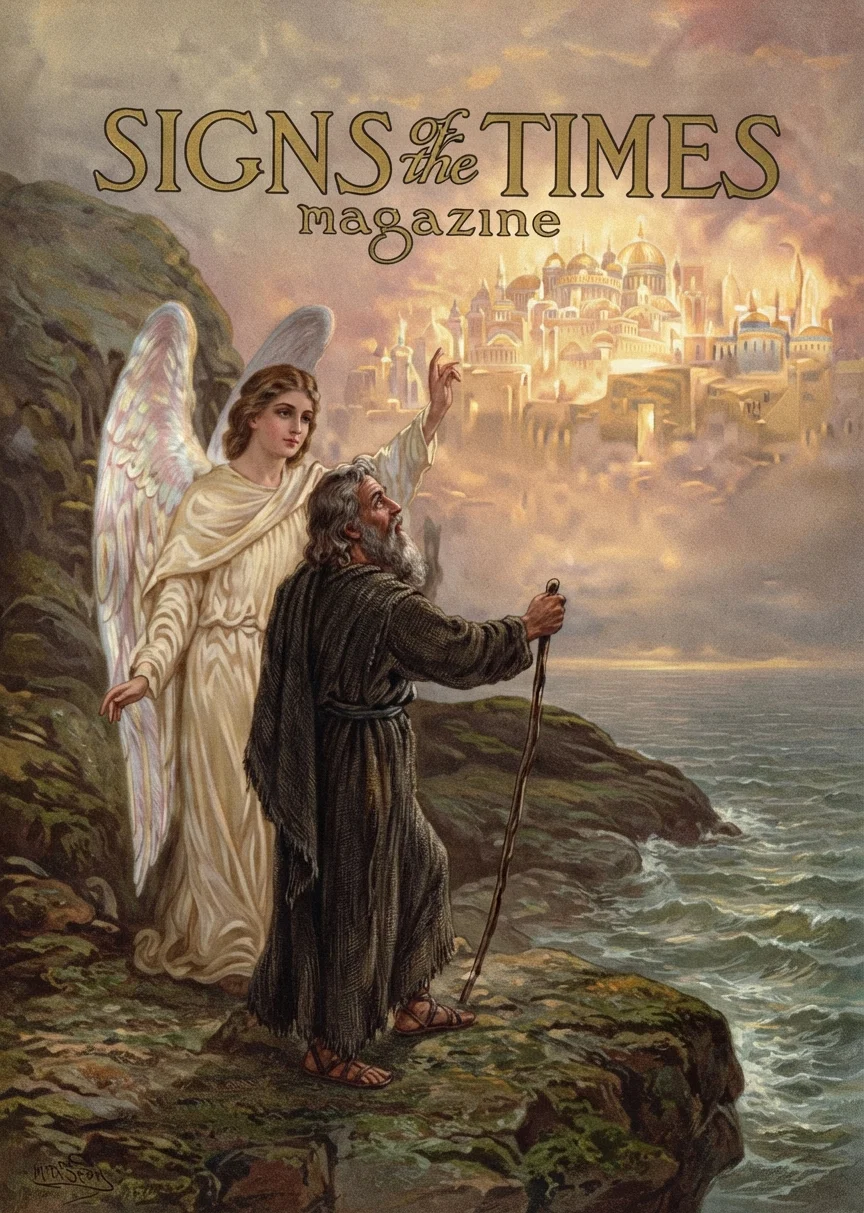
Signs of the Times, Vol. 43, No. 28.

Modern Speed Mania

Earlier text: FEROCITY OF MODERN WARFARE

Heaven's Preparedness Program

Procrastination and Its Wreckage

The Preventive of Failure

By RUTH LEES OLSON
AGES ago, the prophet Amos sounded the slogan that has found a worldwide echo in the present-day "preparedness" cry; and because the children of the world are wiser than the children of light, they have given heed to the immense possibilities contained in that word. As a result, men stand in amazed awe at the power of the great military machines of the day.
Let us study the message of the prophet Amos. Three things need to be considered in the program of "preparedness" for the nation or the individual that contemplates future success. They are the links in the chain that connects the present with the future: first, the time for preparedness; second, the material needed; and last, but not the least important, the constructive work.
The future is oftentimes mirrored in the present, for "coming events cast their shadows before." The all-wise Book says, "A prudent man foreseeth the evil, and hideth himself." The view that is needed is not the downward view that beholds only the confines of our own little world, but the broad vision that looks out and beyond the present time to the great crisis that faces humanity. The time is coming when men shall seek for God, and shall not find Him; shall search His word for salvation, and find it a closed book to the eyes of their understanding.
"Prepare to meet thy God." When? Surely not when we are in the vortex of strife and commotion; not when the enemy of mankind sweeps down on us with an avalanche of temptations; and surely not when the door of mercy has closed on an impenitent world. When? There is only one safe and sane answer to that question — NOW! — And that word "now" covers every moment and hour of to-day and all days to come.

Wrecked by a Flaw

PROCRASTINATION is as ancient as the hills; and as an inoculating germ, it has found a hiding place, to a greater or lesser extent, in every member of the human family. There is only one preventive for it, and that is preparedness; and the sooner we forget to put off, and remember to put on, the greater will be our efficiency. Therefore preparation now is the bulwark and fortress for the conflict to come.
In defensive resistance, the question of material plays an important part. Shall I make preparation by selecting from the old material that I have so carefully gathered in the days that are past and gone, the experiences that were once so full of life and power?
The cost of a modern battleship is from eight to ten million dollars, and its lifetime of service is comparatively few years. The best material and workmanship are used in its construction; yet notwithstanding such tremendous expenditure, no nation will settle down, and after ten or twenty years, point to its obsolete hulk, and say: "I am prepared for war. Behold my navy."
The material used in the preparation for a future life should be the best possible, the work progressive, and each day and each year should see new ships of experience launched on life's sea. Each hour should prove the material of our souls to be trustworthy. Many a ship has gone down to destruction because of some small flaw in its construction, many a soul has been defeated unto death because of a neglect to prepare every joint of its armor to resist the enemy's steel; for a ship is no stronger than its weakest timber, and a chain no more powerful than its weakest link.
Let us make sure of our work. A little child came to her teacher, lesson book in hand, and announced confidently that she was ready to recite; but the testing time revealed a hesitancy and uncertainty which showed that the lesson was not "quite by heart," and the confident "I thought I knew it," melted to tears when the book was returned with "the mark still set in the selfsame place."

Studying the Blue Prints

THE work of preparedness must be minute in detail, and the blue print of the Master Workman must be carefully studied and followed, always with the thought in mind that the strongest will be needed to stand the storm, the best to endure the testing time. "I thought I was ready" is not an acceptable excuse, and may mean eternal loss. True preparedness insures triumphant victory in the crisis of battle.
The message of preparedness has sounded from the heights of heaven to earth's remotest bounds: "Get ready, get ready, get ready." Will we listen to the warning, or like some of the nations of to-day, wait until the storm breaks in all its fury, then vainly seek to gather our forces and materials for what can only be a feeble, futile resistance? We cannot test our material too often. We cannot be too careful in selecting it. Do not wait until the battle cry is sounded to be sure of your armor. Prepare and inspect it now.

CHRIST MAGNIFIES HIS FATHER'S LAW

ISAIAH, prophesying of the attitude Christ would sustain to His Father's law, said, "The Lord is well pleased for His righteousness' sake; He will magnify the law, and make it honorable." Isa. 42: 21.
Christ's life was the law of God magnified and made honorable in every respect. To magnify is not to add anything to or take from. When we turn a magnifying glass upon a flower, the glass neither adds to nor takes from the flower, but simply reveals that which is already there.
Christ was an example of the law of His Father lived out in the flesh. The Father gave to the human family the law, and sent His Son as an example to all in commandment keeping.
"Sin is the transgression of the law." 1 John 3: 4. The Lord came to save His people from their sins, not in their sins or from the law. We read, "Thou shalt call His name Jesus: for He shall save His people from their sins." Matt. 1: 21.
It is also a matter of prophecy that the time will come that the Master will bruise the head of the serpent. Gen. 3: 15. Said John, "For this purpose the Son of God was manifested, that He might destroy the works of the devil." 1 John 3: 8.
The foregoing texts clearly reveal the work of Christ. He came to magnify the law of His Father, save man from his sins, and destroy the works of the devil.
Now if the Christian life means anything, it is that Christ dwells in the heart by faith. Paul's testimony was, "I live; yet not I, but Christ liveth in me." Gal. 2: 20.

Destroys Plan of Salvation

THE Master is "the same yesterday, and to-day, and forever." When any permit Him to have His perfect way in their lives, He will cause them to magnify His holy law, will save them from their sins, and will destroy the devil's works in them.
The teaching which would cause people to believe that the law of God is abolished, destroys the principles of the plan of salvation, and denies the work of the Lord.
Of the law, the Bible declares: "Sin is the transgression of the law." 1 John 3: 4. "By the law is the knowledge of sin." Rom. 3: 20. "Where no law is, there is no transgression." Rom. 4: 15. "Sin is not imputed when there is no law." Rom. 5: 13.
Now for argument's sake, let us conclude that as some teach, there is no law. What do we have then? Says one, "We have sin and Christ left." But where there is no law, there is no sin. Inasmuch, then, as the work of Christ is to magnify the law, and save us from sin, if there is no law or sin, there is no need of Christ. Thus the no-law theory needs no Saviour.
May the Lord help us to consider that the whole effort of Heaven, in the plan of salvation, is to write the law of ten words in the heart and mind of the child of God. This is the new covenant. Heb. 8: 10. That which is written by the Spirit of the Lord in the heart and mind is not abolished. Whatsoever is in the heart, we delight to do.
If the Bible teaches anything, it certainly teaches that the human family will be judged by the law of Ten Commandments. If we cannot, by the help of the Lord, meet the requirements of the law in this world and our life here, how will we fare in the Judgment? A. S. BOOTH.

God's Unchanging Law

God's unchanging and unchangeable law is the foundation, in written form, of all truth. All that is truth is but the outworking of the divine principles contained in those ten precepts. "Thy law is the truth." Ps. 119: 142. T. E. B.

Prepare to Meet Your Foe

My soul, be on thy guard. Prepare to meet thy foe, Whose unseen ranks are drawing near to bend thy standard low. Go, search thy strong defense, thy strength its weakest spot, Thy weapons useless in the fight unless thou knowest aught Of tempered steel and skillful use in conflict with the might Of unseen spirits of the air, arrayed against the right. Seek thou on bended knee a preparation true, That victory in Christ's dear name be always given you.

American Twin Evils

Beer and the Cigarette
By DANIEL H. KRESS, M. D.
THERE exists an intimate and inseparable connection between drink and tobacco. Where the one is, the other is almost sure to be. Horace Greeley once said, "Show me a drunkard who does not smoke, and I will show you a white blackbird." While there are some smokers who do not drink, a drunkard who does not smoke is seldom seen.
The smoke usually precedes and leads to drink. Seventy-five per cent of drunkenness is traceable to the smoke habit. Tobacco creates a thirst that water fails to quench. A smokeless saloon cannot long exist. The greatest asset of the saloon is tobacco. The boy who begins to smoke will usually end in the saloon.
An effort is being made to separate tobacco and drink. This will ultimately fail. To get rid of one evil, we must get rid of both. Drink is withheld from the men on the battle field as destructive to efficiency and success, while the cigarette has been furnished as a helpful adjunct. One is considered a curse, the other a blessing. The appeal comes from the battle field, not for more food or for better food, but for tobacco. The Belgian prime minister recently asked his men who were still holding on to the small portion that is left of their territory, which they preferred, better food, or tobacco with their rations. They unanimously replied, "Give us worse food if you like, but let us have tobacco."
An appeal has come to America for a weekly sum of $5,000, or $260,000 annually, to supply the demands of these 200,000 Belgian soldiers who are calling for tobacco. Millions of cigarettes have already been sent to the front from America, for the British and French soldiers. Manufactories are running night and day to meet this additional demand.

Battle Field Not the Place to Wean Them
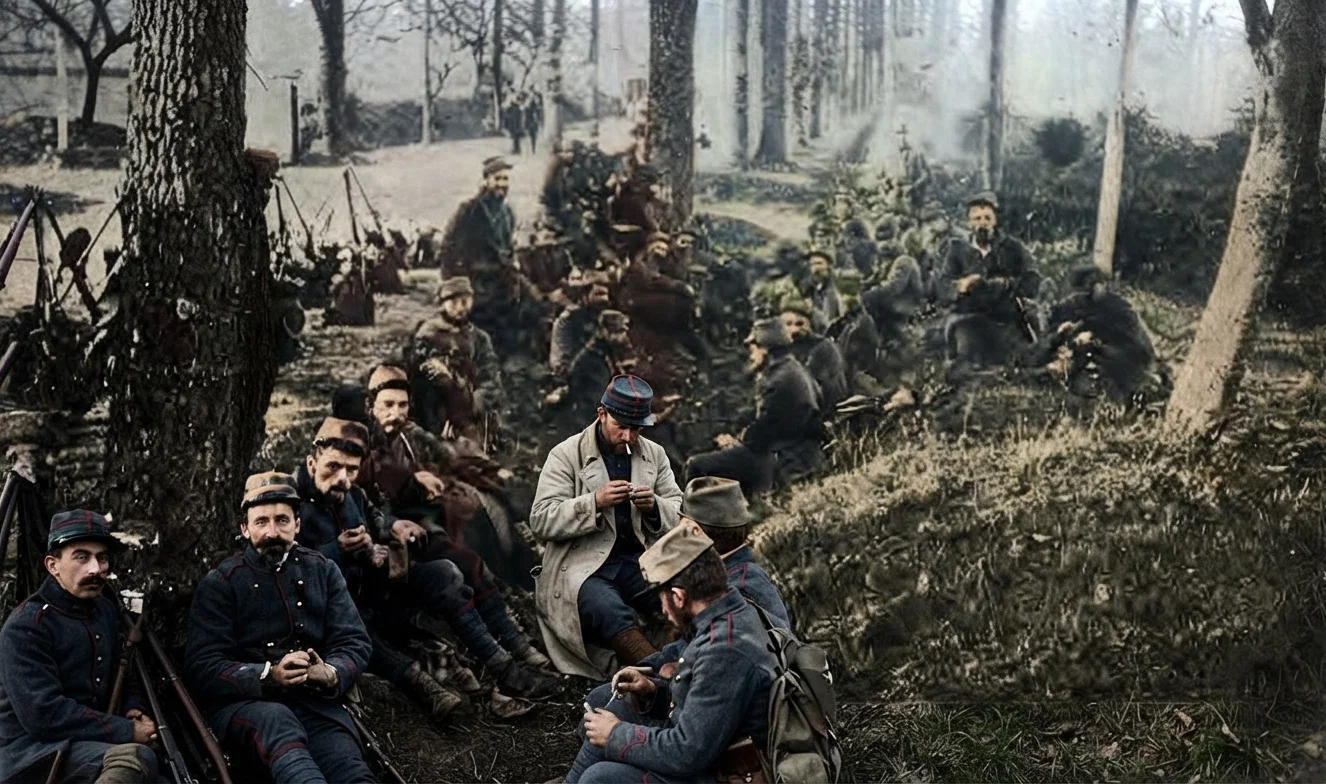
I DO NOT say that tobacco ought to be withheld from the men who have gone to the front and are calling for it. This is not the purpose of my appeal. I realize that one of the surest ways to defeat an army of men made up of smokers would be to deprive them of their accustomed smokes. I merely say that the battle field is not the best place to wean men from tobacco, or to treat drug fiends of any kind. This work should be done before addicts are sent to the front.
The tobacco habit is a drug addiction. The habit of inhaling the smoke, which is now the universal way of smoking, is a drug addiction similar to opium smoke inhalation, and is possibly almost as injurious. The injury resulting from the smoking of opium, should the smoke merely be drawn into the mouth, would be small compared with that caused by drawing the smoke into the lungs. It is the inhaling of opium smoke that is responsible for China's degradation. Opium smoke inhaling in China has never been as common as tobacco smoke inhaling now is in America. Opium smoke inhaling there has been confined almost exclusively to adults, while tobacco smoke inhaling is common among children as well as adults.
The appeal comes from the battle field, not for more food or for better food, but for tobacco.
Smoke inhaling is without doubt the best method to employ to obtain the immediate drug effect desired. Two or three deep inhalations of tobacco smoke will produce more intoxication than can be produced by one hour of ordinary smoking. It is the drug effect that is demanded. Why not inhale to obtain it?
But is a country that is defended by "drug fiends" safe? There are young men who are more interested in the cigarette than in the welfare of their country. They cannot endure hardships. James I, in referring to this practice, so prevalent among his men, as relating to the efficiency of his army, asked, "How can men who cannot go a day's journey without sending for hot coals to kindle the tobacco, be expected to endure the privations of war?" He understood that the nation could not rely upon an army made up of such men, for endurance or success.

1,200 New Recruits Daily

IN addressing his naval cadets, Emperor William several years ago made the prediction: "In the next great war, nerve power will decide the victory. Victory will be with the nation that uses the smallest amount of alcohol." Nerve power, we know, is undermined by the use of alcohol; but there is no agency that is to-day undermining nerve power more surely than is the general practice, among our boys and young men, of inhaling tobacco smoke or of smoking cigarettes. Each day, we are adding 1,200 young recruits to the great army of cigarette fiends we already have. We are a nation of smoke inhalers. The results are alarming.
Between July, 1914, and May, 1915, out of 159,800 young men who applied to enter the United States army, only 36,200 were able to pass the test. Over 123,000 were rejected as physically unfit to stand the strain of war. This is certainly a serious condition, regardless of what the causes of the degeneracy may be.
In referring to the cigarette habit among the youth of England, and its deteriorating influence, Sir Brampton Gordon said, "If, in ten or fifteen years hence, we should have the misfortune to engage in a great war, this habit among our youth to-day would tell against us." America consumes twice as much tobacco per capita as does Great Britain. Boys and young men who are addicted to this habit are not reliable before they are called to the front. They are not in demand where efficiency, accuracy, and nervous and mental concentration are required. If they are unreliable in business, are they reliable defenders of our country?

Forbids Smoking Among Minors

JAPAN is wiser. She began to build battleships and guns about twenty years ago; but at the same time, she gave attention to the building of men. Sixteen years ago, a bill was introduced in the house of representatives of Japan, forbidding the use of tobacco to young men under twenty years of age. This bill was passed unanimously, and became a law the same year. The argument used in urging the passage of this bill, it would be well for us in America to study.
The Hon. Neomota, in introducing the bill, said: "Tobacco, like opium, contains narcotic poisons, which benumb the nervous system, weaken the mental power of children addicted to smoking. And thus, to give point to our national policy, we must strictly prohibit the smoking of tobacco by children and young people. If we expect to make this country superior to the nations of Europe and America, we must not allow our youths, who are to become the fathers and mothers of our country in the near future, to smoke."
Smoke inhalation, as practiced to-day by the youths of America, is doing more to undermine the efficiency of our future men and nation than possibly any other one practice, not excepting alcohol.
We give tobacco to the men in the trenches. They all, practically, smoke. If they are supplied, they will smoke more on the battle field than while at home. We withhold beer and whisky from these same men. What does the future hold in store?

Produces the Drink Appetite

THE men who leave the battle field will be nervous wrecks, made so perhaps more by the smoking of cigarettes than by the exposure. They will all be drug addicts. By smoking, they will have cultivated a craving for strong drink. While prohibition may be enforced for a time, this universal craving will later demand drink and an open saloon. By encouraging the use of tobacco among the young men who have gone to the front, we are in danger of defeating our efforts to prevent the sale of alcoholic beverages in the future; for the two cannot be separated.
We are already spending twice as much for tobacco as we pay out for railroad travel, and about three times the amount we spend on our common school system. During the past two years, there has been an increase of over $150,000,000 in the consumption of tobacco in America.
Not less than $1,200,000,000 is now paid out annually for tobacco—a sum one half that of our drink bill. It is generally recognized that the smoker who gives up drink, almost invariably goes back to it unless he also gives up his smoke. Likewise the nation that gives up drink, will go back to it unless she discards the smoke. There is but one safe way, and that is to bury them both. The attempt to separate them has proved to be a failure in individual life. It will be a failure in our national life.

Bury Drink and Tobacco Together

"It is generally recognized that the smoker who gives up drink, almost invariably goes back to it unless he also gives up his smoke. Likewise the nation that gives up drink will go back to it unless she discards the smoke. There is but one safe way, and that is to bury them both."

A NATION'S RIGHTS

Should It, or Should It Not, Abolish the Saloon?
By HAMPTON W. COTTRELL
HAS the state a right to abolish the saloon? The causes for the existence of the saloon are obviously two. From the viewpoint of the proprietor, it stands for easy and ready money; therefore it exists. On the part of its patrons, it stands for the frequent satisfying of an abnormal thirst for the crime-breeding and death-dealing liquid; hence it exists. But neither of these assigned reasons constitutes evidence that the saloon should exist.
The state was ordained of God as a guarantee to all people, even to the most humble citizen, that the natural liberty of all and the rights of each should be preserved, and that corporal punishment be meted out to the invaders of the rights of others.
Whether or not the state has the right to abolish the saloon, turns upon this pivotal point: Does the saloon promote among its patrons better, higher, and purer living, thus making of them more highly respected citizens, or is it a menace to the work of developing higher, purer, and nobler ideals in the minds of men and women who are citizens of the commonwealth?
If the saloon does not engender among its patrons, who constitute a large minority of the citizens of the state and the nation, a better citizenship, by making them better men, with better morals, able and willing to bring back to the government better results in fruit-bearing, but does directly the opposite, then it is a menace to civil government, and should be abolished.

The State's Duty

HISTORY fails to chronicle that any saloon ever built up the morals of a community. It is a menace because of the character of its work; a menace because its victims do not possess the strength of character to resist the temptation to indulge in alcoholic drink, such indulgence having become a second nature to them. The saloon is a menace because of the abominable evil lurking therein, which, oftentimes accompanied by strains of well rendered music, is thrust into the very faces of our brightest boys and girls at the age of adolescence, while as yet they are unprepared to escape the snare for their feet.
In nearly every instance, the business of a successful saloon leaves in its trail broken hearts and financially ruined homes. The inmates are often left to drink the dregs of poverty, in order to fill the saloon keeper's till. In every municipality where the saloon survives, this lamentable condition obtains.
The state has a duty to perform to protect this unfortunate class of its citizens; and there is but one course left for it to take, and that is to abolish the saloon.
Individual rights stand distinctively in two well defined classes. The first of these, natural, inherent liberty or rights, are not created by man, or imparted by him to another. Such rights are not created by a collective body of men in legislative capacity. They are God-given, and each individual has them by nature. The duty of the state toward the inborn rights of the individual is to see that civil government does not trench upon them, and that no citizen abridges them.

Inherent Rights Jeopardized

Example: Every man has the inherent right of liberty of choice to worship God or not to do so, as he may elect. Provided he chooses to worship God, and does not infringe upon the equal rights of his neighbor in his method of worship, the state owes him protection. This man also has the right of choice not to be religious. Should he so choose, he is entitled to the same protection from the state as if choosing to be a worshiper of God, provided only that carrying out his idea of true living does not trespass upon the equal rights of another person.
Again, every man has the inherent right to keep his brain in normal condition, that he may have the proper use of his mind at all times. And his liberty to remain sober ought not to be invaded by traffic in alcoholic liquors.
But those engaged in the nefarious liquor traffic hourly interfere with the right of millions of our brothers and sisters to remain sober. The state has the unquestionable right to eradicate the saloon, in harmony with its divinely ordained duty to protect the rights of its citizens.
God ordained civil government to protect every man in the enjoyment of his natural rights. The state therefore cannot, by divine right, legalize by legislation a traffic which will, in the very nature of the business, enable the trafficker to wreck the rights of each of his patrons.
The saloon personified says, "I furnish the money that makes the growth of city, state, and nation." Reason replies: "No, you do not. The money you furnish as yours is unjustly extorted from millions of unfortunate men and women, whose liberty, reason, and property you have stolen."
The state should abolish the saloon forever.

Looking Upon the Cross

"HE who looks often upon the cross of Calvary, remembering that his sins placed the Saviour there, will never try to estimate the degree of his guilt in comparison with that of others."

Rent an Underwood Typewriter

¶ Demanded by those who know machine merit.
¶ Most popular with largest corporations and all champion operators.
"The Machine You Will Eventually Buy"

August Signs Magazine

NOW READY

Some of the Contents

The August number of the Signs of the Times Magazine deals with the great eternal verities of God, the things which man needs to know, not simply for the life that is to come, but which will be of untold benefit in this life.

HUMANITY'S GREATEST NEED

A. G. DANIELLS
An exceedingly helpful and spiritual article, showing that the greatest need of the world and the church is the abiding presence of the Holy Spirit. This help is offered to every soul that will grasp it.

HUMAN EMANCIPATION

DR. L. A. REED
This article shows, contrary to the religious philosophy of the present day, that man is not saved by social reformation or by natural regeneration, but that a power from above must take hold of the weaknesses and degeneracy of humanity, and make of the individual a new man.

REVELATION THIRTEEN

EDITORIAL
A very illuminating presentation of this wonderful prophecy. The time of its application; the ten horns; the beast—what is it? the deadly wound—when inflicted. There is much misunderstanding as to what this prophecy really means. This article clearly shows that it is not a church or a man, but a system under various phases.

EVOLUTION AND THE PROBLEM OF EVIL

GEORGE MC CREADY PRICE
Showing the wisdom of God manifested in permitting sin. Teaching of evolution. No power outside of Christ to uplift the imperfect human.

THE LAW OF CHRIST'S KINGDOM

R. S. OWEN
The infinite responsibility of choice; God will not compel obedience; the law is the law of liberty.

"THY KINGDOM COME"

This article is illustrated by the splendid cover design.

WITNESSING FOR CHRIST

MRS. E. G. WHITE
The possibilities and duties of Christ's followers.

THE WORLD OUTLOOK

The above are only a few of the many good things to be found in the August number.
Pacific Press Publishing Assn. Mountain View, Cal.

EXTINCTION WORSE

THAN HELL

WHEN the truth of the Bible concerning the end of the wicked is taught, the cry is raised that annihilation is not punishment, and that if eternal suffering is not preached, there will be no fear of the future in the hearts of men. Indifference to the service of God will result. Better indifference than a service based on fear. Fear has torment, says the Word; but perfect love casts out fear. The belief in eternal torment keeps the love of God in its fullness out of the human heart. How can a person love a being one of whose attributes is extreme cruelty? Cruelty is the antithesis of love.
That eternal nonexistence has with it a wholesome fear is thus evidenced:
In 1883, when he stood upon the edge of threescore years, the noted scientist Huxley wrote to a friend:
"It is a curious thing that I find my dislike to the thought of extinction increasing as I get older and nearer the goal. It flashes across me at all sorts of times with a sort of horror that in 1900 I shall probably know no more than I did in 1800. I had sooner be in hell."—Quoted by T. Calvin McClelland, D. D., in his book, "The Mind of Christ," page 135; published by Thomas Y. Crowell & Co., New York.
Men look upon death as a severer punishment than imprisonment for twenty years, or for life. There is no greater punishment than the eternal extinction of being. To put the sinner out of existence forever—this is justice and mercy; to keep him in excruciating torments for eternity is cruelty,—a cruelty which had its origin in the mind of Lucifer, God's everlasting enemy. The wicked shall be as though they had never existed. This is the truth taught in the word of God, a truth which appeals to every man's sense of right and justice.
JOHN N. QUINN.

Wanted for Missionary Work

Mrs. Jennie Williams Lamb, Box 401A, Route 2, Pasadena, California, desires a continuous supply of denominational literature for missionary purposes.
Charles E. Schwerin, Box 82, Orange Springs, Florida, desires copies of the SIGNS OF THE TIMES, both weekly and monthly, Liberty, Life and Health, Watchman, and tracts of all kinds, for free distribution in new, unworked territory.

HYGIENIC COOKING OIL

Dr. Godsmark's

HYGIENIC COOKING OIL

The shortening used by vegetarians. Shipped everywhere from Louisville, Ky.
Write for prices and descriptive circulars
Address Dr. O. C. Godsmark, Chattanooga, Tenn.

School for Nurses

Loma Linda Training School for Nurses is now making up a class to begin August 13. We shall be pleased to send our calendar and full information to any one who contemplates entering this line of work. The school is well equipped with laboratories, and instruction is given by members of the college faculty. Our hospital furnishes excellent opportunity for clinical experience. Ten grades are required for entrance. Our school is also recognized by the state. We can accommodate an unusually large number of students this year. For further information, address Superintendent of Nurses, Loma Linda Sanitarium, Loma Linda, California.

Nurses Wanted

WANTED AT ONCE, at Long Beach Sanitarium, Long Beach, California, ten Seventh-day Adventist, strictly first class graduate lady nurses.
Continue reading: Our Representatives