Signs of the Times, Vol. 42, No. 1.

And the Nations Were Angry
Earlier text: And the Nations Were Angry

“The Motor Power in Love’s Activities”

The Great Fountain from Which It Flows—Not a Tinge of Hatred to Contaminate
By GEORGE B. STARR
LOVE works. It must work. It is the greatest working force in the world or the universe. And it must work for others; for love works outward, and lives on its deeds that actually minister to others’ happiness.
Love plants, it sows, it reaps, it builds, it ministers to the sick, it carries light and blessing near and far, it creates in order to bless. Love must create new channels for its ever increasing activities. Wider, broader, higher, further must it reach.
“Back of the loaf is the snowy flour; And back of the flour is the mill; And back of the mill is the wheat and the shower And the sun and the Father’s will.”

ONLY BLESSING AND HAPPINESS

God is love; and love is as great and good and far-reaching as God Himself. It must be. Love can plan only blessings and happiness, peace and joy. Love can not plan evil. Even in the destruction of sin and sinners and death itself, love is working to bless.
“By love serve one another.” Gal. 5:13. Love must serve. It lives and grows by service; and it is constantly seeking avenues, channels, through which it may serve more. Men and angels have been and are the natural channels for love’s working. But love’s workings have back of them all, as Lawrence says, “a mighty Motor, which is Christ Himself as author, operator, and energizer of all divine activities. Christ is the one motive power. Not the command of Christ, not the love of Christ, not the glory of God alone, not the guilt or perils or possibilities of souls—no one of these alone is the great controlling force, but Christ Himself.”

THE WHOLE LIFE CHANGED BY THE TOUCH

Men meet Christ; and as the wire is charged with the current of the mighty dynamo with which it comes in contact, and becomes itself a channel for the electric current, so one touches Christ, and another touches him, and is in turn charged with the same energy. The Samaritan woman at the well touched Christ, and all Samaria was electrified through her. Mary touched Christ, and seven devils were paralyzed, and she was released, to set all earth and heaven an example of giving the best to Jesus; for love must give its very best.
Paul touches Christ, and the world is stirred yet with his earnest prayers that we may “know the love of Christ, which passeth knowledge.” All his hatred and selfish ambition are turned to love for Christ and man.

CHARGED BY THE DIVINE DYNAMO

Moody touched Christ in Boston in 1856, at the age of nineteen, and his life was charged with an indefinable love for all the world. Work he must, and work he did, from 1860 to 1890, as few other evangelists ever worked for the salvation of two continents. The divine Dynamo was undoubtedly charging him for love’s service to the world, which resulted in one of the greatest evangelists the world’s history has recorded. Christ, through Moody, reached and stirred to activity thousands of others who felt the influence of love’s power through him, and were cut loose, as if by magic, from their moorings to sin, and set at their Master’s work. Among those so moved were Ira D. Sankey, Major Whittle, P. P. Bliss, Robert E. Speer, and John R. Mott, of America; Henry Drummond and James Stalker, of Scotland; Dr. Wilfred T. Grenfell, of England, now of Labrador; and Dr. Kenneth MacKenzie, of China; and among the thousands of others is included the writer.
Dr. W. T. Grenfell, in an article in the Congregationalist of November 12, 1914, says of the influence of Mr. Moody upon his life and work: “I have been analyzing the causes that brought me to this barren coast and held me here these twenty-two years, a large section of one’s life. The answer is an odd one: An American, a man of humblest birth, a man invested with no human authority, a man I only once spoke to,—D. L. Moody. His whole soul was for the individual; and his sane simplicity and courageous big heart, with his practicability, made every one want to do things. Like Paul, he claimed for Christ the credit for anything he accomplished. That lovely unselfishness appeals always to the best in every man. D. L. Moody always stood on the platform of ‘whose I am, and whom I serve.’”

MEN ELECTRIFIED TO-DAY

Now as surely as Christ touched and mightily moved men in the past, so is He electrifying and moving men to-day, for the finishing of His work, for the harvesting of the work of all His servants of the past; and you and I may be among those so honored of Heaven as to be channels through which His love may still flow earthward. All may keep in close and constant touch with Him through His word and prayer. There is a wireless service with Heaven’s Dynamo, and we may use it.
“All power is given unto Me in heaven and in earth” includes the power of all the love in the universe, which is the greatest impelling and staying power in the universe; and we may be the channels of its working.
“Make channels for the streams of love, Where they may broadly run; And love has overflowing streams To fill them every one.
“For we must share if we would keep That good gift from above. Ceasing to share, we cease to have. Such is the law of love.”

What God Can Make You Like

“If you wish your neighbor to see what God is like, let him see what He can make you like.”

The Bow of Promise

“THE bow of promise is never seen while we are looking down.”

The Gospel and the Law

How Long the Law Has Existed — The Relation They Sustain to Each Other — The Mirror That Shows the Defects
By JOHN E. FULTON.
In the beginning, there was no sin. Man was placed in a beautiful garden, where all was love and peace. Nothing was wanting that could minister to his joy, and all that was required on his part was perfect obedience to God’s law.
How sad that this happy state did not continue! Sin, which is a monster, entered that lovely garden, and brought woe, unhappiness, and death. “Sin,” says the apostle John, “is the transgression of the law.” 1 John 3:4. And “the way of the transgressors” of the law “is hard.” Prov. 13:15. How hard has been the lot of sinners from the day our first parents transgressed to the present time!

The Law Before Sin

Sin has a hoary head. It is of great age. But before sin, God’s law must have existed. Paul says that “where no law is, there is no transgression.” Rom. 4:15. But there was transgression in the beginning, so there must have been law. “Sin is not imputed [or reckoned] where there is no law.” Rom. 5:13.
Of Cain God said, “Sin lieth at the door.” He was said to have sinned; so there was a law to be transgressed, for “sin is the transgression of the law.” What law did Cain break?—God’s law. In what particular did he break God’s law?—He broke the law which says, “Thou shalt not kill,” for he murdered his brother Abel. The law, then, was in existence from the beginning.

The Remedy for Sin

But no sooner did sin enter than God set forth the gospel plan to save man from the pit into which sin had cast him. God loved us from the beginning. He loved us “with an everlasting love.” Jer. 31:3. Christ is the “Lamb slain from the foundation of the world.” That means His death availed for sinners in every age, from the beginning of the world. While He did not actually die back there, He gave Himself then, and was promised as a Saviour.
Early, therefore, in the world’s history, the gospel was preached. The Bible tells us the gospel was preached to Abraham. Gal. 3:8. The promised seed proclaimed to Abraham was Christ. Verse 16. But the first mention of the promised seed was not to Abraham, but to Adam and Eve, when it was said, “I will put enmity between thee and the woman, and between thy seed and her seed; it shall bruise thy head, and thou shalt bruise his heel.” Gen. 3:15. The seed of the woman that was finally to bruise the serpent’s head, was Christ. Rom. 16:20. This promise of Christ was the preaching of the gospel to Adam and Eve, and through them to their posterity.
The introduction of the gospel was therefore at an early date in the history of mankind. It was preached to Abraham, as we have seen, and also proclaimed to the Israelites. Heb. 4:2.
The ceremonial law given to Israel was the gospel in type and shadow. Later the gospel was preached in its fullness by Christ. There has therefore never been an age when the gospel was not proclaimed. As God’s love is everlasting, so is His gospel, the loving news, an everlasting gospel. Rev. 14:6.

The Law of God

God’s law is eternal and unchangeable. For instance, to worship idols, to steal, or to kill, has ever been and ever must remain a sin. Why?—Because God’s law, which is eternal in its character, forbids idolatry, theft, and murder. Such principles can not be altered; for God’s law is a transcript of His character, and His character must ever remain the same. “All His commandments are sure. They stand fast forever and ever.” Ps. 111:7, 8. “Every one of Thy righteous judgments endureth forever.” Ps. 119:160.
Do not be confused about that law of ceremonies given to Israel, which was indeed abolished. The types and shadows met in Christ, the Antitype and Substance, and were no longer binding; but the law which points out sin, can never pass away. “Think not that I am come to destroy the law, or the prophets: I am not come to destroy, but to fulfill.” Matt. 5:17. “And it is easier for heaven and earth to pass, than one tittle of the law to fail.” Luke 16:17.

The Law and the Gospel

There is no lack of harmony between the law and the gospel. What is the office of the law? “The law entered, that the offense might abound. But where sin abounded, grace [or the gospel] did much more abound.” Rom. 5:20. The law is to point out sin. “By the law is the knowledge of sin.” Rom. 3:20.
The law is compared to a mirror into which we look. As in a mirror we seek to see any blemish upon the face, so the great mirror, God’s law, reveals the blemishes of character. Now just as the mirror is not to remove the blemish, but the water and the soap are to do that, so the law of God, the mirror, is not to take away the sin, but the precious blood of Christ revealed in the gospel is to do so. And just as the mirror and the water are perfectly related the one to the other, so are the law and the gospel. We do not destroy the mirror because it will not cleanse the face. Neither do we abolish the law because it does not cleanse the sinner, for it was never ordained to such a purpose.
The purpose served by the mirror is to testify to an untarnished face when the soap and the water have been fully applied. Just as the mirror tells us the face is soiled before the water is used, just as surely does it show a clean face when the water has been successfully applied. And so the law of God, which points out sin when sin is present, witnesses to a clean character when the blood has been applied. To this end is the scripture which says: “By the law is the knowledge of sin. But now the righteousness of God without the law is manifested, being witnessed by the law and the prophets.” Rom. 3:20, 21. To make it simpler, let us paraphrase Paul’s statement thus: “The law gives us the knowledge of what sin is. But a sinless character is obtained apart from the law, through faith in Christ; and when it is obtained, the law points out the sinless character.”

Justification by Faith

Justification by faith is the great gospel message. Man is a sinner by nature. Sin came to the race through Adam; and all, in every nation, are sinners. Now as by another came our sins, so by another comes our righteousness. Rom. 5:12, 19. Since we can not do good in our own strength, righteousness must come as a gift. Verse 16. Sin came through Adam; the free gift, through Jesus Christ.
Our part in the great transaction is to believe, to accept. “Being justified by faith, we have peace with God through our Lord Jesus Christ.” Verse 1. We are to confess our sins; and when we do this, He cleanses us from all unrighteousness.
But He does not leave us without a garment when He takes away our filthy rags of sin. As the prodigal son, when he came to his father and confessed his sin, immediately received the best robe, so when we return to God, confessing our sins, He forgives, and places upon us the blessed robe of Christ’s righteousness.
Christ is the way, the truth, and the life; and we receive Him by faith, simple faith. Now comes Paul’s question: “Do we then make void the law through faith? God forbid: yea, we establish the law.” Rom. 3:31. God’s law, therefore, and faith in Christ—the gospel—go hand in hand.
The fall of man with its terrible consequences establishes the binding claims of God’s law. If the law could be changed, it would have been changed before Adam and Eve left Eden. But the curse fell upon Adam and his posterity; and the blight and mildew of sin must follow everywhere, because God’s law which had been transgressed could not be set aside—could not be abolished. If the abolition of God’s law is so light a matter as some suppose, how easy to set it aside in the beginning, while there were but two beings on earth, and before sin passed upon the race!
Again the death of Christ establishes the law. Why did Christ die? He came as a substitute for man. He died in man’s stead. The law was broken, and that is sin. The wages of sin is death. The broken law demanded death, and so Christ died that we might live. He died to satisfy the claims of the law. But if the law could be so easily set aside or abolished, why need Christ die?
The death of Christ indicates the unchangeableness of the law. “My covenant will I not break, nor alter the thing that is gone out of My lips.” Ps. 89:34. Law is the foundation of government, and the fundamental law can not be broken. Human law is sometimes altered because imperfect, but God’s law is perfect. Ps. 19:7. It is therefore unchangeable.

Jesus Loved the Law

Of Jesus it is prophesied that He loved the law. Ps. 40:8. He kept it while here on earth. John 15:10. He died to satisfy its demands, for our sins were upon Him. We are not saved by the law; we are not saved by our endeavors to keep the law or by our works. We are saved by faith. But remember, faith works. Gal. 5:6. Faith is not dead. And while we are not saved by our works but by faith, the man who is saved works the works of faith. He then keeps the law not in order to be saved, but he is saved so as to be able to keep the law.
Of the last people upon earth the Scripture says, “Here is the patience of the saints: here are they that keep the commandments of God, and the faith of Jesus.” Rev. 14:12. And the last blessing found in the Bible is the following: “Blessed are they that do His commandments, that they may have right to the tree of life, and may enter in through the gates into the city.” Rev. 22:14.
Man lost Eden through doubt of God’s word, and disobedience; but faith in God’s word, and obedience, are the necessary passport to the pearly gates of Eden restored.

The Seventh Day Is the Christian Sabbath

Christ by His Father's Power Created the World and Men — It Was He Who Rested in Creation and Made the Sabbath — He Gave It to His Followers to Commemorate His Mighty Work, Reaffirmed by Him and the Early Apostles
By ALLEN MOON
“In the beginning was the Word, and the Word was with God, and the Word was God.” John 1:1. The name “God” belongs equally to the Father and the Son. In the above text, evidently one person of the Godhead is termed the “Word”; for the Word was with God, and was God. “And the Word was made flesh, and dwelt among us.” Verse 14. This identifies the Word with the Son of God, who came to earth and wrought out man's redemption.
But why is the name “Word” given? Can we ascertain the meaning as applied to the Son? John says again, “All things were made by Him; and without Him was not anything made that was made.” Verse 3. The Word was with God, and was God; and this same Word made all things that were made.

How the Worlds Were Made

God's method of making things has been unmistakably set forth in the following words: “Through faith we understand that the worlds were framed by the word of God.” Heb. 11:3. That is, “He spake, and it was done” (Ps. 33:9); which is saying that the worlds were framed by the Son of God, who is the Word, “the image of the invisible God, the first-born of every creature. For by Him were all things created, that are in heaven, and that are in earth, visible and invisible, whether they be thrones, or dominions, or principalities, or powers: all things were created by Him, and for Him: and He is before all things, and by Him all things consist.” Col. 1:15-17.
This establishes, beyond all cavil, the fact that the Son of God, who is the word or expression of the Godhead, is the Creator of all things, being that member of the Godhead through whom expression is given.

Crowning Purpose in Creation

The crowning purpose of God in the creation of the earth was that it might be inhabited by a race of beings capable of appreciating the Creator. The progenitors of this race were among the “things” created during the six days, and, like all the rest of the work of His hands, were pronounced very good.
In addition to the home He had created for man, the dear Son of God would leave with man also a memorial of Himself and His work. So when He had finished His work, He said, I will now rest on the seventh day; and when He had rested, He blessed the day on which He had rested; and then He sanctified the day also, and made it a holy institution. He made this blessed, holy rest day for man in his purity. In setting apart the rest day, the Creator must have made known to man the purpose of the Sabbath—to remind him periodically that his Creator had in six days spoken into existence man as well as that which was designed for his eternal home. Man forfeited eternal life by transgression, but God did not leave him without a promise on which to base hope.

It Was Christ Who Spoke to Moses

God's remnant in the earth, after sin came, passed through many vicissitudes; but finally the Lord chose the family of a faithful man, and permitted them to suffer great tribulations for four hundred years. He delivered them from the bondage of the world, and placed them in a position to serve Him. Then the Son of God, the Word, appears again identified personally with His people. It was He who spoke to Moses; and was with him as the commander of Israel. Acts 7:38.
Early after their deliverance, God the Son said to Moses, “See, for that the Lord hath given you the Sabbath.” Ex. 16:29. This Sabbath which was given was “the rest of the holy Sabbath.” The Son of God had not lost the day on which He rested, even though the people in their bondage had. He had caused the holiness of the day to remain. It was the successor of His rest day, and not another day. Hear the inspired Word when it says, “Thou camest down also upon Mount Sinai, and spakest with them from heaven, and gavest them right judgments, and true laws, good statutes and commandments: and madest known unto them Thy holy Sabbath.” Neh. 9:13, 14.

Then It Was the Christian Sabbath

Then the Sabbath of the Jew was the Christian Sabbath, for it was Christ's holy rest day. Although the Sabbath, like the Son Himself, was holy and sanctified, thus revealing a great contrast with sinful man, yet the Lord, for reasons stated, gave to man in his sinful state this holy, sanctified memorial. He says, “Moreover also I gave them My Sabbaths, to be a sign between Me and them, that they might know that I am the Lord that sanctify them.” Eze. 20:12.
The redemption of sinful man means his cleansing, his purification, his transformation and sanctification. The Lord gave to His redeemed people the Sabbath on which He, Jehovah, had rested, and which He had blessed and sanctified for unfallen man, that they might know when God's blessing and sanctification rested upon them. When God's people are in complete accord with the Author, there will be sweet accord with His divine institutions.
The Spirit of Christ in the prophet caused to be written: “If thou turn away thy foot from the Sabbath, from doing thy pleasure on My holy day; and call the Sabbath a delight, the holy of the Lord, honorable; and shalt honor Him, not doing thine own ways, nor finding thine own pleasure, nor speaking thine own words: then shalt thou delight thyself in the Lord; and I will cause thee to ride upon the high places of the earth. . . . for the mouth of the Lord hath spoken it.” Isa. 58:13, 14.
Here again the Spirit of Christ calls the Sabbath “My holy day,” and promises blessings upon all who honor it, and, by so doing, honor the Author. How cheering to the child of God to have the rubbish which has so long obscured the word of God, cleared away by the divine Spirit, so that the Word of truth may stand forth in all its clearness and power!

Christ Was Its Author

If a doubt remains in the mind of any one as to Christ's being the author of the seventh-day Sabbath, let him contemplate for a moment the language of Christ when He was on earth. When the Jews found fault with His disciples concerning their manner of keeping the Sabbath, “He said unto them, The Sabbath was made for man, and not man for the Sabbath.” Who could know better than He the purpose for which the Sabbath was made? He made it. “Therefore,” said He, “the Son of man is Lord also of the Sabbath.” Mark 2:27, 28.
The Saviour continued to instill into the minds of His disciples and followers the sacred and divine character of the Sabbath in contrast with the traditions and laws with which the Jewish leaders had surrounded it. Near the close of His life, as He sat conversing with His disciples, He predicted the destruction of the temple, and the overthrow of the Jewish nation, and the flight of Christians from the country. He also admonished them to pray that their flight be not on the Sabbath day. Matt. 24:20.

The Day of the Early Church

These sayings were treasured by His followers, insomuch that when the Jews had accomplished His crucifixion and death, the devout women who had companied with Him, who had prepared spices and ointments for His burial, would not anoint Him on the Sabbath day. Instead, they “rested the Sabbath day according to the commandment.” Luke 23:56.
After the events connected with the death of the Saviour, we have an account of the conversion of Paul, a noted Pharisee. The Lord sent him to preach the gospel to the Gentiles. The record shows that Paul was an observer of the Lord's rest day; for it is written of him in Acts 17:2, that “Paul, as his manner was, went in unto them [the Jews of Thessalonica], and three Sabbath days reasoned with them out of the Scriptures”—a work which was in complete accord with the sacredness of the Sabbath.

Paul's Sabbath Custom

On another occasion, when Paul was at Corinth, it is said that “he reasoned in the synagogue every Sabbath, and persuaded the Jews and the Greeks. . . . And he continued there a year and six months, teaching the word of God among them.” Acts 18:4, 11. Paul's visit to Corinth was in A.D. 54 and 55, more than twenty years after the death of the Saviour; yet the apostle is still found honoring the holy day of God as a day of rest from secular labor. While he was at Corinth, he engaged in tent making to pay expenses, that he might teach the word to the people on the Sabbath day. How very conclusive the facts here stated!
The Jews as a nation had failed to recognize the true purpose of the Sabbath, and went about to establish their human conception of the holy thing God had given them. They did not recognize the Author of the Sabbath, for the same reason that they did not see in the Sabbath its divine origin. May it not be true that thousands to-day are deceived by human reasoning regarding the sacredness, the purpose, and the glory of the Sabbath? By establishing and observing a man-made institution as a Christian sabbath, they are turning away from the only true Christian Sabbath, the day of Christ's rest. For without controversy, the seventh day is the Christian Sabbath.

The Dreaded Disease of Modern Times

THE CONTAGION AND THE ONLY REMEDY

By David Paulson, M. D.
Leprosy was the most dreadful disease of ancient times. Syphilis has well-nigh replaced it in modern times. Leprosy was a most fitting type of moral disease, and syphilis is an equally appropriate illustration of the hideous character of sin. There was no human cure for leprosy. Have we yet a positive cure for syphilis?
No one knows how widespread is syphilis, but the conclusive evidences of its ravages are seen on every hand; and like sin, its effects are transmitted to the third and the fourth generation. Syphilis is not satisfied with demoralizing such ordinary tissues as bone, muscle, and membranes, but in a certain number of cases it invades the brain and the nervous system, and thus lays the temple in ruin and wreckage. Locomotor ataxia and general paresis, or softening of the brain, are among its most common manifestations.

The Old and the New Cure

In the past the victims of this disease have been saturated with mercury and other toxic drugs, which ordinarily succeeded in discouraging the activity of the disease to such an extent that they were supposed to be cured, when in many cases it would break out afresh a little later under some unforeseen provocation.
Only recently we were led to believe that Ehrlich, the great German investigator, had finally produced in his famous “606” salvarsan treatment the final and certain cure for syphilis. Those who had been restrained from certain sins because of their possible consequences now began to assume that if they should contract this modern leprosy they could be promptly cured by one or two injections of this magic remedy. But we are gradually coming to recognize that God has not yet given to man the power to change so readily the operation of that emphatic, inspired declaration, “Be not deceived; God is not mocked: for whatsoever a man soweth, that shall he also reap.” Gal. 6:7. Many eminent physicians are beginning to believe that this new remedy, in many instances at least, tends rather to paralyze the diseased organisms than to destroy them.

Attractive Yet Destructive

We are living in an age when almost everything from the highest stratum of society to the lowest hell is calculated to make sin enticing and attractive, but in the last analysis immorality “biteth like a serpent, and stingeth like an adder.” Prov. 23:32. It is God’s own verdict that “sin, when it is finished, bringeth forth death.” James 1:15. Sin may be ever so fascinating in its beginning, but its full development is hideous and revolting.
Perhaps you have strayed into a beautiful, well-kept garden almost overgrown with fragrant roses, and while you were admiring their beautiful shapes and colors you have been startled by the unexpected sight of a hideous snake,—seeming all the more hideous because of its surroundings. Have you not ere this known some charming soul whose very character at first sight seemed to be a veritable garden of roses, lilies, and pinks, and lo, on closer acquaintanceship, you have discovered to your dismay a coiled serpent in the form of a deadly jealousy, some wretched suspicion, or some canker-eating “sensitiveness,” all the more sharply defined because of its exquisite surroundings?

A Universal Infection

Every one of us has inherited this awful moral taint of sin, and unless the divine antitoxin has been administered to our sin-infected system, our very life, although unconsciously to ourselves, reveals to others just such a picture as the one presented; and even if we have succeeded in concealing it from man, it is open and fully revealed to God. You may marvel at and even thoughtlessly criticize some particular manifestation of this moral malady in others, but do not forget that the “sin which doth so easily beset us” (Heb. 12:1) is already slowly infecting the entire moral nature unless it is checked by a power outside of ourselves.
Modern science teaches us that the syphilitic organism may innocently slumber for years and then upon some lowering of the vitality can spring into active life and resume its former ravages. So self-mastery and favorable circumstances may enable us for a time to disguise or sugar-coat the hideous monster of sin in our life, but to our dismay and the bitter disappointment of our best friends, when some unusual provocation befalls us, this same identical sin reappears just as virulent as ever.

No Painless Remedy

Is there no satisfactory remedy for sin? Is there no balm in Gilead? Most certainly! This besetting sin can be expelled from the soul just as the snake can be driven out of the garden, but the necessary process is as painful as extracting an eyetooth without an anaesthetic. On this account many are undertaking the impossible task of subduing or at least civilizing this besetting sin, or to offset it by more vigorously cultivating some of their good points of character which have never cost them a struggle. In other words, they are trying to raise a more abundant crop of flowers, more effectually to hide the snake from observation.
That devilish trait of character that we have allowed Satan to cultivate in our life and which we have ourselves secretly nourished, and which our friends from time to time have been compelled to poultice and otherwise favor in order to live with us, will, unless expelled from the soul, infect the whole life and finally sink us into perdition.

A Sure Cure

You have this disease of sin unless you have taken the “cure.” Jacob tried every cure but the only sure cure, till finally in a great crisis (and such a crisis comes sooner or later to all who have postponed or refused the pain of taking the real cure), he turned aside to pray, not to “say prayers,” and was filled with one overmastering purpose, namely, transformation of character; and he was cured.

A Reliable Test

Modern methods have developed a fairly reliable test for syphilis, and its use has again and again revealed this hideous disease lurking in a system that was supposed to be absolutely healthy. Fortunately, God has also furnished a certain test for the presence of sin in the human life. The Word is living, active, “and quick to discern the thoughts and intents of the heart.” Heb. 4:12, R. V. When it was applied to Daniel his “comeliness was turned . . . into corruption.” Dan. 10:8. When Isaiah took the same test he made the amazing discovery that he was a man of “unclean lips.” Isa. 6:5. Invariably when it is applied to humanity they discover that their hearts are “exceedingly corrupt.” Jer. 17:9, R. V. And God has provided through the death of His Son an absolutely certain remedy. “Thy word have I hid in mine heart [not upon the shelf], that I might not sin against Thee.” Ps. 119:11.
But this remedy must be prayerfully applied each day, for as sure as the devil lives it is his studied purpose constantly to inoculate the children of men with the venom of sin, hence the divine antitoxin must be as constantly applied.

Reasons for Sunday Laws

ONE reason advanced for the enactment of Sunday laws is that Sunday work disturbs those who regard the day as holy.
If the noise incident to such work is the disturbing feature, reply may justly be made that laws already exist for protection against an undue amount of noise on any day of the week.
No law can be framed that would provide entire freedom from such annoyance; else in many instances music students must entirely abandon their practice, and even skilled musicians must forego the rendition of selections not in accord with the taste of all the neighbors and passers-by, children must smother their laughter, no one must speak in hearing of a misanthrope but in hushed tones, and the unfortunate victim of a cold in the head must beware lest he lay himself liable to the law by a chance sneeze.
If the annoyance suffered because of another's Sunday labor be wholly mental, it is doubtless in the same category as that of the individual who observes others going to a church whose teachings he disapproves. Yet certainly one who would assay to prescribe, by law, the nature of the church services others may attend, is some centuries behind the world in the principles of jurisprudence.
Most of the Old World nations had their experiments, long ago, in governmental paternalism; and no person who has a knowledge of the history of those experiments, wishes to see them repeated.
If any one were qualified to frame civil laws for the regulation or protection of a Christian usage, certainly the Author of Christianity would be; but instead of exercising that prerogative, or accepting the civil power which His admirers sought to thrust upon Him, He confined His efforts to appeal to individual conscience.
ADELAIDE D. WELLMAN.

Twice Written — What?

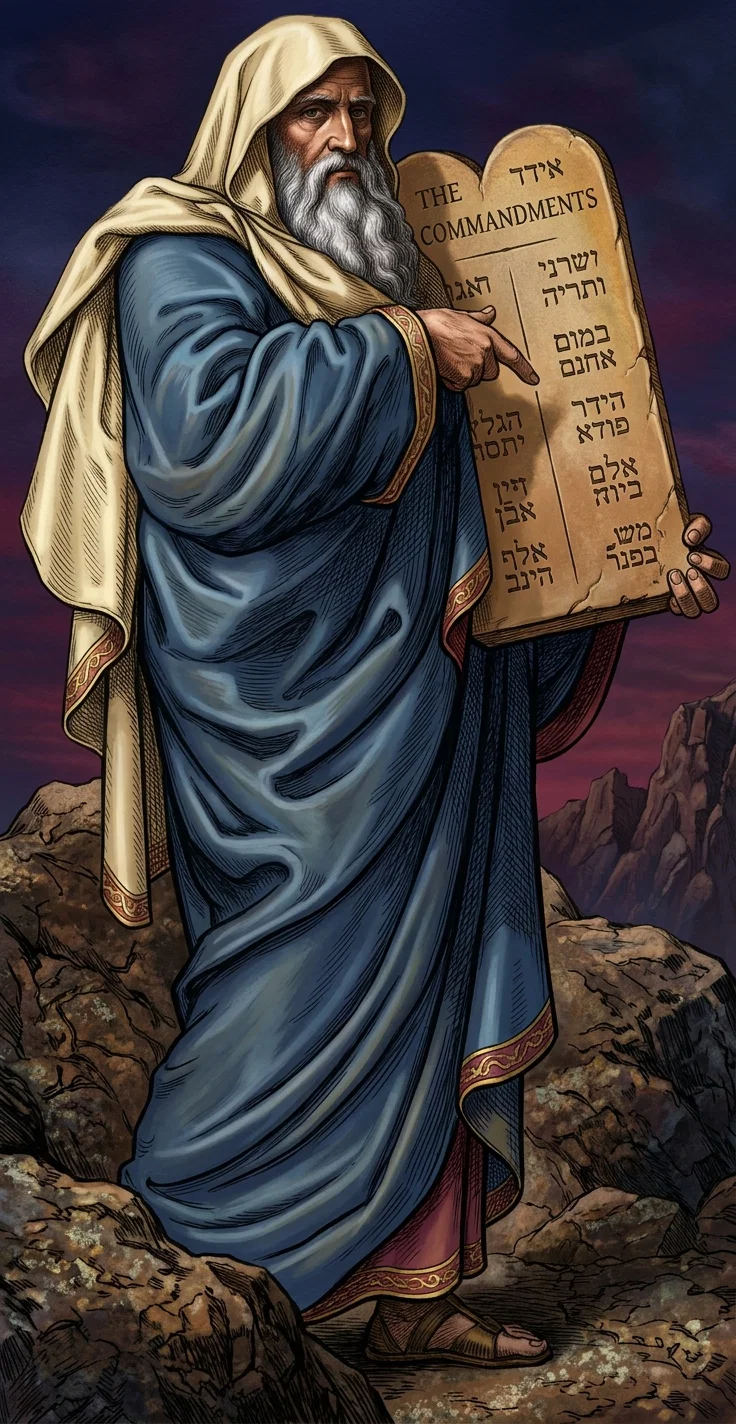
THE law of God was twice written by the finger of God on tables of stone, first on stone He had prepared, second on tables of stone prepared by Moses. Of the second tables He said, “Hew thee two tables of stone like unto the first: and I will write upon these tables the words that were in the first tables, which thou brakest.” Ex. 34:1. Again we read, “He [the Lord] wrote on the tables, according to the first writing, the Ten Commandments.” Deut. 10:4.
When the apostle Paul referred to the course of Israel which led to this second writing of the law, he said: “Now these things were our examples, to the intent we should not lust after evil things, as they also lusted. Neither be ye idolaters, as were some of them; as it is written, The people sat down to eat and drink, and rose up to play.” 1 Cor. 10:6, 7. This statement refers to their course when dancing a heathenish, lascivious dance around the golden calf; and it is recorded in Ex. 32:6. Only about forty days previously, they had entered into a solemn covenant with God, promising to keep this law of Ten Commandments, which the Lord had spoken with a voice that shook the earth, and filled them with terror of their lives.
How frail is humanity when left to its own weakness! As expressed by Paul, “I know that in me (that is, in my flesh) dwelleth no good thing: for to will is present with me; but how to perform that which is good I find not.” Rom. 7:18. How soon, when subject to temptation, these Israelites failed to fulfill their human promise! As Moses came in sight of the golden calf and the idolatrous dancing, “He was in a measure unprepared for the dreadful exhibition which he witnessed of the degradation of Israel. He threw down the tables of stone in utter discouragement and wrath because of Israel’s great sin before God.”
This act of Israel’s in so soon grossly departing from God, and violating their own solemn promise, while still in sight of cloud-covered Sinai, must for the moment have looked to Moses like a total failure of the whole scheme to rescue that people from sin. Indeed, it would be a failure, if they were to have no other aid but human. The breaking of the first tables might be taken as a fit representation of such a failure.
But the scheme of obedience to God’s law is not a failure; for the Lord told Moses to hew two tables like the first, and He would write the same Ten Commandments on these humanly prepared tables. By His writing upon the second tables, we have a fit illustration of how obedience to God may be obtained. When the human heart, like the second tables, is submitted to God, He says, He “will take away the stony heart out of your flesh, and I will give you an heart of flesh. And I will put My Spirit within you, and cause you to walk in My statutes.” Eze. 36:26, 27. Then it is that God “worketh in you both to will and to do of His good pleasure.” Phil. 2:13.
J. N. LOUGHBOROUGH.

Living What We Profess

“If we live what we profess, our lives will never preach too long a sermon.”
Continue reading: MANUFACTURING ANIMOSITIES