Your ShelfYour Projects

Review and Herald, Vol. 81, No. 11.

Science in the Kitchen
Earlier text: Washington, D. C

Safe-Keeping

He will keep thee as the apple of his eye. Deut. 32:10.
He will keep thy foot from being taken. Prov. 3:26.
Lest any hurt thee, he will keep thee day and night. Ps. 121:3.
He will keep thee as a shepherd doth his flock. Jer. 31:10.
He will keep thee from the evil that is in the world. John 17:15.
He will keep thee from falling. Jude 24.
He will keep thee from the hour of temptation. Rev. 3:10.
He will keep thee in all places whither thou goest. Gen. 28:15.
He will keep the feet of the saints. 1 Sam. 2:9.
He will keep thee in all thy ways, lest thou dash thy foot against a stone. Luke 4:11.
He will keep thee in the way, and bring thee into the place which he has prepared. Ex. 23:20.
He will keep that which thou hast committed to him. 2 Tim. 1:12.— Watchword and Truth.

Our Horizon

OUR horizon depends upon the position of our eyes. If our eyes were in our feet, our horizon would be measured by inches. Providence placed them in our head, and our horizon is measured by miles.
Higher altitude means wider vision. So the good man of old was called a seer; his vision swept far beyond that of his fellows. Abraham saw the day of Christ.
Broader outlook means grander faith. Short-sightedness sees only the near, and declares the battle lost; far-sightedness sweeps the far-off hills, and beholds a conquering host advancing to victory. Our views do not alter facts, but a vision of the victory that is to be acts like the blare of a thousand battle-trumpets upon the church of God. Climbing higher, we shall surely see farther.—Zion's Herald.

The Journey Homeward

“Give thyself entirely to Him, Do his will; And thy life the highest mission Will fulfil. Then pursue thy journey onward At his call, ’Tis the path that leads thee homeward After all!”

The Art of Doing Without

THERE'S a beautiful art that is sadly neglected, And daily I wonder to see it rejected By some who'd be healthy and wealthy and wise By just condescending to open their eyes, And look at things fairly, with never a pout— I refer to the fine art of doing without.
“Why, that's nothing wonderful!” maybe you'll say, “I do without things I want, every day!” Quite likely you do, but how do you do it— With good grace, or a face that's as blue as a bluet? There's a wonderful difference—just jot that down— Between giving up things with a smile or a frown; And that is precisely the difference between The artist and bungler—you see what I mean.
You can't do as you like? Then do as you can; I'm sure you find it the very best plan. Can't have what you want? Take what you can get; No better device has been patented yet. 'Tis the bravest and blithest and best way by far, Not to let little losses your happiness mar; 'Tis an art that needs practise, of that there's no doubt; But 'tis worth it—this fine art of doing without.
— Minnie Leona Upton.

Despise Not the Children

WAS it not our own Garfield who said that he never met a boy upon the street without feeling that he ought to take off his hat to him, because he did not know what possibilities were wrapped up under that coat?
We are just beginning to wake up to the potentialities of the boys and girls. As the wonderful power of electricity with which our atmosphere has always been charged has only been discovered and utilized within recent years, so the latent powers of the children in our homes are just being found out and employed.
Boys’ and girls’ rally day affords an opportunity for us to follow the example of our Master to place a little child in the midst of the people who are seeking after greatness, and say to them, “Become as this little child if you would behold the kingdom of heaven.”
We pray, “Thy kingdom come. Thy will be done in earth, as it is in heaven.” Train the rising generation for Christ, and you will usher in his kingdom with power.
“See that ye despise not one of these little ones,” but show true regard for their worth by enlisting them with all their talents and enthusiasm in the services of their Lord and Master.—C. M. Fillmore, in The Christian Herald.

_Medicinal Value of Fruit_

NATURE has made fruit beautiful that it should please us in one way. It has been made odorous to please us in another way, and the most delicate and delightful flavors have been imparted to it from Nature’s laboratory of essences that it may be a joy to our palates. In the sick room fruit fills an important place.
Fruits cause effects which are in no way unnatural; they simply encourage natural processes.
Under the head of laxatives we find oranges, figs, tamarinds, prunes, mulberries, dates, nectarines, and plums. Taken in the morning, an orange acts as a very decided laxative, sometimes amounting to a purgative. It is much better than any kind of cathartic. As astringents, we have pomegranates, cranberries, blackberries, dewberries, raspberries, barberries, quinces, pears, and wild cherries. Singers and speakers who are troubled with relaxed throat and uvula use a pomegranate for its astringent properties.
Diuretics, or substances which induce elimination by way of the kidneys, are grapes, peaches, strawberries, and black currants.
Gooseberries and red and white currants are refrigerants; that is, they reduce abnormal temperature of the body.
Apples, limes, and lemons are stomachic sedatives. Apples especially are often a very great relief to people who are troubled with insomnia.
Figs split open form excellent poultices for boils and small abscesses.
The acid of lemons applied locally will remove tartar from the teeth.
Frequently in fever, when there is a desire for liquid, water has a bad taste, which is most trying. The patient’s taste may always be relied upon in such cases to suggest fruit juices to drink.
Then after a fast before the stomach is ready to attack any more formidable meal, oranges, grapes, or figs may be wanted. A patient convalescing from measles, scarlet fever, diphtheria, or any acute trouble which has necessitated a fast, doesn’t call for toast and eggs first. What the patient really wants is fruit. The appetite is a guide which ought to be respected. If people would only realize that nature is quite well aware what she is about when she calls for certain things, convalescence would be accomplished more quickly and more easily and good health established sooner than when every natural taste is repressed.—The Christian Herald.

Nervous Prostration: Its Cause and Cure

NERVOUS prostration is a condition in which the nerve-centers are exhausted of their stores of energy. Properly speaking, nervous prostration, or, as physicians call it, neurasthenia, is not a disease, but simply a group of symptoms which indicate a weakened state of the nerve-centers. But these symptoms and the state of the nerve-centers are only indications of some other morbid conditions in the constitution of the individual; they are a result.

Not Always Due to Overwork

NERVOUS exhaustion is frequently attributed to overwork. This is a mistake. Rest will cure all the damage that work can do, leaving out of consideration, of course, structural or mechanical injuries which may result from overstrain.
The only difference between a tired man and a man who has neurasthenia is that the latter is chronically and constitutionally tired. Sleep and rest do not cure him. He is not lazy, but languid; disposed to take up accustomed tasks, but lacking the force and energy to perform them. In most cases this condition has nothing to do with work, unless it be the result of too little work.

A State of Chronic Poisoning

Neurasthenia, in the vast multitude of cases, is nothing more or less than chronic poisoning, a state of the body in which the blood and tissues are constantly filled with poisons produced in the alimentary canal in such quantities that the liver can not destroy them, or the kidneys remove them as fast as they are developed. When this accumulation reaches the point of tissue saturation, then the symptoms of poisoning appear. The nerve-centers are stupefied by narcotic poisons produced by indigestion, these poisons being similar in their effects to opium and other narcotic drugs. The brain may be excited by poisons formed in the alimentary canal resembling strychnia in their effects. The whole body may be deranged by toxins and ptomaines which subject the body to a perfect fusillade of toxic influences, as if a whole apothecary's shop had been turned into it. A chronic dyspeptic is bound to become a neurasthenic sooner or later,—generally sooner,—for his stomach and intestines have become the hold of every unclean and hateful germ. They are converted into a factory of nerve-irritating, brain-stupefying, heart-exciting, tissue-paralyzing poisons, which are capable of deranging every vital function, perforating every vital process, and opening thousands of doors to germs and other causes of disease.

The Treatment Required

The most important thing to be done for gastric neurasthenia is to remove the chief causes, to correct the dietary; set the patient to eating right, and his stomach will gladly resume its normal functions, and will become so inhospitable toward the microbic parasites which infest it that they will disappear or perish. The neurasthenic generally recovers soon enough if he can be persuaded to assume a normal mode of life. If he is a self-made prisoner in a counting-room or an office, he must release himself from his fetters, and flee to the liberty of the woods and fields, and in the fresh air find a priceless benison.
He must not only exercise right, but he must eat right. Two meals a day, well eaten, in proper quantity, composed of fruits, cereals, and nuts, nature's choicest products, and which contain exactly the elements for building brain and muscle and storing them with vital energy,—these are true sources of energy. Flesh affords energy, it is true, but only at second hand and deteriorated.
A neurasthenic should sleep from eight to ten hours a night, or if he can not sleep, let him lie in bed and rest. A warm bath at bedtime, at ninety-five degrees or ninety-eight degrees temperature, for half an hour or an hour, will often induce sleep when hypnotic drugs of every sort fail utterly, unless administered in such overwhelming doses as to produce a poisoned sleep that is sure to be followed by a wretched awakening. He must cut off all unnecessary expenditure of energy, as a miller sometimes stops his wheel that his pond may fill up. Mental and moral peace and content of mind are essential conditions for rapid recovery from neurasthenia.

A Natural Tonic

The daily cold bath has tonic powers equalled by no known drug. The patient should not attempt to administer the bath himself. The water should generally be as cold as can be borne without discomfort. Very cold water can be applied if employed in the right way. The vigor of the application should be increased from day to day, until very powerful effects are produced.—Good Health.

A Cheerful Face

NEXT to the sunlight of heaven is the cheerful face. There is no mistaking it—the bright eye, the unclouded brow, the sunny smile, all tell of that which dwells within. Who has not felt its electrifying influence? One glance at this face lifts us out of the mists and shadows into the beautiful realms of hope. One cheerful face in a household will keep everything warm and bright within.
It may be a very plain face, but there is something in it we feel, yet can not express; and we would not exchange it for all the soulless beauty that ever graced the fairest form on earth.
It may be a very little face, but somehow this cheery little face ever shines, and the shining is so bright that the shadows can not remain.
It may be a wrinkled face, but it is all the dearer for that, and none the less cheerful. We linger near it, and gaze tenderly upon it, and say: “God bless this dear, happy face!” We must keep it with us as long as we can, for home will lose much of its brightness when this sweet face is gone.
God bless the cheerful face! What a dreary world this would be without this heaven-born light! And he who has it not should pray for it as he prays for his daily bread.—Selected.

To Amuse Baby

A BABY will be attracted for a short time by some fine toy that he can simply look at, but he will spend ten times as long in putting pegs into holes in a board contrived for the purpose, or in taking out, one by one, from a well-filled basket articles, no matter what—spools, blocks, clothes-pegs—anything, so that they are sometimes changed and he does not tire of the monotony. Then the task of putting them all back keeps him busy for a still longer time. As baby becomes more discerning and his fingers more nimble, a pleasing device for his employment is a board with variously shaped holes—round, square, triangular, etc.—with blocks and spheres to fit into the various places. Should these be in bright colors, his love for color may also be gratified, and learning these colors soon follows. Little tasks of carrying articles from one portion of the room to another, or from room to room, will often keep the child busy and interested for hours. A small hammer and tacks, with a good soft board into which to drive them, is generally a delight to any child old enough not to put the tacks into his mouth.
So simple are the employments that will satisfy the little tot, that almost any mother will find them constantly suggesting themselves.—Selected.

Take Care of Your Health

PEOPLE have no right to be careless concerning their health. First, they have their own duties to do, and they can not do them properly without health; secondly, no person can be sick without interfering with the rights and privileges and comforts of others. Probably three fourths of the sickness and disease in the world could be prevented by a little care, and what a shame it is for people who ought to be and might be well and useful in the world, to make themselves ill and dependent and miserable, and so hinder others from their work, and weary them and make them ill, when a little care might have prevented it all! It is every person’s duty to be well and strong, rather than weak, sickly, miserable, helpless, and burdensome to others. Hence all persons should be thoughtful and careful about their health.
Christians especially should care for their bodies, which are the temples of the Holy Ghost, and their health, which is necessary for effective service for the Master. No one but a brute would wish to work a horse till it was sick; yet many who claim to be Christians will work themselves, and their families, in a way which would be cruel in the case of a horse or a mule. People must learn to be careful of the Lord’s property, and Christians are not their own; they are “bought with a price,” and should, therefore, glorify God in their bodies.—The Safeguard.

19,000,000 a Day

THIS enormous sum represents the number of cigars smoked by the American people each day for the last fiscal year. The money spent for cigars amounts to three hundred and forty-six millions of dollars. The enormity of these figures is simply paralyzing. It is evident that large numbers of persons, mostly men, are already slaves to this pernicious and expensive habit. But the worst feature is that church-members by the thousands are tobacco users, and go on wasting their money, as well as endangering both body and soul, without rebuke from either pulpit or pew. Does God look upon this extravagance and waste with impunity? We aver not. It is stench in his nostrils, as it is stench in the nostrils of any clean man or woman.
The habit is unquestionably on the increase. Boys and young men are beginning early in life. The effect upon the physical system and as a hereditary influence is blighting. Shall the church not cry out against it? — The Soul-Winner.

Test Water With Sugar

THE supply of drinking water for the family should be tested occasionally. Water that at one time is pure and wholesome may become too impure for use, yet it may be without color, and have no odor or taste to show its dangerous qualities. Typhoid fever is frequently communicated through the drinking water.
A simple test of drinking water is the Meisch test. Fill a clean pint bottle three quarters full of the water to be tested, and dissolve in it a teaspoonful of granulated sugar. Cork it, and set it in a warm place for two or three days. If during this time it becomes cloudy or milky, it is unfit for domestic use. If it remains perfectly clear, it is probably safe. Be careful that the bottle is absolutely as clean as you can make it, and the sugar pure.
The second test is also a simple one. Obtain from a trustworthy chemist a pennyworth of saturated solution of permanganate of potassium. Add about five drops of this to a pint bottle of water. This will turn the water a beautiful rose-purple. If there is any considerable amount of organic matter, the color will give place, in the course of a few hours, to a more or less dirty reddish-brown. If the color of the water in the bottle remains for twelve hours unchanged from the rose-purple it assumed when the permanganate of potassium was first added, it may be considered free from organic contamination.—Selected.

The Message in Galilee

J. H. KRUM
A FEW years ago a young Syrian who had spent some time in the State of Iowa, United States, and had come in contact with our people there, paid a short visit to his parents in Syria. He brought a copy of “Bible Readings for the Home Circle” along, and soon after his arrival spoke of its contents to the Presbyterian pastor of his town. The pastor began examining the subject of the Sabbath, and became convinced that it is binding upon all Christians to-day, and began to observe it. Shortly after, in a district conference of the Presbyterian pastors and teachers, he openly defended his Sabbath-keeping, bringing proofs which they could not answer.
Not knowing that there were representatives of our mission in this country, he went to America, to become acquainted with our work. His church and the director of his mission field gave him good testimonials. After spending one month in New York, the brethren there decided to send him to Berrien Springs, where he remained six months, and then returned to this country. All this occurred without the knowledge of any of our Syrian workers.
After his arrival in Beirut, the writer proceeded with him to his former charges, at the source of the Jordan, at the foot of Mount Hermon. From the middle of June until November, 1903, Brother Zarub and myself visited the villages and towns in the territory extending from Mount Hermon southward to ancient Tyre. We first visited the village of Am Konia, at the southern slope of Mount Hermon. This village is composed of Christians, Jews, and Druses. A few days after our arrival, the local teachers went to the government town, and reported us to the authorities, saying that two men had come bringing a new religion.
They sent officers the next day, who examined our papers, and then reported to their superiors. The following day the chief ruler of the district came himself, and forbade our holding any meetings at all. However, Brother Zarub used the opportunity to preach the message to the ruler.
This experience is a specimen of the freedom we have in all Turkey. We then went from village to village, presenting especially the truths concerning the second coming of Christ. A relative of Brother Zarub and the wife of a teacher began the observance of the Sabbath in the district. Brother Zarub’s wife opposed the truth when we returned, but is now keeping the Sabbath, and walking in the light. Many of his relatives and former church-members are under conviction, and we expect more fruit in the near future. In his birthplace the people reported that he had become insane through religion. But after we arrived there, they soon saw that he had a good foundation for his faith. We quickly had a very good interest, and confidently expect some to take their stand fully.
This part of Syria was greatly agitated last summer and autumn by the cholera breaking out in different towns. At the same time the Bedouins (roving Arabs) attacked several of the villagers, robbing and even killing some. However, all these things caused the people to think seriously of the truths presented to them. Owing to a strict quarantine, our movements were greatly restricted. Since we have returned to Beirut, we are receiving calls for literature from the places visited last summer, and from all appearances the seed sown will soon bear more fruit.
We also had the pleasure of visiting two of the American war-ships frequently while they were protecting American interests here this winter. We distributed many papers among the crews, besides selling about twenty-five of our subscription books in the English and German languages. Since the recent uprising, in which about thirty persons have been killed among the Christians and Mohammedans, the city has been visited first by great want among the poorer classes, and immediately after that an epidemic of smallpox broke out, which has not yet fully subsided. We need, and ask for, the prayers of God’s people, that the work may go with a convincing and convicting power.
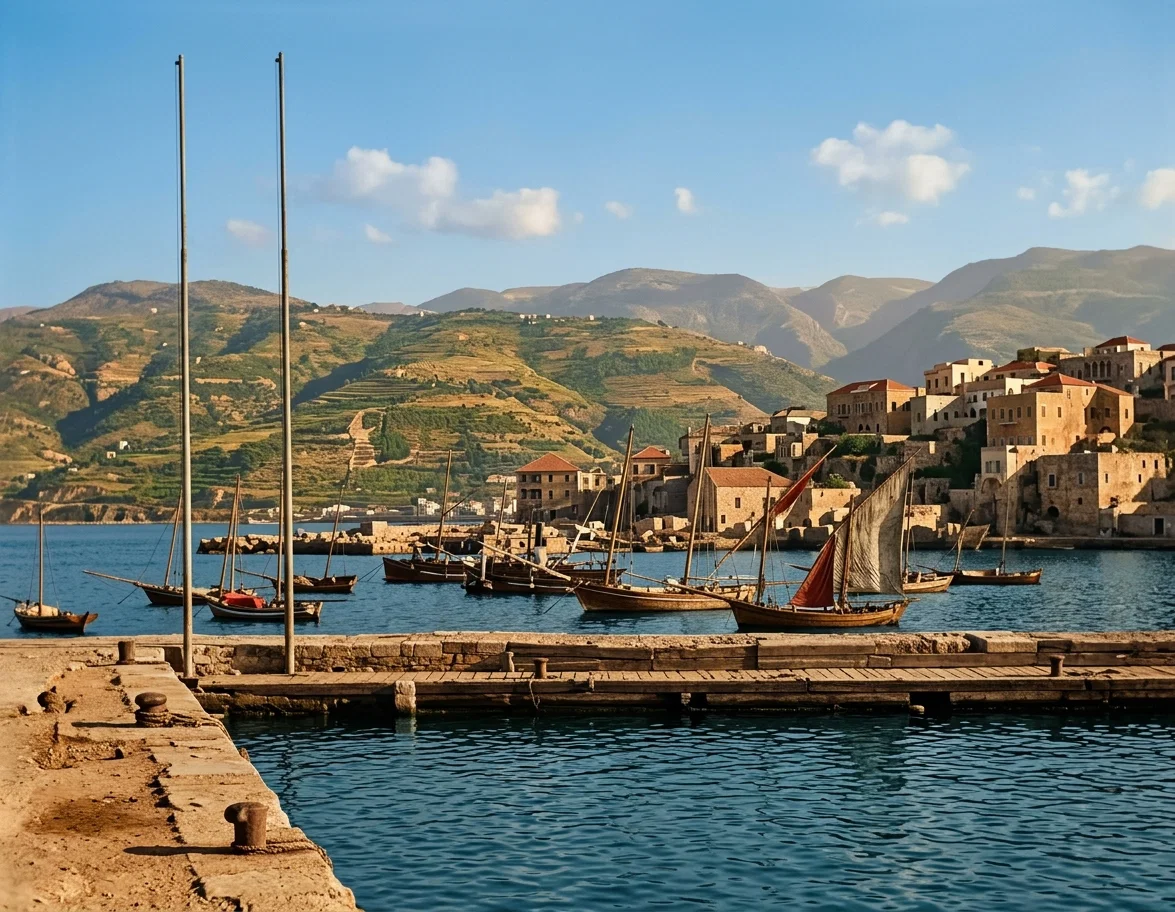
THE HARBOR OF BEIRUT

A Journey in Northwestern Rhodesia

Notes From My Diary

W. H. ANDERSON
(Concluded)
August 9. We made a very early start, and traveled a long distance. The country is covered with scrub brush. Signs of big game are abundant. I saw hartebeest and wild hogs; also the fresh tracks of buffalo.
August 10. We could not travel far on account of the boy who had fever. He was some better, and the other carriers took most of his load. There was still plenty of game and birds. As we were short of food, I killed four guinea-fowl at one shot, and the boys ate them. The country is more open as one climbs the plateau.
August 11. After a short walk in the morning we came to a nice pool of water, where we had a bath and did our washing. It was very refreshing. One has to be careful where he bathes in this country, as many of the deep pools contain crocodiles. We came out on the open prairie at noon. The soil is quite good here. There are also herds of big game.
August 12. We arrived in Kalomo. I was soon comfortable at the home of Mr. Rangely, the magistrate. We had entertained him at our home in Southern Rhodesia, and he was glad to return the favor. He arranged for me to see the administrator the next day.
August 13. I saw the administrator at 11 A. M. He said that the government had decided to give each missionary society a particular part of the country. The French Protestants have the upper Zambesia, or the Barotse Valley. The Primitive Methodists have the Mashukulumbwe country. The Jesuits have the country about Kalomo. They offered us the country to the north and east among the Batokas or the Batoka and Mashukulumbwe to the north. I decided to visit both places.
August 14. I had a long visit with the district commissioner, whom I met two years ago. He gave me much information about the people and the Batoka country. I was glad to find a letter from my wife at the post-office. We left Kalomo in the afternoon, and made our camp about ten miles out. We were very short of food, as we came to no native kraals.
August 15. We had our usual Sabbath service. In the afternoon we had a long talk on the experiences of David and Saul. We walked ten miles after the Sabbath.
August 16. We had a long walk of sixteen miles. We could get no food, as there are no native kraals on the road. I shot some birds for the boys. We came to a white man's camp in the evening, and I bought some food for the boys, which they ate with a relish. The natives here live a long way off the road. A native does not like living on a main road. There are too many demands on him for food. He does not like to refuse a hungry man food, as he is naturally very hospitable. But if he sees hungry men every day, his scanty store is soon exhausted. He seeks a remedy in moving four or five miles away.
August 17. The carriers had no food, so we went on to a native kraal before breakfast. I was told that it was about eight miles to the village, but I found that it was twenty. We saw the fresh tracks of a herd of elephant that had crossed the road just ahead of us. We arrived at the kraal at 1 P. M., and were able to get a little food, but the water was bad. We rested three hours, and went on again in the evening. We traveled six miles, and made our camp for the night. We had no dinner, so we went to bed hungry.
August 18. I awoke at three in the morning with severe cramps in my bowels, and a very bad attack of dysentery. I could sleep no more, so we started on again at daybreak. I soon came up with a donkey wagon in charge of Mr. Maddocks, a geologist for the Northern Copper Company. He kindly gave me a ride in his wagon to the next river, eight miles ahead. I was suffering intensely, and by noon I had a very high fever. I ate very little, and kept my bed all day. I had the boys make my bed away from the noise of the donkeys and dogs, and retired at sunset for the night. My fever was still high, and my strength was fast passing away. I thought that my time had come, and calling the boys to my bedside, I gave them directions as to my burial. This is the second time since I have been in this country that I have given directions as to what I would like to have done after I was gone. I told the boys to dig a grave and sew me in my blankets and bury me. Then they were to return home at once, and take a message to my wife and child. As I finished, we committed ourselves to God, and I went to sleep, expecting never to see the light of the morning.
August 19. I slept fairly well during the night. My head was dull, and I could not think clearly. I still had a high fever. I learned from the natives that I was near the camp of Mr. Walker, the old hunter. I had often met him in Buluwayo, and he had invited me to call on him when I was north of the Zambesia. I was glad to accept his invitation. “My God shall supply all your need according to his riches in glory by Christ Jesus.” With the help of the boys I was soon in his tent, and he cared for me the next week, which I spent in bed. I slowly recovered my strength, and as soon as I was able, I started on again. As Mr. Walker had been hunting in this land for the past six years, he gave me much valuable information in regard to it. I found him the best informed in regard to the country of any man that I met. I told him what I wanted, and he directed me to several places that he thought would suit me. He kindly loaned me his aneroid, so I might know my elevation at any time.
August 25. I left Mr. Walker's tent in the afternoon, and started for Monze's. As I was still weak, we could not travel very fast. We made our camp in a native field for the night. I must here describe our usual camp. It consisted of a high bush fence made circular, and about thirty feet in diameter. Inside of this all the loads were placed and the beds made. A quantity of wood was collected, and a good fire was made across the entrance. I had my bed just back of the fire. It was made by cutting two poles about seven feet long, and placing them side by side on the ground and about three feet apart. The space between them was filled with grass to the depth of about six inches. This made a comfortable mattress, on which the blankets were spread. A short log at my feet prevented the grass from working down into the fire. The carriers made their beds on either side. One of the boys was to keep up the fire all night.
August 26. We walked twelve miles for the day. We traveled up a river, so water was plentiful. The country was very rough, and covered with scrub brush. We saw a large herd of water antelope.
August 27. We had a long walk to the hot springs. We took the wrong path, and traveled eighteen miles to reach a point eight miles from our night camp. We remained at this place four days, looking over the country. There is some excellent land here, but the water is scarce. The government will not permit the ground to be pegged in the vicinity of the springs. The springs belong to a series extending from the Kafui to a point south of the Zambesia. I saw several of them. The water varies in temperature from the boiling point to simply warm. In some springs the water appears to be pure, while in others there are minerals. The natives have many traditions in regard to them, and they visit them regularly for worship.
August 30. We walked eight or ten miles in the evening, and came into the wagon road eighty-five miles from Kalomo and fifteen miles from Monze's. There were hyenas about the camp all night, so I did not sleep much. I can not say that I enjoy being serenaded by three or four hyenas. The country is very rough, almost mountainous.
August 31. We traveled the fifteen miles to Monze's. He is the chief of the Batoka nation. The first part of the journey was in the hills, and then we came out in the open, elevated, rolling prairie. We arrived at the kraal at sunset. It is a dirty Batoka village, inhabited by people, cattle, sheep, goats, dogs, fowls, and vermin. There is nothing except the large herd of cattle to indicate the rank of the chief. He received me very kindly, and after the usual exchange of presents,—he gave me a goat, and I presented him with a blanket,—I announced my mission. He said that he wanted a school for his people, and asked what he could do for me. I told him that a guide to show me the country would be very acceptable. He promised to send his son, and he was at my camp the next morning at daybreak.
September 1. I looked carefully over the ground to the south and west, but found nothing that suited me. The combination that I desired was elevation, good soil, and proximity to the natives.
September 2. I started very early to the north and east. I took my guide and two of my carriers with me. We traveled hard all day, but saw nothing that was desirable until about dark, when I came to just what I wanted.
September 3. I had a good look around the spring and over the surrounding country in the forenoon, and in the afternoon I pegged a farm of five thousand acres on the Makel River directly east of Monze's kraal. I pegged about three miles of river front, so as to include timber and the fountain. This farm has six native kraals on it. It is the best farm that I saw in all my travels in the country. There is sufficient in the fountain to irrigate a good garden, and plenty of water in the river for stock.
“The soil is black along the river, and of a chocolate color on the high land. The elevation is four thousand eight hundred feet. The natives grow corn, Kaffir corn, sweet potatoes, peanuts, ground nuts, beans, pumpkins, and a kind of vegetable marrow. I returned to my camp on Friday, and started for Kalomo on Monday. On the return I visited two other places that were suggested to me, but I did not think them so good as the place that I selected.
On my arrival at Kalomo, I submitted my farm to the government for approval. They accepted it, only they said that part of it might be placed on the east side of the Makel River instead of the west side. The plan has to be submitted to the London Board of Directors for their approval. The government officials expressed themselves as glad that we are planning to enter the field, as the territory is nearly all taken up, and our plan of work pleases them better than that of any who are now working there.
The directors are very much interested in the work of Booker T. Washington in America, and they have invited him to visit Africa in the interest of his idea of education. As we have some things in common with the great colored educator, it naturally appeals to them. An attempt is being made to have compulsory education of the natives between the ages of twelve and sixteen. I do not know what the outcome will be. I do know that the time has come for the gospel to be preached in all the world for a witness, and I believe that the time will soon come when there will be a memorial of the truth in Northwestern Rhodesia. I made a hasty trip home, visiting a mission on the Zambesia on the way. I arrived home, October 3, very tired, but otherwise in good health. My carriers could not keep up with me, so I left them behind, and they arrived nearly a week later. During my absence I had traveled three hundred miles by rail and about seven hundred miles on foot.
I feel sure that as soon as the Mission Board can obtain the funds, the work will be opened in that once distant, but with the present railway facilities, almost home field.

Scotland

SINCE our last report we have moved into a new field of labor. The pressing calls for help from this great city of Glasgow obliged us to leave our work in Kirkcaldy before we would otherwise have done so.
All who accepted the message there remain loyal thus far, but a few have not yet taken a firm stand on tithing. However, eighteen persons are paying tithe, and twenty-two have been baptized. We thank and praise the Lord for what has been done.
We left the company there comfortably located in a neat, well-lighted little hall, entirely under their own control, with a seating capacity of about two hundred. All their bills were paid, and their courage was good in the Lord. Elder O. A. Olsen visited them about four weeks ago, and they enjoyed his visit very much. Brother Westworth held three meetings with them, the first week in February, and they appreciated these also.
We are now laboring in Glasgow, the commercial metropolis of Scotland. Our work here opened concurrently with a workers’ meeting for the Scottish laborers, who are mostly canvassers as yet. Much precious instruction was given during this meeting; and on the last Sabbath eight souls were baptized, and fifteen persons were added to the Glasgow church.
The circumstances which made the demand for our removal to Glasgow so urgent were these: (1) The church-members needed help and encouragement, as there had been strife and division among them; (2) they had been promised help for months, without receiving it; (3) their place of worship was a vacant church rented from a railway company for two hundred and fifty dollars a year (about five dollars a week). They undertook this responsibility about a year ago, with the advice of leading brethren from other conferences in attendance at the last Scottish general meeting. They rented the church with the understanding that ministerial help would be supplied to them, to use the church for public services, and thus by collections raise the rent, or at any rate a good part of it, the remainder being covered by pledges. But seven months of their rent-year passed by before help was sent, because there was no one to send.
Some might say, “Why did they rent so large a place, and at such a rent?”—Simply because, although a committee searched the city for days, no other place at all suitable could be found.
Now we are here, and this is the situation that confronts us. This is a city of one million souls, the second in size and importance in the great British empire. It is a wicked, drunken city, with much poverty and misery. There is a vast population all around it, which will be influenced by whatever we can do here. There are four and one-half millions of people in Scotland, and over one fifth of them are here in our “parish.”
Our church-members are all poor in this world’s goods. There is a debt of over sixty dollars resting on them now, some of which is nearly a year old. This is mainly for coal, gas, printing, and hymn-books. We need an organ. We have not a penny with which to advertise our meetings, call the people in, and thus raise collections. All the churches here have to advertise freely.
Our church is closed this week, because the owners consented to clean, paint, and redecorate it. When this is done, we shall rejoice; for it was very, very dirty. We know your needs are many in America, but we plead for just a little help. Perhaps the Lord will impress some dear Scotch brother or sister to give us a lift. The Lord must have many honest souls in a city of this size. Who will turn the fly-wheel half-way round so we can get a start?
We wish to thank most heartily the following dear brethren and sisters for valuable tracts received from them: Mrs. H. L. Allen, Rutland, N. Y.; W. H. Jenkins, Knoxville, Iowa; Mrs. J. S. Christiansen, Sebastopol, Cal.; Brother Neil McGill, Roden, Manitoba. Our address now is 47 Cartvale Road, Langside, Glasgow, Scotland.
Brethren and sisters, remember Scotland and us in your prayers and offerings.
ALEXANDER RITCHIE, TILLIE OLDS RITCHIE.
Continue reading: New York