The Youth’s Instructor, Vol. 28, No. 28.

NAME OF THE GOOD SAMARITAN

The Youth’s Instructor

Jul 7, 1880

S. D. A. Publishing Association · Battle Creek, Mich. · Jul 7, 1880

NAME OF THE GOOD SAMARITAN.

MANY are there to whom the pleasure of doing a generous deed is a sufficient reward. It is well that it should be so. There will be no lack of little deeds of kindness, so long as it is true that it is more blessed to give than to receive. And where this is true, the little deeds of kindness may at length come to resemble, in their number, the little grains of sand. All that we can do to foster the spirit which tends to this end is work well done.
Oberlin, the well-known philanthropist of Steinthal, while yet a candidate for the ministry, was traveling, on one occasion, from Strasburg. It was in the winter time. The ground was deeply covered with snow, and the roads were almost impassable. He had reached the middle of his journey, and was among the mountains, but by that time was so exhausted that he could stand up no longer. He was rapidly freezing to death. Sleep overcame him; all power to resist it left him. He commended himself to God, and yielded to what he felt to be the sleep of death. He knew not how long he had slept, but suddenly became conscious of some one rousing him and waking him up. Before him stood a wagon-driver, in his blue blouse, and the wagon not far away. He gave him a little wine and food, and the spirit of life returned. He then helped him on the wagon and brought him to the next village. The rescued man was profuse in his thanks, and offered money, which his benefactor refused.
“It is only duty to help one another,” said the wagoner, “and it is the next thing to an insult to offer a reward for such a service.”
“Then,” replied Oberlin, “at least tell me your name, that I may have you in thankful remembrance before God.”
“I see,” said the wagoner, “that you are a minister of the gospel; please tell me the name of the good Samaritan.”
“That,” said Oberlin, “I cannot do, for it was not put on record.”
“Then,” replied the wagoner, “until you can tell me his name, permit me to withhold mine.”
Soon he had driven out of sight, and Oberlin never saw him again.
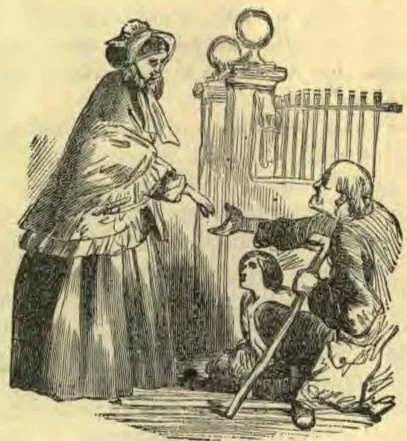
Is it not a principal charm of the story of the good Samaritan that there is no name given, no clue to any person, nothing by which to locate the generous hand that did the deed, except the generous spirit which prompted it?
If you feel prompted to an unnoticed act of kindness, do not hold back because it will be unnoticed! Ask yourself, What was the name of the good Samaritan?—Children at Work.

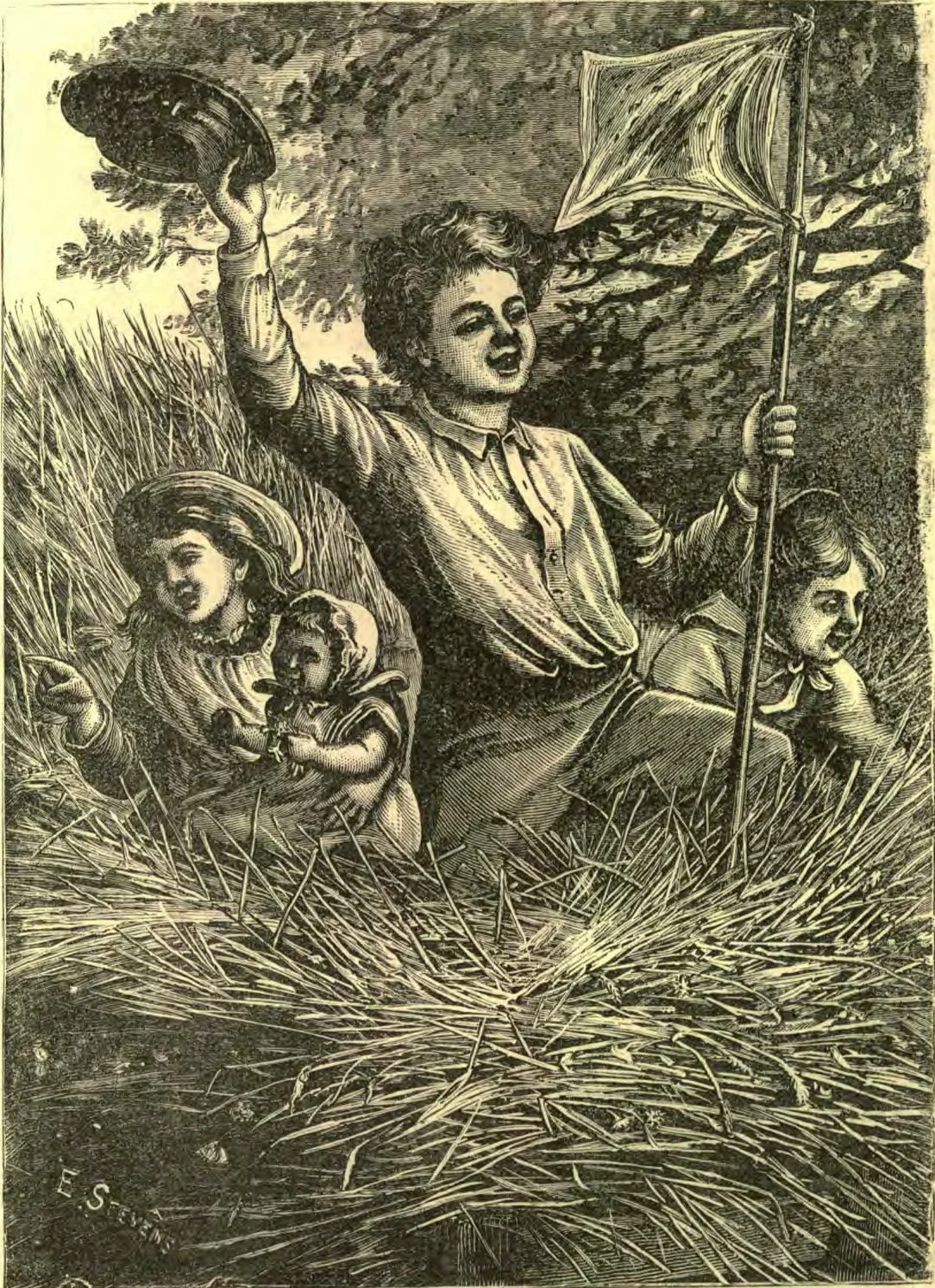
THE LITTLE HAY-MAKERS.

HURRAH! the grass is tangling, In the fields so fair; For little ones are playing In merry fashion there. “Oh, joy,” say they, “comes with the day When John begins to cut the hay.”
“We’re happy little children, So much to make us glad; We doubt if little princes Know half the joys we’ve had; But of all days, the merriest day Is when we toss the new-mown hay.”
Then away with books and lessons, And off to the grass so sweet, So fresh and green, so cool and clean, So pleasant to one’s feet. “For joy,” say they, “comes with the day When John begins to cut the hay.”
—Little Folks.

MR. WILDER IN EUROPE.

IN 1803 Mr. Wilder concluded an arrangement by which he was sent to Europe as an agent for one Mr. Gray, a wealthy Boston merchant. He declined, even at his advanced age, to settle the matter without first consulting with his “honored mother,” but having obtained her consent, he soon set sail on the old ship Elizabeth. The conveniences for traveling were not such then as now. “Even the cabin,” says Wilder in describing the passage, “was so filled with freight, with bags of pepper and coffee, that we could not reach our berths without crawling on our hands and knees.”
In the course of twenty years, Mr. Wilder crossed the ocean sixteen times. No mere pleasure trips these in those days; no mere crossings of a gigantic ferry, which they have now become; but long, tedious, patience-killing voyages were they, of from forty to eighty days’ duration, fraught with danger from storm and iceberg.
Arriving in Europe, Mr. Wilder proceeded to invest the funds at his disposal in such manufactures as he found in various places, finally arriving in Paris on the very day and hour on which Napoleon was proclaimed emperor on twelve squares of the city. Of this, he says, “The streets of the city ran wine from morning till night. A distribution of thousands of legs of mutton, roast fowls, and loaves of bread, was made, enough to satisfy the cravings of 800,000 people.”
A flourishing business was soon built up in Europe by Mr. Wilder, and at the end of the first year he found himself giving regular employment to upward of twelve hundred persons. His business soon called him abroad. During one of his visits to London, he engaged to meet a man one evening near St. Paul’s; but as the appointed hour passed and no one appeared, he entered a small church near by, when he found himself in a missionary meeting, a scene which deeply affected his heart.
As he occupied a retired seat, the collection plate did not reach him, but he found means to drop into it a ten-pound note. This led the friends to seek his acquaintance, and on being asked if tracts could not be circulated in Paris, he at once directed £10 worth to be sent to his address in that city. When the enormous box arrived at the custom-house, it was seized as contraband, and he was summoned to appear for his crime. He stated that there was nothing in them political or revolutionary, and presented a copy to each one present. He thus found himself somewhat suddenly enlisted in the tract, Bible, and missionary work. From that time on he never lost his interest in this great work.
A circumstance occurred near the close of his life in Europe which shows his characteristic zeal in this work:—
Having for some years been accustomed to receive a New-Year’s visit from some hundreds of the different workmen to whom I gave employment, I resolved on one of these occasions, after the establishment of our Bible society in Paris, to ascertain how far, in the estimation of some dozen packers at the custom-house, the sacred volume would be appreciated in preference to money. I therefore prepared a dozen or more Bibles by placing inside of the outer wrapper a gold-piece of forty francs,—eight dollars.
After these custom-house packers had entered and wished me a Happy New-Year, I said to them, “My friends, you have had during the past year an arduous task, packing so many more cases than were ever before sent through the custom-house in any one year, and I wish now to present you with something more valuable than the ordinary five-franc piece you have usually received”; and, taking a Bible in one hand and a five-franc piece in the other, I said, “Now, my friends, I offer each of you one of these blessed books, or a five-franc piece, whichever you prefer.” An elderly gentleman standing near replied that he presumed the book was all that I represented it to be, but as it would not put bread into the mouths of his children, he preferred the five-franc piece.
Thus I proceeded with the others, extolling the Holy Scriptures, and the advantages those would derive who had faith in my declarations. But from first to last of the eleven men, all made choice of the five-franc piece.
A lad some fourteen years of age still remained. It was his department to mark the initials and numbers on the outside of the cases. He approached and said that as he thought it would give his mother and sisters great pleasure to hear him read such an interesting book as I had represented this to be, he would take the book, which I had the satisfaction of handing him in the presence of all the others. So eager was he to know the contents of the volume, that he at once took off the cover, when out fell to the floor the forty-franc gold-piece therein deposited.
Judge of the consternation of the others, who saw at once the mistake they had made in giving the preference to the money rather than the Bible. They asked if all the other books contained the same treasure. I answered, Yes, and opened several, displaying in each the golden piece in question. This caused them, Frenchman-like, to smite their breasts, stamp on the floor, and, retiring, to exclaim that they would never again be guilty of similar folly.
Thus all through Mr. Wilder’s Christian life was he seeking in some way to spread the knowledge of Christ and the Bible. And just before his death he wrote these touching words to his children:—
“I have seen all that this world calls great and glorious. I have seen human nature in its most attractive forms, and in its lowest degradation. I know what it is to tread the courts of emperors, kings, and princes. I know what it is to tread the courts of a prison as well as of a palace. I know what it is ‘to abound,’ and what it is ‘to be abased,’ and I have come to this solemn conviction, that there is but one thing in this transitory world worth living for, and that is to know aright Him who is the truth, the way, and the life, and to rely only on his blood and righteousness for salvation.” M. K. W.

LOOK UP.

A CHRISTIAN'S trials contain hidden blessings; but oh, how often our eyes are blind to this blessed truth! How often our trials seem to us like monsters ready to destroy us, when if we would only look up, we would discern God's hand hidden within, filled with precious blessings. In times of trial, how apt we are to look down. Our Father says, Look up, my child. The sailor that climbs the mast in a storm at sea, never thinks of looking down, for he knows that there is danger of falling; but he looks steadily up. When the storms of trial and temptation assail us, let us, too, look up, for there is danger in looking down.
Our trials are but crosses to lead us nearer Jesus. Let us be patient, then, and bear the cross for his sake, who died for us. The blessed Saviour was crowned with cruel thorns, and meekly bore the cross for us, because we have sinned. Oh, what wondrous love and pity! See him, the blessed Son of God, submit to be nailed to the cross for us! Shall we, then, faint when the cross appears? Nay, but let us think of the sufferings of the dear Lord Jesus, and meekly endure for his sake. He does not ask us to do great things,—only to love and obey him, and follow where his Spirit leads, whether it be up and down the hills of trial and temptation, over the rough road of doubts and fears, or beside the still waters, and in the green pastures of peace.
When the storms of life are fiercest, And high its billows roll, Then look to the blessed Jesus,— He's the Saviour of the soul.
D. E. WALKER.

Give Every Hour Its Work and Every Work Its Hour

Throw life into a method, that every hour may bring its employment, and every employment have its hour.

BIBLE LESSONS FOR YOUTH.

LESSON CVI.—THE MACCABEES.

In this time of almost unparalleled distress a remarkable family came into notice. They were sometimes called the Asmonæans, from Asmones, one of their ancestors, but are more commonly known as the Maccabees.
The father of the family was Mattathias, who with his five sons dwelt at Modin, a city lying westward from Jerusalem, and near the seacoast. He plainly told the officers of Antiochus that he should never engage in pagan worship, or in any way prove unfaithful to his God. Seeing a Jew about to offer sacrifice to the heathen gods, he fell upon him, like Phineas of old, and killed him on the spot. “Collecting his family and other like-minded persons, he withdrew to the mountains of Judea, occupied the same caves and fastnesses which David had held nearly a thousand years before, and bade defiance to Antiochus and his armies. One body of his followers, to the number of a thousand, had taken refuge in a cave, where they were attacked on a Sabbath by a Syrian troop; and deeming it unlawful to resist on that day, every man, woman, and child was put to death. Hearing of this, Mattathias and his friends held a council, and after deliberation, came to the conclusion that resistance to such attacks on the Sabbath was lawful.”
These times afford some of the most noble examples of martyrdom on record. Eleazar, a scribe ninety years of age, was commanded to eat swine’s flesh; but rather than commit such an abomination, he chose to suffer torture and death. A mother and her seven sons received a similar command, but one of the lads declared that he would rather die than obey such a requirement. His persecutors then proceeded to cut out his tongue, and hew off his fingers and toes. In this condition he was thrown into a great vessel on the fire, while his mother and brothers, who were obliged to witness his torture, constantly encouraged one another to be faithful. One by one the other brothers met the same fate, the mother standing by, and exhorting them to meet death bravely, and not to accept the offers of wealth and honor that were made them on condition of their complying with the demands of Antiochus. After witnessing the death of all her sons, the mother suffered the same inhuman cruelty that had been inflicted upon them.
The Maccabees were alike undaunted by threats and by tortures. Their followers constantly increased in number; and although Mattathias died, his son Judas nobly filled his place as leader. They defended themselves against the Syrians through three successive campaigns. One of these was undertaken by Antiochus in person. “But the same loathsome disease which afterward cut off Herod, attacked and destroyed him while breathing out threatenings and slaughter against his foes. A civil war having broken out in Syria, peace was at last concluded. Judas Maccabeus became governor of Palestine, and though fresh troubles broke out speedily, a new era may be said to have begun.”
The temple was re-dedicated, and the priests resumed their services. The Syrians, however, soon invaded the country again, and Judas was at last compelled to apply to the Romans for help. Judas fell in battle before assistance could reach him, and the command devolved upon his brother Jonathan, who, taking advantage of the plots then going on for the Syrian throne, obtained a formal recognition of his authority. In a short time he was treacherously murdered, and was succeeded by his brother Simon, who, by applying to the Romans and studying their interests, obtained a large share of power. The sovereignty was made hereditary to the family of Simon, and he was succeeded by his son, John Hyrcanus. The bitter contentions between the Pharisees and Sadducees caused no little commotion at this time. “At last, two rival Maccabees, Hyrcanus and Aristobulus, grandsons of John Hyrcanus, contended for the dignity, and a civil war ensued in Judea. Meanwhile the Romans, under Pompey, had extended their victories into Syria, and Hyrcanus and Aristobulus both submitted their claims to Pompey’s decision. Hyrcanus was preferred. Aristobulus attempted to defend Jerusalem against Pompey, but in vain. After a three months’ siege the city and temple were taken.”

QUESTIONS.

  1. What remarkable family came into notice during the terrible persecution inflicted on the Jews by Antiochus?
  2. Who was the father of the family?
  3. How many sons had he?
  4. Where did the family dwell?
  5. What did he tell the officers of Antiochus, when they came to enforce the worship of their heathen gods?
  1. What did he do when he saw a Jew about to offer sacrifice at a pagan altar?
  2. How did he then save himself and his family?
  3. Describe the terrible massacre of a company of Jews who had followed the example of Mattathias.
  4. Why were they so easily and so completely destroyed?
  5. What decision was made by Mattathias and his friends in council?
  6. Of what do these times furnish examples?
  7. What was the fate of Eleazar, an aged scribe?
  8. Describe the martyrdom of a mother and her seven sons.
  9. What was the character of the Maccabees for courage?
  10. What success attended their efforts for freedom?
  11. How long did they have to struggle for independence?
  12. What internal disturbance in the Syrian empire finally favored the cause of the Maccabees?
  13. Who became governor of Palestine?
  14. What was the fate of Antiochus Epiphanes?
  15. What reforms did Judas Maccabeus bring about?
  16. What further trouble did he have with the Syrians?
  17. Of whom did he finally obtain assistance?
  18. Did the assistance come in time to save the noble man who had applied for it?
  19. By whom was he succeeded?
  20. What recognition did he obtain?
  21. How was his career cut short?
  22. How did Simon become successful?
  23. What special favor did he secure for his family?
  24. Who succeeded him?
  25. What caused considerable commotion at this time?
  26. What calamity finally came upon the people of Judea?
  27. What was the cause of this civil war?
  28. How was the quarrel settled?
  29. Who was Pompey?
  30. In whose favor did he decide?
  31. Did Aristobulus acquiesce with the decision?
  32. How was he compelled to submit?

LESSONS FOR CHILDREN.

LESSON LXXX.—REVIEW OF LESSONS LXXVII-LXXIX.

  1. By what Syrian king was Samaria besieged?
  2. Tell the story of the woman that complained to the king.
  3. What caused them to do such things as that?
  4. Whom did the king blame for the famine?
  5. What prediction did Elisha make when the king visited him?
  6. What contemptuous remark was made by one of the lords of the king?
  7. What prediction did Elisha make concerning him?
  8. Tell how the four lepers visited the Syrian camp.
  9. What caused the Syrians to leave their camp in such condition?
  10. Where had they gone?
  11. Tell how Elisha’s predictions were fulfilled.
  12. How did the people of Israel come to be taken captive and carried away to the land of the Medes?
  13. Who conquered them, and carried them away?
  14. How many good kings can you name that reigned over the kingdom of Israel?
  15. What course did they pursue?
  16. Were there any good kings among those that reigned in Jerusalem?
  17. What ones have been noticed?
  18. What ones began to reign well, and afterward became wicked?
  19. What good things did Asa do?
  20. Describe Asa’s great battle with the Ethiopians.
  21. What wrong things did Asa do?
  22. Who was the next good king after Asa?
  23. What course did he take in regard to idolatry?
  24. How did he instruct the people so that they might know the will of God?
  25. What did he do in order that the people might have all their difficulties properly settled?
  26. How did he receive reproof from the Lord?
  27. How did he gain victories over his enemies?
  28. Describe Jehoram and his reign.
  29. What can you say of Ahaziah and Athaliah?
  30. What can you tell about Joash?
  31. Describe Amaziah’s reign.
  32. What course did Uzziah take through the greater part of his reign?
  33. What bad thing did he do at last?
  34. How did he have to suffer for it?
  35. Tell what you can about Jotham.

TIME TO STUDY.

When urging our scholars to a more thorough study of the lessons, we are often told that it is impossible to find time, and we as often think of the little boy who, after a severe whipping, being asked if he would be good, answered, “I can’t find time.” We often make this an excuse for neglecting those things we do not especially enjoy; and we too often find time to do those things which do not benefit us and are not necessary. This is well illustrated by the following paragraph from the S. S. Times:—
We always find time to do the one thing which we feel is most important of all to be done. We are always ready to do one thing more for the person who is dearer to us than all the world besides. Whatever and whoever are left unattended to, in our daily life, are crowded out by something, or some one, deemed worthier of our first attention. All our activities, therefore, and all our endeavors, are materially shaped by our desires and our affections. How important, then, that we give the first place in our love and longings to the persons who, and the things which, ought to be foremost. The old German symbolist tells of a lock shown to Gotthold, which was constructed of separate rings, on each of which was a letter, and the lock could be opened only when those rings were arranged to spell a word to which they had been set by him who closed it. This made Gotthold long to have a lock on his heart set to the name of Jesus; and his prayer was, “Lord Jesus, engrave thou thy name with thine own finger upon my heart, that it may remain closed to worldly joy and worldly pleasure, self-interest, fading honor, and low revenge, and open only to thee.” How many of our hearts are so set that they will open readiest of all to that name?
W. C. WHITE, in Signs of the Times.

LETTER BUDGET.

TERAMAH, NEB. DEAR EDITORS: I am ten years old. I go to Sabbath-school, and get the INSTRUCTOR there. I think it is the best paper I ever read. I live with my uncle and aunt. I have two little sisters sleeping in their graves. I am trying to overcome all of my sins so as to be saved when Jesus comes. Pray for me. DELLA GARY.
SOUTH CASS, MICH. DEAR EDITORS: I am six years old. I live with my grandparents. My grandmother keeps the Sabbath. She takes Good Health, the Review, the Signs of the Times, and the INSTRUCTOR. There is no Sabbath-school or meeting near here. When we get our papers read, we let the Baptist minister's family have them to read. I am trying to be a good boy. Pray for me. GEORGE PARMALEE.
BLACK HAWK, COL. DEAR EDITORS: As I have not seen any letters written from Black Hawk, I now write a few lines to you. I take the weekly INSTRUCTOR and like it very much. It is a welcome visitor. I tried to get some subscribers for it, but failed because almost all whom I asked took the Youth's Companion. Black Hawk is surrounded with mountains on which are many gold and silver mines. We do not expect to live here very long, because we do not like it. We have property in Missouri and are going to that. I go to Sunday-school and church every Sunday. I also go to day-school. I get wood on the mountains. I am a Dane by birth, was born in Denmark, September, 1866; and came over to America before I was five years old. I have many friends in Denmark. Pray for me that I may at last meet you all in Heaven for Jesus' sake. Yours truly, CHRISTEN HANSEN.

THE TIME TO BE PLEASANT.

“Mother's cross!” said Maggie, coming out into the kitchen with a pout on her lips. Her aunt was busy ironing, but she looked up and answered, “Then it is the very time for you to be pleasant and helpful, Maggie. Mother was awake a great deal last night with the baby.”
Maggie made no reply. She put on her hat, and walked off into the garden. But a new idea went with her. “The very time to be helpful and pleasant is when other people are cross,” thought she. “Sure enough, that would be the time when it would do the most good. I remember when I was sick last year, I was so nervous that if any one spoke to me I could hardly help being cross; and mother never got angry or out of patience, but was just as gentle with me! I ought to pay it back now; and I will.” Up she sprang from the grass where she had thrown herself, and turned a face full of cheerful resolution toward the room where her mother sat soothing and tending a fretful, teething baby. Maggie brought out the pretty ivory balls, and began to jingle them for the little one. He stopped fretting, and a smile dimpled the corners of his lips.
“Couldn’t I take him out to ride in his carriage, mother?” she asked. “It’s such a nice morning.”
“I should be so glad if you would!” said her mother. The little hat and sack were brought, and the baby was soon ready for his ride. “I’ll keep him as long as he is good,” said Maggie, “and you must lie on the sofa and get a nap while I am gone. You look tired.”
The kind words and the kiss that accompanied them, were almost too much for the mother. The tears rose to her eyes, and her voice trembled as she answered, “Thank you, dear; it will do me a world of good if you can keep him out an hour; and the air will do him good, too. My head aches badly this morning.” What a happy heart beat in Maggie’s bosom as she trundled the little carriage up and down on the walk! She had done real good. She had given back a little of the help and forbearance that had so often been bestowed upon her. She had made her mother happier, and given her time to rest.
She resolved to remember and act on her aunt’s good words: “The very time to be helpful and pleasant is when everybody is tired and cross.”—Well-Spring.

The Rosetta Stone.

The art of writing was very early known to the Egyptians, and they had books before most other nations. This is proved by the writing implements found on monuments that are supposed to have existed before Moses was born. Clemens of Alexandria, who lived about seventeen centuries ago, states that in his day there were still extant forty-two sacred books of the Egyptians. They were all written in the old Egyptian characters that we call hieroglyphics, and most of them have been lost; while the manner of reading those strange characters had been entirely forgotten.
So it was, also, in regard to the inscriptions on the monuments and tombs and coffins,—nobody could read them, or tell anything of their history; not even whether the hieroglyphics were mere symbols of religion and mythology, or whether they were a real written language applied to the things of every-day life.
Scholars all over Europe had been puzzling over the problem for two or three hundred years, trying to find out some way of reading these wonderful hieroglyphics; but for a long time with very little success. If they had only had an authentic translation of just one ancient Egyptian inscription, into any language known to modern scholars, they might, by analogy, have continued to work out the others. And this is precisely what the Rosetta Stone came forth from its grave to furnish.
In August, 1799, Mons. Bouchard, a French officer of artillery, in digging the foundation of a redoubt, at Rosetta, which stands at the mouth of the western branch of the Nile, found this stone. It is inscribed with various characters, which proved to be in three different languages,—that is, the one legend is inscribed three times, once in the old hieroglyphics, again in demotic characters, and the third time in Greek.
This stone, which is now held as a priceless treasure in the British Museum, is of a kind known by the learned as black semite basalt. It is four feet long by three feet broad, with one corner broken off, so that no one of the inscriptions is entire, although the larger part of all remain. Scholars saw at once its importance as a probable key to the reading of hieroglyphics; and the Antiquarian Society caused the inscriptions to be engraved, and copies generally circulated among the learned men of Europe. Their attention was, of course, first turned to the Greek, which was found to be a recognition of the royal honors conferred on Ptolemy Epiphanes by the Egyptian priesthood assembled at Memphis; and the concluding sentence directed that the decree should be engraven on a tablet of hard stone, in three ways,—in hieroglyphics, in demotic, or ordinary characters of the country, and in Greek. So with this key, coupled with an untold amount of study, the inscriptions on those old tombs and monuments have become intelligible, and we may now learn the names, ages, condition, and frequently something of the history, of those shriveled old mummies that are exhumed and placed before us, after their burial for thousands of years.—St. Nicholas.

GIVING

GIVE as you would if the angels Waited for it at the door; Give as you would if to-morrow Found you where all alms are o’er; Give as you would to the Master, If you met his searching look; Give as you would of your substance If his hand your offering took.

You have reached the end of this edition.

The Youth’s Instructor · Jul 7, 1880