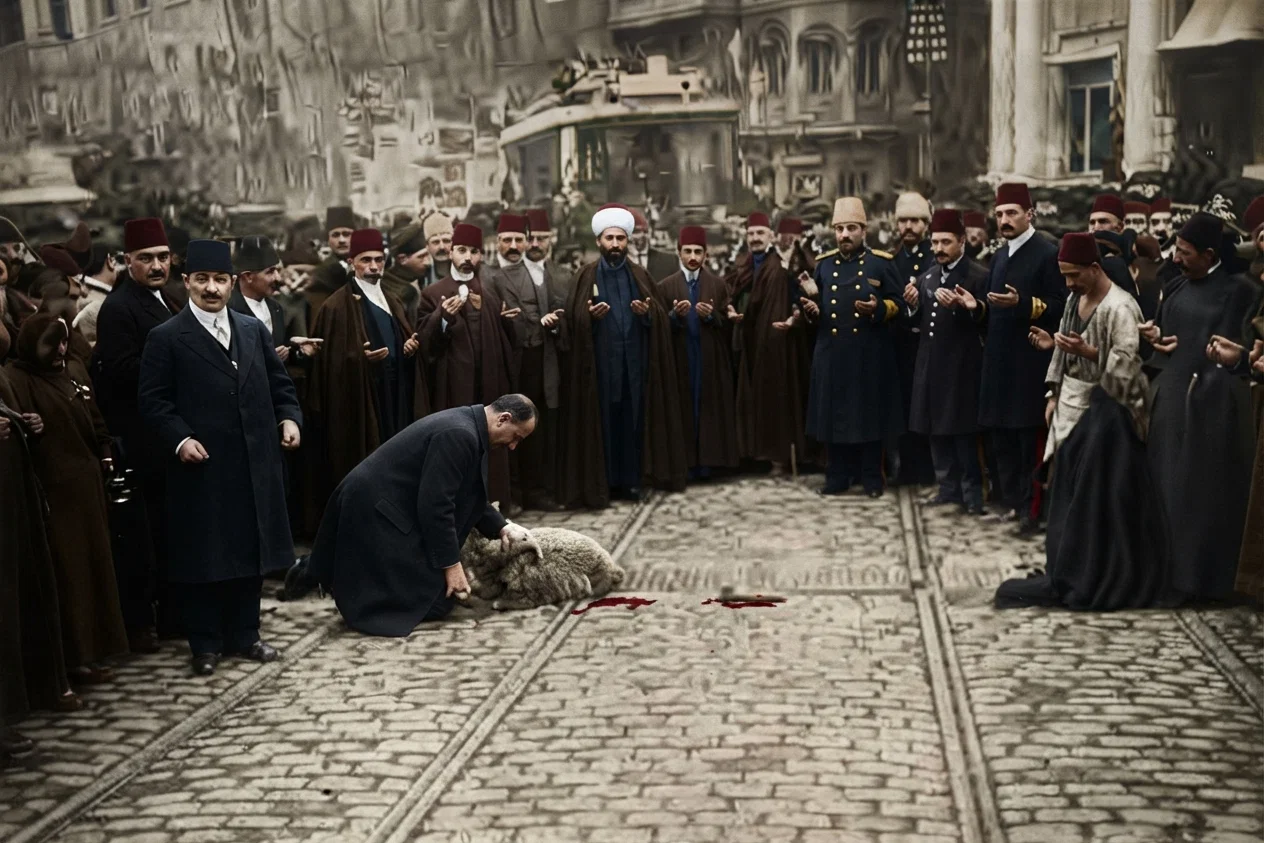
Motives Are Respected in Application of Moral Law—In Operation of Physical Law Motives Are Not Considered—Fire Will Burn a Righteous Man as Quickly as the Worst Outlaw—Some Exceptions to the Rule
MORAL laws appeal to the intelligence, and apply to intelligent creatures only. In their application, motives are respected, but individual accountability is required. They are supported by rewards and penalties. Physical laws apply to both animate and inanimate objects. In their application motives are not considered. They have to do with
CAUSES AND EFFECTS
and antecedents and consequences. God is the first great cause of all natural law. "He maketh His sun to rise on the evil and on the good, and sendeth rain on the just and on the unjust." Matt. 5:45. These words of Christ reveal the fact that natural law, though operated directly from the throne of God, does not regard motives.
FIRE BURNS THE MARTYR AND THE CRIMINAL ALIKE
Fire burns a martyr as readily as it burns a criminal. Floods destroy the property of Christians and sinners without discrimination. Drought consumes both alike. Cold freezes the missionary exposed to it as well as the outlaw. Sickness and death come upon all alike; and the effects of sinful heredity are visited upon both classes, although physical law determines that a life of virtue tends to repair the effects of heredity, even as an open-air life is beneficial to one with tubercular tendencies.
Hence the extreme effect of sinful heredity to the third and fourth generations is visited upon the haters of God only. In the third generation of a life of vice may be seen a tendency to insanity. In the fourth generation idiocy is common. While, as in the operation of natural law, corn planted produces corn, potatoes produce potatoes, likewise seeds of virtue sown produce after their kind; thus according to the natural law in the spiritual realm, the Word sown in the heart so completely changes the individual during one generation as to reflect His image fully. "But we all, with open face beholding as in a glass the glory of the Lord, are changed into the same image from glory to glory even as by the Spirit of the Lord." 2 Cor. 3:18.169
THUS THAT MOSES ENDURED
According to the same natural law in the spiritual realm, the trials of life are greatly lessened by beholding Jesus, and by looking forward by faith to the eternal reward. It was thus that Moses "endured, as seeing Him who is invisible" (Heb. 11: 24-27), and Abraham obeyed, and endured all privations consequent upon a perfectly surrendered Christian life, "for he looked for a city which hath foundations, whose builder and maker is God." Heb. 11: 10.
Paul sums up the principle operating in the natural law of spiritual growth as follows: "For all things are for your sakes, that the abundant grace might through the thanksgiving of many redound to the glory of God. For which cause we faint not; but though our outward man perish, yet the inward man is renewed day by day. For our light affliction, which is but for a moment, worketh for us a far more exceeding and eternal weight of glory; while we look not at the things which are seen, but at the things which are not seen: for the things which are seen are temporal; but the things which are not seen are eternal." 2 Cor. 4: 15-18.
Photograph by Underwood & Underwood, N. Y.
SOME NOTABLE EXCEPTIONS
From these observations, it is clearly evident that though God is the author of both physical and spiritual law, He operates in harmony with law in all His relations, both to animate and inanimate nature. Rewards and penalties, in the administration of moral law, are distributed according to the motives prompting actions; but effects and consequences follow causes and antecedents in the administration of natural law, without regard to motives. There are notable exceptions, which we call miracles, such as the three Hebrews in the fiery furnace, and Daniel in the lions' den, where natural law is restrained from taking its regular course. These exceptions prove the rule.
OBEDIENCE TO PHYSICAL LAWS COMPULSORY
It is a universally accepted hypothesis of science that law controls the operation of all force. The heavenly bodies are governed by law. The balancing of the planets and their motions are all under the direction of law. The law that governs them is "the word of His power," called "gravitation." The balancing of the clouds is in conformity to law. Light, heat, and sound are all produced in strict accord with the most exacting laws. All chemical combinations of the elements act in the same conformity to law as the universe of planets.
The heavenly bodies can no more choose their relations to the laws of gravitation than they can solve problems in mathematics. Water, steam, electricity, and radium are subject to man's control only when he learns the secret of their laws and complies with their demands. The electric current, misdirected, kills instead of serving man. Water, which is a great blessing when rightly used, becomes an agent of destruction when the lungs are broken by it. Gravitation, which holds the universe in poise, hurls a workman to death who accidentally loses his balance on a high scaffold.
Thus may it be seen that physical laws disregarded cause death, regardless of motives. Enforced obedience is therefore the law of the physical world. The consequence of any failure of the physical law which controls the movements of the heavenly bodies would be instant destruction. Perfect obedience alone insures the harmony and safety of the universe.
Since physical laws are enforced without regard to choice or motives, there can be no accountability in their operation. Hence the verdict of Christ in response to the question: "Who did sin, this man, or his parents, that he was born blind? Jesus answered, Neither hath this man sinned, nor his parents: but that the works of God should be made manifest in him." John 9: 2, 3.
NATURAL LAW REVEALS THE CREATOR
Take a drop of water from a stagnant pool, and, placing it under the microscope, behold the almost infinite number of real, living, moving organisms contained in it. It has been estimated that "in a single drop of water, four thousand millions would have room to exercise at will." Dr. Burr says:
"Another characteristic of nature, deserving of notice, is the perfection of its details. The exquisite finish of nature in its minutest parts is about as wonderful as its vastness and variety. Scan that leaf. Examine the wing of that butterfly. Let the tinted and polished antennae of that moth glitter in the focus of your instrument. Subject to the most skilful notice of science and art the smallest veins of any animal or vegetable. Push the analysis just as far as possible, and submit that last visible minimum of organization in the crystalline lens of the cod, with its five millions of muscles and sixty thousand millions of teeth, to the most searching criticism of the superbest microscope. What exquisite details! What elaborate refinement of workmanship!"
PERFECT IN SMALLEST MINUTIAE
"In masterpieces of human painting, the main points only are cared for, while all the subordinate are too rude to bear close inspection. Not so with the works of nature. A real landscape you may analyze to your heart's content, and inspect its details as critically as eye, armored with lens, can do, without finding workmanship growing less exquisite the further you push inquiry. A real man—you may descend to the minutest particulars of his organization, and get as near its primary elements as an Ehrenberg with his superb instruments and practised vision can carry you, without finding the least falling off from that delicacy of execution which appears on the larger masses and outlines of the body.
"So everywhere among natural objects—the great and the small, the outline and the minute filling up, as far as utmost optical resources can carry our observation, are wrought with apparently the same overflowing outlay of attention and skill. It is not so in a few instances merely, nor in a thousand—it is so universally. That there are any so preposterous as to think that this feature of nature makes positively against the idea of a sparrow-watching, hair-numbering, and thought-weighing God, is, of course, not to be imagined. Of course, it is a feature that fully harmonizes with such an idea."
JUST WHAT WE SHOULD HAVE EXPECTED
"A nature finished exquisitely, down to the most infinitesimal of its details, is just what one would have predicted from a God of this description. Announced the fact that He was about to create, and expectation would have stood on tiptoe to look for just such a nature as we see. A God for whose vision nothing is too small, who necessarily gives as complete attention to the affairs of an atom as to those of an empire, who can concentrate His almightiness with as much freedom and accuracy on a mathematical point as on a world, who is embarrassed no more by unlimited multiplicity than by unlimited minuteness of details, who can with equal ease paint a landscape on the point of a needle,—say, if you please, forty thousand of such landscapes at once, with all their innumerable and minima particulars, back to the reticulated eyes of a single butterfly,—can with ease do this, and roll a solar system on its triumphant path about the Pleiades; do I not know that a Being with such a striking attribute as this, would surely give it expression in His works?"—"Ecce Coelum," pages 168-170.
IT PROCLAIMS AN ALL-POWERFUL GOD
The minute detail of natural law in the infinitely small things, as well as its unlimited majesty as seen in the movements of millions of suns and systems in the universe, proclaims an all-powerful God of infinite wisdom as its Author.
The most delicate cambric needle, placed under the microscope, appears rough and feathery, while the sting of the wasp appears perfectly smooth. Such is the contrast between the works of God and the works of man, that man's imperfection appears in his most perfect170work, while the minutest details of the work of God bear evidence of His perfection, wisdom, and power.
The same God who cares for mighty rolling worlds and vast planetary systems, cares for the little sparrow, paints the lily, and to assure man of His constant care, says: 'But the very hairs of your head are all numbered. Fear ye not therefore, ye are of more value than many sparrows.' Matt. 10: 30, 31. What marvelous evidence of an all-wise and almighty Creator is revealed by the infinite works of God!
R. C. P.
A WORD TO OUR READERS
By Editor
We send no papers from this office to individuals without pay in advance. When persons receive copies without ordering them, they are sent by other parties, and we can give no information in regard to them. Persons thus receiving copies of the SIGNS are not indebted to the office, and will not be called upon to pay for them. Please read the papers you may receive, and hand them to your friends to read.
DATE OF EXPIRATION
The SIGNS wrapper bears date of last issue due on your subscription. Unless renewed in advance, paper stops with expiration date.
If herewith is an order-blank, you will know you have overlooked sending renewal. You will not wish to miss a single issue. Back numbers often can not be furnished.
SCRIPTURE QUOTATIONS
Our authority for the doctrines we teach is the Bible. Quotations are usually from the King James Version or the American Standard Revised.
One new yearly subscription and one renewal, or two new, sent at one time, $3.00.
Two new yearly subscriptions and one renewal, or three new, sent at one time, $4.00.
Three new yearly subscriptions and one renewal, or four new, sent at one time, $5.00.
Five or more copies to one person, six months, each $0.60.
Five or more copies to separate addresses, six months, each $0.65.
Weekly and Monthly SIGNS one year, $2.25.
G. C. HOSKIN, Circulation Manager.
THE MIRACLE OF HEALING THE SICK
By E. E. A.
To Heal the Sick Is in the Gospel Commission — Healing Is One of the Gifts of the Spirit — Promise of the Prayer of Faith
AS Jesus sent forth His twelve disciples, "He gave them power against unclean spirits, to cast them out, and to heal all manner of sickness and all manner of disease." As they departed, He said to them: "As ye go, preach, saying, The kingdom of heaven is at hand. Heal the sick, cleanse the lepers, raise the dead, cast out devils: freely ye have received, freely give." Matt. 10: 1, 7, 8. Luke tells us that Jesus sent forth the twelve "to preach the kingdom of God, and to heal the sick." Luke 9: 2. Again, in sending forth the seventy, Jesus said, "Heal the sick." Luke 10: 9.
HIS PARTING INSTRUCTION
In the Saviour's parting instruction to His disciples before His ascension to heaven, as He gave them their final commission, sending them into all the world to preach the gospel, He said, "They shall lay hands on the sick, and they shall recover." "And they went forth, and preached everywhere, the Lord working with them, and confirming the word with signs following." Mark 16: 15-20.
The healing of the sick was an important feature of the gospel commission, and was one of the signs that God was working with them; and by that means the word was confirmed. After Peter had healed the impotent man at the beautiful gate of the temple, he declared to the multitudes, "And His name through faith in His name hath made this man strong, whom ye see and know: yea, the faith which is by Him hath given him this perfect soundness in the presence of you all."
THE INFLUENCE OF THE MIRACLE
Because of the influence of this wonderful miracle upon the people, the rulers durst not thrust the disciples into prison — though they greatly desired to do so — "for all men glorified God for that which was done." After being released, Peter and John returned to their company, and reported what had occurred. Then all united in prayer, saying: "And now, Lord, behold their threatenings: and grant unto Thy servants, that with all boldness they may speak Thy word, by stretching forth Thine hand to heal; and that signs and wonders may be done by the name of Thy holy Child Jesus." Acts 4: 21, 29, 30.
"Gifts of healing" are found among the gifts of the Spirit that were placed in the church, of which gifts, says Paul, "I would not have you ignorant." 1 Cor. 12: 9, 1. In writing to the Ephesians, the apostle says: "Wherefore He, saith, When He ascended up on high, He led captivity captive, and gave gifts unto men." The object of the gifts is stated thus: "For the perfecting of the saints, for the work of the ministry, for the edifying of the body of Christ." The time for their continuance in the church is stated as follows: "Till we all come in the unity of the faith, and of the knowledge of the Son of God, unto a perfect man, unto the measure of the stature of the fulness of Christ." Eph. 4: 8, 12, 13. We have not yet reached the time when this scripture has met its complete fulfilment, hence the gifts of the Spirit should be in the church still.
THEY ATTEMPTED TO COUNTERFEIT
Undoubtedly many have attempted to counterfeit the genuine gift of healing. Every good thing has been counterfeited. But that does not prove the absence, from the church, of the genuine gift. Instead it would be a very good testimonial to the presence of the true gift of healing. No effort is ever made to counterfeit a thing that does not actually exist.
The following counsel to the church is found in James 5: 14-16: "Is any sick among you? let him call for the elders of the church; and let them pray over him, anointing him with oil in the name of the Lord: and the prayer of faith shall save the sick, and the Lord shall raise him up; and if he have committed sins, they shall be forgiven him. Confess your faults one to another, and pray one for another, that ye may be healed. The effectual fervent prayer of a righteous man availeth much."
INSTRUCTION TO THE SICK
The sick are instructed to call for the elders of the church, who are to pray over the patient, anointing him with oil in the name of the Lord; and the promise is, "The prayer of faith shall save the sick, and the Lord shall raise him up; and if he have committed sins, they shall be forgiven him."
It seems that the apostles followed this method in their work of healing, at least in some instances. We read, "And they cast out many devils, and anointed with oil many that were sick, and healed them." Mark 6: 13.
I do not understand that the instruction given to the sick by the apostle James was intended simply for the church in his day. In fact, it would seem that if it was intended for any one particular time more than another, it was for those living near the second coming of the Lord; for the apostle, in this same chapter, speaks of certain conditions that would prevail in the world "in the last days" (R.V.), when "the coming of the Lord draweth nigh." Verses 1-8. This is one of the many prophecies that are to-day fulfilled before our eyes in a most striking manner, showing clearly that we are nearing the glorious morning of deliverance. If ever it was the privilege of the children of God, in time of sickness, to call for the elders of the church to pray that they might be healed, with the expectation that such a prayer would be answered in the healing of the body and the forgiveness of sin, it surely is so now.
IF IT BE THY WILL
It should be understood, however, that we ought ever to pray, "If it be Thy will." There are some things concerning which God has made known His will; for instance, the forgiveness of sin. When the conditions on our part are met, this promise is absolute, and we may with all assurance claim its fulfilment. But God has not made known His will in each case regarding physical healing, hence it is always proper to leave the case in the hands of the great Physician, knowing that "with God nothing shall be impossible" (Luke 1: 37), and that if it will glorify Him, and be for the good of the sick one, He will restore him.
"But let him ask in faith, nothing wavering. For he that wavereth is like a wave of the sea driven with the wind and tossed. For let not that man think that he shall receive anything of the Lord." James 1: 6, 7. Perfect faith in God leads to perfect trust in the infinite wisdom and tender love of our kind heavenly Father. The trusting child will not presume to dictate to the great Physician how his case or the case of a loved one shall be treated, or what shall be the immediate result of his petition; but with implicit confidence in His wisdom, His power, and His love, the case will be left in the hands of his Elder Brother and his affectionate Father, knowing They will do all things well. Such faith is intelligent, and will always bring the very best results.
E. E. A.
ALLEGED FRAUDS AND CAUSTIC REMARKS
By Editor
SOME recent issues of the New York World have given considerable space to the story of the twelve million dollar fraud perpetrated against the New York, New Haven & Hartford Railroad Company. Commenting upon the statement in the report of Chairman Prouty, of the Interstate Commerce Commission, that the twelve million "vanished into thin air," the editor of the World says:171
"It is needless to say that this money did not vanish into thin air. It vanished into the coffers of J. P. Morgan & Company. It was taken out of the treasury of the New Haven by Mr. Morgan and his associates to recompense J. P. Morgan & Company for loans they had made practically without security to a dummy corporation organized to conceal various financial manipulations in connection with the construction of the Westchester road."
And again the World says:
"Whoever wishes to know how the stockholders of a great railroad company can be swindled, robbed, and ruined by due process of law, is invited to study carefully the steps by which the Westchester road was unloaded upon the unfortunate New Haven after President Mellen had informed the New Haven directors that the Westchester stock was worth 'about ten cents a pound.' Whoever wishes to understand the cold, calculating villainy by which the New Haven has been bled white, and its helpless stockholders cheated of the dividends which represent the only means of support that thousands of them have, is invited to study this chronicle of 'high finance' to the last, least line."
A few other sentences from this World editorial are:
"If J. P. Morgan and his associates had gone into the offices of the New Haven, blown open the safe, and stuffed these millions into their pockets, they would have been guilty of burglary. But what a burglar might have done brazenly and defiantly, they accomplished by stealth and cunning. . . . Thousands of men are in jail for offenses against society which were picayunish in comparison with this stupendous achievement in respectable robbery. . . .
"Mr. Morgan is dead, but his estate is not dead. His executors still hold the tainted profits that were acquired in this transaction. . . .
"Whatever measure of mercy and immunity is shown toward the corporation, there should be neither mercy nor immunity for directors who participated in the colossal swindles by which the New Haven has been brought to the verge of bankruptcy."
It is not ours to say to what extent the New York editor is exactly stating the facts, but we can point out that he is making some very strong statements. And as statements of that character are read by the populace, there can be no question but that they stir up feelings of indignation and resentment against the great corporations and the individual men of colossal wealth.
THE MOTIVE MAY BE COMMENDABLE
The object of the editor of the World in publishing such things is of course to create a sentiment that will correct them. The motive is certainly a commendable one. But the actual result of the publication of such matter is to inflame still further the minds of the people, when they are already in a condition of excitement and unrest that requires only a spark to start rioting, violence, and disorder.
SOWING DISCONTENT
Editorials of the character presented herewith from the columns of the World are similar to many things that are circulated daily among the people, and it is childish to say that this seed sowing of discontent will not produce its harvest of world-wide revolution in a little time from this. We are not criticizing the matter that is published. We are not saying that to print such things is wrong, for certainly it is evident that the conditions of the time call forth such utterances. But the thing that we desire to point out is that the things that are printed concerning these conditions, instead of relieving the situation, are working together to hasten on the indescribable revolution.
The men of this world are rapidly bringing matters to the place where the only thing that can settle them is that divine power which will be displayed in the second coming of Christ. Conditions in the world demand His coming, and the prophecies clearly point out that it is the one great event that lies just before the world.
SYSTEMATIC BIBLE STUDY
ONE or two of the gems found in our reading this week are these words: "Glorious things are spoken of thee, O city of God." "And of Zion it shall be said, This and that man was born in her: and the Highest Himself shall establish her." Ps. 87: 3, 5. How such words as these thrill the heart with a desire to be in that glorious city of which the glorious things have been spoken! And how good it is to know that the Highest Himself shall establish Zion! And how such gems of truth should continually fill the soul with the determination to read God's word continuously, and to study it closely and carefully, so that we may become familiar with every one of its sacred utterances!
Read a chapter in Leviticus each day, and two on the Sabbath. Read a psalm each day. Read a chapter in Acts each day, and two on the Sabbath.
Question Corner
By Editor
We can not answer repeatedly in the same volume questions upon the same scripture. The name and address must accompany question. It is well always to enclose stamp for reply.
4279 — WHO HAVE ASCENDED TO HEAVEN?
Please explain John 3:13. Do we not understand that Enoch and Elijah have ascended up into heaven? If so, why does the Saviour use this expression in John 3:13?
John 3:13 reads: "And no man hath ascended up to heaven, but He that came down from heaven, even the Son of man which is in heaven." This verse comes in connection with the Saviour's talk to Nicodemus. He asked Nicodemus, "If I have told you earthly things, and ye believe not, how shall ye believe, if I tell you of heavenly things?" Verse 12. Then follows the thirteenth verse, in which He makes the statement that "no man hath ascended up to heaven, but He that came down from heaven." In other words, the Son of man who came down from heaven is the only one who can reveal heavenly things. No man has ascended up to heaven and been permitted to return to this earth. "There is none other name under heaven given among men, whereby we must be saved." Acts 4:12. And even Enoch and Elijah, who were translated to heaven, were taken there by the power of the Son of man Himself. They did not go by their own power. And so the lesson that Christ was teaching Nicodemus is literally true, that Christ is the only source of communication between heaven and earth.
4280 — THE CONVERSION OF PETER
Please explain Luke 22:32. Was Peter not converted before this?
Verse 24 indicates that there was still selfishness in the heart of Peter. One who was looking for the highest place for himself could not do much to strengthen his brethren. At that time, right at the close of Christ's ministry, when they had been associated with Him closely for three years, and had listened to His instruction, there was strife among them as to who should receive the highest honors. This shows that they had not been fully converted, for there is none of self in the heart that is wholly regenerated by the love of Christ. Love "seeketh not her own." Verse 31 shows that Peter had a prominent part in the discussion, and this is what led to the Saviour's remark. That he was not thoroughly converted at that time is also shown by his subsequent denial of Christ. The disciples did not yet comprehend the full import of the invitation, "Take My yoke upon you, and learn of Me; for I am meek and lowly in heart." The meek and gentle Saviour humbled Himself, that mankind might be elevated and exalted; but the disciples had not partaken of this spirit of self-abnegation.
Selfishness is at the foundation of all sin. Satan's aspiration to exalt himself (Eze. 28:2, 5, 6, 17; Isa. 14:12-14) was what made it necessary to cast him out of heaven. Regarding the great apostate church against which the prophecies of the Bible warn us, it is stated, he "opposeth and exalteth himself above all that is called God, or that is worshiped; so that he as God sitteth in the temple of God, showing himself that he is God." Self-exaltation seeks the best for itself, no matter how much misery, sorrow, or suffering it brings upon others. The spirit of Christ seeks to give the best to the other person, no matter how great the sacrifice or the suffering one has to endure in bestowing these blessings; and it was not until after the disciples had seen the indescribable agonies and sufferings of Christ in the Garden of Gethsemane, in the judgment-hall, and upon Calvary, that they realized the true nature of sin and the awful wickedness of exalting self. The disciples had learned many valuable lessons from Christ, but it was not until they got a true view of Him in His suffering and death that they received a humble opinion of themselves and became truly converted.
4281 — CHILDREN FREE FROM SIN
If a young man and a young woman both are converted, repent, and are baptized, and receive the Holy Ghost, and are free from sin, then marry and have children, will the children be free from sin? If not, why not be free?
Questions of that character are often thought of by individuals, and the principal thing that they accomplish is to provoke discussion, without doing any good. Hundreds of pages of so-called scholastic theology have been devoted to just such questions; and after they were discussed and rediscussed, what did they amount to?
The individual who has actually come in contact with the word of God, and who has tasted the joys of salvation, knows that the Christian life is a growth; and the young man or the young woman who has been converted and received the power of the Spirit of God, has all the trials of the Christian life before him. "The path of the just is as the shining light, that shineth more and more unto the perfect day." Prov. 4:18. The "perfect day" is not at the beginning of his career. The newly converted person is spoken of as a babe in Christ (1 Cor. 3:1, 2; Heb. 5:12-14), and he is to "grow up into Him in all things, which is the head, even Christ." Eph. 4:15.
Job was considered a perfect man in his day, and one who had a deep Christian experience, and yet he said, "When He hath tried me, I shall come forth as gold." Job 23:10. It takes trials to develop and refine the Christian into the beautiful character of Christ. The Scriptures are full of similar experiences. And no matter how well children may be born, it is essential that their training be right if they are to remain innocent and free from sin. We can not get away from the divine plan, "Train up a child in the way he should go." Prov. 22:6.
There are well-known cases of children who were born in heathen homes, and started out in life under all of the degrading influences of demon-worship, but have been brought under Christian influences and into Christian homes early in life, and stand on a level intellectually and morally with some of the very best children that were born under more favorable circumstances. The training of children has a great deal more to do with their after-life than the conditions of their birth, even though these conditions of birth may be very important and very helpful in themselves alone.