WHEN Sir Walter Scott was dying, he said to his secretary: “Give me the Book.” “Which book?” “There is only one book,” said Scott; and the secretary handed him the Bible.
The Bible has always been the Book of books. No rival has ever defeated it. Many foes have arisen against it; but always when the smoke of strife has cleared away, the Bible has come forth wearing fresh laurels of victory.
Every successful missionary enterprise has the Bible for its foundation. Every civilized land has drawn upon the Hebrew code in the Pentateuch for its best laws. All who have given to the world literature that inspires high Christian ideals, have themselves received the gift they are passing on from the pages of the Book of books. Ruskin said that the scriptures he had learned so influenced his life that he could never write frivolous or superficial English.
But the most vital question for you just now is not what the Bible has done for others; but, What is it doing for you? It is the great guidebook of life. “It has God for its author, salvation for its end, and truth without any admixture of evil for its matter.” And because of its authorship, because of its purpose, and because of its contents, it becomes to all of us the great guidebook of life eternal.
When God gave Israel his Word, he said, “O that there were such a heart in them, that they would fear me, and keep all my commandments always, that it might be well with them, and with their children forever!” Today the Father is saying to you and to me, “O my child, will you not obey my Word, that it may be well with you forever?” Obedience to God is the pathway to heaven. We cannot be saved unless we learn to obey; and we cannot lead others into the path of obedience until we have trained our own feet to walk in it.
“How shall the young secure their hearts,
And guard their lives from sin?
Thy Word the choicest rules imparts,
To keep the conscience clean.”
“’Tis like the sun, a heavenly light,
That guides me all the day;
And through the dangers of the night,
A lamp to lead my way.”
“Thy precepts make me truly wise;
I hate the sinner’s road;
I hate my own vain thoughts that rise,
But love thy law, my God.”
“Thy Word is everlasting truth;
How pure is every page!
That Holy Book shall guide my youth,
And well support my age.”
Sometimes you will find that God’s commands run directly across your most cherished plans; and it seems hard to say, “Nevertheless not my will, but thine, be done.” But soon, very soon, my dear young friend, God will say to the angels, “Gather my saints together unto me; those that have made a covenant with me by sacrifice.” You desire to be ready for that happy gathering. Then resolve, by His grace to obey his Word, and soon you will begin to enjoy giving up your selfish plans, for you will find in the path of obedience joys sweeter than you had ever dreamed could be tasted by humans here.
MEDITATION.—As I meditate on the texts for this week, I grow more determined to obey God’s Word. I am thinking how important it is for tourists in the mountains and other dangerous places to obey their guide promptly and fully. Just one misstep may hurl them into eternity. The walk of life all the way is close to the edge of a precipice, and the Bible is the only chart we have of the path that leads to heaven. I must obey it, for it tells me just where to step; and I do not know. I’ve never been over the path before.
MEMORY VERSE: “He is brought as a lamb to the slaughter, and as a sheep before her shearers is dumb, so he openeth not his mouth.” Isa. 53:7.
Questions
1. When Jesus was arrested in the garden, where was he taken by his captors? Who were gathered at the high priest’s house? Matt. 26:57. Note 1.
2. What did Peter do? Verse 58. Note 2.
3. What were the chief priests and elders seeking against Jesus? What was their purpose? Verse 59.
4. How did they at first succeed? Verse 60, first part.
5. Finally what did two false witnesses say? Verse 60, last part, and 61. Note 3.
6. What did the high priest ask Jesus? Verse 62.
7. When Jesus made no answer, what did the high priest ask Jesus to say under oath? Verse 63.
8. What reply did Jesus now make? Verse 64, first part. Note 4.
9. What did he say that the high priest would one day see? Verse 64, last part. Note 5.
10. What did the high priest do to show his feelings? Of what did he accuse Jesus? Verse 65.
11. When he pressed the council for a decision, what verdict did they pronounce? Verse 66.
12. What cruel treatment did Jesus then receive? Verses 67, 68.
13. What did a damsel say to Peter as he sat without in the palace? Verse 69.
14. What reply did Peter make? Verse 70.
15. After a little while, what did another maidservant say? Verse 71.
16. What did Peter do the second time? Verse 72. Note 6.
17. What did bystanders say to Peter a little later? Verse 73.
18. What did Peter then begin to do? What immediately took place? Verse 74.
19. What did Peter now remember? Verse 75. Luke 22:61. Note 7.
Notes
1. “The armed band, with their prisoner, threaded the dark and narrow streets, guided by torches and lanterns, for it was yet early morning, and very dark. Amid insult and mockery, the Saviour was hurried to the palace of the officiating high priest, Caiaphas.”—“The Spirit of Prophecy,” Vol. III, p. 107.
2. “After deserting their Master in the garden, two of the disciples had ventured to follow, at a distance, the mob that had Jesus in charge. These disciples were Peter and John.”—“The Desire of Ages,” p. 710.
3. Early in the morning Christ had said, “Destroy this temple, and in three days I will raise it up,” speaking of the temple of his body. One of these false witnesses who had been paid to speak against Jesus, declared, “This fellow said, I am able to destroy the temple of God, and to build it in three days.” He did not give Christ’s words as he had spoken them. Had he done so, they would not have secured Christ’s condemnation. They applied this statement to the temple at Jerusalem, which was not only dear to every Jew, but in which the Romans also took great pride, as they had recently rebuilt it.
According to the rules of Jewish law the penalty for procuring false witnesses was death.
4. “To this appeal Christ could not remain silent. . . . Christ would not fail to show proper respect for the law. . . . Every ear was bent to listen, and every eye was fixed on his face as he answered, ‘Thou hast said,’ meaning that what Caiaphas said was true—he was the Son of God. Christ would not deny his relation to his Father, even though he knew that to answer now would make his death certain. By his own example, Jesus here teaches us an important lesson. See Matt. 10:32.
5. “In these words Christ presented the reverse of the scene then taking place. He, the Lord of life and glory, would be seated at God’s right hand. He would be the judge of all the earth, and from his decision there could be no appeal.”—“The Desire of Ages,” pp. 706, 707.
6. Peter was afraid to have it known that he was a Christian. It is not safe to be in the company of those who mock at religion. In doing this, Peter placed himself on Satan’s ground, and was easily overcome. It is always best to let our true colors be known.
7. “It was in sleeping when Jesus bade him watch and pray that Peter had prepared the way for his great sin. . . . Had those hours in the garden been spent in watching and prayer, Peter would not have been left to depend upon his own feeble strength. He would not have denied his Lord.”—Id., p. 713.
Where was Jesus taken by his captors? Matt. 26:57. Note 1.
What did Peter do? Verse 58. Note 2.
What did the council seek deliberately to do? Verse 59.
How did they succeed? Verse 60. Note 3.
What testimony did the false witnesses bear? Verse 61.
What did the high priest ask Jesus? Verse 62.
When Jesus held his peace, what did the high priest then say to him? Verse 63.
What answer did Jesus give? Verse 64. Note 4.
What did the high priest then do and say? Verse 65.
When he pressed the council for a decision, what verdict did they pronounce? Verse 66.
How was Jesus then treated? Verse 67.
What did they say to him in mockery? Verse 68.
What did a damsel say to Peter as he sat without in the palace? Verse 69.
How did he answer her? Verse 70.
What did another maid remark about Peter in the porch? Verse 71.
How did he answer this time? Verse 72.
What did bystanders say to Peter a little later? Verse 73.
With what emphasis did he deny his Lord a third time? What happened immediately? Verse 74.
What words of Jesus did Peter now recall? Verse 75, first part.
What did Peter do? Verse 75, last part. Note 5.
Notes
John's record (18:14) identifies this Caiaphas with the one who had declared that it was expedient that one man should die for the people. The occasion of this utterance is found in John 11:47-54, where it is said that the expression did not originate with Caiaphas, but that as high priest he had been used of the Lord to utter a prophecy concerning Jesus' death. Now he takes a leading part, by illegal and unbecoming means, in bringing about the condemnation of Jesus.
Peter's first mistake was that he “sat with the servants” instead of openly following his Master into the trial room as John did. John 18:15. Here the rougher element would be gathered, and this bad company became the means of his downfall, though it was through his own lack of courage that he was in the place of trial.
According to the rules of Jewish law as cited in the Cambridge Bible for Schools and Colleges, “the penalty for procuring false witnesses was death.” Other violations of these rules were: “the trial by night, the sentence on the first day of trial, the trial of a capital charge on the day before the Sabbath, the suborning of witnesses, the direct interrogation by the high priest.” Also “the condemned was not to be executed on the day of his trial.”
When asked directly by the proper person to declare his identity, Jesus did not hesitate to answer. His words, “Thou hast said,” are equivalent to an affirmative answer, as when he used the same expression in answering Judas in verse 25.
Luke says (22:61) that when the cock crew, “the Lord turned, and looked upon Peter.” That sad, tender look melted the heart of Peter to sincere repentance. He went out where he could be alone and wept aloud bitterly, as the expression means.
Taking Our Place with Christ
By F. B. Meyer
WHEN Napoleon’s horse ran away, and a common soldier caught him, Napoleon said, “Thank you, Captain,” and the man at once went to the officers’ quarters and sat down with them at mess. Had not the emperor called him “captain”? and was not his place with the captains? Let us take our place with Christ. — F. B. Meyer.
Remarkable Service
ONE man in this country believes in young men. This is Dr. Russell H. Conwell, pastor of Baptist Temple, Philadelphia, Pennsylvania. As an evidence of this confidence he has delivered eight thousand lectures at an average net profit of $150 each, and devoted the entire sum to poor boys who were working their way through college.
Forty years ago at the age of thirty-four Dr. Conwell, mindful of his early struggles at Yale, decided to make this use of the returns from his lectures; and as a result, three thousand students, enrolled in nearly every institution of higher learning in the land, have had the financial problems of college life made easier for them.
This philanthropic man has been called America’s only penniless millionaire. “If the money he has received and given away in twoscore years had been invested at six per cent compound interest at the time it was earned, he would have five million dollars today. At the end of each month he balances his books, pays his bills, and scatters the residue, to the last cent, over his charity list.
“Fifty-five years ago, in a Westfield, Massachusetts, church, Dr. Conwell made an address which, under the later title of ‘Acres of Diamonds,’ has been delivered more than five thousand two hundred and fifty times. Audiences in every State in the Union, in Europe, Asia, and Africa, have heard it, and the lecturer turned down an offer of fifty thousand dollars for a six months’ antipodal tour in Australia. Eight or nine other lectures have been carried through this period, but ‘Acres of Diamonds’ has been given more times than the others combined.”
Dr. Conwell has attracted attention not alone for his practical interest in the education of young men, but in his church relationship and service. When he accepted “the pastorate of a languishing little church in Philadelphia, thirty-three years ago, the trustees stipulated that his eight-hundred-dollar salary should be doubled every time he doubled the church’s membership of ninety-two. But they never surmised what was in store for them. Within six weeks the fold had grown to one hundred and ninety-five; within six months the membership and the minister’s salary had doubled again; within six years Dr. Conwell was receiving ten thousand dollars annually, and had refused to accept more. Had he held the church to the agreement, he would have been getting long ago more than twenty-five thousand dollars a year.
This church, under Dr. Conwell’s care, “put forth many branches, and became the first great institutional church in America. In less than a decade the magnificent Baptist Temple had been built; Temple College, now Temple University, had been founded for poor boys and girls desirous of getting an education at night, and the Samaritan Hospital, a haven for the helpless, had been brought into being. Later, Garretson Hospital was established in an industrial center. Temple University started with two students in a back room. Today it has fourteen hundred students, and buildings valued at more than half a million dollars.”
The Gateway of the Kingdom
By Clarence E. Flynn
THE gateway of the Kingdom
It bendeth very low,
Within the reach of every place
Where common people go.
'Tis grand, but grandly simple.
'Tis great, yet very small,
Though wide enough that ever
There's passage way for all.
The gateway of the Kingdom
Is not of common gold;
Its pearl is far more precious
Than earthly realm can hold;
It has no rusty hinges,
No marble steps are piled:
The gateway of the Kingdom
Is the spirit of a child.
— Clarence E. Flynn.
Fewer and Better Laws
A FORMER United States Attorney-General, Mr. Wickersham, wisely says of all law-making powers that “it would be a good thing if our legislative bodies, not excluding the Congress of the United States, would give themselves a long rest from the business of framing multitudinous new statutes, with which to clutter their own records and the law libraries of the world. They could profitably devote a term of years to analyzing existing laws, simplifying, standardizing, and modernizing those which are essential to good government, and ruthlessly repealing those which we could do without. The sweet reasonableness which they would acquire from this task might convince them that problems of such importance as to require brand-new legislation are comparatively rare in the life of a State.”
“Some years ago, the State of New York appointed a splendid body of men, including lawyers and jurists of the highest distinction, as a ‘Board of Statutory Revisers.’ Their powers were limited. They could not suppress any principle or theory that had found its way into the laws of the State. They could not change the meaning of any given statute, either arbitrarily or by interpretation. But they were authorized to condense and rearrange, to revise by striking out overlapping laws, to combine groups of statutes which covered the same subject; in short, to state the laws of the community concisely and faithfully. The result of their labors was the ‘Consolidated Laws of the State of New York,’ enacted in 1909 and supplemented a year later. Comprised in ten or eleven volumes, this was one of the most thorough, practical, and truly admirable compilations of the laws of a State that had ever been made.”
“We need fewer laws, more carefully drawn,—laws that can be respected and honestly enforced.”
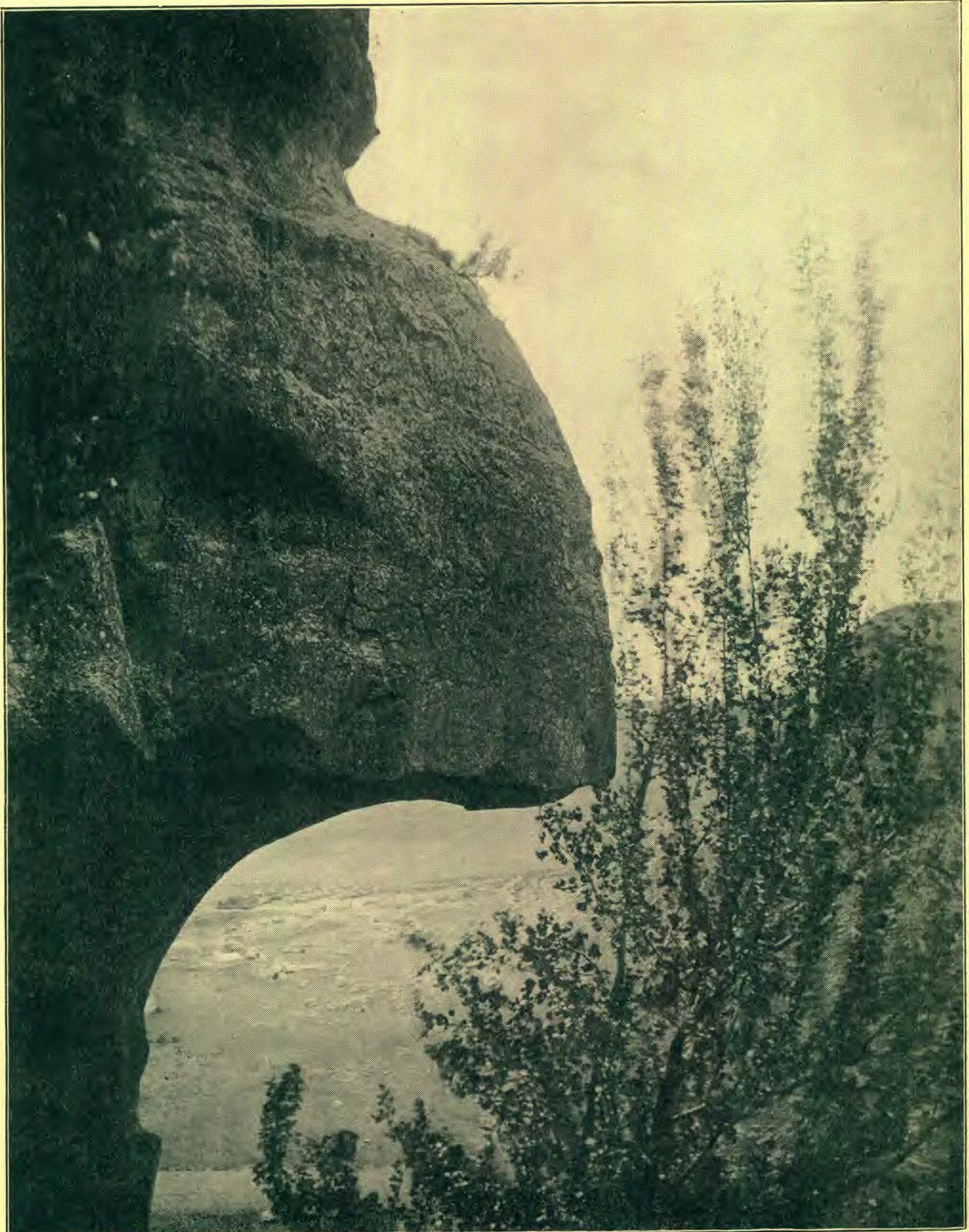
Photo by H. C. Olmstead A SCENE NEAR EMMANUEL MISSION, BASUTOLAND, SOUTH AFRICA
THE EARLY MORNING OFTEN FOUND JESUS IN SOME SECLUDED PLACE, MEDITATING, SEARCHING THE SCRIPTURES, OR IN PRAYER.