R. EDWARD H. HAMILTON, one of the veteran Democratic newspaper men of the Coast, in a breezy report from Sacramento in the "Examiner" of January 6, says:
There is to be a Sunday rest law. Some of us of the Democratic faith remember that way back in 1882 we had a famous fight on this Sunday law, the Republicans espousing the law and the Democrats fighting it. When the smoke had lifted it was found that the Democrats had cleaned up every State and district office but one; and Lew Morehouse of Alameda County, having managed to get elected as a Republican to the Board of Equalization, was known as "Lonely" Morehouse by reason of this distinction.
But many more Sabbatarians have settled in the State since then, and so there are at least some legislators who think it is safe to monkey once more with a puritanical Sunday.
We hope Mr. Hamilton's prediction will prove false. It would probably please him and many others if it did. We can not conceive that the great majority of the people of California deep down in their hearts believe in a Sunday law. We can not conceive that the majority of the legislators in Sacramento believe in it. The true liberty-loving statesmen among them can not believe it, because such legislation is in its very nature unequitous and iniquitous. If a Sunday law is secured in California it will be because (1) There are a very active and determined few who are working every scheme religious and political and religio-political to obtain it; (2) There is a class of politicians who fear the disfavor of the churches — largely a bugaboo — and who will vote for such a law because they love place more than principle; (3) There is another class, ignorant of the principles of true liberty, who will vote for it simply because some prominent preacher-politicians ask them so to do. These classes may pass a Sunday bill.
Opposed to such legislation are some legislators who, like Mr. Hamilton the newspaper man, count it a sort of joke, a harmless affair, which is wrong in principle, but which will prove a dead letter if passed, but who will vote against it if pressure is not too strong. But they will not work against it. There are a few stalwarts who will stand for liberty and equality, on true constitutional and American ground.
There are more Sabbatarians in the State now, Mr. Hamilton tells us, by which he means Sunday-law people. That may be, but that is no reason why a Sunday law should be placed upon the statute-books of the State. Religious legislation is not a matter of numbers or majorities; it is not a matter of which day, the seventh or the first; it is wholly a matter that lies outside of the province of the American legislator, municipal, State, or national.
The Sabbath is a matter that lies between the soul and God. How a man should employ it, if he do nothing that is counted criminal on all days, lies between him and God. He may rest in working at manual labor, or weary by church-going; he must give an account at the bar of God.
If Sunday is of God, He will care for His own and those who observe the day for His sake. If the seventh-day Sabbath is His, He is abundantly able to preserve it without human aid.
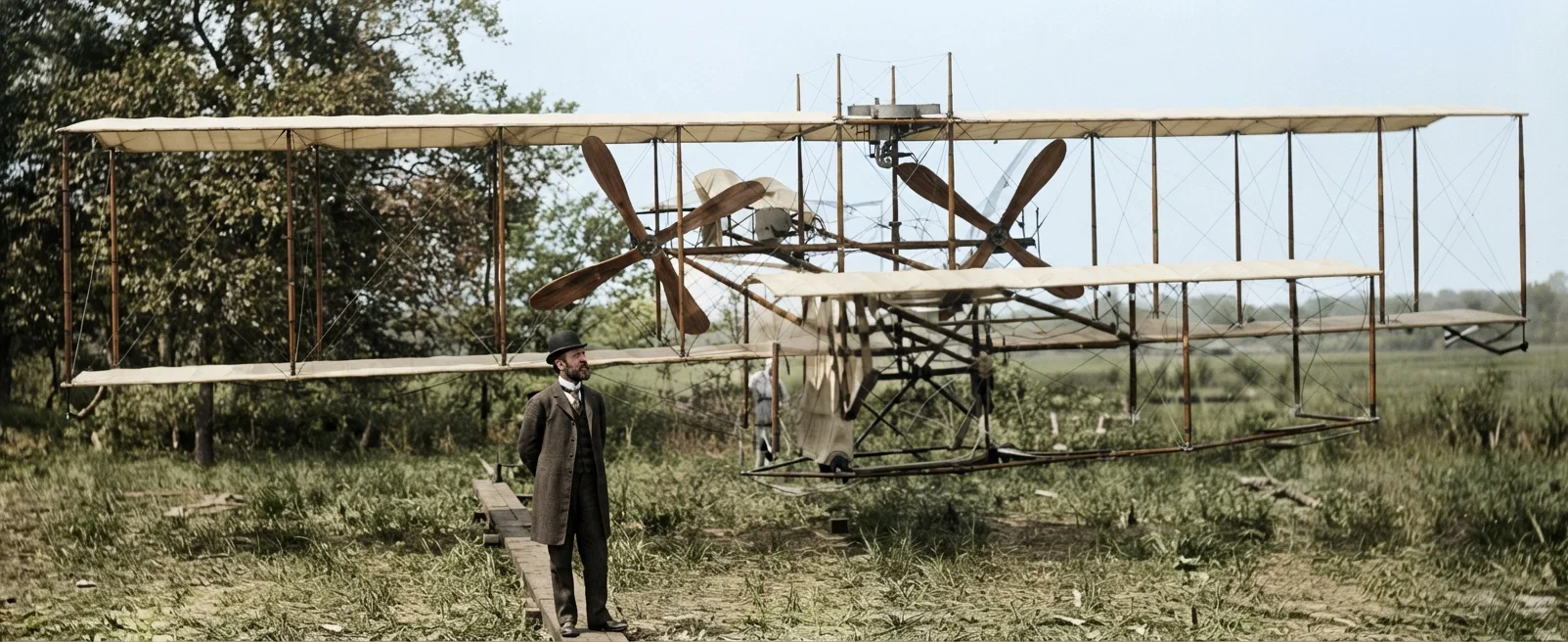
A passenger flying-machine, built in Paris to carry eight persons. It has not yet been used, consequently has no record of deaths; tho doubtless when ready it will easily find eight foolhardy ones who will play with death in it. The best experts tell us that the problem is not yet solved. All yet made are so light that the least accident causes wreck, and motors often fail. Some of those who have lost their life flying considered them safe.
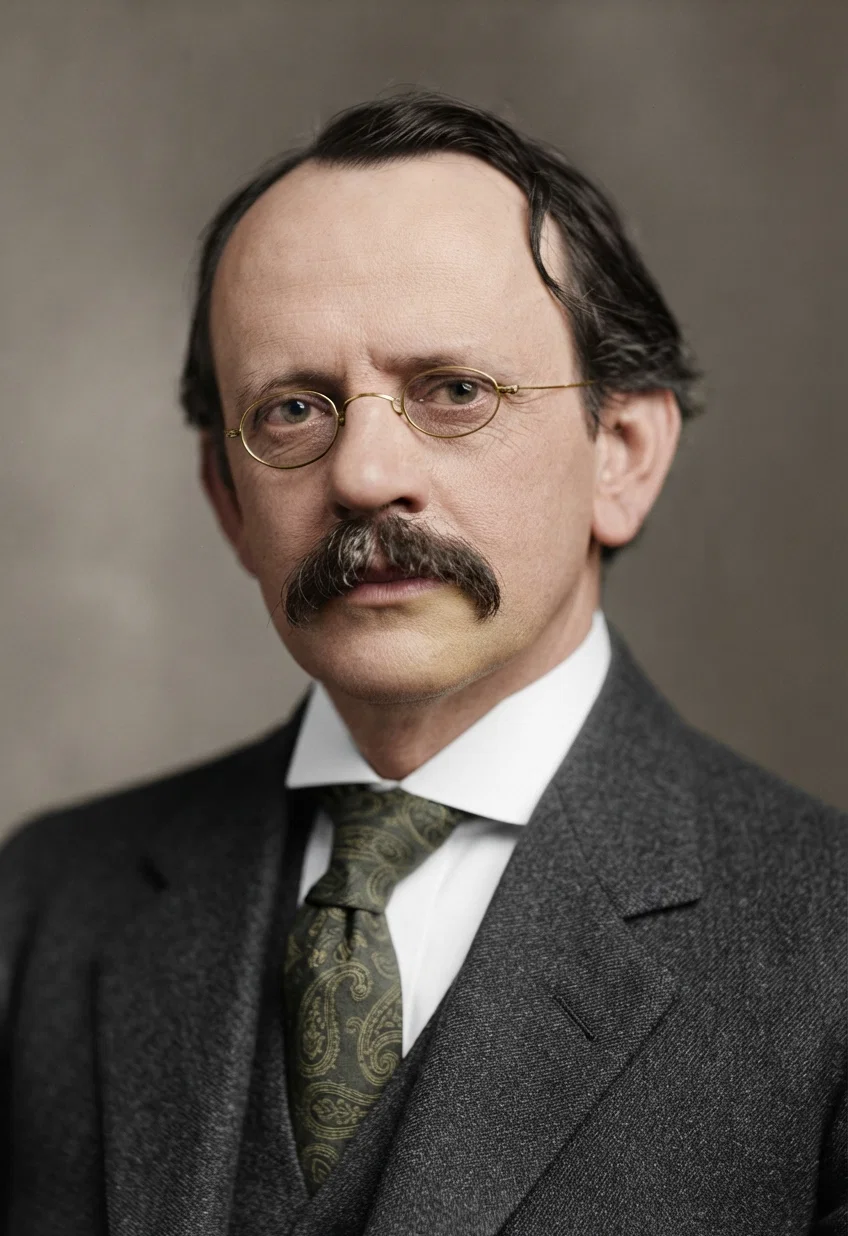
Professor Joseph John Thompson, whose research into the conductivity of electricity through gases made wireless telephony possible. "Current Literature" calls him "one of the most illustrious physicists since Newton." It is believed that wireless telephony, which can be conducted without a specially trained operator, will soon exceed in practical importance wireless telegraphy. Men admit the results of these sciences, yet for centuries and millenniums both have been in operation between God and His children.
If the Sunday people believe in religious liberty truly, they believe in it for the other fellow, their opponent. That is the true test. They will demand, if they are fair and equitable, the same liberty, the same equal opportunity, for the seventh-day man or the no-day man, which they ask for themselves. In other words their legislation will not be in behalf of institutions, but of men.
A Great Country
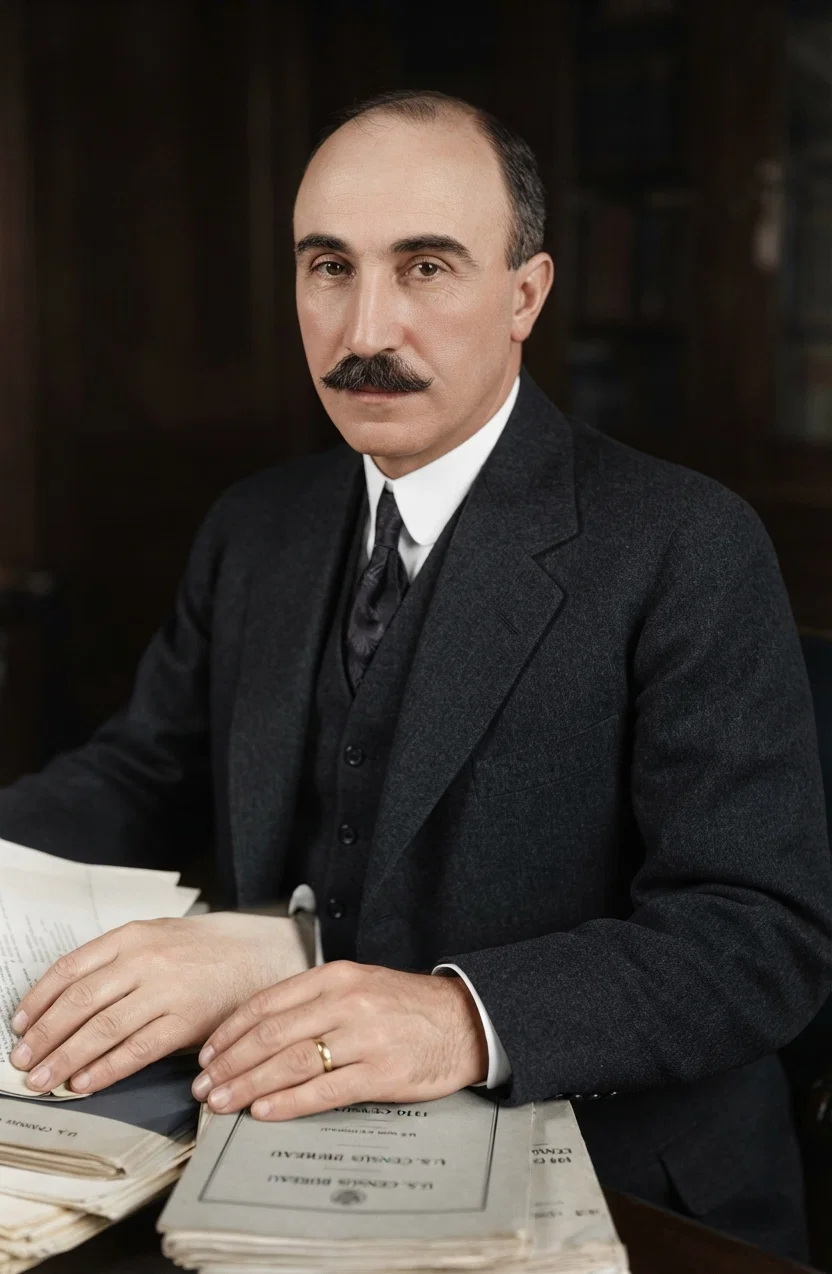
According to the last census the population of the United States aggregates 101,100,000, an increase of 21 per cent in the last decade; twenty-five times as much as when first counted in 1790. This aggregate includes the Philippines, Samoa, Guam, Hawaii, Alaska, and the Panama Canal Zone. Within its own proper border its population is 91,972,266. The population of Texas now is nearly as large as the entire country was then. The increase is less rapid than in any decade but one.
Another war instrument is a monster motor search-light, illustrated above, of the United States Army. Other nations possess them also. They will be used for spying out land enemies and finding flying-machines. Ready for service it weighs over five and one fourth tons, can travel sixteen miles an hour, climb a twenty-five per cent grade, run over soft ground, and climb over a log ten inches through. The engine propels the machine, and supplies a current of electricity for two powerful search-lights, which can penetrate the darkness for several miles. (Courtesy "Popular Mechanics.")
This enumeration will probably alter Congress, giving, on the present ratio of one Representative to 194,000, 474 members instead of 392 as at present. Some of the States have made a great gain, Washington, for instance, 120 per cent. Ten States fell below 10 per cent increase. The rank of the States in population is as follows:
1, New York; 2, Pennsylvania; 3, Illinois; 4, Ohio; 5, Texas; 6, Massachusetts; 7, Missouri; 8, Michigan; 9, Indiana; 10, Georgia; 11, New Jersey; 12, California; 13, Wisconsin; 14, Kentucky; 15, Iowa; 16, North Carolina; 17, Tennessee; 18, Alabama; 19, Minnesota; 20, Virginia; 21, Mississippi; 22, Kansas; 23, Oklahoma; 24, Louisiana; 25, Arkansas; 26, South Carolina; 27, Maryland; 28, West Virginia; 29, Nebraska; 30, Washington; 31, Porto Rico; 32, Connecticut; 33, Colorado; 34, Florida; 35, Maine; 36, Oregon; 37, South Dakota; 38, North Dakota; 39, Rhode Island; 40, New Hampshire; 41, Montana; 42, Utah; 43, Vermont; 44, District of Columbia; 45, New Mexico; 46, Idaho; 47, Arizona; 48, Delaware; 49, Hawaii; 50, Wyoming; 51, Nevada; 52, Alaska.
One bad omen is the great increase in city population, and in some of the States an ac11tual decrease in the agricultural districts.
The increase in New York State alone was 1,844,380. "More than one half of the States have fewer people than the New York increase." The total population of the State is 9,113,279, which is 2,500,000 more than all New England, and more than double that of the aggregate population of the Pacific States. New York City now numbers more than the State without the city.
How are these vast millions to be reached with the Gospel of Christ, the Gospel which sanctifies and saves?
—**—
Increase of Intoxicants
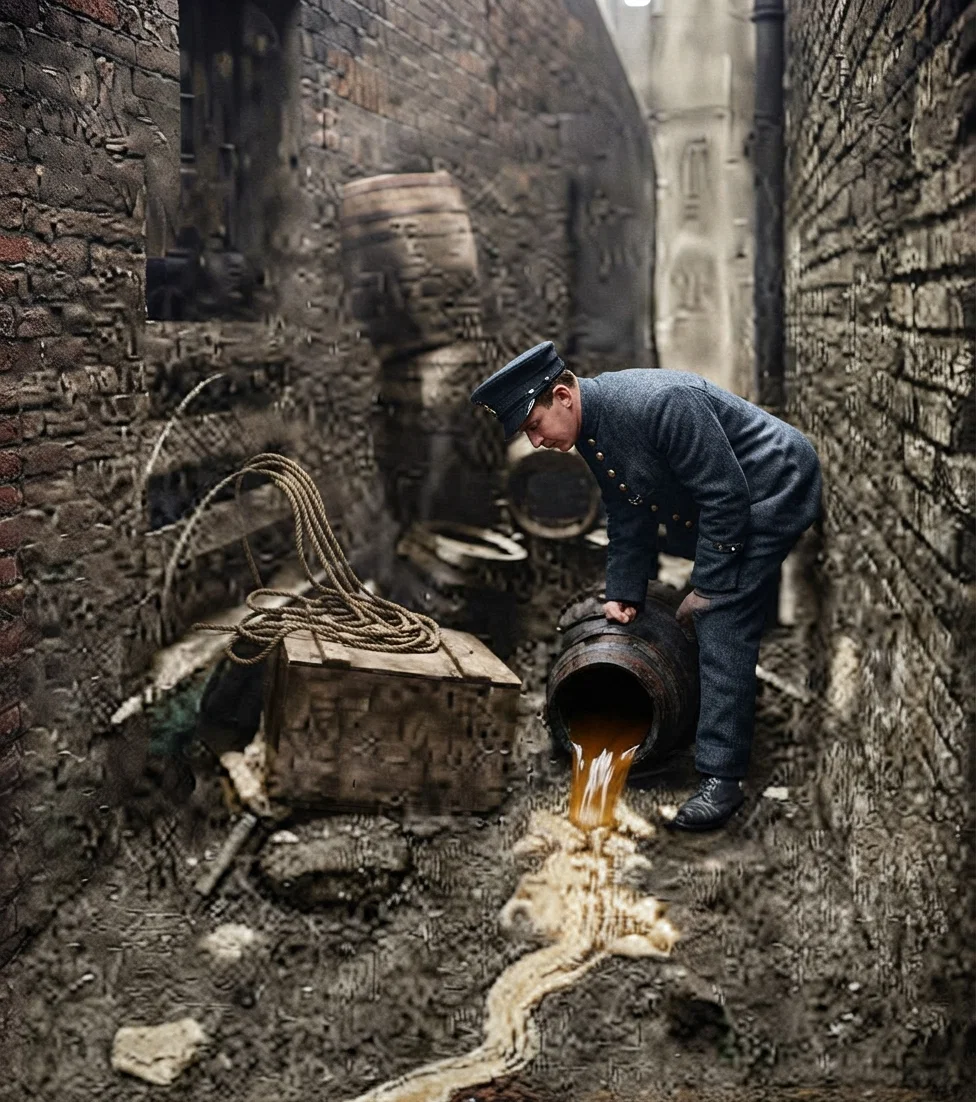
The United States has become a great nation with its more than 100,000,000 people; but its drink bill, notwithstanding increased prohibition, has increased, according to Government reports, more rapidly than the population. The Internal Revenue Bureau for the year ending June 30, 1910, says that we consumed the following:
Distilled spirits — 163,000,000 gallons, 30,000,000 gallons more than the year previous.
Fermented liquors — 59,485,117 barrels, an increase of 3,000,000 barrels.
In Tobacco
Cigars — 7,600,000,000; increase, 160,000,000.
Cigarets — 6,830,000; increase, 1,000,000.
Other tobacco — 402,000,000 pounds; increase, 4,000,000 pounds.
Thank God there are many who do not use tobacco. There are many more who do not use liquor. What an awful record it is for those who do use these poisons.
Criminal Reform and National Education
By Editor
Judge Henry E. McGinn of the State Circuit Court of Oregon propounds a new theory for the reformation of criminals. According to his statement he divides men guilty of crime into three classes,—(1) the first offender, a young man with a previously clean record; (2) the weakling, the man who is good or bad according to his environment; and (3) the professional criminal, the man who has lost all moral sense and has become incorrigible. Only the latter class, he thinks, ought to be sentenced to the penitentiary, and that only because science offers no other means of dealing with him.
Says the "Western Watchman:" "A unilingual people can not hope to keep pace with other and better educated peoples in the race for power and progress in our day. South America is forging to the front and will soon pass us, owing to the fact that the people of the republics to the south of us are better educated, vastly more moral, and ask of their neighbors no favors they do not themselves accord."
Of these last affirmations there would be serious differences of opinion, we are afraid.
The Wreck of a Napoleon in Finance
The Wreck of a Napoleon in Finance.—Sixteen years ago Joseph G. Robin, by name then of Rabinowitz, came to this country from Russia penniless, ignorant of the language. He began public life as a reporter. He soon got into money transactions, and his energy and ability to interest prominent men rapidly carried him forward. The other day he was taken to a sanitarium as a hopeless paranoiac. Three banks and other companies were found to be in a critical condition; and three banks with deposits of $8,000,000 were closed. His financial methods were wild and questionable in the extreme.
General Allen, Chief of the Signal Corps of the United States Army, has announced a new invention of the telephone which has been patented in the name of the American people. This invention makes it possible for several independent conversations to be carried on simultaneously on a single wire. The secret of the operation is the adoption of the wireless principle, while the direction is controlled by a wire base. This makes multiplex telephony not only possible but practicable.
Three times King Alfonso of Spain has escaped assassination at the hands of bomb throwers,—once before his marriage, once on the day of his wedding, and the last occurred January 5, when a bomb was hurled before the palace in Malaga with intent to kill King Alfonso, Premier Canalejas, and the ministers of war and marine.
A series of mysterious mail robberies aboard ferry-boats in the San Francisco Bay while specially guarded by postal clerks, has set the entire staff of Government post-office inspectors and Southern Pacific detectives on the trail of this seemingly well-organized band of robbers.
Thousands of persons are reported killed or injured by an earthquake in Asiatic Russia. Practically 1,000 square miles are said to have been devastated. Vyerny, a fortified town of 23,000 inhabitants, is in ruins; and a great section of Kopal is also wrecked.
Spiritualists announce that the sum of $100,000 has been pledged by persons interested in that cult for the erection of a temple in New York City. The edifice will be known by the incongruous title of "Temple of the Divine Inspiration."
In a train wreck at Cheney, Washington, five were killed and twelve injured. The battered engine trapped its own whistle cord, and above the cries of the injured, shrieked its awful summons for help.
Another train robbery occurred at Argo, a suburb of Seattle, Washington, when a masked pair looted the mail-car of the North Coast Limited, shooting the postal clerk and firing at his assistant.
One day following the anniversary of the earthquake in Messina, Italy, that city was visited by fire, which has left 3,500 homeless, and damage to property estimated at $1,000,000.
A fight which lasted eight hours occurred in London between anarchists and 1,200 troops. Four deaths resulted, and the burning of a building.
It is reported that the Chinese in Manchuria have organized a secret society of large membership to drive the Japanese out of the country.
Numerous organizations of "The Woman's Union Missionary Society" raised and distributed last year $3,328,840 for foreign missions.
Senator Stephen B. Elkins of West Virginia died January 5 at Washington. The cause of his death was septic poisoning.
Fourteen were instantly killed and eighteen hurt in an explosion in an ice plant at Pittsfield, Massachusetts.
Ben Pitman, author of the Pitman shorthand system, died at Cincinnati, Ohio, aged 88 years.
An Alarming Tendency
By Editor
In an opinion of the United States Circuit Court of Appeals, eighth circuit, delivered by Judge William C. Hook, of Kansas, Nov. 21, 1910, is one utterance which shows a dangerous tendency. The court says:
The power of Congress extends to the regulation of the entire postal system of the country. It may prescribe what can be carried in the mails and what shall be excluded. It may in its wisdom confine the use of the mails to sealed letters, excluding everything else, or it may extend it to papers, periodicals, and books, and to large packages of merchandise, as in the parcel-post systems of other countries. It may even prescribe the size, shape, weight, and character of contents of every mailable packet, and limit the superscription to the bare name and address of the person for whom intended; and it may also declare a violation of its regulations a public offense, and fix the punishment therefor.
Congress, we presume, can do all this; but the opinion shows the growing tendency in some circles toward the censorship of publicity. The Government of the United States kidnapped miners in Colorado, and transported them to Idaho, and put them on trial for murder. Warren, editor of "Appeal to Reason," offered a reward for the kidnapping of Ex-Governor Taylor of Kentucky, a fugitive from justice, and sent this offer broadcast on postal cards. The courts seem to have evaded the true issue, and turned the whole matter over the wrong use of the mails. The above is from the opinion in his case.
Now a crime in the sight of the law includes not only the act, but the INTENT. That Warren's intent was not criminal appears from the fact that he submitted the post-card to the local postmaster, a regularly constituted United States officer, who approved it. The Springfield "Republican" aptly asks what the Federal Government would have done if the State of Kentucky had sent out such a notice through the mails. It is not even thinkable that Kentucky would have been prosecuted. Why Warren, then? We are not a Socialist, but we do believe that they are entitled to the same rights as other men.
—**—
Shiloh: the Man of Sorrows
By Mrs. L. D. Avery-Stuttle
Chapter L.— On Golgotha
AR in advance of Matthias and Bar-jona, the rabble had reached Golgotha; and already a sound, as of the driving of nails with heavy hammers, together with loud shouts and clamoring voices, reached their ears, as they wearily climbed the hill.
It was already near noon, and the hot sun breathed his fiery breath through the palpitating air, and threw fervid kisses upon the white brow of Calvary.
"O Matthias! man, how can I endure to look upon the sight!" moaned Bar-jona, his white lips trembling as he pointed to the hilltop, where three rude crosses with the tortured victims already nailed upon them, suddenly burst upon their view, at a sharp turn in the foot-path.
"Ah! they have crucified Him with the two thieves who were with Barabbas!" exclaimed Matthias.
"They have crucified Him! O Thou Man of Sorrows! Thou art indeed acquainted with grief,—even as saith the prophet," moaned Bar-jona, "and we trusted that it had been Thou who shouldest have redeemed Israel."
"But surely it must not be!" exclaimed a deep voice near them. "Surely the Miracle-Worker will come down from the cross, to the confusion of His enemies."
Matthias turned his head, and beheld his old friend Varro, the Samaritan.
"Ho, Varro! whither goest thou?" he questioned, turning to the giant form which was hurrying past him, toward the hill summit. The man paused a moment.
"Is it thou, Matthias? I am come up to Jerusalem from Gadara, where I have been that I might fulfil the word of the Nazarene thy Master when He healed me; for He commanded me, saying, 'Go to thy friends, and tell them how great things the Lord hath done for thee.' But verily, young man, thy people, even Israel, have delivered this Man to death; and in that they have done this, they have overtopped the wickedness of the Samaritans and the heathen." And with an expression of over-mastering sadness upon his rugged countenance, Varro passed on.
At that moment there sounded from the hill summit a Voice which reached every ear in the vast multitude despite the din and confusion:
"Father, forgive them; for they know not what they do."
At these words, some of the soldiers paused in their awful work, and gazed in astonishment upon the divine Sufferer. But others paused not for a moment; and their brutal laughter rang out over the hill of death.
"See, Matthias!" exclaimed Bar-jona, quickening his pace, unmindful of his extreme exhaustion; "see! they are bearing away the form of a woman from the foot of the cross. O my Master! my Master! how can I endure the sight! for behold, it is Thy mother whom Thou so tenderly lovest." And the speaker groaned. Great sweat drops stood upon his broad forehead, and his bearded lips twitched painfully, as the mob parted for a moment to allow the fainting woman to be borne away.
"Ah, John! thou son of Zebedee," continued Bar-jona, addressing the young man who tenderly supported the drooping head of the woman as they passed by, "ah, thou son of Zebedee, hath not the Hope of Israel perished?"
"Verily, O Bar-jona," mournfully replied the other, "we trusted that it had been He who should have redeemed Israel."
"Behold!" exclaimed Matthias, "the soldiers of Pilate sit dividing the garments of the Crucified among them."
At this moment there passed by, from the midst of the clamoring throng, the familiar form of the man servant Demas.
"Aha! aha!" he cried mockingly. "Seest thou now thy Master, Bar-jona? Of a truth His feet will no more walk upon the waves of Galilee as once we saw them—you and I, Bar-jona, when thou also didst try the tricks of the Conjurer! Aha! aha! rememberest thou that—how thou didst cry out when the waters closed about thee, saying 'Lord, save me?'" Demas laughed boisterously; and as he passed on, he raised his voice to a shrill shriek, as he cried again and again, "He saved others; Himself He can not save!" And this shrill cry was taken up by the multitude, until it echoed and re-echoed over the dismal hill of death, mingled with the wailing cries of many women who had joined themselves to the multitude. "Look!" exclaimed Matthias; "there is Shaphan, the rabbi of Nazareth; see how he mocketh Him! but behold, one of the thieves who hangeth by the side of the Master hath turned his sorrowful eyes toward Him, and—"
Before Matthias could finish his words, the trembling voice of the suffering thief sounded clear, above the din:
"Lord, when Thou comest into Thy kingdom, remember me!"
Even Rabbi Shaphan hurried forward and bent his head anxiously to catch the reply; and the soldiers who sat by, busy with their dice as they quarreled over the garments of the Crucified, hushed for a moment their loud voices, and listened also, to catch the answer of the Man. The eyes of Bar-jona and Matthias filled with sudden tears, as the answer rang out.
"Even this day do I say unto thee, Thou shalt verily be with Me in Paradise."
"Sawest thou the look in the Master's eyes as He regarded the thief?" questioned Matthias reverently.
"Aye," responded a soft voice near them; "the look in the eye of the Godlike Nazarene was the same as when He said unto me, 'Daughter, be of good comfort; thy faith hath made thee whole!'"
"It is the sister of Jazer, the scribe," whispered Bar-jona, "even the woman Huldah, who did but touch the hem of the garment of our Master, and she was made whole."
"Verily they have crucified the Desire of Israel," moaned another, a poor woman who stood near, wearing the badge of widowhood, tears of anguish streaming down her face. "Truly the heart of the Master is tender and gentle toward all, as the heart of a woman for her child. Not long ago, I went up to the temple to worship," she continued, addressing another woman, "and as I saw the rich casting gold into the treasury, I said in mine heart, 'O that I also might give somewhat unto the God of Israel for all His benefits toward me; for lo, He hath fed me and given me life these many years.' Now I had in my hand two mites; it was all I had. But I said, 'Jehovah hath fed me thus far, He will feed me still.' So I watched until I thought no man would see me, for verily I feared the scorn of the Pharisees; and then quickly I dropped my two mites into the box, and turned to go again out of the temple. But as I raised my eyes, behold, this Nazarene Prophet had seen me; His gentle eyes met mine, and I knew by the soft light in them that He read my very heart. Then He spake to the men who followed Him—His disciples—'See ye this woman? for verily she hath put into the treasury more than they all; for all these have given of their abundance; but she of her penury hath cast in more than they all—for she hath given all the living that she had.'" And the woman turned weeping away.
"Seest thou the inscription which hath been placed above the brow of the Master? Behold, Bar-jona, what they have written!" exclaimed Matthias, "and the reading of it teareth my heart: 'This is Jesus of Nazareth, the King of the Jews.' And see; there is Rufus, the guardsman of Herod Antipas—he who took from him the head of my master, John the Baptizer—he is also the son of Varro—but he heedeth not the words of his father, tho he hath pleaded with him. Ah! they have cast lots for the garments, and this Rufus hath taken the seamless vesture."
"Hush!" exclaimed Bar-jona hoarsely. "Is not that the cry of the Master? See! they are putting the sponge of vinegar to His lips."
"If Thou be the Son of God, come down from the cross!" Bar-jona turned his head. Close by his side stood the high priest Caiaphas. "Thou that destroyed the temple and buildest it in three days, come down from the cross!" echoed the aged Annas, who stood by the side of Caiaphas, forgetful of his age, and the dignity of his sacred office.
These words were taken up by the howling rabble, and repeated and re-echoed from hundreds of blasphemous throats.
Suddenly Bar-jona turned to Matthias with an exclamation of astonishment:
"Behold, my brother! seest thou not the black mantle which covereth the hot face of the sun?"
Before Matthias could reply, even as he turned his astonished eyes toward the blue and unclouded sky, the mantle of darkness had covered the cross-crowned summit of Golgotha, and crept like a black wave onward toward the city, until the gray walls and massive towers and even the glittering dome and spires of the white temple on Moriah, were lost in a veil of blackness.
The terror of death settled over the scoffing multitude.
"Come, let us go again into the city" cried a hundred trembling voices. A vivid flash of lightning from the terrifying blackness, revealed to the astonished disciples the frightened faces of Annas and Caiaphas, as, with groping hands outstretched in helpless terror, they turned their livid faces toward Jerusalem; and without waiting for friend or servant, they began groping their way slowly down the craggy sides of Golgotha.
"Will He not come down from the cross?" cried many voices. Some of the voices had in them a wail of terror; and some who had been foremost in scoff and jest, smote upon their breasts in fear. But in the faces of some, shone a sudden hope, so they turned their streaming eyes toward their Master.
An hour passed away—a long hour of gloom and horror—but the darkness had not yet lifted.
"See!" cried a trembling voice, "a messenger from the city cometh!"
"I am sent from the palace of the governor, Pontius Pilate!" exclaimed the messenger breathlessly, bounding from his horse and addressing the soldiers who still remained at the summit; "from the palace of Pontius Pilate on Mount Zion am I sent, even from Claudia Procula, the wife of the procurator. For she commanded me with tears, saying, 'Go quickly to Golgotha, and bring me word what hath become of the Nazarene; for I have suffered many things this day in a dream because of Him; for verily He is a just man and an holy, and now, lo—the darkness covereth the earth!'"
The messenger smote upon his breast, cast one troubled, anxious look at the Crucified as again a vivid flash of lightning revealed the rugged crosses, and hurried away in direction of the palace on Mount Zion, beating his breast and crying out with fear.
Another hour passed.
"Behold! it is the ninth hour of the day!" exclaimed Bar-jona, "and the Almighty still covereth the earth with the garment of blackness. Thinkest thou, O Matthias, that the Master will yet—"13Even as he spoke, the enveloping cloud of darkness was swept away as by a mighty hand. But about the Man still clung the inky mantle. As
the darkness upon Calvary receded, the returning light revealed the shrinking forms of Rabbi Shaphan and his son Tubal, crouching beneath an overhanging ledge of rock, whither they had fled upon the first approach of darkness. But now, emboldened again by the bright light of the sun, they stepped from their hiding-places, and with blatant voices and wagging heads, again sounded the clamorous cry: "Come down from the cross! if Thou be the Messiah of Israel, come down from the cross!"
At a little distance, trembling with terror and dismay, the hot tears of anguish in their eyes and the pallor of death upon their cheeks, crouched Mary Magdalene and her companions, among whom was Joanna, the wife of Chuza, steward of Herod Antipas.
"Ah! my Magdalene," sobbed Joanna, "surely the Master will not die. He must not die! Even now in my memory see I the rich, red wine as the butler brought it from the stone water-pots, fresh from the hand of yonder Miracle-Worker. Verily the God of Israel willeth not that these our enemies should triumph."
"He hideth His Beloved in a cloud of darkness," sighed Magdalene; "but can not He who gave life unto my brother, when he had been four days in his sepulcher, and cast out with His mighty word the seven demons which tore my poor body—can not He, the Mighty One, deliver Himself from His murderers? Yet remember I certain words of the Master, and of a truth these words trouble me, and the darkness which settleth about Him causeth my poor heart to faint. Thinkest thou—"
But her words were lost in the din of the rabble, some of whom were fast regaining their courage as the bright beams of the sun again shone over Calvary.
"Ho, Matthias, son of Sylvanus," sneered Rabbi Shaphan, "why lingerest thou near, as if this Man would indeed come down from yonder cross?"
Suddenly, and before Matthias could reply, a loud voice rose clear and high above the din of the multitude:
"Eloi, Eloi, lama sabachthani!"
"What saith the Man?" questioned Tubal, turning to his father. "He calleth for Elias!" declared a dozen voices. "This Man claimeth to be the Son of God, so let us see if Elias will come to His deliverance."
"See ye not," screamed Shaphan, "that the darkness hath settled about Him? and even now, behold, the lightning spendeth its wrath upon Him, because He, being in league with Beelzebub, declareth that He is the Son of God."
The cheek of Bar-jona paled, as he heard the despairing cry of his Master, and his voice shook as he turned to Matthias:
"Verily now my heart and my hope faileth. O my Master! art Thou indeed forsaken of Thy Father? and I—whither shall I go? for I trusted that it had been Thou who shouldest have redeemed Israel."
"But see! Bar-jona, the cloud hath once more settled over the city and over the holy temple—and O my brother! the glory of Jehovah shineth about the Master!" and Matthias pointed toward the illuminated cross.
But even as he spoke, the voice of the Crucified again rang out; and the wonderful words echoed to the heaven of heavens, and the angels about the throne of eternal glory repeated them:
"It is finished!"
Instantly the glory-circled head drooped upon the pulseless breast.
"Come, my Magdalene," cried Joanna, as the cry rang out, "let us go even to the foot of the cross, for the Hope of Israel hath perished!"
"Verily!" cried a deep voice from the multitude, "the 'midst of the week' hath fully come, and the Messiah hath indeed been cut off."
"I knew not that thou wast this Man's disciple, O Nicodemus," replied one of the scribes, scornfully.
"Thou art too wise a man, O Nicodemus," exclaimed Rabbi Shaphan, "to be led by this Carpenter! Why should He deceive thee? Knowest thou not the prophets? for of a truth Messiah shall come in glory and honor; but this Man is born in poverty—a carpenter—and will He deliver Israel gloriously and reign in Jerusalem? See! He hangeth high upon the cross of Pontius Pilate the Roman governor! Then how shall this Fellow deliver Israel from the yoke of the Romans!"
While Rabbi Shaphan yet spoke, there came a mighty trembling of the earth. The face of the rabbi again turned white with fear as he cried hoarsely:
"Behold, the rocks of Golgotha are rent in twain! What meaneth it?"
"And see! the tombs of the buried dead are rocked and cleft asunder as by a mighty hand!" cried many voices.
"Truly, this Man was the Son of God!" exclaimed one of the centurions, whom they called Lucius.
Again a pall of blackness was stretched over the heavens, and bloody Golgotha trembled and shook like a reed in the wind. The brutal jest and the mocking laugh were changed again in one awful moment, to shrieks of wildest terror.
"Come! let us haste from this accursed spot!" cried many voices. Amid the direful confusion, the loud voice of a messenger from the city was heard above the din:
"Behold! the veil of the holy temple hath been rent from the top to the bottom; and I, even I, saw the fingers of a bloodless hand, and it tore the massive drapery as if it had been a spider's web! Then the lamb, which the priest was about to offer, escaped, unhurt, from the temple; and I hastened to Golgotha that I might know what had become of Jesus of Nazareth."
Again the deep voice from the outskirts of the fleeing throng cried aloud:
"The midst of the week hath fully come; and the Messiah hath been cut off!"
(To be continued)
IN THREE DAYS
SAN FRANCISCO
Overland Limited
TAKES YOU
To Chicago
ACROSS GREAT SALT LAKE
AND
HIGH SIERRA BY DAYLIGHT
Luxurious High-class Equipment
Electric Lighted Throughout
Pullman Drawing-room
Stateroom
Vestibuled Sleeping-cars
Careful and Attentive Dining
Service
Parlor Observation-car with
Library and Cafe
Ladies' Reading-room
Gentlemen's Smoking-room
Daily News Bulletins
Latest Papers and Magazines
Southern Pacific
Large Ripe Olives
5 to 25 gal. at 60c per gal.; 25 to 50 gal. at 55c per gal.; 50 gal. or more at 45c per gal.; extra large, 20c extra per gal.; medium size, half green, 10c less per gal. Also white or black figs, 45 pound buckets, at 7c per pound. Extra fine, hand picked, processed and pressed. Satisfaction guaranteed. A. E. Crist, Chico, California.
For Sale
Large, eight-room, strictly modern residence. Large pantry, four large closets, large basement, wired for electricity. House built for two families. Small barn and chicken yard. Lot 139 by 229 feet.
The above can be bought for cost of house alone — $3,000.
See owner, J. M. Benedict, corner California Street and Chiquita Avenue, Mountain View, Cal.