Across Great Salt Lake and High Sierra
by Daylight
Fastest Time---Most Direct Route
VIA
Southern Pacific
INDIVIDUAL COMMUNION CUPS
Send for FREE catalogue and list of over 4,000 churches using our cups.
Sanitary Communion Outfit Co.
64th Street, Rochester, N. Y.
VIEW NEW YORK HARBOR
from the convenient New York terminals of the Grand Trunk-Lehigh Valley Route. Double track. For time tables, descriptive literature, etc., write Geo. W. Vaux, A. G. P. & T. A., Grand Trunk Railway System, 135 Adams Street, Chicago.
VI. THE GREAT THREEFOLD ANGEL'S MESSAGE IN JAPAN.
By F. W. Field
IT is now about ten years since the first representatives of God's last threefold message came to Japan. And as we look back over this decade of labor, we have many reasons for thankfulness for what has been accomplished. The labor performed has been largely a matter of seed sowing, tho not without a due return of fruits for the encouragement of the laborers. At present we have organized churches in three different localities, with an aggregate membership of over a hundred. But our members are scattered in various parts of the country, from Akita, far to the north, to Nagasaki, in the extreme south.
The first Japanese to accept this message were a number of young men, who had emigrated to the United States, and who there learned the truth. Several of these have since returned to Japan, and given themselves to Gospel work among their countrymen. And having been quite well educated in English, they have been able to render good service as translators and interpreters, besides laboring directly for their people.
Publishing.
Early in the history of our work, the publication and circulation of literature in the Japanese language was begun. And this continues to be a very important part of our work. Thousands of copies of our little monthly paper have been, and are being, sent to all parts of the country. Our regular subscription list is not very large as yet; but many copies are being sent free to chosen addresses. We have seen good results from these efforts. Interested persons write to the office of the paper, asking questions and requesting that some one visit them. We respond to all such requests as far as possible; and in this way souls have been led to take their stand for the truth of Christ.
Besides our monthly paper, a number of tracts and pamphlets on present truth have been published. These have also been widely circulated by our workers, and we look for good results to follow this seed-sowing.
But it must be confessed that in the face of the obstacles encountered, we have not yet succeeded in making the work of circulating our literature self-supporting. A publication, to sell readily in Japan, must be of very moderate price, to bring it within the means of the people; this reduces the agent's profits to the minimum. The prejudice of the majority of the people against Christianity, makes this a hard field for the self-supporting colporteur. Add to this our lack of experience, and the results are not flattering from a financial view. But we believe that with consecration and careful preparation on the part of the laborers, a much greater degree of success can be attained in this important branch of our work. So we are preparing other publications, and seeking to improve our methods of labor.
Medical Missionary Work.
The opening of medical missionary work in Kobe nearly four years ago, marked a distinct step in advance. While the workers from America were acquiring the Japanese language, they secured a pleasant location and began work among the foreign population. This phase of the work has prospered from the beginning, and steadily increased, making it necessary to enlarge our quarters, and to call for more help to carry on the work. Roomy quarters in charge of native workers have also been opened. These two institutions have co-operated in the training of young men and women for medical missionary work, and in efforts for the physical and spiritual relief of the patients that have come under their care. And the results have been truly gratifying. A goodly number of the patients received have been brought to the knowledge of the truth. Many become interested in Bible study, and desire that some one instruct them. At times the workers have been so pressed that they have been unable to respond to all such requests. The membership of the Kobe church is now about fifty; and they have erected a neat little chapel in which to worship,—our first and only church building in Japan.
The Recent War
brought some trying but precious experiences to the handful of Sabbath-keepers in Japan. Several of our brethren were called for military service, and fervent were the prayers offered in their behalf. One of the most active and successful workers was thus summoned. He resolved that he would visit the officers of the General Staff Office, and make a declaration that as a Christian he could not bear arms. He did so; some of the officers scoffed, some expressed sympathy, but all agreed that they had no authority to excuse him. So he was constrained to report at the barracks, had a similar experience with the officers there, and was passed on to the examining physicians. Here he was unexpectedly excused from service on account of his health, and so was free to pursue his work for the salvation of men. The Tokyo church gained a rich experience during this trial of faith, and our brother believes implicitly that the Lord worked to deliver him.
Tent Labor in Japan.
We had long wished that we had a tent in which to hold meetings in new places; for in spite of much damp and rainy weather, we believed that this method of labor could be profitably followed in Japan, at least during the most favorable weather. Kind friends in California responded to our appeal, and sent us a very neat tent. This was pitched for the first time in the fall of 1905, in a suburb of Tokyo.
We experienced some difficulty in securing the permission of the police for such a series of meetings; for police supervision of public gatherings is quite strict in Japan. The police objected that similar meetings had been repeatedly attempted in that neighborhood, but had always resulted in disturbance and disorder. Further, we had reason to believe that our church was looked upon with suspicion by the authorities, because of the objections to military service made by some of our brethren during the war.
Police permission for the meetings was finally secured, and the tent was located in a quiet but convenient place. But the watchful authorities detailed two policemen to attend all our meetings, to take note of all that was said, and to see that no disorder resulted. The meetings continued about three weeks, and throughout that time the best of order was observed by those who attended. The attendance was not large, for there was nothing about our services to attract the idle and curious. We can not point to large apparent results as the outcome of these meetings, but a number became deeply interested, and we hope will yet accept the truth.13
Another definite gain as a result of these meetings was, that it gave us a very favorable opportunity to place our work and faith before the authorities. The policemen detailed to attend our meetings were faithful to the discharge of their duties, and one or other of them attended every meeting. One of these men became deeply interested, and was strongly affected by what he heard. He often tarried to converse with our brethren; and one day told them that his associates at the police station were chaffing him about becoming a Christian. He replied that he had no such intention, and asked them why they thought he had. They answered, "Because you have changed so much since you began to attend those meetings; you act and talk differently." Yet he declared to our brethren that he was entirely unconscious of this. We hope that the subtle yet powerful influence of truth will continue to draw him, and that he will not resist its power.
During these meetings the truth was freely and fully presented. Yet we feel assured that the reports of these two officers will place us and our work in a favorable light with the authorities. Not that we are seeking favors from the government; we desire simply to take such a course that the progress of the truth of Christ will not be hindered.
Further Work.
As preparatory for further efforts with the tent, we located two of our workers at Takasaki, a city of some twenty-five or thirty thousand inhabitants, a few hours by rail north of Tokyo. These brethren engaged in a systematic canvass of the city with our publications. They began by soliciting readers for our monthly paper, The Gospel for the Last Days. Failing to sell a copy or to secure a subscription, they offered to loan the paper. In this way they have been using over five hundred copies a month. But it will give some idea of the prejudice and indifference they have to meet, when I state that not more than one-third of the number solicited are willing to receive the paper even as a loan.
This last fall we pitched the tent in Takasaki, and with a good force of workers held a series of meetings continuing for several weeks. On several occasions when especially attractive programs were prepared, the subjects being illustrated with stereopticon views, the attendance was large. But at other times the attendance was much smaller, and rather decreased toward the close of the series. The weather was quite rainy and uncomfortably cool much of the time. But the none were led to take their stand fully for the truth, there are a number of interested ones with whom the workers will continue to labor. They will also continue to supply a goodly number of readers with our paper. Meanwhile they will open work at Maebashi, a large town but a few miles distant, following the same general plan of work.
Limits of space forbid to mention all the encouraging incidents in our work. Souls are accepting the truth, some of whom are well-fitted by education and previous experience to help us as regular workers. This is encouraging; yet still there is a great dearth of laborers. But we are fully committed to the finishing of this work in this generation. And to this end we ask the prayers and co-operation of the Lord's people in the home land.
F. W. FIELD.
The Suwa Shrine, Nagasaki.
Nagasaki Park, Nagasaki.
OUR WORK AND WORKERS.
By Editor
A CHURCH was recently organized at Wa Keeney, Kan.
A SABBATH-SCHOOL of twelve members has been organized at Niles, Mich.
THROUGH the labors of Brother Talburt, Citra, I. T., three have stepped out on the side of truth.
IN seven days a little blind girl at Rice Lake, Wis., recently sold books to the amount of $40.00.
TWO SISTERS have taken their stand for the truth as a result of the labors of Brother Bringle, at Gaylord, Kan.
BROTHER H. Clay Griffin has just organized a church of eight members at Mabelvale, Ark., two of whom he baptized.
IT is encouraging to learn that church buildings are being sold and larger ones being purchased because of the growth of membership. Such is the case with the church at Wichita, Kan.
AS A result of a ten days' effort by Brother Jayne in Bridgeton, N. J., three have begun keeping the Sabbath, a mother and her two daughters.
A MAN and his wife near Buffalo Gap, in western Texas, have decided to keep all the commandments as a result of a few meetings held by Brother N. J. Etheredge.
SIX candidates, five of them young people, followed their Lord in baptism at Healdsburg, Cal., last month. Much interest is reported in the work of the college at that place. Monday, December 10, was a rally day among the students, many of whom earned their scholarships by canvassing during the summer.
BROTHER F. M. GARNER, a canvasser in the Southwest, writes: 'I want to arrange to stick to the work twelve months in the year. I can't see any place to stop; and if we stop, how about the message? We can't afford to stop. Satan never stops his work. I for one am anxious to see this message closed up.'
'STUDIES IN GOSPEL HISTORY,' a series of forty-five lessons on the life of Christ, by Prof. M. E. Kern, of Union College. The written answer method is to be employed in the use of this work—space being left after each question for the answer to be written in. Notes, copious library references, outline maps, and illustrations, make the study of the life of the Christ, as here outlined, one of fascinating interest when taken up either privately or in the class room. The book contains 364 pages, is attractively bound in cloth, and will be sent anywhere, post-paid, on receipt of price, 75 cents. Address, The Union College Press, Box 37, College View, Neb.
THE SPECIAL WATCHMAN, filled from beginning to end on the coming of the Lord and prophecy, is at hand. It is certainly an excellent paper. It takes for its motto, 'The end of the world in this generation.' Its cover design shows Christ sending out His disciples to all the world. Among its striking articles are: 'Christ's Return at Hand;' 'Hope for the Present and Future;' 'Coming of Christ;' 'The Increase of Lawlessness;' 'Signs of the End;' 'The Gospel of the Kingdom;' 'Without Hope and Without God;' 'Last-day Delusions;' and others. It is an excellent number, beautifully illustrated, and sells presumably for five cents. No price is given on the paper. We hope that it may have a tremendous circulation. Address Southern Publishing Association, Nashville, Tenn.
'BIBLE NATURE STUDIES,' and 'Science in the Bible,' books of which Prof. M. E. Cady is the author, were supposed to be destroyed by the Pacific Press fire, but about five hundred copies of the former and a thousand copies of the latter were saved in signatures. The latter will be bound in cloth instead of red leather and the price reduced from 40 cents to 30 cents per copy. Further information concerning these may be obtained by addressing the Pacific Press Publishing Company, Mountain View, Cal.
THE third number of Liberty, published in the interests of religious liberty alone, a thirty-two-page quarterly, is one which every lover of liberty ought to read. It is more general in its scope than any hitherto issued. It discusses the principles of religious liberty, surveys the great field, notes the struggle in France, discusses the national reform and Mormon theories of union of Church and State, and other subjects too numerous for us to mention. The price of the journal for a whole year is but 25 cents, including extras. Single copies regular issues, five cents. Address, Liberty, Takoma Park Station, Washington, D. C.
THE SIMPLE DESIRE.
By Washington Gladden
O MASTER, let me walk with Thee,
In lowly paths of service free;
Tell me Thy secret, help me bear
The strain of toil, the fret of care.
Help me the slow of heart to move
By some clear, winning word of love;
Teach me the wayward feet to stay,
And guide them in the homeward way.
Teach me Thy patience, still with Thee
In closer, dearer company,
In works that keep faith sweet and strong,
In trust that triumphs over wrong.
In hope that sends a shining ray
Far down the future's broadening way,
In peace that only Thou canst give,
With Thee, O Master, let me live.
—Washington Gladden.
APPRECIATIVE.
[From the Mountain View Leader, the official town paper.]
In the death of Mr. W. N. Glenn, editor of the SIGNS OF THE TIMES, that excellent publication loses one of its most facile and forceful writers, the community loses a good citizen, and the world loses a good man. It was the good fortune of the editor of this paper to know Mr. Glenn well enough to appreciate his lovable nature and the expanse and liberality of his views. He had a deep-seated and abiding faith in his religion, but he was in no sense a bigot. He was one of the pioneer newspaper men of this coast, and possessed a rich store of experience and reminiscences of the "days of gold." Mr. Glenn's place in the community will not easily be filled. The Leader extends fraternal sympathy to the SIGNS staff, and to the bereaved family of its highly esteemed and lamented fellow journalist.
WANTED FOR MISSIONARY WORK.
LATE, clean copies of the Review, SIGNS, Watchman, and Instructor. A continuous supply is needed. James Harvey, P. M. Book Company, Oakland, Cal.
FOR use in reading racks—SIGNS, Review, Watchman, Life and Health, Life Boat, Instructor, and tracts. Mrs. S. A. Williams, 48 156th Street, Harvey, Ill.
CHURCH AND STATE IN ENGLAND.
By John D. Bradley
Attitude of the House of Lords on the Education Bill.
THE upper house of the British Parliament had had the measure for the liberation of the English public-school system from sectarianism, passed by the Commons at the last session of Parliament and known as the Education Bill, under consideration three weeks on November 10, and during that time, according to the London correspondent of the New York Evening Post, the measure had "been marvelously transmuted." While the lords and bishops had "fulfilled their intention to avoid any deliberate wreckage tactics," wrote this correspondent, "so strongly is their conservative and clerical attitude antagonistic to the idea of popular control that any method of bringing their amendments into harmony with the will of the House of Commons seems difficult to contrive."
The lords and bishops began their anticipated work of "reconstituting" the bill in line with the wishes of the established church and other theocratical elements on October 29, by amending the first clause of the bill, which provides that "on and after January 1, 1908, a school shall not be recognized as a public elementary school unless it be a school provided by the local education authority," by adding, "and unless some portion of the school hours of every day is set apart for purposes of religious instruction."
The effect of this amendment, while not altering the bill so far as the elimination of church-controlled schools from the public educational system is concerned, is to make religious instruction a part of the regular daily curriculum of the public-school system itself, and attendance thereon compulsory, in opposition to the legislation of the Commons eliminating religious instruction from the curriculum of the public schools, and providing that attendance should be entirely voluntary upon such voluntary religious instruction as the local educational authorities might see fit to permit in the schools. Its effect, together with other amendments by which it was to be supplemented, "is to broadly carry forward into the proposed public-school system all the denominational conditions which have hitherto existed in the church schools," declared the Westminster Gazette, following its adoption. The amendment was passed by a vote of 256 to 56, "the bishops voting as a unit with the conservatives," of course.
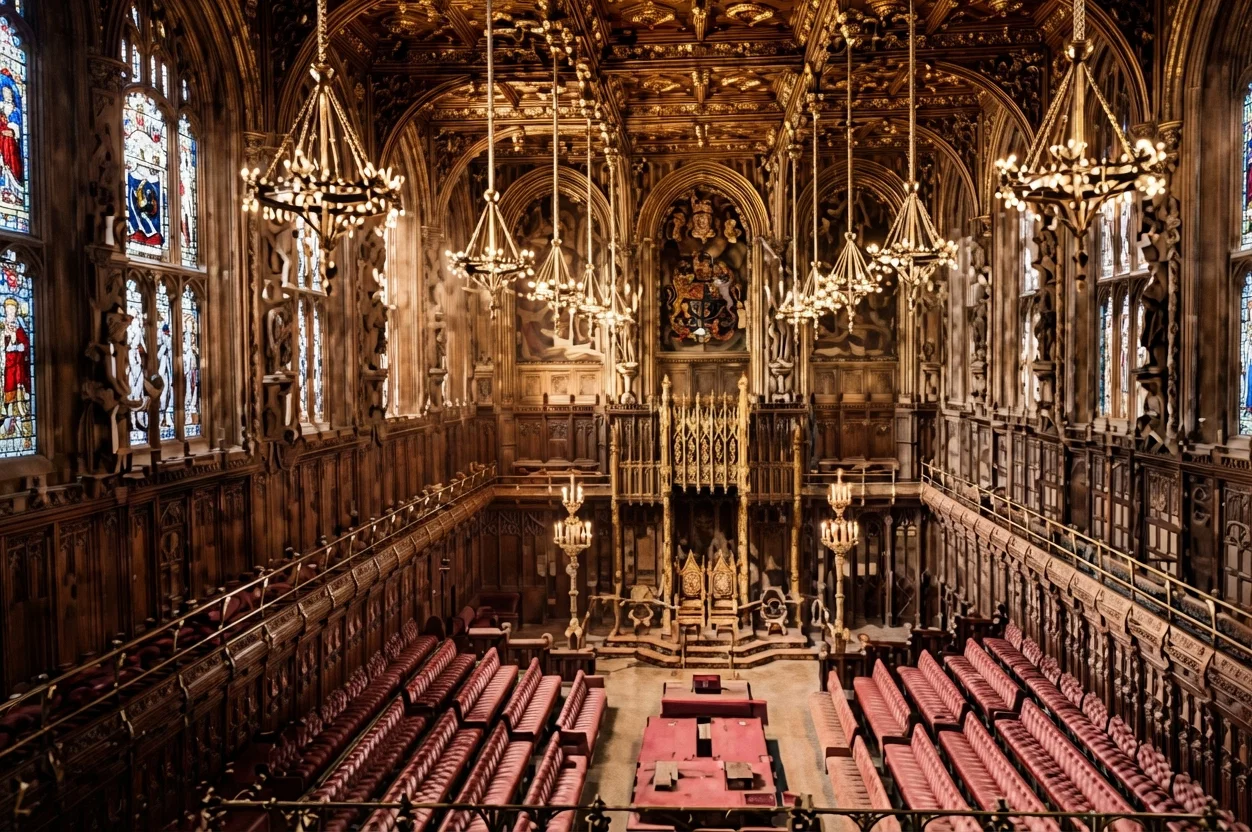
According to the parliamentary reporter of the above paper, "not since the Home Rule Bill has the House of Lords been more crowded" with the Tory element than it was on the day this amendment was considered and passed. He says "the Tory flood overflowed" its side of the chamber, and that "the little handful of Liberal peers were compassed on every side" by "the Tory peers and bishops, who sat with the comfortable assurance of a big majority."
The adoption of this amendment and the decisive vote by which it was carried was taken as an unmistakable indication of the stand of the House of Lords in the matter, and "as a direct challenge to the House of Commons which reveals little hope of compromise; for in this matter the Liberal Government feels that it had a direct mandate from the people, and can hardly recede from its position." Commenting upon the policy of the lords and bishops with respect to the Education Bill, following the action of October 29, the Westminster Gazette said:
"They will not kill it, but merely 'reconstitute' it in such a way that its own parents won't know it when it comes back to them dressed up in low sleeves and bishop's gaiters. . . . They tumble over each other in their zeal to transform it. . . . Their animus is such that prudent restraint is impossible."
"It is not an amended bill which they have in mind, but an entirely new bill—a bill more ecclesiastical than that of 1902, a bill which will enhance the privileges of that measure, and combine with them the money grant which was proposed in the Government measure as a compensation for the withdrawal of those privileges. . . . The effect of the changes being made and proposed is to broadly carry forward into the proposed public-school system all the denominational conditions which have hitherto existed in the church schools, with due guarantee for their continuance and extension to provided schools, and an elaborate system of checks upon local authorities who desire to be free of them."
"And, in addition to this, the extension proposed to clause 4 would also in all parts of the country permit the establishment of a special class of sectarian schools practically withdrawn from public control. If these proposals are persisted in, Mr. Balfour's bill of 1902 will be milk-and-water compared with the new ecclesiastical establishment and endowment bill which will be returned to the House of Commons in the guise of an amendment of the Government bill. No one, of course, imagines that the present House of Commons will look at a bill returned to them in this form. Peers and bishops are spending their time on proposals which every one knows will not become law, and which could not become law even if the last election were blotted out and Mr. Balfour were reestablished in the House of Commons with his former majority."
House of Lords.
With reference to the great contention of the theocratical party that "parents have the inalienable right to have their children instructed in their religion," the Gazette very pertinently said that if the matter were left to the parents "we should soon have done with the religious question, which is a controversy between people who want to decree what other people's children shall be taught."
In the course of a speech at Manchester on November 2, Mr. Asquith, of the Ministry, "said the people of the country had decided that all schools maintained at the expense of the rates and taxes should henceforward be under undisputed and unfettered control, and that the Liberal Government could not if they would, and would not if they could, infringe upon that decision by consenting for a moment to anything in any shape or form which would limit or fetter the absolute authority [independence] of the schools which belonged to the ratepayers."
"The House of Commons had decided in the course of its debate on the bill against what was called the secular system; that was to say, it had decided that it would not prohibit local authorities, if they were so minded, from giving religious teaching in public elementary schools. But, at the same time, the House of Commons had clearly intimated that the religious teaching which the local authorities had the power to supply was to be that simple, elementary, vital teaching which was acceptable, they believed, to the great bulk of the parents of children throughout the United Kingdom. The so-called unlimited right of entry for the sects into schools was not demanded, and would not be tolerated, by the country, and in future there should be in the great profession of teaching no denominational bars to the selection or promotion of the individual teacher."
Referring directly to the course of the House of Lords with respect to the Education Bill, which he declared to be one of
the Most Important Measures Before the Present Parliament,
Mr. Asquith "said the Education Bill was at present undergoing a process which the Bishop of Manchester had described as a process of reconstitution. Suppose he took the Ten Commandments and wrote the word 'not' in all those that were affirmative, and omitted the word 'not' in those that were negative, would that be a reconstitution? If so, it was a process of that description that was going on in the House of Lords over the Education Bill."
The London Times, which is disposed to be critical of the Liberal Government and its measure in this matter, declares that "its whole treatment of the subject has been marked by deference to party considerations," and that "the lords unquestionably desire and intend to place the broad issue of whether there is or is not to be religious education of some kind in the schools clearly before the nation."
Of course, the measure of the Liberal Government is a compromise so far as a consistent application of the principle of separation of church and state is concerned. The issue which the Times says the lords and bishops are trying to place before the nation is exactly the issue that should be placed before it. But, of course, they are not raising that issue with any desire to have it decided in harmony with the principle of separation of church and state. The Times says that but one peer—Lord Russell—has "declared himself to be an advocate of secularism," and that "secularism was repudiated by a majority of 414" by the House of Lords last May.
In seeking to do what the Times says they are doing, the lords and bishops are playing a little politics themselves in the matter. England is not15ready for a consistent application of the principle of separation of church and state to its public educational system; and it is an open secret that in adopting the amendment they did on October 29, the lords and bishops gleefully felt that they were placing the government in a position where it would have to accept the amendment or appear to the country to be standing for "secularism," and "ignoring a sentiment which operates in the breasts of four-fifths of the people of this country," as one bishop put it. But while in the present state of British public opinion, it can not go to the length that should be gone to, advocated by "A Fighting Noncon" (formist), who wrote to the Westminster Gazette following the action of the House of Lords on October 29, that "the proper course for the House of Commons to adopt when the lords have ruined the Education Bill is to pass a resolution declaring that no school shall be recognized as a public elementary school if any portion of the school hours of any day is set apart for purposes of denominational education." The Liberal Government is not likely to recede from that degree of separation of church and state in the public educational system which obtains in its Education Bill, and which it feels that the prevailing opinion of the nation demands and will support. It is evident that an interesting struggle bearing upon the relation of church and state is on in England between the two houses of Parliament. JOHN D. BRADLEY.
Church and State in France
By Editor
The principle underlying the separation of Church and State, the true principle of religious liberty, which ought to obtain in every government, is not that which is moving the Vatican in this issue. If it were we would find that the Vatican itself would be the most forward actor in bringing about the absolute separation. The faith of the Church of Jesus Christ is indeed pitiable when she must leave the All-power of her divine Master and depend upon the weak, puny arm of the State. We most earnestly hope that the great crisis in France may be settled without bloodshed, but we hope that it will be settled right. We also ardently wish that the French statesmen may look upon these questions, not in any enmity toward Roman Catholicism or any other religion, but consider it from the broader standpoint of what ought to be, as expressed by U. S. Grant, "Keep the Church and State forever separate." At the present time the government is determined to execute the law, and notwithstanding the denial of the Catholics in this country, the news comes to us through friendly sources that there are very many Catholics in France who are in favor of yielding. Whether the Vatican can hold them to resistance to the law will be a question which must be settled within the next few days.
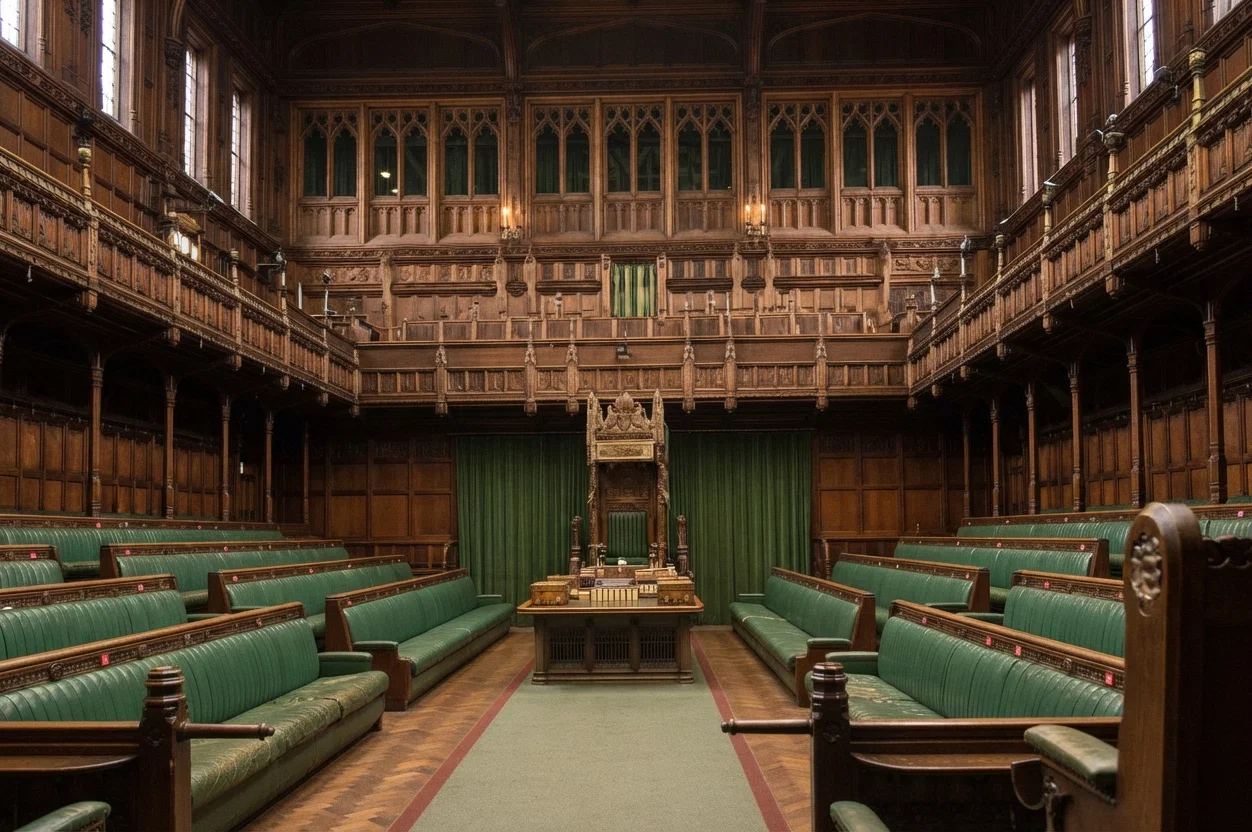
House of Commons.
SUNDAY LAW FOR RUSSIA.
THERE are many evidences of Russia's reaction toward despotism. The leading men of the first Douma, or popular parliament—those who urged radical reforms—are marked for disfavor by the government, and many of them are self-exiled from the country. By a system of disfranchisement, the next Douma will be practically elected by government influences. Troops are being located in regions where liberalism is likely to become active, and the late premier De Witte, who led the government to a somewhat hopeful extent toward a recognition of the people's rights, has been warned that his life is in danger if he remains in the country.
But another feature of governmental tyranny is coming to the front in a movement for a stringent Sunday law. Like certain classes in our own country, the authorities seem to have imbibed the notion that all the trouble and unrest among the masses are due to their lax Sunday observance. So a recent despatch from St. Petersburg says that "the government will soon promulgate a law providing for Sunday closing, under the provision of territory legislation, the measure being intended to strengthen the administration position in the electoral campaign. The project provides for closing stores and the cessation of work in factories on Sunday except in the case of necessity. Groceries and meat markets will be permitted to open for a few hours. Sunday closing formerly was practically unknown in Russia, but during the recent past a powerful movement in its favor has sprung up and has been partially successful."
The Struggle Between Church and State
By Editor
The great struggle in France between the State and the Church is decidedly on. Just what the outcome will be it is impossible to tell at this writing. Before our paper reaches its readers there may be civil war. In case it should reach any degree of regular warfare, no doubt there will be filibustering parties pouring in from Catholic countries all over the world, and the very existence of the French republic would be at stake. Some of the Socialists contend that this present struggle is with the view of overthrowing the republic and establishing a monarchy. American Catholics are endeavoring to induce the American people to believe that it is wholly a matter of injustice on the part of the French Government. We have endeavored to look quietly and dispassionately on both sides of the question. We do not see how France could have done much better. It has given the Roman Catholic Church the privilege of forming associations for the holding of church property. It has proposed to assist that church in the support of its priests until it can adjust itself and become self-supporting, as well as the other religious bodies of the republic, the same as in the United States. What the French Government proposes is an absolute separation of Church and State. Roman Catholics in America tell us that they are in favor of that; they are in favor of that because that has always been the case here, but they are opposed to it in France because it is setting aside all the history of the past; they can not bear to feel that the eldest daughter of the church repudiates the union of Church and State.
GOOD WORDS FROM THE PRESIDENT.
By Editor
IN the present contention and discussion in this country over civil and religious liberty, it is worth while to read the following, which we take from the message of President Roosevelt, sent to Congress December 3:
"Not only must we treat all nations fairly, but we must treat with justice and good-will all immigrants who come here under the law. Whether they are Catholic or Protestant, Jew or Gentile; whether they come from England or Germany, Russia, Japan, or Italy, matters nothing. All we have a right to question is the man's conduct. If he is honest and upright in his dealings with his neighbor and with the state, then he is entitled to respect and good treatment. Especially do we need to remember our duty to the stranger within our gates. It is the sure mark of a low civilization, a low morality, to abuse or discriminate against, or in any way humiliate, such stranger who has come here lawfully and who is conducting himself properly. To remember this is incumbent on every American citizen, and it is, of course, peculiarly incumbent on every government official, whether of the nation or of the several states."
We wonder if our esteemed President is taking note of the efforts, oftentimes strenuous and successful, which misled religious zealots are putting forth in various parts of America at the present time, not for the purpose of restricting foreigners, but good citizens of this country, in the matter of religious observances. The President truly says: "If he [the man] is honest and upright in his dealings with his neighbor and with the state, then he is entitled to respect and good treatment." No government on the face of the earth has any right to regulate or attempt to regulate man's duty toward his God or any religion which he professes or does not profess. The President's words mean absolute religious liberty unless he put the state in the place of God, or treat citizens of this country with less consideration than foreigners.