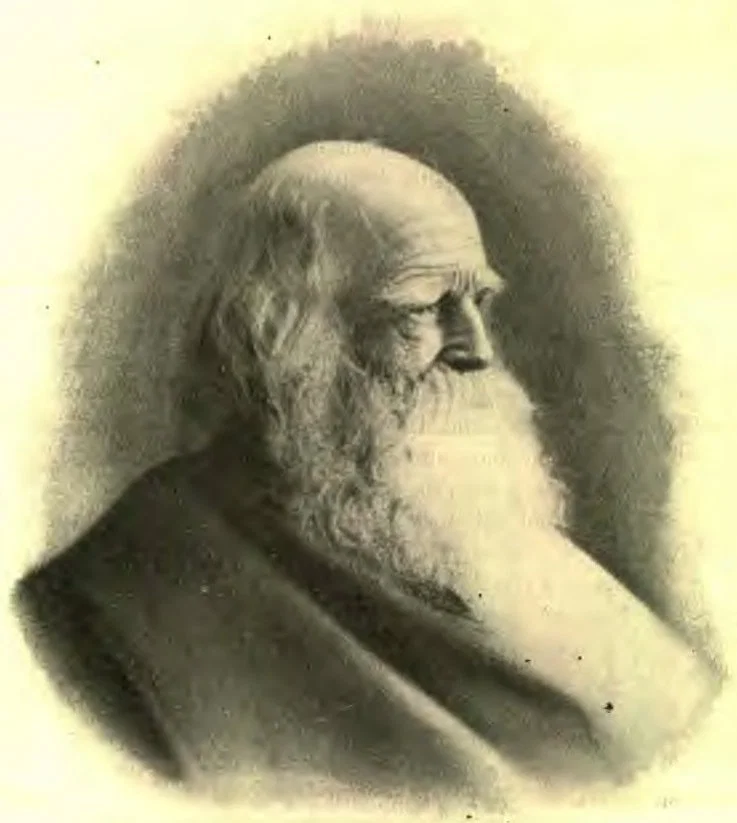
The Youth’s Instructor, Vol. LII, No. 24

Bryant on His Birthday

The Youth’s Instructor

Jun 14, 1904

Review and Herald Publishing Assn. · Washington, D. C. · Jun 14, 1904

Bryant on His Birthday

WE praise not now the poet's art, The rounded beauty of his song; Who weighs him from his life apart Must do his nobler nature wrong.
Not for the eye, familiar grown With charms to common sight denied,— The marvelous gift he shares alone With him who walked on Rydal-side;
Not for rapt hymn or woodland lay, Too grave for smiles, too sweet for tears; We speak of his praise who wears to-day The glory of his seventy years.
When peace brings freedom in her train, Let happy lips his song rehearse; His life is now his noblest strain, His manhood better than his verse!
Thank God! his hand on nature's keys Its cunning keeps at life's full span; But dimmed and dwarfed, in times like these, The poet seems beside the man!
So be it! let the garlands die, The singer's wreath, the painter's meed. Let our names perish, if thereby Our country may be saved and freed!
— J. G. Whittier.

William Cullen Bryant

The mother of William Cullen Bryant was in the habit of keeping a diary, from which it appears that the future poet was an unusually precocious child. On his first birthday he could toddle alone; he knew all the letters of the alphabet when but a few days more than sixteen months old; before the close of his third year he began to read the Bible, and he had read the Scriptures through from beginning to end before the completion of his fourth year. This may indicate why he was a puny child of a painfully delicate, nervous temperament, giving little promise of surviving to boyhood. But before he had completed his fourth year, he was sent to the district school, and perhaps the association with other boys in play and mischief improved his physique. That he participated in mischief was shown by a mark which he carried on his forehead to the end of his days; it was made by the hoof of a horse that he persisted in teasing from behind until it flung out its heels and laid him flat.
AUTHOR OF THANATOPSIS
The boy began to make verses in his ninth year, and in his tenth year wrote some that were thought worthy of publication in the county newspaper. Two years later, in 1806, he celebrated the great eclipse in rhyme. He was the author of some political verses against Jefferson and his administration, which were published in Boston at his father's instance, in a little pamphlet entitled “The Embargo, or, Sketches of the Times: a Satire by a Youth of Thirteen,” which ran into a second edition, and was praised in the Monthly Anthology, then the chief critical authority of New England.
The two years from 1808 to 1810 were spent in preparing himself for college, and in October, 1810, he entered the sophomore class at Williams College, which he left the May following in the hope of joining a friend who had gone to Yale. But his father, a country doctor, was far from rich, and when the expenses of graduating at Yale were estimated, they obviously exceeded what the family could give to the young poet. He was thus obliged to stay at home, and share with his brothers the labor of managing the farm, giving his evenings to the choicer books of his father's tolerably well-stocked library. He used to read sprawled on the floor by the fire, to avoid the cost of a more expensive light.
It was after this stay with his parents that his father accidentally discovered, in the drawer of a desk at which William Cullen had been accustomed to write, some verses that seemed to him of unusual merit. He took these with him to Boston, and submitted them to the editor of the North American Review, then in its infancy, mentioning that they were written by his son seventeen years of age.

From Schoolboy to Editor

The editorial council pronounced the lines to be of high merit, but Mr. Richard H. Dana, a poet himself and one of the editorial council, thought it impossible that such verses should have come from the pen of so young a man. When investigation removed all doubts upon that subject, the poem appeared in the succeeding number of the Review. It was the famous “Thanatopsis”—a Greek word for a view of death. Its publication at once placed young Bryant in the foremost rank of the poets of America.
It was by this time apparent that he should endeavor to earn his bread by one of the literary professions, especially as his two brothers were quite sufficient for the work of the farm, which would hardly suffice for the three.
After much family debate, it was decided that William Cullen should study law in Bridgewater, where his grandfather lived. In that place there was a highly cultivated jurist, Mr. Baylies, who consented to receive the youth in his office.
There the young man of genius worked so earnestly, and acquired so entirely the confidence of his teacher, then a member of Congress, that he was entrusted with the control of nearly all the business during his prolonged absences. Yet William Cullen did not neglect the muses, and many of the pieces which he later thought worthy of preservation were written during his law course at Bridgewater.
Leaving Bridgewater in 1815, he began the practise of law on his own account in Plainfield, his office being in full view of the Bryant homestead; but after a residence of about eight months there, he went into partnership with a young lawyer named Ives, at Great Barrington. There he suffered by what he described as “a complaint of the lungs,” by which he may be said to have profited greatly; for it led him to take unusual care of his health, to avoid the use of drugs, to abstain rigorously from tea, coffee, spices, tobacco, and all stimulants, and to eat sparingly of meat. Probably the adoption of this regimen at so early an age contributed largely toward securing to him length of days, riches, and honor.
Many young persons believe themselves full of genius because they are disinclined to ordinary work, and these may do well to reflect on Bryant's apparent liking and aptitude for the commonplace tasks of life. During his five years at Great Barrington he was very industrious. Besides attending carefully to his law practise, he wrote many of the verses which contributed most to his popularity as a poet, as well as criticism for the North American Review, Fourth of July orations, and occasional addresses in large numbers and volume.

Removal to New York

Friends in Boston and New York finally succeeded in persuading him that he ought to move to New York, where he arrived without any assured resources, and expecting to live by his wits. He wrote criticisms and stories and poetry for many different magazines, and was grateful to a Boston editor for allowing him two dollars apiece for certain verses. His pecuniary value, however, was not long hidden; for he had been in New York but two years when he was invited to assist Mr. Coleman in the editorship of the New York Evening Post, then, as now, one of the leading daily papers. After some two years' apprenticeship at the editorial desk, Mr. Coleman, the editor, died, and Mr. Bryant became part proprietor and editor-in-chief—a position which he occupied for the rest of his life.
His editorials were conspicuous for the purity, grace, and dignity of their style. I asked him once how he had managed to keep the standard of his literary work in the Evening Post so high, compelled, as editors usually are, to write with little time for deliberation, or for care as to manner. His reply was, in substance, “If my style has not suffered by the exigencies of our profession, I suppose it is for the same reason that Johnson gave to Boswell for always talking so well, ‘because he always talked his best.’”
“But,” I said, “editors are frequently called upon to write without any time to review what they have written, or even time to deliberate upon what they shall say.”
“Well,” he replied, “I would sooner let the paper go to press without an editorial than send anything to the printer with which I was not satisfied.”

His Marvelous Memory

Mr. Bryant's exceptionally abstemious habits no doubt accounted largely for the fact that he was always ready for his work. He was not a man of moods; he never said to himself or to any one else, “I do not feel like work to-day.” He was always ready, and ready to do his best, which could never be said of any man who made habitual use of stimulants or drugs.
He had a marvelous memory. I am not sure that it was excelled by Gladstone's; possibly it was by Macaulay's. On one occasion I saw it announced in the morning paper that a new poem of Mr. Bryant's had just appeared in Graham's Magazine. As the magazine had not yet reached the office, I proposed to send to the editor for a copy. He said, “I will give you a copy,” and turned to his desk to write it down. I complimented him upon his memory, and he said, “I have no doubt that, with a little time for reflection, I could write out a copy of every poem I have ever printed.” He had then published four fifths of all the poetry he ever published.
His favorite recreation from the editorial desk was travel in foreign countries, but he never felt quite well at sea, and he told me that his chief recreation on shipboard was repeating poetry. He added that he always had remembered enough to last him through his longest voyages.
Although a man of genial manners with those whom he knew well and respected, he was a man of great personal dignity, with whom no one would ever feel disposed to take a liberty. He was naturally rather shy, and generally esteemed inaccessible to strangers.
Mr. Bryant believed that political parties are necessary, but he was never the slave of any party. He regarded the most important function of an editor to be that of a critic, in contradistinction from the theory of journalism which makes the collection of news the paramount business of a journal, and he never allowed his partiality for any party to influence unduly his judgment of its actions. In this independence, both as a man and as a journalist, he persisted with truthfulness, and with refusal of any sort of compromise with transgression or the transgressor, but he was very careful to temper his judgments with justice and charity.

A Scrupulous Gentleman

Although compelled, while he was still very young, to support himself, he managed to make himself familiar with the French, German, Spanish, and Italian languages.
Of the Latin and Greek he had a better knowledge before leaving his father's house than was possessed by most of the professors in the colleges of that day. He also later learned to read modern Greek fluently.
Mr. Bryant was essentially a gentleman in his correspondence from abroad with his newspaper. Although he met in England all the most prominent men of letters of the period, he never once alluded in his published letters to any of the acquaintances and friendships thus formed abroad. He scrupulously respected the sanctity of private hospitality, and revolted at the thought of making merchandise of its privileges.
In keeping with this feeling was his aversion to publicity. Although he had overcome this to some extent after he had passed his threescore years and ten, his face prior to that period of his life was probably less familiar to the people of New York than that of any other New Yorker of even half his prominence or importance.
On his return from his first visit to Europe, in the winter of 1836, he was invited by Washington Irving, Fitz-Green Halleck, A. B. Durand, G. C. Verplanck, and many others of their class, to allow them to give him a public dinner. In his letter declining the compliment, and after testifying his sense of the flattering honor intended for him, he added:—
“I can not but feel, however, that although it might be worthily conferred upon one whose literary labors had contributed to raise the reputation of his country, yet that I, who have passed the period of my absence only in observation and study, have done nothing to merit such a distinction. This alone would be a sufficient motive with me, even were there no others which I might mention, to decline your flattering invitation.”
Although Mr. Bryant lived to the age of eighty-four years, his death, humanly speaking, was premature. His health, mentally and physically, up to May 29, 1878, seemed to be unimpaired.
On that day a memorial statue was erected in Central Park to Mazzini, the Italian patriot, and Mr. Bryant delivered the address on this occasion. When he had finished, he was obliged to stand for some time with his head uncovered and exposed to the full glare of the blazing sun.
As he descended from the stage, he was joined by an acquaintance, who invited him to walk with him across the park to his house. Although weak and exhausted by the labors of the morning, he consented. He ascended the steps of the house to which he was invited, and while his companion went forward to open the door, Mr. Bryant seems to have been attacked with a faintness or vertigo, and fell back, striking his head against the stone steps. He was taken to his home in Sixteenth Street, and after lingering in a state of comparative insensibility for fourteen days, he died.—Hon. John Bigelow.

The Downfall of the Jewish Nation

In previous articles the events have all clustered about that city which for centuries ruled the world, and which, in human strength and power, towers above all others. In this one, we turn our attention to a city located near the southeastern corner of the Mediterranean, the capital of Palestine. If the inhabitants of Jerusalem had been faithful to the Lord in keeping the Sabbath, his promise, “This city shall remain forever,” would have been fulfilled. The Lord promised if they would obey his voice, to make them “the head,” and to set them “on high above all nations of the earth.”
The history of this chosen people, instead of being what it might have been, is a sad, sad story. It is true that under David, Solomon, and a few others who were loyal to God, the kingdom became strong; but a period of strength would early be followed by rebellion and idolatry, causing the glory to fade. Servants of the Lord who had the courage to warn the people of their evil ways, were persecuted and slain.
Finally Nebuchadnezzar overcame them, and for seventy years they were captives to the king of Babylon. In burning Jerusalem, he destroyed the temple of Solomon, the most beautiful building that the world has ever seen. When the captivity was over, the Jews rebuilt the city and temple; but from that time on they were ruled in turn by Persia, Grecia, and Rome. In beauty and grandeur the second temple could not be compared to the first, yet the Lord promised, “The glory of this latter house shall be greater than of the former.”
This was fulfilled when our Saviour himself stood in the temple courts, taught the multitudes, and healed the sick. But the Jews scorned to be taught by him, thus hastening the fulfilment of his words, “Your house is left unto you desolate.” For forty-six years the work of repairing the temple had been going forward. Herod the Great had spent immense sums of money to beautify and adorn it, and Augustus Cæsar had sent gifts. Great blocks of white marble were brought from Rome to be used in the building, and Josephus tells us that they were about thirty-eight feet in length, eighteen in breadth, and twelve in height. The disciples said, “See what manner of stones and what buildings are here!” But Jesus made reply, “There shall not be left one stone upon another, that shall not be thrown down.” And in the trial of Jesus when Pilate shrank from taking the Saviour’s life, the people cried out, “His blood be on us, and on our children.” It came even as they had said.
The Jews had long been looking for a king to take the throne of David, and deliver them from the Roman yoke. Under different leaders and false prophets, they had rebelled time after time, only to be defeated, and to make their condition more wretched. When Nero became emperor, the Jews were oppressed more than ever, and again they revolted. Never were the minds of people so held under control of priests. These leaders now promised that heaven would surely give them the victory, and the desperate warfare that followed is hardly equaled in all history.
The Roman army, in command of Cestius, surrounded Jerusalem, and then “without any reason in the world,”—to use the language of Josephus,—he retreated from the city, being pursued and beaten by the Jewish army. Thus the Christians were given the sign foretold by Christ (Luke 21: 20, 21); and while the Romans were retreating before the Jews, the Christians fled in safety to a city beyond the Jordan.
Vespasian became emperor in 69 A. D., and entrusted his son Titus with an army of eighty thousand to complete the war. Early in the next year Titus marched against Jerusalem with all his forces. Within the city, multitudes had gathered to celebrate the Passover feast, and behind the walls were twenty-four thousand regular soldiers, besides a large army that had been raised and armed for the occasion. Nature had given to the city great strength, it being built upon two hills which were partly surrounded with impassable valleys. In other places, three massive walls protected the city, one of which made the entire circuit.
Had the Jews been united, it would seem that no earthly power of that age could have captured the city. But false prophets and wicked leaders excited the people to fighting among themselves, and in so doing destroyed the stores of provision that would otherwise have lasted for years. Famine stared them in the face, and soon the prophecy found in Deut 28: 53, that parents would eat their own children in the straitness of the siege, was fulfilled.
All the engines of war known at that time were used by Titus in battering down the walls, and one after another they fell. Several times he sent messengers to persuade the Jews to make terms of peace, but those who carried the appeals were met with curses and darts. Hundreds of prisoners were taken daily, tortured, and crucified, that the remainder might take warning and surrender. Titus desired to spare the temple, but the people could not be induced to fight elsewhere. The battering-rams were then brought to bear upon Mt. Moriah, and soon the place was taken by storm. Titus made every effort to restrain his soldiers, but in their fury, they rushed into the holy place over heaps of the dead, applied firebrands, and the building was soon wrapped in flames.
The people now fled to the upper city known as Mount Zion, and here made their last defense. But all in vain; thousands died of starvation, and the rest soon fell into the hands of the Romans. The city was left a ruin; the temple was leveled to the ground; more than a million Jews perished in the siege, while the survivors were sold in the slave markets of Rome, or worked in the rock quarries of Egypt.
The destruction of the Jewish nation was complete. “Be not deceived; God is not mocked: for whatsoever a man soweth that shall he also reap.” —ROY F. COTTRELL.

Japan and Her People

Just now, all of us, of course, are hearing much about soldiers, and no doubt you will be interested to learn what kind of fellow the Japanese soldier is. First of all, he is one of the cheapest soldiers as well as one of the best in the world. This means a great deal, for it is very necessary that a soldier should be cheap as well as skilled in the use of arms.
This all seems quite remarkable, because Japan has had only thirty years’ experience in training modern soldiers. Before that time the Japanese used bows and arrows as their chief weapons. They were such skilful bowmen that the best of them could even shoot through the stem of a fan as it was being swayed in the wind.
Once upon a time a fish was being carried off in the talons of a bird called the osprey, and the emperor ordered one of his archers to rescue it. This the archer did without killing either the bird or the fish. He shot through the legs of the osprey so that it had to drop the fish, and the latter fell into a lake below.
The Japanese “Tommies,” as they are called, have been trained during these last thirty years by the very best officers in the European armies, and many of the Japanese have come over to America also to study our soldiers, and then they have gone back to Japan to teach the home soldiers what they themselves have learned. Japanese soldiers are full of courage and patriotism.
Every man in Japan between seventeen and forty years of age is liable to have to serve in the army. There is only one class of the people who are not allowed to serve, and that is the criminals, or anybody who has had to serve a term for crime.
The soldier’s pay amounts to less than fifty cents a month; and even many of the officers receive only a little more than five dollars a month. But the “Tommies” know how to make their pay go a long way. Indeed, they have to, because in the Japanese army no one is allowed to fall into debt, and in their army they have no mess. Every soldier must live outside the barracks with his home people. While on the march, the soldier requires very little to eat. It consists of rice and fish. The rice is called “hos-bill,” and is prepared by boiling, and then being dried in the sun or some other heat. This makes it shrink into very small space. Each soldier can easily carry three days’ supplies in his bag. When he is ready to eat it, he soaks it in water until it swells up again, and he is satisfied with it, especially if he can have a little fish, or, as a special luxury, a little dried seaweed.
The soldier has hard muscles, and even when he is heavily armed, he prefers running to ordinary walking or marching, and he can keep up his running for miles and miles at a time.

Japanese Houses

You ought to see a Japanese house, boys and girls. You know what a sliding door is like? Most of us have sliding doors between the parlor and sitting-room, or between the sitting-room and the dining-room. Well, try to imagine what our houses would be like if they consisted altogether of sliding doors, so that you could go from one room into another at any point in the wall that you might choose. Wouldn’t that be queer? But that is the style of house that Japanese boys and girls live in.
All a Japanese carpenter does when he builds a house is to set up four corner posts, put in a floor, place four cross-beams from post to post, put a roof on top, and then make a groove all around the under side of the cross-beams and in the floor (just like the grooves that our carpenters make for our sliding doors), then between the grooves in the floor and the grooves in the cross-beams the Japanese carpenter fits ever so many running shutters. Then he divides the house up into as many rooms as the owner wishes, and these are divided from one another by the same kind of sliding shutters.
So, you see, a Japanese house really has no doors at all, for it is easy enough to shove any shutter back, and pass from one room into another. Every shutter has a little burnished handle to it for that purpose.

How Japanese Children Play

In Japan the boys and girls have many holidays. The favorite holiday sport for both boys and men is kite-flying. Their kites are very gorgeous, and very large, many of them, some being as big as two doors put together. These huge ones, of course, require several men to raise and fly. And they are in all sorts of wonderful shapes—birds with outspread wings, flowers, butterflies, and hideous ogres. Then, too, the boys have just a simple square kite with a picture of some favorite military or naval hero pasted on it.
The boys like to wage kite battles with one another. The way they do this is by pasting bits of glass to the strings, and then running with all their might, trying to cross the strings of the other boys with their own, and to cut them by means of the glass.
Many of them make their kites sing. It is probably done by fastening various little things to the strings. The sound is like that of an Eolian harp.
The favorite game of the girls of Japan is battledore and shuttlecock. And a very pretty sight it is when a bevy of pretty Japanese girls enter into this game, and yet it is not a very wise custom. Their faces are painted perfectly white, while their lips are colored a bright vermillion. Their hair is done up into bows and butterfly shapes, and from head to foot they are dressed in robes of brilliant colors fastened with handsome girdles and sashes.

Baby Parks in Japan

Have you ever heard of the wonderful dwarf trees in Japan? It is said that several specimens are to be seen in the Roman garden owned by a North Philadelphia family. These dwarf trees are perfect in every respect, with gnarled trunks and twisted branches—but are only a foot or two in height.
In Japan dwarf parks are laid out filled with these tiny trees, and little bits of streams of water and bridges and walks are put in here and there. Instead of grass, a tiny green moss is used. And in the tiny (two or three inch) flower beds the most wonderful little Alpine flowers are to be found. The whole park—trees, flower beds, streams, bridges, and all—would stand easily on an ordinary dining-table.
No other people in the world know how to dwarf trees. It is a secret carefully preserved by the Japanese.

Japanese Ideas of Politeness

It is not the custom in Japan for the men to rise when women enter the room, or to show any of the courtesies that all gentlemen pay to women in this country.
They always walk ahead of women, and are always waited on first.
They do not knock before entering a room. Servants sit down in the presence of their superiors.
They do not kiss nor embrace—at least not before people.

Reverence Shown to Policemen

The policemen of Japan are not very dignified looking contrasted with our stalwart American policemen.
They are short, lean back too far to stand straight, dress in badly fitting white duck uniforms, wear huge blue goggles on their eyes, and earn about five dollars a month.
But the Japanese stand in the deepest awe of them, and obey their slightest command.
When a policeman makes an arrest, all he has to say is “Come!”

No Profanity

It is said that not a single “swear word” is to be found in the Japanese language. That means that the people have no need for such words. And no wonder! For they think it is very silly for any one to get angry. “What’s the use?” they say. “Why get angry about things one can not help.”—The Inter Ocean.

The Giant Who Wanted to Work

In a little Scotch kitchen, with rafters above, And the wide, open fireplace that grandmothers love, The kettle was making a terrible din. Would you guess that a giant was prisoned within?
No one knew what he said; no one heeded the noise; People don't know when they live in a house full of boys. And, with grandma asleep, and James on the settle, Small wonder they heard not the voice in the kettle.
“I'm a giant imprisoned!” the cry came again. “I have strength for the work of a million of men; Your ships I will carry, your carriages draw.” (Jamie looked in surprise, but no giant he saw.)
“I can print all your books, and your cloth I could weave; Your grain I will grind, if you'll but give me leave; Great weights I can lift, as you quickly will see, Only give me more room. Come, my lad; set me free.”
Just then grandma awoke, and she cried, “Lazy thing, Have you nothing to do but hear teakettles sing?” But he answered her gently, and told her his plan— More room for the giant to do all he can. Just a dream?—No, indeed! You will own it was not, When I tell you the name of the lad was James Watt. ’Twas the giant who is working for you and for me; Aren’t you glad that he listened, and then set him free?
— S. E. Eastman.

Good Words from Wellsville, New York

OUR Young People’s Society consists of ten members. A good interest has been manifested by every member each Sabbath afternoon. An active interest has been shown in the weekly studies in “Great Controversy,” and the mission fields. Besides selling about thirty copies of “Story of Joseph” and forty Signs, there has been eleven dollars raised for mission work, home and foreign.
The homes of the poor have been visited by the children, and food given to needy ones. I think more valuable lessons were learned on these trips than could be learned at school or from a weekly program.
Many Bible readings have been given, and each member has been provided with a set of the Family Bible Teacher.
Three of the members have missionary chickens. We have found various ways of serving; yet we trust, as the children older grow, their spiritual sight may enlarge, enabling them to see many more things about them which they may do for the love of Christ.
I give these few items, realizing that we have been blessed more than it seemed to us at the time, and while Satan tried many ways of discouraging us in our work, yet at its close we are full of courage, in seeing already some fruit appear. EFFA G. GILBERT.

Young People's Work in South Dakota

SOMETHING more than a year ago we organized our first regular Young People's Society in South Dakota, at Elk Point. The membership was largely made up of the students of our intermediate school located at that point. It is hard to say what the membership of this Society is, as it is constantly changing as the students come and go. Several lines of missionary work have been taken up by the Society; chief among them have been work with our papers and literature. Canvassing for our smaller books, and also with “Christ's Object Lessons,” has been very successful, not only in getting the truth before the people, but in giving the young people an experience in practical work along with their studies. It makes their preparatory work along missionary lines very much more beneficial to them.
At Webster we have a nice little Society with a membership of eighteen. Most of these are children under fifteen years of age. They took an active part in selling the special number of the Signs, and have also sold a number of copies of the “Story of Joseph.” However, the line of work that seems to interest them the most is that of Christian Help work. It is wonderful what children can do in this work, when directed by older minds who are interested in the work, and in the children, too. Several boxes of clothing have been collected, and sent to the poor of our large cities. Flower gardens proved a blessing to many in that city last year, and preparations are again being made for more extensive ones this year. The band is rightly named the “Helping Band.”
At Ash Grove there is a company of young people who once a week meet to study the lessons that are particularly needed by them in their work. During the week they sell and distribute papers, books, and tracts. Much good has already resulted from these visits. At their meetings the papers are wrapped and sent away. The one receiving the most attention is the Signs. They find this a most excellent paper for house-to-house work, and also to send through the mails to friends or acquaintances.
At Viborg we have a very strong Society, with a membership of about twenty-four. The Life Boat and Signs have been used freely by them in their neighborhood, as well as through the mails. They have been taking up a systematic study of the doctrinal points of our faith, the leader appointing different ones to take the burden of the meeting from week to week. Excellent experiences have been gained in this way, and new interest has been awakened in the heart of some to devote their life to the furtherance of this work and message.
Truly, there is life and power in this message, and may the time be hastened when our young people shall be trained for service, and go forth in the ardor and strength of youth, filled with the Holy Spirit, to carry this blessed gospel to all the world. MATTIE E. RANDALL.

A Story of Edison

A tall young countryman, looking as green as a suit of “butternut” clothes and a slouch hat could make him, applied for work in the Broad Street, New York, office of Maury Smith, in 1871. Mr. Smith was manager of the consolidated telegraph lines then in opposition to the Western Union. Like all other managers, he could make room for an expert operator, and told the young rustic that an engagement depended altogether upon his skill.
“Try me; I can keep up with the best of them,” said the stranger.
Mr. Smith noticed that the applicant appeared to be quite deaf; but, out of curiosity, and possibly with the idea of having some fun with him, he gave him a table, and told him to “receive” a message then due.
“You will have to work pretty fast,” he warned him, “for our man is in the habit of rushing things.”
Mr. Smith connected the receiver with a “sender” in another part of the same operating room, and put his fastest operator, “Dick” Hutchinson, at work sending a two-thousand-word message. Edison, for it was he, grasped a pen, and, as soon as the instrument began to click, dashed off the copy in a large, round, legible hand. While deaf to all other sounds, he could catch the faintest metallic click. On came the message, faster and faster, twenty, thirty, forty words a minute. A crowd of operators gathered around, curiosity, and then amazement depicted on their faces. Page after page was reeled off, with never a break, and with the last click of the instrument the forty-minute message had been received, and lay in a heap of manuscript on the table. The young man’s triumph was complete. Hutchinson rushed up and shook hands with him, and Smith gave him a job on the spot.—Selected.

THE WEEKLY STUDY

God’s People Delivered
(Concluded)
Chapter Study: “Great Controversy,” Chapter Forty, pages 640-652.
Lesson Topics:—
Announcement of the exact time of the Saviour’s coming.
Sign of the Son of man.
Coming of the Redeemer.
Difference in the way the righteous and the wicked receive his coming.
Awakened memory of the Saviour’s persecutors.
His Messiahship acknowledged.
Jesus speaks to the righteous dead.
The ascension.
Jesus himself crowns the righteous, and gives to each the victor’s palm and the shining harp.
Meeting of Adam and Jesus.
The science and song of the redeemed.

A Strong Christian Experience

DAVID, who had an earnest Christian experience in his youth, said: “I have set the Lord always before me; because he is at my right hand, I shall not be moved. Mine eyes are ever toward the Lord; for he shall pluck my feet out of the net.” Here is the secret of David’s strength and of every young person who has a living experience in the things of God. Isaiah said: “Thou wilt keep him in perfect peace, whose mind is stayed on thee: because he trusteth in thee.” Paul says: “If ye then be risen with Christ, seek those things which are above, where Christ sitteth on the right hand of God. Set your affection on things above, and not on things on the earth.”
The only way for young people ever to have a living experience is to always have the Lord set before them, and their eyes ever toward God, as did David. We can not hope to have day by day that joy, rest, and peace which Jesus gives unless our minds are stayed on him. Past experience has taught me that the surest way to have this fixedness of purpose is to have a daily talk with Jesus, and then let him talk with me through his Word.
Satan’s aim is to keep our minds on worldly pleasures and amusements, and thereby cause us in the end to lose everlasting life.
F. A. ZAPPE.

Loving His Appearing

A CROWN of righteousness is promised to all who love the Lord’s appearing. Just before the apostle Paul was beheaded, when looking back over his life of toil for the Master, he said, “I have fought a good fight, I have finished my course, I have kept the faith: henceforth there is laid up for me a crown of righteousness, which the Lord, the righteous judge, shall give me at that day: and not to me only, but unto all them also that love his appearing.” We are living very near to “that day.” The message of the soon-coming King is being preached to the world. How many of the boys and girls of Seventh-day Adventist parents really “love his appearing”?
When we desire to see persons come, it is because we love them; for when we love any one, we appreciate his companionship. But we do not desire to be in the presence of the person who we know does not approve of our actions. Therefore, if we really love Jesus, we shall want to do his will, and nothing contrary to it.
We are told that those young persons who “really love Jesus” should go to work for God. As we love him, and bring our lives to conform to his will, and work earnestly for others, to get them to do the same, we shall more and more love the Saviour’s appearing. In that wonderful prayer of Jesus for us just before he died, he said, “Father, I will that they also, whom thou hast given me, be with me where I am.” John 17:24. If there are those who do not always want to do just what Jesus wants them to do, and hence rather fear and tremble when the soon coming of Jesus is mentioned, wishing that it might not be so soon, will they not take the promise in Rev. 3:20, “Behold, I stand at the door, and knock: if any man hear my voice, and open the door, I will come in to him, and will sup with him, and he with me”? What a blessed companionship! It means much to be a Christian, and to “love His appearing.”
M. E. KERN.

Best Time Is Present Time

“Best time is present time.”

Always Know More Than Expected

“ALWAYS know more than you are expected to know.”
Continue reading: Self-Made: A Lesson in Mother's Devotion