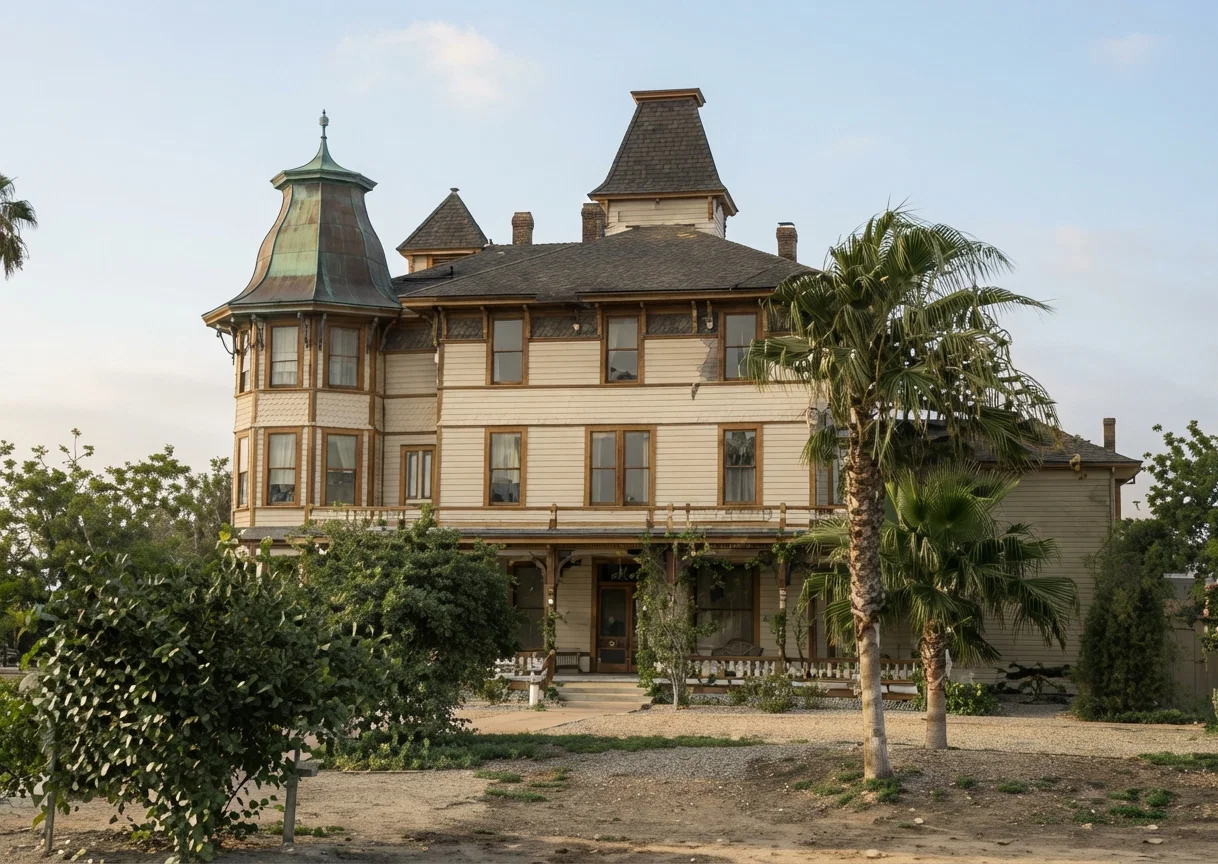
IT is with a great sense of satisfaction and thankfulness to God, that we are able to announce that another sanitarium in Southern California is now ready to open its doors to the sick and suffering. For many years, even from the beginning of our sanitarium work, we have looked from the East, with its cold, wet seasons, over into the salubrious climate of Southern California, and have heartily wished that Providence might open a way whereby we could establish at least one of our sanitariums, where the splendid natural methods, which God has given us for treating disease, could be assisted by the unparalleled climate of Southern California.
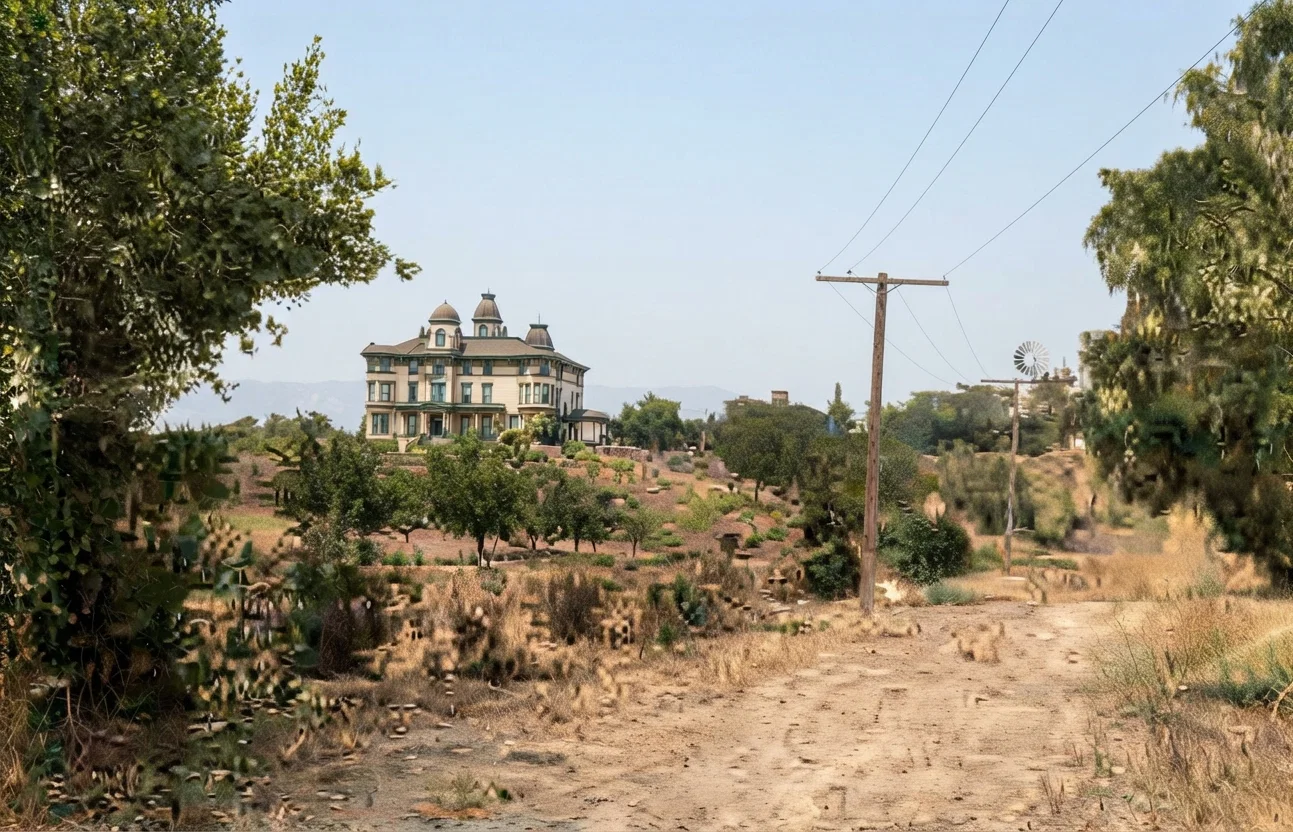
And now, instead of one, the Lord has given us two beautiful sanitariums, one situated at Glendale, a suburb of Los Angeles, which has already been announced to our readers; and the other to be known as the Paradise Valley Sanitarium, located in Paradise Valley, within the limits of the quiet little town of National City, six miles from San Diego.
About twenty years ago, a lady physician, possessed of considerable wealth and enterprise, selected a commanding site in Paradise Valley for a sanitarium home, and expended fully $60,000 on the buildings and grounds. For various reasons her enterprise was a failure, and in a few months the doors were closed, and the building has not been occupied since, except by care-takers and an occasional boarder.
Our attention was first called to this building about three years ago, and about one year ago negotiations were taken up which resulted in the purchase of this fine building, with about fifty rooms, a six-room cottage near by, a fairly good barn, and thirty acres of land, for $5,000, including all expenses and costs. The main building is a splendid structure, and, with repairs and painting just completed, it is practically as good as new.
The initial investment in this property was made by four individuals who were most enthusiastically interested in the subject of a sanitarium for Southern California. During the month of November, 1904, these investors spent about three weeks at the Paradise Valley Sanitarium, and while here visited various places in the county, and presented the work to the friends of the enterprise. The result was that the capital was sufficiently increased to cover the purchase of the property, to furnish the buildings, and to make the improvements necessary for an opening. The hearty way in which our friends took hold of this work was most cheering. At every place where the interests of the work were presented, stock was subscribed, and gifts of money and other valuables were made.
The situation of the sanitarium affords a fine landscape scene of the table mountains of Mexico to the south; of San Miguel and lower peaks of the Coast Range to the east; and a magnificent view of the silvery Bay of San Diego and the Pacific Ocean, and the Coronado Islands, on the west; Point Lomo, with her celebrated lighthouse, a little further to the north; and the whole of National and San Diego cities, and the surrounding valleys, whose olive and orange orchards are always green. These enlivening scenes constitute a grand panorama calculated to give joy, and health, and life, to those who can avail themselves of the privilege of visiting this, one of the loveliest and most attractive places in the world.
There may be other localities where a more beautiful climate is enjoyed for a brief period, but there is no other place in the world where the temperature is so even, delightful, and healthful all the year round as in San Diego County. But nineteen times in thirty-two years has the temperature of San Diego exceeded 90 degrees. Four times in the history of San Diego the temperature has gone down to 32 degrees (the freezing point), but it has never fallen lower, and, within the history of the city, there has never been a snowstorm. Flowers bloom outdoors from January to December. On an average of 135 days in the year, the thermometer stands between 55 and 65 degrees day and night.
Last year there were 291 clear days, and a rainfall of only about five inches. During the past ten years there has been an average of one day per month when there was an hour or more of fog, and during that period there has been only seventeen thunder-storms, an average of less than two per year. The average humidity, covering a period of thirty-one years, has been 73 per cent.
During this same period of thirty-one years there has been a high wind twice each year. There is a sea-breeze from about ten in the morning to four or five in the afternoon, the average velocity being 5.6 miles per hour. These statistics are all collected from the official records of the Weather Bureau, and will indicate to our readers how well adapted this climate is for a pleasant out-of-door life all the year round. No place is more free from seasonal diseases, and no climate is better for health-seekers.
The sanitarium has not yet been formally opened, nor has its work been announced to the public, but applications for admittance began to come in as soon as repairs were commenced. One good lady insisted upon coming, and has been with us about two months, while the painting and repairing were going on. The week before last, six patients pressed their way in upon us; others have come since, and all are pleased and are doing well. We expect the formal opening to take place about the middle of February, and it seems probable that our building will be full before we have time to open, as there are only four13unoccupied rooms at the present time. In making the announcement for the preparation of this place for sanitarium work, the board of managers and investors wish thus publicly to express their thanksgiving to God for the marked providences which have opened the way for the launching of this enterprise.
Friends wishing to come to the Paradise Valley Sanitarium should buy tickets to San Diego, via Los Angeles. Our city office is 1117 Fourth Street, San Diego. Our team will bring patients from the city to the sanitarium, a distance of six miles. All inquiries relative to facilities, charges, etc., at this place, should be addressed to the Manager of the Paradise Valley Sanitarium, National City, Cal.
E. R. PALMER.
THOU ART THE LIGHT.
By Thoro Harris
BY THORO HARRIS.
THOU art the Light, whose rays illumine
The path we may not see;
The darkened portals of the tomb
Are lighted up by Thee.
Thou art the Life; at Thy command
The seed its fruit shall bear.
The keys of hell are in Thy hand,
For Thou hast conquered there.
And thou art Love that reaches down
To our humanity.
Redemptive grace its heirs will crown
With immortality.
Light, Life, and Love! on us bestow
The beams which from Thee shine;
Thy quick'ning power may we know,
Thy character divine.
Chicago, Ill.
OUR WORK AND WORKERS.
By Editor
A CONTRACT has been let for building a church for the colored people at Cleburne, Texas.
FOUR converts to the truth at St. Charles, Mich., are reported in the Banner by Brother A. R. Sandborn.
WILL the party who sends our literature to Soldiers' Home, Cal., please send name and address to this office?
TWO NEW Sabbath-keepers are reported at Saginaw, Mich., as a result of Bible work by Sister F. G. Lane.
THE New York Conference has purchased a 200-acre tract of land in Cattaraugus County, on which to erect an industrial school.
A SERIES of meetings is now being conducted in a Presbyterian Church, by Brother H. Rorholm, in Denmark Township, Emmet County, Iowa.
TWELVE churches have been organized in the British field the past year—in North and South England, four each; in Scotland and Wales, two each.
THE newspapers of Sioux Falls, S. D., have recently been devoting an average of nearly two columns a day to reports of meetings held by Brother F. L. Perry.
AT the recent session of West Michigan Conference three new churches were added, as follows: Rothbury church, with nineteen members; Bangor, with twenty-three members; and Holton, with sixteen members.
A REPORT in the Southwestern Union Recorder, by Brother James Butka, notes the addition of eighteen converts to the church at Enid, O. T., under the labors of Sister Minnie Syp, beginning with the week of prayer.
IN the West Michigan Herald we note a list of fifty-four churches in that conference in which every family enjoys the weekly visits of our church paper, the Review. This is as it should be in every church. From such churches we naturally expect fruit in the line of missionary work with our other literature.
SPECIAL work among the Poles is to be inaugurated in Chicago, where there are said to be 100,000 of that nationality. The work will be under the auspices of Northern Illinois Conference. The work heretofore done for these people has been done by German laborers, but many of them understand only the Polish. The truth must go, not only to “every nation,” but to “every tongue and people.”
WE acknowledge receipt of a very handsome little catalog of excellent books, issued by the Review and Herald Publishing Association, Washington, D. C. It is good missionary work to circulate such documents. Have one sent to some person who you think would be interested. “A low class of literature begets a low class of humanity. Good literature will elevate the morale of any community.” The catalog is free.
UNDER the heading, “Rev. R. C. Porter Makes Some Startling Statements in Pulpit,” the Joplin (Mo.), Globe, of December 14, reported as follows:
That a state has no right to interfere with a person's religious rights or choosing was the basis upon which Rev. R. C. Porter, president of the Missouri Adventist Conference, addressed a congregation last night at the Adventist church. Rev. Porter held to the opinion that a man's duties in regard to religion were intended to be optional from the time of the command, “Whosoever will, may come.” The minister quoted these words, adding that Christ did not say, Whosoever won't come, make him; and dwelt at length upon the Sunday-closing law, holding that such law was in direct violation of the Constitution established by the descendants of the Pilgrim Fathers, who left England because they could not worship God as they chose, but were hampered by religious legislation. Rev. Porter took the stand that if a man chose to run his business on the Sabbath, if it was a civil business, the civil law had no right to interfere, inasmuch as no crime had been committed. “If the merchant who transacts business on the Sabbath has committed a sin,” he said, “it is a sin against God, and it should be he and God for it. A government that tries to control a man's religious acts is no better than the government of Turkey, Russia, or any other country wherein the faith of the state is imposed, under penalty, on its subjects. When a state or individual seeks to compel a man to do any so-called religious act, it becomes tyrannical oppression, and results, not in good, but in much evil.”
And has it come to this, that such statements as these are “startling”? Such “startling statements” should be made and heard wherever agitation for Sunday enforcement appears. The following day the above report was published in the Carthage (Mo.) Press, under the heading, “Adventist Minister Says a State Has No Right to Meddle with Religion.”
Abiding Spirit
ABIDING SPIRIT.—By the late Mrs. S. M. I. Henry. The object of this book is to show the necessity of having the help of the Holy Spirit in the performance of the common and every-day duties of life. Plain, cloth . . . 40c. Gilt edges . . . 75c.
Address PUBLISHERS OF THIS PAPER.
LAMP-FITS.
By Macbeth
How do you know what chimney fits your lamp?
Your grocer tells you.
How does he know?
He don't.
Do you then?
That's about how lamps are fitted with chimneys by people who don't use my Index; and they complain of bad chimneys! Lamp-Fits indeed! Do you want the Index? Free.
MACBETH, Pittsburgh.
TOURIST CARS EAST
VIA
S. P. LINES
Personally Conducted Quickest Time
Cheapest Rates
Your choice of a dozen routes
Through cars to—
Portland Los Angeles Salt Lake City
Omaha Denver Kansas City
St. Paul Minneapolis Chicago
St. Louis Louisville Cincinnati
Memphis El Paso San Antonio
Houston New Orleans Montgomery
Atlanta Washington, D. C.
Remember these cars run through to above named cities without a change from Oakland or San Francisco. Our fast limited trains in connection with the above mentioned service.
C. T. FORSYTH
Div. Pass. Agent
12 San Pablo Ave., Oakland, Cal.
PHONE MAIN 543
Journalism for Women
By Frances H. Low
What to Write
How to Write It
and
Where to Send It
By
Frances H. Low
Price, 35 Cents
THE
By Charles H. Manley
Voice
How to Develop
AND
How to Use It
BY
CHAS. H. MANLEY, M. A.
Price, 35 Cents
A TEXT-BOOK FOR THE
Young Woman Journalist
This manual has been written expressly to fill the long-felt want by a large number of young women who contemplate adopting the journalistic profession as a means of livelihood, but who find themselves unable to obtain the authentic information so necessary for arriving at a proper decision in a matter of such lasting importance. In this work the author-ess does not hold out any overdrawn picture of the delights, the ease and the fortune to be obtained by every writer for the press, but she gives such instructions to the novice as will materially help her to qualify and enter the literary world.
Sent Post-paid on Receipt of Price
The Bazaar Pub. Co., [R 5] St. Johns, Mich.
A Manual of Voice Culture
Systematic Home Training by which the Voice is Cultivated for Platform or Private
A method of instruction on a true educational basis. Students learn to express themselves naturally and artistically and do not become mere copyists.
Testimonials
"It has been to me all that a twenty dollar correspondence course could be and perhaps more."—R. F. OSBORNE.
"I believe the method has doubled the effectiveness of my preaching."—W. K. "Every choir leader would do well to supply the members of his choir with a copy—it is invaluable."
Indispensable to the Teacher, Student, Preacher
Public Speaker or Singer
Sent post-paid on receipt of price
The Bazaar Pub. Co., St. Johns, Mich.
WANTED FOR MISSIONARY WORK.
(Always prepay postage.)
TRACTS on all points of the Third Angel's Message. Address, Box 65, Seward, Neb.
OLD copies of the SIGNS or other missionary papers, and tracts. Address, R. S. Greaves, Box 55, Leduc, Alta, Canada.
THE NORTHWESTERN LINE
RUSSIA-JAPAN ATLAS.
Send ten cents in stamps to R. R. Ritchie, No. 617 Market Street, San Francisco, for Russo-Japanese War Atlas, issued by the Chicago & Northwestern Railway, three fine colored maps each 14x20, bound in convenient form for reference. The Eastern Situation shown in detail with tables showing relative military and naval strength and financial resources of Russia and Japan.
LAUNDERING LACES AT HOME.
By A. M. H.
BY A. M. H.
THOSE who can afford it usually take lace to a professional cleaner, who returns it looking beautifully new, but often very much injured by the use of cleaning fluids; and the only safe way is to have all the laces and dainty lace-trimmed articles washed at home by women under your direct supervision or by yourself.
The flimsiest laces may be thoroughly cleaned without suffering the slightest damage if they are carried through the process known as "bottle washing," and it is impossible to wash them without injury by any of the usual methods of laundering.
A large glass jar or bottle should be covered first with a strip of flannel securely fastened around, then with a strip of old soft cotton. The lace should be carefully wound around this and tacked to the cloth, using care to have every point basted down smoothly, then roll the bottle in strong suds and press between the hands. It should then be placed in an enamelled kettle filled with a light suds which is to be gradually heated and allowed to boil for ten minutes, after which clear water may be poured over it to rinse it; then set in the sun to dry. When carefully taken from around the bottle the lace will be as fresh and beautiful as when new.
Rusty black lace may be restored by soaking for several hours in vinegar and water. The right proportions are two tablespoonfuls of vinegar to a pint of water. When removed from this bath the lace should be rinsed in cold coffee.
Another method of freshening black lace is by washing and rinsing in cold tea, using it as if it were water. As a hot iron will make black lace appear rusty, the best way to dry the pieces is to wind them around a bottle filled with warm water, allowing them to remain until dry. Large articles of lace such as white lace veils, Battenburg collars, and fine lace-trimmed handkerchiefs, will require very little rubbing if they are put to soak over night in a warm pearline suds, and this suds should be used for the bottle washing of lace, as anything that saves rubbing is a genuine saving to the laces and all thin fabrics. If laces are ironed, which the best cleaners do not approve of, the ironing should be done over a soft flannel cloth and with a cloth between the iron and the lace.
The best way to dry lace is to baste it to a cloth, being very careful to pull the pieces into perfect shape, then draw the cloth smoothly over a board and place in the sun to dry, and lace dried in this way will need no ironing, and short pieces of lace can be spread over a large window pane while they are damp, and when removed from the glass the lace will be crisp and new in appearance.
DATES FROM "THE AMERICAN DESERT."
FIVE years ago the Department of Agriculture began the experiment of raising dates in the Southwest. The first crop has been gathered, and the confidence of the department's botanical experts is justified. It is now evident that the date can be naturalized into an American fruit as the Smyrna fig has been.
The American people are hardly beginning to appreciate the wonderful work that the Agricultural Department is doing for them. There is scarcely an edible fruit or grain in the world which it is not adapting to American soil and climatic conditions. It has revolutionized rice-growing in the South, and the United States now exports rice, instead of importing three-quarters of the amount necessary for home consumption. It has introduced macaroni wheat, and 10,000,000 bushels were harvested last year. It has discovered new varieties of clover that promise to be invaluable to certain sections of the country.
It has given Sumatra tobacco to Connecticut and Wisconsin tobacco-growers. It has stimulated the production of American silk. It is experimenting with new varieties of oranges that promise to resist the coldest winters of Florida and California. It is teaching American farmers the secret of scientific fertilization. It is showing them what soils will produce the most profitable crops. It is warring against every pest, from the boll weevil to the potato beetle. Nothing which concerns American agriculture or horticulture is foreign to its corps of trained scientists.
Mr. Carnegie has just given $100,000 to Luther Burbank, a famous California producer of new fruits and flowers, to aid him in future work of this beneficent kind. The Agricultural Department has been doing a similar work for years, and is giving encouragement to thousands of persons engaged in a similar undertaking. It has become the great brain of American agriculture, and has well earned the tribute paid to it by Prof. Hugo Munsterberg, of Harvard, when he says that "there is no other government in the world which is engaged in such a many-sided scientific work."
Of all the departments of the Federal Government, the Department of Agriculture is probably making the most valuable contributions to the welfare of the American people, and yet, in the popular mind, it has long been regarded chiefly as a medium for distributing dubious garden seeds to the constituents of Congressmen.—New York World.
AT ALL TIMES PRAISE THE LORD.
By John S. Howson
At all times praise the Lord;
His promises are sure.
What if thou doubt? His steadfast Word
Unchanging shall endure.
Praise Him when skies are bright
And gladness fills thy days.
Heav'n shames thee with its glorious light,
And calls thee to His praise.
Praise Him when clouds are dark;
True faith waits not to prove;
Tho hope no brightning gleam may mark,
His meaning still is love.
Praise Him when drear and lone
The shadows 'round thee fall;
No eye upon thy sins but One;
Fear not, He pardons all.
Praise Him when home is sweet,
As tho we ne'er should part;
But pray—while kindred spirits meet—
Pray for a thoughtful heart.
Praise Him when far away
On mountain or on sea;
Each place is home to them who pray;
Thy Father guardeth thee.
Praise Him when joyful songs
The saints on earth unite
In sacred chorus with the throngs
Of angels in the height.
At all times praise the Lord,
His promises are sure;
Fear not, doubt not; His steadfast Word
Unchanging shall endure.
—John S. Howson.
A MEDICAL JUDGMENT OF THE JAPANESE.
THE Japanese have taught Europeans and Americans a lesson, and quenched, in some degree, the conceit of the Caucasian in his superior capacity to do all things. Even in the matter of diet, our long-cherished theory that the energy and vitality of the white man are largely due to the amount of animal food consumed, must undergo revision.
The Japanese are allowed to be among the very strongest people on the earth. They are strong mentally and physically, and yet practically they eat no meat at all. The diet which enables them to develop such hardy frames and such well-balanced and keen brains, consists wholly of rice, steamed or boiled, while the better-to-do, add to this Spartan fare, fish, eggs, vegetables, and fruit. For beverages they use weak tea, without sugar or milk, and pure water, alcoholic stimulants being but rarely indulged in. Water is imbibed in what we should consider prodigious quantities—to an Englishman, indeed, the drinking of so much water would be regarded as madness. The average Japanese individual swallows about a gallon daily, in divided doses.
The Japanese recognize the beneficial effect of flushing the system through the medium of the kidneys, and they also cleanse the exterior of their bodies to an extent undreamed of in Europe or in America.
The Japanese have proved that a frugal manner of living is consistent with great bodily strength—indeed, is perhaps more so than the meat diet of the white man. As to the water-drinking habit, which is so distinctive a custom to them, it is probably an aid to keeping the system free from blood impurities, and might be followed with advantage in European countries to a far greater extent than is at present the case. Hydropathy and exercise seem to be the sheet anchors of the Japanese training regimen, and, judging from results, have been eminently satisfactory.—Medical Record.
THE CONTRAST.
A MILLIONAIRE said a short time before his death: "I don't see what good all my money does me. I can't eat it; I can't spend it; in fact, I never saw it. I dress no better than my private secretary and can not eat as much as my coachman. I live in a big servants' boarding-house; am bothered to death by beggars; have dyspepsia; can not drink champagne; and most of my money is in the hands of those who use it mainly for their own benefit." What a sad defeat!
A poor man said a few months before his death: "I care not where I live or how I live, or what hardships I go through, so that I can but gain souls for Christ. When asleep I dream of those things; as soon as I awake the first thing I think of is this great work. All my desire is to give the Gospel to others; all my hope is in God." What a glorious victory!—Selected.
SEEDLESS APPLES.
The seedless apple is a new feature and comes to share the honors with the horseless carriage, the wireless telegraph, the smokeless coal, and the seedless orange. It is a Colorado product and was on exhibition in the Horticulture building at the World's Fair. It is claimed for the seedless apple that it is safe from frost because it has no blossoms. Several bushels of seedless apples are kept in cold storage and the supply is constantly fresh.
There were 103 varieties of apples shown in the Indiana exhibit in the Palace of Horticulture at the World's Fair. The commissioners have made an effort to exhibit every kind of apple grown in the state.
INTERNATIONAL SERIES THE SUNDAY SCHOOL
LESSON 10.—MARCH 5.—JESUS AT THE FEAST OF TABERNACLES.
(37) "Now on the last day, the great day of the feast, Jesus stood and cried, saying, If any man thirst, let him come unto Me, and drink. (38) He that believeth on Me, as the Scripture hath said, from within him shall flow rivers of living water. (39) But this spake He of the Spirit, which they that believed on Him were to receive; for the Spirit was not yet given; because Jesus was not yet glorified. (40) Some of the multitude therefore, when they heard these words, said, This is of a truth the prophet. (41) Others said, This is the Christ. But some said, What, doth the Christ come out of Galilee? (42) Hath not the Scripture said that the Christ cometh of the seed of David, and from Bethlehem, the village where David was? (43) So there arose a division in the multitude because of Him. (44) And some of them would have taken Him; but no man laid hands on Him.
(45) "The officers therefore came to the chief priests and Pharisees; and they said unto them, Why did ye not bring Him? (46) The officers answered, Never man so spake."
Golden Text.—"Never man spake like this man." Verse 46.
SUGGESTIVE QUESTIONS
(1) As the people from all parts were assembled in Jerusalem, what did Jesus cry unto them? What annual gathering was this? Verse 37. Note 1. (2) What promise did He utter? Verse 38; John 4:13, 14. Note 2. (3) What explanation of verse 38 is given in verse 39? Why had not the Spirit yet been given in its fulness? Note 3. (4) What did some of the people think about Jesus, when they heard His words? Verse 40. Note 4. (5) What did others say? Verse 41. (6) What query was raised about the birthplace of Christ? Verse 42. Note 5. (7) What effect did this have on the minds of the people? Verse 43. (8) What were some in the crowd disposed to do? Verse 44. (9) What was said to the officers who failed to arrest Jesus? Verse 45. Note 6. (10) What did the officers say in defense of their failure? Verse 46. Note 7.
NOTES.
1. "The feast" here mentioned was the Feast of Tabernacles, about the middle of October, and about six months before the crucifixion of Christ. On that last day of the feast the priest had performed the ceremony which represented the smiting of the rock in the wilderness and the issuing of water therefrom. That rock was the figure of Christ, hence the significance of His words, giving the people to understand that He was the Christ.
2. Verse 38 is explained by verse 39. And that which flows from the believer is that which he receives from Christ. So, on sending out His disciples, He said, "Freely ye received, freely give." Matt. 10:8. Note also Isa. 12:2, 3 and 44:2-4.
3. "The Spirit was not yet given; because Jesus was not yet glorified." They "were to receive" it in the future, when He should be glorified. Hence, the giving of the Spirit, which had not yet taken place, referred to the full outpouring which began on the Day of Pentecost. Jesus again told them, on the night of His betrayal, "If I go not away, the Comforter [which was the Holy Spirit] will not come unto you; but if I go, I will send Him unto you." John 16:7. They were not yet ready for this endowment, for they did not yet fully believe in Christ. They did not believe that He would die, and be raised again from the dead. But it will not do to say that there was no measure of the Spirit in the earth; for it was with the prophets (Acts 1:16; 1 Peter 1:10, 11). John the Baptist was "filled" with it (Luke 1:15), and it "abode" with Christ (John 1:32). Jesus also imparted it to His disciples after His resurrection, in sufficient measure for them to understand the scripture concerning His death, resurrection, and departure (Luke 24:44-47; John 20:22); but the beginning of what might be called the dispensation of the Spirit was not until the Pentecostal outpouring. See Acts 1:1-8; 2:1-4, 16-18, 32, 33.
4. "That prophet" refers to the prophet mentioned in Deut. 18:15-18. The people did not understand that Moses referred to Christ, but supposed that he foretold some great prophet that would precede or appear contemporaneously with Christ. See John 1:19-25.
5. The scripture referring to the place of Christ's birth was turned against Jesus, because the critics were ignorant of the fact that He was born in Bethlehem, altho reared in Nazareth.
6. The angels of God protected Jesus from harm, even from official arrest, until His work was done, and His time had come. Even Satan himself could do no more than tempt Him. The tempter understood the scripture that guaranteed this protection. See Matt. 4:6.
7. The testimony of the officers harmonizes with the record in Matt. 7:28, 29: "The multitudes were astonished at His teaching; for He taught them as one having authority, and not as their scribes."
Sabbath School Lesson Quarterly
By Editor
The Sabbath-school lessons have been discontinued. The Lesson Quarterly may be obtained, containing three months' lessons and notes, for five cents. Address, Pacific Press, Mountain View, Cal. The Sunday-school lessons will continue.
BIG MAGIC LANTERN FREE!!
Latest style Lantern. Has double adjustable lenses of great magnifying power which can be used as microscopes. Slides very brightly colored. Mostly funny pictures. Unequalled Selection of 50 single pictures and two series of continuous moving pictures. We give this handsome Lantern, Colored Pictures, Metal Lamp, Extension Top, Latest Patent Slide Support, Wood Base, and everything required, securely packed in grooved box. Send us your name and address for only 24 packages of BLUINE to sell at 10 cents a package. Return our $2.40 received from the sale and we will send you the lantern and outfit at once. This lantern is more than a foot tall and it makes very large pictures. Write today. Address BLUINE MFG. COMPANY, CONCORD JUNCT., MASS., 128 MILL STREET. (The Old Reliable Firm.)
OLIVOILINE
By O. C. Godsmark
Is the
# Hygienic Cooking Oil of To-day
A Pure Vegetable Shortening. No Animal Fat. No Taste and No Chemicals.
Like Olive Oil, and Keeps in Any Climate
Price, F. O. B., Cash with order
5 gal. can, $3.50; 10 gal. can (75 lbs.), $6.75. Write for circulars on Bbl. and ½-Bbl. lots.
(Refined Cotton Seed Oil, 10 Gallons, $5.50)
Address O. C. GODSMARK
2005 Magazine St. LOUISVILLE, KY